

Synopsis
Covers the whole plot, including the ending.
- Difficulty
- Medium
- Pacing
- Moderate
- Mood
- Epic, Adventurous, Romantic, Gritty, Hopeful
- Read it if
- You enjoy sweeping historical epics with strong characters, a blend of romance, adventure, and social commentary against a backdrop of significant historical change.
- Skip it if
- You prefer fast-paced thrillers over detailed historical narratives, or if you are sensitive to descriptions of historical injustices like slavery and indentured servitude.
A Place Called Freedom Plot Summary
Covers the whole plot, including the ending.
The Bonded Miner's Desperation
In 1766 Scotland, Mack McAsh, a young, strong coal miner, is condemned to forced labor in the mines of High Glen. He lives under the mine owner, Sir George Hallim, and his cruel overseer, Tam McAsh, Mack's own cousin. The miners are essentially serfs, bought and sold with the land, forbidden to leave. Mack has a fierce independent spirit and a deep hatred for his bondage, constantly seeking ways to challenge the system and find freedom. His intelligence and strength set him apart, but also make him a target for those who want to maintain the status quo. He often clashes with Tam, who is jealous of Mack's leadership among the miners.
A Glimmer of Hope and Forbidden Love
Mack's life changes when he meets Lizzie Hallim, Sir George's beautiful and intelligent daughter. Lizzie, though highborn, feels stifled by rigid societal expectations and her father's control, yearning for a life beyond her privileged existence. She is drawn to Mack's strength and defiance, and he to her compassion and independent spirit. Their forbidden attraction grows, creating a dangerous bond that crosses their class divide. Lizzie secretly helps Mack, providing him with books and knowledge, which further fuels his desire for freedom and understanding of the outside world. This secret relationship adds great risk to both their lives, as discovery would bring severe consequences.
The Escape and the Pursuit
Driven by his desire for freedom, Mack orchestrates a daring escape from the High Glen mines, aided by Lizzie, who helps him understand legal loopholes concerning bonded laborers. He flees to England, hoping to find work and disappear into London's anonymity. However, Sir George, furious at the loss of his valuable miner and the defiance of the system, sends Tam McAsh and a ruthless bounty hunter, Jamie Stewart, to track him down. Mack's journey is full of danger, as he must constantly evade his pursuers while navigating the unfamiliar and often hostile landscape of 18th-century Britain. His resilience is tested at every turn.
London's Underbelly and New Connections
In London, Mack struggles to survive, working odd jobs and living in the city's rougher districts. He eventually finds work as a stevedore on the docks, where his strength and quick wit earn him a place among the working class. He befriends some of his fellow laborers, learning about their struggles and the growing ideas of liberty. However, London is also a dangerous place, and Mack must constantly be on guard against those who would exploit him or turn him in. He meets various characters, some sympathetic to his plight, others who see him as a means to their own ends. His pursuers, Tam and Stewart, are never far behind, making his new life precarious.
Lizzie's Predicament and Desperate Measures
Back in Scotland, Lizzie's father, Sir George, arranges her marriage to Lord James Sholto, a powerful but cruel nobleman, to solidify his family's position and quell any scandal surrounding her association with Mack. Desperate to avoid this fate and reunite with Mack, Lizzie plans her own escape. She uses her intelligence and resources to flee High Glen, making her way to London, where she hopes to find Mack and forge a new life. Her journey is equally perilous, as a woman of her standing traveling alone faces many dangers and societal judgment. She leaves behind her privileged life for an uncertain future.
Reunion and Renewed Danger
Against all odds, Mack and Lizzie find each other in the chaos of London. Their reunion is passionate but brief, as their pursuers, Tam McAsh and Jamie Stewart, are close behind. The couple is forced to flee again, realizing that England offers no true sanctuary from Sir George's reach or the legal system that still considers Mack his property. They understand that their only hope for genuine freedom lies beyond the British Isles, prompting them to consider even more drastic measures to escape their past. The constant threat of capture weighs heavily on them, strengthening their resolve to find a safe haven.
The Voyage to the New World
Desperate, Mack and Lizzie secure passage on a ship bound for the American colonies, believing the New World offers their best chance at a fresh start and true freedom. However, their journey is far from easy. The ship is also carrying enslaved Africans, and Mack witnesses firsthand the brutal inhumanity of the transatlantic slave trade. This experience deeply affects him, reinforcing his own abhorrence of bondage and solidifying his commitment to fighting for liberty. The harsh conditions of the voyage and the moral dilemmas it presents challenge both Mack and Lizzie, strengthening their bond and their shared ideals.
Arrival in Virginia and New Challenges
Mack and Lizzie arrive in Virginia, hoping to build a new life. However, they quickly discover that the 'New World' is not entirely free. While bonded servitude for white Europeans is less rigid than in Scotland, the vast plantation system relies heavily on chattel slavery. Mack initially works as an indentured servant, a form of temporary bondage, to pay for their passage. Lizzie, using her intellect, finds work as a governess. They navigate the complexities of colonial society, where social hierarchies and racial prejudices are deeply ingrained, presenting new challenges to their pursuit of genuine freedom and equality.
The Plantation and the Seeds of Rebellion
Mack eventually finds himself working on a large Virginia plantation owned by a powerful and often cruel planter. Here, he witnesses the full horror of slavery, observing the brutal treatment of enslaved Africans. His own experiences with bondage make him deeply empathetic to their plight, and his innate sense of justice compels him to act. He subtly encourages defiance among the enslaved people, sharing ideas of freedom and resistance, even at great personal risk. His actions begin to stir unrest on the plantation, setting the stage for a potential uprising and further drawing the ire of the authorities.
The Revolutionary Undercurrent
As tensions rise between the American colonies and Great Britain, Mack finds himself drawn into the revolutionary movement. His personal experiences with oppression make him a passionate advocate for liberty, and he speaks out against tyranny, both British and local forms of injustice. He connects with prominent figures and ordinary citizens who share his desire for freedom, becoming an active participant in the debates and preparations for independence. Lizzie, with her education and social skills, also contributes to the cause, using her influence to support the revolutionary ideals.
Confrontation and the Fight for Freedom
The past catches up to Mack when Tam McAsh and Jamie Stewart, still relentless in their pursuit, arrive in America, now working for the British colonial authorities. A final, climactic confrontation ensues, not just a personal battle for Mack's freedom, but a symbolic one amidst the larger struggle for American independence. Mack must use all his strength, intelligence, and the alliances he's forged to overcome his long-standing oppressors. The narrative culminates in a dramatic showdown where Mack's fight for personal liberty intertwines with the colonies' fight for national freedom, determining his fate and the future he hopes to build with Lizzie.
A Place Called Freedom Characters
Mack McAsh
Protagonist
A fiercely independent Scottish coal miner who yearns for freedom.
Mack is a strong, intelligent, and defiant young man from the Scottish coal mines. Possessing an indomitable spirit, he refuses to accept his fate as a bonded serf. His experiences with oppression fuel a deep-seated desire for liberty, not just for himself but for all who are enslaved. He is resourceful, courageous, and capable of inspiring others, though his impulsiveness can sometimes lead to trouble. He is driven by a powerful sense of justice and a longing for a life where he can be truly free.
Relationships: Lizzie Hallim (Forbidden love interest and intellectual companion); Tam McAsh (Cousin and primary antagonist, Mack's overseer and pursuer); Sir George Hallim (Mine owner and oppressor); Jamie Stewart (Ruthless bounty hunter hired to capture Mack)
Lizzie Hallim
Supporting/Love Interest
Sir George's highborn daughter, intelligent and rebellious.
Lizzie is a beautiful, intelligent, and spirited young woman from a privileged background. Despite her social standing, she feels trapped by the conventions of her time and her father's control. She possesses a keen mind and a strong sense of empathy, drawn to Mack's raw strength and his fight for justice. She is courageous and resourceful, willing to defy societal expectations and risk everything for love and her own pursuit of a meaningful life. She uses her intellect and social skills to aid Mack and later, the revolutionary cause.
Relationships: Mack McAsh (Forbidden love interest and partner in freedom); Sir George Hallim (Controlling father); Lord James Sholto (Unwanted suitor)
Sir George Hallim
Antagonist
The powerful and ruthless owner of High Glen mines.
Sir George is a wealthy Scottish landowner and mine owner, representing the entrenched power structure and the legal system that perpetuates bonded servitude. He is proud, arrogant, and utterly convinced of his right to control his 'property,' including his miners. He views Mack's escape as a personal affront and a threat to his authority, driving his relentless pursuit. He is a man of his time, but his cruelty and unwavering belief in his own superiority make him a formidable adversary.
Relationships: Mack McAsh (His 'property' and primary antagonist); Lizzie Hallim (His daughter, whom he seeks to control)
Tam McAsh
Antagonist
Mack's jealous cousin and brutal overseer.
Tam is Mack's cousin and the brutal overseer of the High Glen mines. He is driven by envy, resentment, and a desire for power, constantly seeking to undermine and dominate Mack. He is cruel, opportunistic, and completely loyal to Sir George as long as it benefits him. Tam is the physical embodiment of the oppressive system Mack fights against, and his personal vendetta against Mack makes him a relentless and dangerous pursuer throughout the story. He enjoys inflicting pain and asserting his authority over others.
Relationships: Mack McAsh (Cousin and personal enemy); Sir George Hallim (His employer and master)
Jamie Stewart
Supporting Antagonist
A ruthless bounty hunter hired to recapture Mack.
Jamie Stewart is a professional bounty hunter, cold, calculating, and highly skilled in tracking. He is motivated purely by money and the thrill of the chase, devoid of any moral qualms about his work. He is a dangerous presence, representing the pervasive reach of the law and the forces that seek to deny freedom. His persistence and cunning make him a constant threat to Mack and Lizzie, adding an element of relentless suspense to their flight.
Relationships: Mack McAsh (His target); Tam McAsh (His uneasy partner in pursuit)
Lord James Sholto
Mentioned/Minor Antagonist
Lizzie's arranged suitor, a powerful but cruel nobleman.
Lord James Sholto is a powerful Scottish nobleman, chosen by Sir George Hallim to marry Lizzie. He is depicted as arrogant and possessive, seeing Lizzie as a means to enhance his own status and secure an heir. His character highlights the limited choices available to women of Lizzie's era and serves as a catalyst for her own decision to flee. While not a direct pursuer of Mack, his presence represents another form of imprisonment for Lizzie.
Relationships: Lizzie Hallim (Her unwanted fiancé)
Reverend Prynne
Supporting
A compassionate London clergyman who aids Mack.
Reverend Prynne is a kind and morally upright clergyman in London who offers Mack assistance and guidance during his time there. He represents the benevolent side of society and the moral conscience that recognizes the injustice of Mack's situation. He helps Mack navigate the complexities of London life and provides him with some much-needed support and advice, demonstrating that not everyone in power is corrupt or indifferent.
Relationships: Mack McAsh (Mentor and benefactor)
Moses
Supporting
An enslaved man on the Virginia plantation.
Moses is an enslaved African man on the Virginia plantation where Mack works. He is a wise and resilient figure who has endured immense suffering but retains a spark of hope and defiance. He forms a bond with Mack, recognizing a kindred spirit in his fight against bondage. Moses helps Mack understand the realities of chattel slavery and becomes a recipient of Mack's ideas of freedom, symbolizing the broader struggle of enslaved people in America.
Relationships: Mack McAsh (Fellow oppressed individual, recipient of Mack's ideals)
A Place Called Freedom Themes
The Pursuit of Freedom
This is the novel's central theme, explored on multiple levels. Mack's personal struggle to escape bonded servitude in Scotland forms the core, but the theme expands to encompass Lizzie's fight against societal constraints and arranged marriage, the horrors of transatlantic slavery, and ultimately, the American colonies' quest for independence. Freedom is depicted not just as physical liberation, but also intellectual and spiritual autonomy. The novel posits that the desire for freedom is an inherent human right, worth fighting and sacrificing for, as seen when Mack repeatedly risks his life to escape and later to aid others. It highlights the stark contrast between those who enjoy liberty and those who are denied it, regardless of their background.
“Freedom. It was the only word that mattered. The only thing worth living for. And dying for.”
Social Injustice and Class Struggle
The novel vividly portrays the harsh realities of 18th-century social stratification and the injustices inherent in systems like bonded labor and chattel slavery. The class divide between wealthy landowners like Sir George Hallim and impoverished miners like Mack is stark. The narrative exposes how power is used to exploit and control, with legal systems often designed to maintain the status quo. Mack's journey highlights the struggles of the working class and the enslaved, revealing the systemic nature of oppression and the courage required to challenge it. The contrast between Lizzie's privileged life and Mack's literal chains underscores the pervasive nature of societal constraints.
“The law was a cage, built by the rich to keep the poor inside.”
Love and Sacrifice
The forbidden love between Mack and Lizzie is a powerful driving force in the narrative. Their relationship transcends class barriers and societal expectations, symbolizing hope and resilience in the face of adversity. Both characters make immense sacrifices for their love and their shared ideals of freedom. Lizzie gives up her privileged life, while Mack continually risks his life. Their bond provides emotional strength and motivation, showing that love can be a catalyst for change and a source of unwavering support amidst hardship. Their commitment to each other reinforces their commitment to a life of liberty.
“She had given up everything for him, for them, for freedom. He would never forget it.”
The Nature of Law and Justice
The novel examines the concept of law and justice, particularly how it applies to different social classes. In Scotland, the law is a tool of oppression, legally binding miners to their owners. As Mack travels, he encounters different legal systems, some more equitable than others, but all imperfect. The story questions whether a law that condones slavery or bonded labor can truly be just. Mack's actions often defy established law in his pursuit of a higher form of justice – human freedom and dignity. The emerging ideas of revolutionary America further challenge the legitimacy of laws imposed by a distant, tyrannical power.
“Justice, he had learned, was often just another word for the will of the powerful.”
Identity and Belonging
Mack's journey is also a quest for identity beyond his status as a 'bonded miner.' He constantly seeks a place where he can truly belong and be recognized as a free individual, not just property. His Scottish heritage is important, but he ultimately seeks a universal identity as a free man. Lizzie, too, grapples with her identity, shedding the expectations of her noble birth to forge her own path. The 'New World' offers the promise of a fresh start, a place where one can redefine oneself, but also presents new challenges to belonging, especially for those who are marginalized or enslaved. The theme explores what it means to truly be free and where one can find a home for that freedom.
“He was Mack McAsh, a free man. Not a miner, not a serf, not a slave. Just a man.”
Plot Devices & Literary Techniques
The MacGuffin of Freedom
The elusive concept of 'freedom' drives all major character actions.
While not a tangible object, the abstract concept of 'freedom' functions as a central MacGuffin. It is the ultimate goal for Mack, Lizzie, and eventually the American colonists. Its elusive nature propels the plot forward, forcing characters to make difficult choices, undertake perilous journeys, and constantly re-evaluate their understanding of what freedom truly means. The pursuit of this abstract ideal motivates escapes, rebellions, and personal sacrifices, uniting the disparate plotlines and character arcs under a singular, powerful banner. The lack of a clear, easily attainable definition ensures continuous conflict and development.
The Relentless Pursuit
Tam McAsh and Jamie Stewart's unwavering chase of Mack.
The relentless pursuit of Mack by Tam McAsh and Jamie Stewart serves as a constant source of external conflict and suspense. This device ensures that even when Mack finds temporary respite, the threat of recapture is always imminent, preventing any sense of true safety until the very end. It embodies the long arm of the oppressive system and Sir George's unwavering determination to reclaim his 'property.' This continuous chase creates a sense of urgency and danger, propelling Mack and Lizzie across continents and forcing them to make increasingly desperate decisions, while also highlighting Mack's resilience and resourcefulness.
The Fish Out of Water
Mack and Lizzie's experiences in unfamiliar social settings.
Both Mack and Lizzie frequently find themselves as 'fish out of water' in various social settings. Mack, a bonded miner, struggles to navigate the complexities of London society and later the hierarchical world of American plantations. Lizzie, a highborn lady, is thrust into the harsh realities of independent travel and working-class life. This device highlights their adaptability, resilience, and the stark differences in social norms and expectations. It allows the narrative to explore various facets of 18th-century society through their fresh, often critical, perspectives, while also generating conflict and opportunities for growth as they learn to survive and thrive in new environments.
Dramatic Irony (Class Differences)
The audience's awareness of the hypocrisy of 'freedom' in a slave-owning society.
Dramatic irony is frequently used, particularly when Mack arrives in America. The audience is aware of the burgeoning rhetoric of 'freedom' and 'liberty' among the colonists, while simultaneously witnessing the entrenched system of chattel slavery that directly contradicts these ideals. This creates a powerful tension and underscores the hypocrisy of the era. Mack, having experienced his own form of bondage, is uniquely positioned to recognize this contradiction, forcing him and the reader to confront the complex and often uncomfortable realities of early American society. This device deepens the thematic exploration of true vs. perceived freedom.
A Place Called Freedom Quotes
“Freedom is the right to choose, and the responsibility for the choice.”
“The greatest prison is a mind that cannot imagine freedom.”
“Sometimes, to find your way, you have to get lost first.”
“Love is not a cage, but wings.”
“The truth has a way of coming out, even when buried under layers of lies.”
“Hope is a dangerous thing, but it's all we have left sometimes.”
“A man's worth is not measured by his birth, but by his deeds.”
“Revenge is a dish best served cold, but justice is a meal for all.”
“The future belongs to those who dare to dream it into being.”
“Fear is the greatest weapon of the oppressor.”
“Sometimes the greatest courage is simply to keep going.”
“The chains that bind us are often forged in our own minds.”
“Every journey begins with a single step, but it's the steps you take after that define it.”
“You cannot truly own land, only borrow it from the future.”
Quiz
10 questions on the plot and the characters. Each answer comes with a short explanation.
Question 1
What is the primary motivation for Mack McAsh's initial actions in Scotland?
- To become wealthy and powerful within the mining community.
- To escape his forced servitude in the coal mines.
- To marry Lizzie Hallim and live a quiet life.
- To lead a rebellion against the mine owners for better wages.
Show answer
B. To escape his forced servitude in the coal mines. Mack McAsh is a 'coal thrall' sentenced to a life of misery in the mines, and his central desire is to escape this brutal existence.
Question 2
Who is Lizzie Hallim in relation to Mack McAsh's initial social standing?
- She is his sister, also working in the mines.
- She is a fellow miner's daughter, equally oppressed.
- She is a highborn woman, trapped in her own kind of restrictive life.
- She is a revolutionary leader from London.
Show answer
C. She is a highborn woman, trapped in her own kind of restrictive life. The book description explicitly states Lizzie Hallim is 'beautiful, highborn' and 'trapped in her own kind of hell', highlighting the social disparity between her and Mack.
Question 3
What significant historical backdrop does the novel utilize as Mack seeks freedom?
- The French Revolution.
- The American Revolution.
- The Industrial Revolution in England.
- The Scottish Wars of Independence.
Show answer
B. The American Revolution. The synopsis mentions Mack's journey to a 'sprawling Virginia plantation' and a novel of 'liberty and revolution', strongly hinting at the American Revolution as a key setting and theme.
Question 4
What is the primary societal 'hell' that Lizzie Hallim experiences, contrasting with Mack's physical servitude?
- Financial destitution and poverty.
- The strictures and expectations of her highborn social class.
- Forced labor in a textile factory.
- Persecution for her religious beliefs.
Show answer
B. The strictures and expectations of her highborn social class. The description states Lizzie is 'highborn' and 'trapped in her own kind of hell', implying the societal constraints and expectations placed upon women of her status, rather than physical labor or poverty.
Question 5
Which of the following locations is NOT explicitly mentioned as a setting for Mack's journey?
- London
- A slave ship
- A Scottish coal mine
- The battlefields of the War of 1812
Show answer
D. The battlefields of the War of 1812 The synopsis mentions 'teeming streets of London', 'infernal hold of a slave ship', and 'sprawling Virginia plantation' (implying America during its revolution), and Mack starts in a 'brutal coal mine' in Scotland. The War of 1812 is not mentioned.
Question 6
What overarching theme binds Mack McAsh and Lizzie Hallim despite their different social standings?
- Their shared desire for wealth and power.
- Their mutual love for the Scottish Highlands.
- Their passionate search for a place called freedom.
- Their joint effort to overthrow the British monarchy.
Show answer
C. Their passionate search for a place called freedom. The title of the book and the synopsis explicitly state they are 'bound by their passionate search for a place called freedom'.
Question 7
What is the specific year mentioned at the beginning of the novel's setting?
- 1776
- 1766
- 1789
- 1755
Show answer
B. 1766 The synopsis clearly states: 'Scotland, 1766. Sentenced to a life of misery...'
Question 8
How does the narrative structure of 'A Place Called Freedom' primarily function, based on the description?
- It focuses solely on Mack's personal journey, with Lizzie as a minor subplot.
- It presents a series of unconnected vignettes across different historical periods.
- It follows multiple characters (heroes, villains, lovers, rebels) whose destinies converge in an epic struggle.
- It is told from a single, omniscient narrator's perspective, without character focus.
Show answer
C. It follows multiple characters (heroes, villains, lovers, rebels) whose destinies converge in an epic struggle. The description highlights 'a vivid cast of heroes and villains, lovers and rebels... all propelled by destiny toward an epic struggle', indicating a multi-character narrative structure.
Question 9
What does the term 'coal thrall' imply about Mack McAsh's legal status in 1766 Scotland?
- He is a free laborer, able to leave his employment at will.
- He is indentured for a fixed period of time, after which he gains freedom.
- He is legally bound to the mine and its owner for life, akin to a slave.
- He is a minor, protected by child labor laws of the time.
Show answer
C. He is legally bound to the mine and its owner for life, akin to a slave. The term 'thrall' historically refers to a slave or serf. Combined with 'sentenced to a life of misery in the brutal coal mines', it implies a state of lifelong, inherited servitude, making him legally bound.
Question 10
Considering the genre blend, which element would likely be least prominent in the novel compared to the others?
- Detailed historical research on 18th-century Scotland and America.
- Intrigue and suspense surrounding Mack's escape attempts and new life.
- A focus on futuristic technology and dystopian societies.
- Emotional relationships and personal struggles for autonomy.
Show answer
C. A focus on futuristic technology and dystopian societies. The genres listed are Thriller, Historical Fiction, Mystery, Romance. Futuristic technology and dystopian societies are characteristic of Science Fiction, a genre not mentioned, making it the least likely prominent element.
A Place Called Freedom FAQ
What is the central conflict driving Mack McAsh's journey at the beginning of the novel?
Mack McAsh's central conflict begins with his desperate desire to escape the brutal, hereditary servitude of the Scottish coal mines in High Glen. He is essentially a slave, bound to the mine by law, and his initial actions are all aimed at breaking free from this oppressive system and the tyranny of the mine owner, Sir George Hallim.
Who is Lizzie Hallim and what is her initial connection to Mack McAsh?
Lizzie Hallim is the highborn, educated daughter of Sir George Hallim, the owner of the High Glen mine. Her initial connection to Mack is one of a shared, albeit vastly different, sense of entrapment and a burgeoning intellectual curiosity about the plight of the miners, which leads her to secretly teach Mack to read.
How does Mack manage to escape Scotland, and what role does Lizzie play in his initial flight?
Mack escapes Scotland after a confrontation at the mine, ultimately fleeing to London. Lizzie indirectly aids his escape by fostering his rebellious spirit and providing him with the literacy that becomes a crucial tool for navigating the outside world, though she doesn't directly facilitate his physical departure from High Glen.
What challenges does Mack face in London, and how do they differ from his struggles in Scotland?
In London, Mack faces the challenges of navigating a complex urban society, poverty, unemployment, and the constant threat of impressment into the navy. These differ from Scotland's direct, hereditary servitude by being more about economic and social precarity, though still a form of 'unfreedom' due to the lack of opportunities and constant danger.
What ultimately leads Mack to embark on a slave ship to America, and what is his status during this journey?
Mack is forcibly impressed into the crew of a slave ship bound for America, a cruel twist of fate that places him in a position of authority over enslaved people, even as he himself is a victim of impressment. He is a 'free' man by law but serves under duress, highlighting the pervasive nature of various forms of unfreedom.
What is the significance of the 'freedom papers' or legal documents in the story, and how do they reflect the historical context?
The 'freedom papers' represent the tangible, legal proof of liberty, particularly for enslaved people or those escaping servitude. Their importance reflects the 18th-century legal systems where status was often determined by documentation, and their absence or forgery could mean the difference between freedom and enslavement, highlighting the era's reliance on written law.
How does the character of Lizzie Hallim evolve beyond her initial role as Mack's intellectual benefactor?
Lizzie evolves into a proactive and independent woman, challenging societal expectations for women of her class. She travels to America, becomes involved in the abolitionist movement, and actively works to secure Mack's freedom and challenge the institution of slavery, demonstrating a strong moral compass and personal courage.
What subtle connections are drawn between the plight of the Scottish miners and the enslaved people in Virginia?
The novel subtly connects the Scottish miners' hereditary servitude, their lack of legal rights, and their dehumanization to the chattel slavery in Virginia. Both groups are considered property, their labor exploited, and their lives controlled by powerful masters, creating a parallel between different forms of 'unfreedom' across continents.
How does Mack's experience on the slave ship impact his understanding of freedom and his later actions in America?
Mack's time on the slave ship, witnessing the brutality of the trade firsthand, profoundly deepens his understanding of freedom and injustice. It solidifies his resolve to fight for liberty, not just for himself but for others, and fuels his later involvement in the abolitionist cause and his empathy for enslaved people in Virginia.
Analyze Lizzie Hallim's psychological motivation for defying her family and societal norms to pursue Mack and the cause of abolition.
Lizzie's motivations stem from a strong sense of moral justice, intellectual curiosity, and a deep-seated rejection of the restrictive societal roles imposed upon her. Her initial empathy for Mack evolves into a broader commitment to human rights, driven by a desire for a purposeful life beyond the confines of aristocratic expectations.
How does the experience of being both a victim of impressment and an overseer on a slave ship create internal conflict for Mack?
This dual experience creates significant internal conflict for Mack, as he is forced to participate in the oppression of others while still fighting for his own freedom. It forces him to confront the complexities of power, complicity, and the varying degrees of 'unfreedom,' challenging his simple black-and-white understanding of good and evil.
Discuss the psychological impact of the constant threat of re-enslavement or capture on Mack and other characters seeking freedom.
The constant threat of re-enslavement or capture creates profound psychological stress, anxiety, and paranoia, forcing characters like Mack to live with perpetual vigilance and distrust. This fear shapes their decisions, limits their trust, and profoundly impacts their ability to truly experience peace or security, even when physically 'free'.
Is 'A Place Called Freedom' primarily a romance, a historical thriller, or a social commentary? Justify your interpretation.
While containing strong elements of romance and thrilling escape, 'A Place Called Freedom' is arguably most profoundly a social commentary. It uses the historical setting and personal narratives to explore the universal themes of liberty, human rights, and the various forms of oppression, making a powerful statement on the nature of freedom itself.
How does the novel portray the concept of 'freedom' as a multifaceted and evolving idea rather than a simple state of being?
The novel portrays freedom as multifaceted by showing that merely escaping physical chains isn't enough; true freedom encompasses economic independence, legal rights, social mobility, and the right to self-determination. Mack and Lizzie's journeys illustrate that freedom is a continuous struggle against various forms of constraint, both physical and societal.
To what extent does the novel suggest that freedom is an individual pursuit versus a collective struggle?
The novel suggests freedom is both an individual pursuit and a collective struggle. Mack's personal quest for liberty drives much of the narrative, yet his ultimate success and the broader change are intertwined with collective movements like abolitionism and the support of allies. It highlights that individual freedom is often dependent on broader societal change.
Does the ending of the novel offer a definitive 'place called freedom,' or is it more ambiguous?
The ending offers a hopeful but not entirely definitive 'place called freedom.' While Mack and Lizzie achieve a measure of personal liberty and security, the broader struggles against slavery and injustice continue. It suggests that freedom is an ongoing process, not a final destination, and that their 'place' is more about a state of mind and ongoing commitment.
How does the character of Sir George Hallim serve as a representation of the entrenched power structures of the era?
Sir George Hallim embodies the entrenched power structures through his ownership of the mine and his belief in the divine right of landowners over their 'property,' including the miners. He represents the aristocratic class whose wealth and authority are built upon the exploitation of others, resisting any challenge to the status quo.
What role does the American Revolution, though not explicitly central, play in the thematic backdrop of the story?
The American Revolution serves as a crucial thematic backdrop, mirroring the characters' personal struggles for liberty on a national scale. Its ideals of independence and self-determination resonate with Mack and Lizzie's quest for freedom, suggesting that their personal battles are part of a larger, revolutionary spirit sweeping the era.
About the author

Kenneth Martin Follett, is a British author of thrillers and historical novels who has sold more than 160 million copies of his works.
Similar books
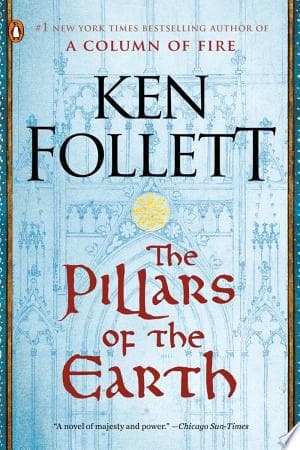
- The Pillars of the Earth
Ken Follett
4.3 (649k) average on GoodreadsFantasyShares Follett's signature epic historical scope, detailed settings, and strong character development across generations.
- North and South
Elizabeth Gaskell
4.2 (57k) average on GoodreadsHistorical FictionExplores class conflict, industrial strife, and a forbidden romance between individuals from different social strata in a historical setting.
- Outlander
Diana Gabaldon
4.2 (824k) average on GoodreadsFantasyFeatures a strong historical setting, romance across social divides, and elements of adventure and danger.
- Angels & Demons
Dan Brown
3.9 (2.7M) average on GoodreadsThrillerA Harvard symbologist races through Rome's ancient sites, deciphering cryptic clues to unmask the Illuminati and stop a vengeful plot to destroy the Vatican with a stolen antimatter weapon.
- Gone Girl
Gillian Flynn
4.1 (2.3M) average on GoodreadsThrillerA wife's sudden disappearance on her fifth anniversary reveals a web of lies and psychological warfare, exposing the secrets within a seemingly perfect marriage.
- The Girl on the Train
Paula Hawkins
3.9 (2.1M) average on GoodreadsThrillerA woman’s fascination with a seemingly perfect couple she watches from her daily train commute leads her into a dark investigation when she witnesses something that shatters their idyllic image.




Enjoyed the summary?
A summary gives you the shape of the book. The book itself has the detail, the examples and the voice.
Find A Place Called Freedom on AmazonAs an Amazon Associate, BookBrief earns from qualifying purchases. How we're funded