
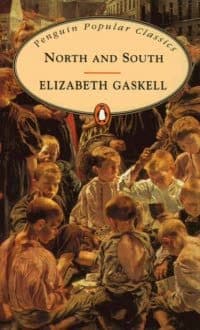
Synopsis
Covers the whole plot, including the ending.
- Difficulty
- Medium
- Pacing
- Moderate
- Mood
- Thought-provoking, Romantic, Socially Conscious, Melancholy
- Read it if
- You enjoy classic Victorian literature, character-driven romance with social commentary, and stories about strong heroines navigating societal change.
- Skip it if
- You prefer fast-paced plots, lighthearted romance, or dislike detailed descriptions of industrial-era social issues.
North and South Plot Summary
Covers the whole plot, including the ending.
A Sudden Departure from Helstone
Margaret Hale, living a comfortable life in the peaceful Hampshire village of Helstone, is affected by her father, Mr. Hale's, sudden crisis of conscience. A clergyman, Mr. Hale decides he can no longer agree with the Church of England's teachings and resigns. This forces the family to leave their home and move to Milton-Northern, an industrial town in the North of England. Margaret dislikes the difference between Helstone's beauty and Milton's grim, smoky look, finding the town and its people rough. Her mother, Mrs. Hale, is especially upset by the move, struggling to adjust to their new, less privileged life and the unfamiliar ways of the manufacturing town.
First Impressions of Milton and Mr. Thornton
In Milton, the Hales rent a house and start to adjust. Mr. Hale, a scholar, tutors private students, one of whom is John Thornton, a prominent and wealthy mill owner. Margaret's first meetings with Thornton have misunderstandings and social tension. She sees him as abrupt, arrogant, and typical of Milton's harsh, practical spirit, especially after seeing him manage his factory strictly. Thornton, in turn, likes Margaret's beauty and refinement but finds her proud, prejudiced, and too critical of his life. Their early talks are often arguments, showing their different backgrounds and values, yet a mutual, unspoken attraction begins to grow beneath their disagreements.
Encountering the Workers and Their Plight
Margaret's initial dislike for Milton slowly changes to an awareness of the working class's struggles. She befriends Bessy Higgins, a mill girl with consumption, and through her, Bessy's father, Nicholas Higgins, a strong union man. Visiting their home, Margaret sees the poor living conditions, poverty, and health problems caused by factory work. She feels for the workers, contrasting their suffering with the apparent indifference of mill owners like Thornton. This exposure strengthens her sense of social justice and begins to challenge her ideas, broadening her understanding of the complex social dynamics in industrial Milton.
The Strike and Its Aftermath
A major strike happens, called by mill workers led by Nicholas Higgins, demanding better wages and conditions from the owners, including John Thornton. Tensions rise, and the town experiences unrest. During a tense moment, a mob of striking workers approaches Thornton's mill. Margaret, visiting the mill with her mother, gets caught in the growing violence. To protect Thornton, who is speaking to the angry crowd, she steps forward and shields him with her body, getting hurt by a thrown stone. This act of courage affects Thornton deeply; he sees it as a sign of her care for him, which leads him to propose marriage soon after. Margaret, however, rejects his proposal, believing his admiration comes from a misunderstanding and still seeing him as someone who oppresses the poor.
Frederick's Secret Visit and the Railway Station Incident
Mrs. Hale's health quickly worsens, and she wants to see her eldest son, Frederick, who is exiled from England for his involvement in a naval mutiny years ago. Margaret secretly arranges for Frederick to visit his dying mother in Milton. During his brief, secret stay, Frederick has to flee after an old acquaintance, Leonards, recognizes him at the railway station and tries to expose him. In the struggle, Leonards falls and hits his head, later dying. Margaret, who was there, lies to Inspector Slack to protect Frederick, saying she was alone at the station. This lie, plus her presence with Frederick, is seen by John Thornton, further complicating their strained relationship and making him suspicious of her.
Tragedy and Growing Responsibility
After Frederick's hurried departure, Mrs. Hale's condition worsens, and she soon dies, leaving Margaret and Mr. Hale in deep grief. Soon after, Bessy Higgins also dies from her illness, likely caused by cotton dust from her factory work. These deaths deepen Margaret's sense of loss and responsibility. She takes on more household duties and supports her father. She continues to interact with Nicholas Higgins, Bessy's father, trying to help him find work and improve his life. This shows her lasting commitment to the working class and creates an unlikely friendship with the union leader.
The Truth Revealed and a Lingering Misunderstanding
Leonards' death at the railway station leads to an investigation, and Margaret is identified as being present. Inspector Slack questions her, and though she maintains her lie about being alone, Nicholas Higgins and John Thornton provide alibis that protect her, based on their own ideas of what happened. Thornton, who saw Margaret with a man he thought was a lover, struggles with jealousy and disappointment, believing she has been deceitful. While Margaret is cleared of involvement in Leonards' death, she cannot tell the truth about Frederick without endangering him, leaving a significant misunderstanding between her and Thornton, further separating them emotionally.
Return to Helstone and Mr. Hale's Death
After the troubles in Milton, Mr. Hale decides to revisit Helstone, hoping to find some of the peace they once knew. Margaret goes with him, finding comfort in the familiar surroundings, though the village now seems changed and less lively without them. Their hopes of perhaps returning for good are broken when Mr. Hale suddenly gets sick and dies during their trip. This unexpected death leaves Margaret completely alone, without either parent, and with a significant inheritance from her godmother, Mrs. Shaw. Her father's death marks another major turning point, cutting her last direct tie to her past life and forcing her to face an uncertain future.
Heiress and Mistress of Her Own Fortune
After Mr. Hale's death, Margaret learns she has inherited a large fortune from her godmother, Mrs. Shaw. This unexpected wealth changes her situation, making her financially independent and well-off. She moves to London to live with her Aunt Shaw, who has returned from abroad. The inheritance allows Margaret to follow her own interests and gives her a freedom she had not known before. However, she still thinks about her experiences in Milton and the unresolved feelings and misunderstandings with John Thornton, even as she adapts to her new life in the busy capital.
Milton's Decline and Thornton's Financial Woes
While Margaret is in London, the economy in Milton worsens. The cotton trade experiences a severe downturn, causing widespread hardship. John Thornton's mill, like many others, faces serious financial difficulties. He works hard to keep his business going, making sacrifices to avoid laying off his workers. His mother, Mrs. Thornton, and his sister, Fanny, worry about his declining wealth. The once-proud mill owner finds himself in a risky situation, possibly facing bankruptcy and the loss of everything he has built.
Reconciliation and a New Beginning
Margaret eventually returns to Milton, wanting to help Nicholas Higgins and feeling a connection to the town. She learns of Thornton's financial struggles and, through her legal advisor, Mr. Bell, discovers that Thornton holds a mortgage on her property in Milton. During a meeting, the truth about Frederick's visit and the railway station incident finally comes out to Thornton. He realizes Margaret's actions were from sisterly love and sacrifice, not deceit or a romantic relationship. The misunderstandings between them are cleared, and their true feelings, long hidden, surface. Margaret offers Thornton a loan from her inheritance to save his mill, and in doing so, they confess their love and agree to marry, bringing their different worlds together.
North and South Characters
Margaret Hale
Protagonist
A proud, compassionate young woman from the South, adapting to the industrial North.
Margaret Hale is the spirited and intelligent protagonist, initially a representative of the genteel, agrarian South. She possesses a strong moral compass, a deep sense of justice, and an independent spirit. Initially prejudiced against industrial Milton and its inhabitants, she gradually develops empathy for the mill workers and challenges her own preconceived notions. Her pride and reserve often lead to misunderstandings, particularly with John Thornton, but she is also capable of great courage and self-sacrifice, as seen in her protection of Thornton and her brother Frederick. She is loyal to her family and friends, and her experiences in Milton profoundly shape her character and worldview.
Relationships: Mr. Hale (Devoted daughter); Mrs. Hale (Loving, dutiful daughter); Frederick Hale (Loyal, protective sister); John Thornton (Initially antagonistic, then deeply romantic and mutually respectful); Bessy Higgins (Compassionate friend and advocate); Nicholas Higgins (Respectful and supportive ally)
John Thornton
Protagonist/Love Interest
A self-made, proud mill owner from Milton, representing the industrial North.
John Thornton is a wealthy, self-made mill owner in Milton, embodying the industrious spirit of the North. He is intelligent, pragmatic, and deeply committed to his business and the welfare of his workers, despite his stern exterior. He initially appears harsh and unfeeling to Margaret, but beneath his strong will lies a sensitive and honorable man. He is fiercely proud of his achievements and his town, and he struggles with his intense, often misunderstood, love for Margaret. His experiences with the strike and later financial difficulties reveal his resilience and his deep sense of responsibility, making him a more nuanced figure than his initial portrayal suggests.
Relationships: Margaret Hale (Initially antagonistic, then deeply romantic and mutually respectful); Mrs. Thornton (Devoted son, respectful of her strength); Fanny Thornton (Protective older brother); Nicholas Higgins (Opponent in labor disputes, later a respectful employer)
Mr. Hale
Supporting
Margaret's scholarly and gentle father, a former clergyman.
Mr. Hale is Margaret's father, a former clergyman who leaves the Church of England due to a crisis of conscience. He is a gentle, scholarly, and somewhat unworldly man, ill-suited to the harsh realities of industrial Milton. He struggles to adapt to their new life and relies heavily on Margaret's strength. While well-meaning, his indecisiveness and scholarly detachment often leave practical matters to Margaret, and his emotional fragility is evident after his wife's death. He represents a kind of intellectual idealism that clashes with the pragmatism of the North.
Relationships: Margaret Hale (Affectionate father, reliant on her strength); Mrs. Hale (Loving husband, though somewhat detached); John Thornton (Pupil and respected acquaintance)
Mrs. Hale
Supporting
Margaret's delicate and nostalgic mother, who struggles with their move to Milton.
Mrs. Hale is Margaret's mother, a delicate and somewhat self-pitying woman who never fully recovers from leaving her beloved Helstone. She longs for the social comforts and gentility of her past life and finds Milton crude and depressing. Her declining health and constant complaints add to Margaret's burdens. She represents the fragility of the Southern gentry when confronted with the harshness of industrial life, and her death is a significant turning point for Margaret, forcing her to take on full responsibility.
Relationships: Margaret Hale (Demanding but loving mother); Mr. Hale (Loving wife, though often critical); Frederick Hale (Devoted mother, longs for his return)
Frederick Hale
Supporting
Margaret's exiled elder brother, a former naval officer.
Frederick Hale is Margaret's older brother, who was forced to flee England years ago after being involved in a naval mutiny. He is a loving and protective brother, and his clandestine visit to see his dying mother is a central plot point, creating significant complications and misunderstandings for Margaret. He represents the hidden past and the sacrifices made for family, and his presence highlights Margaret's loyalty and willingness to bend the truth to protect those she loves.
Relationships: Margaret Hale (Close and loving sibling bond); Mr. Hale (Revered son); Mrs. Hale (Beloved son, whose absence causes her great sorrow)
Mrs. Thornton
Supporting
John Thornton's proud and formidable mother.
Mrs. Thornton is John Thornton's strong-willed, proud, and fiercely devoted mother. She is deeply protective of her son and his reputation, having worked tirelessly to help him build his fortune after her husband's bankruptcy. She is initially suspicious of Margaret, viewing her as haughty and unsuitable, and is quick to judge her actions. While sometimes harsh, her character is rooted in love for her son and a deep respect for hard work and integrity. She represents the strong, self-reliant women of the industrial North.
Relationships: John Thornton (Devoted and protective mother); Fanny Thornton (Strict but loving mother); Margaret Hale (Initially antagonistic, later accepting of her son's choice)
Nicholas Higgins
Supporting
A proud and outspoken mill worker and union leader.
Nicholas Higgins is a proud, intelligent, and outspoken mill worker and a leader among the striking operatives. He is a staunch advocate for workers' rights and initially deeply distrustful of the masters, including Thornton. Through his friendship with Margaret, he slowly begins to see beyond class divisions, and he eventually works for Thornton, demonstrating a capacity for reconciliation and mutual respect. He is a complex character who embodies the struggles and resilience of the working class in industrial England.
Relationships: Bessy Higgins (Loving and grieving father); Margaret Hale (Initially wary, then respectful and grateful friend); John Thornton (Opponent in labor disputes, later a loyal worker)
Bessy Higgins
Supporting
A consumptive mill worker and Margaret's first friend in Milton.
Bessy Higgins is a young mill worker suffering from a fatal lung disease caused by the cotton dust in the factories. She is Margaret's first friend in Milton and opens Margaret's eyes to the harsh realities of industrial life and the suffering of the working class. Despite her illness, Bessy maintains a gentle spirit and a philosophical outlook. Her death is a poignant moment that further solidifies Margaret's commitment to social justice and her bond with Nicholas Higgins.
Relationships: Nicholas Higgins (Loving daughter); Margaret Hale (Friend and confidante)
Edith Shaw (née Hale)
Mentioned
Margaret's cousin, living a comfortable, conventional life in London.
Edith Shaw is Margaret's beautiful and conventional cousin, married to Captain Lennox. She represents the genteel, leisurely life of the upper middle class in the South, a stark contrast to Margaret's experiences in Milton. While kind, she lacks Margaret's depth and social conscience, and her concerns are primarily domestic and social. She provides a glimpse into the world Margaret left behind and later returns to.
Relationships: Margaret Hale (Affectionate cousin); Captain Lennox (Loving wife)
Henry Lennox
Supporting
A London barrister who proposes to Margaret.
Henry Lennox is a successful London barrister and the brother-in-law of Margaret's cousin, Edith. He is a cultured and respectable gentleman who admires Margaret and proposes marriage to her early in the novel. Margaret rejects him, seeing him more as a brother. He represents the conventional, safe choice for Margaret, contrasting with the intense, challenging relationship she develops with Thornton. He remains a steadfast, if ultimately unsuccessful, suitor.
Relationships: Margaret Hale (Admirer and suitor); Edith Shaw (Brother-in-law)
North and South Themes
Class Conflict and Social Justice
The novel shows the clear difference between the industrial masters and the working class in Milton. Margaret's journey from Southern gentility to understanding Northern industrial life highlights the mill workers' struggles, their poverty, and their fight for fair treatment. The strike is a central event, showing the tensions and misunderstandings between the two classes. Margaret's understanding for Bessy and Nicholas Higgins, and her efforts to bridge the gap, show the theme of social fairness and the need for understanding between employers and employees.
“'It was the spirit of a mob, not of a people, that was shown that day. The people had a cause, and a grievance, and were striving for the right, as they understood it; the mob was but a collection of wild beasts, mad with rage and hunger.'”
Prejudice and Understanding
Both Margaret and John Thornton initially have strong biases against each other's worlds. Margaret sees Milton as crude and its people as unrefined, while Thornton sees her as proud and impractical. The novel carefully breaks down these biases through their interactions and experiences. Margaret learns to value the industry and integrity of the North, while Thornton gains a deeper understanding of empathy and the importance of human connection beyond just business. Their personal journey mirrors the larger theme of bridging the cultural and social gap between the agricultural South and the industrial North.
“'You do not know the South, Miss Hale. You have no conception of the life there – the life of an agricultural labourer. It is a very different thing from the life of a factory-hand.'”
Love and Misunderstanding
The romance between Margaret and Thornton involves a series of misunderstandings, caused by pride, social differences, and untold truths. Margaret rejects Thornton's proposal because she misinterprets his actions and believes his love is based on a false idea. The railway station incident, where Margaret protects Frederick, creates a deep division, with Thornton misinterpreting her actions as a romantic encounter. This theme shows the importance of clear communication and the dangers of letting pride and assumptions control relationships. It ultimately shows how true love can overcome such problems once the truth is known.
“'If you think I am one of those who would like to try and improve you, you are mistaken. I have no such thought. I only want to be with you.'”
Identity and Belonging
Margaret's forced move from Helstone to Milton challenges her sense of who she is and where she belongs. She struggles to reconcile her Southern upbringing with the harsh realities of the North, feeling like an outsider in both places at different times. The novel explores how her experiences in Milton change her into a more resilient and socially aware person, eventually finding a new sense of purpose and belonging not tied to a specific region but to her own moral beliefs. Her inheritance and financial independence also allow her to build an identity free from societal expectations.
“'I like the country, but I don't feel as if I were one of them. I am not country born.'”
Duty and Sacrifice
Many characters, especially Margaret, are driven by a strong sense of responsibility and a willingness to make personal sacrifices for others. Margaret's dedication to her parents, her protection of Frederick, and her efforts to help the Higgins family all show her selflessness. Thornton also shows responsibility in his commitment to his mill and his workers, even when facing financial ruin. The theme explores the moral duties individuals feel towards family, community, and even their perceived opponents, often requiring personal cost and emotional difficulty.
“'I am not at all sure that I did right in leaving Helstone. I have never been sure since.'”
Plot Devices & Literary Techniques
North-South Divide (Geographical & Societal)
Symbolizes the clash of traditional agrarian values with industrial pragmatism.
The geographical move from the rural, genteel South (Helstone) to the industrial, bustling North (Milton-Northern) is a fundamental plot device. This division represents more than just geography; it embodies a clash of social values, economic systems, and cultural norms. Helstone symbolizes tradition, beauty, and a slower pace of life, while Milton represents progress, industry, and social strife. Margaret's journey across this divide forces her to confront and ultimately bridge these contrasting worlds, making the physical setting integral to the novel's thematic exploration of class, prejudice, and social change.
The Strike
A catalyst for revealing character, escalating conflict, and exploring class tensions.
The major mill workers' strike in Milton serves as a pivotal plot device. It brings the inherent class conflict to the forefront, forcing direct confrontation between the masters (like Thornton) and the operatives (like Higgins). It is during the strike that Margaret's bravery and compassion are dramatically revealed when she shields Thornton, leading to his first proposal and a significant misunderstanding. The strike acts as a crucible, testing the characters' loyalties, values, and forcing them to re-evaluate their positions and prejudices, ultimately shaping the trajectory of the narrative and the relationships within it.
Frederick's Secret Visit and the Railway Station Incident
A device for creating suspense, fueling misunderstandings, and showcasing Margaret's loyalty.
Frederick Hale's clandestine visit and the subsequent incident at the railway station are crucial for driving the plot and deepening the central misunderstanding between Margaret and Thornton. This secret creates immense personal risk for Margaret, forcing her to lie and act in ways that are misinterpreted by others, particularly Thornton, who sees her with a mysterious man. It generates suspense around Frederick's safety and Margaret's reputation, while simultaneously highlighting Margaret's fierce loyalty to her family, even at personal cost, and showcasing the dangers of hidden truths in Victorian society.
Margaret's Inheritance
A device for financial independence, shifting power dynamics, and enabling resolution.
Margaret's unexpected inheritance from her godmother, Mrs. Shaw, is a significant plot device that grants her financial independence. This wealth fundamentally changes her social standing and allows her agency she wouldn't otherwise possess as a single woman in Victorian society. Crucially, it provides the means for her to offer Thornton a loan, which not only saves his business but also subtly shifts the power dynamics between them, allowing them to meet on more equal footing and facilitating the final resolution of their relationship, demonstrating that love can transcend class and financial status.
North and South Quotes
“I see a little of the bitterness of the world in this, that go where we will, we are for ever bound to the circle of our own miserable selves.”
“If you do not marry my daughter, I will ruin you, sir, as I have ruined many a better man!”
“I wish I could do something. I feel so helpless. I cannot sit still and see it all go wrong, without trying to mend it.”
“You seem to have a good deal to say about the South. I should have thought you had had enough of it by this time.”
“If I were a man, I would go and make my fortune, and come back and marry you.”
“I do not want to be a lady. I want to be a woman, and do a woman’s work.”
“We are all of us more or less like children, who can't understand what is good for them till they have had it.”
“I tell you what, I am a man; and I have a man’s feelings, and a man’s passions; and I will not be trifled with!”
“He had not been brought up to that nice perception of others’ feelings, which was a part of Margaret’s nature.”
“He knew that she was of a different grade to himself, and he loved her for it.”
“It’s not for you to be bringing shame on your father’s honest name.”
“We have all our crosses; and it’s a poor heart that grumbles at them.”
“For, you see, I was in love with you all the time.”
“The South, with its soft, relaxing lines, and the North, with its stern, rugged grandeur.”
Quiz
10 questions on the plot and the characters. Each answer comes with a short explanation.
Question 1
Why do the Hale family move from Helstone to Milton?
- Mr. Hale inherits a factory in Milton.
- Mr. Hale takes up a new position as a minister in Milton.
- Mr. Hale leaves the Church of England due to a crisis of conscience.
- Mrs. Hale's health requires them to move to a different climate.
Show answer
C. Mr. Hale leaves the Church of England due to a crisis of conscience. Mr. Hale, Margaret's father, experiences a crisis of conscience and decides to leave the Church of England, which necessitates their move from the rural south (Helstone) to the industrial north (Milton).
Question 2
What is Margaret Hale's initial reaction to the industrial town of Milton?
- She is immediately fascinated by its energy and progress.
- She is repulsed by its ugliness, smoke, and grime.
- She feels indifferent, missing her old home but accepting the new.
- She finds it surprisingly beautiful in its own unique way.
Show answer
B. She is repulsed by its ugliness, smoke, and grime. The book explicitly states that Margaret is 'initially repulsed by the ugliness of her new surroundings in the industrial town of Milton,' contrasting it sharply with her idyllic memories of Helstone.
Question 3
Who is Bessy Higgins?
- A wealthy mill-owner's daughter who befriends Margaret.
- A young mill worker who suffers from a fatal lung disease due to her work.
- Margaret's cousin who lives in London.
- John Thornton's younger sister.
Show answer
B. A young mill worker who suffers from a fatal lung disease due to her work. Bessy Higgins is a young mill worker who becomes a friend to Margaret. She is ill with a lung disease, likely byssinosis, due to the cotton dust in the mills, and her suffering highlights the harsh conditions faced by the workers.
Question 4
What event initially causes a major misunderstanding and social scandal for Margaret in Milton?
- She is seen walking alone with John Thornton late at night.
- She publicly argues with Mr. Thornton about his treatment of workers.
- She intervenes to protect her brother Frederick from being recognized by a mob.
- She refuses a marriage proposal from a prominent Milton resident.
Show answer
C. She intervenes to protect her brother Frederick from being recognized by a mob. Margaret pushes John Thornton away from her brother Frederick during a riot, to prevent Frederick, who is a fugitive, from being recognized. This action is misinterpreted by many as a passionate embrace between Margaret and Thornton.
Question 5
What is the primary reason for the mill workers' strike in Milton?
- They demand shorter working hours.
- They are protesting against a reduction in their wages.
- They want better housing conditions provided by the mill owners.
- They are seeking the right to form a union without employer interference.
Show answer
B. They are protesting against a reduction in their wages. The strike in Milton is a response to the mill owners, including Mr. Thornton, deciding to reduce the workers' wages, leading to significant hardship and conflict.
Question 6
How does Margaret Hale come into possession of a significant sum of money?
- She inherits it from her wealthy aunt, Mrs. Shaw.
- She receives it as a gift from John Thornton.
- She inherits it from her godfather, Mr. Bell.
- She earns it through her work as a governess.
Show answer
C. She inherits it from her godfather, Mr. Bell. After the death of her godfather, Mr. Bell, Margaret inherits his fortune. This inheritance plays a crucial role in the novel's resolution.
Question 7
What is the fundamental difference in worldview between Margaret Hale and John Thornton early in the novel?
- Margaret values tradition and social hierarchy, while John champions progress and innovation.
- Margaret prioritizes individual feelings and social justice, while John emphasizes self-reliance and economic efficiency.
- Margaret believes in strict religious adherence, while John is an atheist.
- Margaret seeks to return to a rural, agrarian society, while John advocates for urban industrialization.
Show answer
B. Margaret prioritizes individual feelings and social justice, while John emphasizes self-reliance and economic efficiency. Margaret, coming from a more genteel background, initially focuses on the human suffering and social injustice caused by industrialism. Thornton, a self-made man, prioritizes the economic realities and efficiency of his mill, viewing the workers through a more utilitarian lens, though he is not without compassion. Their conflict stems from these differing perspectives.
Question 8
What significant personal loss does Margaret experience shortly after moving to Milton?
- Her brother Frederick is caught and imprisoned.
- Her father, Mr. Hale, dies suddenly.
- Her mother, Mrs. Hale, dies from a prolonged illness.
- Her dear friend Bessy Higgins moves away from Milton.
Show answer
C. Her mother, Mrs. Hale, dies from a prolonged illness. Margaret's mother, Mrs. Hale, suffers from a debilitating illness that worsens after the move to Milton, and she eventually dies, a profound loss for Margaret and her father.
Question 9
How does the relationship between Margaret and John Thornton evolve throughout the novel?
- It begins with mutual admiration and develops into friendship, then romance.
- It starts with immediate attraction, but political differences keep them apart.
- It progresses from fierce opposition and misunderstanding to mutual respect and eventual love.
- It remains largely antagonistic, with no true resolution of their differences.
Show answer
C. It progresses from fierce opposition and misunderstanding to mutual respect and eventual love. Their relationship is initially marked by strong disagreements and misunderstandings, particularly regarding class and industrial relations. However, through shared experiences, evolving perspectives, and a growing understanding of each other's character, their initial 'fierce opposition' gives way to deep respect and a 'deeper attraction' that culminates in their union.
Question 10
What is the ultimate resolution for John Thornton's mill at the end of the novel?
- It is sold off to a larger company and he leaves Milton.
- It goes bankrupt, leaving him impoverished.
- It is on the verge of bankruptcy but is saved by an investment from Margaret.
- It thrives and he expands his business significantly.
Show answer
C. It is on the verge of bankruptcy but is saved by an investment from Margaret. Due to economic downturns and the strike, Thornton's mill faces severe financial difficulties and is on the brink of failure. Margaret, having inherited money from Mr. Bell, invests in the mill, effectively saving his business and allowing him to continue his work.
North and South FAQ
What is 'North and South' about?
'North and South' is about Margaret Hale, a young woman from the genteel South of England, who is forced to relocate with her family to the industrial Northern town of Milton. She grapples with the harsh realities of industrialization, class conflict, and a complex, often antagonistic, relationship with the mill-owner, John Thornton, all while navigating her personal growth and evolving social conscience.
Why should I read 'North and South'?
You should read 'North and South' for its brilliant exploration of Victorian class tensions, its nuanced portrayal of industrial life, and its compelling romance between two strong-willed individuals, Margaret Hale and John Thornton. Gaskell crafts a heroine who is both empathetic and fiercely independent, challenging societal norms while fostering a deep sense of social justice.
What is the background/setting of 'North and South'?
The story is primarily set in the fictional industrial town of Milton-Northern, modeled on Manchester, during the mid-19th century. This setting starkly contrasts with Margaret's idyllic upbringing in Helstone, Hampshire, highlighting the profound social and economic divisions between the agrarian South and the industrial North of England during the Victorian era.
What are the most memorable quotes?
One memorable quote is Margaret's defiant 'I do not care what your work is, so that it is not slavery.' Another is John Thornton's impassioned 'I love you as a man loves a woman, Margaret.' These quotes encapsulate the novel's themes of social justice and intense personal feeling.
What writing style does the author use?
Elizabeth Gaskell employs a rich, descriptive prose style, blending detailed social realism with psychological depth. Her narrative is often empathetic, providing insight into the perspectives of both the working class and the mill-owners, while using vivid imagery to depict the contrasting landscapes of the North and South.
What minor details add significant meaning?
The repeated descriptions of dust and smoke in Milton symbolize not only the physical grime of industry but also the moral and social obscurity that pervades the town, contrasting sharply with the clean, natural beauty Margaret remembers from Helstone. Also, the contrast between the Hales' simple but elegant furnishings and the Thorntons' more opulent but less refined home subtly illustrates their differing social backgrounds.
What are some subtle foreshadowing moments?
Early in the novel, Mr. Bell's warnings about the dangers of industrial unrest and the potential for violence subtly foreshadow the workers' strike and the subsequent riot at Thornton's mill. Also, Margaret's immediate, strong reaction to John Thornton upon their first meeting, though negative, hints at the profound depth of feeling that will develop between them.
What unexpected character connections exist?
An unexpected connection is between Mr. Bell, Margaret's godfather, and John Thornton, as Mr. Bell reveals he was once Thornton's tutor. This connection provides a bridge between Margaret's past and present, and gives Thornton a respectable advocate in Margaret's circle, despite their initial class differences.
What are unspoken character motivations?
John Thornton's seemingly harsh and unyielding business practices are often motivated by a deep-seated fear of financial ruin, stemming from his family's past poverty, and a strong sense of responsibility for his workers' livelihoods, even if he struggles to express it. Margaret's strong defense of the mill workers, at times appearing reckless, is driven by a profound need to act on her moral convictions, perhaps as a way to cope with her own family's upheaval and sense of helplessness.
What psychological complexities do characters exhibit?
Margaret Hale exhibits the complexity of navigating conflicting loyalties: to her family, to her social class, and to her burgeoning sense of justice for the oppressed. John Thornton struggles with pride and vulnerability, often masking his deeper emotions and desires behind a formidable, business-like exterior, making him appear aloof when he is deeply feeling.
What are the major emotional turning points?
A major turning point is when Margaret shields John Thornton during the riot, revealing her courage and a nascent protective instinct towards him, despite their disagreements. Another is Thornton's heartfelt, though initially rejected, marriage proposal, which lays bare his profound feelings for her and forces Margaret to confront her own complex emotions.
How do relationship dynamics evolve?
The relationship between Margaret Hale and John Thornton evolves from one of initial mutual repulsion and class-based antagonism to a deep, respectful understanding and eventually, love. Their dynamic is constantly shifting, marked by misunderstandings, fierce debates, and moments of unexpected empathy, ultimately bridging the social chasm between them.
Which parts remain ambiguous or open-ended?
While the romance concludes, the broader social issues of industrial unrest and class inequality in Milton are not fully resolved in a definitive way. Gaskell leaves the reader to ponder the long-term impact of the burgeoning industrial age and whether the new understanding between Margaret and Thornton can truly foster widespread social change.
What are controversial scenes or decisions?
Margaret's decision to lie to the police about Frederick's presence during the confrontation at the station, to protect her brother, is a controversial moment. While driven by loyalty, it places her in a morally ambiguous position, leading to gossip and damaging her reputation in Milton.
'North and South' ending explained: how it ends & what it means
The novel ends with Margaret Hale inheriting money from her godfather, Mr. Bell, which includes a mortgage on John Thornton's mill. She offers this to Thornton, effectively saving his business from ruin. This financial transaction brings them together, leading to a proposal and acceptance, symbolizing not just their personal union but also a metaphorical reconciliation between the North and South, and between capital and labor, through mutual respect and understanding.
About the author

Elizabeth Cleghorn Gaskell, often referred to as Mrs Gaskell, was an English novelist, biographer and short story writer. Her novels offer a detailed portrait of the lives of many strata of Victorian society, including the very poor. Her first novel, Mary Barton, was published in 1848. Gaskell's The Life of Charlotte Brontë, published in 1857, was the first biography of Charlotte Brontë. In this biography, she wrote only of the moral, sophisticated things in Brontë's life; the rest she omitted, deciding certain, more salacious aspects were better kept hidden. Among Gaskell's best known novels are Cranford (1851–1853), North and South (1854–55), and Wives and Daughters (1865), all of which were adapted for television by the BBC.
Similar books
- Pride and Prejudice
Jane Austen
4.3 (3M) average on GoodreadsHistorical FictionFeatures a strong, opinionated heroine and a 'will they, won't they' romance with a proud, initially misunderstood man.
- Jane Eyre
Charlotte Brontë
4.1 (1.6M) average on GoodreadsHistorical FictionExplores themes of social class, independence, and a complex, passionate romance in a Victorian setting.
- Hard Times
Charles Dickens
4.0 (514) average on GoodreadsThrillerWhile both novels address industrial society, Gaskell's North and South offers a more balanced and less overtly didactic view of factory owners and workers compared to Dickens's often more critical and melodramatic portrayal in Hard Times. Gaskell delves deeper into individual motivations rather than presenting clear villains and heroes.
- Shirley
Charlotte Brontë
3.8 (30k) average on GoodreadsHistorical FictionBoth North and South and Shirley explore industrial unrest and class issues. However, Gaskell's novel provides a more focused narrative and psychological depth within a tighter family drama, whereas Brontë's work is arguably more sprawling and fragmented, weaving in broader political events like the Luddite rebellions with its social commentary. Gaskell's character development, especially of the male protagonist, is arguably more intricate.
- To Kill a Mockingbird
Harper Lee
4.3 (4.5M) average on GoodreadsHistorical FictionIn the 1930s Jim Crow South, Harper Lee writes about racial injustice, moral growth, and the quiet courage of a lawyer father, Atticus Finch, as seen through his young daughter's eyes.
- The Great Gatsby
F. Scott Fitzgerald
3.9 (3.8M) average on GoodreadsHistorical FictionIn the opulent Roaring Twenties, a mysterious millionaire's lavish parties hide his desperate, tragic pursuit of a lost love, exposing the emptiness within the American Dream.





Enjoyed the summary?
A summary gives you the shape of the book. The book itself has the detail, the examples and the voice.
Find North and South on AmazonAs an Amazon Associate, BookBrief earns from qualifying purchases. How we're funded