

Synopsis
Covers the whole plot, including the ending.
- Difficulty
- Medium
- Pacing
- Moderate
- Mood
- Intellectual, Witty, Darkly Humorous, Philosophical, Absurd
- Read it if
- You enjoy intricate character studies, philosophical explorations of love and desire, and a darkly comedic look at the absurdities of human relationships, especially those involving intellectuals and their tangled affairs.
- Skip it if
- You prefer straightforward plots, morally unambiguous characters, or find complex, often incestuous, relationship dynamics uncomfortable.
A Severed Head Plot Summary
Covers the whole plot, including the ending.
The Revelation
Martin Lynch-Gibbon, a middle-aged wine merchant, lives a comfortable life in London with his wife, Antonia, and has a long-term affair with Georgie Hands, a young academic. His world changes when Antonia calmly tells him she is in love with her psychoanalyst, Palmer Anderson, and plans to leave Martin to marry him. The news is delivered with an almost clinical detachment, as if it were a logical step. Martin is initially shocked and hurt, struggling to understand how his carefully separated life suddenly fell apart. He feels a deep sense of betrayal, not just from Antonia but from the very structure of his life, which he thought was stable.
Introducing Palmer and Honor
After Antonia's announcement, Martin reluctantly meets Palmer Anderson, a charming and smart man who seems calm and authoritative. Palmer, instead of seeming like a villain, presents himself as a man of reason, further confusing Martin. Soon after, Martin meets Palmer's half-sister, Honor Klein, an anthropology professor. Honor is a striking and mysterious woman with an intense presence. She immediately makes a strong impression on Martin, her sharp mind and unusual beauty both pushing him away and drawing him in. Their first meetings have a clear tension, as Honor seems to see through Martin's polite front, challenging his assumptions and unsettling him.
Georgie's Despair
Amidst the chaos of his failing marriage, Martin's affair with Georgie Hands takes a dramatic turn. When Georgie learns of Antonia's departure and Martin's emotional distress, she becomes very upset. Feeling abandoned and overlooked, and realizing her uncertain place in Martin's life, Georgie tries to kill herself with gas. Martin finds her in time and takes her to the hospital, where she recovers. This event makes Martin feel a new wave of guilt and responsibility, showing the devastating effect of his complicated romantic life. It also forces him to face Georgie's emotional fragility, a vulnerability he may have underestimated while living a double life.
A Visit to Honor's Lair
Martin, drawn by an unexplained fascination, visits Honor Klein at her secluded house. Her home's atmosphere is as intense and unusual as she is, filled with strange objects and an almost raw energy. During his visit, Martin is both intimidated and fascinated by Honor's intelligence and strong personality. He feels a powerful attraction to her, despite her often harsh and critical manner. In a shocking discovery, Martin finds Honor and her brother, Palmer, in an incestuous embrace, confirming a dark secret and shattering his view of their intellectual and moral superiority. This revelation deeply disturbs Martin, yet it paradoxically deepens his complex obsession with Honor.
The Confession and the Fight
Reeling from his discovery, Martin tells Antonia about Palmer and Honor's incestuous relationship. Antonia, at first disbelieving, is eventually convinced by Martin's distressed account. This revelation creates a deep crisis, not only for Antonia and Palmer's upcoming marriage but also within the entire group. Antonia confronts Palmer, leading to a highly emotional and violent scene between the siblings. The exposure of their secret shatters the careful image of rationality Palmer had maintained, plunging them all into a more primitive and chaotic emotional state. Martin, despite the turmoil, feels a strange sense of justification, having exposed what he saw as hypocrisy.
Honor's Disappearance and Return
After the explosive confrontation, Honor Klein suddenly disappears without a trace, leaving everyone to wonder about her whereabouts and intentions. Her absence casts a shadow of unease over the characters, especially Martin, who finds himself increasingly thinking about her. Just as the group starts to adjust to her absence, Honor unexpectedly reappears, her return as sudden and mysterious as her departure. Her reappearance reignites the complex emotional dynamics, especially between her and Martin. Her presence continues to be a disruptive force, challenging the established order and forcing the characters to confront their deepest desires and fears, especially Martin, who is now undeniably drawn to her.
Attempted Reconciliation and Renewed Chaos
In the aftermath of the various revelations and departures, Martin tries to fix his relationship with Antonia. There are moments when a fragile hope of reconciliation appears, as they both navigate the wreckage of their past. However, these attempts are constantly undermined by lingering emotional attachments and the volatile nature of their relationships with others. Martin's continued fascination with Honor, and the general entanglement of the characters, prevents any real or lasting peace. The story constantly shifts, with new romantic alliances forming and dissolving, showing the characters' inability to escape the intricate web of desire and betrayal they have created, leaving Martin in a constant state of emotional turmoil.
Georgie's Revelation and Martin's Shock
Georgie Hands, still recovering from her suicide attempt, reveals another shock: she is pregnant. Martin, assuming he is the father, is thrown into a new spiral of responsibility and panic. He struggles with the implications of fatherhood, especially given the chaotic state of his life. However, the situation quickly becomes more complicated when it is revealed that the father is actually Alexander, Martin's half-brother, who had also been having an affair with Georgie. This revelation further exposes the complex and morally unclear sexual politics at play, challenging Martin's self-perception and forcing him to confront how blind he had been and the moral compromises made by those around him.
The Duels of Desire
The various romantic and family connections become increasingly unstable, leading to a series of intense confrontations. Martin finds himself caught in a complex web of desires, jealousy, and betrayal. There are verbal arguments and near-physical fights as characters compete for affection, assert control, and try to navigate their tangled relationships. Martin's own desires swing wildly, pulled between Antonia, Georgie, and the growing pull of Honor Klein. These clashes highlight the primitive, almost animalistic forces at play beneath the surface of civilized behavior, showing how deeply intertwined and destructive the characters' lives have become, with Martin at the center of the emotional storm.
Honor's Departure and Martin's Pursuit
Honor Klein, after her brief return and further involvement in the group's affairs, leaves again, this time with a sense of finality. Martin, now completely obsessed with her, finds himself unable to let her go. He pursues her, driven by a powerful, almost desperate passion. However, when he finally confronts her, Honor rejects him. Her reasons are complex, perhaps rooted in her own psychology and need for self-preservation. This rejection is a crushing blow to Martin, forcing him to accept the futility of his pursuit and the depth of his own emotional trap. It marks a turning point in his understanding of his own desires and the elusive nature of true connection.
The Shifting Landscape of Love
In the chaotic aftermath, the romantic landscape of the characters undergoes a final, dramatic change. Palmer Anderson, after his relationship with Antonia falters, ultimately marries Honor Klein, a union that both shocks and makes a strange kind of sense given their complex history. Antonia, in turn, finds herself drawn back to Martin, perhaps out of familiarity or a shared sense of exhaustion from the emotional turmoil. Martin, having been rejected by Honor and having seen the various pairings, is left in a state of bewildered thought. He has been through an intense emotional re-education, stripped of his previous illusions about love, loyalty, and control, emerging as a character who is perhaps more aware, if not entirely content.
Antonia's Return and Martin's Acceptance
After things settle, Antonia, having experienced her own disappointment with Palmer and the chaos of their shared past, returns to Martin. This return is not a grand romantic reunion but rather a tired, almost expected coming together of two people who have been through a shared ordeal. Martin, changed by his experiences and his unrequited passion for Honor, accepts Antonia back, not with the innocent joy of a man reunited with his lost love, but with a deeper, more resigned understanding of their intertwined destinies. The ending suggests a cyclical nature to their relationship, acknowledging that while their lives have been irrevocably altered, certain bonds, even flawed ones, persist.
A Severed Head Characters
Martin Lynch-Gibbon
Protagonist
A wine merchant who navigates a complex web of romantic entanglements.
Martin is a seemingly conventional, middle-aged man who prides himself on his rationality and ability to manage his life, including his long-standing affair with Georgie Hands. He initially believes he can possess both a beautiful wife and a delightful lover, embodying a certain English upper-middle-class complacency. He is intelligent but emotionally naive, often misunderstanding the depth of others' feelings and his own. He is prone to self-deception and a desire to behave 'beautifully' or 'sensibly' even when his actions are anything but. His journey is one of forced emotional awakening, stripping away his illusions.
Relationships: Antonia Lynch-Gibbon (Wife, later ex-wife, then returns to him. Their relationship is complex, marked by convenience, affection, betrayal, and eventual resignation.); Georgie Hands (Long-term mistress. Martin views her as a comforting, less demanding alternative to Antonia, but she is more vulnerable than he perceives.); Honor Klein (Object of intense, almost monstrous, passion and obsession. Her enigmatic nature both repels and attracts him.); Palmer Anderson (Antonia's lover and psychoanalyst, later Honor's husband. Martin initially resents him but later develops a complex, almost grudging respect.); Alexander Lynch-Gibbon (Half-brother. Their relationship is cordial but reveals Alexander's own hidden complexities and involvement with Georgie.)
Antonia Lynch-Gibbon
Supporting
Martin's elegant and composed wife who leaves him for her psychoanalyst.
Antonia is Martin's beautiful, sophisticated, and seemingly rational wife. She initially appears calm and detached when she reveals her affair with Palmer Anderson, presenting her decision as a logical and intellectual progression. However, beneath her composed exterior lies a complex emotional landscape, capable of both profound love and pragmatic self-interest. She seeks intellectual and spiritual fulfillment, which she believes Palmer offers. Her journey involves navigating the fallout of her decisions and ultimately returning to a familiar, if imperfect, comfort.
Relationships: Martin Lynch-Gibbon (Husband, ex-wife, then returns to him. Their relationship is characterized by a deep, if flawed, connection and shared history.); Palmer Anderson (Lover, then fiancé. She idealizes him as an intellectual and spiritual guide, but their relationship is destabilized by Honor.); Honor Klein (Palmer's sister, whose existence and relationship with Palmer deeply impact Antonia's life.)
Georgie Hands
Supporting
Martin's vulnerable young mistress, an academic.
Georgie is Martin's younger mistress, an academic who is deeply devoted to him. She is emotionally fragile and often overlooked by Martin, who sees her as a convenient and undemanding companion. Her vulnerability is highlighted by her suicide attempt and her subsequent pregnancy. She represents a different kind of love than Antonia or Honor, one that is more dependent and less intellectually challenging for Martin. Her character underscores the destructive consequences of Martin's self-centered approach to relationships.
Relationships: Martin Lynch-Gibbon (Lover. She is deeply attached and dependent on him, suffering greatly when he is distracted by others.); Alexander Lynch-Gibbon (Lover and father of her child. This relationship is a surprising twist, further complicating the narrative.); Honor Klein (Resents Honor for her influence over Martin and the general chaos she brings.)
Palmer Anderson
Antagonist/Supporting
Antonia's charismatic psychoanalyst and lover, a figure of intellectual authority.
Palmer is a highly intelligent and charismatic psychoanalyst, initially presented as Antonia's lover and intellectual guide. He exudes an aura of calm, rational authority, making Martin feel inferior. He represents a seductive blend of intellect and spiritual insight. However, his character is revealed to be far more complex and morally ambiguous, particularly through his incestuous relationship with his sister, Honor. He is a master manipulator of emotions and ideas, capable of both profound insight and profound self-deception.
Relationships: Antonia Lynch-Gibbon (Lover, then fiancé. He is her intellectual and spiritual mentor, but their bond proves fragile.); Honor Klein (Half-sister and incestuous lover, later his wife. Their relationship is the dark, powerful core of the novel, representing a primal, unconventional bond.); Martin Lynch-Gibbon (Rival for Antonia's affection, whom he initially dismisses but later develops a strange, strained connection with.)
Honor Klein
Antagonist/Supporting
Palmer's formidable and enigmatic half-sister, an anthropology professor.
Honor is arguably the most powerful and enigmatic character in the novel. A brilliant professor of anthropology, she possesses an intense, almost demonic presence that both repels and fascinates Martin. She is fiercely intelligent, unconventional, and morally ambiguous, unafraid to challenge social norms. Her incestuous relationship with Palmer is a central, shocking revelation. She represents a primal, untamed force of nature, embodying raw desire and an almost supernatural insight into human psychology. She is the catalyst for much of Martin's emotional re-education.
Relationships: Palmer Anderson (Half-sister and incestuous lover, later his wife. Their bond is deeply primal and unconventional.); Martin Lynch-Gibbon (Object of his consuming and monstrous passion. She both attracts and repels him, a source of profound emotional upheaval.); Antonia Lynch-Gibbon (A rival for Palmer's affection, though their dynamic is more complex than simple rivalry.)
Alexander Lynch-Gibbon
Supporting
Martin's half-brother, a sculptor.
Alexander is Martin's half-brother, a sculptor. He appears to be a more grounded and artistic contrast to Martin's intellectual and commercial world. However, he is also revealed to be secretly involved with Georgie, adding another layer of complexity and betrayal to the already tangled relationships. He represents the hidden depths and complications within the seemingly respectable Lynch-Gibbon family, demonstrating that emotional and moral ambiguity extends beyond just Martin's immediate circle.
Relationships: Martin Lynch-Gibbon (Half-brother. Their relationship is cordial but marked by Alexander's secret involvement with Georgie.); Georgie Hands (Lover and father of her child. This relationship is a surprise revelation, complicating the paternity of Georgie's baby.)
A Severed Head Themes
The Nature of Love and Desire
The novel explores the many, often conflicting, aspects of love and desire. It questions traditional ideas of romantic love, showing it as a chaotic, irrational, and often destructive force instead of a beautiful ideal. Martin's initial belief in a 'sensible' love with Antonia and a 'delightful' love with Georgie is shattered by the raw, consuming passion he develops for Honor. The incestuous relationship between Palmer and Honor further pushes limits, suggesting that desire operates on basic, often amoral levels, beyond social norms. The characters are driven by an almost animalistic pursuit of connection, often mistaking obsession for love, and finding little comfort in traditional relationships.
“Love is the extremely difficult realisation that something other than oneself is real.”
Self-Deception and Illusion
A central theme is the characters' widespread self-deception and their reliance on illusions to live their lives. Martin, in particular, builds an elaborate facade of rationality and control, believing he can separate his desires and maintain a 'civilized' existence. His emotional re-education largely involves stripping away these illusions, forcing him to confront the messy, irrational reality of his own desires and the true nature of those around him. Palmer's intellectual facade and Antonia's initial 'sensible' approach to her affair are also forms of self-deception, which eventually crumble under the weight of basic emotions and shocking revelations. The book suggests that much of human interaction is built on carefully maintained fictions.
“We are all in the dark, and we have to invent our own light.”
The Breakdown of Social Order and Morality
Murdoch shows a world where traditional social and moral structures are not just challenged but actively broken down. The novel questions the very foundations of loyalty, family, and ethical behavior. Martin's affairs, Antonia's departure, and especially Palmer and Honor's incestuous relationship, all contribute to a sense of moral disorder. The characters constantly cross boundaries, and their attempts to maintain a polite image often fail spectacularly. The story suggests that beneath society's polite surface lie primitive, powerful forces that can erupt at any moment, leading to chaos and a re-evaluation of what is 'right' and 'wrong.' The 'severed head' itself can symbolize this separation between intellect and basic instinct.
“One finds the most extraordinary things when one is looking for something else.”
Power Dynamics in Relationships
The novel is full of complex power dynamics, constantly shifting between the characters. Martin initially believes he has power over Georgie, but his wife's departure and Honor's strong pull quickly show him he is wrong. Palmer Anderson holds intellectual and psychological power over Antonia and initially over Martin. Honor Klein, however, is the most powerful, her mysterious nature and strong will dominating many interactions. The power struggles are not always obvious but show up in emotional manipulation, intellectual superiority, and sheer force of personality. The characters are often locked in a battle for control, whether conscious or unconscious, over each other's affections and minds.
“I was at the mercy of my own passion, and that is a terrible thing.”
Plot Devices & Literary Techniques
The Love Octahedron (or complex love polygon)
A tangled web of interconnected romantic and sexual relationships.
The novel uses a highly intricate and constantly shifting network of romantic relationships as its central engine. Martin is involved with Antonia and Georgie; Antonia with Palmer; Palmer with Honor; Honor with Palmer; Georgie with Martin and Alexander. This creates a complex, almost geometric structure of desire and betrayal, where every character is connected to multiple others. This device prevents any stable pairing, constantly generating new conflicts, revelations, and emotional chaos, forcing the characters to confront the irrationality of their desires and the interconnectedness of their lives.
The Unveiling of Secrets
The gradual revelation of hidden truths that disrupt the characters' perceived realities.
The plot progresses through a series of shocking revelations that dismantle the characters' carefully constructed worlds. From Antonia's initial announcement to the discovery of Palmer and Honor's incest, and then Georgie's pregnancy and Alexander's paternity, each secret unveiled destabilizes the existing order. This device serves to constantly reorient the reader's understanding of the characters and their motives, highlighting the deep-seated hypocrisy and hidden desires that lurk beneath the surface of polite society. It keeps the narrative momentum high and drives Martin's emotional re-education.
The Enigmatic Figure (Honor Klein)
A character whose mysteriousness and unconventional nature drive much of the protagonist's obsession and the plot's chaos.
Honor Klein serves as the enigmatic figure, a catalyst for Martin's profound emotional transformation. Her intellectual prowess, unconventional lifestyle, and morally ambiguous actions (particularly her incestuous relationship with Palmer) make her a force of nature. Her mysteriousness and unpredictable behavior fuel Martin's consuming passion, drawing him into a world beyond his comprehension. She embodies the 'demonic splendour' described in the synopsis, representing raw, untamed desire and a challenge to conventional morality, thereby pushing the protagonist and the narrative into unexplored territory.
The Psychoanalyst as Confidant/Antagonist
A character who holds a position of psychological authority, yet is deeply implicated in the emotional chaos.
Palmer Anderson, as a psychoanalyst, holds a position of perceived authority and insight into the human mind. This device initially sets him up as a figure of rational understanding, a 'healer' who is meant to bring clarity. However, he quickly becomes an antagonist, not just in a romantic sense, but as a figure whose own psychological complexities and moral compromises (his affair with Antonia, his incestuous relationship with Honor) deeply implicate him in the very chaos he is meant to analyze. This subverts the traditional role of a psychoanalyst, highlighting the hypocrisy and self-deception that can exist even in those who claim to understand the human psyche.
A Severed Head Quotes
“The greatest and most insufferable pain, to a man of sensibility, is to be forced to love a woman who doesn't love him in return.”
“We are all of us, always, in the presence of the absurd.”
“One does not fall in love with a person, but with a situation.”
“Goodness and badness are not things that can be added up. They are qualities of the will.”
“The true artist is a man who can create a new form of life.”
“Perhaps all love, in the end, is a kind of self-deception.”
“There are some things which, once done, can never be undone, and there are some things which, once seen, can never be unseen.”
“Human beings are endlessly interesting, especially when they are in pain.”
“The only way to keep a secret is to tell no one.”
“One must choose between being a lover and being a moralist.”
“We are condemned to be free, and every choice is a risk.”
“To be truly alone is to be without a mirror.”
“Love is not a feeling, it is a decision.”
“The heart has its reasons of which reason knows nothing.”
Quiz
10 questions on the plot and the characters. Each answer comes with a short explanation.
Question 1
What is Martin Lynch-Gibbon's initial marital status at the beginning of the novel?
- He is a widower.
- He is married to Antonia and has a lover, Georgie Hands.
- He is single and looking for a partner.
- He is engaged to Honor Klein.
Show answer
B. He is married to Antonia and has a lover, Georgie Hands. At the start of the novel, Martin is married to Antonia and also maintaining a long-term affair with Georgie Hands, believing he can manage both relationships.
Question 2
For whom does Martin's wife, Antonia, initially leave him?
- His brother, Alexander
- Her psychoanalyst, Palmer Anderson
- Martin's lover, Georgie Hands
- Honor Klein
Show answer
B. Her psychoanalyst, Palmer Anderson Antonia announces to Martin that she is in love with and plans to marry her psychoanalyst, Palmer Anderson, which sets off the novel's main events.
Question 3
What is the profession of Palmer Anderson, the man Antonia leaves Martin for?
- A university professor
- A lawyer
- A psychoanalyst
- A sculptor
Show answer
C. A psychoanalyst Palmer Anderson is Antonia's psychoanalyst, and his professional relationship with Antonia evolves into a romantic one, leading to their decision to marry.
Question 4
Which character is described as having 'demonic splendour' and arouses a 'consuming and monstrous passion' in Martin?
- Antonia Lynch-Gibbon
- Georgie Hands
- Honor Klein
- Rosemary Anderson
Show answer
C. Honor Klein Honor Klein, Palmer Anderson's half-sister, is the character whose powerful, enigmatic, and initially unsettling presence captivates Martin, leading to a profound obsession.
Question 5
What is the relationship between Honor Klein and Palmer Anderson?
- They are married.
- They are siblings, specifically half-siblings.
- They are distant cousins.
- They are professional colleagues.
Show answer
B. They are siblings, specifically half-siblings. Honor Klein is Palmer Anderson's half-sister, a relationship that adds a significant layer of complexity and tension to the various intertwining romantic and familial dynamics in the novel.
Question 6
Martin discovers a secret relationship between Georgie Hands and which other character?
- Palmer Anderson
- Alexander Lynch-Gibbon
- Antonia Lynch-Gibbon
- Honor Klein
Show answer
B. Alexander Lynch-Gibbon Martin discovers that his mistress, Georgie, has also been having an affair with his brother, Alexander, further complicating his already entangled emotional life.
Question 7
The novel explores themes of desire, infidelity, and the breakdown of conventional morality. Which of these best describes Martin's initial self-perception regarding his relationships?
- He believes he is a victim of circumstance.
- He sees himself as a master of his emotions, capable of managing multiple affections without significant consequence.
- He views himself as a moral arbiter, judging others' behavior.
- He feels overwhelmed by his passions and seeks guidance.
Show answer
B. He sees himself as a master of his emotions, capable of managing multiple affections without significant consequence. Martin initially believes he can elegantly balance his marriage with his affair, perceiving himself as sophisticated and in control, only for this illusion to shatter as the plot unfolds.
Question 8
What object does Martin encounter in Honor Klein's room that deeply disturbs him and leads to a confrontation?
- A collection of ancient weapons
- A severed head in a box
- A portrait of Palmer Anderson
- A diary detailing her past relationships
Show answer
B. A severed head in a box Martin finds a box containing a severed head in Honor Klein's room, a shocking discovery that reveals a hidden, almost ritualistic, aspect of her character and her relationship with her brother.
Question 9
Which character attempts suicide after being rejected and discovering multiple infidelities?
- Antonia Lynch-Gibbon
- Georgie Hands
- Martin Lynch-Gibbon
- Honor Klein
Show answer
B. Georgie Hands Georgie Hands, Martin's long-time mistress, attempts suicide after the various entanglements and betrayals come to light, particularly after Martin's erratic behavior and her rejection by Alexander.
Question 10
At the end of the novel, what is the ultimate romantic pairing that forms, defying conventional expectations?
- Martin and Antonia remarry.
- Palmer Anderson and Georgie Hands get together.
- Martin ends up with Honor Klein, and Alexander with Antonia.
- All characters remain single, disillusioned with love.
Show answer
C. Martin ends up with Honor Klein, and Alexander with Antonia. In a final, unexpected twist, Martin ends up with Honor Klein, and his brother Alexander marries Antonia, demonstrating the novel's exploration of fluid and unconventional relationships.
A Severed Head FAQ
What is the central premise of 'A Severed Head'?
The novel explores Martin Lynch-Gibbon's complacent life, where he believes he can maintain both his wife Antonia and his mistress Georgie. This illusion shatters when Antonia announces she is leaving him for her psychoanalyst, Palmer Anderson, forcing Martin into a chaotic journey of emotional re-education and a series of increasingly bizarre and incestuous romantic entanglements.
Who are the primary characters involved in the initial romantic entanglements?
Initially, there is Martin, his wife Antonia, and his mistress Georgie Hands. The equilibrium is disrupted when Antonia reveals her affair with her psychoanalyst, Palmer Anderson, who is also Martin's good friend. This revelation sets off a chain reaction of shifting affections among the group.
How does Martin's perception of himself change throughout the novel?
Martin initially sees himself as a civilized, rational man capable of managing his relationships with grace. As events unfold, his self-perception is repeatedly challenged and shattered, revealing his capacity for possessiveness, irrationality, and a monstrous passion he previously denied, forcing him to confront his true nature.
Who is Honor Klein and what is her role in Martin's re-education?
Honor Klein is Palmer Anderson's half-sister, an anthropologist and a figure of 'demonic splendour' who initially repels Martin but later captivates him. She acts as a catalyst for Martin's emotional upheaval, embodying a raw, untamed passion that forces him to abandon his preconceived notions of love and morality, ultimately becoming the object of his consuming obsession.
What is the significance of the title, 'A Severed Head'?
The title refers to a recurring dream Martin has, and symbolically represents the separation of mind from body, or reason from passion, which is a central theme. It also hints at the intellectual, detached way characters initially approach relationships, only to be overwhelmed by primal emotions, and the disorienting, almost violent nature of emotional awakening.
How does the concept of incest play out in the narrative?
Incest is a significant hidden detail, revealed through multiple relationships. Palmer and Honor Klein are half-siblings and lovers. Later, it is implied that Martin's wife Antonia and Palmer are also half-siblings, sharing the same father. This complex web underscores the novel's exploration of forbidden desires and the blurring of social boundaries.
What is the nature of Palmer Anderson's relationship with Honor Klein?
Palmer and Honor Klein are half-siblings who share a deeply complex and passionate relationship that is both intellectual and sexual. Their bond is intensely private and almost ritualistic, representing a union beyond conventional morality and serving as a powerful, unsettling force within the narrative that fascinates and repels other characters.
How does Martin's initial affair with Georgie Hands contribute to his eventual downfall?
Martin's affair with Georgie, while seemingly manageable, establishes his pattern of emotional dishonesty and complacency. It highlights his belief in his ability to control multiple relationships without consequence, making the subsequent revelations about Antonia and Palmer even more devastating and forcing him to confront his own moral hypocrisy.
What role does psychoanalysis play in the novel, both literally and metaphorically?
Psychoanalysis is literally present through Palmer Anderson, Antonia's analyst and lover, whose professional role blurs dangerously with his personal life. Metaphorically, the novel itself acts as a form of psychoanalysis for Martin, forcing him to confront repressed desires, irrational impulses, and the hidden truths of his own psyche and those around him, leading to a profound self-reckoning.
How does Iris Murdoch use language to convey the characters' emotional states?
Murdoch employs highly descriptive and often philosophical language to articulate the intricate and often contradictory emotional states of her characters. She uses vivid imagery, internal monologues, and sharp dialogue to expose their intellectual rationalizations alongside their raw, irrational passions, making their internal turmoil palpable to the reader.
What is the significance of the final pairings in the novel?
The final pairings, with Martin ending up with Honor Klein and Palmer with Antonia, are deeply ironic and unsettling. They represent a complete subversion of conventional morality and expectations, suggesting that characters ultimately gravitate towards their true, often darker, desires, and that love can be found in unexpected and even forbidden configurations, rather than necessarily in 'sensible' ones.
Is there a definitive 'moral' to the story, or is it more ambiguous?
The novel deliberately avoids a clear moral, instead presenting an ambiguous and complex exploration of human nature, desire, and the limits of rationality. It challenges traditional notions of love, fidelity, and happiness, suggesting that life's truths are often messy, irrational, and far from the neat categories we try to impose upon them.
How does Martin's sister, Rosemary, fit into the narrative?
Rosemary Lynch-Gibbon represents a more conventional, grounded perspective, often serving as a foil to the chaotic lives of the other characters. She provides a sense of normalcy and concern for Martin, though her attempts to provide sensible advice often fall on deaf ears amidst the escalating emotional drama, highlighting the absurdity of the situation.
What is the underlying theme of freedom versus bondage in relationships?
The novel constantly explores the tension between the desire for freedom and the inevitable bondage of passionate love. Characters seek liberation from conventional ties but often find themselves enslaved by new, more intense, and sometimes destructive desires, suggesting that true freedom in love is an elusive and perhaps impossible state.
Are there any subtle allusions to classical myths or literature?
While not explicitly stated, the novel's themes of incest, forbidden love, and a protagonist's journey through a labyrinth of relationships evoke echoes of Greek tragedy and myth, particularly stories involving complex family dynamics and the overwhelming power of fate or passion. The 'severed head' itself can be seen as a mythological motif.
How does the setting (primarily London and the English countryside) contribute to the atmosphere?
The setting often contrasts the seemingly civilized, upper-class environments of London and the countryside with the raw, primitive passions unfolding within the characters. The elegant homes and intellectual discussions serve as a ironic backdrop to the increasingly wild and unconventional relationships, emphasizing the disconnect between outward appearance and inner turmoil.
What is the nature of the power dynamic between Martin and Honor Klein?
The power dynamic is complex and constantly shifting. Initially, Honor holds intellectual and emotional sway over Martin, challenging his worldview. As Martin's obsession grows, he seeks to possess her, but she remains elusive and powerful, ultimately leading him into a relationship where she dictates the terms, asserting her dominance through her enigmatic nature.
How does the novel challenge traditional gender roles and expectations?
The novel features strong, intellectually formidable female characters like Honor Klein and Antonia, who actively pursue their desires and challenge male complacency. It subverts traditional notions of female subservience, portraying women as agents of their own destinies and desires, often leaving the male protagonist, Martin, in a state of bewildered reaction.
About the author
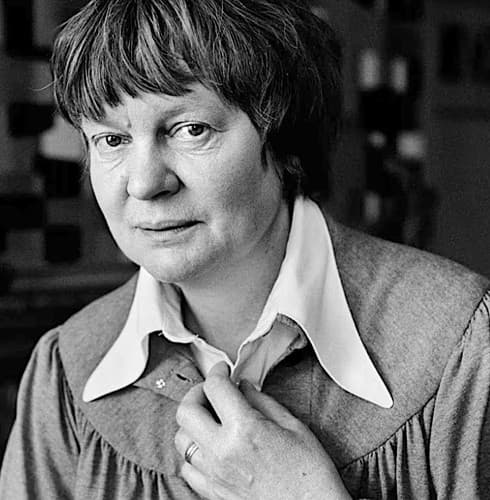
Dame Jean Iris Murdoch was an Irish and British novelist and philosopher. Murdoch is best known for her novels about good and evil, sexual relationships, morality, and the power of the unconscious. Her first published novel, Under the Net (1954), was selected in 1998 as one of Modern Library's 100 best English-language novels of the 20th century. Her 1978 novel The Sea, the Sea won the Booker Prize. In 1987, she was made a Dame by Queen Elizabeth II for services to literature. In 2008, The Times ranked Murdoch twelfth on a list of "The 50 greatest British writers since 1945".
Similar books
- A Handful of Dust
Evelyn Waugh
3.9 (23k) average on GoodreadsLiterary FictionOffers a satirical and bleakly humorous look at the disintegration of relationships among the English upper class.
- Nineteen Eighty-Four
George Orwell
4.2 (5.5M) average on GoodreadsFictionWinston Smith dreams of truth and rebellion in a world where Big Brother watches all, but he confronts the terrifying power of a regime that controls not just actions, but thoughts.
- The Frozen River
Ariel Lawhon
4.4 (600k) average on GoodreadsFictionIn 1789 Maine, a heroic midwife's diary helps her expose a murder and get justice in a town that wants to silence her.
- A Man Called Ove
Fredrik Backman
4.4 (569k) average on GoodreadsFictionA stubborn widower, who lives by strict rules, finds his quiet world changed by a lively new family next door, making him face his past and find happiness in human connection.
- The Art of Racing in the Rain
Garth Stein
4.2 (452k) average on GoodreadsFictionThrough the eyes of Enzo, a wise and observant dog, a race car driver's family navigates a journey of love, loss, and resilience, learning that life's most important lessons often come in the curves, not just on the straightaways.
- The Colour of Magic
Terry Pratchett
4.0 (425k) average on GoodreadsFictionOn a discworld hurtling through space on the back of a giant turtle, an inept wizard and his naive, walking-luggage-toting tourist embark on a chaotic, belief-fueled journey to the very edge of their flat planet, encountering dragons that only exist if you believe in them.





Enjoyed the summary?
A summary gives you the shape of the book. The book itself has the detail, the examples and the voice.
Find A Severed Head on AmazonAs an Amazon Associate, BookBrief earns from qualifying purchases. How we're funded