
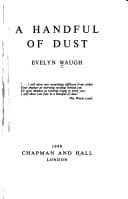
Synopsis
Covers the whole plot, including the ending.
- Difficulty
- Medium
- Pacing
- Moderate
- Mood
- Satirical, Tragicomic, Cynical, Bleak
- Read it if
- You appreciate dark humor, social satire, and a tragicomic exploration of English aristocracy between the wars.
- Skip it if
- You prefer optimistic endings, straightforward narratives, or find bleak cynicism unappealing.
A Handful of Dust Plot Summary
Covers the whole plot, including the ending.
Hetton Abbey and the Seeds of Discontent
Tony Last loves his ancestral Gothic Revival country house, Hetton Abbey, and his young son, John Andrew. He enjoys being a squire, fixing up the house, and living a traditional English life. His wife, Brenda Last, finds Hetton and Tony's rural activities boring after seven years of marriage. She often goes to London, supposedly for shopping or social events, but secretly wants a more exciting life. Tony, naive and trusting, does not notice her growing unhappiness, believing their life at Hetton is perfect and safe.
Brenda's Affair with John Beaver
During her trips to London, Brenda Last starts a relationship with John Beaver, a young, unemployed, and rather uninteresting socialite. Beaver lives with his demanding mother, Mrs. Beaver, who arranges his social life. Brenda is not deeply in love with Beaver but finds his company a welcome change from the dullness of Hetton. Their affair starts casually, driven more by Brenda's boredom and desire for new things than real affection. Tony remains completely unaware, even when Brenda spends more and more time in London, making up believable reasons for her absences.
The Financial Strain and Tony's Naivety
Brenda's affair with John Beaver grows, leading to more frequent and costly trips to London. Beaver has no money, so Brenda pays for their outings and even her own living expenses in the city. Brenda, in turn, uses a lot of Tony's money, straining his finances. Tony is too busy with Hetton and too trusting to question her spending closely. Her friends, especially Mrs. Beaver, quietly encourage the affair, seeing it as a way to help Beaver or simply for the social drama.
The Tragic Death of John Andrew
One day, while Tony is away, John Andrew, their eight-year-old son, dies in a riding accident. Tony is heartbroken. He rushes to London to tell Brenda, expecting her to be just as sad. However, when he tells her, Brenda's first thought is not for her son but for Beaver, asking, 'Oh, thank God. I thought you were going to say Tony was dead.' This shocking statement shows how little she cares about her family and how much she prioritizes her lover. Tony is deeply hurt by her reaction, realizing how indifferent she is to their life together.
The Divorce Proceedings and Financial Demands
After John Andrew's death and Brenda's cold reaction, Tony finally confronts her about her affair and asks for a divorce. Brenda, advised by her calculating friends like Mrs. Beaver, agrees but demands an excessive financial settlement of £500 a year for life. This amount is far more than Tony can afford, as his income is mostly tied up in maintaining Hetton Abbey. The legal process becomes a long and shameful experience for Tony, who has to consider selling parts of his beloved estate to meet Brenda's demands, further showing her greedy nature.
Tony's Retreat to Hetton and the Compromise
Tony returns to Hetton Abbey, heartbroken and let down, trying to find comfort in his home and its traditions. He struggles with the idea of selling his land to pay for Brenda's affair with Beaver. Eventually, after much emotional pain and with help from his lawyer, Jock Grant-Menzies, they reach a compromise: Brenda will accept £300 a year if Tony provides the evidence for an 'amicable' divorce. Tony, tired of the fight and desperate to end the public shame, reluctantly agrees to this plan.
Tony's Expedition to Brazil
Unable to come to terms with losing his son, his wife's betrayal, and the collapse of his traditional life, Tony decides to escape by joining an expedition to find a lost city in the Amazon jungle. He pays for the trip himself, seeing it as a desperate search for meaning and a way to leave his problems behind. He hires Dr. Messinger, an unusual explorer, to lead the expedition. Tony is not ready for the harsh realities of jungle life; his upper-class English upbringing gives him little protection against the wilderness's dangers.
The Journey Upriver and Messinger's Death
The expedition goes upriver into the thick Amazon. Tony, despite his first excitement, finds the journey harder and more confusing. Dr. Messinger, though experienced, is a poor leader, and the native guides slowly leave them because of the difficult conditions and lack of clear direction. Food supplies run low, and the men get sick. Eventually, Messinger drowns in a rapids accident, leaving Tony stranded and alone in the middle of the jungle, far from any towns. His dreams of discovery turn into a fight for survival.
Tony's Rescue by Mr. Todd
Delirious and close to death from fever and hunger, Tony is eventually found by Mr. Todd, an elderly, isolated English settler who lives deep in the jungle. Todd, who seems kind, nurses Tony back to health. He lives in a simple settlement, surrounded by native people, where he maintains an unusual and solitary life. Tony, weak and thankful for the rescue, at first sees Todd as his savior, unaware of the dark side of his host's hospitality.
The Eternal Reader: Tony's Captivity
Once Tony recovers, he finds out the true, terrible nature of Mr. Todd's hospitality. Todd, who cannot read, has held previous visitors captive, forcing them to read aloud to him from all of Charles Dickens's books. Tony is now his latest victim, held prisoner in the remote jungle outpost. Todd refuses to let Tony leave, destroying any way to escape or communicate with the outside world. Tony is condemned to spend the rest of his days reading Dickens aloud, a permanent part of Todd's strange and cruel literary prison, his identity and freedom completely gone.
Brenda's New Life and Financial Struggles
Back in England, news of Tony's presumed death in the jungle reaches Brenda. She is now free to marry John Beaver, but his interest in her quickly fades without Tony's money to pay for their lifestyle. Beaver finds another, richer patroness, and Brenda is left with her small settlement, which is not enough to keep her desired social standing. She has to move into a small, less fashionable apartment, her dreams of a glamorous life with Beaver shattered, ironically reflecting Tony's own entrapment.
The Finality of Tony's Fate
A search party, organized by Tony's relatives and lawyers, eventually reaches Mr. Todd's settlement. Todd, always clever, shows them a grave and a locket belonging to Tony, convincing them that Tony died of fever and was buried there. The search party accepts this evidence and returns to England, reporting Tony's death. This seals Tony's fate, ensuring that no one will ever look for him again, and he remains permanently trapped as Mr. Todd's reader, his existence erased from the world he once lived in. The novel ends with Tony's tragic, endless captivity, a chilling symbol of his ultimate loss.
A Handful of Dust Characters
Tony Last
Protagonist
Naive, traditional English squire devoted to his ancestral home, Hetton Abbey.
Tony Last is the well-meaning but ultimately passive and naive protagonist. He embodies the traditional English gentry, deeply attached to his Gothic country house, Hetton Abbey, and the values it represents. He is trusting, kind-hearted, and rather oblivious to the complexities of human nature, especially his wife's disaffection. His love for Hetton and his son, John Andrew, defines him. His inability to adapt to the changing social landscape and his wife's modern desires ultimately leads to his tragic downfall and disfigurement.
Relationships: Brenda Last (Wife, whose betrayal devastates him); John Andrew Last (Son, whose death is a profound loss); Mr. Todd (Captor in the Amazon)
Brenda Last
Antagonist
Tony's bored wife, who seeks excitement and material gain through an affair.
Brenda Last is Tony's beautiful, but shallow and selfish wife. Bored with the rural life at Hetton, she seeks stimulation and attention in London. Her affair with John Beaver is driven by a desire for novelty and social validation rather than deep affection. She is characterized by her emotional detachment, especially evident in her reaction to her son's death, and her mercenary pursuit of financial security through divorce. She represents the superficiality and moral decay of a certain segment of post-WWI English society.
Relationships: Tony Last (Husband, whom she betrays and divorces); John Andrew Last (Son, whose death she reacts to with shocking indifference); John Beaver (Lover, whom she pursues for social and emotional escape)
John Beaver
Supporting
Brenda's dull, penniless lover, a product of London's superficial social circles.
John Beaver is a young, unaccomplished, and rather insipid socialite who becomes Brenda Last's lover. He is entirely dependent on his mother, Mrs. Beaver, and later on Brenda's money. Beaver is not malicious but utterly devoid of substance, ambition, or genuine affection. He is a passive participant in the affair, driven by the convenience and the social status it briefly affords him. He symbolizes the aimlessness and shallowness of the interwar 'smart set' in London.
Relationships: Brenda Last (Lover); Mrs. Beaver (Overbearing mother)
Mrs. Beaver
Supporting
John Beaver's calculating mother, a social climber and manipulator.
Mrs. Beaver is John Beaver's formidable and manipulative mother. She is a social climber who orchestrates her son's life and social connections, always with an eye for advantage. She actively encourages Brenda's affair with John, seeing it as a potential path to financial security for her son. She is shrewd, cynical, and utterly amoral, embodying the predatory nature of the London social scene. She offers Brenda calculated advice during the divorce, further isolating Tony.
Relationships: John Beaver (Son, whom she controls); Brenda Last (Brenda's confidante and advisor, albeit a self-serving one)
John Andrew Last
Supporting
Tony and Brenda's young son, whose accidental death is a pivotal turning point.
John Andrew is Tony and Brenda's eight-year-old son. He is a bright, energetic boy, deeply loved by his father and a source of joy in Tony's life at Hetton. His accidental death in a riding accident is the pivotal event that irrevocably shatters Tony's world and reveals the shocking depth of Brenda's indifference, forcing Tony to confront the reality of his marriage. His death is a symbol of the destruction of innocence and the end of Tony's idyllic existence.
Relationships: Tony Last (Beloved son); Brenda Last (Son, whose death she reacts to callously)
Mr. Todd
Antagonist
Reclusive, illiterate English settler in the Amazon who enslaves Tony as his reader.
Mr. Todd is the eccentric and sinister English settler who 'rescues' Tony in the Amazon jungle. He is a reclusive, seemingly benevolent figure at first, but his true nature is revealed as that of a cruel and obsessive captor. Illiterate, he forces Tony (and presumably previous victims) to read aloud to him from the complete works of Charles Dickens, trapping him indefinitely. Todd symbolizes the ultimate loss of freedom and identity, representing a bizarre and inescapable form of mental and physical imprisonment.
Relationships: Tony Last (Captor and enslaved reader)
Dr. Messinger
Supporting
Eccentric, inexperienced explorer hired by Tony for his Amazon expedition.
Dr. Messinger is the ill-fated explorer hired by Tony to lead his expedition into the Amazon. He is presented as somewhat academic and ill-suited for the practicalities and dangers of jungle exploration. His lack of leadership skills and experience ultimately contribute to the expedition's failure and his own death. He serves as a vehicle for Tony's escape from England and his eventual abandonment in the wilderness.
Relationships: Tony Last (Employer, travelling companion)
Jock Grant-Menzies
Supporting
Tony's sympathetic solicitor who advises him through the divorce.
Jock Grant-Menzies is Tony's solicitor, a sensible and sympathetic character who tries to navigate Tony through the painful and humiliating divorce proceedings. He offers practical advice and attempts to protect Tony's interests, particularly regarding the financial demands. He represents a voice of reason and traditional decency amidst the moral decay surrounding Tony.
Relationships: Tony Last (Solicitor and advisor)
Polly Cockpurse
Mentioned
Brenda's socialite friend, often seen at parties and a minor figure in her London life.
Polly Cockpurse is one of Brenda's London socialite friends, part of the shallow set that Brenda frequents. She is a minor character, mentioned in the context of parties and social gatherings, representing the frivolous and self-absorbed world Brenda desires. She has no significant plot function beyond illustrating Brenda's social circle.
Relationships: Brenda Last (Social acquaintance)
A Handful of Dust Themes
The Decline of the English Aristocracy and Traditional Values
The novel clearly shows the breakdown of the traditional English landed gentry, symbolized by Tony Last and his beloved Hetton Abbey. Tony's dedication to his ancestral home and its old-fashioned values contrasts sharply with the superficiality and moral decay of modern London society, shown by Brenda and her friends. The financial strain of keeping Hetton and Brenda's demands, along with Tony's naive inability to change, shows how vulnerable this class is to a changing world. His final loss of inheritance and literal exile mean his world completely fell apart.
“For Tony, Hetton was a symbol of the continuity of his family and the permanence of English life.”
Betrayal and Disillusionment
Betrayal is a main theme, mostly through Brenda's unfaithfulness and emotional abandonment of Tony. Her cold reaction to their son's death and her greedy demands during the divorce deeply disappoint Tony, destroying his belief in their marriage and his perfect life. This personal betrayal mirrors a larger disappointment with society's values, as Tony finds little comfort or real connection in either the London social scene or the chaotic wilderness. His final betrayal by Mr. Todd, who offers rescue only to impose eternal captivity, is the last, crushing blow.
“Oh, thank God,' said Brenda. 'I thought you were going to say Tony was dead.”
The Absurdity and Cruelty of Society
Waugh uses sharp irony and dark humor to reveal the absurdity and cruelty beneath the polished surface of English society. The London socialites are shown as shallow, self-centered, and morally corrupt, manipulating each other for personal gain or fun. The divorce proceedings are presented as a ridiculous show, further shaming Tony. The ultimate example of this theme is Tony's strange and unavoidable captivity in the Amazon, a fate far more grotesque than any social exclusion, yet presented with a chilling, detached irony that highlights the indifferent cruelty of his world.
“He had not the least idea of the forces that were to work for his destruction.”
The Search for Meaning and Escape
Tony's journey from Hetton to the Amazon is a desperate, though misguided, search for meaning and escape from his personal sadness and disappointment. He first seeks comfort in his ancestral home, then tries to find adventure and purpose in the 'lost city' of the jungle. This search, however, leads him not to self-discovery but to the ultimate loss of self and freedom. Brenda, too, seeks escape from boredom through her affair, but finds only brief pleasure and eventual financial insecurity. The novel suggests that real escape or meaning is hard to find, often leading to worse forms of being trapped.
“He longed for a place where loyalty was a simple matter, and love was not a bargain.”
Identity and Dispossession
Tony Last's identity is tied to Hetton Abbey and his role as a landed gentleman. As his marriage falls apart and his money decreases, he slowly loses his home, his son, his wife, and eventually, his freedom and his very self. The novel tracks the gradual stripping away of everything that defines him. His final captivity as Mr. Todd's reader is the ultimate act of dispossession, where his name, his past, and his ability to act are completely erased, leaving him as just a tool for another's obsession.
“Tony was a man of fixed ideas, and the fixed idea of his identity was bound up with Hetton.”
Plot Devices & Literary Techniques
Ironic Detachment
A narrative tone that creates a sense of emotional distance and critical observation.
Waugh employs a consistently ironic and detached narrative voice, particularly when describing the characters' actions and motives. This detachment allows for a scathing critique of society without explicit moralizing. For example, Brenda's callous reaction to her son's death is presented with stark simplicity, allowing the reader to grasp the horror without the narrator's emotional intervention. This device underscores the absurdity and moral bankruptcy of the characters and their world, often creating a darkly humorous effect even in tragic circumstances.
Symbolism of Hetton Abbey
The ancestral home represents tradition, stability, and the fading English gentry.
Hetton Abbey is more than just a setting; it is a powerful symbol. For Tony, it embodies the continuity of his family, the stability of traditional English life, and a deeply cherished past. Its Gothic Revival architecture suggests a longing for an idealized, perhaps unattainable, past. As Tony's personal life unravels, the house becomes a sanctuary, but also a financial burden and a symbol of what he is losing. Its eventual fate, left in the hands of strangers or threatened by Brenda's demands, mirrors the decline of Tony's world and the traditional values it represents.
The 'Lost City' Metaphor
Tony's Amazon expedition symbolizes a futile search for meaning and a mythical escape.
The 'lost city' Tony seeks in the Amazon is a metaphor for his desperate, romanticized quest for meaning and escape from the wreckage of his life. It represents an idealized, untainted world, a stark contrast to the corrupted society he leaves behind. However, this quest leads not to discovery or solace but to deeper entrapment and the loss of his identity. The jungle itself becomes a symbol of the chaotic, untamed forces that destroy human illusions, ultimately consuming Tony in a bizarre and inescapable reality far worse than the one he fled.
The Dickensian Reader
Tony's final role as Mr. Todd's reader symbolizes the ultimate loss of self and agency.
Tony's fate as Mr. Todd's captive reader of Charles Dickens is a highly symbolic and darkly ironic plot device. It represents the ultimate stripping away of Tony's identity, freedom, and purpose. He is reduced to a mere instrument, his voice and intellect enslaved to another's will. The endless reading of Dickens, a chronicler of English society, becomes a grotesque parody of his own lost world, emphasizing his permanent exile and the finality of his dispossession. It's a literary prison, a chilling metaphor for his utter powerlessness.
Contrast between Rural and Urban Life
The stark differences between Hetton and London highlight societal decay.
Waugh consistently contrasts the quiet, traditional, and somewhat naive rural life at Hetton Abbey with the bustling, superficial, and morally bankrupt urban environment of London. Hetton represents order, history, and Tony's genuine, if outdated, values. London, conversely, is portrayed as a place of moral laxity, social climbing, and emotional detachment, embodied by Brenda and the Beaver set. This contrast serves to highlight the destructive forces at play, showing how the 'modern' urban values infiltrate and ultimately destroy the 'old' rural order, leading to Tony's undoing.
A Handful of Dust Quotes
“I have been here before, but when or how I cannot tell.”
“All over England people were waking up, queasy and despondent.”
“I do not think I shall ever marry again.”
“It is a good plan in life never to apologize. The right sort of people do not want apologies, and the wrong sort take a mean advantage of them.”
“He had got into the habit of loving and trusting Brenda.”
“I am afraid I was not really cut out to be a husband.”
“The whole of English life is a series of impersonations.”
“It is a curious thing that every creed promises a paradise which will be absolutely uninhabitable for anyone of civilized taste.”
“I have always been happy at Hetton.”
“One must be modern, mustn't one?”
“There is a species of person called a 'Pythoness' who spends her time eating and drinking and saying the wrong thing.”
“I think I have been in a dream since I came here.”
“It is a very difficult thing to explain, but I know that it is the only thing I want.”
“The truth is that I am a romantic.”
Quiz
10 questions on the plot and the characters. Each answer comes with a short explanation.
Question 1
What is the name of the Gothic mansion that Tony Last is obsessed with maintaining?
- Brideshead Castle
- Hetton Abbey
- Manderley
- Thornfield Hall
Show answer
B. Hetton Abbey Hetton Abbey is the Gothic mansion that represents Tony Last's traditional values and becomes a source of Brenda's boredom, serving as a central symbol in the novel.
Question 2
What event initially prompts Brenda Last to move to London and begin her affair with John Beaver?
- The death of her son
- Tony's refusal to modernize Hetton
- Her son going away to school
- A financial crisis at Hetton
Show answer
C. Her son going away to school When their son John Andrew goes away to school, Brenda uses this as an excuse to take a flat in London, where she meets the idle socialite John Beaver and begins her affair.
Question 3
What tragic event occurs while Tony is on his expedition to South America?
- Brenda dies in a London bombing
- Hetton Abbey burns down
- Their son John Andrew is killed in a riding accident
- John Beaver commits suicide
Show answer
C. Their son John Andrew is killed in a riding accident John Andrew's death in a hunting accident occurs while Tony is away, and Brenda's reaction to this tragedy reveals the depth of her emotional detachment from her family.
Question 4
How does Tony Last ultimately become trapped in the Brazilian jungle at the novel's conclusion?
- He is captured by indigenous people
- He contracts a tropical disease
- He is forced to read Dickens aloud forever
- He loses his maps and supplies
Show answer
C. He is forced to read Dickens aloud forever In one of literature's most famous ironic endings, Tony is held captive by Mr. Todd, a mad settler who forces him to read aloud from Dickens' novels repeatedly, representing Tony's ultimate entrapment.
Question 5
What does Brenda request from Tony during their divorce negotiations that particularly shocks him?
- Full ownership of Hetton Abbey
- An allowance of £500 a year
- That he pretend to commit adultery
- £500 a year for life
Show answer
D. £500 a year for life Brenda's coldly practical demand for £500 a year for life (which she mistakenly thinks is a modest sum) reveals her complete misunderstanding of Tony's financial situation and her detachment from reality.
Question 6
Which character represents the 'shallow socialite' with whom Brenda has her affair?
- Reggie St. Cloud
- John Beaver
- Dr. Messinger
- Mr. Todd
Show answer
B. John Beaver John Beaver is the idle, opportunistic socialite who has an affair with Brenda, representing the empty values of London society that contrast with Tony's traditionalism.
Question 7
What major theme does the contrast between Hetton Abbey and London society primarily represent?
- The conflict between science and religion
- The disintegration of traditional English values
- The benefits of modernization
- The importance of marital fidelity
Show answer
B. The disintegration of traditional English values The novel contrasts Tony's traditional, decaying world at Hetton with Brenda's shallow, modern London society, representing the broader disintegration of English social values after WWI.
Question 8
What happens to Brenda's relationship with John Beaver after their affair is exposed?
- They marry and live happily
- Beaver abandons her when she needs financial support
- They run away to South America together
- Beaver dies in the same accident as John Andrew
Show answer
B. Beaver abandons her when she needs financial support When Brenda needs financial support after the divorce, the shallow John Beaver abandons her, revealing the emptiness of their relationship and the superficiality of London society.
Question 9
What literary work provides the novel's title 'A Handful of Dust'?
- Shakespeare's Hamlet
- The Bible
- T.S. Eliot's The Waste Land
- Dickens' Great Expectations
Show answer
C. T.S. Eliot's The Waste Land The title comes from T.S. Eliot's poem 'The Waste Land' ('I will show you fear in a handful of dust'), reflecting the novel's themes of spiritual emptiness and societal decay.
Question 10
Why does Tony Last embark on his expedition to South America?
- To find a legendary city of gold
- To escape his failed marriage and find meaning
- To conduct anthropological research
- To track down Brenda and John Beaver
Show answer
B. To escape his failed marriage and find meaning After his divorce from Brenda and the loss of everything he valued, Tony joins an expedition to Brazil seeking escape and new purpose, which leads to his ironic fate in the jungle.
A Handful of Dust FAQ
What is 'A Handful of Dust' about?
The novel chronicles the breakdown of Tony and Brenda Last's marriage in post-WWI England. Bored with life at Hetton Abbey, Brenda drifts into an affair with socialite John Beaver, leading to Tony's abandonment and his disastrous expedition to Brazil, where he becomes trapped in the jungle.
Why should I read 'A Handful of Dust'?
It's a masterful blend of tragedy and savage social satire that captures the moral decay of English aristocracy between the wars. Waugh's brilliant irony and unforgettable characters make it both devastating and darkly comic.
What is the background/setting of 'A Handful of Dust'?
Set in 1930s England, the novel moves from Hetton Abbey (Tony's beloved Gothic mansion) to London's fashionable Belgravia, then to the Brazilian jungle. This contrast highlights the emptiness of English society versus primal wilderness.
What are the most memorable quotes?
"I have been here before" (Tony's haunting realization in Brazil) and "All over everywhere people are saying, 'What's become of Tony Last?'" (highlighting society's shallow concern). The title itself comes from T.S. Eliot's 'The Waste Land,' reflecting spiritual emptiness.
What writing style does Evelyn Waugh use?
Waugh employs precise, economical prose with devastating irony and dark comedy. His detached narration amplifies the characters' emotional emptiness, while sudden shifts from drawing-room comedy to tragedy create jarring effects.
What minor details add significant meaning?
Tony's obsession with Hetton's Gothic architecture symbolizes his clinging to a dead tradition. Brenda's request for £500 annually from Tony (instead of alimony) reveals her calculation. The death of their son John Andrew in a hunting accident becomes the irreversible fracture.
What are some subtle foreshadowing moments?
Early descriptions of Hetton as 'a monstrous piece of Gothic' hint at its oppressive nature. Brenda's casual remark about 'getting away' foreshadows her abandonment. Tony's reading of Dickens to Mr. Todd in Brazil mirrors his trapped existence.
What unexpected character connections exist?
John Beaver's mother, Mrs. Beaver, profits from both the Lasts' marriage breakdown (decorating Brenda's flat) and Tony's disappearance. Dr. Messinger's expedition connects Tony's English despair to Brazilian captivity through shared delusions of escape.
What are unspoken character motivations?
Brenda seeks excitement to escape emptiness, not love. Tony clings to Hetton to maintain identity. John Beaver desires social advancement, not Brenda. Mr. Todd keeps Tony captive for Dickens readings, representing how tradition becomes imprisonment.
What psychological complexities do characters exhibit?
Tony shows pathological attachment to the past while being emotionally passive. Brenda displays shallow self-deception about her affair. Both avoid genuine feeling—Tony through architecture, Brenda through social distraction—until tragedy forces confrontation.
What are the major emotional turning points?
John Andrew's death destroys any marriage remnant. Tony's discovery of Brenda's affair costs (her request for money) reveals her coldness. His Brazilian captivity represents complete psychological breakdown. Brenda's remarriage to dull Jock Grant-Menzies shows her diminished expectations.
How do relationship dynamics evolve?
Tony and Brenda move from bored tolerance to bitter separation. Brenda and Beaver's affair shifts from excitement to inconvenience. Tony's relationship with Hetton transforms from pride to prison. His captivity with Mr. Todd inverts master-servant roles tragically.
Which parts remain ambiguous or open-ended?
Whether Tony could have saved his marriage earlier remains unclear. Brenda's final happiness with Jock is questionable. Most ambiguous is Tony's fate—whether he accepts captivity or still hopes for escape, representing the generation's trapped condition.
What are controversial scenes or decisions?
Brenda's reaction to her son's death (asking 'Which John?' when told) seems shockingly callous. Tony's passive acceptance of her affair until financial betrayal divides readers. The brutal irony of his Brazilian fate—reading Dickens forever—sparks debate about punishment versus tragedy.
'A Handful of Dust' ending explained: how it ends & what it means
Tony is trapped in the Brazilian jungle, forced to read Dickens aloud to illiterate Mr. Todd forever, while Brenda remarries in England. This represents the spiritual death of English tradition—Tony's Gothic ideal becomes literal imprisonment, and Brenda's shallow society continues unchanged.
What does the Brazilian expedition symbolize?
It represents Tony's desperate search for meaning after losing everything, but becomes a literalization of his trapped existence. The jungle mirrors the moral wilderness of English society, with Mr. Todd as a dark parody of tradition-consuming individuals.
How does Waugh portray English society?
As fundamentally hollow—characters pursue affairs, money, and status while avoiding genuine connection. Hetton's Gothic fantasy contrasts with London's superficiality, showing a culture preserving empty forms. Even tragedy (John Andrew's death) becomes social gossip.
What is the significance of the title?
From T.S. Eliot's 'The Waste Land,' it reflects spiritual desolation after WWI. The 'handful of dust' represents what remains of tradition (Hetton), marriage, and personal identity—all reduced to meaningless fragments in modern society.
About the author
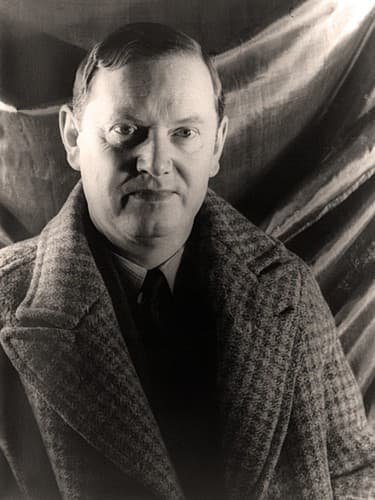
Arthur Evelyn St. John Waugh was an English writer of novels, biographies, and travel books; he was also a prolific journalist and book reviewer. His most famous works include the early satires Decline and Fall (1928) and A Handful of Dust (1934), the novel Brideshead Revisited (1945), and the Second World War trilogy Sword of Honour (1952–1961). He is recognised as one of the great prose stylists of the English language in the 20th century.
Similar books
- Brideshead Revisited
Evelyn Waugh
4.0 (93k) average on GoodreadsLiterary FictionExplores English aristocracy and the decline of tradition with a similar blend of wit and melancholy.
- Decline and Fall
Evelyn Waugh
3.9 (12k) average on GoodreadsLiterary FictionShares Waugh's characteristic satirical tone and dark humor, focusing on an innocent protagonist navigating a chaotic world.
- Vile Bodies
Evelyn Waugh
3.8 (12k) average on GoodreadsLiterary FictionCaptures the 'crazy and sterile generation' of the interwar period with sharp social commentary and a sense of impending doom.
- The Old Man and the Sea
Ernest Hemingway
3.8 (831k) average on GoodreadsLiterary FictionA Cuban fisherman's long struggle with a giant marlin becomes a story of endurance and dignity, now retold for young adults with illustrations, phonetic guides, and writing prompts in Traditional Chinese.
- One Hundred Years of Solitude
Gabriel García Márquez
4.1 (753k) average on GoodreadsLiterary FictionThrough the multi-generational story of the Buendía family, a mythical town deals with the repeating patterns of time, love, and solitude, as the extraordinary mixes with the ordinary.
- The Goldfinch
Donna Tartt
3.9 (720k) average on GoodreadsLiterary FictionHaunted by a tragic explosion and clutching a stolen Dutch masterpiece, a young orphan navigates the opulent drawing rooms of New York and the gritty underbelly of the art world, desperately seeking connection and redemption amidst a life spiraling into crime and obsession.




Enjoyed the summary?
A summary gives you the shape of the book. The book itself has the detail, the examples and the voice.
Find A Handful of Dust on AmazonAs an Amazon Associate, BookBrief earns from qualifying purchases. How we're funded