
Synopsis
Covers the whole plot, including the ending.
- Difficulty
- Medium
- Pacing
- Moderate
- Mood
- Existential, Bleak, Philosophical, Haunting, Despairing
- Read it if
- You enjoy philosophical horror, existential dread, and explorations of eternity, identity, and the meaning of suffering. Perfect for those who appreciate a unique and thought-provoking take on the afterlife.
- Skip it if
- You prefer traditional narratives of heaven and hell, or find themes of eternal, inescapable suffering and the loss of self too disturbing or bleak. Not for those seeking a comforting or redemptive afterlife story.
A Short Stay in Hell Plot Summary
Covers the whole plot, including the ending.
Soren's Unexpected Afterlife
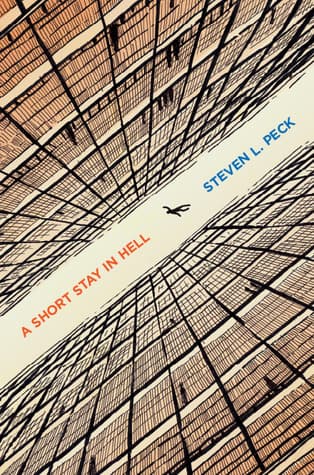
Soren Johansson, a devout Mormon, geologist, and family man, dies peacefully in his sleep. He expects to awaken in the Celestial Kingdom with his beloved wife, Emily, and their children. Instead, he finds himself in a massive, seemingly infinite library filled with books, but no people he recognizes. A voice, later identified as a 'Demon of the Lord,' tells him he is in Hell, a place not of eternal torment, but of endless, futile searching. This God is not the one he worshipped, and His judgment is based on finding the single book that perfectly describes Soren's life among an infinite number of variations. Soren is shocked and disoriented by this alien eternity, a stark contrast to his cherished beliefs.
The Infinite Library and the Task
The 'Demon' explains that Soren's Hell is a library containing every book ever written, every book that could be written, and every book that never will be written, including infinite variations of his own life story. To escape to a 'higher' heaven, Soren must find the one book that is a perfect, word-for-word account of his earthly existence. The Demon emphasizes how nearly impossible this task is, given the library's size and the subtle variations between books. Soren is given a small, Spartan room within the library and begins his search, initially overwhelmed by the sheer scale and the realization that his deeply held faith was entirely wrong.
Initial Hope and Crushing Realization
Initially, Soren approaches the task with the same diligent, organized mind he applied to geology. He tries to devise systems for searching, categorizing, and eliminating books. He reads countless volumes, finding books that are almost his life story, differing by a single word or a minor event. The endless variations, the subtle shifts in narrative, and the sheer volume of books quickly erode his hope. He realizes the task is not merely difficult, but mathematically impossible. The weight of infinite possibilities and the absence of his family begin to take a toll on his mental and emotional state, pushing him towards despair.
Encounters and Loss of Identity
Over vast stretches of time, Soren encounters other 'searchers' in the library, individuals from different cultures and belief systems, all tasked with the same impossible quest. He observes their varying coping mechanisms: some meticulously catalog, others wander aimlessly, some descend into madness, tearing pages or creating their own nonsensical 'books.' Soren witnesses the gradual decay of their identities, as memories blur and personalities fragment under the relentless pressure of eternity. He sees the physical deterioration of some, their bodies becoming frail and their minds lost, a grim foreshadowing of his own potential fate.
The Passage of Eons
Time becomes meaningless in the library. Soren experiences epochs that dwarf the entire history of the universe. He reads billions upon billions of books, his memories of his earthly life, his wife Emily, and his children slowly fading into a generalized ache. The details become hazy, the faces less distinct. He struggles to recall specific events, making his search even more impossible as he can no longer definitively identify his own story. The vastness of eternity and the endless repetition of similar but incorrect narratives warp his perception of reality, blurring the lines between what was real and what he has merely read.
The Library's Evolution and the Scavengers
As eons pass, the library's structure and inhabitants evolve. The 'scavengers,' beings who feed on the decaying books and knowledge, emerge from the dust and forgotten corners. These creatures are a new threat, embodying the library's indifference and its capacity for decay. Soren learns to navigate these new dangers; his existence is reduced to a primal struggle for survival and the continuation of his futile search. The library is not static; it is a changing entity that mirrors the slow, grinding destruction of the searchers' hopes and sanity.
The Last Remnants of Hope
Despite the unimaginable length of his stay and the erosion of his memories, a deep-seated, almost instinctual desire to reunite with Emily and his children persists. This faint glimmer of hope, however irrational, is the only thing that prevents him from succumbing entirely to the library's madness or simply giving up. He occasionally finds books that evoke strong emotional responses, brief echoes of his past life, which rekindle his resolve, however fleetingly. He understands that finding 'his' book is not just about escape, but about validating the life he lived and the love he shared.
The Ultimate Sacrifice of Memory
Soren eventually realizes his own memories, now corrupted and incomplete, are hindering his search. To truly identify 'his' book, he needs an objective, perfect record. He considers finding a book that meticulously details the life of someone else, then using that as a template to refine his search for his own. This thought is horrifying, as it implies a further detachment from his own past. He grapples with the idea of intentionally forgetting or discarding what remains of his personal history to become a more efficient, less human, searcher.
The Decision and the Endless Task
After billions of years, Soren makes a final, heartbreaking decision. He acknowledges the impossibility of his task as a single individual. He starts a new project: meticulously copying books that are 'almost' his life, hoping that future searchers might benefit from his work, or perhaps that in the act of copying, he might stumble upon his own story. This act is both a surrender and a defiant assertion of meaning in a meaningless existence. He accepts that his eternity is likely within the library, but he chooses to spend it in a way that creates a legacy, however small, for the infinite future. He becomes a part of the library's fabric, a living archive.
A Glimmer of Connection
As Soren continues his copying, he occasionally finds books that resonate deeply, not because they are *his* life, but because they capture the essence of love, family, and human experience. He finds a specific book that, while not his own, contains a passage that perfectly articulates the love he felt for Emily. This moment provides a bittersweet sense of connection and validation. It suggests that even in a hell of infinite variations and forgotten identities, fundamental human experiences, like love, can transcend individual stories and persist as universal truths, offering a small measure of comfort in his eternal, solitary quest.
Principal Figures
Soren Johansson
Protagonist
A devout Mormon geologist thrust into an absurd and eternal afterlife.
Soren is an ordinary, principled man who lived a life grounded in faith, family, and scientific inquiry. As a geologist, he values order, logic, and systematic approaches, which he initially applies to his impossible task in the library. His deep love for his wife, Emily, and his children is his primary motivation, even as memories fade. He is initially optimistic and resilient, but the sheer scale of eternity and the futility of his quest slowly erode his sanity, identity, and hope. He represents humanity's struggle against overwhelming cosmic indifference.
Relationships: Emily Johansson (Beloved wife, his primary motivation for finding his book and escaping Hell.); His Children (Loved ones, part of the family he longs to reunite with.); Demon of the Lord (The indifferent entity who explains the rules of Hell to Soren.)
Emily Johansson
Supporting/Mentioned
Soren's beloved wife, representing his lost earthly life and his ultimate goal.
Emily is Soren's wife, though she only appears in his memories and is never directly present in the afterlife. She represents everything Soren has lost and everything he strives to regain. Her memory is the anchor that initially keeps him sane and motivates his search. As eons pass, her image and the specific memories associated with her blur, making his quest even more agonizing. She symbolizes the profound human need for connection and the enduring power of love, even in the face of infinite separation.
Relationships: Soren Johansson (Her husband, who is desperately searching for her in the afterlife.)
The Demon of the Lord
Supporting
The indifferent, bureaucratic entity who explains the rules of Hell to Soren.
This entity is not a traditional fiery demon but rather a calm, articulate, and utterly indifferent administrator of the afterlife. It serves a God whose nature is entirely alien to Soren's understanding. The Demon explains the library's purpose and Soren's task with detached clarity, offering no comfort or sympathy. It embodies the cold, logical, and ultimately absurd nature of this particular Hell, highlighting the cosmic indifference of the universe and the arbitrary nature of divine judgment outside of human comprehension.
Relationships: Soren Johansson (The 'guide' who informs Soren of his eternal task.)
Other Searchers
Supporting
Fellow inhabitants of the library, each on the same impossible quest.
These are the countless other souls trapped in the library, all tasked with finding their own life stories. They come from diverse earthly backgrounds and belief systems. Soren observes their various coping mechanisms, their descent into madness, and their physical and mental deterioration over eons. They serve as a mirror for Soren's own potential future and illustrate the universal impact of this particular Hell. Their presence emphasizes the shared, yet ultimately solitary, nature of their eternal punishment and the dehumanizing effects of infinite, futile labor.
Relationships: Soren Johansson (Fellow sufferers, occasionally interacting but mostly isolated.)
The Scavengers
Mentioned
Creatures that emerge from the library's decay, symbolizing its indifferent, evolving nature.
These are not human or demonic, but rather creatures that evolve from the dust and decaying books of the library itself. They represent the library's organic, yet unfeeling, nature and its capacity for creating new forms of existence out of its own endlessness. They are a physical manifestation of the library's indifference to the human plight, posing a minor, yet persistent, threat to the searchers. Their presence signifies the ultimate dehumanization of the afterlife, where even inanimate objects can develop a form of predatory life.
Relationships: Soren Johansson (A minor, indifferent threat in the library.)
Themes & Insights
The Absurdity of Existence and Meaninglessness
The novel explores the philosophical concept of absurdity, where human yearning for meaning clashes with a silent, indifferent universe. Soren's task in the infinite library—to find a single, perfect book among an endless sea of variations—is meaningless. His deeply held religious beliefs are rendered irrelevant by a new, arbitrary God. The passage of eons, the erosion of memory, and the inevitable descent into madness for most searchers highlight the futility of their struggle, forcing Soren to confront a universe devoid of inherent purpose or justice, where even 'Hell' is a bureaucratic, logical, yet cruel, exercise.
“Welcome to Hell. Not the Hell you imagined, perhaps, but a Hell nevertheless.”
Identity and Memory
A central theme is the fragility of human identity when stripped of context, relationships, and the passage of meaningful time. Soren's memories of Emily and his children, initially sharp, slowly fade into a generalized longing. The details of his earthly life blur, making his task impossible and his sense of self increasingly tenuous. The library, with its infinite variations of lives, actively works to dismantle individual identity, suggesting that without a fixed narrative and the preservation of personal history, the self dissolves. Soren's struggle to recall specific events shows how memory is crucial for maintaining identity and purpose.
“How could he find his book when he could no longer remember the details of his life?”
Faith and Disillusionment
Soren's journey is a deconstruction of his lifelong Mormon faith. He expected a specific, loving afterlife with his family, only to find himself in a cold, alien 'Hell' ruled by an unknown God. This stark contrast forces him to confront the complete irrelevance of his earthly beliefs. The novel questions the nature of divine justice and mercy when confronted with an arbitrary, bureaucratic eternity. Soren's initial shock and subsequent despair illustrate the disillusionment that comes from having one's most fundamental assumptions about the universe utterly shattered, leaving him to build a new understanding of existence without the comfort of his old faith.
“His God was not this God. His heaven was not this heaven.”
The Nature of Eternity and Time
Peck explores eternity not as a static state, but as an active, destructive force. Time in the library is measured in eons, far beyond human comprehension, leading to the erosion of memory, sanity, and even physical form. The library itself evolves, showing that even infinite systems change and decay. The narrative forces the reader to grapple with the philosophical implications of truly endless time, where all human endeavors, including the search for meaning, eventually become meaningless. Eternity here is a punishment not of active torment, but of relentless, grinding, impossible duration.
“There was no time in Hell. Only a vast, endless now that stretched into an infinite future.”
Love and Connection in Isolation
Despite the overwhelming isolation and the erosion of his memories, Soren's love for Emily and his children remains a persistent, if faded, anchor. This enduring emotional connection, even when the specifics are lost, highlights the human need for connection and the power of love to transcend even the most absurd and dehumanizing circumstances. His final act of copying books, particularly those that evoke universal truths about love, suggests that even in a solitary eternity, the shared experience of human affection can offer solace and meaning, a fragile defiance against cosmic indifference.
“Sometimes, in the quiet between books, he would hear Emily’s voice, a whisper from a life long gone.”
Plot Devices & Literary Techniques
The Infinite Library
The central setting and primary antagonist, embodying cosmic indifference and existential despair.
The library is not merely a setting but a character and a powerful plot device. It is a manifestation of Jorge Luis Borges's 'Library of Babel,' containing every conceivable book, including infinite variations of Soren's life. This device creates the central conflict: an impossible task in an infinite space. Its vastness, the endless variations, and its indifferent nature serve to strip Soren of hope, memory, and identity, forcing him to confront the absurdity of his existence. It functions as a literal and metaphorical representation of the universe's indifference and the human struggle to find meaning within it.
Erosion of Memory
A psychological device that heightens the protagonist's despair and makes his task impossible.
The gradual fading of Soren's memories of his earthly life, particularly of his wife and children, is a crucial psychological plot device. It directly undermines his ability to complete his task (finding 'his' book) and intensifies his suffering. This erosion highlights the fragility of human identity when confronted with infinite time and the absence of familiar anchors. It transforms his longing from specific memories into a generalized ache, making his quest not just physically impossible, but mentally and emotionally devastating, as the very thing he seeks to preserve (his past) is slowly taken from him.
The Indifferent Administrator/Demon
A narrative voice that establishes the rules of the afterlife with detached, bureaucratic logic.
The 'Demon of the Lord' serves as a crucial expository device. Unlike traditional demons, this entity is not malevolent but merely a detached, logical administrator. Its calm explanation of Soren's impossible task and the nature of this alien Hell immediately establishes the story's tone of cosmic indifference and bureaucratic absurdity. This voice reinforces that Soren's suffering is not a personal vendetta but a consequence of a vastly different, uncaring divine system, making his plight even more isolating and his former faith entirely irrelevant. It sets the stage for the novel's philosophical exploration of meaninglessness.
The Passage of Eons (Deep Time)
A narrative technique that emphasizes the crushing weight of eternity and the insignificance of human life.
The novel utilizes the concept of 'deep time' to convey the true horror of Soren's eternity. Instead of days or years, the narrative speaks of billions of years, epochs, and the slow evolution of the library itself. This device stretches human comprehension of time to its breaking point, showing how even the strongest human spirit and memory are utterly overwhelmed. It underscores the ultimate insignificance of an individual life in the face of true eternity and allows the story to depict the profound psychological and physical transformations that occur over such incomprehensible durations, leading to the loss of identity and hope.
A Short Stay in Hell Quotes
“Hell is repetition. Hell is the same thing over and over again, until you can't stand it anymore, and then you do it again.”
“The Library contains all possible books of a certain length. Every possible combination of letters and spaces. Every truth, every lie, every story ever told or never told.”
“You search for meaning in a place designed to have none. That's the real torture.”
“Time doesn't work here like it does back home. A day can feel like a century, and a century can pass in the blink of an eye.”
“We are all just stories in the end. Some are longer, some are shorter, but they all end the same way.”
“The only thing worse than finding nothing is finding something that makes no sense.”
“Hope is the cruelest invention of all. It keeps you going when you should have given up long ago.”
“In an infinite library, the chance of finding your own life's story is zero. But not zero enough to stop looking.”
“We build our own hells out of the things we love the most.”
“There are no new conversations here. Every word has been said before, in every possible order.”
“You don't realize how precious a single coherent sentence is until you've read a million pages of gibberish.”
“The punishment isn't the search; it's the realization that the search is all there is.”
“Even in hell, we find ways to love. Or maybe especially in hell.”
“You can't go mad here. Madness would be a relief, but the Library won't allow it.”
Quiz
10 questions on the plot and the characters. Each answer comes with a short explanation.
Question 1
What is the primary setting of Hell in 'A Short Stay in Hell'?
- A vast desert with shifting sands
- An infinite library containing all possible books
- A labyrinthine city of eternal darkness
- A replica of Soren's hometown that repeats endlessly
Show answer
B. An infinite library containing all possible books In the novella, Hell is depicted as an infinite library containing every possible 410-page book, where Soren must search for the one book that tells his life story to escape. This setting reflects themes of infinity, meaning, and existential search.
Question 2
What is Soren Johansson's profession before he dies?
- A librarian
- A geologist
- A philosopher
- A Mormon missionary
Show answer
B. A geologist Soren is described as an ordinary family man and geologist, which grounds his character in a scientific, practical worldview that contrasts with the surreal, infinite nature of the Hell he encounters.
Question 3
What must Soren find in the library to escape Hell?
- A book containing the secret to immortality
- A book that tells the story of his life
- A book with instructions from God
- A book that reveals the meaning of the universe
Show answer
B. A book that tells the story of his life Soren's task is to locate the single book among infinite possibilities that accurately narrates his life story. This premise drives the plot and explores themes of identity, chance, and the search for meaning in an uncaring universe.
Question 4
Which of the following best describes a key theme of the novella?
- The triumph of faith over doubt in the afterlife
- The existential horror of infinity and meaningless search
- The importance of family reunions after death
- The scientific explanation of supernatural phenomena
Show answer
B. The existential horror of infinity and meaningless search The book subverts traditional afterlife beliefs by portraying Hell as an infinite library where Soren's search is mathematically near-impossible, highlighting themes of existential dread, the scale of eternity, and the collapse of comforting beliefs.
Question 5
How does Soren's Mormon background influence his experience in Hell?
- It gives him special privileges to access restricted library sections
- It provides him with a community of fellow Mormons to search with
- It shapes his initial expectations of an orderly, purposeful afterlife that are brutally contradicted
- It allows him to pray for divine intervention to find his book faster
Show answer
C. It shapes his initial expectations of an orderly, purposeful afterlife that are brutally contradicted As a Mormon, Soren believed in a structured, familial afterlife, but Hell's infinite, indifferent library shatters this, forcing him to grapple with a reality where his beliefs are irrelevant. This contrast deepens the existential impact.
Question 6
What mathematical concept is central to understanding the scale of Soren's task in the library?
- The Fibonacci sequence
- Combinatorics and the number of possible books
- The Pythagorean theorem
- Calculus and rates of change
Show answer
B. Combinatorics and the number of possible books The library contains all possible 410-page books, with a finite set of characters per page. The number of combinations is astronomically large (effectively infinite for human purposes), making Soren's search practically hopeless, emphasizing the novella's themes of infinity and futility.
Question 7
Why is the library considered a particularly cruel form of Hell in the story?
- Because it is physically painful and torturous
- Because it offers false hope through an endless, meaningless task
- Because it isolates Soren completely from other souls
- Because it constantly changes its rules to confuse inhabitants
Show answer
B. Because it offers false hope through an endless, meaningless task The cruelty lies in the psychological torment: the task seems achievable in theory but is effectively impossible due to scale, trapping Soren in an eternal search that mocks his desire for meaning and escape, reflecting existential and philosophical horrors.
Question 8
What does Soren realize about the nature of the God who created this Hell?
- It is the Mormon God he worshiped in life, testing his faith
- It is a malevolent being that enjoys inflicting suffering
- It is an indifferent, possibly non-human entity with incomprehensible motives
- It is a fictional construct imagined by the library's inhabitants
Show answer
C. It is an indifferent, possibly non-human entity with incomprehensible motives Soren learns that this God is unlike any he knew, with motives and nature beyond human understanding. This realization underscores the novella's subversion of religious expectations and its exploration of a universe indifferent to human concerns.
Question 9
How does the novella use the concept of 'eternity' to challenge traditional afterlife narratives?
- By showing eternity as a joyful reunion that validates religious beliefs
- By depicting eternity as a finite period that eventually ends
- By portraying eternity as an endless, monotonous search that renders life's meaning absurd
- By suggesting eternity is an illusion created by the library's architecture
Show answer
C. By portraying eternity as an endless, monotonous search that renders life's meaning absurd Instead of a purposeful heaven or hell, eternity here is a mathematically infinite library where Soren's task is futile, challenging comforting ideas of an afterlife with order, justice, or meaning, and evoking existential philosophy about the absurd.
Question 10
In practical terms, why is Soren's search for his life story book statistically impossible?
- Because the library randomly destroys books every day
- Because the number of possible books is so vast that finding the correct one in a finite time is negligible
- Because he is not allowed to use any search tools or assistance
- Because the books are written in a language he cannot read
Show answer
B. Because the number of possible books is so vast that finding the correct one in a finite time is negligible Given the combinatorial explosion of possible 410-page books (with a limited character set), the odds of randomly finding Soren's specific book are astronomically small, effectively zero. This mathematical reality highlights the hopelessness of his task and the story's existential critique.
A Short Stay in Hell FAQ
What is 'A Short Stay in Hell' about?
The novella follows Soren Johansson, a Mormon geologist who dies and finds himself in a Hell unlike any he imagined: an infinite library where he must locate the single book containing his life story to escape. This afterlife is ruled by a mysterious deity called Yod, and Soren navigates this vast, seemingly endless space while grappling with his shattered beliefs about eternity.
Why should I read 'A Short Stay in Hell'?
It offers a profound exploration of existential themes like infinity, purpose, and the nature of belief through a unique blend of fantasy, philosophy, and science fiction. Peck's concise yet haunting narrative challenges readers to consider what eternity might truly mean, making it a thought-provoking read for fans of speculative fiction and philosophical inquiry.
What is the background/setting of 'A Short Stay in Hell'?
The story is set in an afterlife realm that resembles the Library of Babel—an infinite library containing every possible book of a certain length. Soren awakens here after death, discovering that this Hell is governed by Yod, a god unfamiliar to him, and that time stretches on for eons as he searches for his life's book among the endless shelves.
What are the most memorable quotes?
Key quotes include Soren's realization, 'I had been wrong about everything,' reflecting his shattered faith, and descriptions of the library's infinity, such as 'The library went on forever in every direction.' These lines encapsulate the novella's themes of existential dread and the vastness of eternity.
What writing style does the author use?
Peck employs a sparse, direct prose style that mirrors the bleak, infinite setting of the library. The narrative is introspective, focusing on Soren's internal monologue as he grapples with philosophical questions, blending elements of fantasy and science fiction to create a haunting, minimalist atmosphere.
What minor details add significant meaning?
Details like the library's books being of a fixed length and containing every possible combination of letters highlight the mathematical nature of infinity, emphasizing the futility of Soren's search. The occasional mention of other souls, like the woman he briefly connects with, underscores the isolation and randomness of this Hell.
What are some subtle foreshadowing moments?
Early on, Soren's confidence in his Mormon beliefs about an orderly afterlife foreshadows their complete inversion in Hell. The infinite scale of the library, described from the start, hints at the impossibility of his task, setting up the novella's exploration of eternal struggle without resolution.
What unexpected character connections exist?
Soren forms a fleeting bond with a woman in the library, representing one of the few human connections in this desolate place. This relationship briefly alleviates his loneliness but ultimately dissolves, mirroring the transient nature of connections in an infinite, impersonal universe.
What are unspoken character motivations?
Soren is driven by a deep-seated need to validate his former beliefs and find meaning in his search, even as he outwardly accepts the futility. His persistence in looking for his book stems from an unspoken hope for redemption or understanding, masking a fear of eternal insignificance.
What psychological complexities do characters exhibit?
Soren undergoes a profound psychological shift from faithful certainty to existential despair, grappling with cognitive dissonance as his Mormon worldview collapses. He exhibits resilience and adaptability, but also moments of nihilism, reflecting the human struggle to maintain sanity in the face of infinite meaninglessness.
What are the major emotional turning points?
Key emotional turns include Soren's initial shock upon realizing his beliefs were wrong, his brief connection with the woman offering temporary solace, and his eventual acceptance that he may never find his book. The climax involves him contemplating an eternity of search, leading to a resigned but poignant emotional resolution.
How do relationship dynamics evolve?
Soren's relationship with the woman evolves from casual encounter to a deep, albeit temporary, emotional bond, providing a contrast to the library's isolation. However, it ultimately fades as they drift apart, symbolizing how even meaningful connections are ephemeral in an infinite setting, leaving Soren more alone than before.
Which parts remain ambiguous or open-ended?
The nature of Yod and the purpose of this Hell are left ambiguous—it's unclear if it's a test, punishment, or mere cosmic accident. The ending doesn't confirm if Soren ever finds his book, leaving his fate and the ultimate meaning of his journey open to interpretation.
What are controversial scenes or decisions?
Some readers might find the depiction of Hell as an infinite library controversial for challenging traditional religious notions of afterlife. Soren's abandonment of his Mormon faith and the story's bleak outlook on eternity could spark debate about the portrayal of belief and the possibility of redemption.
'A Short Stay in Hell' ending explained: how it ends & what it means
The novella ends with Soren continuing his search indefinitely, having accepted that he may never find his book. This suggests that Hell is not about punishment but the endless, meaningless pursuit of purpose in an infinite universe, reflecting themes of existential absurdity and the human condition.
About the author

Steven L. Peck is a fiction author known for his thought-provoking narratives. His notable work, A Short Stay in Hell, explores themes of existence and the afterlife. Peck's writing often blends elements of fantasy and philosophical inquiry.
Similar books
- The Library of Babel
Jorge Luis Borges
4.4 (6k) average on GoodreadsFantasyExplores themes of infinite libraries, the search for meaning in vastness, and the nature of knowledge.
- Inferno
Dante Alighieri
3.9 (4k) average on GoodreadsThrillerWhile both depict a structured afterlife and specific forms of torment, Peck's hell is intellectual and psychological, focusing on memory and identity, rather than Dante's physical and moral torments. Peck's suffering is also more self-inflicted through infinite self-reflection, contrasting with Dante's externalized punishments.
- The Great Divorce
C.S. Lewis
4.3 (109k) average on GoodreadsFantasyLewis explores the permeable boundary between heaven and hell, emphasizing choice and the possibility of conversion. Peck's narrative, in contrast, presents a hell from which there is no escape or redemption once damnation is established, focusing solely on the experience of eternal, inescapable suffering.
- Harry Potter and the Sorcerer's Stone
J.K. Rowling
4.5 (7M) average on GoodreadsFantasyRescued from a miserable life under the stairs, an orphaned boy discovers he's a wizard destined for a magical school, where he uncovers a dangerous secret tied to the dark wizard who murdered his parents.
- The Hunger Games
Suzanne Collins
4.3 (6.4M) average on GoodreadsFantasyIn a future where children fight to the death on live television, Katniss Everdeen volunteers for the arena, turning a death sentence into a fight for survival and a spark of rebellion.
- 1984
George Orwell
4.2 (3.1M) average on GoodreadsPoliticsIn a future where surveillance and thought control are absolute, a man's search for truth clashes with the Party, showing that hope can be a form of rebellion.




Enjoyed the summary?
A summary gives you the shape of the book. The book itself has the detail, the examples and the voice.
Find A Short Stay in Hell on AmazonAs an Amazon Associate, BookBrief earns from qualifying purchases. How we're funded