

Synopsis
Covers the whole plot, including the ending.
- Difficulty
- Medium
- Pacing
- Moderate
- Mood
- Dark, Oppressive, Thought-provoking, Suspenseful
- Read it if
- You are interested in political philosophy, dystopian futures, the dangers of totalitarianism, or psychological thrillers.
- Skip it if
- You prefer light-hearted stories, happy endings, or are sensitive to themes of torture and psychological manipulation.
1984 Plot Summary
Covers the whole plot, including the ending.
Winston's Rebellion Begins with a Diary
In 1984 London, Oceania, Winston Smith, a low-ranking Outer Party member, lives under the Party and Big Brother's oppressive gaze. Telescreens in every room monitor citizens' every move, and the Thought Police stop any deviation from Party ideology. Despite constant surveillance and the Party's manipulation of history, Winston has rebellious thoughts. He buys a forbidden diary from a junk shop in the prole district, an act of defiance against the Party's control over personal thought. He begins writing in it, addressing it to the future, expressing his disillusionment and questioning the Party's power. This secret act starts his conscious rebellion against the totalitarian regime.
A Glimpse of the Past and a Mysterious Woman
Winston continues his secret diary entries, thinking about the Party's alteration of historical records and his vague memories of a time before the Revolution. He visits the prole district again, seeking a connection to the past, and talks to an old prole man in a pub, hoping to learn about life before the Party. However, the old man's memories are fragmented and ordinary, offering no clear picture of the past. Meanwhile, Winston notices Julia, a dark-haired woman from the Fiction Department, who seems to be watching him. He first thinks she is a Thought Police agent, fearing exposure and punishment for his rebellious thoughts and diary.
A Secret Note and a Forbidden Affair
One day, in the hallway at work, Julia deliberately falls and, as Winston helps her up, slips him a small folded note. Winston is scared to open it, fearing it contains an accusation from the Thought Police. However, when he reads it in secret, he finds it says simply: 'I love you.' This unexpected message changes his ideas about her and gives him hope. They start a secret affair, meeting in secluded spots in the countryside and eventually in a rented room above Mr. Charrington's junk shop in the prole district. Their physical intimacy is a direct rebellion against the Party's control over human relationships and its efforts to suppress sexual desire for anything other than having children.
O'Brien's Invitation and the Brotherhood
Winston has long been interested in O'Brien, an Inner Party member he believes shares his rebellious feelings. One day, O'Brien approaches Winston in the Ministry of Truth, seemingly by chance, and mentions Syme's work on the new edition of the Newspeak dictionary, hinting at a shared intellectual understanding. Later, O'Brien invites Winston to his luxurious apartment, supposedly to lend him a copy of the new dictionary. Winston, with Julia, attends, and O'Brien reveals himself as a member of the Brotherhood, a resistance movement against the Party. Winston and Julia promise their loyalty, willing to commit any act of sabotage or murder for the cause, believing they are joining a genuine rebellion.
The Book of Emmanuel Goldstein
O'Brien gives Winston a copy of 'The Theory and Practice of Oligarchical Collectivism' by Emmanuel Goldstein, the Party's supposed enemy. Winston hides the book and begins reading it during Hate Week, a time of intense patriotic feeling. The book explains Oceania's totalitarian society, describing perpetual war, the Party's use of doublethink, and the purpose of Newspeak. It reveals that the Party holds power not for society's good, but only for power itself, and that the 'Brotherhood' is likely just another tool of control. The book's revelations deepen Winston's understanding of his world and the Party's methods.
Capture in the Prole Room
Winston and Julia continue to meet in their rented room above Mr. Charrington's shop, which they consider their safe place from the Party's eye. They believe they are safe there, thinking the proles are not watched as closely. One evening, as they are together in the room, the Thought Police ambush them. The telescreen, previously hidden behind a picture on the wall, is revealed, confirming their betrayal. Mr. Charrington, whom they had trusted, reveals himself to be an agent of the Thought Police. Winston and Julia are arrested and separated, their rebellion crushed, their sanctuary violated.
Interrogation at the Ministry of Love
Winston is taken to the Ministry of Love, the Party's center for re-education and torture. Various Party agents subject him to physical and psychological torment, including fellow prisoners who betray each other. He sees other arrested figures, including Parsons and Ampleforth, who confess to thoughtcrime. Eventually, O'Brien enters, revealing that he was never part of the Brotherhood but a dedicated Party loyalist who had been watching Winston for seven years. O'Brien takes charge of Winston's 're-education,' explaining the Party's philosophy of power for power's sake and systematically breaking Winston's independent thoughts and memories through extreme pain and manipulation.
Room 101 and the Betrayal of Love
Despite severe torture, Winston holds onto his love for Julia as his last act of defiance, refusing to betray her. O'Brien, knowing Winston's deepest fear, takes him to Room 101, the final stage of re-education. There, Winston faces a cage with two large, starving rats, placed in a mask designed to be fitted over his face. The rats are ready to eat his face, a terror that overwhelms him. In a desperate act of self-preservation, Winston screams, 'Do it to Julia! Do it to Julia! Not me!' This betrayal of his love for Julia shows the Party's complete victory over his spirit and individuality.
Re-education and Acceptance
After Room 101, Winston is released, physically and mentally shattered. His spirit is broken, and his independent thought is gone. He meets Julia briefly in a park; both admit to having betrayed each other, and their former love is gone, replaced by indifference and defeat. Winston spends his days in the Chestnut Tree Cafe, a place where rehabilitated thought criminals go, drinking Victory Gin and playing chess. His memories are hazy, and his mind is filled with Party slogans. He has been completely re-educated. The final scene shows Winston, sitting in the cafe, watching a news report about Oceania's victory in battle, and realizing that he truly loves Big Brother.
1984 Characters
Winston Smith
Protagonist
A disillusioned Outer Party member who yearns for truth and freedom.
Winston is a 39-year-old employee at the Ministry of Truth, responsible for rewriting historical documents to align with Party propaganda. He is frail, suffers from a varicose ulcer, and is deeply alienated by the totalitarian society of Oceania. Despite the constant surveillance, he secretly rebels by keeping a diary, questioning the Party's narrative, and seeking genuine human connection. His primary motivation is a desire to understand the past and to assert his individual identity against the Party's collective will. He is intelligent and reflective but ultimately lacks the physical and mental fortitude to withstand the Party's brutal re-education.
Relationships: Julia (lover, fellow rebel (initially), ultimately betrayed); O'Brien (perceived ally, mentor, ultimately torturer and indoctrinator); Big Brother (feared and hated dictator, ultimately loved)
Julia
Supporting
Winston's lover, a pragmatic rebel who seeks personal pleasure.
Julia is a young, dark-haired woman who works in the Fiction Department at the Ministry of Truth. Unlike Winston, her rebellion is purely personal and pragmatic, focused on sensual pleasure and evading Party control for her own gratification rather than ideological truth. She is outwardly enthusiastic about the Party, participating in youth leagues and denouncing thought criminals, but secretly engages in numerous illicit affairs. She is resourceful, practical, and unafraid of breaking rules as long as she can get away with it. Her focus is on the 'here and now' rather than changing the system.
Relationships: Winston Smith (lover, fellow rebel (initially), ultimately betrayed); Big Brother (feared and hated dictator)
O'Brien
Antagonist
An Inner Party member, Winston's torturer and ideological re-educator.
O'Brien is a high-ranking member of the Inner Party, a powerful and intelligent man who Winston initially believes to be a fellow rebel in the Brotherhood. He possesses a commanding presence and an intellectual air. However, O'Brien is, in fact, a dedicated Party loyalist and a master manipulator who has been observing Winston for years. He is the architect of Winston's torture and re-education in the Ministry of Love, systematically breaking Winston's spirit and forcing him to accept Party ideology. O'Brien represents the Party's absolute power, its intellectual justification for totalitarianism, and its chilling capacity for psychological control.
Relationships: Winston Smith (observer, manipulator, torturer, ideological re-educator); Big Brother (loyal servant)
Big Brother
Antagonist
The enigmatic, all-seeing leader of the Party and Oceania.
Big Brother is the supreme leader of Oceania and the Party, constantly depicted on posters and telescreens as a black-mustachio'd, hypnotic figure. He is the embodiment of the Party's power and its cult of personality. Whether Big Brother is a real person or a symbolic construct is never explicitly stated, but his image and presence are ubiquitous, serving as a constant reminder of surveillance, control, and the Party's absolute authority. He is the ultimate object of fear, love, and obedience for the citizens of Oceania, and his existence is crucial to maintaining the Party's totalitarian grip.
Relationships: Winston Smith (object of hatred, then ultimate love); Julia (object of hatred); O'Brien (leader and object of loyalty)
Mr. Charrington
Supporting
An old junk shop owner who is secretly a Thought Police agent.
Mr. Charrington is an old, seemingly kindly prole who owns a junk shop in the prole district where Winston buys his diary and rents a room for his affair with Julia. He appears to be a sympathetic figure, knowledgeable about the past and seemingly supportive of Winston's interest in history. He rents Winston the room, making it appear to be a safe haven from the Party's surveillance. However, Mr. Charrington is, in fact, a member of the Thought Police, meticulously observing Winston. His betrayal is a devastating blow to Winston, highlighting the pervasive nature of the Party's control and the impossibility of true trust.
Relationships: Winston Smith (betrayer and surveillor); Julia (betrayer and surveillor)
Syme
Supporting
A brilliant Newspeak lexicographer who is 'vaporized' for being too intelligent.
Syme is an intelligent and enthusiastic philologist who works with Winston at the Ministry of Truth, specializing in the Eleventh Edition of the Newspeak Dictionary. He is passionately devoted to the Party's goal of reducing language to eliminate thoughtcrime, believing that by destroying words, they destroy the capacity for rebellious thought. Winston recognizes Syme's intelligence and critical thinking abilities, which make him a potential threat to the Party despite his loyalty. True to Winston's premonition, Syme is eventually 'vaporized'—disappeared and unmentioned—because his intelligence makes him too dangerous, even to the Party he serves.
Relationships: Winston Smith (colleague, intellectual contrast)
Parsons
Supporting
Winston's dull, orthodox neighbor who is betrayed by his own children.
Parsons is Winston's neighbor at Victory Mansions and a fellow employee at the Ministry of Truth. He is a fat, stupid, and utterly orthodox Party member, embodying the ideal citizen: mindlessly loyal, physically active in Party activities, and completely devoid of independent thought. He is proud of his children, who are members of the Spies and Junior Anti-Sex League and fanatically devoted to the Party. Ironicaly, it is his own children who denounce him to the Thought Police for muttering 'Down with Big Brother' in his sleep, leading to his arrest and re-education in the Ministry of Love. He represents the Party's success in indoctrinating even the most mundane citizens and turning family members against each other.
Relationships: Winston Smith (neighbor, colleague); His Children (betrayers)
Emmanuel Goldstein
Mentioned
The mythical leader of the Brotherhood and archenemy of the Party.
Emmanuel Goldstein is the supposed leader of the Brotherhood, the mythical anti-Party resistance movement, and the most hated figure in Oceania. He is depicted as a Jewish-looking man with a reedy voice, constantly denounced during the Two Minutes Hate and portrayed as a traitor and renegade. He is the author of 'The Theory and Practice of Oligarchical Collectivism,' a forbidden book that Winston reads. However, it is strongly implied by O'Brien that Goldstein and the Brotherhood are either entirely fabricated by the Party or are controlled by it, serving as a convenient scapegoat and a tool to identify potential dissidents. He represents the external enemy necessary for the Party to maintain internal control.
Relationships: Big Brother (arch-enemy (publicly), likely a Party construct)
1984 Themes
Totalitarianism and State Control
The novel shows the absolute power of a totalitarian state, the Party, over every part of its citizens' lives. This includes constant surveillance through telescreens, control over information and history (Ministry of Truth), language (Newspeak), thought (Thought Police), and even personal relationships and sexual desire. The Party's goal is not just to rule, but to control reality itself, showing how a government can achieve total dominance through fear, propaganda, and psychological manipulation. Winston's rebellion shows how effective this system is.
“BIG BROTHER IS WATCHING YOU.”
Psychological Manipulation and Mind Control
Orwell explores the Party's methods of manipulating the human mind. Doublethink, the ability to hold two contradictory beliefs and accept both, is central to this. The Party rewrites history, controls memory, and uses Newspeak to remove words linked to rebellious thought, limiting the capacity for dissent. The Ministry of Love's re-education process, ending in Room 101, shows the ultimate psychological breaking of an individual, forcing them to betray their deepest loyalties and 'love' the Party. This shows the power of a regime that controls actions, thoughts, and emotions.
“Who controls the past controls the future: who controls the present controls the past.”
Individuality vs. Collective Identity
Winston's struggle is about asserting his individuality in a society that demands conformity and collective identity. His secret diary, his affair with Julia, and his desire to remember the past are all acts of personal defiance against a Party that wants to erase individual thought, emotion, and history. The Party wants to create a uniform population, loyal only to Big Brother, where personal desires and unique perspectives are considered thoughtcrime. Winston's ultimate defeat means the tragic loss of individuality when faced with an overwhelming, oppressive collective.
“If you want to keep a secret, you must also hide it from yourself.”
Plot Devices & Literary Techniques
Telescreens
Omnipresent devices for surveillance and propaganda.
Telescreens are two-way television screens found in every public and private space in Oceania, except for some prole homes. They simultaneously broadcast Party propaganda and news while constantly monitoring citizens' every move, sound, and even facial expressions. They serve as the primary tool for the Party's pervasive surveillance, instilling constant fear and self-censorship among the populace. The telescreen symbolizes the absolute lack of privacy and the inescapable gaze of the totalitarian state, effectively eliminating any space for independent thought or action.
Newspeak
A controlled language designed to eliminate rebellious thought.
Newspeak is the official language of Oceania, systematically engineered by the Party to narrow the range of thought. Its vocabulary is drastically reduced, and words with undesirable connotations or the potential for independent thought are eliminated. The goal is to make thoughtcrime literally impossible by removing the words needed to express dissenting ideas. Syme, the Newspeak lexicographer, explains that by destroying words, they destroy concepts. Newspeak is a powerful example of linguistic determinism, where control over language equates to control over thought and reality.
Doublethink
The psychological ability to hold two contradictory beliefs simultaneously.
Doublethink is a core psychological principle enforced by the Party, requiring citizens to simultaneously accept two mutually contradictory beliefs as true. For example, the Ministry of Love is where torture occurs, and the Ministry of Truth deals in lies. It is not merely hypocrisy but a conscious mental act of believing in contradictory ideas, then forgetting that one has changed one's mind. This device allows the Party to constantly rewrite history and manipulate reality without citizens perceiving the inconsistencies, thereby maintaining absolute ideological control and preventing logical rebellion.
Room 101
The final stage of re-education, confronting one's ultimate fear.
Room 101 is the most feared room in the Ministry of Love, where prisoners are brought for their final, most brutal 're-education.' In Room 101, each individual is confronted with their absolute worst fear, tailored specifically to break their spirit and make them betray their deepest loyalties. For Winston, this is a cage of rats. The purpose of Room 101 is to annihilate individuality and ensure that the prisoner's love for Big Brother is absolute, even at the cost of betraying loved ones, demonstrating the Party's ultimate power over the human psyche and its ability to destroy all personal bonds.
1984 Quotes
“War is peace. Freedom is slavery. Ignorance is strength.”
“Big Brother is watching you.”
“Who controls the past controls the future. Who controls the present controls the past.”
“If you want a picture of the future, imagine a boot stamping on a human face—forever.”
“Doublethink means the power of holding two contradictory beliefs in one's mind simultaneously, and accepting both of them.”
“The best books... are those that tell you what you know already.”
“We shall meet in the place where there is no darkness.”
“Freedom is the freedom to say that two plus two make four. If that is granted, all else follows.”
“The Party seeks power entirely for its own sake. We are not interested in the good of others; we are interested solely in power.”
“Until they become conscious they will never rebel, and until after they have rebelled they cannot become conscious.”
“He loved Big Brother.”
“The past was erased, the erasure was forgotten, the lie became truth.”
“Orthodoxy means not thinking—not needing to think. Orthodoxy is unconsciousness.”
“The object of persecution is persecution. The object of torture is torture. The object of power is power.”
Quiz
10 questions on the plot and the characters. Each answer comes with a short explanation.
Question 1
What is the name of the totalitarian political party that rules Oceania in '1984'?
- The Brotherhood
- The Inner Party
- Ingsoc
- The Thought Police
Show answer
C. Ingsoc Ingsoc (short for English Socialism) is the official ideology and name of the ruling party in Oceania. The Brotherhood is the supposed resistance group, the Inner Party is the elite ruling class, and the Thought Police enforce ideological conformity.
Question 2
What is the name of Winston Smith's love interest in the novel?
- Julia
- Katharine
- Syme
- Parsons
Show answer
A. Julia Julia is the dark-haired woman who works in the Fiction Department and becomes Winston's lover and fellow rebel. Katharine is Winston's estranged wife, Syme is a Newspeak specialist, and Parsons is Winston's neighbor.
Question 3
What is the purpose of the Two Minutes Hate in Oceania?
- To encourage physical exercise among Party members
- To publicly execute thought criminals
- To reinforce loyalty to Big Brother through collective emotion
- To distribute weekly rations to citizens
Show answer
C. To reinforce loyalty to Big Brother through collective emotion The Two Minutes Hate is a daily ritual where citizens watch a film depicting enemies of the Party (especially Emmanuel Goldstein) and express rage, designed to channel emotions into loyalty for Big Brother and hatred for external threats.
Question 4
What is the significance of Room 101 in the Ministry of Love?
- It is where Winston first meets O'Brien
- It contains the forbidden history archives
- It is the location of each prisoner's worst fear
- It serves as the Party's main broadcasting studio
Show answer
C. It is the location of each prisoner's worst fear Room 101 is the final torture chamber in the Ministry of Love where prisoners face their deepest, most personal fears—for Winston, this is rats—to break their spirit and ensure absolute loyalty to the Party.
Question 5
What is the primary goal of Newspeak, as developed by the Party in '1984'?
- To simplify language for faster communication
- To eliminate words that could express rebellious thoughts
- To create a universal language for all of Oceania
- To improve literacy rates among the proles
Show answer
B. To eliminate words that could express rebellious thoughts Newspeak aims to narrow the range of thought by removing words related to freedom, rebellion, and complex ideas, making 'thoughtcrime' literally impossible. This is a key tool for totalitarian control in the novel.
Question 6
Who does Winston believe is the author of the forbidden book 'The Theory and Practice of Oligarchical Collectivism'?
- Big Brother
- Emmanuel Goldstein
- O'Brien
- Julia
Show answer
B. Emmanuel Goldstein Winston reads this book, which critiques the Party's ideology, believing it was written by Emmanuel Goldstein, the alleged leader of the Brotherhood. Later, it is revealed that O'Brien and the Party may have authored it as a trap.
Question 7
What is the significance of the paperweight that Winston buys from Mr. Charrington's shop?
- It symbolizes the fragility of Winston's rebellion
- It contains a hidden microphone for the Thought Police
- It is a gift from O'Brien to test Winston's loyalty
- It represents the technological advancement of Oceania
Show answer
A. It symbolizes the fragility of Winston's rebellion The glass paperweight with a piece of coral inside symbolizes the past and the private world Winston tries to create with Julia. Its eventual smashing by the Thought Police mirrors the destruction of their rebellion and personal connection.
Question 8
According to the Party's slogans, which of the following is NOT one of the three main principles of IngSoc?
- War is Peace
- Freedom is Slavery
- Ignorance is Strength
- Truth is Lies
Show answer
D. Truth is Lies The Party's three slogans are 'War is Peace,' 'Freedom is Slavery,' and 'Ignorance is Strength,' which exemplify the paradoxical logic used to maintain control. 'Truth is Lies' is not an official slogan, though it reflects the Party's manipulation of reality.
Question 9
What is the ultimate fate of Winston and Julia's relationship by the end of the novel?
- They escape to the countryside together
- They are both executed by the Party
- They betray each other and feel no love after torture
- They join the Brotherhood as active rebels
Show answer
C. They betray each other and feel no love after torture After being captured and tortured in the Ministry of Love, Winston and Julia betray each other to avoid their worst fears in Room 101. They later meet briefly but feel no emotional connection, showing the Party's complete victory over their individuality.
Question 10
What does O'Brien claim is the Party's true motive for seeking power, as revealed during Winston's interrogation?
- To create a utopian society for all citizens
- To eliminate poverty and inequality in Oceania
- Power for its own sake, with no external goal
- To prepare for an eventual war with Eastasia
Show answer
C. Power for its own sake, with no external goal O'Brien explains that the Party seeks power purely for its own sake, not for ideals like wealth or happiness. This highlights the novel's theme of totalitarianism as an end in itself, where control over reality and human minds is the ultimate goal.
1984 FAQ
What is '1984' about?
'1984' follows Winston Smith, a low-ranking member of the ruling Party in Oceania, a totalitarian superstate. The novel chronicles his rebellion against the oppressive regime through secret diary writing and a forbidden love affair with Julia, culminating in his capture, torture, and ultimate psychological breaking by the Thought Police.
Why should I read '1984'?
You should read '1984' because it remains one of the most influential dystopian novels ever written, offering profound insights into totalitarianism, surveillance, propaganda, and psychological manipulation. Orwell's concepts like Newspeak, doublethink, and Big Brother have become fundamental to discussions about privacy, language, and political power in modern society.
What is the background/setting of '1984'?
The novel is set in 1984 in Airstrip One (formerly Britain), part of the superstate Oceania, which is perpetually at war with either Eurasia or Eastasia. Society is controlled by the Party led by Big Brother, with constant surveillance through telescreens, historical revisionism, and psychological manipulation enforcing absolute loyalty.
What are the most memorable quotes from '1984'?
Key quotes include 'Big Brother is watching you,' 'War is peace. Freedom is slavery. Ignorance is strength,' and 'If you want a picture of the future, imagine a boot stamping on a human face—forever.' These encapsulate the novel's themes of surveillance, paradoxical Party slogans, and the bleak vision of perpetual oppression.
What writing style does George Orwell use in '1984'?
Orwell employs a stark, clinical prose style that mirrors the bleakness of the dystopian world. The narrative is largely third-person limited from Winston's perspective, with sections from 'The Theory and Practice of Oligarchical Collectivism' (Emmanuel Goldstein's book) providing ideological exposition, creating a blend of personal and political commentary.
What minor details add significant meaning in '1984'?
The glass paperweight Winston buys represents his longing for the past and a private world, which is shattered when he's arrested. The nursery rhyme 'Oranges and Lemons' symbolizes fragmented memories of pre-revolutionary England, and the rat cage in Room 101 exploits Winston's deepest fear to break his spirit.
What are some subtle foreshadowing moments in '1984'?
Early scenes foreshadow Winston's fate: his diary entry 'DOWN WITH BIG BROTHER' marks him for surveillance, O'Brien's initial contact hints at his role as an agent provocateur, and Winston's dreams of the 'Golden Country' and Room 101 prefigure his eventual torture and betrayal of Julia.
What unexpected character connections exist in '1984'?
Mr. Charrington, the seemingly harmless antique shop owner, is revealed as a member of the Thought Police monitoring Winston. O'Brien, whom Winston believes is a fellow rebel, is actually a high-ranking Party official orchestrating his entrapment and re-education, showing how the regime infiltrates every aspect of dissent.
What are unspoken character motivations in '1984'?
Winston is driven by a deep-seated need for truth and individuality in a world that denies both, while Julia rebels primarily for personal pleasure and sensory experience rather than ideological reasons. O'Brien's motivation appears to be a fanatical belief in Party power for its own sake, seeking to dominate minds completely.
What psychological complexities do characters exhibit in '1984'?
Winson exhibits cognitive dissonance, clinging to memories he knows may be false, while practicing doublethink to survive. Julia displays pragmatic compartmentalization, enjoying rebellion without ideological commitment. O'Brien demonstrates sadistic intellectualism, deriving pleasure from breaking Winston's mind to prove Party omnipotence.
What are the major emotional turning points in '1984'?
Key emotional turns include Winston's first diary entry (act of rebellion), his love affair with Julia (discovery of intimacy), reading Goldstein's book (ideological awakening), his capture in the room above Charrington's shop (loss of freedom), and his final betrayal of Julia in Room 101 (complete psychological surrender).
How do relationship dynamics evolve in '1984'?
Winston and Julia's relationship begins as a purely physical affair but deepens into emotional dependence and shared rebellion, only to be destroyed by torture. Winston's relationship with O'Brien shifts from perceived mentorship to brutal victimization, while his view of Big Brother transforms from hatred to forced love through brainwashing.
Which parts of '1984' remain ambiguous or open-ended?
The existence of the Brotherhood (the resistance) is never confirmed—it may be a Party fabrication. Whether Big Brother is a real person or symbolic construct is unclear. The novel ends ambiguously with Winston loving Big Brother, leaving his ultimate inner state and the regime's future uncertain.
What are controversial scenes or decisions in '1984'?
Winston's betrayal of Julia under torture is deeply controversial, raising questions about human resilience. The graphic rat torture scene in Room 101 is disturbing in its psychological cruelty. Some readers debate whether Winston's final submission represents realistic human breaking or Orwell's pessimistic view of totalitarian triumph.
'1984' ending explained: how it ends & what it means
The novel ends with Winston completely broken, sitting in the Chestnut Tree Cafe, having betrayed Julia and genuinely loving Big Brother. This represents the ultimate victory of totalitarianism over the individual mind, suggesting that under sufficient pressure, even the most rebellious spirit can be reprogrammed to embrace its own oppression.
What is the significance of Newspeak in '1984'?
Newspeak is the Party's engineered language designed to eliminate unorthodox thoughts by removing words for concepts like freedom and rebellion. Its purpose is to make 'thoughtcrime' literally impossible by limiting expressive capacity, demonstrating how language control enables thought control in totalitarian systems.
How does '1984' explore the theme of reality control?
The Party constantly revises historical records, manipulates statistics, and employs doublethink (holding two contradictory beliefs simultaneously) to control reality. Winston's job at the Ministry of Truth involves altering past documents, illustrating how totalitarian regimes manufacture truth to maintain power and eliminate objective reality.
What role does technology play in the surveillance state of '1984'?
Telescreens provide constant audio-visual surveillance in homes and public spaces, while the Thought Police use advanced monitoring to detect thoughtcrime. Technology enables the Party to maintain omnipresent control, with even facial expressions being monitored for signs of dissent, creating a panopticon society with no private space.
How does Orwell use symbolism in '1984'?
Big Brother symbolizes omnipresent state authority, the glass paperweight represents fragile private memory, Room 101 embodies personalized terror, and the singing prole woman symbolizes natural humanity beyond Party control. These symbols reinforce themes of oppression, memory, fear, and residual human spirit.
What is the significance of the proles in '1984'?
The proles (proletariat) comprise 85% of the population but are kept ignorant and distracted by entertainment and lottery. They represent both the Party's success in controlling through apathy and Winston's hope for revolution, though the novel suggests their lack of consciousness makes them unlikely agents of change.
About the author

Eric Arthur Blair, better known by his pen name George Orwell, was an English novelist, essayist, journalist, and critic. His work is characterised by lucid prose, social criticism, opposition to totalitarianism, and support of democratic socialism.
Similar books
- Brave New World
Aldous Huxley
4.0 (1.4M) average on GoodreadsFantasyExplores a different vision of a dystopian future focused on control through pleasure rather than pain.
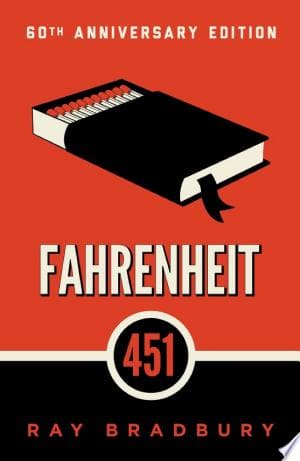
- Fahrenheit 451
Ray Bradbury
4.0 (1.7M) average on GoodreadsFantasyFeatures a protagonist who rebels against a repressive society that suppresses knowledge and individuality.
- The Handmaid's Tale
Margaret Atwood
4.1 (1.5M) average on GoodreadsFantasyPresents a chilling totalitarian regime and a female protagonist's struggle for survival and identity.
- Animal Farm
George Orwell
4.0 (2.7M) average on GoodreadsPoliticsA farm animals' rebellion against humans turns into a pig-led dictatorship, showing how power corrupts and revolutionary ideals are betrayed.
- Freakonomics: A Rogue Economist Explores the Hidden Side of Everything
Steven D. Levitt
4.0 (709k) average on GoodreadsBusinessThis book uses economic principles to reveal the surprising incentives behind everything from drug dealing and real estate to cheating teachers and the decline of crime.
- I Am Malala: The Story of the Girl Who Stood Up for Education and Was Shot by the Taliban
Malala Yousafzai
4.1 (419k) average on GoodreadsPoliticsA teenage girl from a Taliban-controlled valley refuses to give up her books, becoming a global voice for education even after an assassination attempt.





Enjoyed the summary?
A summary gives you the shape of the book. The book itself has the detail, the examples and the voice.
Find 1984 on AmazonAs an Amazon Associate, BookBrief earns from qualifying purchases. How we're funded