

Synopsis
Covers the whole plot, including the ending.
- Difficulty
- Medium
- Pacing
- Moderate
- Mood
- Thought-provoking, Introspective, Challenging, Hopeful
- Read it if
- You enjoy deep explorations of identity, genetic engineering, and the ethics of survival, with a focus on alien-human relations and societal restructuring.
- Skip it if
- You prefer fast-paced action over philosophical dilemmas and intricate character development, or find themes of genetic manipulation and forced evolution unsettling.
Adulthood Rites Plot Summary
Covers the whole plot, including the ending.
Akin's Early Life and the Conflict of Identities
Akin is the first male child born to Lilith Iyapo, a human, and her Oankali mates, Nikanj and Jdahya. Unlike other constructs, Akin looks entirely human at birth. This pleases and concerns his five parents (Lilith, Jdahya, Nikanj, and the ooloi, Kahal and Dichaan). He grows up in a construct community on Earth, learning Oankali languages and human customs. From a young age, Akin shows an unusual liking for human ways. He often prefers human food and resists some Oankali teachings. His unique genetic makeup, being a male with full human potential, makes him an important figure in the Oankali's plan for humanity. He spends his early years observing the strained relationship between the constructs and the 'resister' humans, who refuse genetic merging and are sterilized by the Oankali.
Kidnapped by Resisters
While on a foraging trip with his human father, Jdahya, and his ooloi parent, Dichaan, seven-year-old Akin is ambushed and kidnapped by a group of human resisters. The resisters, led by a woman named Beatrice, take Akin to their hidden settlement. The Oankali, Lilith and Nikanj, know about the kidnapping through their sensory organs. They decide not to immediately retrieve Akin. They believe Akin, given his unique genetic makeup, needs to experience life among the resisters firsthand. Lilith is distressed by this decision, but the Oankali maintain that Akin's exposure to pure human society is essential for him to understand the species he is meant to bridge.
Life Among the Resisters
Among the resisters, Akin learns about their fear, hatred, and desperation. He is at first treated with suspicion and some hostility, especially by Beatrice, who sees him as an alien despite his human appearance. He learns to hunt, gather, and survive in the wild. He experiences the challenges of a society without Oankali technology or assistance. Akin observes the resisters' deep fear of the Oankali and their desire for reproductive freedom, even knowing the Oankali's reasons for sterilization. He also sees their internal conflicts and violence, which supports the Oankali's assessment of humanity's self-destructive tendencies. During this time, Akin's Oankali senses begin to develop, allowing him to perceive the resisters' genetic flaws and the suffering caused by their lack of reproductive ability.
The First Decision: Rescued and Reflecting
After several months, an Oankali search party, led by his ooloi parent, Kahal, retrieves Akin. He returns to his construct family, physically unharmed but deeply changed by his time with the resisters. His Oankali senses are now fully awake, allowing him to perceive the genetic 'errors' in humans and the Oankali's solutions. He tells his parents and other Oankali about his experiences. This gives a unique view on the resisters' situation. The Oankali continue to say that Akin's experiences are important for him to make an informed decision about the resisters' future. He struggles with conflicting loyalties, feeling a connection to both his construct family and the desperate humans who kidnapped him.
The Second Abduction and the Promise of Fertility
Akin is abducted a second time, this time by a more organized and desperate group of resisters led by a man named Joseph. They know about his unique genetic makeup and his ability to influence the Oankali. Joseph and his people ask Akin to speak for them. They promise to live peacefully if the Oankali restore their fertility. Akin, now more mature and understanding, agrees to consider their request. He recognizes the depth of their desire to reproduce and the suffering caused by their sterility. This second abduction is not as traumatic as the first. It is a direct appeal to Akin's developing empathy and responsibility towards pure humans.
Negotiations and the Cost of Freedom
Akin returns to the Oankali with Joseph and his group, acting as their advocate. He presents their case for reproductive freedom. He argues that some resisters can live without self-destruction. This proposal starts a fierce debate among the Oankali. They worry about renewed human violence and environmental damage. The Oankali acknowledge Akin's unique perspective but are wary of granting fertility to a species they believe is inherently self-destructive without their influence. Akin struggles to find a compromise that satisfies both his human empathy and the Oankali's practical concerns for long-term survival and genetic integrity.
The Solution: Oankali Settlements for Resisters
Akin, after much thought and talking with his Oankali parents, proposes a solution: allow a select group of resisters to reproduce. This would happen only within isolated, Oankali-monitored settlements on Mars. These settlements would provide the necessary resources and oversight to prevent the resisters from destroying themselves or the environment. The Oankali would not genetically alter these humans, but would provide guidance and intervention when necessary. This plan is a compromise. It acknowledges the resisters' desire for biological continuation while lessening the Oankali's fears of renewed human chaos. It shows Akin's ability to bridge understanding between two different species.
Departure for Mars: A New Beginning
With the Oankali's reluctant approval, Akin prepares to lead the first group of fertile resisters, including Joseph and his family, to Mars. This undertaking begins a new chapter for both humanity and the Oankali. Akin, now a young adult, fully accepts his role as a bridge between the two species. He understands the responsibility he carries and the potential for both success and failure in this experiment. The journey to Mars is uncertain, but it is the first step towards a future where pure humans can exist and reproduce without being sterilized, though under strict conditions and far from Earth.
Life on Mars and the Test of Autonomy
On Mars, Akin works to help the resisters establish their new colony. He acts as an intermediary, providing guidance and support while allowing the resisters as much autonomy as possible. He observes their struggles and successes, their ability to cooperate, and their occasional relapses into conflict. The Oankali continue to monitor the colony, ready to intervene if the resisters threaten themselves or their environment. Akin's role is important in mediating between the resisters' desire for independence and the Oankali's need for control. He constantly navigates the balance between freedom and safety. He dedicates himself to proving that humans, given the right circumstances, can overcome their self-destructive tendencies.
Akin's Legacy and the Future of Humanity
As the years pass, Akin continues his work on Mars. He observes the growth of the resister community and the first generation of naturally born humans in centuries. His decision to advocate for their fertility, and the establishment of the Martian colonies, becomes his defining legacy. He remains a unique being, a construct with deep human empathy and Oankali wisdom, always bridging the two species. The future of humanity, both the construct population on Earth and the pure human colonies on Mars, rests on the success of Akin's experiment. This shows his courage and the Oankali's willingness to adapt their plans based on his insights. Akin's journey ends with his acceptance of his complex identity and his role in humanity's survival.
Principal Figures
Akin
Protagonist
The first male construct, a pivotal bridge between humans and Oankali.
Akin is the central protagonist, a unique construct born to Lilith and her Oankali mates. He is the first male of his kind to possess full human reproductive potential. His journey is one of self-discovery and interspecies mediation. Kidnapped twice by resisters, he experiences pure human society firsthand, developing empathy for their plight while also understanding the Oankali's concerns. He grapples with his dual heritage, ultimately choosing to advocate for the resisters' right to reproduce, leading them to Mars. His intelligence, sensitivity, and ability to understand both human and Oankali perspectives make him indispensable.
Relationships: Lilith Iyapo (human mother); Jdahya (male Oankali parent); Nikanj (female Oankali parent); Kahal (ooloi parent); Dichaan (ooloi parent); Beatrice (resister captor); Joseph (resister leader and advocate)
Lilith Iyapo
Supporting
Akin's human mother, a key figure in the construct community.
Lilith is Akin's human mother, a first-generation construct who underwent significant genetic merging. She struggles with the Oankali's decision to allow Akin to remain with the resisters, torn between her love for her son and her understanding of the Oankali's long-term goals. Her experiences in 'Dawn' have made her pragmatic, but her human maternal instincts remain strong. She supports Akin, offering guidance and comfort, and represents the human perspective within the construct family, often voicing concerns about the Oankali's methods.
Relationships: Akin (son); Jdahya (mate and co-parent); Nikanj (mate and co-parent); Kahal (ooloi mate and co-parent); Dichaan (ooloi mate and co-parent)
Jdahya
Supporting
Akin's male Oankali parent, a patient and understanding figure.
Jdahya is Akin's male Oankali parent, known for his patience and deep understanding of both human and Oankali nature. He accompanies Akin on the trip where the boy is first kidnapped, and later participates in the discussions about Akin's future. Jdahya is one of Akin's primary teachers, instilling Oankali values and knowledge. He often acts as a calming presence, helping to explain Oankali decisions to Lilith and Akin, and advocating for Akin's unique journey.
Relationships: Akin (son); Lilith Iyapo (mate and co-parent); Nikanj (mate and co-parent); Kahal (ooloi mate and co-parent); Dichaan (ooloi mate and co-parent)
Nikanj
Supporting
Akin's female Oankali parent, providing a different Oankali perspective.
Nikanj is Akin's female Oankali parent, representing a more traditional Oankali viewpoint regarding human nature. She is part of the decision-making process regarding Akin's kidnapping, believing it is necessary for his development. Nikanj is less outwardly emotional than Lilith but deeply committed to the Oankali's long-term genetic goals. She provides a practical, often blunt, perspective on humanity's flaws and the necessity of Oankali intervention, pushing Akin to understand the full implications of his choices.
Relationships: Akin (son); Lilith Iyapo (mate and co-parent); Jdahya (mate and co-parent); Kahal (ooloi mate and co-parent); Dichaan (ooloi mate and co-parent)
Kahal
Supporting
Akin's primary ooloi parent, instrumental in his genetic understanding.
Kahal is one of Akin's ooloi parents, a highly intelligent and sensitive being who plays a crucial role in Akin's education and understanding of genetics. Kahal's unique sensory abilities allow for deep communication and healing. Kahal is particularly invested in Akin's development as a bridge between species, understanding the nuances of his genetic makeup. It is Kahal who retrieves Akin after his first kidnapping and helps him process his experiences, guiding him towards a deeper understanding of both human and Oankali biology and motivations.
Relationships: Akin (son); Lilith Iyapo (mate and co-parent); Jdahya (mate and co-parent); Nikanj (mate and co-parent); Dichaan (ooloi co-parent)
Dichaan
Supporting
Akin's secondary ooloi parent, present during his first abduction.
Dichaan is Akin's other ooloi parent. While less prominent than Kahal, Dichaan is present during Akin's first kidnapping and shares in the parental responsibilities. Ooloi are the sexless third gender of the Oankali, responsible for genetic manipulation, healing, and reproduction. Dichaan's presence reinforces the unique, multi-parental structure of Akin's family and the Oankali's pervasive influence on life. Dichaan's role primarily emphasizes the collective nature of Oankali parenting and their genetic expertise.
Relationships: Akin (son); Lilith Iyapo (mate and co-parent); Jdahya (mate and co-parent); Nikanj (mate and co-parent); Kahal (ooloi co-parent)
Beatrice
Supporting
Resister leader who first kidnaps Akin, driven by fear and desperation.
Beatrice is the leader of the first group of resisters who kidnap Akin. She is a hardened woman, deeply suspicious of the Oankali and anything associated with them, including Akin. Her motivation stems from a profound fear of alien influence and a desperate desire for human autonomy and reproductive freedom. She represents the intense human resistance and the raw, often violent, aspects of their struggle. Akin's time with Beatrice's group exposes him to the harsh realities of pure human survival without Oankali assistance.
Relationships: Akin (captor of Akin)
Joseph
Supporting
Resister leader who later kidnaps Akin, seeking his help for fertility.
Joseph is the leader of the second group of resisters who kidnap Akin. Unlike Beatrice, Joseph is more pragmatic and willing to negotiate. He understands Akin's unique position and appeals directly to him for help in restoring human fertility. Joseph represents a more hopeful, albeit still desperate, faction of resisters who are willing to compromise for the sake of their species' future. His interactions with Akin are crucial in convincing Akin to advocate for the resisters' cause.
Relationships: Akin (appeals to Akin for help)
Themes & Insights
Identity and Belonging
The novel explores Akin's struggle with his identity as a unique construct, neither fully human nor fully Oankali. His kidnappings make him confront what it means to be human, and his Oankali nature constantly reminds him of his alien heritage. He must reconcile these two aspects to form his own sense of self and purpose. This theme extends to the resisters, who cling to a 'pure' human identity, even at the cost of their species' future, and the constructs who form a new identity through genetic merging.
“He was human. He was Oankali. He was both and neither. He was Akin.”
Reproduction and Survival of the Species
A central theme is the need for reproduction for species survival and the Oankali's solution to humanity's 'genetic flaw.' The resisters' desire for fertility, even knowing the potential for self-destruction, shows the biological drive to procreate. Akin's decision to grant fertility to a select group of resisters, under Oankali supervision, is an experiment. It tests whether humanity can overcome its self-destructive tendencies when given the chance to reproduce. This theme questions the definition of 'survival' and the lengths a species will go to ensure its continuation.
“They wanted children. They wanted to live on in their children. It was a need as basic as hunger.”
Freedom vs. Control
The conflict between the resisters' desire for absolute freedom and the Oankali's benevolent but absolute control is a driving force. The Oankali sterilize humans to prevent their self-destruction, seeing it as a necessary form of control for survival. The resisters, however, see this as a violation of their autonomy. Akin's solution—allowing reproduction under Oankali supervision on Mars—tries to bridge this gap. It offers a limited form of freedom within a controlled environment. It questions if true freedom is possible or even good when a species is prone to self-destruction.
“The Oankali had saved them from themselves. But they had taken away the right to choose.”
Empathy and Interspecies Understanding
Akin's unique position allows him to develop empathy for both humans and Oankali. His time with the resisters reveals their fear, desperation, and love. His Oankali upbringing gives him insight into their logical, long-term perspective. He acts as an empathetic bridge, translating the needs and fears of one species to the other. The novel suggests that true understanding requires stepping outside one's own species' perspective and embracing the 'other,' even when their ways are alien or contradictory.
“He felt their need, their desperation, as if it were his own.”
Genetic Imperfection and Evolution
The Oankali's premise is humanity's 'genetic flaw' – a destructive mix of intelligence and hierarchical tendencies. They see themselves as facilitators of evolution, merging with other species to create genetically superior offspring. Akin's existence is a product of this genetic manipulation. The debates around resister fertility directly address whether humanity can evolve past its inherent flaws or if external intervention is always necessary. This theme explores the ethics and implications of genetic engineering and directed evolution.
“You are intelligent. You are hierarchical. The combination is deadly.”
Plot Devices & Literary Techniques
The Ooloi
The sexless Oankali gender responsible for genetic manipulation and healing.
The Ooloi are the third, sexless gender of the Oankali, possessing extraordinary sensory and genetic manipulation abilities. They are crucial for reproduction, healing, and the genetic merging of species. In 'Adulthood Rites,' the ooloi Kahal and Dichaan are Akin's parents, playing a key role in his upbringing and genetic understanding. Their ability to perceive genetic 'errors' and facilitate changes is central to the Oankali's mission and the plot's resolution, particularly in the decision to sterilize humans or grant them fertility.
First-Person Limited Perspective (Akin's POV)
Narrative told primarily through Akin's evolving consciousness.
The narrative is primarily presented through Akin's perspective, allowing readers to experience his internal conflicts and growth firsthand. This device is crucial for understanding the nuances of his dual identity and his empathy for both humans and Oankali. By witnessing events through Akin's eyes, including his kidnappings and his developing Oankali senses, the reader gains a unique, balanced insight into the complex interspecies dynamics, making his ultimate decision more impactful and believable.
Kidnappings
Plot catalyst for Akin's exposure to pure human society.
Akin's two kidnappings by human resisters serve as a crucial plot device. The first forces him to experience pure human society, its fears, and its violence, without Oankali protection. The second is a direct plea, solidifying his role as an intermediary. These events are not merely action sequences; they are pivotal to Akin's education and character development, providing him with the experiential knowledge necessary to make his momentous decision about the resisters' fertility. They force him to bridge the theoretical understanding of humanity with lived experience.
Genetic Flaw of Humanity
The Oankali's justification for their intervention and genetic merging.
The 'genetic flaw' of humanity, described by the Oankali as a destructive combination of intelligence and hierarchy, is a foundational plot device. It underpins all Oankali actions, including the sterilization of resisters and the genetic merging with constructs. This flaw is consistently referenced as the reason for humanity's near self-destruction and the Oankali's intervention. Akin's developing Oankali senses allow him to perceive this flaw directly, influencing his decisions and providing a biological, rather than purely philosophical, justification for the Oankali's perspective.
Mars as a Sanctuary
A physical and symbolic space for a new human experiment.
Mars serves as a critical plot device, representing the physical space for Akin's radical experiment: allowing pure humans to reproduce under Oankali supervision. It is a place of isolation and control, but also one of potential new beginnings. Symbolically, Mars is a 'clean slate,' removed from Earth's past conflicts and the direct influence of the larger Oankali construct communities. Its harsh environment also necessitates cooperation among the resisters, testing their capacity for peaceful coexistence and self-governance, away from the destructive tendencies that plagued Earth.
Adulthood Rites Quotes
“The thing that makes you human…is your ability to make choices.”
“You can’t make people grow up just by telling them to.”
“Change is the only constant.”
“We are not meant to be alone.”
“Knowledge is dangerous, but ignorance is fatal.”
“You have to learn to choose your pain.”
“Fear can be a useful tool, but it can also be a paralyzing poison.”
“The past is not dead. It is not even past.”
“Survival is not enough. We need to live.”
“To truly understand, you must experience.”
“There are no easy answers, only difficult choices.”
“The greatest strength is adaptability.”
“Sometimes you have to break things to make them whole again.”
“We are all connected, whether we like it or not.”
Quiz
10 questions on the plot and the characters. Each answer comes with a short explanation.
Question 1
Who are Akin's five parents, as described in the book?
- Two humans, two Oankali, and one Ooloi
- Two humans, one Oankali, and two Ooloi
- One human, two Oankali, and two Ooloi
- Three humans, one Oankali, and one Ooloi
Show answer
A. Two humans, two Oankali, and one Ooloi Akin's unique parentage is a core element of the Oankali's genetic merging process, consisting of a male and female human, a male and female Oankali, and a sexless Ooloi.
Question 2
What is the primary reason the Oankali chose to leave Akin with his human captors?
- They believed Akin was too weak to return to them.
- They wanted Akin to decide the fate of the human resisters.
- They were testing the resisters' capacity for compassion.
- They were punishing Lilith for her earlier defiance.
Show answer
B. They wanted Akin to decide the fate of the human resisters. The Oankali's decision was strategic: they intended for Akin, being the most 'human' of their children, to ultimately determine whether the resisters should regain their fertility and freedom, despite the risk of humanity's self-destruction.
Question 3
What is the 'price' humanity pays for the Oankali's salvation from nuclear war?
- They must relinquish all technological advancements.
- They are forced into genetic merging with the Oankali.
- They must provide the Oankali with a new homeworld.
- They must serve the Oankali as a labor force.
Show answer
B. They are forced into genetic merging with the Oankali. The Oankali are compelled to genetically merge their species with others, drastically altering both. This is the core 'price' humanity pays for being saved from extinction.
Question 4
How do the Ooloi generally treat 'pure' human resisters who choose not to merge?
- They are immediately executed.
- They are enslaved and forced to work.
- They are sterilized but otherwise left alone, unless violent.
- They are given special privileges for maintaining their purity.
Show answer
C. They are sterilized but otherwise left alone, unless violent. The Ooloi sterilize the resisters to prevent them from reproducing humanity's 'genetic defect' (the drive to self-destruction), but they are otherwise left alone unless they pose a threat.
Question 5
What is the 'genetic defect' the Oankali associate with humanity?
- A susceptibility to disease.
- An inherent drive to destroy itself.
- An inability to adapt to new environments.
- A short lifespan compared to other species.
Show answer
B. An inherent drive to destroy itself. The Oankali believe humanity possesses a fundamental flaw, a 'genetic defect' that drives it towards self-destruction, which manifested in the nuclear war.
Question 6
Why is Akin considered 'the most human' of the Oankali children?
- He looks exactly like a pure human child.
- He has rejected his Oankali heritage.
- He was raised exclusively by human parents.
- He is the only one who can communicate with the resisters.
Show answer
A. He looks exactly like a pure human child. Despite his five parents, Akin is described as looking like a 'normal human boy,' making him outwardly the most 'human' of the emergent species and thus an ideal intermediary for the Oankali's plans.
Question 7
What significant decision is Akin expected to make regarding the human resisters?
- Whether they should be exiled from Earth.
- Whether they should be given back their fertility and freedom.
- Whether they should be forced into genetic merging.
- Whether they should be given access to advanced Oankali technology.
Show answer
B. Whether they should be given back their fertility and freedom. The Oankali place the burden on Akin to decide if the resisters, who represent pure humanity, should be allowed to reproduce and live freely again, knowing it could lead to their destruction.
Question 8
What is the primary function of the Ooloi within the Oankali species, particularly in reproduction?
- They are the warriors and protectors.
- They are the sexless facilitators of genetic merging and reproduction.
- They are the leaders and decision-makers.
- They are the historians and record-keepers.
Show answer
B. They are the sexless facilitators of genetic merging and reproduction. The Ooloi are the third, sexless gender of the Oankali, crucial for mediating the genetic merging process between species and enabling reproduction of the new combined species.
Question 9
What is the overarching theme explored by the Xenogenesis series, as suggested by the description?
- The dangers of unchecked technological advancement.
- The conflict between individual freedom and collective survival.
- The complexities of alien existence and interspecies genetic merging.
- The historical struggle for human dominance over other species.
Show answer
C. The complexities of alien existence and interspecies genetic merging. The description highlights the 'powerful tale of alien existence' and the 'compelled to genetically merge their species with other races, drastically altering both,' pointing to interspecies genetic merging and the nature of alien life as a central theme.
Question 10
What event led to the Oankali's intervention and subsequent 'rescue' of humanity?
- A global pandemic that threatened human extinction.
- A devastating nuclear war that humanity inflicted upon itself.
- An asteroid impact that rendered Earth uninhabitable.
- An invasion by a hostile alien species.
Show answer
B. A devastating nuclear war that humanity inflicted upon itself. The Oankali rescued humanity from the brink of extinction after humanity itself caused a 'devastating nuclear war,' which is presented as evidence of their 'genetic defect'.
Adulthood Rites FAQ
What is 'Adulthood Rites' about?
'Adulthood Rites' is the second book in Octavia E. Butler's Xenogenesis series, focusing on Akin, the first male 'construct' child born from a human, Oankali, and Ooloi genetic merge. The story follows Akin's unique upbringing among both his Oankali-human family and, crucially, his time spent with 'resister' humans who reject the Oankali's genetic intervention. Akin must ultimately decide the fate of these pure humans: whether to grant them fertility, knowing they are prone to self-destruction, or to maintain the Oankali's control over human reproduction.
Why should I read 'Adulthood Rites'?
You should read 'Adulthood Rites' for its profound exploration of identity, belonging, and the nature of humanity through an alien lens. It delves into complex ethical dilemmas, presenting a nuanced view of 'salvation' and 'domination' as Akin grapples with the conflicting desires of his diverse heritage. Butler's masterful prose and challenging themes make it a thought-provoking read that pushes the boundaries of science fiction.
What is the background/setting of 'Adulthood Rites'?
The book is set on a rehabilitated Earth, centuries after a nuclear war nearly wiped out humanity. The Oankali, an alien species, rescued the survivors and began a process of genetic merging to 'improve' humanity, which they perceive as inherently self-destructive. Human 'constructs' like Akin, with mixed Oankali and human DNA, populate this new world, while 'resisters'—pure humans who reject the Oankali's 'salvation'—live in isolated communities, sterilized by the Oankali to prevent them from reproducing their 'defect.'
What are the most memorable quotes?
One memorable quote reflects the Oankali perspective: 'You are a cancer. You have been a cancer for a long time. You have been a cancer on Earth. You have been a cancer on yourselves.' Another, illustrating Akin's internal conflict, might be his reflection on the resisters: 'They were human. They were beautiful. And they were insane.' These quotes encapsulate the core conflicts of the novel.
What writing style does the author use?
Octavia E. Butler employs a clear, direct, and often stark writing style that is both immersive and unflinching. She uses precise language to convey complex biological and psychological concepts, focusing heavily on internal monologue and character perspective, particularly Akin's, to explore the ethical ambiguities of the narrative. Her prose is devoid of unnecessary embellishment, making the challenging themes even more impactful.
What minor details add significant meaning?
The detail of the Oankali's sensory tentacles, which allow them to literally 'taste' genetic compatibility and emotions, adds significant meaning by highlighting the profound biological differences that drive their motivations and interactions. Also, the description of the constructs' unique sensory abilities, like enhanced hearing or night vision, subtly emphasizes their 'otherness' and distance from pure humanity, even as they navigate human emotions.
What are some subtle foreshadowing moments?
A subtle foreshadowing moment occurs early when the Oankali deliberately allow Akin to be taken by the resisters, hinting at their long-term plan for him to become an arbiter for humanity. Another is the Ooloi's insistence on Akin's extensive education about both human history and Oankali biology, preparing him for the monumental decision he will eventually face regarding the resisters' future.
What unexpected character connections exist?
An unexpected connection is between Akin and the resister leader, Hugh. Despite being captor and captive, their shared humanity (or Akin's strong human heritage) allows for a degree of understanding and even empathy that transcends their ideological conflict. Akin also forms a bond with other resister children, revealing the innocence that exists even within a group defined by its hostility towards the Oankali.
What are unspoken character motivations?
The Oankali's unspoken motivation, beyond their stated desire to 'trade' and 'improve' species, is a deep-seated fear of their own genetic stagnation if they do not constantly seek out new genetic material. This underlying compulsion drives their actions, including their controversial 'salvation' of humanity. Lilith, Akin's human mother, carries an unspoken desire for her human heritage to persist, even as she embraces her Oankali family.
What psychological complexities do characters exhibit?
Akin exhibits profound psychological complexity, grappling with his dual heritage. He experiences genuine affection for both his Oankali-human family and the pure human resisters, leading to an internal conflict about where his true loyalty lies and what constitutes 'humanity.' Lilith struggles with the moral implications of the Oankali's actions, even as she benefits from their intervention, showcasing the psychological burden of being a bridge between two vastly different species.
What are the major emotional turning points?
A major emotional turning point for Akin is his realization that the resisters, despite their beauty and ingenuity, are indeed prone to the self-destructive tendencies the Oankali speak of, often through petty conflicts and violence. Another is his growing understanding of the Oankali's deep, if alien, love and their genuine desire for humanity's survival, albeit on their own terms, which complicates his earlier sympathies for the resisters.
How do relationship dynamics evolve?
The relationship dynamics between Akin and his five parents evolve as he matures, moving from a dependent child to an independent thinker who challenges their perspectives. His relationship with the resisters also evolves, initially from captive to observer, and then to a deeply conflicted figure who understands their plight but also their flaws, ultimately becoming their reluctant judge. The relationship between pure humans and constructs remains fraught with tension and misunderstanding.
Which parts remain ambiguous or open-ended?
The ultimate long-term future of humanity, even after Akin's decision, remains somewhat ambiguous. While Akin makes a choice regarding the resisters' fertility, the question of whether humanity can truly overcome its self-destructive tendencies, even with Oankali intervention, is left open. The nature of the Oankali's own evolution and their final destination also carries an open-ended quality, suggesting their journey is far from over.
What are controversial scenes or decisions?
The most controversial decision is Akin's final judgment on the resisters: whether to allow them to reproduce and potentially destroy themselves, or to keep them sterilized. This decision forces the reader to confront difficult questions about free will versus forced 'salvation.' The Oankali's initial act of sterilizing pure humans, even those who were non-violent, is also highly controversial, sparking debate about ethical boundaries in the face of perceived extinction.
'Adulthood Rites' ending explained: how it ends & what it means
'Adulthood Rites' ends with Akin making the monumental decision to grant the resisters their fertility back, allowing them to reproduce 'pure' humans. However, this is not a simple act of liberation; it is a calculated risk based on his hope that proximity to the constructs, combined with the Oankali's continued influence, might eventually lead to a change in human behavior. It means that humanity, both 'pure' and 'construct,' will continue to exist, but the tension between their differing natures and the potential for conflict remains, setting the stage for the final book in the series.
About the author
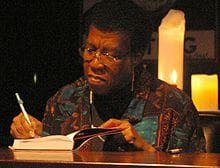
Octavia E. Butler was an American science fiction writer known for her exploration of complex themes such as race, gender, and identity. Her notable works include "Kindred," a time-travel narrative addressing slavery, and the "Patternist" series, which begins with "Mind of My Mind." Other significant titles in her catalog include "Parable of the Talents," "Wild Seed," "Adulthood Rites," and "Bloodchild and Other Stories."
Similar books
- Speaker for the Dead
Orson Scott Card
4.1 (225k) average on GoodreadsFantasyExplores complex alien-human interactions, moral dilemmas, and the search for understanding between species.
- Dune
Frank Herbert
4.2 (766k) average on GoodreadsFantasyFeatures intricate world-building, genetic manipulation, and the evolution of humanity under extreme circumstances.
- The Left Hand Of Darkness
Ursula K. Le Guin
4.1 (120k) average on GoodreadsFantasyWhile both explore alien societies and fundamental aspects of identity (gender in Le Guin), Butler's Adulthood Rites places the reader inside a hybrid consciousness, forcing an internal re-evaluation of humanity, whereas Le Guin's narrative primarily uses an external human observer to understand an alien culture.
- Harry Potter and the Sorcerer's Stone
J.K. Rowling
4.5 (7M) average on GoodreadsFantasyRescued from a miserable life under the stairs, an orphaned boy discovers he's a wizard destined for a magical school, where he uncovers a dangerous secret tied to the dark wizard who murdered his parents.
- The Hunger Games
Suzanne Collins
4.3 (6.4M) average on GoodreadsFantasyIn a future where children fight to the death on live television, Katniss Everdeen volunteers for the arena, turning a death sentence into a fight for survival and a spark of rebellion.
- 1984
George Orwell
4.2 (3.1M) average on GoodreadsPoliticsIn a future where surveillance and thought control are absolute, a man's search for truth clashes with the Party, showing that hope can be a form of rebellion.





Enjoyed the summary?
A summary gives you the shape of the book. The book itself has the detail, the examples and the voice.
Find Adulthood Rites on AmazonAs an Amazon Associate, BookBrief earns from qualifying purchases. How we're funded