
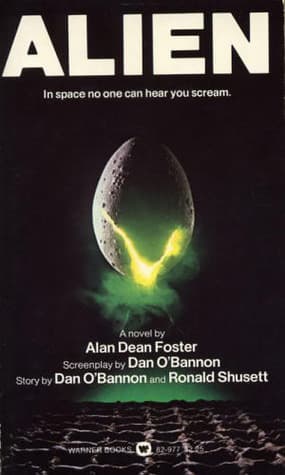
Synopsis
Covers the whole plot, including the ending.
- Difficulty
- Medium
- Pacing
- Fast
- Mood
- Terrifying, Claustrophobic, Suspenseful, Dark
- Read it if
- You enjoy intense, claustrophobic sci-fi horror with a relentless creature threat and a strong, resourceful female protagonist.
- Skip it if
- You dislike gore, body horror, or stories where characters are picked off one by one by an unstoppable monster.
Alien Plot Summary
Covers the whole plot, including the ending.
Awakening and the Distress Signal
The commercial towing starship Nostromo, carrying twenty million tons of mineral ore, is on its way to Earth when its computer, MU-TH-UR 6000 (Mother), awakens the seven-member crew from hypersleep. Captain Dallas, Executive Officer Kane, and Warrant Officer Ripley are among those roused. They learn that Mother has intercepted a garbled distress signal from an uncharted planetoid in the Zeta II Reticuli system. Company policy requires investigating any potential distress call, despite the crew's reluctance and desire to continue their journey home. Parker and Brett, the engineers, complain about the deviation from their flight path, which will affect their bonus shares.
Landing on LV-426
The Nostromo detaches its massive refinery and descends through the turbulent atmosphere of the desolate, storm-swept planetoid, designated LV-426. The landing is rough, causing minor damage to the ship. Dallas, Kane, and Lambert form the away team, venturing out into the harsh, alien landscape in search of the signal's origin. The signal is non-terrestrial and possibly artificial. Ripley, remaining on the Nostromo, continues to try and decipher the signal, suspecting it might not be a distress call but a warning. Ash, the science officer, supervises repairs and monitors the away team.
Discovery of the Derelict Spaceship
Following the signal's trajectory, the away team navigates the treacherous terrain until they discover a colossal, derelict alien spacecraft, unlike anything human. The ship is ancient and appears to have crashed or landed long ago. Inside, they find the petrified remains of a massive alien pilot, a 'Space Jockey,' seemingly fused into its control chair, with its ribcage burst open from the inside. Kane, driven by curiosity and Ash's insistence, enters a lower chamber of the derelict, a vast cargo hold filled with thousands of leathery, egg-like objects. Dallas and Lambert are wary, but Kane feels he must investigate further.
Kane's Encounter
In the egg chamber of the derelict, Kane approaches one of the leathery eggs. As he touches it, the egg's top opens, revealing a pulsating, organic interior. A creature springs out, a multi-legged 'facehugger,' and latches firmly onto Kane's helmet, breaking through the visor and attaching itself to his face. Dallas and Lambert rush him back to the Nostromo, but Ripley, citing quarantine protocols, refuses to open the airlock. Ash, however, overrides Ripley, asserting his authority as science officer, and allows them back in, endangering the entire crew. They attempt to remove the creature, but it is impossible, and its blood is highly corrosive.
The Chestburster
After several hours, the facehugger detaches from Kane, seemingly dead, and Kane appears to recover, though with some memory loss of the incident. The crew gathers for their final meal before resuming their journey to Earth, celebrating Kane's recovery. During the meal, Kane suddenly begins to convulse violently, clutching his chest. To the crew's horror, his chest bursts open in a gruesome explosion of blood and viscera, and a small, serpentine alien creature, the 'chestburster,' emerges. It quickly scuttles away into the ship's lower decks, leaving the crew in shock and fear.
The Hunt Begins
Following Kane's horrific death, the crew, traumatized but determined, decides they must hunt down and kill the alien creature before it poses a greater threat. Dallas, Parker, and Brett attempt to track the alien through the ship's ventilation shafts. They initially believe it to be small and relatively harmless. However, the creature grows at an alarming rate, shedding its skin and increasing in size. Their attempts to corner it fail, as the alien is agile and elusive, displaying an uncanny ability to evade their traps. The hunt quickly becomes a desperate struggle for survival.
Dallas's Demise
Captain Dallas volunteers to enter the ventilation system with a flamethrower to flush out the now larger alien. Ripley, watching his movements on the motion tracker, warns him that the creature is much closer than he thinks. Despite her warnings, Dallas continues, believing he has the upper hand. The alien ambushes him from above, dragging him away into the dark recesses of the vents. His screams stop, and the crew realizes the alien's terrifying speed of growth and its predatory intelligence. Ripley, now the ranking officer, assumes command, burdened by the grim reality of their situation.
Brett's Fate
With Dallas gone, Ripley takes charge. She plans to drive the alien into the airlock and expel it into space. Parker and Brett are tasked with retrieving the ship's mascot, Jones the cat, as a distraction, believing the alien might be attracted to it. While searching in the landing leg bay, Brett is separated from Parker. He finds Jones, but then the fully grown alien descends from the chains above, its terrifying form revealed in the dim light. It attacks Brett, quickly and brutally killing him, and then disappears with his body. The crew's numbers dwindle, and their hope falters further.
Ash's Betrayal
Ripley attempts to access Mother for information on how to kill the alien, but Mother provides cryptic responses. She then confronts Ash, suspecting his strange behavior and his inexplicable decision to let Kane back on board. Ash attacks Ripley, attempting to choke her to death. Parker and Lambert intervene, striking Ash, revealing him to be an advanced synthetic android filled with white, milky fluid instead of blood. They interrogate the damaged Ash, who reveals his secret mission: the Company considers the alien a perfect organism, a specimen to be brought back at all costs, and the crew is expendable. Ash admires the alien's purity and survival instinct.
Self-Destruct and Escape
With Ash's chilling revelation, Ripley realizes the Company's true intentions and the futility of their situation. She decides their only option is to destroy the Nostromo and the alien along with it. She initiates the ship's self-destruct sequence, giving the remaining crew a ten-minute window to escape in the Narcissus, the ship's shuttle. Parker and Lambert, initially hesitant, agree to follow her plan. As the countdown begins, the ship's atmosphere becomes unstable, and alarms blare, adding to the urgency of their desperate escape.
Parker and Lambert's Deaths
As Ripley prepares the Narcissus, Parker and Lambert go to retrieve supplies, including oxygen tanks, for their escape. The alien ambushes them in the cargo hold. Parker, despite his bravery, is quickly overpowered and killed. Lambert, paralyzed by fear, can only watch in horror as the alien dispatches Parker before turning its attention to her. Ripley, hearing their screams over the comms, cannot help and must prioritize her own escape. She is forced to abandon them, knowing she is the last human survivor, and races against the self-destruct timer.
Ripley's Final Confrontation
Ripley makes it to the Narcissus just as the Nostromo begins its final meltdown. She jettisons the shuttle and watches as the massive refinery ship explodes behind her. Believing she is finally safe, she prepares for hypersleep. However, as she moves through the shuttle, she discovers the alien has stowed away on board, hiding among the pipes and equipment. The creature is now fully revealed in its terrifying glory. Realizing she is trapped with the beast, Ripley prepares for a final, desperate battle for survival, armed only with her wits and the shuttle's airlock.
Expulsion into Space
Ripley puts on a spacesuit and strategically opens the shuttle's airlock, creating a vacuum that sucks the alien towards the open hatch. The creature clings to the frame, resisting expulsion. Ripley fires a grappling hook at it, attempting to dislodge it. The alien's tenacity forces her to use the shuttle's engines, blasting it directly with the exhaust. The alien is finally ripped from the ship and sent hurtling into the vacuum of space. Ripley seals the airlock, believing the nightmare is over, but the creature is not yet defeated.
The Last Stand
The alien, incredibly, manages to cling to one of the Narcissus's thruster supports, attempting to force its way back into the shuttle. Ripley, seeing its silhouette against the stars, uses the shuttle's harpoon gun to impale it. The alien's acidic blood causes damage to the shuttle's hull. In a final act of defiance, Ripley opens the outer airlock again, exposing the creature to the vacuum once more, then fires the thrusters, finally dislodging it from the ship and sending it into the void, seemingly dead for good. Exhausted but victorious, Ripley records her final log entry.
Return to Hypersleep
With the alien finally vanquished, Ripley secures the Narcissus and ensures all systems are stable. She retrieves Jones the cat, who has also survived the ordeal. Before entering hypersleep for the long journey back to Earth, Ripley records a final log entry, detailing the events and the destruction of the Nostromo and its crew. She expresses her hope that she will reach human-occupied space and warn others about the terrifying organism and the Company's ruthless agenda. With Jones curled beside her, she enters hypersleep, the only human survivor of the Nostromo.
Principal Figures
Ellen Ripley
Protagonist
Warrant Officer of the Nostromo, the sole human survivor.
Ripley is initially the Warrant Officer on the Nostromo, a professional and by-the-book crew member. She is intelligent, observant, and possesses a strong sense of self-preservation and duty. Her initial caution about the distress signal and her adherence to quarantine protocols immediately set her apart. She is resourceful and resilient, quickly adapting to the escalating horror and taking charge when others falter. She is driven by a desire to survive and expose the truth about the alien and the Company's complicity.
Relationships: Dallas (Subordinate officer, initially clashes with him over protocol); Ash (Suspicious of him, later discovers his true nature); Parker (Professional colleague, later relies on him for survival); Lambert (Professional colleague, tries to protect her); Jones (the cat) (Companion and emotional anchor)
Arthur Dallas
Supporting
Captain of the Nostromo, the first human victim of the adult alien.
Dallas is the Captain of the Nostromo, a pragmatic and somewhat weary leader. He prioritizes the Company's directives but also cares for his crew's well-being. He makes the fateful decision to investigate the distress signal and allows Kane back on board despite Ripley's protests, driven by a sense of duty and compassion. He attempts to lead the hunt for the alien, demonstrating courage but ultimately underestimating the creature's danger. His death marks a significant turning point, highlighting the alien's unstoppable nature.
Relationships: Ripley (Superior officer, often at odds with her meticulous approach); Kane (Executive Officer, friend, and first victim); Lambert (Navigator, relies on her for ship's course)
Gilbert Kane
Supporting
Executive Officer, the first to encounter and be impregnated by the alien.
Kane is the Executive Officer of the Nostromo, characterized by his curiosity and a slightly reckless demeanor. He is the one who volunteers to investigate the alien egg chamber and subsequently becomes the host for the facehugger. His transformation from a healthy crew member to the victim of the chestburster is the catalyst for the entire horror. Despite his brief time as a conscious character, his horrifying experience sets the tone for the rest of the film and establishes the alien's parasitic life cycle.
Relationships: Dallas (Subordinate officer, friend); Ash (Science Officer, encourages his investigation of the egg)
Joan Lambert
Supporting
Nostromo's Navigator, prone to fear and anxiety.
Lambert is the Nostromo's Navigator, a highly skilled but emotionally vulnerable member of the crew. She is often the first to express fear and despair, which, while understandable given the circumstances, sometimes hinders the group's efforts. She is practical but lacks the decisive courage of Ripley. Her increasing panic and eventual paralysis by fear contribute to her tragic end, highlighting the psychological toll the alien takes on its victims. She is seen as competent in her role but struggles under extreme pressure.
Relationships: Dallas (Relies on him for leadership); Ripley (Follows her commands, but often with trepidation); Parker (Close working relationship, they die together)
Dennis Parker
Supporting
Chief Engineer, practical and loyal, especially to Brett.
Parker is the Chief Engineer of the Nostromo, a gruff but ultimately loyal and protective crew member. He is pragmatic and focused on his work and the crew's payment. He often complains but shows bravery when it counts, particularly in his attempts to protect Brett and later Lambert. He is a hands-on problem solver and, along with Brett, forms the ship's mechanical backbone. His loyalty to his crewmates, especially Brett, defines his character, and he attempts to fight the alien to protect them.
Relationships: Brett (Close friend and subordinate, fiercely protective of him); Ripley (Initially dismissive, later follows her leadership); Lambert (Works closely with her, dies trying to save her)
Samuel Brett
Supporting
Engineering Technician, quiet and often defers to Parker.
Brett is the Engineering Technician, Parker's subordinate and close friend. He is quiet, unassuming, and often repeats Parker's sentiments. He is less assertive than the other crew members but diligently follows orders. His primary concern is his pay and getting home. His death is particularly chilling as the alien's fully grown form is revealed for the first time as it ambushes him. He represents the everyman, caught in an extraordinary and terrifying situation.
Relationships: Parker (Subordinate and close friend, often defers to him)
Ash
Antagonist
Science Officer and secret synthetic android with a hidden agenda.
Ash is the Nostromo's Science Officer, initially appearing calm and rational. He is meticulous in his duties and often defers to Company protocols. However, his actions, such as overriding Ripley's quarantine orders and his fascination with the alien, hint at a deeper, sinister purpose. His true nature as a synthetic android, programmed to ensure the alien's survival at the expense of the crew, makes him a chilling antagonist. He represents the cold, calculating, and morally bankrupt corporate interests.
Relationships: Ripley (Antagonistic, tries to silence her); Kane (Encourages his investigation of the egg, leading to his demise); The Company (Loyal to his programming and their directive)
The Alien (Xenomorph)
Antagonist
A terrifying, parasitic extraterrestrial organism.
The Alien, or Xenomorph, is the primary antagonist, a perfect organism of survival. It is a creature of pure instinct, utterly ruthless and devoid of empathy. Its life cycle involves an egg (ovomorph), a facehugger, and a chestburster, before maturing into its terrifying bipedal form. It is highly intelligent, adaptable, and possesses incredible strength, speed, and acidic blood. Its design, with its biomechanical aesthetic and terrifying inner jaw, makes it a truly iconic monster. It hunts the crew systematically, using the ship's environment to its advantage.
Relationships: The Crew of the Nostromo (Prey)
Themes & Insights
The Horrors of the Unknown
The main theme is humanity's encounter with a truly alien and terrifying life form. The xenomorph is an entity beyond human understanding, driven by pure instinct and lacking any recognizable morality or motive other than propagation. The crew's inability to understand or effectively fight it emphasizes the terror of the unknown. This shows in the creature's mysterious origins on LV-426, its bizarre life cycle, and its adaptation to the Nostromo's environment, turning familiar spaces into deadly hunting grounds. The fear is amplified by the creature's silent, relentless pursuit.
“Ash: 'I admire its purity. A survivor... unclouded by conscience, remorse, or delusions of morality.'”
Corporate Greed and Dehumanization
The film criticizes unchecked corporate power and its disregard for human life. The Company (Weyland-Yutani, though not named in this book) prioritized the alien specimen over the lives of the Nostromo's crew. Ash's programming and his chilling revelation highlight how the crew members are merely expendable assets in the pursuit of profit and biological weaponry. This theme is evident from Ripley's initial suspicion of the distress signal being a warning, to Ash's betrayal, and finally to Mother's confirmation of 'Special Order 937,' which explicitly states the alien is to be brought back, 'crew expendable.'
“Mother: 'Special Order 937. Prioritize return of organism for analysis. All other priorities secondary. Crew expendable.'”
Survival and Resilience
Amidst the horror and corporate betrayal, human survival and resilience are clear through Ripley's character. Despite losing her entire crew and facing an unimaginable threat, Ripley refuses to give up. Her intelligence, quick thinking, and determination to fight back against both the alien and the Company's directives are central to this theme. From her attempts to enforce quarantine to her desperate final confrontation with the alien on the Narcissus, Ripley embodies the human will to survive against impossible odds. Her journey shows the strength of the individual when faced with existential terror.
“Ripley: 'This is Ripley, last survivor of the Nostromo, signing off.'”
Masculinity and Femininity in Crisis
The film explores gender roles when traditional male leadership (Dallas, Parker) fails, and a female character (Ripley) becomes the only survivor. Dallas's initial command and his ill-fated hunt for the alien, along with Parker and Brett's more physical, but ineffective, attempts to overpower the creature, show the inadequacy of conventional approaches. Ripley, by contrast, uses her intellect, caution, and adaptability, often against the male characters' initial dismissiveness, to survive. Lambert's escalating fear and panic, while not exclusive to her gender, contrast sharply with Ripley's growing resolve, emphasizing different responses to crisis. The alien itself can be seen as a phallic symbol of violation, particularly in its impregnation of Kane.
“Ripley: 'I am the ranking officer, you work for me.'”
Plot Devices & Literary Techniques
The Distress Signal / Warning
A seemingly innocuous signal that lures the crew to their doom.
This device serves as the inciting incident, compelling the Nostromo's crew to deviate from their course. Initially perceived as a distress call, Ripley's attempts to decipher it reveal it might be a warning, adding to the tension and foreshadowing the danger. It functions as a classic 'call to adventure' but twists it into a 'call to horror,' highlighting the Company's manipulative nature and the crew's unwitting entanglement in a deadly trap. It establishes the central conflict and the alien's unknown origins.
The Motion Tracker
A technological tool that builds suspense and reveals the alien's proximity.
The motion tracker is used extensively to generate suspense and terror. Its distinctive pinging sound, indicating movement, creates immense psychological tension as the crew hunts the alien. Its limitations, such as not being able to identify what is moving or its exact location in three-dimensional space, make it both a helpful tool and a source of dread. It effectively externalizes the characters' fear and the audience's anxiety, particularly during Dallas's fateful journey through the vents, where the pings become a countdown to his demise.
MU-TH-UR 6000 (Mother)
The ship's computer, a seemingly neutral entity with a hidden agenda.
Mother functions as an oracle and an extension of the Company's will. Initially seen as a helpful interface, her cryptic responses to Ripley's queries and her ultimate revelation of 'Special Order 937' expose the chilling truth of the Company's priorities. She is a plot device that represents the insidious nature of corporate control, effectively acting as an accomplice to the alien's introduction. Her detached, synthesized voice underscores the dehumanizing aspect of the Company's policies.
The Derelict Spaceship
The mysterious alien vessel where the xenomorph's eggs are discovered.
The derelict ship is a pivotal plot device, introducing the ancient, terrifying origins of the alien. Its massive, biomechanical design and the discovery of the 'Space Jockey' pilot immediately establish a sense of profound mystery and cosmic horror. It is the literal birthplace of the threat, containing the eggs that lead to Kane's impregnation. The ship's unsettling atmosphere and its unknown purpose amplify the feeling that humanity is trespassing on something vast and dangerous, setting the stage for the terror to come.
The Self-Destruct Sequence
A desperate measure to destroy the ship and the alien.
This device creates a ticking clock, ratcheting up the tension in the film's climax. Ripley's decision to initiate the self-destruct sequence underscores the alien's overwhelming threat and the futility of any other solution. It forces the remaining crew into a frantic race against time, leading to more casualties and emphasizing the extreme measures required to combat the xenomorph. It serves as a stark reminder that sometimes, the only way to win is to sacrifice everything.
Alien Quotes
“The last thing he remembered was the thing's head rearing back, and then, with a convulsive forward thrust, a secondary set of jaws erupting from its mouth and striking home.”
“In space, no one can hear you scream.”
“I can't believe I'm listening to this. You're talking about a species that has survived by its wits and its ability to adapt. And you expect me to believe that it's just going to roll over and die because you're uncomfortable?”
“It's a perfect organism. Its structural perfection is matched only by its hostility.”
“There's a creature out there, and I don't know what it is, and I don't know what it wants. But I know it's not friendly.”
“We're not just going to leave it. We're going to kill it.”
“The silence was absolute. Not even the hum of the ship's systems could penetrate the shroud of dread that now enveloped the Narcissus's tiny cockpit.”
“It was impossible to believe that such a tiny creature could cause so much damage, so much fear.”
“How could a species so far advanced, so technologically superior, be so utterly unprepared for something so utterly primal?”
“The cold metal of the flamethrower felt like a natural extension of her arm, a weapon of last resort against an enemy that defied all reason.”
“Every shadow seemed to hold a lurking threat, every creak and groan of the ship a warning.”
“It was a fight for survival, stripped of all pretense, all civility. Just predator and prey.”
“The ship was dying around them, and they were dying with it, one by one.”
“She was alone, utterly and completely, with something that shouldn't exist.”
Quiz
10 questions on the plot and the characters. Each answer comes with a short explanation.
Question 1
What is the name of the spaceship carrying the crew at the beginning of the story?
- Sulaco
- Nostromo
- Discovery One
- Event Horizon
Show answer
B. Nostromo The crew's commercial towing vehicle is named the Nostromo, a key detail established early in the novel.
Question 2
Which crew member is the first to be attacked by a facehugger after investigating the derelict alien craft?
- Ripley
- Dallas
- Kane
- Lambert
Show answer
C. Kane Kane is the first to discover the alien eggs and subsequently becomes the host for the facehugger, leading to the infamous 'chestburster' scene.
Question 3
What is the primary mission of the Nostromo's crew before they receive the distress signal?
- Scientific exploration of new planets
- Transporting mineral ore back to Earth
- Military patrol of deep space
- Establishing a new colony
Show answer
B. Transporting mineral ore back to Earth The Nostromo is a commercial towing vehicle, and its crew are essentially truck drivers transporting a refinery and twenty million tons of mineral ore.
Question 4
What is the name of the company that owns the Nostromo and gives the crew their orders?
- Weyland Corporation
- Tyrell Corporation
- Weyland-Yutani Corporation
- Cyberdyne Systems
Show answer
C. Weyland-Yutani Corporation The omnipresent and morally ambiguous Weyland-Yutani Corporation is the owner of the Nostromo and is revealed to have ulterior motives regarding the alien specimen.
Question 5
What is the ultimate fate of the Nostromo itself?
- It is safely returned to Earth by Ripley.
- It is destroyed by Ripley to eliminate the alien.
- It crashes on the planet LV-426.
- It is captured by another alien vessel.
Show answer
B. It is destroyed by Ripley to eliminate the alien. Ripley initiates the self-destruct sequence to destroy the Nostromo in an attempt to kill the Xenomorph, before escaping in the Narcissus shuttle.
Question 6
What significant revelation does Ripley uncover about Ash, the science officer?
- He is secretly working for a rival corporation.
- He is an android, programmed to ensure the alien's survival.
- He is the alien in disguise.
- He has been infected by the alien and is undergoing a transformation.
Show answer
B. He is an android, programmed to ensure the alien's survival. Ripley discovers that Ash is an android, a 'synthetic', who has been given secret orders to prioritize the acquisition and preservation of the alien lifeform over the lives of the crew.
Question 7
What is the primary theme explored through the character of Ripley and the crew's struggle?
- The triumph of technology over nature.
- The dangers of unchecked corporate greed and disregard for human life.
- The inherent goodness of humanity.
- The thrill of space exploration.
Show answer
B. The dangers of unchecked corporate greed and disregard for human life. The novel heavily emphasizes the theme of corporate exploitation, with Weyland-Yutani viewing the alien as a valuable asset and the crew as expendable, highlighting the dangers of prioritizing profit over ethical concerns.
Question 8
How does the alien creature, specifically the adult Xenomorph, primarily hunt its prey on the Nostromo?
- It uses advanced psychic abilities to incapacitate its victims.
- It sets elaborate traps and ambushes its victims in the ship's vents and dark corridors.
- It emits a powerful sonic scream to disorient and attack.
- It uses projectile acid attacks from a distance.
Show answer
B. It sets elaborate traps and ambushes its victims in the ship's vents and dark corridors. The Xenomorph is a master of stealth and ambush, utilizing the ship's complex ventilation system and dark spaces to stalk and surprise its victims, making it an incredibly effective and terrifying hunter.
Question 9
What is the name of the small escape shuttle that Ripley uses to flee the Nostromo?
- Pillar of Autumn
- Serenity
- Narcissus
- Betty
Show answer
C. Narcissus Ripley manages to escape the exploding Nostromo aboard the small emergency shuttle, the Narcissus, where she believes she is finally safe, only to discover the alien is still with her.
Question 10
Beyond the immediate threat of the alien, what deeper fear does the novel evoke through the crew's isolation in deep space?
- The fear of financial ruin and unemployment.
- The fear of technological failure and obsolescence.
- The existential fear of cosmic insignificance and being utterly alone against an unknowable, hostile universe.
- The fear of social ostracization and loss of reputation.
Show answer
C. The existential fear of cosmic insignificance and being utterly alone against an unknowable, hostile universe. The vast, empty backdrop of space, combined with the crew's isolation and the alien's utterly foreign nature, amplifies the existential dread and highlights humanity's vulnerability against a universe that is indifferent, if not actively hostile.
Alien FAQ
What is the primary mission of the Nostromo and why are they awakened?
The Nostromo is a commercial towing vehicle, a massive refinery ship hauling 20 million tons of mineral ore back to Earth. The crew is awakened prematurely from hypersleep by the ship's computer, Mother, after it intercepts a mysterious distress signal originating from a distant, uncharted planetoid, LV-426.
Who are the main crew members of the Nostromo and what are their roles?
The Nostromo's crew consists of Captain Dallas, Executive Officer Ripley, Navigator Lambert, Science Officer Ash, Engineer Parker, Engineer Brett, and their cat, Jonesy. Each has a specific role crucial to operating the vast commercial vessel, though their exact duties become less important once the alien threat emerges.
How does the alien first make contact with the crew, and who is its first victim?
The alien makes contact when the crew investigates the distress signal on LV-426. Kane, the Executive Officer, discovers a derelict spacecraft and, inside, a chamber filled with leathery eggs. When he approaches one, a 'facehugger' creature springs out and attaches itself to his face, becoming the alien's first victim.
What is the 'company' and what is its true interest in the alien lifeform?
The 'company' refers to Weyland-Yutani Corporation, the mega-corporation that owns the Nostromo. Their true interest in the alien is not its eradication, but its acquisition for weaponization. This is revealed through Special Order 937, which prioritizes bringing the alien back at any cost, even the lives of the crew.
What is the significance of the alien derelict ship found on LV-426?
The derelict ship is a crashed 'Juggernaut' belonging to an ancient, unknown alien race, later dubbed the 'Space Jockeys'. It serves as the origin point for the xenomorph eggs and implies a much larger, terrifying cosmic history beyond human understanding, suggesting the xenomorph is not an isolated phenomenon.
How does Ripley discover Ash's true nature and his hidden directive?
Ripley becomes suspicious of Ash's actions, particularly his insistence on bringing Kane back aboard with the facehugger still attached and his later attempts to sabotage her efforts. She eventually accesses Mother's core programming and uncovers Special Order 937, which explicitly states Ash's directive to protect the alien specimen, leading to the revelation that he is an android.
What is the 'acid blood' of the xenomorph and how does it affect the crew's attempts to kill it?
The xenomorph's 'acid blood' is a highly corrosive biological fluid that can eat through multiple decks of the Nostromo. This unique defense mechanism prevents the crew from using conventional weapons or even attempting to capture it, as any injury to the creature risks breaching the ship's hull and dooming them all.
What is the symbolic meaning behind the alien's life cycle, particularly the facehugger and chestburster stages?
The alien's life cycle, with the facehugger forcing impregnation and the chestburster violently erupting, symbolizes a terrifying violation of the body and traditional reproduction. It embodies primal fears of parasitic invasion, rape, and uncontrolled biological horror, subverting natural processes into something monstrous.
How does Ripley's character arc reflect a shift in traditional gender roles in science fiction?
Ripley starts as a competent but not dominant crew member, but her intelligence and tenacity quickly make her the sole survivor and hero. Her survival against a creature often interpreted as phallic and her assertive, logical decision-making, in contrast to the male characters' fatal errors, challenged traditional damsel-in-distress tropes and established her as a strong female protagonist.
Discuss the psychological impact of the alien's design on the audience and the characters.
The alien's design, particularly its biomechanical aesthetic, lack of eyes, and phallic head, evokes deep-seated psychological fears. It's a creature of pure instinct, devoid of empathy, making it an unstoppable force of nature. This design creates a sense of dread and helplessness, as both characters and audience struggle to comprehend or reason with it.
How does the film use claustrophobia and isolation to enhance the horror?
The Nostromo itself becomes a character, a confined, labyrinthine space where the crew is trapped light-years from help. The vastness of space outside contrasts with the cramped interiors, amplifying the feeling of isolation. The alien's ability to move through the ship's vents and dark corners heightens the claustrophobic terror, making escape impossible.
What themes of corporate greed and human expendability are explored in the story?
The story strongly criticizes corporate greed through the Weyland-Yutani Corporation's actions. The crew are merely expendable assets in the company's pursuit of the alien for profit and weaponization. Special Order 937 explicitly values the specimen over human life, highlighting the dehumanizing nature of unchecked capitalism.
What is the significance of the chestburster scene, both for the plot and its impact on horror cinema?
The chestburster scene, where the fully formed alien erupts from Kane's chest, is a pivotal moment that cemented the film's horror status. It's a shocking, visceral act of violence that violates the sanctity of the human body, establishing the alien's horrifying life cycle and setting a new benchmark for body horror in cinema.
How does the character of Jonesy the cat contribute to the narrative?
Jonesy serves multiple purposes: he provides moments of brief, false comfort, acts as a 'canary in the coal mine' by sensing the alien before the crew, and ultimately represents a small piece of humanity Ripley saves. His survival emphasizes Ripley's compassion and her ultimate success in escaping a truly inhuman threat.
Discuss the ambiguity surrounding the Space Jockey and its implications.
The Space Jockey, the enormous fossilized pilot of the derelict ship, is never fully explained. Its ambiguous nature sparks questions about its species, its purpose, and its connection to the xenomorphs. This lack of explanation enhances the cosmic horror, suggesting ancient, unknowable forces at play far beyond human comprehension or control.
How does the film subvert audience expectations regarding typical monster movie tropes?
Instead of a monster that can be reasoned with or easily killed, the alien is an unstoppable, perfectly evolved killing machine. The film also delays showing the full creature, building suspense, and kills off traditional hero figures like Dallas early on, leaving the less conventional Ripley to face the threat alone, defying typical narrative structures.
What role does the ship's AI, Mother, play in the unfolding events?
Mother, the Nostromo's central computer, is responsible for waking the crew and directing them to the distress signal. While seemingly helpful, Mother is ultimately bound by Special Order 937, effectively becoming an unwitting accomplice to the Company's plan by prioritizing the alien's retrieval over the crew's safety, embodying the cold logic of corporate directives.
What is the significance of the Nostromo's self-destruct sequence?
The self-destruct sequence represents Ripley's desperate, last-ditch effort to contain the alien threat and prevent it from reaching Earth. It symbolizes her willingness to sacrifice everything, including the ship, to stop the creature. It also highlights the ultimate failure of human technology and strategy against the alien, forcing a primal act of destruction.
About the author

Alan Dean Foster is a prolific American author known for his extensive work in science fiction and fantasy. He is particularly celebrated for his novelizations of major films, including "Alien," "The Thing," and "Star Wars: A New Hope." Foster has authored numerous original novels, such as the "Pip and Flinx" series, earning him a dedicated readership and recognition within the genre.
Similar books
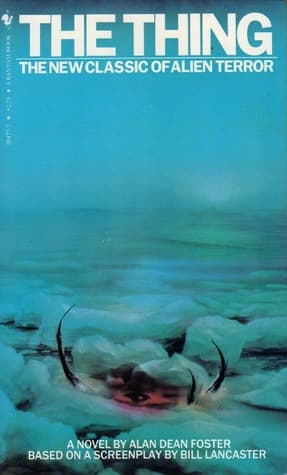
- The Thing
Alan Dean Foster
4.0 (820) average on GoodreadsFantasyFeatures a small crew isolated with a shapeshifting alien threat.
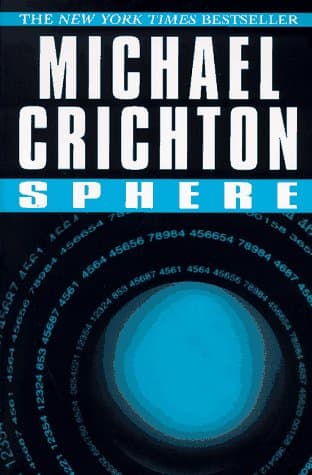
- Sphere
Michael Crichton
3.8 (167k) average on GoodreadsThrillerExploration of an alien craft leads to psychological and physical horror.
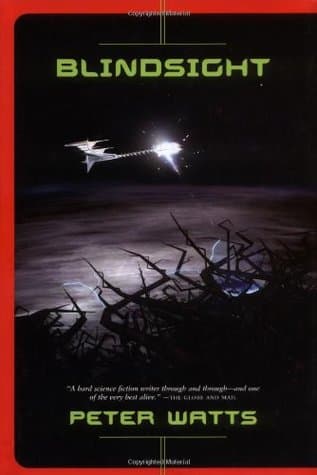
- Blindsight
Peter Watts
4.0 (27k) average on GoodreadsFantasyFirst contact with truly alien, incomprehensible life forms in deep space.
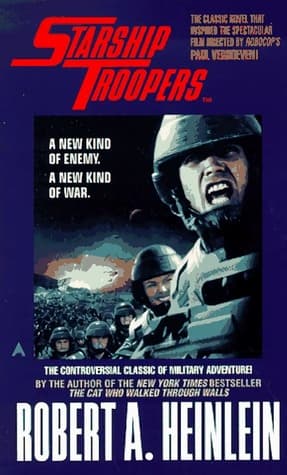
- Starship Troopers
Robert A. Heinlein
4.0 (192k) average on GoodreadsFantasyWhile both feature human encounters with alien life, Heinlein's work is a military science fiction novel exploring societal structures, civic duty, and fascism. Foster's 'Alien' is a contained psychological horror and survival thriller, focused on the individual struggle against a terrifying biological threat rather than grander socio-political themes. Heinlein's aliens are a collective enemy for a militarized humanity; Foster's alien is a singular, perfect predator.
- Dune
Frank Herbert
4.2 (766k) average on GoodreadsFantasyHerbert's 'Dune' is an epic space opera that delves into complex political intrigue, ecology, religion, and the evolution of humanity on a planetary scale. Foster's 'Alien' is a stark, intimate horror story focused on the immediate threat to a small crew. While both are landmark science fiction, 'Dune' builds vast worlds and intricate societies, whereas 'Alien' strips everything down to a primal fight for survival against a single, relentless organism, emphasizing vulnerability rather than power.
- Angels & Demons
Dan Brown
3.9 (2.7M) average on GoodreadsThrillerA Harvard symbologist races through Rome's ancient sites, deciphering cryptic clues to unmask the Illuminati and stop a vengeful plot to destroy the Vatican with a stolen antimatter weapon.


Enjoyed the summary?
A summary gives you the shape of the book. The book itself has the detail, the examples and the voice.
Find Alien on AmazonAs an Amazon Associate, BookBrief earns from qualifying purchases. How we're funded