

Synopsis
Covers the whole plot, including the ending.
- Difficulty
- Easy
- Pacing
- Fast
- Mood
- Suspenseful, Adventurous, Hopeful, Dystopian
- Read it if
- You enjoy dystopian stories with child protagonists who fight against oppressive systems, and you like a mix of suspense and adventure.
- Skip it if
- You prefer fantasy over science fiction or find stories about totalitarian regimes too dark for children's literature.
Among the Enemy Plot Summary
Covers the whole plot, including the ending.
The Forest Attack
Matthias, a twelve-year-old 'third child' hiding with his family in the woods, sees a skirmish between rebels and the Population Police. During the fight, Commander Hendricks, an officer, is injured and pinned under a tree. Despite his family's rule to avoid authorities, Matthias helps. He frees Hendricks, who is severely wounded. Before losing consciousness, Hendricks recognizes Matthias as a 'third child' but, instead of reporting him, sees his kindness as potential. He orders his subordinates to take Matthias to Population Police headquarters for an unknown purpose, changing Matthias's life.
Arrival at Headquarters
Matthias is taken to the heavily guarded Population Police headquarters. He is terrified, believing he will be executed for being an illegal third child. However, Commander Hendricks, recovering, offers Matthias a choice: death or a new life as a recruit. Matthias receives a new name, Alex, and a false identity as a legal second child whose family died. He is assigned to barracks with other recruits, all legal children, and begins to learn the strict rules and beliefs of the Population Police. He struggles to adapt to the disciplined life and the constant fear of being discovered.
Training and Indoctrination
Matthias, now 'Alex,' undergoes intense physical and ideological training. He learns about the 'necessity' of the Population Law, which limits families to two children to prevent overpopulation. Instructors, like the stern Sergeant Bob, preach about the dangers of 'shadow children' and rebels. Matthias, desperate to survive and maintain his cover, outwardly conforms, excelling in training. He learns self-defense, surveillance, and loyalty to the Population Police. Internally, he struggles with his past and his forced new reality, constantly fearing exposure.
Meeting Nina
During training, Matthias meets Nina, a seemingly ordinary recruit who is also a 'third child' in disguise. Nina, captured years ago and forced into the Population Police, subtly reveals her true identity and her loyalty to Mr. Talbot's resistance movement. She explains she has been undercover for years, gathering intelligence and looking for ways to undermine the regime. Nina recognizes Matthias's fear and his genuine nature, seeing him as a potential ally. She begins to test his loyalty and hints at a larger plan that needs his help, planting seeds of hope and danger in Matthias's mind.
The Plan to Expose
Nina tells Matthias about her mission: to find evidence that the Population Police are hoarding resources and manipulating information, not protecting the public. She believes hidden files or communications within the headquarters could expose their corruption. Nina proposes a plan: they must access restricted areas and find proof of the Population Police's lies. Matthias is hesitant, fearing failure, but Nina's conviction and their shared bond as 'third children' convince him. He realizes this is his chance to fight the system that oppressed his family.
Gathering Evidence
Matthias and Nina begin their covert operation, using their training and knowledge of the headquarters. They observe patrol routes, identify surveillance blind spots, and listen to conversations, gathering information. Nina, with more experience, knows key personnel and their habits. Matthias, with his fresh perspective, notices details others might miss. They find inconsistencies in official reports and hints of hidden agendas. Tension is constant, as any mistake could lead to exposure and severe punishment. Their trust in each other grows as they navigate the dangerous headquarters.
The Hidden Archives
Following a lead, Matthias and Nina find a concealed server room, a restricted area. They bypass security, using Nina's access codes and Matthias's agility. Inside, they find digital archives with incriminating evidence: true population statistics, records of resource hoarding, and plans to manipulate public opinion. The data confirms Nina's suspicions—the Population Police have been deceiving the public about resource scarcity to justify their laws and maintain control. They realize this information, if broadcast, could shatter the regime's credibility and spark rebellion.
The Broadcast Plan
With the evidence, Nina explains their next step: transmit the data to the outside world, specifically to Mr. Talbot's rebel forces, who can then share it with the public. They target the main communications hub within headquarters. The plan is risky, requiring them to access the hub during a brief window when security is relaxed and upload a large amount of data without detection. Matthias, though terrified, is determined. He understands the immense stakes and how this information could change the lives of countless 'third children' like him.
The Transmission
Matthias and Nina execute their plan to transmit the data. Under cover of night, they infiltrate the communications hub. Matthias acts as a lookout while Nina, using her technical skills, uploads the encrypted files. The process is slow. Just as the transmission nears completion, Sergeant Bob, on an unexpected patrol, approaches. A tense moment follows, but Nina, thinking quickly, creates a diversion, allowing the last of the data to be sent. They narrowly escape detection, leaving headquarters knowing their mission is complete, though their safety is now more uncertain.
Escape and Aftermath
After successfully transmitting the data, Matthias and Nina know they cannot stay at headquarters. They make a daring escape, using their knowledge of the building's less-guarded exits. They meet members of Mr. Talbot's resistance movement outside the city. Soon after, news of the Population Police's deception spreads quickly. Public outrage grows, and the regime's authority begins to crumble. Matthias, reunited with his true identity, looks toward a future where 'third children' might be free. He and Nina, now heroes, join the resistance, ready to fight for a new, just society.
Principal Figures
Matthias (Alex)
Protagonist
A twelve-year-old 'third child' forced to infiltrate the Population Police.
Matthias is initially a fearful but compassionate boy, living in constant hiding due to his illegal status as a 'third child.' He possesses an innate sense of justice and empathy, which leads him to save Commander Hendricks despite the danger. Forced to adopt the persona of 'Alex' within the Population Police, he is intelligent and adaptable, quickly learning their ways. He struggles with the moral conflict of his false identity and the propaganda he's fed, but his core desire for freedom and justice for 'third children' ultimately drives him.
Relationships: Nina (Fellow 'third child' and co-conspirator in the resistance.); Commander Hendricks (The Population Police officer Matthias saved, who offers him a 'new life.'); His Family (His hidden 'third child' family, whom he misses and fights for.)
Nina
Supporting
A 'third child' working undercover within the Population Police for the resistance.
Nina is a resourceful, intelligent, and fiercely determined young woman. Like Matthias, she is a 'third child' who was forced into the Population Police, but she has secretly been working for the resistance for years. She is a master of disguise and deception, able to maintain her cover while actively undermining the regime. Nina is pragmatic and strategic, always focused on the larger mission. She is a mentor and an ally to Matthias, guiding him through the complexities and dangers of their shared mission. Her experience has made her resilient and unwavering in her commitment to justice.
Relationships: Matthias (Fellow 'third child' and co-conspirator in the resistance.); Mr. Talbot (Her contact and leader within the resistance movement.)
Commander Hendricks
Supporting
A high-ranking Population Police officer with a complex moral compass.
Commander Hendricks is a powerful and influential figure within the Population Police. He is severely injured in the opening scene and is saved by Matthias. This act of kindness seems to spark a flicker of humanity or pragmatism in him, leading him to recruit Matthias rather than execute him. While he firmly believes in the Population Law and the authority of the police, he also shows a degree of shrewdness and perhaps a hidden capacity for recognizing potential beyond the strictures of the law. His motivations for recruiting Matthias are ambiguous, possibly seeing him as a useful tool or genuinely believing he can be 'reformed.'
Relationships: Matthias (The boy he saved, whom he then recruits into the Population Police.)
Sergeant Bob
Antagonist
A strict and loyal Population Police instructor.
Sergeant Bob is a stern, by-the-book instructor at the Population Police headquarters. He embodies the rigid ideology and unquestioning loyalty expected of all officers. He is a constant presence during Matthias's training, enforcing rules, delivering propaganda, and instilling fear. Sergeant Bob is suspicious and observant, making him a recurring threat to Matthias and Nina's covert operations. He genuinely believes in the necessity of the Population Law and views 'third children' and rebels as dangerous enemies of society. His lack of empathy makes him a formidable obstacle.
Relationships: Matthias (Matthias's strict training instructor and a constant source of fear.)
Mr. Talbot
Mentioned
The leader of the resistance movement.
Mr. Talbot is the unseen but influential leader of the resistance movement that seeks to overthrow the Population Police. He is Nina's contact and the ultimate recipient of the incriminating evidence they gather. He is portrayed as a strategic and determined leader, working tirelessly to expose the truth and liberate 'third children.' His existence provides hope and a clear objective for Nina and, subsequently, Matthias. He represents the organized opposition to the totalitarian regime.
Relationships: Nina (Her leader and contact within the resistance.); Matthias (The ultimate recipient of Matthias's efforts.)
Matthias's Family
Mentioned
Matthias's parents and siblings, living in hiding as 'third children.'
Matthias's family consists of his parents and his two siblings, all of whom are 'third children' living illegally in the woods. They are a close-knit unit, constantly fearing detection by the Population Police. Their existence highlights the harsh realities and injustices of the Population Law. Matthias's longing to return to them and his desire to protect them are powerful motivators for his actions. They represent the innocent victims of the regime and the hope for a future where such families can live freely.
Relationships: Matthias (Matthias's immediate family, whom he misses and fights for.)
Themes & Insights
Identity and Deception
Identity is a central theme, as Matthias must abandon his true self and become 'Alex.' This deception is about survival and navigating moral complexities. He constantly questions who he is and who he pretends to be, a struggle worsened by the indoctrination he receives. Nina's long-term deception shows the psychological toll and strategic need of living a double life. This theme explores how appearances can hide inner truths and how individuals keep their core identity in oppressive environments, as Matthias holds onto memories of his family despite his 'Alex' facade.
“He was Alex now. He had to be Alex. But inside, he was still Matthias, still a third child, still a rebel.”
Resistance Against Oppression
The novel explores resistance against a totalitarian regime. The Population Police represent absolute control, enforcing brutal laws under the guise of public good. Matthias, a seemingly powerless 'third child,' becomes an unlikely hero who, with Nina, works to dismantle this oppressive system from within. Their actions, though small at first, show that individuals can challenge overwhelming power. Mr. Talbot's larger resistance movement provides context and hope, showing that collective action is possible and necessary to fight for freedom and justice against systematic injustice.
“What can one boy do against a wicked bureaucracy? Everything, if he has the truth.”
The Power of Information
Information is both a tool of control and a weapon of liberation. The Population Police maintain power by manipulating facts and controlling the narrative about overpopulation and resource scarcity. Their propaganda keeps the public compliant and fearful. Conversely, Matthias and Nina's mission involves uncovering the truth – the hidden data and genuine statistics that expose the regime's lies. Transmitting this information to the outside world becomes the catalyst for the regime's downfall, showing that truth, once revealed, can shatter even the most entrenched power systems and ignite revolution.
“The truth was a spark, and they were about to light a fire.”
Trust and Betrayal
In a world of constant surveillance and deception, trust is a precious and dangerous commodity. Matthias constantly wonders whom he can trust within the Population Police headquarters, where even a friendly face could be an informant. His initial suspicion of Nina eventually turns into deep, necessary trust as they embark on their dangerous mission. This theme highlights the risks of forming alliances in a repressive environment and how betrayal can come from unexpected sources, making the bond between Matthias and Nina even more significant and vital for their survival and success.
“In this place, trust was a luxury, a weapon, and a deadly gamble.”
Plot Devices & Literary Techniques
The 'Third Child' Status
A societal decree that labels children beyond the first two as illegal and subject to extermination.
This central plot device establishes the dystopian setting and the core conflict. It creates immediate stakes for Matthias and his family, forcing them into hiding and making Matthias's identity a constant source of danger. It also serves as a powerful symbol of the Population Police's oppressive control and the dehumanization of individuals. The existence of 'third children' drives the entire narrative, motivating both the resistance and the actions of the protagonists to fight against this unjust law.
Undercover Infiltration
Matthias and Nina's strategy of pretending to be loyal Population Police recruits.
This device is crucial to the plot, allowing the protagonists to gain access to the heart of the enemy's operations. It creates constant tension and suspense, as their true identities are always at risk of exposure. The infiltration enables them to gather intelligence and find the evidence needed to expose the Population Police, demonstrating that sometimes the most effective way to fight an enemy is from within their own ranks, by understanding and manipulating their systems.
The Hidden Archives/Data
A secret collection of incriminating information about the Population Police's true motives.
This device serves as the primary objective of Matthias and Nina's mission. It is the 'macguffin' that drives the plot forward, representing the definitive proof needed to expose the regime's corruption. The difficulty in accessing and transmitting this data builds suspense and highlights the power of truth in a world built on lies. Its discovery and dissemination are the turning point of the narrative, leading directly to the potential downfall of the Population Police.
Among the Enemy Quotes
“Luke had always felt like an outcast, but here, among the enemy, he was just one of many.”
“Sometimes, you have to pretend to be someone you're not to find out who you really are.”
“The hardest part of being a shadow child wasn't the hiding, it was the not existing.”
“Fear was a powerful motivator, but hope was even stronger.”
“Being free wasn't just about not being caught; it was about having choices.”
“You can't change the past, but you can change the future.”
“Even in the darkest places, there can be light, if you know where to look.”
“Trust was a fragile thing, easily broken, but essential for survival.”
“Sometimes the greatest rebellion is simply to exist.”
“The world was bigger than he had ever imagined, and far more dangerous, but also full of possibilities.”
“It wasn't about being brave all the time, but about being brave when it mattered most.”
“Every secret had a price, and sometimes that price was loneliness.”
“Family wasn't always blood; sometimes it was the people who chose to protect you.”
Quiz
10 questions on the plot and the characters. Each answer comes with a short explanation.
Question 1
What is Matthias's illegal status that leads to his initial capture?
- He is a rebel sympathizer.
- He is an illegal third child.
- He stole food from a government facility.
- He was caught outside the designated living zones.
Show answer
B. He is an illegal third child. Matthias is an illegal third child, a status that is central to the plot and his subsequent interactions with the Population Police.
Question 2
How does Matthias initially end up at Population Police headquarters?
- He was forcibly conscripted after his family was discovered.
- He willingly turned himself in to escape the rebels.
- He unwittingly saves a Population Police officer.
- He was mistaken for another recruit during a raid.
Show answer
C. He unwittingly saves a Population Police officer. Matthias's journey to headquarters begins when he inadvertently saves an officer, leading to his recruitment as a trainee.
Question 3
Who is Nina, and what is her initial proposition to Matthias?
- She is a high-ranking Population Police officer who takes Matthias under her wing.
- She is another third-born who enlists his help in a plot to undermine the Population Police.
- She is a rebel spy who tries to convince Matthias to escape headquarters.
- She is a fellow trainee who becomes his closest friend and confidante.
Show answer
B. She is another third-born who enlists his help in a plot to undermine the Population Police. Nina is introduced as another third-born who immediately tries to involve Matthias in her plans to sabotage the Population Police from within.
Question 4
What is the primary challenge Matthias faces while working with Nina inside Population Police headquarters?
- He struggles with the physical demands of the training.
- He is under constant scrutiny and doesn't know whom to trust.
- He misses his family and wants to escape immediately.
- He has difficulty understanding the complex rules and regulations.
Show answer
B. He is under constant scrutiny and doesn't know whom to trust. The synopsis highlights Matthias's constant scrutiny and distrust as a key challenge, making his involvement with Nina particularly risky.
Question 5
What is the overarching theme explored by Matthias's struggle against the Population Police?
- The importance of physical strength in overcoming adversity.
- The power of individual action against oppressive bureaucracy.
- The inevitable failure of all resistance movements.
- The necessity of strict population control for societal stability.
Show answer
B. The power of individual action against oppressive bureaucracy. The question 'What can one boy do against a wicked bureaucracy?' directly points to the theme of individual agency against a large, oppressive system.
Question 6
Before being taken to headquarters, Matthias is caught in the crossfire between which two groups?
- Farmers and merchants.
- Rebels and the Population Police.
- Two rival gangs.
- Citizens and foreign invaders.
Show answer
B. Rebels and the Population Police. The story begins with Matthias caught between the rebels and the Population Police, setting the stage for his subsequent capture.
Question 7
What is the core conflict that drives the plot, as suggested by the title and synopsis?
- Matthias's internal struggle with his identity as a third child.
- The direct confrontation between the rebels and the Population Police.
- Matthias's choice between hiding his identity and actively fighting the system.
- The challenge of surviving in a post-apocalyptic world.
Show answer
C. Matthias's choice between hiding his identity and actively fighting the system. The title 'HIDE OR FIGHT?' and Matthias's predicament of being an illegal third child forced into the heart of the system directly point to his central conflict: whether to remain hidden or actively work against the oppressive regime.
Question 8
What distinguishes Nina from other Population Police trainees, making her a potential ally for Matthias?
- She is the only one who openly questions the Population Police's methods.
- She is also an illegal third-born child.
- She has a family member who is a high-ranking rebel.
- She possesses unique skills that make her indispensable to the police.
Show answer
B. She is also an illegal third-born child. Nina's shared status as an illegal third-born child is the key factor that connects her to Matthias and drives her motivation to undermine the Population Police.
Question 9
The phrase 'wicked bureaucracy' used in the synopsis primarily refers to which entity?
- The rebel organization.
- The system run by the Population Police.
- The local government in Matthias's hometown.
- A corrupt group of merchants.
Show answer
B. The system run by the Population Police. The 'wicked bureaucracy' refers directly to the Population Police and the oppressive system they enforce, which Matthias is up against.
Question 10
Given Matthias's constant scrutiny and the uncertainty of whom to trust, what is a likely psychological challenge he faces throughout the story?
- Overconfidence in his abilities to outsmart the police.
- Paranoia and extreme difficulty in forming alliances.
- Overwhelming boredom due to the repetitive nature of his training.
- A strong desire to become a loyal Population Police officer.
Show answer
B. Paranoia and extreme difficulty in forming alliances. The text explicitly states 'Matthias is under constant scrutiny, and he has no idea whom he can trust.' This directly implies a struggle with paranoia and the difficulty of trusting others, even potential allies.
Among the Enemy FAQ
What is the core conflict Matthias faces at the beginning of 'Among the Enemy'?
Matthias, an illegal third child, is constantly in hiding from the Population Police. His family lives in fear, and his initial conflict is the struggle for survival and concealment, which is violently disrupted when his family's hiding place is compromised during a clash between rebels and the Population Police.
How does Matthias end up at Population Police headquarters, despite being an illegal third child?
During a skirmish, Matthias inadvertently saves a Population Police officer from a rebel attack. Instead of exposing him, the officer, Officer Nissen, brings Matthias back to headquarters, believing he can be molded into a loyal recruit, thus giving Matthias an unexpected entry into the very organization that hunts his kind.
Who is Nina and what is her initial role in Matthias's journey at headquarters?
Nina is another third-born child who is also training at Population Police headquarters. She quickly befriends Matthias, revealing her true allegiance lies with the rebels and enlisting his help in a dangerous plot to undermine the Population Police from within, making her a crucial ally and catalyst for Matthias's actions.
What is the ultimate goal of Nina's plan, and how does Matthias fit into it?
Nina's ultimate goal is to expose the Population Police's oppressive practices and dismantle their system by revealing the existence of all third-borns, not just the ones they 're-educate.' Matthias, with his unique position and access, is instrumental in gathering information and executing the critical steps of her risky plan.
What is the significance of the 'special diet' and 'exercises' given to the third-borns at headquarters?
The 'special diet' and 'exercises' are subtle methods used by the Population Police to control and potentially brainwash the third-born children. They are designed to weaken their resolve, make them compliant, and erase their memories of their original families and identity, effectively turning them into loyal agents of the state.
Are there any clues about Officer Nissen's true motivations or potential conflicted loyalties?
While Officer Nissen initially appears to be a loyal Population Police officer, his decision to bring Matthias in rather than report him, and his occasional moments of leniency, hint at a deeper complexity. He might be disillusioned with aspects of the system or genuinely believe in 'reforming' third children, rather than outright eliminating them, suggesting a subtle internal conflict.
What is the true purpose behind the Population Police's 'adoption' program for third-borns?
The 'adoption' program is a deceptive facade. Its true purpose is not to provide loving homes but to integrate selected third-borns into society as compliant citizens, often under new identities, while also serving as a means to identify and control them. This allows the Population Police to maintain the illusion of order while secretly manipulating their population.
How does Matthias's experience as a hidden third child influence his decision-making at headquarters?
Matthias's entire life has been defined by fear and secrecy, making him inherently cautious and observant. This upbringing allows him to navigate the treacherous environment of headquarters with a heightened sense of suspicion and an ability to read subtle cues, which is crucial for his survival and his eventual involvement in Nina's plot.
Analyze the psychological manipulation employed by the Population Police on the third-born children.
The Population Police employs a systematic psychological manipulation by isolating the children, stripping them of their identities, and providing a controlled environment. They use fear, the promise of safety, and a distorted sense of belonging to break down the children's resistance and reprogram them to accept the state's ideology, effectively erasing their pasts.
What internal conflict does Matthias face regarding trust, particularly with Nina and Officer Nissen?
Matthias grapples with profound trust issues, stemming from his life in hiding. He constantly questions Nina's motives and whether her rebel allegiance is genuine, while simultaneously trying to discern if Officer Nissen's occasional kindness is a genuine gesture or merely a sophisticated form of manipulation, leaving him in a perpetual state of vigilance.
How does Matthias's desire for belonging conflict with his loyalty to his family and the rebel cause?
Matthias, having lived a life of isolation, experiences a powerful yearning for belonging and acceptance, which the Population Police subtly exploits. This desire conflicts with his deep-seated loyalty to his family and the burgeoning rebel cause, creating an internal struggle between the comfort of perceived safety and the moral imperative to fight for freedom.
Is Matthias a hero by choice or circumstance? Discuss.
Matthias is largely a hero by circumstance, thrust into a pivotal role due to his unique situation as a third-born who inadvertently saves an officer. However, his subsequent choices to align with Nina and actively resist the Population Police demonstrate a growing moral agency, transforming him from a reluctant participant to a deliberate agent of change.
To what extent is the Population Police a reflection of real-world authoritarian regimes?
The Population Police strongly reflects real-world authoritarian regimes through its control over birth rates, surveillance, propaganda, and the re-education of dissidents. Its methods of stripping individuals of identity and forcing conformity mirror historical and contemporary examples of governments that prioritize state control over individual liberty and human rights.
How does the ending of 'Among the Enemy' offer hope while still acknowledging the ongoing struggle?
The ending offers hope by showcasing Matthias and Nina's successful exposure of the Population Police's secrets, igniting a spark of rebellion and awareness among the populace. However, it realistically acknowledges that the fight against the oppressive bureaucracy is far from over, implying that this is merely the beginning of a longer, more arduous struggle for true freedom.
Discuss the ethical dilemma of Nina's plan, particularly regarding the potential risks to other third-born children.
Nina's plan presents a significant ethical dilemma because it involves a high risk to all third-born children, potentially exposing them to greater danger from the Population Police. While her goal is liberation, the immediate consequences of her actions could lead to increased persecution, forcing Matthias to weigh the greater good against individual safety.
What is the symbolic meaning of Matthias's original name versus the name he is given at headquarters?
Matthias's original name represents his true identity and connection to his family, a symbol of his individuality. The new name he is given at headquarters is a tool of dehumanization and control, symbolizing the Population Police's attempt to erase his past and mold him into a compliant citizen, stripping away his personal history and autonomy.
Could Officer Nissen have been a double agent, working for the rebels or an internal reform movement?
While the book doesn't explicitly state it, Officer Nissen's actions — particularly his initial decision to save Matthias and his occasional subtle leniency — could be interpreted as signs of a conflicted loyalty or even a secret affiliation with the rebels or an internal reform movement. His character remains ambiguous enough to suggest he might not be entirely committed to the Population Police's ideology.
How does the concept of 'family' evolve for Matthias throughout the story?
Initially, family for Matthias is his biological parents and siblings, defined by shared hiding and survival. At headquarters, Nina and the other third-borns create a new, chosen family bound by shared oppression and a common cause. This evolution highlights that family can be forged through shared ideals and struggle, not just blood.
About the author

Margaret Peterson Haddix is an American author known for her works of children's and young adult fiction. Some of her notable books include "Among the Hidden," "Just Ella," "Among the Impostors," "Among the Betrayed," "Running Out of Time," and "Among the Brave." Her stories often explore themes of identity, freedom, and the consequences of societal rules.
Similar books
- The Giver
Lois Lowry
4.1 (1.8M) average on GoodreadsFantasyFeatures a young protagonist uncovering the dark truths of a seemingly perfect dystopian society.
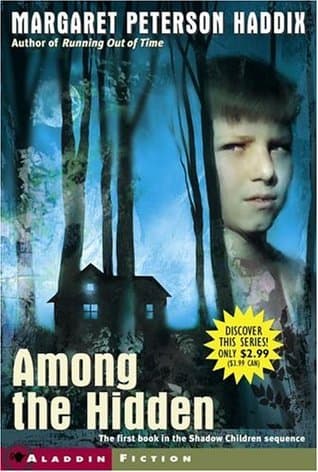
- Among the Hidden
Margaret Peterson Haddix
4.0 (112k) average on GoodreadsFantasyFirst book in the 'Shadow Children' series, sharing the same world, themes, and protagonist.
- Uglies
Scott Westerfeld
3.9 (560k) average on GoodreadsFantasyYoung protagonist in a dystopian society discovering a conspiracy and fighting for freedom.
- The Hunger Games
Suzanne Collins
4.3 (6.4M) average on GoodreadsFantasy"Among the Enemy" shares with The Hunger Games a dystopian setting and a focus on young protagonists fighting against an oppressive regime. Both series feature complex character development, particularly in allies who might initially seem antagonistic. However, Collins's Katniss Everdeen generally exhibits more proactive agency and internal conflict compared to Haddix's Matthias, whose journey is often more reactive.
- Harry Potter and the Sorcerer's Stone
J.K. Rowling
4.5 (7M) average on GoodreadsFantasyRescued from a miserable life under the stairs, an orphaned boy discovers he's a wizard destined for a magical school, where he uncovers a dangerous secret tied to the dark wizard who murdered his parents.
- 1984
George Orwell
4.2 (3.1M) average on GoodreadsPoliticsIn a future where surveillance and thought control are absolute, a man's search for truth clashes with the Party, showing that hope can be a form of rebellion.





Enjoyed the summary?
A summary gives you the shape of the book. The book itself has the detail, the examples and the voice.
Find Among the Enemy on AmazonAs an Amazon Associate, BookBrief earns from qualifying purchases. How we're funded