
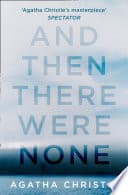
Synopsis
Covers the whole plot, including the ending.
- Difficulty
- Medium
- Pacing
- Moderate
- Mood
- Suspenseful, Claustrophobic, Tense, Dark
- Read it if
- You love classic whodunits, psychological thrillers, and stories with high stakes and a claustrophobic atmosphere.
- Skip it if
- You prefer fast-paced action over intricate plotting and character-driven suspense, or dislike stories with a high body count.
And Then There Were None Plot Summary
Covers the whole plot, including the ending.
The Invitation and the Journey to Soldier Island
Eight guests, along with two new staff members, Fred Narracott (the boatman) and Mr. and Mrs. Rogers (the butler and cook), travel to Soldier Island off the coast of Devon. Each guest received a mysterious invitation: Vera Claythorne, a former governess, is hired as a secretary; Philip Lombard, a mercenary, is offered a vague job; Emily Brent, an older woman, is invited for a holiday by an old friend; General Macarthur thinks he is meeting old army friends; Justice Wargrave, a retired judge, is invited by a fake Lady Constance Culmington; Dr. Armstrong, a surgeon, is hired to see a patient; Anthony Marston, a reckless young man, is invited to a party; and Mr. Blore, a former detective, pretends to be Mr. Davis, hired to watch the others. When they arrive, their host, U. N. Owen, is not there.
The Voice and the Accusations
As the ten people gather for dinner, a gramophone record plays. A voice from nowhere accuses each person of murder, for which they avoided legal punishment. The accusations are specific, describing the victims and situations. For example, Vera Claythorne is accused of letting Cyril Hamilton drown, and Justice Wargrave of unfairly sentencing Edward Seton to death. The group is shocked and reacts with anger, fear, and denial. Soon after the accusations, Anthony Marston, accused of hitting two children with his car, chokes and dies from what Dr. Armstrong first thinks is cyanide poisoning in his drink. This death matches the first line of the nursery rhyme 'Ten Little Soldier Boys' displayed in each bedroom.
Panic Sets In and the Second Death
The remaining nine guests are very troubled by Marston's death and the gramophone's accusations. They realize they are stuck on the island, with no way to contact the mainland or leave, as Fred Narracott, the boatman, will not return until the weather improves. The next morning, Mrs. Rogers, the cook and housekeeper, is found dead in her bed from too much chloral hydrate. Her death matches the second line of the nursery rhyme: 'One choked his little self, and then there were nine. One overslept himself, and then there were eight.' The remaining guests start to suspect each other, and the mood becomes heavy with fear and mistrust. They search the island for U. N. Owen, but find no one else.
General Macarthur's Demise and Growing Paranoia
General Macarthur, becoming more quiet and accepting, walks off alone. He is found dead on the beach, hit on the back of the head with a heavy object. This is the third death, matching the nursery rhyme's 'One said he'd stay there, then there were seven.' Finding his body increases the terror among the remaining seven. They search the island and house again, concluding that no one else can be on the island. This makes them face the truth: the killer must be one of them. Suspicion falls heavily on Dr. Armstrong, because he has access to poisons and medical knowledge, though no one is truly above suspicion.
Mr. Rogers's Murder and the Missing Figurines
The next morning, Mr. Rogers, the butler, is found dead in the woodshed, killed by an axe blow to the back of his head while chopping wood. This is the fourth death, fulfilling 'One chopped himself in half, and then there were six.' A key detail appears: a small porcelain soldier figurine, like the ten first on the dining room table, disappears after each death. This grim count reinforces the killer's use of the nursery rhyme. The remaining six guests, Justice Wargrave, Vera Claythorne, Philip Lombard, Emily Brent, Dr. Armstrong, and Mr. Blore, are now very afraid and suspicious, locking themselves in their rooms at night.
Emily Brent's Death and the Hypodermic Syringe
Emily Brent, sitting alone on the terrace, is found dead. She was injected with cyanide using a syringe, with a bee nearby, fulfilling 'A bumble-bee stung one, and then there were five.' Philip Lombard later finds the missing syringe. Suspicion changes, and the group's unity breaks down further. They search each other's belongings for weapons and keys, finding Lombard's revolver missing. The mood is full of accusations and fear, as they realize anyone could be the murderer. The constant threat makes them question every action and word spoken by the others.
Justice Wargrave's Apparent Demise
Justice Wargrave is found shot in the head, appearing to be the fifth victim, fulfilling 'One got in Chancery, and then there were four.' He is dressed in judge's robes with a wig made from Emily Brent's wool. The group is now down to four: Vera Claythorne, Philip Lombard, Dr. Armstrong, and Mr. Blore. Lombard's revolver, which had been missing, is found in Wargrave's room, making him a main suspect for the other deaths. However, the apparent death of Wargrave, a symbol of justice, adds more terror and confusion to the nightmare.
Dr. Armstrong Vanishes
The next morning, Dr. Armstrong is gone. His disappearance, rather than a clear murder, matches the nursery rhyme's 'One got in a big red bear, and then there were three.' The remaining three—Vera Claythorne, Philip Lombard, and Mr. Blore—believe Armstrong is the killer and has hidden, ready to attack again. They spend the day on high alert, trying to stay together and watching each other constantly. The psychological stress of being alone and constantly threatened is huge, pushing them to their breaking point.
Mr. Blore's Violent End
While Vera and Lombard try to signal a passing boat, Mr. Blore is killed in the house. A large marble bear clock, pushed from a window above, falls onto his head, fulfilling 'A big red bear hugged one, and then there were two.' Soon after, Vera and Lombard find Dr. Armstrong's body washed ashore, confirming he was not the killer. His death, by drowning, fits the 'red herring' line in the rhyme, suggesting he was tricked to the sea. This leaves Vera and Lombard as the last two survivors, trapped in a deadly game with a killer who is still alive and among them.
The Final Confrontation and the Killer's Revelation
Vera Claythorne and Philip Lombard, the last two, suspect each other. Vera manages to take Lombard's revolver and shoots him, believing him to be the killer, fulfilling 'One got in a big red bear, and then there were two.' She then goes back to the house, where she finds a noose hanging from her bedroom ceiling and a chair underneath. Overwhelmed by suggestion and her guilt for Cyril Hamilton's death, she kicks the chair away and hangs herself, fulfilling the final line: 'He went and hanged himself, and then there were none.' Later, the police find all ten bodies. A manuscript in a bottle, written by Justice Wargrave, shows he planned the whole plot, faking his own death, to give his own twisted justice to those who escaped the law.
And Then There Were None Characters
Justice Lawrence Wargrave
Antagonist/Protagonist
A retired judge who orchestrates the murders on Soldier Island.
Justice Wargrave is a highly intelligent and manipulative retired judge, known for his 'hanging judge' reputation. He harbors a deep-seated, sadistic desire to punish those who have escaped legal justice for their crimes. His invitation to Soldier Island is a meticulously planned trap to execute his own brand of 'poetic justice.' He is calm, calculating, and observes the others with a keen, analytical eye, even feigning his own death to complete his master plan. His motivation stems from a twisted sense of justice and a thrill for the macabre, seeing himself as a divine instrument of retribution.
Relationships: Edward Seton (Victim of Wargrave's alleged judicial murder); The other guests (His chosen victims in his elaborate murder plot)
Vera Claythorne
Protagonist
A former governess haunted by the death of a child in her care.
Vera Claythorne is a young, resourceful, and intelligent former governess who comes to Soldier Island believing she has been hired as a secretary. She is haunted by the death of Cyril Hamilton, a child she was supposed to care for, whom she allowed to drown so his uncle, her lover Hugo, would inherit money. She is initially resilient but becomes increasingly fragile and hysterical as the deaths mount, succumbing to guilt and fear. She is observant and tries to maintain a logical approach amidst the chaos, but ultimately her psychological defenses crumble.
Relationships: Cyril Hamilton (Her young charge whom she allowed to drown); Hugo Hamilton (Cyril's uncle and her former lover, for whom she committed her crime); Philip Lombard (Forms a tense alliance with him, but ultimately kills him)
Philip Lombard
Protagonist
A cynical, amoral mercenary with a dark past.
Philip Lombard is an ex-army officer and mercenary, described as a man who 'looks like a panther.' He is cynical, resourceful, and possesses a strong survival instinct. He openly admits to leaving twenty-one East African natives to die in the bush, showing little remorse. Lombard is pragmatic and often the first to suggest practical solutions, such as searching the island. He carries a revolver, which becomes a focal point of suspicion. Despite his hardened exterior, he develops a grudging respect and attraction to Vera, though their alliance is fraught with distrust.
Relationships: 21 East African natives (His victims whom he left to die); Vera Claythorne (Forms a tense, distrustful alliance and romantic tension with her)
Dr. Edward Armstrong
Supporting
A respected surgeon with a secret history of medical malpractice.
Dr. Armstrong is a successful London surgeon who initially seems competent and reassuring. He is accused of operating while drunk and causing the death of a patient, Louisa Mary Clees. He struggles with his past actions and attempts to suppress the memory. On the island, he is often the one to examine the bodies and offer medical opinions, but his past makes him a suspect, especially given his access to drugs. He is somewhat timid and easily manipulated, making him an unwitting pawn in Wargrave's scheme.
Relationships: Louisa Mary Clees (His patient who died on the operating table due to his drunkenness); Justice Wargrave (Unwittingly aids Wargrave in his plan before being killed by him)
William Henry Blore
Supporting
A former police inspector, now a private detective, with a history of perjury.
William Henry Blore is a burly, ex-police inspector who initially comes to the island under the alias 'Mr. Davis,' hired to observe the others. He is accused of having given false testimony in court, leading to the wrongful conviction and death of James Landor. Blore is suspicious by nature, always looking for clues and trying to assert his authority, but he lacks true insight into the killer's mind. He is physically strong but ultimately vulnerable, becoming a victim of the killer's elaborate plan. His past as a police officer ironically does not save him.
Relationships: James Landor (Man he framed and whose death he caused through perjury)
Emily Brent
Supporting
A rigid, elderly spinster, deeply religious and morally judgmental.
Emily Brent is an elderly, deeply religious, and morally inflexible spinster. She shows no remorse for her past actions, specifically her role in the suicide of her pregnant servant, Beatrice Taylor, whom she fired without references. She believes her actions were righteous and divinely sanctioned. Emily is judgmental and critical of the other guests, often quoting scripture and maintaining an air of superiority. Her rigid beliefs prevent her from acknowledging her own culpability, making her a particularly unsympathetic character.
Relationships: Beatrice Taylor (Her pregnant former servant whom she dismissed, leading to suicide)
General John Macarthur
Supporting
A retired general haunted by a wartime betrayal.
General Macarthur is the oldest of the male guests, a retired general who is accused of sending his wife's lover, Arthur Richmond, to his death during the war. He is guilt-ridden and withdrawn, often lost in his own thoughts about the past. He quickly resigns himself to his fate on the island, seemingly accepting that he deserves to die. His melancholic demeanor and isolation make him an easy target and an early victim, as he openly expresses his desire for the ordeal to end.
Relationships: Arthur Richmond (His wife's lover, whom he sent to his death); Leslie Macarthur (His deceased wife)
Thomas Rogers
Supporting
The meticulous butler, implicated in his former employer's death.
Mr. Rogers is the butler on Soldier Island, hired along with his wife, Ethel. He is meticulous, efficient, and outwardly calm, but beneath his composed exterior, he is terrified. He and his wife are accused of withholding medicine from their former employer, Miss Brady, leading to her death and their inheritance. He attempts to maintain order and routine amidst the chaos, but his fear is palpable. His professional demeanor slowly crumbles under the pressure of the unfolding murders.
Relationships: Ethel Rogers (His wife and co-conspirator in Miss Brady's death); Miss Brady (Their former employer, whose death they caused)
Ethel Rogers
Supporting
The cook and housekeeper, frail and easily frightened.
Mrs. Rogers is the cook and housekeeper on Soldier Island, and Mr. Rogers's wife. She is described as a frail, ghost-like woman, perpetually nervous and easily frightened. Like her husband, she is accused of being complicit in the death of their former employer, Miss Brady. Her guilt and fear are evident in her demeanor, and she is the second victim, dying in her sleep from an overdose, likely due to the psychological shock of the gramophone's accusations. Her death emphasizes the killer's methodical nature.
Relationships: Thomas Rogers (Her husband and co-conspirator in Miss Brady's death); Miss Brady (Their former employer, whose death they caused)
Anthony Marston
Supporting
A reckless, wealthy young man, the first victim.
Anthony Marston is a handsome, athletic, and utterly irresponsible young man from a wealthy family. He represents the carefree, amoral youth of the upper class. He is accused of having run over two children, John and Lucy Combes, while speeding, showing no remorse whatsoever and treating it as a minor inconvenience. He is arrogant and self-absorbed, interested only in pleasure and excitement. He is the first to die on Soldier Island, succumbing to cyanide poisoning in his drink, setting the terrifying tone for the events that follow.
Relationships: John and Lucy Combes (Children he killed in a reckless driving accident)
And Then There Were None Themes
Justice and Retribution
The main theme is justice, specifically giving punishment to those who have avoided legal penalties. Justice Wargrave, the killer, believes he is carrying out a higher form of justice, punishing people for crimes the law could not touch. Each victim on Soldier Island is accused of a murder for which they were never convicted. The events ask questions about what justice is, whether it can truly exist outside legal systems, and if it is right to take the law into one's own hands, even with a seemingly good reason.
“'I have always been a law-abiding citizen. But I have also always been a man of justice. And justice, true justice, is not always found within the confines of the law.'”
Guilt and Conscience
Guilt and conscience affect the characters' mental suffering. While some, like Emily Brent and Philip Lombard, show little regret at first, others, like Vera Claythorne and General Macarthur, are deeply troubled by their past actions. The island setting, along with the accusations and growing number of deaths, makes each character face their inner struggles. The nursery rhyme constantly reminds them of their coming death, increasing their guilt and leading some to despair, affecting their behavior and leading to their deaths, whether by the killer or their own mental breakdown.
“'The damned island… It's a trap. A trap to catch us all. And it's working. We're all caught, every one of us, by our own consciences.'”
Isolation and Paranoia
Soldier Island's isolated setting causes the guests' fear. Once cut off from the mainland, the characters realize they are trapped with a killer, leading to extreme mistrust and suspicion. Each death increases the fear, making them suspect even their closest friends. Rooms are locked, alliances change, and every look or gesture is examined. This isolation removes their politeness and shows their basic fears, showing how quickly people can turn on each other when facing an unavoidable threat and no outside authority.
“'And there was no one on the island but their ten selves. And the murderer was one of them.'”
The Nature of Evil
The novel looks at the nature of evil, not just through the killer's actions but also through the victims' past wrongs. Each character, though a victim of Wargrave's plot, has also committed a past crime, showing how common evil is in society. Wargrave's careful, almost artistic, way of killing makes his actions more than simple bad intent; it is a chilling form of calculated, self-justified evil. The story suggests that evil can hide behind respectable appearances and that the desire for control and 'justice' can become something terrible.
“'I have wanted to commit a murder all my life... I wanted to create an insoluble problem; a murder mystery that would defy solution.'”
Appearance vs. Reality
Throughout the novel, there is a constant difference between how things seem and what is real. The guests first act like respectable people, but the recording breaks these appearances, showing their dark pasts. Justice Wargrave, who seems wise and authoritative, is actually the manipulative murderer. His 'death' is a clever trick, making him seem like a victim while he continues to plan the killings. This theme shows that appearances can be very misleading and that true identities and reasons are often hidden beneath layers of pretense.
“'The more you looked at him, the more you realized that the judge was a man of stone, of cold, implacable justice.'”
Plot Devices & Literary Techniques
The Nursery Rhyme ('Ten Little Soldier Boys')
A macabre blueprint for the murders and a countdown to doom.
The nursery rhyme 'Ten Little Soldier Boys' serves as the central plot device, dictating the order and method of each murder. A framed copy hangs in every guest's room, and ten porcelain soldier figurines are displayed in the dining room. As each person dies, a figurine disappears, creating a chilling visual countdown. This device heightens suspense, allows the characters (and the reader) to anticipate the next type of death, and reinforces the killer's methodical, almost theatrical, approach to justice. It also contributes to the psychological horror, as the victims realize their fates are pre-ordained by a child's rhyme.
The Isolated Island Setting (Soldier Island)
A claustrophobic, inescapable trap that fosters paranoia.
Soldier Island is not just a location; it's a character in itself, functioning as a perfect closed-circle mystery setting. Its remoteness and susceptibility to bad weather ensure that the ten individuals are completely cut off from the mainland and any hope of rescue or external intervention. This isolation is crucial for cultivating extreme paranoia and distrust among the guests, as they realize the killer must be one of them. The inability to escape amplifies the suspense and psychological terror, forcing the characters to confront their impending doom without outside help.
The Gramophone Recording
The initial catalyst for the plot, revealing the characters' past crimes.
The gramophone recording, titled 'Swan Song,' is the catalyst that sets the entire plot in motion. It plays a disembodied voice that systematically accuses each of the ten individuals of a past murder for which they escaped legal punishment. This device immediately establishes the premise of the story—that each person present is a murderer—and introduces the motive for the subsequent killings. It shatters the guests' initial composure and forces them to confront their hidden guilt, sowing the seeds of fear and suspicion that will grow throughout their ordeal.
The Red Herring
A deliberate misdirection to mislead both characters and readers.
The concept of a 'red herring' is explicitly mentioned in the nursery rhyme ('A red herring swallowed one') and is a key narrative technique used by Agatha Christie. Dr. Armstrong's apparent disappearance, making him seem like the killer, serves as a major red herring. His body is later found, revealing he was a victim. This device is employed to divert suspicion from the true killer, Justice Wargrave, and to create doubt and confusion among the remaining characters and the reader, making the mystery more challenging to solve and the final revelation more impactful.
The Manuscript in the Bottle
The posthumous confession that solves the 'insoluble' mystery.
The manuscript, found in a bottle by the police after all the deaths, is Justice Wargrave's detailed confession. This device is essential for providing the solution to the seemingly 'insoluble' mystery, revealing Wargrave's identity as the killer, his motives, and the intricate planning behind each murder, including how he faked his own death. It serves as a narrative 'reveal-all' that ties up all loose ends and explains the cunning methodology that allowed him to commit ten murders and still appear to be a victim, thus achieving his goal of an unsolveable crime.
And Then There Were None Quotes
“There are no children on the island. My clients are not children. They are grown men and women.”
“One of us is a murderer.”
“From now on, it is to be a question of 'who is the killer?' and not 'who is the victim?'”
“The Ten Little Soldier Boys nursery rhyme is more than just a coincidence. It's a blueprint.”
“Don't you see? We're the only people on the island. We must be killing each other.”
“There was a silence, a horrible, an unbearable silence.”
“All crime is a mistake. Murder is a mistake. You don't get away with it.”
“The killer is one of us. He's here, in this room.”
“And then there were none.”
“I have wanted to commit murder all my life.”
“My object was to commit a murder, or rather, a series of murders, that should be insoluble.”
“There was no one left alive on Soldier Island.”
“The damned place is like a graveyard.”
“It was impossible for anyone to get on or off the island.”
Quiz
10 questions on the plot and the characters. Each answer comes with a short explanation.
Question 1
What is the name of the mysterious host who lures the ten strangers to Soldier Island?
- Mr. A.N. Other
- Mr. U.N. Owen
- Mr. X.Y. Zed
- Mr. V.W. Unknown
Show answer
B. Mr. U.N. Owen The mysterious host who invites all the guests to Soldier Island is known only by the enigmatic name U.N. Owen, which is later revealed to be a pun on 'Unknown'.
Question 2
What is the first method of murder used by the killer on the island?
- A gunshot
- Stabbing
- Cyanide poisoning
- Drowning
Show answer
C. Cyanide poisoning Tony Marston, the first victim, is poisoned with cyanide in his drink, mimicking the first line of the 'Ten Little Soldier Boys' rhyme about 'one choked himself'.
Question 3
Which item mysteriously disappears from the dining room table after each death?
- A candle
- A silver soldier figurine
- A flower vase
Show answer
B. A silver soldier figurine After each murder, one of the ten little soldier figurines that decorated the dining room table goes missing, visually representing the declining number of survivors as described in the nursery rhyme.
Question 4
Which character is accused of allowing their young ward to drown?
- Justice Wargrave
- Vera Claythorne
- Dr. Armstrong
Show answer
B. Vera Claythorne Vera Claythorne is accused of deliberately allowing Cyril Hamilton, her young charge, to drown so that his uncle Hugo could inherit, and she could marry Hugo.
Question 5
What is the primary motivation for the killer's actions?
- Revenge against the wealthy elite
- A desire to prove their intellectual superiority
- To deliver justice to those who escaped legal punishment for their crimes
- To inherit a vast fortune from the victims
Show answer
C. To deliver justice to those who escaped legal punishment for their crimes The killer's ultimate motivation, as revealed in the manuscript, is a perverse sense of justice. They wish to punish individuals who committed crimes but were never legally convicted or held accountable.
Question 6
How do the guests initially learn about the accusations against them?
- They receive individual letters detailing their crimes.
- A gramophone record is played after dinner.
- The butler reads a prepared statement.
- A mysterious message appears on a blackboard.
Show answer
B. A gramophone record is played after dinner. During their first dinner, a gramophone record, titled 'Swan Song', is played, which broadcasts the accusations against each of the ten guests for their past misdeeds.
Question 7
Which character is a former judge and is known for his 'hanging judge' reputation?
- General Macarthur
- Mr. Blore
- Justice Wargrave
- Dr. Armstrong
Show answer
C. Justice Wargrave Justice Wargrave is a retired judge, infamous for his stern rulings and his role in sentencing many to death, earning him the nickname 'hanging judge'. He is ultimately revealed as the mastermind.
Question 8
Why is the group unable to leave Soldier Island?
- The boatman refuses to return due to bad weather.
- Their boat was sabotaged and sunk.
- The killer has locked them inside the mansion.
- They are waiting for a rescue ship that never arrives.
Show answer
A. The boatman refuses to return due to bad weather. The boatman, Fred Narracott, was instructed not to return to the island, and the weather soon turns stormy, making it impossible for anyone to leave or reach the island.
Question 9
What is the significance of the nursery rhyme 'Ten Little Soldier Boys' to the plot?
- It is a clue to the killer's identity hidden in the lyrics.
- It describes the killer's personal childhood trauma.
- It serves as the blueprint for the order and method of each murder.
- It's a red herring designed to distract the characters from the real pattern.
Show answer
C. It serves as the blueprint for the order and method of each murder. The nursery rhyme 'Ten Little Soldier Boys' is crucial, as each verse precisely details the method and order of every murder committed by the killer, who meticulously follows it as a macabre guide.
Question 10
How is the killer's identity ultimately revealed to the authorities?
- A survivor manages to escape and report to the police.
- A hidden diary found by the police details the crimes.
- A bottle containing a confession is found at sea by a fishing trawler.
- The killer leaves a note on the island for the investigating officers.
Show answer
C. A bottle containing a confession is found at sea by a fishing trawler. The killer, Justice Wargrave, seals his confession in a bottle, which is then cast into the sea. This bottle is later discovered by a fishing trawler and ultimately reaches Scotland Yard, revealing the truth.
And Then There Were None FAQ
What is "And Then There Were None" about?
"And Then There Were None" by Agatha Christie is a classic mystery novel where ten strangers are lured to a remote island, Soldier Island, by the mysterious U.N. Owen. Each guest is accused via a gramophone recording of having committed a murder for which they escaped justice. Soon, they begin to die, one by one, mirroring the lines of a nursery rhyme, leading the dwindling survivors to realize the killer is among them and meticulously executing a plan of retribution.
Why should I read "And Then There Were None"?
You should read "And Then There Were None" for its masterfully crafted suspense, ingenious plot, and chilling atmosphere. It's a foundational work in the "locked-room mystery" genre, pushing the boundaries of detective fiction by eliminating the detective and forcing readers to piece together clues alongside increasingly paranoid characters. The novel's tight pacing and relentless tension make it an unforgettable experience.
What is the background/setting of "And Then There Were None"?
The story is primarily set on the isolated Soldier Island, a small, rocky island off the Devon coast of England, owned by the elusive U.N. Owen. The island features a luxurious, modern mansion and is cut off from the mainland by unpredictable weather, which plays a crucial role in isolating the characters. The setting creates a claustrophobic and inescapable environment, perfectly amplifying the escalating dread.
What are the most memorable quotes?
One memorable quote is Justice Wargrave's chilling realization: "We are not going to leave this island." Another is the recurring nursery rhyme itself, which dictates the order and method of the murders: "Ten little soldier boys going out to dine; One choked himself and then there were nine." These quotes underscore the inescapable fate awaiting the guests.
What writing style does Agatha Christie use in this book?
Agatha Christie employs a precise, economical, and highly suspenseful writing style in "And Then There Were None." She masterfully uses third-person limited perspective, shifting between various characters' internal thoughts to build paranoia and distrust. Her prose is direct, focusing on plot progression and psychological tension, making every detail count towards the shocking reveal.
What minor details add significant meaning?
The disappearing soldier figurines on the dining table, mirroring each death, is a crucial minor detail that adds immense meaning, visually representing the nursery rhyme's progression and the killer's meticulous planning. Another is the specific wording of the accusations on the gramophone record, which carefully avoids directly implicating any character in a legally punishable crime, highlighting their moral guilt over legal culpability.
What are some subtle foreshadowing moments?
Subtle foreshadowing includes the repeated mentions of the "Ten Little Soldier Boys" nursery rhyme even before the murders begin, setting a sinister tone. Justice Wargrave's detached and analytical demeanor, combined with his fascination for crime and justice, subtly hints at a deeper, more manipulative role than merely a victim or suspect. The initial difficulty of reaching the island also foreshadows the impossibility of escape.
What unexpected character connections exist?
While the characters initially seem to have no direct connections beyond their shared guilt, the unexpected connection is their common link to Justice Wargrave, the orchestrator. He meticulously selected each victim based on their unpunished crimes, essentially creating a 'jury' of the condemned. This hidden connection binds them all as instruments in his grand design for justice.
What are unspoken character motivations?
Many characters harbor unspoken motivations rooted in their past crimes. Vera Claythorne's seemingly innocent demeanor hides a desperate need to suppress her guilt over Cyril Hamilton's death, driving her increasing paranoia. Philip Lombard's mercenary attitude and survival instincts are motivated by a cold self-preservation, revealing his amoral character. Justice Wargrave's ultimate motivation is a twisted sense of justice and a lifelong desire to commit a perfect, undetectable murder.
What psychological complexities do characters exhibit?
Characters exhibit profound psychological complexities, particularly as their sanity erodes under pressure. Vera Claythorne's descent into madness is marked by hallucinations and a fixation on the sea, linking back to Cyril's drowning. Dr. Armstrong's professional competence crumbles into fear and indecision, highlighting his underlying insecurity and past medical malpractice. The entire group struggles with escalating paranoia, distrust, and the psychological burden of their own guilt, projected onto others.
What are the major emotional turning points?
The first major emotional turning point is Tony Marston's sudden death, which shatters the guests' initial complacency and introduces genuine fear. The realization that the deaths align with the nursery rhyme, specifically after Mrs. Rogers' death, is another critical point, shifting their fear into terror and the understanding that a calculated killer is among them. The final turning point is the complete breakdown of trust, where every remaining survivor suspects every other, leading to desperate measures.
How do relationship dynamics evolve?
Relationship dynamics rapidly devolve from initial polite suspicion to outright hostility and paranoia. Alliances form and break quickly; for instance, Vera Claythorne and Philip Lombard initially find common ground but ultimately turn on each other. The group's collective identity disintegrates as individual survival instincts take over, leading to isolation and betrayal among the dwindling numbers, culminating in a complete lack of trust even among the final survivors.
Which parts remain ambiguous or open-ended?
The most ambiguous part, prior to the epilogue, is the identity of the killer and how the final death occurred. The ending, from the perspective of the last two survivors, leaves the reader in suspense as to who could possibly be left to commit the last act. The exact sequence of events for the final 'suicide' and the killer's subsequent actions are deliberately left out of the main narrative, creating a profound sense of mystery.
What are controversial scenes or decisions?
One controversial aspect is the overall premise: the killer's decision to take justice into his own hands rather than relying on the legal system. Another is the grim, uncompromising ending where virtually everyone, including the 'innocent' victims (from a legal standpoint), meets a brutal end. Vera Claythorne's final act of hanging herself, albeit manipulated, is also a stark and disturbing conclusion to her character arc.
"And Then There Were None" ending explained: how it ends & what it means
The main narrative ends with the apparent deaths of all ten guests, leaving the reader with no living characters on the island and no clear culprit. The meaning is revealed in a posthumous confession found in a bottle at sea, written by Justice Wargrave. He explains that he orchestrated the entire plot, faking his own death, to execute a perfect, undetectable mass murder, punishing those who escaped legal justice. He then committed suicide, ensuring he was the 'eleventh' victim, thereby achieving his twisted vision of ultimate justice and artistic crime.
About the author
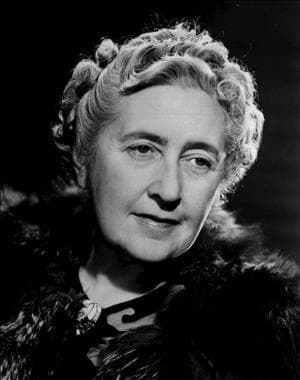
Dame Agatha Mary Clarissa Christie, Lady Mallowan, was an English writer known for her 66 detective novels and 14 short story collections, particularly those revolving around fictional detectives Hercule Poirot and Miss Marple. She also wrote the world's longest-running play, the murder mystery The Mousetrap, which has been performed in the West End since 1952. A writer during the "Golden Age of Detective Fiction", Christie has been called the "Queen of Crime". She also wrote six novels under the pseudonym Mary Westmacott. In 1971, she was made a Dame (DBE) by Queen Elizabeth II for her contributions to literature. Guinness World Records lists Christie as the best-selling fiction writer of all time, her novels having sold more than two billion copies.
Similar books
- Murder On The Orient Express
Agatha Christie
4.2 (381k) average on GoodreadsThrillerAnother classic Christie mystery with a confined group of suspects and a clever killer.
- The Name of the Rose
Umberto Eco
4.1 (301k) average on GoodreadsHistorical FictionEco's novel also features a series of mysterious deaths in an isolated setting (a medieval monastery) and a brilliant detective figure. However, The Name of the Rose is far more dense and academic, interwoven with semiotics, philosophy, and historical detail. It prioritizes intellectual debate and cultural critique alongside the mystery. And Then There Were None, in contrast, is a lean, propulsive thriller, focused almost entirely on the mechanics of the murder and the psychological terror, making it far more accessible and less intellectually demanding, though equally ingenious in its own right.
- Angels & Demons
Dan Brown
3.9 (2.7M) average on GoodreadsThrillerA Harvard symbologist races through Rome's ancient sites, deciphering cryptic clues to unmask the Illuminati and stop a vengeful plot to destroy the Vatican with a stolen antimatter weapon.
- Gone Girl
Gillian Flynn
4.1 (2.3M) average on GoodreadsThrillerA wife's sudden disappearance on her fifth anniversary reveals a web of lies and psychological warfare, exposing the secrets within a seemingly perfect marriage.
- The Girl on the Train
Paula Hawkins
3.9 (2.1M) average on GoodreadsThrillerA woman’s fascination with a seemingly perfect couple she watches from her daily train commute leads her into a dark investigation when she witnesses something that shatters their idyllic image.
- The Da Vinci Code
Dan Brown
3.9 (1.9M) average on GoodreadsThrillerA symbologist and a cryptologist race through European landmarks, deciphering ancient codes and uncovering a conspiracy that could rewrite the foundations of Christianity.





Enjoyed the summary?
A summary gives you the shape of the book. The book itself has the detail, the examples and the voice.
Find And Then There Were None on AmazonAs an Amazon Associate, BookBrief earns from qualifying purchases. How we're funded