

Synopsis
Covers the whole plot, including the ending.
- Difficulty
- Medium
- Pacing
- Moderate
- Mood
- Suspenseful, Clever, Classic
- Read it if
- You enjoy classic 'whodunit' mysteries with a confined setting, intricate plots, and a satisfying, unexpected twist.
- Skip it if
- You prefer fast-paced thrillers with graphic action or dislike stories where the detective is the sole focus of the investigation.
Murder On The Orient Express Plot Summary
Covers the whole plot, including the ending.
A Delay in Syria and a Chance Encounter
The Belgian detective, Hercule Poirot, has solved a case for the French military in Aleppo, Syria. He plans to return to London, but a rockfall delays him for four days near Taurus. He meets Monsieur Bouc, director of the Compagnie Internationale des Wagons-Lits, who is also traveling. Poirot observes the passengers, including the rich and threatening American, Samuel Ratchett, and his secretary, Hector MacQueen. Ratchett, feeling unsafe, tries to hire Poirot for protection, but Poirot dislikes him and refuses.
Boarding the Orient Express and an Uneasy Feeling
The Orient Express is unusually full for winter. Monsieur Bouc gets Poirot a first-class compartment on the Calais coach. As the train leaves Istanbul, Poirot watches other passengers in the dining car. He notices tension, especially around Samuel Ratchett. During the night, Poirot hears loud groans from Ratchett's compartment, then a crash, and sees a woman in a scarlet kimono in the corridor. He also overhears a conversation next door, but cannot understand it.
The Discovery of Ratchett's Murder
The train gets stuck in a deep snowdrift in Yugoslavia, completely isolated. The next morning, Ratchett does not appear for breakfast. Pierre Michel, the conductor, knocks on his door with no response. Monsieur Bouc, worried, asks Poirot to investigate. After forcing the door open, they find Samuel Ratchett's body, stabbed twelve times. The window is open, suggesting an escape, but the snow makes this impossible. The murder weapon is missing, and the circumstances point to a killer still on the train.
Poirot Takes the Case
With the train stranded and no local police available, Monsieur Bouc asks Poirot for help. Poirot agrees, understanding the need to solve the crime before the train moves. Dr. Constantine, the Greek doctor, makes a discovery: Ratchett is actually Cassetti, an American gangster who arranged the kidnapping and murder of three-year-old Daisy Armstrong years ago. Cassetti had escaped punishment, and the Armstrong case was a national tragedy that affected many people.
Initial Clues and Contradictions
Poirot carefully examines Cassetti's compartment. He finds a burned piece of paper with the words '—member little Daisy Armstrong', a pipe cleaner, and a handkerchief with the initial 'H'. The window is open, and a broken watch is found. Initial interviews with passengers show many inconsistencies. Everyone claims to have heard or seen nothing unusual, but their stories conflict with each other or the evidence. For example, some heard no sounds, while Poirot heard a groan. A missing uniform button from the conductor's jacket is also noted.
The Red Kimono and the Conductor's Uniform
Poirot finds the scarlet kimono, which he saw the previous night, hidden in Mrs. Hubbard's compartment. This contradicts her earlier statement. Later, a conductor's uniform, too large for Pierre Michel, is found in a suitcase in another compartment. These discoveries suggest a more complex plot than a simple opportunistic murder. The open window in Cassetti's compartment, first thought to be an escape route, now seems to be a deliberate distraction, as no one could have jumped into the snow.
Unmasking the Passengers' Connections
As Poirot interviews each passenger, he learns about their hidden pasts and surprising connections to the Armstrong case. Princess Dragomiroff says Mrs. Armstrong was her goddaughter. Colonel Arbuthnot was a friend of Daisy's father. Greta Ohlsson was Daisy's nurse. Mary Debenham was Mrs. Armstrong's secretary. Hector MacQueen's father was the district attorney for the Armstrong case. Even the Italian, Antonio Foscarelli, was the Armstrongs' chauffeur. Almost every passenger had a direct or indirect link to the Armstrong family, suggesting a motive for revenge against Cassetti.
The Second Watch and the Left-Handed Killer
The broken watch in Cassetti's compartment stopped at 1:15 AM, indicating the time of death. However, some testimonies suggest activity around 12:40 AM. This difference makes Poirot consider two different times of death or a staged scene. Also, the stab wounds—some deep, some shallow, some from a right-handed person, others from a left-handed one—suggest multiple attackers. This challenges the idea of a single killer and points to a coordinated effort, making the crime much more complex.
The Revelation of the Conspiracy
After much thought, Poirot gathers all the suspects. He presents two possible solutions. The first, simpler one, is that a stranger entered the train, killed Cassetti, and escaped through the snow. Poirot quickly dismisses this as unlikely. He then reveals his true solution: Cassetti's murder was a planned act of collective revenge. All twelve passengers, plus the conductor, were connected to the Armstrong tragedy and conspired to kill Cassetti, each delivering one of the twelve stab wounds.
Justice Served and Poirot's Decision
Poirot explains that Mrs. Hubbard is Linda Arden, Daisy Armstrong's grandmother and a famous actress, who planned the plot. Colonel Arbuthnot was Daisy's father's best friend. Mary Debenham was Daisy's governess. Greta Ohlsson was Daisy's nurse. Princess Dragomiroff was Mrs. Armstrong's godmother. Antonio Foscarelli was the chauffeur. MacQueen's father was the DA. Even Pierre Michel, the conductor, was the father of the Armstrong family's maid, who killed herself after being wrongly accused. Each person stabbed Cassetti, so no single individual could be easily identified as the sole murderer. Facing a moral choice, Poirot, Monsieur Bouc, and Dr. Constantine agree to present only the first, simpler, and less plausible solution to the Yugoslavian police, letting the conspirators go free, believing that justice, in this unique case, was served.
Principal Figures
Hercule Poirot
Protagonist
A meticulous and renowned Belgian detective, known for his 'little grey cells.'
Hercule Poirot is the brilliant and eccentric Belgian detective at the heart of the story. He is known for his fastidious appearance, his reliance on psychological insight rather than physical clues alone, and his iconic 'little grey cells.' Poirot values order, method, and justice above all else. He is initially reluctant to take on Samuel Ratchett's case, disliking the man's aura, but becomes fully engaged once the murder is discovered. His deductive reasoning is unparalleled, allowing him to piece together the complex web of lies and connections among the passengers.
Relationships: Samuel Ratchett (Cassetti) (Victim, whom Poirot initially dislikes and refuses to protect); Monsieur Bouc (Friend and director of the Wagon-Lits company, who tasks Poirot with the investigation); Dr. Constantine (Medical expert who assists Poirot in the investigation)
Samuel Ratchett (Cassetti)
Victim/Antagonist
The wealthy American businessman who is murdered, later revealed as a notorious criminal.
Samuel Ratchett presents himself as a wealthy American businessman, but Poirot immediately senses something sinister about him. He attempts to hire Poirot for protection, claiming his life is in danger. His true identity is revealed to be Lanfranco Cassetti, the mastermind behind the infamous abduction and murder of three-year-old Daisy Armstrong, a crime for which he escaped justice through legal loopholes. Cassetti is portrayed as a cruel and unrepentant individual, making him a deserving target for the revenge carried out by the Armstrong family's associates.
Relationships: Hercule Poirot (Approached for protection, but refused); Hector MacQueen (His secretary); The Passengers (His murderers, all connected to the Armstrong case)
Monsieur Bouc
Supporting
Director of the Compagnie Internationale des Wagons-Lits and Poirot's friend.
Monsieur Bouc is a good friend of Hercule Poirot and the director of the Compagnie Internationale des Wagons-Lits. He is a jovial and pragmatic man who finds himself in a difficult position when a murder occurs on his prestigious train, especially while it is stranded. He relies heavily on Poirot's expertise and acts as a sounding board and occasional assistant during the investigation. Bouc represents the conventional view of justice and law, initially wanting to find a single killer, but ultimately agrees with Poirot's unconventional solution.
Relationships: Hercule Poirot (Close friend and colleague); Dr. Constantine (Fellow investigator during the crisis)
Dr. Constantine
Supporting
A Greek doctor who provides medical expertise during the investigation.
Dr. Constantine is a Greek doctor who happens to be a passenger on the Orient Express. He provides crucial medical insights into Samuel Ratchett's murder, examining the body and determining the nature of the stab wounds, the approximate time of death, and the possible handedness of the assailants. His professional observations are vital to Poirot's understanding of the crime. He is a calm and rational figure, assisting Poirot and Monsieur Bouc throughout the investigation, and ultimately agreeing with Poirot's final judgment.
Relationships: Hercule Poirot (Collaborator in the investigation); Monsieur Bouc (Fellow investigator during the crisis)
Mrs. Hubbard (Linda Arden)
Supporting/Antagonist (Leader of the Conspiracy)
A loud and opinionated American woman, revealed as the mastermind of the plot.
Mrs. Hubbard is a stereotypical loud, demanding, and talkative American woman who provides much comic relief and often exasperates Poirot. She claims to have seen a man in her compartment and is a constant source of 'information,' much of it unreliable. She is later revealed to be Linda Arden, a famous American actress and Daisy Armstrong's grandmother, making her the primary orchestrator and leader of the revenge plot against Cassetti. Her theatrical background proves instrumental in her ability to create a convincing persona.
Relationships: Daisy Armstrong (Her granddaughter, whose murder she avenges); The other conspirators (Her co-conspirators in the murder of Cassetti)
Mary Debenham
Supporting/Antagonist
A calm and efficient English governess, secretly connected to the Armstrong family.
Mary Debenham is an English governess returning from Baghdad. She is presented as self-possessed, efficient, and somewhat reserved. Poirot initially suspects her due to a hushed conversation he overhears between her and Colonel Arbuthnot. She is later revealed to have been Mrs. Armstrong's secretary and governess to Daisy Armstrong, making her one of the key members of the conspiracy. Her calm demeanor masks a deep-seated desire for justice for the Armstrong family.
Relationships: Colonel Arbuthnot (Fellow conspirator and potential love interest); Mrs. Armstrong (Former employer)
Colonel Arbuthnot
Supporting/Antagonist
A distinguished British Army officer, secretly a friend of Daisy Armstrong's father.
Colonel Arbuthnot is a distinguished British Army officer traveling from India. He is portrayed as honorable, traditional, and somewhat stiff-upper-lipped. He is often seen conversing with Mary Debenham. He is revealed to have been a close friend of Colonel Armstrong, Daisy's father, and thus a key member of the revenge plot. His military background provides a plausible reason for his presence and his ability to participate in the act of murder.
Relationships: Mary Debenham (Fellow conspirator and potential love interest); Colonel Armstrong (Close friend)
Princess Dragomiroff
Supporting/Antagonist
An elderly Russian princess, a godmother to the late Mrs. Armstrong.
Princess Dragomiroff is an elderly, aristocratic Russian princess, renowned for her wealth and formidable presence. She is a close friend of the late Mrs. Armstrong and Daisy's godmother. Her regal demeanor and sharp intellect make her a commanding figure. She initially denies knowing anything about the Armstrong case but later admits to her connection. She is a participant in the conspiracy, driven by her love for the Armstrong family and her desire for justice, though her physical frailty means her contribution to the stabbing was likely symbolic.
Relationships: Mrs. Armstrong (Close friend and goddaughter); Hildegarde Schmidt (Her maid)
Hector MacQueen
Supporting/Antagonist
Samuel Ratchett's young, American secretary.
Hector MacQueen is Samuel Ratchett's young, efficient, and seemingly nervous American secretary. He expresses dislike for Ratchett but claims to know little about his employer's past. He is revealed to be the son of the district attorney who handled the original Armstrong case, and who was deeply affected by Cassetti's escape from justice. MacQueen's role in the conspiracy was to keep Ratchett sedated and to provide an alibi for the others, using his position to facilitate the murder.
Relationships: Samuel Ratchett (Cassetti) (His employer and victim); His father (The district attorney from the Armstrong case)
Pierre Michel
Supporting/Antagonist
The French conductor of the Calais coach, secretly connected to the Armstrong tragedy.
Pierre Michel is the polite and seemingly ordinary French conductor of the Calais coach. He is initially seen as a reliable witness and performs his duties diligently. However, he is revealed to be the father of the Armstrong family's maid, Paulette, who committed suicide after being falsely implicated in the Daisy Armstrong kidnapping. His personal tragedy makes him a deeply motivated participant in the revenge plot, driven by overwhelming grief and a desire for retribution against Cassetti.
Relationships: Paulette (His daughter, who committed suicide due to the Armstrong case); The other conspirators (His co-conspirators)
Themes & Insights
Justice vs. Law
This theme explores the conflict between legal justice and a personal, moral justice. Samuel Ratchett (Cassetti) escaped legal punishment for the murder of Daisy Armstrong, leaving a void the law could not fill. The conspirators, all affected by the Armstrong tragedy, take action, believing they are giving rightful punishment. Poirot, who supports law and order, faces a situation where the law failed. This leads him to an extraordinary moral decision to let the murderers go free, acknowledging that 'justice' in a higher sense was served. This makes the reader question their own ideas of right and wrong.
“The impossible cannot have happened, therefore the impossible must be possible in spite of appearances.”
Revenge and Retribution
The entire plot is a planned act of revenge. Each of the twelve conspirators has a direct or indirect personal connection to the Armstrong family and the trauma from Cassetti's crime. Their group action is a form of retribution for the suffering he caused and the legal system's failure to punish him. The multiple stab wounds, each by a different person, represent the shared grief and anger of those whose lives were shattered. The theme questions if revenge, even for a terrible crime, brings peace or just continues violence.
“There are two solutions to this case. I shall put them both before you. Then you, Monsieur Bouc, and you, Doctor, can decide which solution you will put before the Yugoslavian police.”
Identity and Deception
Almost every character on the Orient Express uses a false identity or hides their connection to the Armstrong case. Samuel Ratchett is actually Lanfranco Cassetti. Mrs. Hubbard is Linda Arden, a famous actress. Mary Debenham, Colonel Arbuthnot, Greta Ohlsson, and others hide their pasts and their deep personal grievances. This widespread deception creates a complex web of lies that Poirot must untangle. It shows how people create elaborate facades to reach their goals, whether for protection or vengeance. The theme explores how identity can be changed and manipulated.
“The truth, however ugly in itself, is always curious and beautiful to the seeker after it.”
The Nature of Evil
The novel shows two kinds of evil: Cassetti's open, unrepentant evil, who murdered a child and escaped justice, and the more morally complex evil of the conspirators, who murder out of a desire for retribution. Cassetti's actions are clearly monstrous, justifying the intense hatred toward him. However, the conspirators' act of murder, while understandable given their trauma, still makes the reader think about the moral implications of taking a life, even a 'deserving' one. Poirot's final decision reflects the complex nature of evil and justice.
“I have a feeling that there is something evil in that man.”
Plot Devices & Literary Techniques
The Closed-Circle Mystery (Locked-Room Mystery Variant)
A murder committed in an isolated setting with a finite number of suspects.
The Orient Express, stranded by a snowdrift, perfectly creates a closed-circle mystery. With no one able to enter or leave the train, the murderer must be one of the passengers or staff on board. This device intensifies the suspense and forces Poirot to focus his investigation solely on the confined group, eliminating external possibilities. It allows for detailed character studies and a deep dive into the psychology of the suspects, as they are all trapped together with the detective and the victim.
The Red Herring
Misleading clues designed to distract the detective and reader.
Christie masterfully employs numerous red herrings. The open window in Ratchett's compartment, suggesting an escape, is a prime example. The missing uniform button, the handkerchief with 'H', the pipe cleaner, and the mysterious scarlet kimono all serve to point towards individual suspects or create confusion. These false clues are meticulously planted by the conspirators to obscure the truth and make the crime appear more random or committed by a single, unknown assailant, thereby diverting Poirot's attention from the true, collective nature of the murder.
The 'Impossible' Solution
A crime that initially appears to defy all logical explanation.
The murder of Samuel Ratchett seems impossible to solve by conventional means. He was stabbed twelve times, with wounds suggesting both right and left-handed assailants, and at seemingly two different times. No single person could have achieved this in the confined space and time. This 'impossible' nature of the crime forces Poirot to think outside the box and consider unconventional solutions, ultimately leading him to the truth that defies the initial assumptions of a single killer. It's a hallmark of Christie's genius, challenging the reader's expectations.
The Daisy Armstrong Case
A past crime that serves as the central motive for the present murder.
The Daisy Armstrong case is not just a backstory; it is the entire foundation upon which the plot of 'Murder on the Orient Express' is built. This horrific past event, a child's abduction and murder, provides the motive for every single conspirator. It creates a powerful emotional resonance and justifies the extreme measures taken by the passengers. Without the Armstrong case, there would be no reason for the diverse group of individuals to be united in their desire for revenge, making it the ultimate catalyst for the present murder.
Murder On The Orient Express Quotes
“The impossible could not have happened, therefore the impossible must be possible in spite of appearances.”
“I do not approve of murder.”
“The evidence is there. The little grey cells, they are what matter.”
“It is the brain, the little grey cells on which one must rely.”
“There is too much evidence. That is what is wrong.”
“The murderer is with us—on the train now...”
“I have a little idea...”
“The truth, however ugly in itself, is always curious and beautiful to seekers after it.”
“We are all strangers on a train.”
“It is completely unimportant. That is why it is so interesting.”
“The past is the father of the present.”
“There are two solutions to this case. One very simple, the other very complex.”
“I am not a policeman, I am a detective.”
“The snow has stopped us. It has also saved us.”
Quiz
10 questions on the plot and the characters. Each answer comes with a short explanation.
Question 1
Who is the victim found murdered on the Orient Express?
- Hercule Poirot
- Samuel Ratchett
- Bouc
- Mary Debenham
Show answer
B. Samuel Ratchett Samuel Ratchett is the American businessman found stabbed to death in his compartment, and his murder sets off the investigation. Poirot is the detective, Bouc is a friend and director of the train company, and Mary Debenham is a passenger.
Question 2
What is the real identity of Samuel Ratchett?
- A retired police officer
- A famous actor
- A wealthy art collector
- Cassetti, a kidnapper and murderer
Show answer
D. Cassetti, a kidnapper and murderer Samuel Ratchett is revealed to be Cassetti, the man who kidnapped and murdered Daisy Armstrong, a young girl, leading to multiple tragedies for her family. This past crime motivates the murder on the train.
Question 3
How many stab wounds are found on Ratchett's body?
- 5
- 8
- 12
- 15
Show answer
C. 12 Ratchett is stabbed 12 times, a key clue that suggests multiple attackers. Poirot notes the varying strength and angle of the wounds, hinting at a group effort.
Question 4
Why is the Orient Express stranded in the snow?
- Due to a mechanical failure
- Because of a scheduled stop
- A snowdrift blocks the tracks
- A bridge collapse ahead
Show answer
C. A snowdrift blocks the tracks A heavy snowstorm causes a snowdrift to block the tracks near Brod, Yugoslavia, stranding the train and isolating the passengers, which is crucial for the murder mystery as no one can leave or enter.
Question 5
Which passenger is revealed to be the mother of Daisy Armstrong?
- Hildegarde Schmidt
- Countess Andrenyi
- Mary Debenham
- Mrs. Hubbard
Show answer
B. Countess Andrenyi Countess Andrenyi is actually Linda Arden, the famous actress and mother of Daisy Armstrong. She changed her identity after the tragedy and is part of the group seeking revenge on Cassetti.
Question 6
What key piece of evidence does Poirot find in Ratchett's compartment?
- A bloody knife
- A burned letter
- A hidden gun
- A stolen painting
Show answer
B. A burned letter Poirot discovers a partially burned letter with threats against Ratchett, which mentions the Armstrong case. This clue helps link the murder to the past crime and the passengers' motives.
Question 7
What is the ultimate resolution Poirot offers for the murder?
- He arrests all the passengers
- He declares it a suicide
- He presents two theories and lets the authorities decide
- He accuses a single passenger and has them convicted
Show answer
C. He presents two theories and lets the authorities decide Poirot presents two theories: one where an outside killer escaped, and another where all 12 passengers collaborated in the murder. He leaves the choice to the train authorities, who accept the simpler theory, allowing the group to go free.
Question 8
Which theme is most central to 'Murder on the Orient Express'?
- The corruption of wealth
- Justice versus vengeance
- The dangers of travel
- Romantic betrayal
Show answer
B. Justice versus vengeance The book explores the blurry line between justice and vengeance, as the passengers take the law into their own hands to punish Cassetti for the Armstrong murder, raising moral questions about right and wrong.
Question 9
How many passengers are ultimately involved in the murder plot?
- 6
- 10
- 12
- 14
Show answer
C. 12 All 12 passengers in the Calais coach are involved in the murder, each delivering one of the 12 stab wounds. They are connected to the Armstrong case and conspire together for revenge.
Question 10
What role does Dr. Constantine play in the investigation?
- He is the prime suspect
- He provides medical analysis of the body
- He is a secret police officer
- He confesses to the murder
Show answer
B. He provides medical analysis of the body Dr. Constantine is a passenger and doctor who examines Ratchett's body, helping Poirot with forensic details like the number and nature of the stab wounds, which aids in unraveling the conspiracy.
Murder On The Orient Express FAQ
What is 'Murder on the Orient Express' about?
The novel follows detective Hercule Poirot as he investigates the murder of American businessman Samuel Ratchett aboard the snowbound Orient Express train. With all passengers as suspects, Poirot uncovers a complex web of connections to a past kidnapping case involving the Armstrong family.
Why should I read 'Murder on the Orient Express'?
It's a classic locked-room mystery with a brilliant, surprising resolution that challenges traditional notions of justice. Agatha Christie's intricate plotting and Poirot's deductive reasoning make it a masterclass in the mystery genre.
What is the background/setting of 'Murder on the Orient Express'?
The story is set in the 1930s aboard the luxurious Orient Express train, which becomes stranded in a snowdrift in Yugoslavia. This isolated, confined setting creates a classic 'locked-room' scenario where the murderer must be among the passengers and crew.
What are the most memorable quotes from the book?
Key quotes include Poirot's 'The impossible could not have happened, therefore the impossible must be possible in spite of appearances' and his final reflection: 'I have solved the problem. I know the truth. And the truth is what I have told you.'
What writing style does Agatha Christie use in this book?
Christie employs a tight, third-person narrative focused on Poirot's perspective, with crisp dialogue and meticulous clue placement. The style is economical yet rich in detail, building suspense through interviews and logical deduction.
What minor details add significant meaning to the story?
Details like the burnt note mentioning 'Armstrong,' the multiple languages spoken by passengers, and the varied dagger wounds on Ratchett's body all subtly point to the collective nature of the crime and the passengers' hidden connections.
What are some subtle foreshadowing moments in the book?
Early mentions of the Armstrong kidnapping case, Poirot noting the passengers' unusual diversity of nationalities and backgrounds, and Ratchett's fear of being attacked all foreshadow the revenge plot and the collaborative murder.
What unexpected character connections exist among the passengers?
All twelve suspects are secretly connected to the Armstrong family: for example, Hector MacQueen is the son of the Armstrongs' lawyer, Princess Dragomiroff is the godmother of the kidnapped child, and Countess Andrenyi is the sister of the child's mother.
What are the unspoken motivations driving the characters?
Beyond surface motives like greed or fear, each passenger is driven by a deep, unspoken desire for vengeance for the Armstrong tragedy. Their collective guilt and trauma from the kidnapping and deaths bind them together in the murder plot.
What psychological complexities do the characters exhibit?
Characters like Mary Debenham show stoic composure masking grief, while others like Antonio Foscarelli display exaggerated emotions to divert suspicion. Poirot himself grapples with the morality of their actions versus legal justice.
What are the major emotional turning points in the story?
Key moments include Poirot's realization of the Armstrong connection, the passengers' collective confession revealing their shared trauma, and the climax where Poirot offers two solutions—one legal, one moral—forcing a choice on justice.
How do the relationship dynamics among the passengers evolve?
Initially strangers with tense interactions, the passengers gradually reveal a hidden unity under Poirot's scrutiny. Their dynamics shift from suspicion and distrust to a silent, coordinated defense as their shared secret is exposed.
Which parts of the story remain ambiguous or open-ended?
The ending is deliberately ambiguous: Poirot presents two solutions—one where a stranger committed the murder, and one where all passengers were involved—leaving it to the authorities to choose which version to believe, without a clear moral verdict.
What are controversial scenes or decisions in the book?
The collective murder of Ratchett by twelve people is controversial, as it portrays vigilante justice as somewhat justified. Poirot's decision to let the passengers go free, based on his sympathy for their cause, sparks debate on morality versus law.
'Murder on the Orient Express' ending explained: how it ends and what it means.
Poirot reveals that all twelve passengers collaborated to kill Ratchett, who was the kidnapper Cassetti responsible for the Armstrong tragedy. He offers two solutions to the authorities—one implicating an outsider, one the group—and they choose the former, allowing the passengers to escape punishment. This ending explores themes of collective justice and moral ambiguity.
How does the setting influence the mystery's resolution?
The snowbound train creates absolute isolation, making escape impossible and ensuring the murderer is onboard. This confinement forces Poirot to rely solely on deduction and interviews, heightening the tension and making the collective nature of the crime more plausible.
What role does Hercule Poirot's character play in the themes of the book?
Poirot serves as both detective and moral arbiter; his 'little grey cells' solve the crime, but his final decision to present two solutions reflects the novel's exploration of justice beyond legal boundaries, highlighting his internal conflict between order and compassion.
About the author
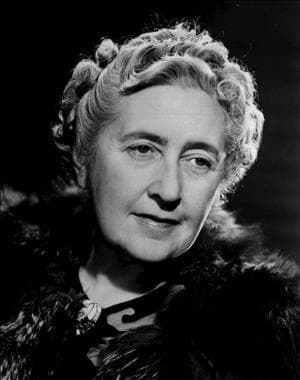
Dame Agatha Mary Clarissa Christie, Lady Mallowan, was an English writer known for her 66 detective novels and 14 short story collections, particularly those revolving around fictional detectives Hercule Poirot and Miss Marple. She also wrote the world's longest-running play, the murder mystery The Mousetrap, which has been performed in the West End since 1952. A writer during the "Golden Age of Detective Fiction", Christie has been called the "Queen of Crime". She also wrote six novels under the pseudonym Mary Westmacott. In 1971, she was made a Dame (DBE) by Queen Elizabeth II for her contributions to literature. Guinness World Records lists Christie as the best-selling fiction writer of all time, her novels having sold more than two billion copies.
Similar books
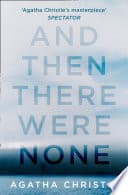
- And Then There Were None
Agatha Christie
4.3 (822k) average on GoodreadsThrillerFeatures a confined setting and a group of people being systematically targeted, with a similar classic mystery feel.
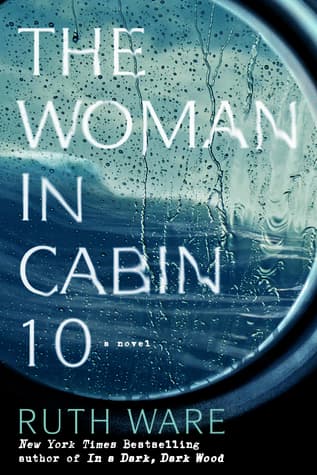
- The Woman in Cabin 10
Ruth Ware
3.7 (375k) average on GoodreadsThrillerA suspenseful mystery set on a luxury cruise ship, involving a witness to a murder and a limited pool of suspects.
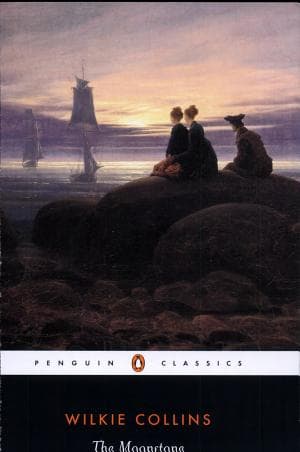
- The Moonstone
Wilkie Collins
3.9 (79k) average on GoodreadsHistorical FictionWilkie Collins' The Moonstone is often considered one of the earliest English detective novels and shares with Murder on the Orient Express a focus on intricate plotting and a large cast of characters. However, The Moonstone employs multiple narrators, offering differing perspectives and unreliable accounts, creating a more fragmented and epistolary narrative. Orient Express maintains a singular, omniscient perspective (primarily through Poirot), allowing for a more controlled reveal of information. Both excel in plot complexity, but The Moonstone delves deeper into the societal implications of class and colonialism, whereas Orient Express primarily explores personal justice and retribution.
- Angels & Demons
Dan Brown
3.9 (2.7M) average on GoodreadsThrillerA Harvard symbologist races through Rome's ancient sites, deciphering cryptic clues to unmask the Illuminati and stop a vengeful plot to destroy the Vatican with a stolen antimatter weapon.
- Gone Girl
Gillian Flynn
4.1 (2.3M) average on GoodreadsThrillerA wife's sudden disappearance on her fifth anniversary reveals a web of lies and psychological warfare, exposing the secrets within a seemingly perfect marriage.
- The Girl on the Train
Paula Hawkins
3.9 (2.1M) average on GoodreadsThrillerA woman’s fascination with a seemingly perfect couple she watches from her daily train commute leads her into a dark investigation when she witnesses something that shatters their idyllic image.



Enjoyed the summary?
A summary gives you the shape of the book. The book itself has the detail, the examples and the voice.
Find Murder On The Orient Express on AmazonAs an Amazon Associate, BookBrief earns from qualifying purchases. How we're funded