

Synopsis
Covers the whole plot, including the ending.
- Difficulty
- Medium
- Pacing
- Moderate
- Mood
- Tragic, Intense, Philosophical, Thought-provoking, Dark
- Read it if
- You want to engage with a foundational work of Western literature that explores timeless themes of law vs. morality, individual conscience vs. state power, and the tragic consequences of pride.
- Skip it if
- You prefer lighthearted stories with clear-cut happy endings or find ancient dramatic conventions difficult to connect with.
Antigone Plot Summary
Covers the whole plot, including the ending.
The Sisters' Secret
The play starts before Creon's palace in Thebes. Antigone tells her sister Ismene her plan to bury their brother, Polyneices. Polyneices and Eteocles, Oedipus's sons, have killed each other fighting for the Theban throne. Creon, their uncle and the new king, has ordered that Eteocles, who fought for Thebes, get an honorable burial, while Polyneices, who attacked the city, be left unburied for scavengers. Antigone believes this order goes against divine law and family honor. She asks Ismene to help, but Ismene, afraid of Creon's punishment and believing women are too weak to defy men, refuses, urging caution and obedience to the state.
Creon's Edict and the Chorus's Support
Creon speaks to the Chorus of Theban Elders, explaining his rules for governing. He says that loyalty to the state is most important and that he will severely punish any disloyalty. He repeats his order about Polyneices, stating that no one shall bury the traitor, under penalty of death by stoning. The Chorus, representing Theban citizens, first supports Creon's authority and his dedication to the city's well-being, agreeing with the new king's stern but seemingly fair rule. They acknowledge the importance of order and following the law, even if it means harsh actions.
The Sentry's News
A trembling sentry arrives with shocking news for Creon: Polyneices' body has been given a ritual burial. A light layer of earth covers the corpse, and libations have been poured, showing that someone defied the king's order. Creon is furious, immediately suspecting a plot and bribery. He accuses the sentry of being involved or paid off. The sentry, scared for his life, strongly denies involvement and expresses relief at just delivering the message. Creon, sure that powerful, corrupt men are behind this defiance, threatens the sentry with torture if he does not find the culprit.
Antigone's Capture
The sentry returns, overjoyed and relieved, having caught the culprit: Antigone. He tells how, after uncovering the body as Creon ordered, they waited. When Antigone returned to perform the burial rites again, crying and wailing at the exposed corpse, they seized her. Antigone does not deny her actions. She openly admits to burying her brother, saying she knew Creon's order but chose to follow the gods' unwritten laws, which she believes are above human laws. Her defiance is clear and firm, putting her directly against Creon's authority.
Confrontation and Ismene's Plea
Creon confronts Antigone, angry at her disrespect. Antigone bravely defends her actions, arguing that the divine laws of burial are above any mortal order, and that she would rather please the dead than the living. Creon remains unyielding, declaring she will pay the highest price. He then calls for Ismene, believing she must have been an accomplice. Ismene, in a moment of loyalty and regret, tries to share the blame, claiming she helped Antigone. However, Antigone strongly rejects Ismene's attempt, saying Ismene had her chance to help and refused, and now should not claim a share in the glory or the punishment. Creon orders both sisters imprisoned.
Haemon's Appeal
Haemon, Creon's son and Antigone's fiancé, comes to speak with his father. First, he assures Creon of his loyalty, but then subtly tries to persuade him to reconsider Antigone's sentence. He reports that Theban citizens secretly sympathize with Antigone and believe her act was noble, not criminal. Haemon urges Creon to listen to reason and be flexible, comparing a stubborn ruler to a rigid tree that breaks in a flood. Creon, however, dismisses his son's advice as weakness, accusing Haemon of being swayed by a woman. Their argument grows, with Haemon warning Creon of bad results if he goes through with Antigone's execution.
Creon's Unyielding Judgment
Despite Haemon's strong plea, Creon stays firm in his decision. He declares that Antigone will not be publicly stoned but will instead be sealed alive in a rocky cave, with just enough food to free the city from responsibility for her death, leaving her fate to the gods. This punishment is cruel, ensuring a slow, painful death. Haemon, heartbroken and enraged by his father's stubbornness, declares that Creon will never see him again and storms out, leaving Creon to think about his son's dark words. The Chorus expresses sadness for Antigone's tragic fate.
Antigone's Lament
Antigone is led away to her death, regretting her sad fate. She mourns her unfulfilled life, her coming death without marriage or children, and the curse that has troubled her family. She asks the gods to judge the fairness of her punishment. While she does not regret her actions, she expresses deep sorrow for losing her life and the pain it causes. The Chorus tries to offer some comfort, acknowledging her nobility but also reminding her of the results of defying the state. Antigone remains firm in her belief that she acted correctly, but deeply saddened by her isolation and coming doom.
Tiresias's Prophecy
The blind prophet Tiresias, guided by a boy, arrives to warn Creon. He reports terrible signs: the altars are polluted by birds of prey that have eaten Polyneices' unburied body, and the sacrificial fires will not light. Tiresias interprets these signs as clear indications of the gods' anger against Creon's refusal to bury Polyneices and his unfair punishment of Antigone. He urges Creon to change his mind, bury the dead, and free Antigone, warning that if he does not, Creon will lose his own son for his crimes. Creon first dismisses Tiresias as a corrupt prophet seeking money, but the prophet's grim predictions begin to trouble him.
Creon's Change of Heart
After Tiresias's frightening prophecy, the alarmed Chorus of Elders advises Creon to listen to the prophet's words, reminding him that Tiresias has never been wrong. Overwhelmed by fear and the weight of the signs, Creon finally gives in. He declares he will reverse his orders: he will go himself to bury Polyneices and release Antigone from her cave. He rushes off, with his attendants, hoping to calm the gods and prevent the coming disaster. His change of heart comes too late, however, as the tragic events already set in motion are irreversible.
The Messenger's Report
A messenger arrives, announcing a series of terrible events. He reports that Creon first went to bury Polyneices, performing the proper rites. However, when they reached Antigone's cave, they found her dead, having hanged herself. Haemon was also there, mourning Antigone, and when Creon appeared, Haemon attacked his father with a sword. Missing Creon, he then turned the sword on himself, dying in Antigone's arms. The messenger tells these horrifying details, emphasizing the terrible results of Creon's stubborn pride and his refusal to listen to wisdom, leading to his own family's destruction.
Eurydice's Suicide
As the messenger finishes his story, Creon's wife, Eurydice, who had been listening silently, slips away into the palace. A second messenger soon emerges to report that Eurydice has also killed herself, stabbing herself at the altar. Her last words were a curse on Creon, blaming him for the deaths of both her sons (she had an elder son, Megareus, who also died in battle) and for their family's destruction. Creon enters, carrying Haemon's body, utterly broken by grief and guilt. He is now left completely alone, having lost his entire family because of his pride and rigid rule.
Creon's Despair
Creon enters, a shattered man, holding his son Haemon's body. He is overcome with grief and regret, admitting that his own stubbornness and pride caused the deaths of Antigone, Haemon, and Eurydice. He wishes for death himself, begging the Chorus to take him away. The Chorus offers sad thoughts on the gods' power and the importance of wisdom. Creon, completely humbled, accepts his fate and the tragic results of his actions, understanding too late the devastating cost of defying divine law and refusing wise advice. He is led away, a broken and ruined king.
Antigone Characters
Antigone
Protagonist
Oedipus's daughter, who defies Creon's decree to bury her brother.
Antigone is the defiant daughter of Oedipus and Jocasta, and sister to Ismene, Eteocles, and Polyneices. She is driven by an unshakeable belief in divine law and family loyalty, which she places above the decrees of the state. Courageous, principled, and deeply devoted to her deceased brother, Polyneices, she is willing to sacrifice her life to ensure his proper burial, believing it is her sacred duty. Her conviction is absolute, and she faces death with dignity, though not without lamenting her lost life.
Relationships: Ismene (Sister; Antigone seeks her help but rejects her later attempts to share blame.); Creon (Uncle; antagonist, whose law Antigone defies.); Haemon (Fiancé; their love is tragically cut short by Creon's decree.); Polyneices (Brother; her loyalty to him drives the central conflict.)
Creon
Antagonist
The new King of Thebes, whose pride and stubbornness lead to tragedy.
Creon is the newly appointed King of Thebes, brother of Jocasta, and uncle to Antigone, Ismene, Eteocles, and Polyneices. He is a pragmatic and authoritarian ruler, fiercely dedicated to maintaining order and the power of the state. His core belief is that the law of the land must be obeyed above all else, and he sees any defiance as a direct challenge to his authority. His pride (hubris) and inflexibility prevent him from listening to counsel, leading him to make tragic decisions that ultimately destroy his family and leave him desolate.
Relationships: Antigone (Niece; his nemesis, whose defiance he cannot tolerate.); Haemon (Son; their conflict over Antigone leads to Haemon's death.); Eurydice (Wife; her suicide is a direct result of Creon's actions.); Tiresias (Prophet; his warnings are initially dismissed but ultimately compel Creon to act.)
Ismene
Supporting
Antigone's sister, who initially refuses to defy Creon but later tries to share her sister's fate.
Ismene is Antigone's more cautious and law-abiding sister. While she grieves for Polyneices, she is terrified of Creon's decree and the severe punishment for defying the state. She represents conventionality and a pragmatic desire for self-preservation, initially urging Antigone to obey the law. Later, out of love and remorse, she attempts to share Antigone's guilt and punishment, but Antigone rejects her. Ismene's character highlights the contrast between cautious obedience and fervent conviction.
Relationships: Antigone (Sister; her foil, representing caution against Antigone's defiance.)
Haemon
Supporting
Creon's son and Antigone's fiancé, who tries to persuade his father to show mercy.
Haemon is Creon's son and Antigone's fiancé. He initially approaches his father with respect and loyalty, but his love for Antigone and his understanding of public opinion lead him to advocate for her. He represents reason and moderation, urging Creon to be flexible and listen to the wisdom of the people. When Creon stubbornly refuses, Haemon's loyalty shifts, and he becomes fiercely defiant, leading to a tragic confrontation and his own suicide. He embodies the tragic consequences of a father's hubris.
Relationships: Creon (Father; their relationship deteriorates due to Creon's stubbornness.); Antigone (Fiancée; his deep love for her drives his actions and ultimate demise.)
Chorus of Theban Elders
Supporting
The voice of Theban public opinion and conventional wisdom.
The Chorus consists of old men of Thebes who represent the conservative, law-abiding citizens. They comment on the action, offer advice, and articulate the traditional moral and religious views of the community. Initially, they support Creon's authority, but as the tragedy unfolds and Tiresias's prophecy is delivered, they become increasingly concerned and eventually urge Creon to change his mind. They serve as a moral compass, though one that is often hesitant and reactive, reflecting the struggle between state law and divine will.
Relationships: Creon (Advisors; they initially support him but later challenge his judgment.)
Tiresias
Supporting
The blind prophet of Thebes, who warns Creon of the gods' wrath.
Tiresias is the revered blind prophet of Thebes, known for his unerring prophecies. He serves as the voice of divine will and wisdom in the play. He bravely confronts Creon, interpreting ominous signs and directly warning the king of the gods' displeasure and the terrible consequences that will befall him if he does not bury Polyneices and free Antigone. His intervention is the catalyst for Creon's change of heart, though it comes too late to prevent the tragedy. He represents the unassailable power of divine law.
Relationships: Creon (Prophet who warns the king; his words ultimately sway Creon.)
Eurydice
Supporting
Creon's wife and Haemon's mother, who takes her own life.
Eurydice is Creon's wife and the mother of Haemon. She has a relatively small speaking role but her tragic death is pivotal. Upon hearing the news of her son Haemon's suicide, she silently retreats into the palace and takes her own life, cursing Creon with her dying breath. Her death completes the utter devastation of Creon's family, highlighting the full extent of his tragic downfall and the far-reaching consequences of his hubris.
Relationships: Creon (Wife; her death is the final blow to Creon's family.); Haemon (Son; her suicide is in response to his death.)
Sentry
Supporting
The fearful guard who reports the burial of Polyneices and captures Antigone.
The Sentry is a minor character who provides crucial plot advancement. He is a common soldier, terrified of Creon and his harsh punishments, yet bound by duty to deliver unwelcome news. He reports the initial, mysterious burial of Polyneices and later captures Antigone in the act of re-burying her brother. His character highlights the fear and oppression experienced by ordinary citizens under Creon's tyrannical rule, and his direct, often humorous, language provides a contrast to the elevated speech of the main characters.
Relationships: Creon (Subordinate; he is terrified of Creon's wrath.)
Antigone Themes
Conflict Between Divine Law and Human Law
This is the play's main conflict. Antigone believes in the gods' unwritten, eternal laws, which say the dead must be buried to find peace, no matter their earthly actions. Creon, on the other hand, supports the power of human law and the state, believing his order against burying a traitor like Polyneices is vital for keeping order and his authority. The tragedy comes from Creon's refusal to accept any law higher than his own, leading to the gods' anger and his family's destruction. Antigone's firm commitment to divine law, even to death, shows its perceived superiority.
“For it was not Zeus who published this decree, nor has Justice, who dwells with the gods below, established any law of this kind among men. Nor did I think that your decrees were of such force, that a mortal could override the unwritten and unfailing statutes of heaven.”
Hubris and its Consequences
Creon's main flaw is his excessive pride and stubbornness. He refuses to listen to anyone – Antigone, Haemon, or even the prophet Tiresias – believing his own judgment is perfect and his authority unquestionable. His inability to admit error or compromise, even when warned and facing public disagreement, directly causes the deaths of Antigone, Haemon, and Eurydice. The play serves as a strong warning about the dangers of unchecked power and the terrible results of pride that blinds a ruler to reason and divine will.
“The greatest griefs are those we cause ourselves.”
The Role of Women in Society
The play explores women's limited power in ancient Greek society through Antigone and Ismene. Ismene shows the traditional female role, submissive and afraid to defy male authority, saying, "We must remember that we are women, that we are not meant to fight against men." Antigone, however, breaks these rules, asserting her will and moral belief against the king. Her defiance, though leading to her death, challenges the patriarchal norms and highlights the strength women can have, even when held back by society.
“I will bury him; and if I die for doing it, I shall rest content. I shall be a criminal, but a religious one.”
Fate vs. Free Will
The play deals with how fate and individual choice interact. The lingering curse on Oedipus's family, a theme from earlier plays, suggests a predetermined tragic destiny for Antigone. Yet, Antigone's conscious decision to bury Polyneices, and Creon's stubborn refusal to give in, are acts of free will that directly drive the plot. While the characters are born into a cursed family, their specific choices and their reactions to moral problems ultimately seal their individual fates. The tragedy implies that while fate may set the stage, human actions and character flaws cause the specific disasters.
“And now once more, the ancient curse of Oedipus has burst forth upon this race, and stalks through the house like a storm, scattering dust and tears.”
Morality and Justice
Antigone deeply explores morality and justice. Antigone's actions come from a moral code based on family duty and divine respect, which she sees as just. Creon, conversely, defines justice as strict obedience to state laws, believing that punishing a traitor is just for Thebes' good. The play asks if state law can truly be just if it violates basic moral or divine principles. The tragic outcome suggests that true justice needs a balance between human authority and higher moral rules, and that a purely legal or authoritarian view of justice can lead to deep unfairness.
“For me, the doer, the deed was holy.”
Plot Devices & Literary Techniques
Tragic Irony
Situations where the audience knows more than the characters, or events turn out contrary to expectations.
Tragic irony is prevalent in Antigone, enhancing the sense of inevitable doom. For instance, Creon, in his effort to assert absolute authority and punish Antigone, believes he is securing his reign and the stability of Thebes. However, his actions directly lead to the deaths of his son and wife, shattering his family and his power. The audience understands the implications of Tiresias's prophecy long before Creon does, creating a palpable tension as Creon unwittingly seals his own tragic fate. The irony underscores the destructive nature of his hubris.
Foreshadowing
Hints or warnings about future events.
Foreshadowing is used extensively to build suspense and convey the sense of an inescapable tragic destiny. Ismene's initial fears about defying Creon's law, and her warnings to Antigone, hint at the severe consequences to come. Haemon's ominous warning to Creon that his son's death will be a direct result of Creon's actions clearly foreshadows Haemon's suicide. Most powerfully, Tiresias's detailed prophecy explicitly outlines the disasters that will befall Creon if he does not relent, directly foreshadowing the deaths of Haemon and Eurydice. These hints create a sense of dramatic inevitability.
Chorus
A group of masked performers who comment on the action and provide moral reflection.
The Chorus of Theban Elders plays a crucial role as both a participant and commentator. They articulate public opinion, offer advice to Creon, and provide moral and philosophical reflections on the unfolding tragedy. Through their odes, they contextualize the events within broader themes of fate, divine justice, and human suffering. Initially supportive of Creon, their growing apprehension and eventual plea for him to heed Tiresias's prophecy highlight the shift in public sentiment and underscore the gravity of Creon's decisions, guiding the audience's moral judgment.
Messenger Speech (Rhesis)
A detailed, often dramatic, report of offstage events.
Sophocles utilizes messenger speeches to convey critical, violent, or complex events that occur offstage, adhering to the conventions of Greek tragedy. The messenger's vivid descriptions of Antigone's suicide, Haemon's desperate attack on Creon, and his subsequent self-inflicted death, and Eurydice's suicide, are powerful and emotionally charged. This device allows the playwright to present horrific events without staging them directly, while still conveying their full dramatic impact and the devastating consequences of the characters' actions.
Antigone Quotes
“I was born to join in love, not hate—that is my nature.”
“The greatest griefs are those we cause ourselves.”
“It is not right that a woman should rule over men.”
“But if I am to die for it, I am content.”
“The only crime is pride.”
“A city which belongs to one man is no city at all.”
“The laws of the gods are not of yesterday or today, but everlasting.”
“It is hard to give in, but it is worse to risk everything and lose.”
“You can learn from others, can't you? Don't cling to your anger.”
“No man loves life like an old man.”
“There is no evil like the refusal to listen.”
“But a good man, when he is in the wrong, should be able to change.”
“Of all the wonders, none is more wonderful than man.”
“The greatest curse on man is to have a mind and not to use it.”
Quiz
10 questions on the plot and the characters. Each answer comes with a short explanation.
Question 1
What is the central conflict that Antigone faces at the beginning of the play?
- Whether to marry Haemon or not.
- The choice between obeying Creon's decree and burying her brother Polyneices.
- Her desire to leave Thebes and escape her family's curse.
- A personal feud with her sister Ismene.
Show answer
B. The choice between obeying Creon's decree and burying her brother Polyneices. Antigone's primary conflict is her decision to defy King Creon's edict forbidding the burial of Polyneices, believing it is her moral and familial duty.
Question 2
Who is Antigone's sister, who initially refuses to help her bury Polyneices?
- Eurydice
- Jocasta
- Ismene
- Tiresias
Show answer
C. Ismene Ismene is Antigone's sister, who is initially too afraid to go against Creon's law but later tries to share Antigone's fate.
Question 3
What punishment does Creon decree for anyone who attempts to bury Polyneices?
- Exile from Thebes.
- Imprisonment for life.
- Death by stoning in the public square.
- Forced labor.
Show answer
C. Death by stoning in the public square. Creon explicitly states that anyone caught burying Polyneices will be put to death by stoning.
Question 4
What is Creon's primary motivation for refusing Polyneices a proper burial and punishing Antigone?
- Personal hatred for Polyneices.
- To assert his authority as king and uphold the law of the state above all else.
- Fear of the gods' wrath if he doesn't punish traitors.
- To gain favor with the Theban people.
Show answer
B. To assert his authority as king and uphold the law of the state above all else. Creon is driven by the desire to establish and maintain his absolute authority as the ruler of Thebes, believing that the law of the state must be obeyed without question.
Question 5
Who is Haemon in relation to Creon and Antigone?
- Creon's brother and Antigone's uncle.
- Creon's son and Antigone's fiancé.
- Creon's chief advisor and Antigone's protector.
- Creon's general and Antigone's rival.
Show answer
B. Creon's son and Antigone's fiancé. Haemon is Creon's son and is engaged to Antigone, which complicates the conflict significantly.
Question 6
What argument does Haemon use to try and persuade his father, Creon, to spare Antigone?
- He threatens to overthrow Creon if Antigone is harmed.
- He appeals to Creon's love for him, saying he will die if Antigone dies.
- He reports that the citizens of Thebes sympathize with Antigone and believe her act was just.
- He argues that Antigone is pregnant with his child.
Show answer
C. He reports that the citizens of Thebes sympathize with Antigone and believe her act was just. Haemon tells Creon that the people of Thebes are quietly supporting Antigone and view her actions as honorable, suggesting that Creon should listen to public opinion.
Question 7
What is the ultimate fate of Antigone?
- She is exiled from Thebes and lives a long life elsewhere.
- She is publicly stoned to death as Creon decreed.
- She hangs herself in the cave where she was imprisoned.
- She is rescued by the gods and made immortal.
Show answer
C. She hangs herself in the cave where she was imprisoned. Antigone takes her own life by hanging herself in the tomb where Creon had imprisoned her, rather than slowly starve.
Question 8
Which tragic theme is most prominently explored through Antigone's conflict with Creon?
- The inevitability of fate versus free will.
- The conflict between divine law/moral conscience and human law/state authority.
- The corrupting influence of wealth and power.
- The dangers of unchecked ambition.
Show answer
B. The conflict between divine law/moral conscience and human law/state authority. The core of the play is the clash between Antigone's belief in the unwritten laws of the gods and family duty, and Creon's insistence on the absolute supremacy of the state's decrees.
Question 9
How does Tiresias, the blind prophet, influence Creon's decision-making?
- He advises Creon to stand firm against Antigone to show strength.
- He reveals a prophecy that Creon will be overthrown if he does not release Antigone and bury Polyneices.
- He curses Creon for his hubris, causing Creon to lose his mind.
- He tells Creon that the gods support his actions.
Show answer
B. He reveals a prophecy that Creon will be overthrown if he does not release Antigone and bury Polyneices. Tiresias warns Creon that the gods are displeased with his actions and prophesies that Creon will suffer great losses in his own family as punishment if he does not reverse his decree.
Question 10
What is the ultimate consequence of Creon's stubbornness and refusal to heed advice?
- He is forced to abdicate his throne and leave Thebes.
- He successfully maintains his power and establishes absolute rule.
- He loses his wife, Eurydice, and his son, Haemon, and is left a broken man.
- He is forgiven by the gods and his family is restored.
Show answer
C. He loses his wife, Eurydice, and his son, Haemon, and is left a broken man. Creon's unyielding pride leads to the deaths of his son, Haemon (who kills himself after finding Antigone dead), and his wife, Eurydice (who kills herself upon learning of Haemon's death), leaving Creon utterly devastated and alone.
Antigone FAQ
What is the central conflict that drives the plot of Antigone?
The central conflict arises when King Creon decrees that Polyneices, considered a traitor, shall not receive a proper burial, while Eteocles, who died defending Thebes, will. Antigone defies this edict, believing divine law mandates the burial of her brother, setting her will against Creon's state law and authority.
Who are Antigone's siblings, and what is their fate?
Antigone has two brothers, Eteocles and Polyneices, who kill each other in battle for control of Thebes, and a sister, Ismene. Eteocles is buried honorably, while Polyneices is initially left unburied by Creon's decree, leading to Antigone's fatal defiance.
What is Creon's primary motivation for refusing Polyneices a proper burial?
Creon's primary motivation is to establish his authority and maintain order in Thebes after the civil war, viewing Polyneices as a traitor who attacked his own city. He believes that strict adherence to his law, even if unpopular, is essential for stable governance and to deter future rebellion.
How does Ismene react to Antigone's plan to bury Polyneices, and why?
Ismene initially refuses to help Antigone, citing their weakness as women and the futility of defying Creon's law, fearing the severe punishment. She later attempts to share Antigone's guilt and fate, demonstrating her love for her sister despite her earlier timidity.
What is the ultimate fate of Antigone, and how does it come about?
Antigone is condemned by Creon to be sealed alive in a cave. She ultimately hangs herself within the tomb, choosing her own death rather than a slow starvation, a tragic end brought about by her unwavering commitment to her principles.
How does the curse of Oedipus manifest in the lives of Antigone and her family?
The curse of Oedipus, stemming from his unwitting parricide and incest, manifests in the violent deaths of Antigone's brothers, Eteocles and Polyneices, and the tragic fate of Antigone herself. This generational suffering underscores the persistent influence of familial transgressions on their descendants.
What is the significance of the Chorus's role, particularly their changing loyalties or perspectives?
The Chorus, representing the elders of Thebes, initially supports Creon but gradually shifts their perspective, especially after Teiresias's prophecy. They serve as a moral compass and provide commentary on the unfolding tragedy, highlighting the dangers of hubris and the importance of divine law.
What omens or prophecies are presented, and how do they influence the play's events?
The blind prophet Teiresias delivers a dire prophecy to Creon, warning him of the gods' displeasure due to his actions regarding Polyneices's burial and Antigone's imprisonment. This prophecy, detailing the death of Creon's son and the suffering of his family, ultimately compels Creon to reverse his decrees, though it comes too late to avert tragedy.
How does Antigone's character demonstrate a blend of strength and vulnerability?
Antigone shows immense strength in her unyielding defiance of Creon and her unwavering commitment to divine law, even in the face of death. Her vulnerability is hinted at in her brief moments of sorrow and her lament over her unfulfilled life and unmourned death, revealing the human cost of her heroic stand.
Analyze Creon's psychological state and his tragic flaw throughout the play.
Creon is initially driven by a strong sense of duty and a desire for order, but his refusal to compromise and his excessive pride (hubris) become his tragic flaw. He becomes increasingly isolated and tyrannical, unable to heed counsel, leading to the destruction of his family and his own profound grief.
How does Haemon's interaction with Creon reveal their differing perspectives on justice and governance?
Haemon, Creon's son, attempts to reason with his father, advocating for listening to the people and flexibility in law, emphasizing that a wise ruler should be open to counsel. Creon, however, views this as a challenge to his authority and an act of weakness, highlighting their fundamental disagreement on the nature of justice and effective governance.
To what extent can Antigone be seen as a feminist figure, considering the societal norms of ancient Greece?
Antigone can be seen as a proto-feminist figure due to her defiance of male authority and her assertion of her own moral agency in a patriarchal society. She challenges the traditional role of women by engaging in political and moral action, though her primary motivation is rooted in familial and divine duty rather than explicit gender equality.
Is Creon truly a villain, or is he a tragic figure with understandable motivations?
Creon is best understood as a tragic figure. While his actions lead to catastrophic outcomes and he exhibits tyrannical tendencies, his initial motivations stem from a desire to protect the state and establish order after civil war. His inability to compromise and his hubris transform him into an antagonist, but his ultimate suffering evokes pity.
How does the play explore the conflict between divine law and human law?
The play profoundly explores this conflict through Antigone's insistence on burying Polyneices according to religious rites, which she believes are divinely mandated, versus Creon's state law prohibiting the burial. Antigone argues that divine laws are eternal and supersede human decrees, a central theme that drives the tragedy.
What is the role of fate versus free will in the tragic events of Antigone?
While the lingering curse of Oedipus suggests an element of fate influencing the family's misfortunes, the characters' choices, particularly Antigone's defiance and Creon's stubbornness, are critical drivers of the tragedy. The play implies that while fate may set the stage, individual free will and moral decisions ultimately determine the tragic outcome.
How does the play's ending provide a sense of catharsis for the audience?
The ending provides catharsis through Creon's profound suffering and his ultimate recognition of his errors, which purges the audience's emotions of pity and fear. His complete isolation and despair, having lost his entire family, serve as a powerful lesson on the dangers of hubris and the importance of humility before divine will.
What is the significance of the messenger's role in conveying the tragic events?
The messenger serves as a crucial narrative device, reporting the off-stage deaths of Antigone, Haemon, and Eurydice. Their detached and factual recounting of these horrific events amplifies the tragedy, allowing the audience to imagine the scenes while emphasizing the irreversible consequences of Creon's actions.
How does Eurydice's suicide impact Creon and the play's themes?
Eurydice's suicide, upon learning of Haemon's death, is the final blow to Creon, stripping him of all his family and leaving him utterly desolate. Her death underscores the devastating ripple effect of Creon's pride and tyranny, reinforcing the theme that a ruler's poor judgment can destroy not only themselves but also those closest to them.
About the author
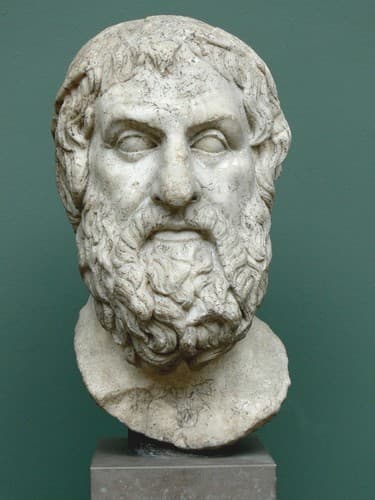
Sophocles was an ancient Greek tragedian, known as one of three from whom at least one play has survived in full. His first plays were written later than, or contemporary with, those of Aeschylus; and earlier than, or contemporary with, those of Euripides. Sophocles wrote over 120 plays, but only seven have survived in a complete form: Ajax, Antigone, Women of Trachis, Oedipus Rex, Electra, Philoctetes and Oedipus at Colonus. For almost fifty years, Sophocles was the most celebrated playwright in the dramatic competitions of the city-state of Athens which took place during the religious festivals of the Lenaea and the Dionysia. He competed in thirty competitions, won twenty-four, and was never judged lower than second place. Aeschylus won thirteen competitions, and was sometimes defeated by Sophocles; Euripides won four.
Similar books
- Oedipus Rex
Sophocles
3.7 (171k) average on GoodreadsFictionExplores the preceding events and family curse, sharing themes of fate and tragic irony.
- Medea
Euripides
4.1 (3k) average on GoodreadsPhilosophyAnother classic Greek tragedy featuring a strong, defiant female protagonist facing extreme circumstances.
- The Crucible
Arthur Miller
3.6 (323k) average on GoodreadsHistorical FictionExamines the conflict between individual conscience and an unyielding, dogmatic authority, leading to tragic outcomes.
- Nineteen Eighty-Four
George Orwell
4.2 (5.5M) average on GoodreadsFictionWinston Smith dreams of truth and rebellion in a world where Big Brother watches all, but he confronts the terrifying power of a regime that controls not just actions, but thoughts.
- The Frozen River
Ariel Lawhon
4.4 (600k) average on GoodreadsFictionIn 1789 Maine, a heroic midwife's diary helps her expose a murder and get justice in a town that wants to silence her.
- A Man Called Ove
Fredrik Backman
4.4 (569k) average on GoodreadsFictionA stubborn widower, who lives by strict rules, finds his quiet world changed by a lively new family next door, making him face his past and find happiness in human connection.





Enjoyed the summary?
A summary gives you the shape of the book. The book itself has the detail, the examples and the voice.
Find Antigone on AmazonAs an Amazon Associate, BookBrief earns from qualifying purchases. How we're funded