

Synopsis
Covers the whole plot, including the ending.
- Difficulty
- Medium
- Pacing
- Moderate
- Mood
- Tragic, Intense, Vengeful, Despairing
- Read it if
- you are interested in classical Greek tragedy, explore themes of revenge, betrayal, and the destructive power of passion, or appreciate strong female characters driven to extreme measures.
- Skip it if
- you prefer lighthearted stories, are sensitive to infanticide or graphic violence, or dislike plays with a focus on intense emotional conflict over physical action.
Medea Plot Summary
Covers the whole plot, including the ending.
The Nurse's Lament and Medea's Grief
The play starts with the Nurse expressing sorrow and fear for Medea. Medea is consumed by grief and rage because Jason has left her and their children to marry Glauce, the daughter of King Creon of Corinth. The Nurse recalls Medea's difficult journey from Colchis to Iolcus and then to Corinth, mentioning her past sacrifices for Jason. She fears Medea's unstable nature and warns of possible violence, especially against her children. The Tutor arrives with the children, confirming rumors of Jason's new marriage and Creon's order to exile Medea and her sons. Medea's cries of pain are heard from inside the house, hinting at her coming rage.
The Corinthian Women's Chorus and Medea's Vow
The Chorus of Corinthian women, hearing Medea's cries, comes to her door to offer sympathy. Medea emerges, expressing her deep feeling of betrayal and the suffering she endures as a foreign woman in a society run by men, now without her husband, home, or status. She laments women's vulnerability and her unfair situation. She tells the Chorus she plans to get revenge on Jason, Glauce, and Creon, vowing to make them pay for what they did. The Chorus, while sympathetic, shows some concern about her extreme words.
Creon's Decree of Exile
King Creon arrives, demanding Medea and her children leave Corinth at once. He explains he fears her intelligence, her reputation as a sorceress, and her potential for violence, especially after her threats against him and his daughter. Medea asks for one more day, saying she needs time to arrange for her children's future and prepare for exile. Despite his initial resolve, Creon is persuaded by Medea's pleas and grants her a single day. He will regret this decision. This delay gives Medea the chance she needs to carry out her plans for revenge.
Jason's Justification
Jason confronts Medea, accusing her of being irrational and causing her own misfortunes with her temper. He tries to justify his marriage to Glauce, claiming it was not for love but to secure a better future for their children, raise their social standing, and connect their families with royalty. He dismisses her sacrifices and past help as unimportant. Medea reminds him of the many times she saved his life and helped him achieve glory, including getting the Golden Fleece and avenging his uncle Pelias. She exposes his hypocrisy and selfishness, showing his ingratitude and betrayal.
Medea's Desperate Plea to Aegeus
Aegeus, the childless King of Athens, stops in Corinth on his way back from the Oracle of Delphi, where he sought advice on his infertility. He meets Medea, who, seeing an opportunity, pretends to be more distressed and appeals to his sympathy. She tells him of her unjust exile and Jason's betrayal. She offers to use her knowledge of drugs and magic to cure his sterility if he promises her sanctuary in Athens. Aegeus, moved by her situation and wanting an heir, agrees to grant her refuge, swearing an oath to protect her. This oath gives Medea a safe escape route, allowing her to proceed with her vengeful plans without fear of immediate punishment.
The Plan for Revenge
With Aegeus's promise of sanctuary, Medea finalizes her revenge plan. She tells the horrified Chorus she will send her children to Glauce with poisoned gifts: a beautiful gown and a golden coronet. These gifts will ensure the princess's agonizing death. After this, she reveals the most shocking part of her scheme: she intends to kill her own children. She justifies this act as a way to inflict maximum suffering on Jason, ensuring he has no heirs to inherit his new royal status and experiences a pain worse than her own. The Chorus tries to stop her, but Medea is firm, driven by her rage.
The Poisoned Gifts
Medea, controlling her emotions, calls Jason back. She pretends to have regained her senses, apologizing for her earlier outburst and admitting her foolishness. She asks him to speak with Creon and Glauce on behalf of their children, so they might stay in Corinth. As a gesture of goodwill and to ensure the children's safety, she sends them to Glauce with gifts: a finely woven gown and a golden coronet, both containing powerful poison. Jason, fooled by her act, agrees to present the gifts, believing he has brought Medea to reason and secured his children's future.
The Deaths of Glauce and Creon
A messenger rushes in, describing the deaths of Glauce and Creon. He recounts how Glauce, upon receiving and wearing Medea's gifts, was instantly afflicted. The coronet burst into flames, and the gown began to consume her flesh, melting it from her bones. Creon, rushing to his daughter's aid, embraced her, only to be caught by the same poison. His flesh tore away as he tried to pull free from his dying daughter, and he also died in agony. The messenger condemns Medea's evil, emphasizing the terror and suffering her sorcery caused.
Medea's Internal Struggle and the Infanticide
After hearing the messenger's account, Medea has a brief, internal conflict. Her maternal instincts surface, causing her to hesitate and feel pity for her sons. She admits the pain she will inflict upon herself by killing them. However, her desire for revenge against Jason ultimately wins over her love for her children. She steels herself, reasoning that it is better for her to kill them than to let her enemies do so, and that this act will wound Jason most deeply. She enters the house, and the children's screams are heard.
Jason's Despair and Medea's Escape
Jason arrives, desperate to save his children from Creon's wrath, unaware of the princess's and king's deaths. He demands the doors be opened, but Medea appears above the stage, in a chariot drawn by dragons, sent by her grandfather, the Sun God Helios. She holds the bodies of her two dead sons. She mocks Jason's despair, enjoying his pain and refusing him even the right to touch his children's bodies for burial. Jason curses her, lamenting his fate and the loss of his children. Medea, unrepentant, flies away in her divine chariot, leaving Jason broken and alone with his grief.
Principal Figures
Medea
Protagonist
A betrayed sorceress consumed by rage and a thirst for revenge.
Medea is a powerful sorceress, a princess from Colchis, and the wife of Jason. She is characterized by her fierce intellect, her passionate nature, and her unwavering loyalty, which, when betrayed, transforms into an equally fierce and destructive rage. As an outsider in Corinth, she feels isolated and vulnerable, yet her formidable magical abilities make her a terrifying force. Her deep love for Jason and her children turns into a profound hatred when Jason abandons her, leading her to commit unthinkable acts.
Relationships: Jason (Husband, then betrayer and sworn enemy); Creon (King of Corinth, victim of her revenge); Glauce (Princess, Jason's new bride, victim of her revenge); Her Children (Sons, victims of her revenge); Chorus (Confidantes, witnesses, and moral commentators); Aegeus (Benefactor, provider of sanctuary)
Jason
Antagonist
A pragmatic and ambitious hero who betrays his wife for social advancement.
Jason is the archetypal Greek hero, renowned for his quest for the Golden Fleece, yet he is also portrayed as opportunistic, self-serving, and devoid of genuine empathy. He rationalizes his abandonment of Medea and their children by claiming it's for their benefit and social advancement, marrying Glauce for political gain. He is blind to Medea's true depth of feeling and her capacity for vengeance, underestimating her at every turn. His ambition and lack of gratitude lead directly to his tragic downfall and the destruction of his family.
Relationships: Medea (Wife, then betrayed and avenging enemy); Glauce (Fiancée/new wife, victim); Creon (Father-in-law, victim); Her Children (Sons, victims of Medea's revenge)
Creon
Supporting
The King of Corinth, whose fear of Medea leads to his and his daughter's demise.
Creon is the King of Corinth and father of Glauce. He is a pragmatic ruler who fears Medea's intelligence, her reputation as a sorceress, and her potential for disruption. He acts to protect his family and his city by exiling Medea, but his momentary weakness in granting her an extra day proves fatal. He is a tragic figure who becomes an unwitting victim of Medea's revenge, dying a gruesome death while trying to save his daughter. His character highlights the dangers of underestimating a wronged woman.
Relationships: Medea (Exiler, then victim of her revenge); Glauce (Daughter, victim of Medea's revenge); Jason (Future son-in-law)
Glauce
Supporting
The young princess of Corinth, Jason's new bride, who becomes a pawn in Medea's revenge.
Glauce is the young, beautiful daughter of King Creon and Jason's intended new wife. She is largely a silent character, never appearing on stage, but her presence is central to the plot as the catalyst for Medea's rage. She represents the social advancement Jason seeks and the object of Medea's jealous hatred. Her innocence and youth make her a particularly poignant victim, as she is simply a pawn in the larger conflict between Medea and Jason. Her gruesome death is depicted vividly by the messenger.
Relationships: Jason (Fiancée/new wife); Creon (Father); Medea (Rival, then murderer)
Nurse
Supporting
Medea's loyal servant, who fears her mistress's rage and laments her fate.
The Nurse is a loyal and devoted servant to Medea, serving as the play's opening voice and a voice of reason throughout. She expresses deep concern and pity for Medea's suffering but also profound fear of her mistress's volatile temper and potential for violence. She is a compassionate figure who cares deeply for Medea's children and foresees the tragedy that is about to unfold. Her initial lament sets the somber and ominous tone for the entire play.
Relationships: Medea (Mistress); Her Children (Caretaker)
Chorus of Corinthian Women
Supporting
Sympathetic observers and moral commentators on Medea's plight.
The Chorus consists of women from Corinth who initially sympathize with Medea's betrayal and her status as a foreign woman. They offer advice, express concern, and lament the injustices faced by women in their society. While they understand Medea's pain, they are increasingly horrified by her escalating plans for revenge, particularly the idea of infanticide. They serve as a moral compass for the audience, representing conventional societal values and providing commentary on the unfolding tragedy.
Relationships: Medea (Sympathizers, then horrified witnesses)
Aegeus
Supporting
King of Athens, who unwittingly provides Medea a safe haven for her revenge.
Aegeus is the King of Athens, who appears briefly but significantly in the play. He is childless and seeks a cure for his sterility from the Oracle of Delphi. Medea, recognizing his vulnerability and need, skillfully manipulates him into promising her sanctuary in Athens. He is a compassionate and honorable man who keeps his word, unwittingly enabling Medea to carry out her full revenge without fear of immediate capture or punishment. His oath serves as the crucial plot device that secures Medea's escape.
Relationships: Medea (Benefactor, manipulated by her)
Tutor
Supporting
The children's attendant, who provides information and expresses concern.
The Tutor is an elderly servant responsible for Medea and Jason's children. He appears early in the play, confirming the news of Jason's new marriage and Creon's decree of exile. Like the Nurse, he is a compassionate figure who cares for the children and witnesses Medea's initial grief and rage. He serves primarily as a bearer of news and a secondary voice of concern for the children's well-being, highlighting the tragic fate awaiting them.
Relationships: Medea (Mistress); Her Children (Caretaker)
Messenger
Supporting
Delivers the graphic account of Glauce and Creon's deaths.
The Messenger is a minor character whose sole purpose is to deliver the vivid and gruesome account of the deaths of Glauce and Creon. His detailed description of the poisoned gifts' effects serves to heighten the horror and demonstrate the terrifying power of Medea's magic. He also expresses moral outrage at Medea's actions, condemning her as a monstrous figure. His report is crucial for the audience to understand the full impact of Medea's revenge without witnessing the deaths directly on stage.
Relationships: Medea (Witness to her destructive power)
Themes & Insights
Revenge and Justice
The main theme is Medea's pursuit of revenge for Jason's betrayal. She sees her actions as justice for the wrong done to her, a necessary punishment for her ruined life and honor. The play explores how unchecked revenge destroys the avenger as much as the victim, leading to horrific consequences. Medea's acts go beyond typical justice, becoming a monstrous display of wrath that questions the nature of punishment itself.
“For no one who wrongs me shall go unpunished.”
The Status of Women in Ancient Greece
The play shows the vulnerable position of women in ancient Greek society, especially foreign women. Medea often laments her lack of power, her reliance on her husband, and the double standards that let men have multiple wives while women must remain loyal. Her speeches highlight the injustices and limits placed on women, making her extreme actions, while not excused, somewhat understandable given her powerlessness and the patriarchal system that oppresses her.
“Of all creatures that have life and reason, we women are the most miserable.”
Betrayal and Loyalty
Betrayal starts the entire tragedy. Jason betrays Medea's loyalty and marriage vows, leaving her for social and political gain. Medea, in turn, betrays her maternal instincts and the sanctity of life to inflict pain on Jason. The play explores the damage caused by broken trust and the extreme lengths a person will go to when loyalty is met with such deceit, questioning the foundations of human relationships.
“Oh, what a wretch I am! Oh, what a faithless man!”
Passion vs. Reason
Medea embodies unchecked passion, a force that overwhelms reason or moral restraint. Her actions are driven by intense emotional pain and rage, leading her to commit unthinkable acts. Jason, in contrast, represents cold, calculating reason, justifying his actions with arguments of social advancement and family benefit, without genuine emotion. The play contrasts these two extremes, showing the destructive potential when passion is not tempered by reason, and when reason is not guided by empathy.
“Yes, I know what an evil deed I am about to do; but passion is master of my resolutions, and that is the cause of the greatest troubles to mortal men.”
The Nature of Evil
Medea's actions, especially killing her children, force the audience to confront the nature of evil. Is it born purely of malice, or can it be a twisted response to suffering and injustice? The play explores the psychology of a character driven to monstrous acts, showing how love can turn into hatred, and how a desire for 'justice' can become cruelty. It challenges ideas of heroism and villainy, presenting a complex figure whose 'evil' is linked to her experience of betrayal.
“Let no one think me a weak, contemptible woman, but rather one of the opposite sort, a terror to my enemies and a friend to those who love me. For the lives of such persons are most glorious.”
Plot Devices & Literary Techniques
Deus ex Machina
Divine intervention for Medea's escape.
The 'deus ex machina' (god from the machine) is used at the play's climax when Medea escapes in a chariot drawn by dragons, sent by her grandfather Helios, the Sun God. This divine intervention allows Medea to evade human justice after committing infanticide, denying Jason the satisfaction of revenge or even burying his children. It provides a striking, albeit controversial, ending that emphasizes Medea's superhuman nature and divine lineage, while also denying a conventional resolution to the human conflict.
Messenger Speech
Offstage violence described in vivid detail.
Euripides employs the messenger speech to narrate the horrific deaths of Glauce and Creon. In Greek tragedy, violent acts were typically not shown on stage but reported by a messenger. This device allows for a more graphic and emotionally impactful description of the events, often heightening the horror through vivid language and the audience's imagination. It also serves to advance the plot quickly and efficiently, providing crucial information about the consequences of Medea's actions.
Dramatic Irony
Audience awareness of Medea's true intentions.
Dramatic irony is prevalent throughout the play, particularly in scenes where Medea interacts with Jason and Creon. The audience is privy to Medea's true, vengeful intentions, while Jason and Creon remain ignorant, believing her feigned repentance or manipulative pleas. This creates tension and suspense, as the audience anticipates the tragic outcome that the characters on stage are oblivious to. For example, Creon grants Medea an extra day, unaware he is sealing his own and his daughter's fate.
Monologue and Soliloquy
Medea's internal struggles and declarations.
Medea frequently delivers powerful monologues and soliloquies, particularly when expressing her grief, rage, and detailing her plans for revenge. These moments provide direct insight into her complex psychological state, her motivations, and her internal conflicts, such as her agonizing hesitation before killing her children. This device allows the audience to understand the depth of her suffering and the warped logic that drives her monstrous actions, making her a more complex and human, albeit terrifying, character.
The Chorus as Moral Compass
Commentary and emotional response from the community.
The Chorus of Corinthian women serves as a collective voice that comments on the action, expresses moral judgment, and provides emotional reactions. They initially sympathize with Medea but become increasingly horrified by her plans, particularly the infanticide, attempting to dissuade her. They reflect societal norms and values, acting as a foil to Medea's extreme individualism and providing a perspective that often mirrors the audience's own developing horror and moral questioning regarding Medea's choices.
Medea Quotes
“Of all creatures that have life and sense, we women are the most wretched.”
“I would rather stand three times in the front of battle than once bear a child.”
“For no one ever hated me when I was a stranger, but when I went into the house of a man, and a wife who has had her body touched by yours, is hated.”
“It is a hard thing to give up the life one has known.”
“The gods are deaf, and when they hear, they do not listen.”
“I know indeed that I am young, but I am afraid that I may be thought to be a simple-minded fool.”
“My heart is in flames.”
“Let no one think me a tame creature, or a fool, but of a most knowing spirit, and skill in many arts.”
“It is better to be hated than to be loved by a liar.”
“Suffering has taught me many things.”
“I am a suppliant at your knees, and I beg you by your children, do not refuse me.”
“The tongue is a greater weapon than the sword.”
“For a woman is a timid creature, ready to weep, and the husband is on the battlefield.”
“I know that I have the power to end your life, but I have not the heart.”
Quiz
10 questions on the plot and the characters. Each answer comes with a short explanation.
Question 1
What is Medea's primary motivation for her actions in the play?
- To gain political power in Corinth.
- To exact revenge on Jason for his betrayal.
- To escape Corinth and return to Colchis.
- To secure a better future for her children.
Show answer
B. To exact revenge on Jason for his betrayal. Medea's actions are driven by a profound sense of betrayal and a desire for vengeance against Jason, who has abandoned her for another woman.
Question 2
Which philosophical concept is most prominently explored through Medea's plight?
- Stoicism
- Epicureanism
- The nature of justice and revenge
- The pursuit of material wealth
Show answer
C. The nature of justice and revenge The play delves deeply into the complexities of justice, the morality of revenge, and the consequences of betrayal, making the nature of justice and revenge the most prominent philosophical theme.
Question 3
When Medea contemplates her actions, she famously states, 'I know indeed what evil I shall do; but passion overcomes my reason.' What philosophical idea does this quote most directly relate to?
- The Socratic paradox of 'no one does evil willingly.'
- Aristotle's concept of the Golden Mean.
- Plato's theory of Forms.
- Nietzsche's concept of the Übermensch.
Show answer
A. The Socratic paradox of 'no one does evil willingly.' This quote echoes the Socratic idea that wrongdoing stems from ignorance or, in Medea's case, from an overwhelming emotional state that overrides rational judgment, suggesting that even when aware of the evil, passion compels the action.
Question 4
Medea's status as a 'barbarian' foreigner in Greece raises questions about:
- The economic disparities between nations.
- The nature of identity and otherness, and the limits of Hellenic civilization.
- The spread of religious practices.
- The development of seafaring technology.
Show answer
B. The nature of identity and otherness, and the limits of Hellenic civilization. Her 'otherness' as a non-Greek highlights themes of xenophobia, cultural relativism, and the perceived superiority or limitations of Greek society and its values.
Question 5
The chorus in 'Medea' often represents:
- The voice of reason and societal norms, though often powerless.
- The justification for Medea's extreme actions.
- A direct commentary from Euripides himself.
- The rationalization of Jason's behavior.
Show answer
A. The voice of reason and societal norms, though often powerless. The chorus typically voices the concerns and judgments of the community, reflecting societal expectations and often expressing moral reservations or anxieties about the unfolding events, even if they cannot intervene effectively.
Question 6
Medea's decision to kill her children is often interpreted through a lens of existentialism. Which of the following existentialist themes does it most directly challenge?
- The inherent meaninglessness of life.
- The radical freedom and responsibility of the individual.
- The possibility of authentic self-creation.
- The notion of inherent human goodness and maternal instinct.
Show answer
D. The notion of inherent human goodness and maternal instinct. Medea's act of infanticide is a profound violation of what is often considered an innate maternal bond and inherent human goodness, forcing audiences to confront the darkest capabilities of human choice and despair.
Question 7
The play can be seen as a critique of patriarchal society. How does Medea's power, derived from her sorcery and foreign origins, subvert traditional gender roles?
- By using her skills to gain political office.
- By demonstrating that women can be as rational and capable as men.
- By wielding a destructive power that transcends conventional male authority and control.
- By advocating for women's suffrage.
Show answer
C. By wielding a destructive power that transcends conventional male authority and control. Medea's sorcery and her ability to inflict devastating revenge represent a form of power that operates outside the established structures of male dominance, showcasing a destructive agency that challenges patriarchal norms.
Question 8
Jason argues that his marriage to Glauce is for the good of Medea and their children. From a philosophical standpoint, this argument could be analyzed as an example of:
- Utilitarianism, where the greatest good for the greatest number is sought.
- Deontology, focusing on duty and rules.
- Sophistry or self-serving rationalization, masking self-interest with appeals to a greater good.
- Existential choice, where individuals define their own values.
Show answer
C. Sophistry or self-serving rationalization, masking self-interest with appeals to a greater good. Jason's justification can be seen as a manipulative attempt to frame his personal ambition and betrayal as beneficial to others, a common tactic in sophistry where rhetoric is used to persuade, even if the underlying motives are self-serving.
Question 9
The ending of 'Medea,' with her escaping in a chariot provided by Helios, can be interpreted philosophically as:
- A divine endorsement of Medea's actions.
- A tragic illustration of human powerlessness against fate.
- An affirmation of the triumph of chaos over order.
- A complex symbol of divine intervention, untamed power, and the ambiguous resolution of justice.
Show answer
D. A complex symbol of divine intervention, untamed power, and the ambiguous resolution of justice. The chariot represents Medea's divine lineage and her ability to escape mortal consequences. It signifies her extraordinary, almost divine, power and raises questions about whether her actions are truly judged or simply transcended by forces beyond human comprehension.
Question 10
The play's enduring philosophical relevance lies in its exploration of:
- The limitations of ancient medicine.
- The conflict between reason and emotion, justice and vengeance, and the consequences of extreme suffering.
- The development of early democratic principles.
- The impact of foreign trade on ancient economies.
Show answer
B. The conflict between reason and emotion, justice and vengeance, and the consequences of extreme suffering. Medea's story continues to resonate because it grapples with fundamental human dilemmas: the struggle between rational thought and overpowering emotions, the complex nature of justice and the destructive path of revenge, and the profound impact of personal suffering.
Medea FAQ
What is Medea about?
Euripides' "Medea" is a tragedy that tells the story of Medea, a sorceress and the wife of Jason. Driven to despair and rage by Jason's decision to divorce her and marry a princess, Medea enacts a brutal revenge.
What are the main themes in Euripides' Medea?
Key themes include revenge, justice, the treatment of women in ancient Greece, the destructive nature of passion, and the conflict between civilization and barbarism.
What philosophical ideas are explored in Medea?
The play delves into questions of moral responsibility, the limits of human reason when faced with intense emotion, and the nature of divine justice versus human actions.
Is Medea a sympathetic character?
Medea's actions are undeniably horrific, but the play presents her as a victim of betrayal and societal constraints, prompting audiences to grapple with her motivations and question the justice she receives.
What does Medea's revenge signify?
Her elaborate and cruel revenge highlights the extreme consequences of betrayal and the desperation that can arise from perceived injustice, particularly for women lacking agency in Athenian society.
How does Medea compare to other Greek tragedies?
While sharing themes of fate and divine intervention common to Greek tragedy, "Medea" is notable for its intense psychological focus on the protagonist and its unflinching depiction of violence.
What is the role of Jason in the play?
Jason serves as Medea's foil and the catalyst for her rage. His pragmatic, self-serving decision to remarry, while arguably justified by societal norms, is perceived as a profound betrayal by Medea.
What lessons can be learned from Medea?
The play serves as a cautionary tale about the destructive power of unchecked anger and the ethical dilemmas that arise when personal suffering leads to acts of extreme violence.
What is the significance of Medea's foreignness?
Medea is an outsider, a barbarian woman in a Greek society that often distrusted foreigners. Her foreignness exacerbates her isolation and justifies her vengeful actions in her own mind.
How does Euripides portray the gods in Medea?
The gods are not directly intervening agents in Medea's plot, but their influence is felt through the concept of divine justice and the moral consequences of actions. Medea invokes them to legitimize her rage.
About the author
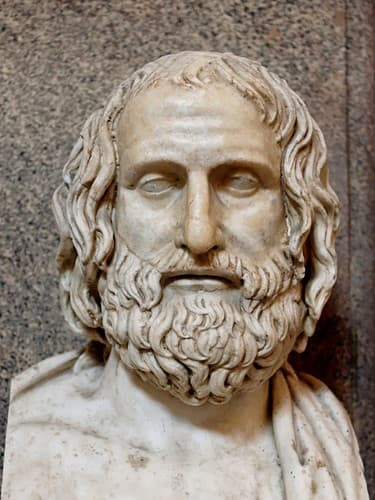
Euripides was a tragedian of classical Athens. Along with Aeschylus and Sophocles, he is one of the three ancient Greek tragedians for whom any plays have survived in full. Some ancient scholars attributed ninety-five plays to him, but the Suda says it was ninety-two at most. Of these, eighteen or nineteen have survived more or less complete. There are many fragments of most of his other plays. More of his plays have survived intact than those of Aeschylus and Sophocles together, partly because his popularity grew as theirs declined—he became, in the Hellenistic Age, a cornerstone of ancient literary education, along with Homer, Demosthenes, and Menander.
Similar books
- Oedipus Rex
Sophocles
3.7 (171k) average on GoodreadsFictionExplores themes of fate, tragedy, and human suffering within a classical Greek drama framework.
- Antigone
Sophocles
3.8 (17k) average on GoodreadsFictionFeatures a strong female protagonist in conflict with societal laws and personal morality, leading to tragic outcomes.
- Brave New World
Aldous Huxley
4.0 (1.4M) average on GoodreadsFantasyIn a future where happiness comes from chemicals and individuality is gone, one man's desire for real experience threatens the calm, controlled society.
- Life of Pi
Yann Martel
3.9 (1.3M) average on GoodreadsFantasyStranded in the vast Pacific, a young Indian boy forms an unlikely bond with a Bengal tiger, questioning belief and survival.
- The Picture of Dorian Gray
Oscar Wilde
4.1 (966k) average on GoodreadsFantasyA beautiful young man's soul decays within a cursed portrait, mirroring the grotesque cost of his hedonistic pursuit of eternal youth and illicit pleasure.
- Tuesdays with Morrie
Mitch Albom
4.1 (782k) average on GoodreadsBiographyA dying professor's weekly lessons from his bedside change a former student, giving him ideas on life, love, and letting go.






Enjoyed the summary?
A summary gives you the shape of the book. The book itself has the detail, the examples and the voice.
Find Medea on AmazonAs an Amazon Associate, BookBrief earns from qualifying purchases. How we're funded