

Synopsis
Covers the whole plot, including the ending.
- Difficulty
- Medium
- Pacing
- Variable
- Mood
- Epic, Immersive, Historical, Melancholy, Adventurous
- Read it if
- You want an immersive, detailed historical epic from a unique cultural perspective, full of adventure, political intrigue, and vivid descriptions.
- Skip it if
- You are sensitive to graphic violence, sexual content, or cultural practices that may be disturbing, or prefer fast-paced, modern narratives.
Aztec Plot Summary
Covers the whole plot, including the ending.
The Mandate and Mixtli's Origin
The novel opens with an elderly, cynical Mixtli-Dark Cloud, the last surviving Aztec nobleman, forced by Spanish Bishop Juan de Zumárraga and Brother Pedro to tell his life story. They want to understand the vanquished Aztec civilization. Mixtli, born in the village of Xaltocan, begins with his childhood. He describes his early life, family, and the Mexica people's rigorous education and cultural practices. He details the societal structure, religious beliefs, and everyday life of common people, setting the stage for his journey through the Aztec Empire and its eventual downfall.
Early Life and the Path of the Warrior
Mixtli's early life is shaped by the strict discipline and communal living of his village, Xaltocan. He undergoes traditional schooling and training for young Aztec men, learning war, rhetoric, and complex religious rituals. He forms a close bond with his childhood friend, Tzompan, who becomes an Eagle Knight. Mixtli's intelligence and wit are clear, but he also has a rebellious side. His first battle, a flower war, shows him the brutal reality of warfare and the importance of taking captives for sacrifice, a core part of Aztec faith and power.
Rise Through the Ranks and Tenochtitlan
Through skill, cunning, and luck, Mixtli excels in battle, taking many captives and earning respect. His bravery and intelligence lead to his selection for service in the capital city of Tenochtitlan. Here, he experiences the full grandeur and complexity of the Aztec Empire. He sees the magnificent temples, busy markets, and intricate political dealings of the ruling class. This period broadens his view of the world as he interacts with various social levels and observes the empire's power dynamics.
The Court of Moctezuma and Political Intrigue
Emperor Moctezuma Xocoyotzin recognizes Mixtli's talents, appointing him to sensitive roles, including scribe and spy. He becomes familiar with the emperor's court, observing rituals, political rivalries, and the constant struggle for power among noble families. He experiences the ruling elite's opulence and decadence, often in contrast to commoners' lives. This period deepens his understanding of Aztec society's strengths and weaknesses, especially its reliance on tribute and its complex diplomatic relations with neighboring city-states.
Adventures and Love in Distant Lands
Mixtli's duties often take him beyond Tenochtitlan, on diplomatic and intelligence-gathering missions throughout the empire and beyond. These travels expose him to diverse cultures, languages, and customs, broadening his perspective. During these journeys, he meets several women with whom he has romantic relationships, each adding complexity to his personal life and challenging his ideas about love and loyalty. These experiences show his adaptability and his ability to connect with people from different backgrounds, even those considered enemies of the Aztec Empire.
The Omens and Prophecies
As the story continues, a sense of dread fills the Aztec world. Mixtli recounts the ominous signs and prophecies that trouble Emperor Moctezuma and the priesthood. Comets, strange lights, and unusual natural events are seen as signs of disaster. These events create anxiety and uncertainty among the Aztec people, especially the ruling class, who are deeply religious and interpret such omens. Mixtli, often skeptical, cannot ignore the growing unease, which foreshadows the Spanish arrival.
Arrival of the Strangers
The moment of destiny arrives with Hernán Cortés and his Spanish conquistadors landing on the eastern coast. Mixtli, often among the first to get intelligence, describes the initial confusion and awe surrounding these pale strangers with their strange weapons, horses, and floating 'mountains' (ships). Emperor Moctezuma, influenced by prophecies and a desire to avoid conflict, decides to welcome Cortés into Tenochtitlan. Mixtli portrays the initial interactions, cultural misunderstandings, and growing tension as the Spanish presence disrupts the Aztec power balance.
The Spanish in Tenochtitlan and the Noche Triste
Cortés and his men are initially welcomed into Tenochtitlan, but their true intentions soon become clear. They take Moctezuma captive, desecrate temples, and demand gold. Mixtli describes the growing resentment among the Aztec people, leading to a massacre during a religious festival. This act ignites a fierce rebellion. The Spanish are eventually driven out of the city during the 'Noche Triste' (Night of Sorrows), suffering heavy losses. Mixtli participates in these desperate battles, witnessing his people's ferocity and the Spanish's technological superiority, especially their firearms and steel weapons.
Siege and Fall of Tenochtitlan
After the Noche Triste, the Spanish regroup and form alliances with many indigenous city-states who were traditional enemies of the Aztecs. They return to besiege Tenochtitlan, cutting off supplies and launching a relentless assault. Mixtli gives a harrowing account of the siege, detailing the starvation, disease (smallpox, introduced by the Spanish, decimates the population), and brutal fighting that tears the city apart. He describes the bravery and desperation of the Aztec defenders under Cuitláhuac and later Cuauhtémoc, as they fight to the last, ultimately succumbing to the overwhelming force and superior weaponry of the invaders.
The Aftermath and Mixtli's Survival
With Tenochtitlan's fall, the Aztec Empire collapses. Mixtli, against all odds, survives the devastation, witnessing his culture, religion, and way of life systematically destroyed. He describes his people's brutal subjugation, forced conversions to Christianity, and ruthless exploitation by the Spanish. Despite immense suffering, Mixtli finds ways to adapt and survive in this new, harsh reality. His resilience and deep understanding of both Aztec and Spanish cultures allow him to persist, albeit as a shadow of his former self, a living reminder of a lost civilization.
Life Under Spanish Rule
In the decades after the conquest, Mixtli continues to live under Spanish rule, experiencing the changes wrought upon his land and people. He observes the imposition of new laws, religions, and social structures, often serving in capacities that give him insight into the colonizers' methods. He witnesses the destruction of temples, the burning of codices, and the forced labor of his countrymen. Despite the oppression, Mixtli maintains a keen eye for detail and a sharp intellect, allowing him to analyze the new order and reflect on the irreversible loss of his heritage while subtly resisting in his own ways.
Reflections and Legacy
As Mixtli finishes his narrative to the friars, he offers his final, often cynical, reflections on his civilization's rise and fall. He critiques flaws within Aztec society, such as its reliance on human sacrifice and imperial ambitions, but also passionately defends its grandeur, achievements in art, science, and social organization. His story is a powerful reminder of the human spirit's resilience and a poignant elegy for a lost world. He leaves the friars, and the reader, with a deep understanding of a complex culture, seen through the eyes of one who lived its glory and its ultimate demise.
Aztec Characters
Mixtli-Dark Cloud
Protagonist
The cynical, intelligent, and adaptable Aztec nobleman and scribe.
Mixtli is the central figure, a highly intelligent and observant Mexica man from a humble background. He possesses an insatiable curiosity, a sharp wit, and a remarkable ability to adapt to changing circumstances. While deeply rooted in Aztec culture and religion, he is also a pragmatic skeptic, often questioning traditions and authority. His experiences as a warrior, scribe, spy, and lover shape him into a complex individual who lives through the glory and the ultimate destruction of his civilization. He is a survivor, capable of both great love and profound cynicism.
Relationships: Tzompan (Childhood friend and fellow warrior); Xilonen (First love, a Totonac woman); Malinal (Another significant love interest, a woman from a rival city-state); Moctezuma Xocoyotzin (Emperor, his patron and a figure of both awe and pity); Hernán Cortés (The Spanish conqueror, his ultimate antagonist)
Moctezuma Xocoyotzin
Supporting
The last great Aztec Emperor, a figure of power and tragic indecision.
Moctezuma is the powerful but increasingly troubled emperor of the Aztec Empire. He is depicted as a man of great intellect and deep religious devotion, but also one burdened by the weight of prophecy and the growing anxieties of his empire. His initial attempts to appease the Spanish, driven by a mix of superstition and political calculation, prove to be his undoing. He is a complex figure, embodying the grandeur and the fatal flaws of the Aztec leadership, ultimately unable to contend with the unprecedented threat posed by the conquistadors.
Relationships: Mixtli-Dark Cloud (His trusted servant, scribe, and informant); Cuitláhuac (His brother and successor, a more aggressive leader)
Hernán Cortés
Antagonist
The ruthless and ambitious Spanish conquistador.
Cortés is the leader of the Spanish expedition, a driven and utterly pragmatic military commander. He is portrayed as cunning, ruthless, and religiously zealous, with an unwavering belief in his divine right to conquer and convert. He skillfully exploits the political divisions among the indigenous peoples and the superstitious fears of Moctezuma. His actions, from the initial landing to the brutal siege of Tenochtitlan, are the direct catalyst for the destruction of the Aztec civilization. He represents the destructive force of European colonialism.
Relationships: Mixtli-Dark Cloud (The antagonist to Mixtli's people and way of life); Malinche (Malintzin) (His indigenous translator and mistress)
Tzompan
Supporting
Mixtli's loyal childhood friend and a brave Eagle Knight.
Tzompan is Mixtli's childhood friend from Xaltocan, who rises through the ranks to become a respected Eagle Knight. He embodies the traditional Aztec warrior ideal: brave, honorable, and deeply committed to his people and their gods. His unwavering loyalty to Mixtli and his fierce dedication to defending Tenochtitlan provide a stark contrast to Mixtli's more adaptable and cynical nature. He represents the heroic, albeit ultimately doomed, resistance of the Aztec warriors against the Spanish invaders.
Relationships: Mixtli-Dark Cloud (Best friend and comrade-in-arms)
Xilonen
Supporting
Mixtli's first love, a beautiful Totonac woman.
Xilonen is a Totonac woman whom Mixtli encounters during his travels. She becomes his first significant love interest and represents a connection to a people outside the immediate Mexica sphere. Their relationship highlights Mixtli's capacity for deep affection and his ability to bridge cultural divides. Her fate, often tied to the brutal realities of inter-tribal warfare and sacrifice, serves as a poignant reminder of the personal costs of the larger conflicts that define Mixtli's world.
Relationships: Mixtli-Dark Cloud (Lover)
Malinal
Supporting
A cunning and resourceful woman, another of Mixtli's lovers.
Malinal is another of Mixtli's significant romantic interests, a woman from a rival city-state. She is depicted as intelligent, resourceful, and fiercely independent. Her relationship with Mixtli is complex, often marked by political intrigue and the dangers of their respective allegiances. She challenges Mixtli's perceptions and forces him to navigate difficult ethical dilemmas, adding another layer of personal conflict to his journey. Malinal represents the diverse and often treacherous human landscape outside of Tenochtitlan.
Relationships: Mixtli-Dark Cloud (Lover and occasional collaborator)
Cuitláhuac
Supporting
Moctezuma's brother and a fierce, unyielding warrior-emperor.
Cuitláhuac is Moctezuma's brother and his eventual successor as Emperor. He is a stark contrast to Moctezuma, possessing a more aggressive, uncompromising spirit. He leads the Aztec resistance during the Noche Triste, proving to be a formidable military leader. His brief reign is marked by a determined effort to expel the Spanish and restore Aztec sovereignty, but he tragically succumbs to smallpox, robbing the Aztecs of a strong leader at a critical juncture.
Relationships: Moctezuma Xocoyotzin (Brother); Mixtli-Dark Cloud (His subject and a warrior under his command)
Cuauhtémoc
Supporting
The last Aztec Emperor, a symbol of defiant resistance.
Cuauhtémoc is the final Aztec Emperor, Cuitláhuac's cousin and successor. He embodies the spirit of defiant resistance against the Spanish. Despite overwhelming odds, he bravely leads the defense of Tenochtitlan during the grueling siege, inspiring his people with his courage and resolve. His capture marks the definitive end of the Aztec Empire. His eventual torture and execution by the Spanish solidify his image as a martyr for his people, a tragic hero in the face of insurmountable defeat.
Relationships: Mixtli-Dark Cloud (His subject and a warrior under his command)
Brother Pedro
Supporting
The Spanish friar tasked with recording Mixtli's story.
Brother Pedro is one of the two Spanish friars who compel Mixtli to recount his life story. He is portrayed as more empathetic and genuinely curious about Aztec culture than Bishop Zumárraga. While still firmly rooted in his Christian faith and the Spanish colonial project, he approaches Mixtli with a degree of respect and a desire to understand, rather than merely judge. He represents the more intellectual and archival aspect of the Spanish conquest, seeking to document what they have destroyed.
Relationships: Mixtli-Dark Cloud (His reluctant narrator); Bishop Juan de Zumárraga (His superior and fellow chronicler)
Bishop Juan de Zumárraga
Supporting
The stern Spanish Bishop who commissions Mixtli's narrative.
Bishop Juan de Zumárraga is the other Spanish friar, a stern and dogmatic figure who represents the more rigid and religiously zealous aspect of the Spanish conquest. He views Aztec culture primarily through the lens of sin and paganism, eager to eradicate its practices and convert its people. His primary motivation for hearing Mixtli's story is to understand the 'enemy' better, to facilitate conversion, and to justify the conquest. He is less interested in cultural understanding and more in theological condemnation.
Relationships: Mixtli-Dark Cloud (His reluctant narrator); Brother Pedro (His subordinate and fellow chronicler)
Aztec Themes
Clash of Civilizations
The novel portrays the collision between the Aztec Empire and the Spanish conquistadors. It explores not just the military conflict but also the cultural, religious, and philosophical differences that made mutual understanding impossible. The Aztec worldview, rooted in cosmic balance and human sacrifice, clashes with the Spanish drive for conquest, conversion, and gold. This theme is central during Cortés's arrival, Moctezuma's indecision, and the siege of Tenochtitlan, showing how two complex societies, each convinced of its own righteousness, brought about one's destruction.
“For the White Strangers, gold was a god. For us, it was merely an adornment, a thing of beauty, not power.”
The Nature of Power and Empire
Aztec examines imperial power, both within the Aztec Empire and in its confrontation with the Spanish. It looks at how the Aztecs maintained control through tribute, military might, and religious ideology (including human sacrifice), and how their imperial structure, with its subjugated city-states, became a weakness Cortés exploited. Mixtli's journey through Moctezuma's court and his observations of political intrigue highlight the fragility and ambition in any empire. The Spanish arrival then demonstrates a different, more technologically advanced and efficient form of imperial expansion.
“An empire is a many-headed beast, and each head hungers for its own portion of meat.”
Cultural Identity and Loss
The novel explores cultural identity and the impact of its loss. Mixtli's narrative is a loving, if sometimes critical, homage to Aztec life, from its social customs and religious rituals to its art, language, and philosophy. The Spanish conquest systematically dismantles this identity, forcing conversions, destroying temples, and suppressing indigenous practices. Mixtli's survival after the conquest makes him a living reminder of this loss, grappling with the memory of a world that is no more and the challenge of maintaining his identity in a conquered land.
“They burned our books, they defiled our altars, but they could not burn the memories in my mind, nor defile the gods in my heart.”
Survival and Adaptation
Mixtli's entire life shows the human capacity for survival and adaptation. From his humble beginnings, he navigates the complex and often brutal Aztec Empire, rising through its ranks through intelligence and resourcefulness. More importantly, he survives the Spanish conquest, adapting to a new, oppressive reality while keeping his inner core. His ability to learn Spanish, understand the invaders' motivations, and find ways to exist in the post-conquest world highlights this theme. It's not just physical survival, but also the adaptation of spirit and mind in the face of great change.
“To live is to change. To live long is to change often, and sometimes to change so much that one no longer recognizes the person one once was.”
The Reliability of History and Narrative
Framed as Mixtli's dictated memoir to Spanish friars, the novel questions historical truth and narrative biases. Mixtli, a cynical and self-aware narrator, often interjects his opinions, challenges the friars' interpretations, and presents a subjective, personal account of events. This narrative device shows how history is constructed and often manipulated by the victors, and how the voices of the conquered are often silenced or distorted. Mixtli's story is an alternative history, a counter-narrative to the official Spanish version, making the reader consider multiple perspectives on the past.
“You scribes of the White Strangers write your histories to please your masters. I speak only to please myself, and the gods who no longer listen.”
Plot Devices & Literary Techniques
First-Person Narrative (Memoir)
The entire story is told through the eyes and voice of Mixtli-Dark Cloud.
This device immerses the reader directly into Mixtli's subjective experience, allowing for a deep understanding of Aztec culture from an insider's perspective. It provides an intimate, personal, and often cynical account of events, contrasting sharply with traditional historical narratives. The framing device of Mixtli dictating his story to Spanish friars also allows for meta-commentary on the act of storytelling and the biases inherent in historical record-keeping, constantly reminding the reader that this is *his* truth.
Cultural Immersion and Detail
Extensive and meticulous descriptions of Aztec life, customs, and beliefs.
Jennings employs rich, sensory details to create a vivid and immersive portrayal of Aztec civilization. This includes descriptions of food, clothing, architecture, religious rituals (including sacrifice), social hierarchy, language, and daily life. This device serves to make the Aztec world feel real and tangible, allowing the reader to understand its complexity and beauty before its destruction, thereby amplifying the tragedy of its fall. It grounds the historical fiction in a palpable sense of authenticity.
Prophecy and Omens
Supernatural signs and predictions foreshadow the arrival of the Spanish and the empire's doom.
Throughout the narrative, various prophecies, omens, and astronomical events are described, unsettling Moctezuma and the Aztec priesthood. These include comets, strange visions, and unusual natural phenomena. This device builds a sense of impending doom and inevitability, creating dramatic tension and highlighting the deep spiritual and superstitious nature of Aztec society. It also explains, in part, Moctezuma's initial hesitant and conciliatory approach to the Spanish, as he grapples with the belief that Cortés might be the returned god Quetzalcoatl.
The Unreliable Narrator
Mixtli's biases, cynicism, and selective memory color his account.
While Mixtli is the primary source of information, his narrative is filtered through his personal experiences, opinions, and the wisdom gained from a long, often bitter life. He is a self-aware and sometimes manipulative storyteller, often challenging the friars' Christian interpretations and offering his own, often cynical, view of events. This device encourages the reader to critically engage with the text, questioning the absolute truth of any historical account and appreciating the subjective nature of memory and perspective.
Aztec Quotes
“My father was a potter, and my mother was a weaver, and I was born to be a scribe. That is the way of our People, that each is born to a certain task, and it is best to accept it.”
“The gods are not mocked. They take what is due them, and they take it with a smile.”
“A man's life is but a breath, a fleeting shadow, but his deeds can live forever.”
“There are many ways to die, but only one way to live: with courage.”
“Knowledge is a powerful weapon, more so than any obsidian blade.”
“The world is a vast and varied place, and a man who stays in one village will never know it.”
“Do not judge a man by the gods he worships, but by the deeds he does.”
“Love is a madness, a beautiful torment that consumes all reason.”
“Gold is a curse, for it drives men to madness and destruction.”
“The gods give us life, and they take it away. It is not for us to question their will.”
“To conquer is not merely to defeat an enemy, but to absorb them, to make them part of your own.”
“The future is not written; it is made by the choices we make today.”
“There is no greater agony than bearing an untold story inside you.”
“Even in the darkest night, the stars still shine.”
Quiz
10 questions on the plot and the characters. Each answer comes with a short explanation.
Question 1
What is the name of the protagonist and narrator of 'Aztec'?
- Montezuma
- Hernán Cortés
- Mixtli-Dark Cloud
- Xicotencatl
Show answer
C. Mixtli-Dark Cloud The story is told from the perspective of Mixtli, whose name means Dark Cloud, as he recounts his life to the Spanish friars.
Question 2
In what major Aztec city does much of Mixtli's early life and the peak of the empire take place?
- Texcoco
- Tlacopan
- Cholula
- Tenochtitlan
Show answer
D. Tenochtitlan Tenochtitlan is the magnificent capital of the Aztec Empire, built on a lake, and is the central setting for much of the novel's action.
Question 3
What is Mixtli's primary occupation or skill that he develops early in his life?
- Priest
- Warrior/Scribe
- Merchant
- Farmer
Show answer
B. Warrior/Scribe Mixtli is initially trained as a scribe and later becomes a highly skilled warrior, earning recognition for his bravery and intelligence.
Question 4
Which Spanish conquistador leads the expedition that ultimately brings about the downfall of the Aztec Empire?
- Francisco Pizarro
- Vasco Núñez de Balboa
- Hernán Cortés
- Juan Ponce de León
Show answer
C. Hernán Cortés Hernán Cortés is the historical figure who led the Spanish forces against the Aztec Empire, a pivotal event in Mixtli's story.
Question 5
Mixtli's life is characterized by his frequent travels and encounters with various cultures within and outside the Aztec Empire. Which of these is NOT a place he visits or lives in for an extended period?
- The lands of the Mixtec people
- The Tarascan Empire
- The Inca Empire
- The Tlaxcalan territory
Show answer
C. The Inca Empire Mixtli travels extensively throughout Mesoamerica, including to Mixtec, Tarascan, and Tlaxcalan territories, but never to the distant Inca Empire in South America.
Question 6
What is the primary reason the Tlaxcalans become crucial allies to the Spanish against the Aztecs?
- They shared the same religious beliefs as the Spanish.
- They were long-standing enemies of the Aztec Triple Alliance.
- They believed Cortés was a returning god, Quetzalcoatl.
- The Spanish offered them vast amounts of gold.
Show answer
B. They were long-standing enemies of the Aztec Triple Alliance. The Tlaxcalans had a deep-seated and long-standing enmity with the Aztecs, making them eager and effective allies for Cortés.
Question 7
Mixtli is known for his relationships with many women throughout his life. Which of the following is NOT a significant female character in his story?
- Coaxoch
- Malintzin (Malinche)
- Zyanya
- Tlatli
Show answer
B. Malintzin (Malinche) While Malintzin is a crucial historical figure in the conquest, she serves as Cortés's interpreter and mistress, not as one of Mixtli's personal romantic interests in the novel.
Question 8
What is the significance of the Flower Wars in Aztec culture, as depicted in the novel?
- They were battles fought purely for territorial expansion.
- They were ritualistic battles fought to capture victims for human sacrifice.
- They were annual festivals celebrating agricultural bounty.
- They were duels between rival noble families for honor.
Show answer
B. They were ritualistic battles fought to capture victims for human sacrifice. The Flower Wars were a distinct type of warfare designed to provide a steady supply of captured warriors for human sacrifice, a central religious practice of the Aztecs.
Question 9
One of the recurring themes in the novel is the clash of cultures and worldviews. Mixtli often struggles to understand the Spanish. What is a key Spanish concept that Mixtli finds particularly alien or contradictory?
- Their strict social hierarchy.
- Their concept of a single, all-powerful God and the rejection of other deities.
- Their advanced weaponry and armor.
- Their desire for gold and silver.
Show answer
B. Their concept of a single, all-powerful God and the rejection of other deities. Mixtli, coming from a polytheistic society, struggles profoundly with the Spanish insistence on one God and their zealous rejection of all other gods, finding it illogical and arrogant.
Question 10
At the end of his life, Mixtli is recounting his story to Spanish friars for a specific purpose. What is that purpose?
- To seek clemency for his past actions as a warrior.
- To convert to Christianity and receive baptism.
- To provide a detailed account of Aztec life and history from their perspective.
- To negotiate peace terms between the remaining Aztecs and the Spanish.
Show answer
C. To provide a detailed account of Aztec life and history from their perspective. The entire novel is framed as Mixtli's testimony to a group of Spanish friars who wish to understand the Aztec people and their civilization, serving as a historical record from an indigenous viewpoint.
Aztec FAQ
What is the central premise of 'Aztec' and who is its primary narrator?
'Aztec' chronicles the life of Mixtli-Dark Cloud, a fictional Aztec man, from his humble beginnings through various societal roles, ultimately witnessing the rise and fall of the Aztec Empire. He narrates his experiences directly to a council of Spanish friars many decades later, providing a unique first-person perspective on pre-Columbian Mesoamerican life.
How does Mixtli's social standing evolve throughout the novel?
Mixtli begins as a humble commoner from a remote village, but through his intelligence, strength, and adaptability, he ascends through various stations. He becomes a scribe, a warrior, a merchant, a priest, and even a slave, experiencing nearly every facet of Aztec society before the Spanish conquest.
What role do the various women in Mixtli's life play in his journey?
Mixtli's relationships with women are central to his development and understanding of Aztec society. From his first love, Tzitzitlini, to his many wives and concubines like Zyanya and Necalli, each woman represents a different aspect of Aztec culture, societal expectation, or personal connection, often influencing his decisions and providing emotional anchors.
How does the book portray the Aztec religious practices, particularly human sacrifice?
The novel depicts Aztec religious practices, including human sacrifice, with a focus on their cultural context rather than sensationalism. Mixtli participates in and observes these rituals, explaining the theological underpinnings, the societal importance, and the deeply ingrained belief in their necessity for cosmic balance and the sun's continued journey.
What is the significance of the arrival of Hernán Cortés and the Spanish conquistadores in the narrative?
The arrival of Hernán Cortés marks a pivotal turning point, signaling the beginning of the end for the Aztec Empire. Mixtli, having lived through the peak of Aztec power, becomes a direct observer and sometimes participant in the clashes, deceptions, and eventual destruction wrought by the Spanish, offering an intimate view of the conquest.
Are there any subtle foreshadowing elements regarding the eventual fall of Tenochtitlan?
Yes, subtle foreshadowing exists in the constant warfare with neighboring tribes, the rigid social hierarchy, and the reliance on tribute from subjugated peoples, which sowed seeds of resentment. Mixtli often reflects on the internal divisions and the hubris of the Mexica, which eventually made them vulnerable to the Spanish and their indigenous allies.
What is the deeper meaning behind Mixtli's changing names or titles throughout his life?
Mixtli's various names and titles, such as 'Dark Cloud,' 'Speaker,' 'Warrior Eagle,' or 'Merchant Lord,' reflect his evolving identity and societal roles. Each change signifies a major life transition, a new skill acquired, or a shift in his social status and responsibilities, illustrating his incredible adaptability and journey through Aztec society.
Does the novel suggest any internal weaknesses within the Aztec Empire beyond the Spanish invasion?
Beyond external threats, the novel highlights internal weaknesses such as the resentment of tributary states, the rigid social structure that stifled innovation, and the religious fatalism that sometimes paralyzed decision-making. These internal frictions and disunities were exploited by Cortés, contributing significantly to the empire's downfall.
How does Mixtli's role as a narrator to the friars influence the storytelling?
Mixtli's narration to the friars creates a frame story, allowing for retrospective reflection and a degree of dramatic irony. He often comments on the friars' misunderstandings or biases, subtly challenging their colonial perspective while also providing a complete, unvarnished account of his life and Aztec culture, filtered through his own experiences and memories.
How does Mixtli cope with the extreme violence and brutality he witnesses and participates in?
Mixtli develops a complex psychological resilience. He often rationalizes violence within the framework of Aztec beliefs, seeing it as necessary for survival, religious duty, or societal order. While he experiences grief and horror, his adaptability, pragmatism, and deep cultural immersion allow him to internalize and cope with these realities, often by compartmentalizing or finding meaning in the chaos.
What psychological impact does Mixtli's constant loss and adaptation have on his character?
Mixtli's life is marked by profound loss – of loved ones, his homeland, and ultimately his civilization. This constant adaptation fosters extreme resilience and a pragmatic worldview, but also leaves him with a deep sense of melancholy and historical burden. He becomes a survivor, but one deeply scarred by the weight of memory and change.
How does Mixtli's perspective on the Spanish evolve throughout the conquest?
Initially, Mixtli views the Spanish with a mixture of awe, curiosity, and suspicion, often struggling to reconcile their advanced technology with their barbaric behavior. As the conquest progresses, his view hardens into one of contempt and despair, recognizing their greed, cruelty, and the irreversible destruction they bring, while also acknowledging their strategic cunning.
What psychological needs did the Aztec religion, including human sacrifice, fulfill for the society and individuals like Mixtli?
The Aztec religion provided a comprehensive framework for existence, offering explanations for natural phenomena, a sense of cosmic order, and a clear path for individual and societal duty. Human sacrifice, while brutal, served to reinforce social cohesion, express devotion to the gods, and alleviate collective anxieties about the sun's continuation, giving individuals like Mixtli a powerful sense of purpose and belonging.
Is Mixtli a hero, an anti-hero, or simply a survivor?
Mixtli defies easy categorization. He exhibits heroic qualities like courage and loyalty, but also engages in morally ambiguous acts common to his time and culture. Ultimately, he is a consummate survivor, driven by an instinct to persist and bear witness, making him more of a complex, morally gray figure rather than a traditional hero or anti-hero.
To what extent is 'Aztec' a critique of colonialism, and to what extent is it a celebration of indigenous culture?
'Aztec' functions as both. It is a powerful critique of colonialism, vividly depicting the brutality and cultural destruction wrought by the Spanish. Simultaneously, it is a profound celebration of Aztec culture, meticulously detailing its richness, complexity, and achievements, offering a humanizing counter-narrative to historical biases.
How does Mixtli's final act of defiance or submission to the friars reflect his life's journey?
Mixtli's final interactions with the friars, particularly his refusal to fully convert or abandon his core beliefs, encapsulate his lifelong resilience and defiance. Despite witnessing the destruction of his world, he remains true to his identity and heritage, ensuring that his story, and thus the memory of his people, endures on his own terms.
What is the novel's stance on the concept of 'civilization' given its portrayal of both Aztec and Spanish societies?
The novel subtly challenges simplistic definitions of 'civilization.' It portrays the Aztecs as a highly complex, sophisticated society with its own ethical codes, art, and governance, despite practices like human sacrifice. Conversely, it exposes the barbarity and hypocrisy underlying the 'civilizing mission' of the Spanish, suggesting that 'civilization' is a relative and often self-serving construct.
Does the book present a biased view of Aztec society, given its first-person narration?
While Mixtli's narration is deeply personal and subjective, it is arguably less biased than traditional Western historical accounts. The author, through Mixtli, strives to present Aztec society from an internal perspective, showing its logic and cultural context, rather than imposing external judgments. Mixtli himself is critical of certain Aztec practices, providing a nuanced view.
About the author

Gary Jennings was an American author known for his historical fiction. He is best recognized for his novel "Aztec," which explores the culture and history of the Aztec civilization. Jennings' works often blend extensive research with imaginative storytelling, bringing historical settings to life.
Similar books
- The Pillars of the Earth
Ken Follett
4.3 (649k) average on GoodreadsFantasyDetailed historical fiction with a strong sense of place and character development.
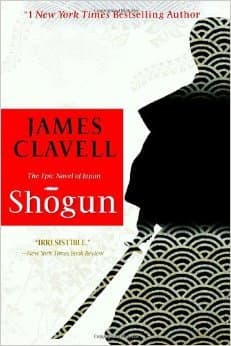
- Shōgun
James Clavell
4.4 (147k) average on GoodreadsHistorical FictionEpic historical fiction exploring cultural clash and political maneuvering in a foreign land.
- Angels & Demons
Dan Brown
3.9 (2.7M) average on GoodreadsThrillerA Harvard symbologist races through Rome's ancient sites, deciphering cryptic clues to unmask the Illuminati and stop a vengeful plot to destroy the Vatican with a stolen antimatter weapon.
- Gone Girl
Gillian Flynn
4.1 (2.3M) average on GoodreadsThrillerA wife's sudden disappearance on her fifth anniversary reveals a web of lies and psychological warfare, exposing the secrets within a seemingly perfect marriage.
- The Girl on the Train
Paula Hawkins
3.9 (2.1M) average on GoodreadsThrillerA woman’s fascination with a seemingly perfect couple she watches from her daily train commute leads her into a dark investigation when she witnesses something that shatters their idyllic image.
- The Da Vinci Code
Dan Brown
3.9 (1.9M) average on GoodreadsThrillerA symbologist and a cryptologist race through European landmarks, deciphering ancient codes and uncovering a conspiracy that could rewrite the foundations of Christianity.





Enjoyed the summary?
A summary gives you the shape of the book. The book itself has the detail, the examples and the voice.
Find Aztec on AmazonAs an Amazon Associate, BookBrief earns from qualifying purchases. How we're funded