
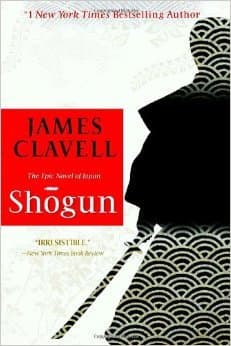
Synopsis
Covers the whole plot, including the ending.
- Difficulty
- Medium
- Pacing
- Variable
- Mood
- Immersive, Epic, Intense, Culturally Rich, Dramatic
- Read it if
- You want an immersive, detailed epic of cultural clash, political intrigue, and personal transformation set in feudal Japan, complete with samurai honor, forbidden love, and high stakes.
- Skip it if
- You prefer fast-paced, action-only narratives, are sensitive to graphic violence, or find extensive detail and a large cast of characters overwhelming.
Shōgun Plot Summary
Covers the whole plot, including the ending.
Arrival and Imprisonment
In April 1600, the Dutch ship *Erasmus*, captained by English pilot John Blackthorne, wrecks on the coast of Izu, Japan. The crew, sick and storm-battered, are captured by samurai. Blackthorne and his remaining men are imprisoned in the village of Anjiro, where they face suspicion and hostility, especially from the local daimyo, Lord Yabu. Blackthorne, struggling to understand the foreign language and customs, sees brutal punishments and is tortured himself, including being boiled and seeing a samurai's head removed. His first interactions show deep cultural shock and a desperate attempt to assert his identity as a European Protestant in a Catholic-dominated region.
Meeting Toranaga
Blackthorne and his surviving crew are eventually brought before Lord Yoshi Toranaga, the powerful Lord of the Kwanto and a member of the Council of Regents. Toranaga, interested in Blackthorne's knowledge of navigation, shipbuilding, and European politics, sees the Englishman as a potential asset in his fight against the other regents, particularly Ishido Kazunari. Through the Jesuit priest Father Alvito and later, Lady Mariko, who acts as interpreter, Blackthorne tries to explain his mission and the geopolitical situation in Europe, including the rivalry between Protestant England and Catholic Portugal/Spain. Toranaga's first view of Blackthorne is one of calculated interest; he recognizes the pilot's potential to break the Portuguese trade monopoly and provide military advantage.
Life in Osaka Castle
Blackthorne is moved to Osaka Castle, the center of the regents' power, where he lives more comfortably but remains a prisoner. Here, he begins to study Japanese language and culture under various samurai and servants, including Lady Mariko. He sees firsthand the complex web of alliances, betrayals, and power plays among the Council of Regents. Blackthorne's presence makes the Portuguese Jesuits uneasy; they fear he will expose their commercial and political schemes to Toranaga. He is given the Japanese name Anjin-san (Pilot), and his attempts to adapt, though often clumsy and offensive by Japanese standards, slowly earn him some respect.
The Earthquake and Mariko's Role
While at Osaka, a massive earthquake hits, causing widespread destruction and death. Blackthorne, using his Western knowledge of structural integrity, helps rescue people from collapsed buildings, including Toranaga's concubine, Kiku, and her children. This act of courage and skill significantly raises his standing with Toranaga. During this time, Blackthorne's relationship with Lady Mariko grows deeper. She continues to be his main interpreter and cultural guide, and their intellectual and emotional connection develops, despite her marriage to Buntaro. Mariko feels increasingly torn between her duty and her growing feelings for 'Anjin-san,' while also struggling with her loyalties to her Catholic faith and her lord, Toranaga.
The Tea Ceremony and Political Maneuvers
Toranaga, facing pressure from Ishido and the other regents, stages a dramatic escape from Osaka, faking illness to avoid a direct fight. Blackthorne, having shown his loyalty and usefulness, is key to this deception, using his ship's cannon to create a diversion. Before this, Blackthorne is invited to a formal tea ceremony, a significant honor that shows his growing acceptance into Japanese society, despite being foreign. This event, carefully detailed, highlights the deep cultural differences and the strict etiquette Blackthorne must learn. Toranaga's strategic brilliance becomes clear as he manipulates events, using Blackthorne as a pawn in his larger game to gain power and become Shōgun.
Lord Yabu's Treachery and Blackthorne's Promotion
Blackthorne is given the title of Hatamoto (banner-man) and a small fief in Anjiro by Toranaga, making him a samurai. This promotion includes a stipend and servants, further bringing him into the Japanese feudal system. Lord Yabu, Blackthorne's first captor and a notoriously ambitious and cruel daimyo, is eventually caught in a plot to betray Toranaga to Ishido. Yabu is forced to commit seppuku, a ritual suicide, by Toranaga. Blackthorne sees this brutal act, which reinforces the stark reality of samurai justice and honor. Toranaga appoints Blackthorne to command a fleet of ships he plans to build, using the expertise of the *Erasmus*'s crew, further cementing the Englishman's importance to his strategic goals.
Mariko's Sacrifice
As Toranaga prepares for the decisive battle against Ishido, he sends Lady Mariko to Osaka Castle, supposedly for her to return to her husband, Buntaro. Her true mission is to create a diversion and weaken Ishido's position by forcing him to violate the sacred code of samurai honor. Mariko tries to leave the castle, asserting her right as a samurai woman to commit seppuku if denied. When she is stopped, she barricades herself and others, including Blackthorne, in a storehouse. During a siege by Ishido's men, Mariko sacrifices herself by deliberately stepping into the path of an explosion, ensuring her death will be seen as an unforgivable act against a samurai by Ishido, thus rallying support for Toranaga.
The Aftermath of Mariko's Death
Blackthorne is devastated by Mariko's death, recognizing his deep love for her and her impact on his life. Her sacrifice serves its purpose, creating a significant political scandal that further isolates Ishido and strengthens Toranaga's position. Toranaga, though appearing grief-stricken, tells Blackthorne about the meticulous planning behind Mariko's mission, emphasizing that her death was a calculated, necessary sacrifice for his ultimate goal. Blackthorne, now fully immersed in Japanese thought, understands the cold logic of this strategy, even as he mourns. He recommits himself to Toranaga's service, recognizing his continued usefulness and the impossibility of returning to England without his ship.
The Burning of the *Erasmus*
Blackthorne discovers that his beloved ship, the *Erasmus*, which he had been diligently repairing, has been deliberately burned. He is furious, believing it to be sabotage by an enemy. However, Toranaga later reveals that he ordered the ship's destruction. This act serves multiple purposes: it stops Blackthorne from leaving Japan, ensuring his continued service in building Toranaga's navy, and it removes a potential source of conflict with the Portuguese. The burning of the *Erasmus* symbolizes Blackthorne's complete break from his past life and his full integration into Japan. His dream of circumnavigating the globe is shattered, and his future is now tied to Toranaga's ambitions.
The Battle of Sekigahara (Implied)
The novel ends with Toranaga having successfully put himself in an unassailable position, outmaneuvering all his rivals. While the Battle of Sekigahara is not explicitly detailed, the outcome is clearly implied: Toranaga will win and become Shōgun. Blackthorne, though no longer commanding his own ship, is tasked with overseeing the construction of a new fleet of Western-style ships for Toranaga, using the knowledge and skills he brought from Europe. His transformation from a 'barbarian' pilot to a respected Hatamoto, deeply involved in Japanese culture and dedicated to Toranaga's cause, is complete. His future, though not what he first imagined, is now one of purpose within Japan's new order.
Principal Figures
John Blackthorne (Anjin-san)
Protagonist
An English pilot shipwrecked in Japan, who becomes a samurai in Toranaga's service.
John Blackthorne is a bold, ambitious English pilot and navigator, driven by a desire for wealth, glory, and to break the Portuguese-Spanish monopoly on Asian trade. He is intelligent, resourceful, and culturally biased at the start, viewing the Japanese as barbaric. Despite his initial revulsion, he possesses an open mind and a strong will, allowing him to adapt and eventually appreciate the complexities of Japanese culture. He is a pragmatic man, quick to learn and utilize new skills, and deeply attached to his ship, the *Erasmus*.
Relationships: Yoshi Toranaga (Master and servant; strategic allies; mutual respect and manipulation); Lady Mariko (Interpreter and teacher; passionate lovers; deep intellectual and emotional connection); Father Alvito (Antagonistic; religious and political rivals); Lord Yabu (Captor and subordinate; mutual distrust and contempt)
Yoshi Toranaga
Deuteragonist/Antagonist (to other lords)
The most powerful daimyo, cunning and patient, who schemes to become Shōgun.
Lord Yoshi Toranaga is a brilliant strategist, a master manipulator, and a patient, ruthless leader. He is the Lord of the Kwanto and a member of the Council of Regents, vying for ultimate power. Toranaga embodies the ideal of a samurai lord: honorable, stoic, and utterly dedicated to his clan and his ambition. He sees the long game, using every person and event as a piece in his elaborate political chess match. Despite his calculated cruelty, he is also capable of great loyalty and even a subtle sense of humor.
Relationships: John Blackthorne (Master and servant; strategic allies; mutual respect and manipulation); Lady Mariko (Liege lord and loyal vassal; deep trust and understanding; uses her as a strategic pawn); Ishido Kazunari (Primary political rival; bitter enemy); Lord Yabu (Subordinate; distrusted but temporarily useful vassal)
Lady Toda Mariko
Supporting/Love Interest
A beautiful, intelligent, and conflicted Catholic samurai woman who becomes Blackthorne's interpreter and lover.
Lady Toda Mariko is a woman of extraordinary intelligence, beauty, and strength. She is a devout Catholic convert, fluent in Portuguese, and bound by the strictures of samurai honor and duty. Mariko is deeply conflicted: her loyalty to her faith often clashes with her loyalty to her lord, Toranaga, and her duty as a wife to Buntaro. She is a poet, a scholar, and a master of etiquette, but also capable of fierce determination and self-sacrifice. Her inner turmoil and her ability to bridge two vastly different cultures make her a compelling figure.
Relationships: John Blackthorne (Interpreter and teacher; passionate lovers; deep intellectual and emotional connection); Yoshi Toranaga (Liege lord and loyal vassal; deep trust and understanding; used as a strategic pawn); Toda Buntaro (Husband; strained, often abusive relationship based on duty, not love); Father Alvito (Confidante and spiritual advisor)
Toda Buntaro
Supporting/Antagonist
Mariko's abusive husband and Toranaga's hot-headed general.
Toda Buntaro is Lady Mariko's husband and one of Toranaga's most loyal, albeit hot-headed, generals. He is a fierce warrior, proud, and deeply traditional, often consumed by jealousy and rage, particularly concerning Mariko's interactions with Blackthorne. He is a master of the sword and a strong advocate for samurai honor, but his impulsiveness and alcoholism often lead him to violence and poor judgment. His possessiveness of Mariko and his disdain for Blackthorne make him a constant source of tension.
Relationships: Lady Mariko (Husband; strained, often abusive relationship based on duty, not love); John Blackthorne (Rival; intense hatred and jealousy); Yoshi Toranaga (Loyal general; trusted warrior)
Ishido Kazunari
Antagonist
The powerful regent and primary rival to Toranaga, controlling Osaka Castle.
Ishido Kazunari is a formidable and ambitious daimyo, serving as one of the five regents and controlling the strategic Osaka Castle. He is Toranaga's primary political adversary, driven by a desire for power and a deep suspicion of Toranaga's intentions. Ishido is a skilled politician and military leader, but he lacks Toranaga's strategic foresight and patience, often resorting to more direct, though less subtle, methods of control. He represents the established power structure that Toranaga seeks to dismantle.
Relationships: Yoshi Toranaga (Primary political rival; bitter enemy); Lady Mariko (Opponent during her mission to Osaka; indirectly causes her death); Council of Regents (Fellow regent; attempts to dominate and control them)
Father Martin Alvito
Supporting/Antagonist
A cunning Portuguese Jesuit priest and interpreter, protecting the Church's interests.
Father Martin Alvito is a highly intelligent and influential Portuguese Jesuit priest who has lived in Japan for many years and is fluent in Japanese. He serves as an interpreter for Toranaga and the other regents, wielding significant political power due to the Church's trade monopoly and influence. He is fiercely dedicated to the Catholic mission in Japan and views Blackthorne as a dangerous heretic who threatens their established order. Alvito is a shrewd diplomat and manipulator, always prioritizing the Church's agenda.
Relationships: John Blackthorne (Antagonistic; religious and political rivals); Yoshi Toranaga (Interpreter and diplomat; attempts to sway Toranaga towards the Church's interests); Lady Mariko (Confidante and spiritual advisor)
Lord Kiyama
Supporting
A powerful Catholic daimyo and regent, allied with Ishido against Toranaga.
Lord Kiyama is one of the five regents and a prominent Catholic daimyo. He is strongly influenced by the Jesuit missionaries and their trade connections, aligning himself with Ishido against Toranaga. Kiyama represents the faction of lords whose power and wealth are intertwined with the Portuguese and the Church, making him a steadfast opponent of Blackthorne and Toranaga's efforts to disrupt the status quo.
Relationships: Yoshi Toranaga (Political adversary); Ishido Kazunari (Political ally); Father Alvito (Religious and political ally)
Lord Onoshi
Supporting
Another regent, initially allied with Ishido, but whose loyalty is tested.
Lord Onoshi is another of the five regents, initially aligned with Ishido. He is a more wavering figure than Kiyama, prone to shifting alliances based on perceived advantage. Onoshi's character highlights the fluidity and treacherous nature of Japanese feudal politics, where loyalty can be a fragile commodity. He is less ideologically driven than Kiyama, more focused on personal gain and survival.
Relationships: Yoshi Toranaga (Political adversary); Ishido Kazunari (Political ally, but with wavering loyalty)
Lord Yabu
Supporting/Antagonist
The cruel and ambitious daimyo of Izu who first captures Blackthorne.
Lord Yabu is the daimyo of Izu and the first Japanese lord Blackthorne encounters. He is a notoriously cruel, greedy, and ambitious man, constantly seeking to expand his power through any means, including treachery. Yabu is obsessed with the concept of 'honor' but often interprets it in self-serving ways, leading him to commit brutal acts. He is fascinated by Blackthorne's ship and Western weapons, seeing them as tools for his own advancement, but his lack of strategic depth ultimately leads to his downfall.
Relationships: John Blackthorne (Captor and subordinate; mutual distrust and contempt); Yoshi Toranaga (Liege lord; distrusted and eventually betrayed)
Fujiko
Supporting
Blackthorne's first concubine and household manager.
Fujiko is a gentle and traditional Japanese woman assigned to Blackthorne as his concubine and manager of his household. She embodies the quiet dignity and obedience expected of Japanese women of her era. Despite the cultural barriers and Blackthorne's initial disrespect, she diligently serves him, teaching him about Japanese customs and household management. She provides a stable, grounding presence in Blackthorne's tumultuous life.
Relationships: John Blackthorne (Concubine and household manager; respectful, though distant, relationship)
Kiku
Supporting
Toranaga's favorite concubine, a geisha of great beauty and influence.
Kiku is Toranaga's favorite concubine and a highly skilled geisha. She is a woman of immense beauty, grace, and intelligence, capable of holding her own in the complex political world of Osaka Castle. Kiku is loyal to Toranaga and often serves as a conduit for information or a means of subtle persuasion. Her presence highlights the role of geishas and concubines in the upper echelons of Japanese society, where beauty and wit could translate into significant, albeit indirect, power.
Relationships: Yoshi Toranaga (Favorite concubine; trusted confidante); John Blackthorne (Acquaintance; saved by Blackthorne during the earthquake)
Themes & Insights
Culture Clash and Adaptation
The novel shows the dramatic clash between Western and Eastern cultures, mainly through John Blackthorne's experiences. At first, Blackthorne sees Japanese customs as barbaric and strange, while the Japanese see him as a 'barbarian' gaijin. As he must adapt to their language, etiquette, and worldview, he changes deeply, losing his prejudices and embracing parts of Japanese life, even while keeping some of his Western practicality. This theme is clear in his first imprisonment, his struggles with language and hygiene, and finally, his acceptance of samurai honor and his role as Anjin-san. The story highlights the challenges and rewards of true cultural immersion.
“For the first time he had a fleeting glimpse of the truth—that the Japanese were not barbarians. They were a people with a highly sophisticated culture, a culture he could not understand, but which he had to respect.”
Power, Ambition, and Political Intrigue
At its heart, *Shōgun* is a story of a ruthless fight for ultimate power in feudal Japan. Lord Toranaga's careful, long-term planning to become Shōgun is the main political story. The Council of Regents, their changing alliances, betrayals, and the constant threat of war create a tense and dangerous political world. Characters like Ishido, Yabu, and the Jesuit priests all act within this complex system, each seeking their own kind of power. Toranaga's cunning, patience, and willingness to sacrifice are key to his success, showing the complex and often brutal nature of political ambition.
“A man's life was like a game of Go. The objective was to capture territory, or to be captured. To win, a man must be patient, and know his strengths and weaknesses, and the strengths and weaknesses of his opponent.”
Honor, Duty, and Sacrifice
The samurai code of Bushido, with its focus on honor, loyalty, duty, and willingness to die for one's lord, runs through the entire novel. Characters like Lady Mariko show this theme, as she balances her duty to Toranaga, her husband, and her Catholic faith. Her ultimate sacrifice at Osaka is a strong example of a samurai's firm commitment to their lord's cause. Even Blackthorne, initially disgusted by ritual suicide (seppuku), comes to understand its cultural meaning and the deep value placed on honor over life. The constant threat of death for perceived dishonor underlines how serious these ideas are in feudal Japan.
“To serve the lord, to follow the Way, to die in battle for him, that is the only honor.”
Fate vs. Free Will
The novel explores how much characters control their destinies versus being subject to forces beyond their control. Blackthorne, at first driven by his own ambitions, finds himself a pawn in Toranaga's grand plan, his ship destroyed, and his return home impossible. Mariko's life is controlled by her birth, her marriage, and Toranaga's strategic needs. While characters make choices, the overall story suggests a strong current of fate, or 'karma,' that guides events, especially in Toranaga's seemingly inevitable rise to power. The idea of 'an-jin' (fate, destiny) is subtly woven throughout the story, questioning individual control.
“Man has a choice, but he has no choice. He is born to a time, and he must live in it. He is a leaf, and the wind blows him.”
Religious Dogma and Hypocrisy
The novel examines the role of religion, especially Catholicism, in 17th-century Japan. The Portuguese Jesuits, while spreading Christianity, are also deeply involved in trade, politics, and power struggles, using their religious authority to keep their monopoly and influence. Blackthorne, a Protestant, exposes their hypocrisy and commercial interests, challenging their spiritual claims. Lady Mariko's inner conflict between her faith and her samurai duties further highlights the tension between religious rules and personal conscience, and how religion can be used for political control.
“The padres preached God, but they practiced commerce and politics.”
Plot Devices & Literary Techniques
The Interpreter (Lady Mariko)
Mariko's role as interpreter bridges the cultural and linguistic gap between Blackthorne and the Japanese.
Lady Mariko's ability to speak Portuguese and Japanese is crucial to the plot. She serves as the primary conduit for Blackthorne to understand Japanese culture, and for Toranaga to understand Blackthorne's world. This device allows for exposition of complex cultural nuances, political machinations, and character motivations. Her role also creates the central romantic tension and highlights the cultural barriers, as misinterpretations or deliberate omissions can significantly alter understanding and outcomes. Her linguistic bridge is essential for the entire narrative to unfold.
The Gaijin (Foreigner) as Catalyst
Blackthorne's foreignness disrupts the status quo and acts as a catalyst for change.
Blackthorne, as a 'gaijin' (foreigner), is not merely an observer but a disruptive force. His arrival challenges the Portuguese-Jesuit monopoly, introduces new technologies (shipbuilding, cannons), and provides Toranaga with crucial geopolitical intelligence. His very existence forces the Japanese characters to confront their own traditions and prejudices. He is a tool for Toranaga, a threat to the Jesuits, and a fascinating anomaly to many, driving much of the plot's conflict and character development. His presence accelerates the political machinations and sets in motion events that would not have occurred otherwise.
The Game of Go
A recurring metaphor for strategic thinking, patience, and political maneuvering.
The ancient Japanese game of Go is frequently referenced throughout the novel, particularly by Toranaga. It serves as a powerful metaphor for the intricate political strategies, long-term planning, and patient maneuvering employed by the daimyo. The game's emphasis on capturing territory, sacrificing pieces for a larger gain, and thinking many moves ahead perfectly mirrors Toranaga's approach to consolidating power. This device reinforces the theme of political intrigue and provides insight into the Japanese mindset of calculated, indirect conflict.
Seppuku (Ritual Suicide)
The ritual of seppuku underscores the extreme value placed on honor and duty in samurai culture.
Seppuku, or ritual suicide, is a recurring and impactful plot device. It is used as a means of atonement for dishonor, a punishment, or a final act of loyalty and defiance. Blackthorne witnesses and struggles to comprehend its significance, initially seeing it as barbaric but gradually understanding its place in the samurai code. The threat of seppuku, or its actual execution (e.g., Yabu's death, Mariko's planned act), raises the stakes, emphasizes the profound cultural differences, and highlights the ultimate commitment to honor and duty that defines the samurai way of life. It is a constant reminder of the fragility of life and the unbending nature of the code.
Shōgun Quotes
“The wind is us. It is the world. It is the seasons. And it is our fate.”
“The past is a ghost, the future a dream. All we ever have is now.”
“A man's life is a loan from the gods, and when repaid, it is repaid.”
“When you have nothing, you have nothing to lose.”
“The enemy of my enemy is my friend, for now.”
“There are no accidents. Everything is fate.”
“To die for your lord is the highest honor. To live for him is the greater challenge.”
“Only a fool fights a war he knows he cannot win.”
“The only difference between a madman and a samurai is the cut of his sword.”
“To hide a secret, tell a lie that is almost the truth.”
“Words are like arrows, once shot, they cannot be recalled.”
“The more you sweat in peace, the less you bleed in war.”
“One day you will understand that happiness is not a thing to be waited for, but a thing to be made.”
“The sea is a cruel mistress, but she is also a generous provider.”
Quiz
10 questions on the plot and the characters. Each answer comes with a short explanation.
Question 1
What is John Blackthorne's primary ambition upon arriving in Japan, specifically regarding trade?
- To establish a direct trade route with China for the Dutch.
- To wrest control of the trade between Japan and China from the Portuguese.
- To introduce English goods and textiles to the Japanese market.
- To find a new source of silver for European markets.
Show answer
B. To wrest control of the trade between Japan and China from the Portuguese. Blackthorne's main goal is to break the Portuguese monopoly on trade between Japan and China, thereby enriching himself and England.
Question 2
What title does Lord Toranaga aspire to achieve to unite the warring samurai fiefdoms?
- Daimyo
- Emperor
- Shogun
- Regent
Show answer
C. Shogun Toranaga's ultimate ambition is to become Shogun, the Supreme Military Dictator, to bring order and unity to Japan.
Question 3
What is Lady Mariko's religious affiliation at the beginning of the novel?
- Buddhist
- Shinto
- Catholic
- Protestant
Show answer
C. Catholic Lady Mariko is a Catholic convert, which adds to her conflicting loyalties within Japanese society.
Question 4
What is the name of Blackthorne's ship that is blown ashore in Japan?
- The Erasmus
- The Angel
- The Gloriana
- The Pimpernel
Show answer
. While not explicitly mentioned in the provided text, the ship is famously named 'The Erasmus' in the novel, though the excerpt only says 'his ship'. This tests a specific detail from the book.
Question 5
What crucial role does Lady Mariko play between Blackthorne and Toranaga?
- She acts as a spy for Toranaga against Blackthorne.
- She is Blackthorne's primary Japanese language instructor.
- She serves as an interpreter, bridging the communication gap.
- She arranges a marriage alliance between Blackthorne and a Japanese noblewoman.
Show answer
C. She serves as an interpreter, bridging the communication gap. The excerpt explicitly states she is a 'beautiful interpreter torn between two ways of life and two ways of love,' highlighting her role in communication.
Question 6
What year is 'Shōgun' primarily set in?
- 1580
- 1600
- 1620
- 1550
Show answer
B. 1600 The excerpt clearly states the novel is 'Set in the year 1600'.
Question 7
What overarching theme does the novel explore through Blackthorne's experiences in Japan?
- The inevitable clash between military might and spiritual enlightenment.
- The corrupting influence of power on even the noblest individuals.
- How a Westerner is altered by exposure to an alien culture.
- The universal struggle for freedom against oppressive regimes.
Show answer
C. How a Westerner is altered by exposure to an alien culture. The text states, 'In dramatizing how a Westerner, the representative man of his time, comes to be altered by his exposure to an alien culture, Mr. Clavell provides a spellbinding depiction...'.
Question 8
What is the primary motivation for the Portuguese presence and their efforts to maintain trade control in Japan?
- To spread their political influence and colonize Japan.
- To establish a stronghold for their navy in East Asia.
- To monopolize the lucrative trade routes, particularly with China, for economic and religious reasons.
- To convert the entire Japanese populace to Catholicism.
Show answer
C. To monopolize the lucrative trade routes, particularly with China, for economic and religious reasons. The excerpt highlights Blackthorne's desire 'to wrest control of the trade between Japan and China from Portuguese,' implying their strong, established control and motivation for it.
Question 9
Lady Mariko's 'conflicting loyalties to the Church and her country' are further complicated by what personal development?
- Her arranged marriage to a powerful opposing daimyo.
- Her desire to become a Buddhist nun.
- Her falling in love with Blackthorne, the barbarian intruder.
- Her secret work as a spy for the Emperor.
Show answer
C. Her falling in love with Blackthorne, the barbarian intruder. The text states her loyalties 'are compounded when she falls in love with Blackthorne, the barbarian intruder,' adding a personal dimension to her existing conflicts.
Question 10
How does the novel depict Japan's state at the time Blackthorne arrives?
- A unified nation under a strong imperial rule.
- A peaceful society isolated from foreign influence.
- A nation seething with violence and intrigue, moving from medieval to modern.
- A land ravaged by natural disasters and famine.
Show answer
C. A nation seething with violence and intrigue, moving from medieval to modern. The excerpt concludes by describing Japan as 'a nation seething with violence and intrigue as it moves from the medieval world to the modern.'
Shōgun FAQ
What is the central premise of 'Shōgun' and when is it set?
'Shōgun' is set in feudal Japan in the year 1600 and follows the story of John Blackthorne, an English pilot whose ship, the 'Erasmus', is shipwrecked. He becomes entangled in the intricate political power struggles between powerful Japanese daimyos, particularly Lord Toranaga, as Toranaga schemes to become Shōgun.
Who are the three main characters and what are their primary motivations?
The three main characters are John Blackthorne, an English pilot seeking wealth and to break Portuguese trade dominance; Lord Toranaga, a powerful daimyo aiming to become Shōgun and unify Japan; and Lady Mariko, a Catholic convert torn between her faith, her duty to her lord, and her growing feelings for Blackthorne.
How does John Blackthorne's arrival disrupt the existing power dynamics in Japan?
Blackthorne's arrival significantly disrupts the existing power dynamics by introducing a Protestant outsider to a Japan heavily influenced by Catholic Portuguese Jesuits. His knowledge of European affairs, shipbuilding, and navigation becomes a valuable asset to Toranaga, giving him an advantage over his Catholic rivals and challenging the Portuguese monopoly on foreign trade and information.
What is the significance of the title 'Shōgun' in the context of the book's plot?
The title 'Shōgun' refers to the Supreme Military Dictator of Japan, a position of ultimate political and military power. The entire narrative revolves around Lord Toranaga's elaborate and dangerous schemes to attain this title, uniting the warring feudal lords under his rule and preventing his rivals, like Ishido, from seizing control.
What challenges does Lady Mariko face due to her dual loyalties?
Lady Mariko faces immense challenges balancing her loyalty to Lord Toranaga, her Catholic faith, and her personal feelings for Blackthorne. She is forced to act as an interpreter and cultural bridge, often having to compromise her beliefs or endure personal suffering for Toranaga's strategic goals, culminating in her tragic sacrifice.
What historical figures are believed to have inspired John Blackthorne and Lord Toranaga?
John Blackthorne is widely believed to be inspired by the real-life English navigator William Adams, who was the first Englishman to reach Japan. Lord Toranaga is a fictionalized portrayal of Tokugawa Ieyasu, the founder and first shōgun of the Tokugawa shogunate, who unified Japan after the Battle of Sekigahara.
What is the true purpose behind Toranaga's 'escape' from Osaka Castle?
Toranaga's 'escape' from Osaka Castle is a meticulously planned ruse designed to provoke his enemies, particularly Ishido, into premature action and reveal their true allegiances. It also serves to rally his loyal vassals and strategically position him for the decisive confrontation that will eventually lead to the Battle of Sekigahara.
How does the earthquake that destroys the 'Erasmus' contribute to Toranaga's plans?
The earthquake that destroys Blackthorne's ship, the 'Erasmus', is not accidental but orchestrated by Toranaga's agents. This act prevents Blackthorne from leaving Japan, forcing him to continue serving Toranaga as a hatamoto and shipwright, thus securing his valuable knowledge and preventing him from aiding rivals or escaping prematurely.
What is the symbolic significance of Blackthorne's transformation from 'Anjin' to 'Hatamoto'?
Blackthorne's journey from 'Anjin' (pilot) to 'Hatamoto' (banner-man, direct vassal of the Shōgun) symbolizes his gradual integration into Japanese society and his increasing importance to Toranaga. It signifies his loss of European identity and autonomy, becoming a tool and a respected, albeit foreign, samurai within the feudal system.
How does Blackthorne's initial cultural arrogance evolve throughout the story?
Blackthorne initially views Japanese culture through a lens of European superiority, finding many customs barbaric or illogical. However, through his interactions with Toranaga and Mariko, and his forced immersion, he slowly begins to appreciate the complexity, honor, and beauty of Japanese traditions, leading to a profound personal transformation and a more nuanced understanding.
Discuss the psychological impact of the 'giri' (duty) and 'ninjo' (human feeling) conflict on Lady Mariko.
Lady Mariko is constantly tormented by the conflict between 'giri'—her absolute duty to her lord, Toranaga, and her family's honor—and 'ninjo'—her personal feelings, particularly her love for Blackthorne and her desire for a different life. This internal struggle leads to profound emotional distress and ultimately dictates her tragic choices and sacrifice.
How does Toranaga manipulate the psychological states of those around him to achieve his goals?
Toranaga is a master of psychological manipulation, using fear, loyalty, honor, and even love as tools. He orchestrates events to test allegiances, provoke reactions, and control perceptions, often appearing weak or defeated to lull enemies into a false sense of security before revealing his true, far-reaching strategic genius.
What is the psychological effect of constant exposure to death and violence on Blackthorne?
Constant exposure to the brutal realities of feudal Japan, including seppuku, public executions, and casual violence, deeply affects Blackthorne. Initially horrified, he gradually becomes desensitized and even accepts some aspects, reflecting a profound psychological adaptation to his new, harsh environment and a blurring of his European moral compass.
Is Toranaga truly a benevolent leader, or is he ruthless and opportunistic?
Toranaga is a complex figure, embodying both benevolence and ruthlessness. While he demonstrates strategic foresight for the long-term stability of Japan and shows moments of genuine care for his vassals, he is undeniably opportunistic and willing to sacrifice individuals, including Mariko, for his ultimate goal of becoming Shōgun, making him morally ambiguous.
Does Blackthorne ever truly 'become' Japanese, or does he remain an outsider?
Blackthorne never fully 'becomes' Japanese. While he adopts many customs, learns the language, and gains a samurai rank, he retains his core Western identity and values. He remains an 'Anjin' (pilot) in spirit, always longing for his ship and his return home, making him a perpetual outsider navigating an alien world.
What is the ultimate message about cultural exchange and understanding conveyed by the novel?
The novel suggests that true cultural exchange is incredibly challenging, often fraught with misunderstanding, violence, and profound personal sacrifice. While Blackthorne gains a deeper appreciation for Japan, the barriers remain significant. It highlights the difficulty of bridging vastly different worldviews but also the enriching, albeit painful, potential of such encounters.
How does the novel portray the role of women in feudal Japanese society?
The novel portrays women in feudal Japanese society as powerful figures, often through indirect influence and manipulation, despite being legally subservient to men. Characters like Lady Mariko, Lady Ochiba, and Kiku demonstrate intelligence, resilience, and strategic acumen, often using their positions to subtly shape events and exert significant, though constrained, agency.
Was Lady Mariko's death a necessary sacrifice for Toranaga's ambitions, or a tragic waste?
Lady Mariko's death is presented as both a necessary sacrifice for Toranaga's ambitions and a deeply tragic waste. Strategically, it provides Toranaga with a powerful moral and political advantage against Ishido. However, personally, it is a devastating loss, highlighting the brutal cost of power and the expendability of even cherished individuals in the pursuit of ultimate control.
About the author
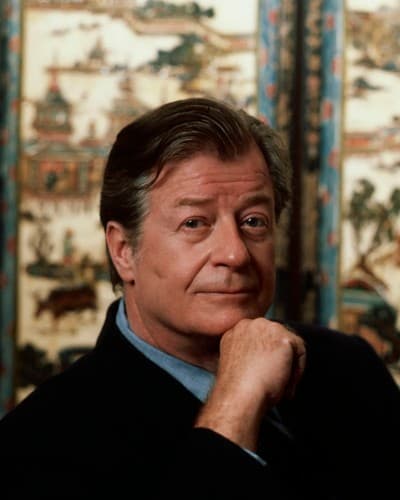
James Clavell was a British author and screenwriter known for his historical fiction set in Asia. His notable works include "Shōgun," a sweeping epic about a British navigator in feudal Japan, and "King Rat," which explores life in a Japanese POW camp during World War II. Clavell's writing often reflects his experiences as a prisoner of war and his interest in Eastern culture.
Similar books
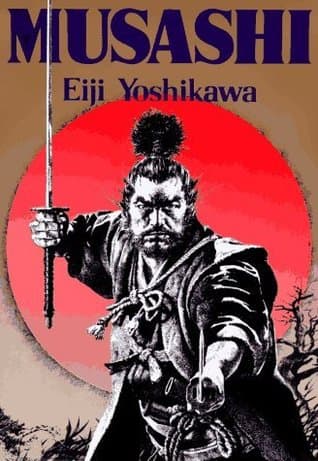
- Musashi
Eiji Yoshikawa
4.5 (15k) average on GoodreadsHistorical FictionAnother sprawling historical epic set in feudal Japan, focusing on a legendary samurai's life and philosophy.
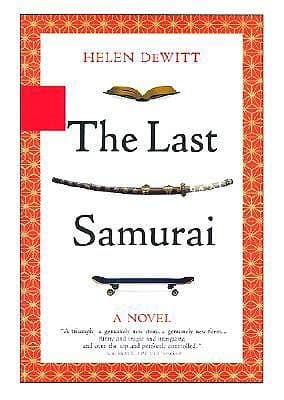
- The Last Samurai
Helen DeWitt
4.2 (6k) average on GoodreadsLiterary FictionExplores themes of cultural immersion and the clash between Western and Eastern philosophies, though in a more contemporary setting.
- The Tale of Genji
Murasaki Shikibu
4.0 (539) average on GoodreadsFantasyComparing Shōgun to The Tale of Genji highlights the vast differences in historical scope and narrative focus. The Tale of Genji, written in the 11th century, is a foundational work of Japanese literature, offering a nuanced and intricate portrayal of court life, aristocratic manners, and romantic entanglements during the Heian period. It is primarily a psychological novel, deeply introspective and focused on the emotional lives and aesthetic sensibilities of its characters. Shōgun, set centuries later, is a much more action-oriented and politically driven narrative, concerned with the rise of a shogunate and the clash of civilizations. While both offer rich cultural detail, Genji provides a more delicate, internal, and historically contemporaneous view of Japanese aristocracy, whereas Shōgun presents a robust, external, and anachronistic (from a Western perspective) view of the warrior class and political upheaval.
- To Kill a Mockingbird
Harper Lee
4.3 (4.5M) average on GoodreadsHistorical FictionIn the 1930s Jim Crow South, Harper Lee writes about racial injustice, moral growth, and the quiet courage of a lawyer father, Atticus Finch, as seen through his young daughter's eyes.
- The Great Gatsby
F. Scott Fitzgerald
3.9 (3.8M) average on GoodreadsHistorical FictionIn the opulent Roaring Twenties, a mysterious millionaire's lavish parties hide his desperate, tragic pursuit of a lost love, exposing the emptiness within the American Dream.
- Pride and Prejudice
Jane Austen
4.3 (3M) average on GoodreadsHistorical FictionIn a society focused on status and money, Elizabeth Bennet navigates love and pride, challenging Mr. Darcy and social expectations to find true affection.




Enjoyed the summary?
A summary gives you the shape of the book. The book itself has the detail, the examples and the voice.
Find Shōgun on AmazonAs an Amazon Associate, BookBrief earns from qualifying purchases. How we're funded