

Synopsis
Covers the whole plot, including the ending.
- Difficulty
- Medium
- Pacing
- Fast
- Mood
- Mind-bending, Mysterious, Darkly Humorous, Suspenseful, Philosophical
- Read it if
- You enjoy mind-bending thrillers with unreliable narrators, intricate plots, and a blend of mystery, dark humor, and speculative fiction that will keep you guessing until the very end.
- Skip it if
- You prefer straightforward narratives, despise ambiguity, or are easily frustrated by stories that constantly challenge your perception of reality.
Bad Monkeys Plot Summary
Covers the whole plot, including the ending.
Interrogation Room
Jane Charlotte is arrested in Reno for Paul's murder. She claims Paul was a serial killer. She does not deny the murder but says she works for the Department for the Final Disposition of Irredeemable Persons, or 'Bad Monkeys.' This group, she explains, finds and eliminates people destined to commit evil in parallel universes. Her strange story lands her in the psychiatric ward, where Dr. Vale must determine if she is a dangerous liar, delusional, or something else.
The First Assignment
Under Dr. Vale's questions, Jane talks about her past. She describes Mrs. Rodriguez, an enigmatic figure, recruiting her into Bad Monkeys. Her first job, she claims, was to watch and then 'dispose of' Phil, an ordinary man who would become a brutal serial killer in her original timeline. Jane details the emotional toll of this mission, watching Phil's decline before following orders, all while dealing with the moral issues of pre-emptive justice. This story tries to make her current actions seem legitimate to Dr. Vale.
The Department's Structure
Jane describes Bad Monkeys' complex and strange bureaucracy, with departments for different parts of multi-dimensional policing. She explains how agents like her are assigned to timelines and 'loops' to stop future evils. She talks about the 'Orientation Unit,' the 'Department of Historical Correction,' and the 'Department of Temporal Integrity.' This detailed, almost ordinary description of a fantastical group makes Dr. Vale wonder if Jane is carefully creating a delusion or if her claims have a strange logic, even as he looks for inconsistencies.
The Paul Case
Jane tells of the events leading to her arrest and Paul's murder. She claims Paul was a 'bad monkey' who had done terrible things in other timelines and was about to do so in her current reality. Her mission was to eliminate him. She describes tracking him, watching him, and confronting him in a hotel room. The murder details are vague, but Jane insists it was a necessary act of pre-emptive justice, a standard operation for her department. This account addresses the crime she is accused of, placing it within her fantastical story.
Dr. Vale's Growing Doubt
As Jane continues her elaborate story, Dr. Vale notices subtle differences and shifts. He questions her on details, dates, and locations, finding some elements do not quite match. He first thinks this is delusion or a made-up story, but a growing unease suggests something more complex. He wonders if she is a pathological liar, a master manipulator, or genuinely suffers from a complex psychological disorder that creates this intricate fantasy. His professional skepticism slowly fades due to Jane's detail and conviction, even as he seeks a logical explanation.
The Revelation of the 'Bad Monkey'
In a surprising turn, Jane reveals she was once a 'Bad Monkey.' She explains that because of a past mistake or a possible future deviation, she was marked for elimination. Instead, she was given a chance to join the group and work off her 'debt' by eliminating others. This complicates her character, suggesting a deeper, more morally ambiguous role in the Department. It makes Dr. Vale reconsider her motives and involvement, adding another layer to her already complex tale.
The Escape Attempt and Its Aftermath
Driven by a perceived threat or a new mission, Jane tries to escape the psychiatric ward. Her methods are resourceful, showing a level of planning and physical ability that surprises the staff and Dr. Vale. Though caught, the incident reinforces that she is not a typical patient. Her actions raise questions about whether her 'training' as an agent gave her skills beyond a normal prisoner, or if her desperation fuels extraordinary measures. The escape attempt further blurs the line between reality and her fantastical claims.
The 'Real' Jane Charlotte
Frustrated by Jane's shifting stories and lack of concrete evidence, Dr. Vale investigates her background. He finds records that paint a different picture of Jane Charlotte: a history of petty crimes, unstable jobs, and deception. This 'real' history contradicts much of what Jane told him about her life before Bad Monkeys. Dr. Vale confronts her with these findings, hoping to break her story. But Jane has an explanation for every inconsistency, weaving the new information into her narrative, claiming it is all part of the Department's cover-up.
The Multiple Timelines
As Jane's story progresses, she introduces the idea of multiple parallel timelines and alternate versions of herself. She claims her memories and experiences combine various 'Janets' (her name for her alternate selves) and that Dr. Vale's discrepancies are because he tries to fit a multi-dimensional truth into a single timeline. This explanation accounts for inconsistencies and makes her story harder to disprove, challenging Dr. Vale's understanding of reality and sanity. It is a clever narrative device that keeps him off balance.
The Department's True Nature
The story reaches its peak as the true nature of Bad Monkeys is revealed. The 'Department' is not a physical group but a mental construct, a sophisticated form of psychological conditioning and identity manipulation. Agents like Jane do not travel through parallel universes but are given false memories and personas, designed to believe they are part of this grand scheme. Their 'missions' are carefully planned events, and the 'Bad Monkeys' they eliminate are often people similarly manipulated or targets for other, less noble reasons. Jane's entire reality has been a constructed illusion.
The Architect of the Illusion
It is revealed that the mastermind behind the 'Bad Monkeys' program is a highly intelligent and manipulative person, possibly Mrs. Rodriguez or someone similar, who uses advanced psychological techniques and perhaps technology to create these elaborate alternate realities in their subjects' minds. The purpose is not to fight evil across universes but to control and use individuals for their own ends, whether for social engineering, political gain, or elaborate psychological experiments. The 'Department' is a tool for manipulation, with its agents as the main victims.
Jane's Final Choice
Faced with overwhelming evidence of her manipulation, Jane must make a profound choice. She can continue to believe in the comforting, false reality of being a Bad Monkey agent, with her sense of purpose and heroism. Or she can accept the painful truth that her life has been a lie, her memories fabricated, and her actions driven by external manipulation. This choice is her final act of agency as she grapples with her identity and the nature of reality. Her decision will define her future, whether within the illusion or outside it.
Principal Figures
Jane Charlotte
Protagonist
A woman arrested for murder, claiming to be an operative for a secret organization.
Jane is a complex and unreliable narrator, initially presenting herself as a highly trained, morally driven operative of the 'Bad Monkeys' organization. She is intelligent, resourceful, and possesses a remarkable ability to weave intricate narratives, adapting her story to new information. Despite her claims of fighting evil, there's an underlying vulnerability and confusion about her true identity. She is driven by a desire for purpose and belonging, even if that purpose is manufactured.
Relationships: Dr. Vale (interrogator and psychological evaluator); Paul (her alleged murder victim); Mrs. Rodriguez (her alleged recruiter and handler); Phil (her alleged first target)
Dr. Vale
Supporting
A psychiatrist tasked with evaluating Jane Charlotte's sanity.
Dr. Vale is a pragmatic and initially skeptical psychiatrist. He approaches Jane's case with a professional detachment, seeking logical explanations for her behavior. However, as Jane's story unfolds with increasing detail and conviction, Dr. Vale finds his scientific worldview challenged. He is intelligent and persistent, meticulously searching for inconsistencies and trying to piece together the truth behind Jane's elaborate claims. He represents the reader's perspective, trying to discern reality from fantasy.
Relationships: Jane Charlotte (patient and subject of his evaluation)
Mrs. Rodriguez
Antagonist/Supporting
Jane's alleged recruiter and handler in the Bad Monkeys organization.
Mrs. Rodriguez is a mysterious and enigmatic figure, described by Jane as the key figure in her recruitment into Bad Monkeys. She is portrayed as calm, authoritative, and utterly convincing, possessing the ability to manipulate individuals and shape their realities. Whether she is a real person, a figment of Jane's imagination, or a handler in a deeper psychological program, her influence on Jane's life and perceived identity is profound. She embodies the manipulative power behind the 'Department'.
Relationships: Jane Charlotte (alleged recruiter/handler and manipulative figure)
Paul
Mentioned
The man Jane is accused of murdering.
Paul is the alleged victim whose murder sets the entire plot in motion. According to Jane, he was a 'Bad Monkey' destined for evil, making his elimination a necessary act. His true nature remains ambiguous for much of the story, serving as a focal point for Jane's claims and the central mystery. He is less a character and more a plot device, representing the catalyst for Jane's arrest and the subsequent unraveling of her story.
Relationships: Jane Charlotte (murderer and victim)
Phil
Mentioned
Jane's alleged first target as a Bad Monkey operative.
Phil is the subject of Jane's first assignment, a seemingly ordinary man whom she claims was destined to become a serial killer. He represents the moral dilemma inherent in the Bad Monkeys' mission: the act of pre-emptive justice against someone who has not yet committed a crime. His story highlights the psychological burden placed on operatives like Jane and further establishes the rules and ethics (or lack thereof) of her alleged organization.
Relationships: Jane Charlotte (her first target)
Themes & Insights
The Nature of Reality and Perception
The novel constantly blurs the lines between real and perceived, manipulated, or imagined. Jane's elaborate story challenges Dr. Vale's, and the reader's, understanding of truth. As her narrative shifts and inconsistencies appear, the book explores how easily reality can be built, taken apart, and rebuilt, especially through psychological conditioning and memory manipulation. The revelation that Bad Monkeys is a mental construct, not a physical one, highlights this theme, showing that perception can be stronger than objective truth, as seen in Jane's firm belief in her missions.
“Reality is a crutch for people who can't cope with drugs.”
Identity and Self-Construction
Jane Charlotte's identity is fluid and always in question. She is not just Jane Charlotte; she is 'Janet' from many timelines, an agent, a 'Bad Monkey' herself, and a woman with a fake past. The novel explores how identity can be imposed, adopted, and strongly defended, even if based on lies. Jane's struggle to match her 'Bad Monkey' persona with parts of her 'real' self shows how much outside forces affect a person's sense of who they are. Her journey involves constantly shedding and rebuilding her self-concept.
“You are who you pretend to be. If you pretend to be a hero, you are a hero. If you pretend to be a villain, you are a villain. And if you pretend to be an operative of the Department for the Final Disposition of Irredeemable Persons, you are one.”
Free Will vs. Determinism
The idea of Bad Monkeys—finding and eliminating 'irredeemable persons' destined to commit evil—directly addresses the debate of free will versus determinism. Is evil an innate quality that can be predicted and prevented, or do people always have the ability to choose? The organization's methods suggest a deterministic view, but Jane's own status as a former 'Bad Monkey' who was 'redeemed' complicates this. The final reveal that the 'Department' is a manipulative construct further questions whether anyone truly has free will when their reality and choices can be so thoroughly engineered.
“We don’t stop evil. We just dispose of it before it happens.”
The Nature of Good and Evil
The novel explores the subjective and often unclear nature of good and evil. The 'Bad Monkeys' organization claims to fight evil, but their methods involve pre-emptive murder, raising questions about whether their 'good' actions are ethical. The revelation that the organization itself is manipulative further blurs these lines, suggesting that what one group calls evil, another might exploit or even create. The story makes the reader consider if the ends justify the means and if true heroism can exist within a system built on deception and control.
“Evil is not a thing. It is a choice.”
Plot Devices & Literary Techniques
Unreliable Narrator
The entire story is told through the perspective of a character whose trustworthiness is constantly in doubt.
Jane Charlotte is the quintessential unreliable narrator. Her elaborate and fantastical story, filled with parallel universes, secret organizations, and shifting identities, immediately casts doubt on the veracity of her claims. The reader, like Dr. Vale, is forced to constantly question whether Jane is telling the truth, fabricating a delusion, or meticulously crafting a lie. This device keeps the reader engaged in a constant state of suspicion and analysis, making the eventual twists and revelations more impactful as previous assumptions are shattered. It's the primary engine of the novel's mystery.
Frame Story
A story within a story, where Jane's narrative is framed by her interrogation.
The novel employs a frame story structure, where Jane Charlotte's detailed account of her life as a 'Bad Monkey' operative is embedded within the ongoing interrogation by Dr. Vale. The present-day interrogation in the psychiatric ward serves as the outer frame, constantly pulling the reader back to the immediate reality of Jane's arrest and psychological evaluation. This structure allows for a constant interplay between Jane's fantastical claims and Dr. Vale's skeptical, scientific questioning, creating tension and grounding the more outlandish elements of her story in a tangible setting. It also provides a clear mechanism for revealing information gradually.
Red Herring
Misleading clues or information designed to distract the reader from the truth.
The novel is replete with red herrings, particularly in Jane's shifting and contradictory narratives. Every time Dr. Vale uncovers an inconsistency or a piece of 'real' information about Jane's past, she has an ingenious explanation that re-integrates it into her Bad Monkeys story, leading the reader down another speculative path. These misdirections serve to build the mystery and prevent the reader from guessing the true nature of the 'Department' too early, creating a complex web of possibilities that keeps the central twist hidden until the opportune moment. The 'parallel universes' explanation is a major red herring.
Psychological Manipulation
The use of mental conditioning and deception to control characters' beliefs and actions.
At its core, the novel utilizes psychological manipulation as a central plot device. The 'Bad Monkeys' program itself is revealed to be a highly sophisticated system of mental conditioning, memory implantation, and identity construction, designed to make operatives believe they are part of a grand multi-dimensional mission. This manipulation affects not only Jane but potentially other characters within the story. It serves to explain the inconsistencies in Jane's narrative and ultimately reveals the true, chilling nature of the 'Department' as a means of control rather than interdimensional policing, making the characters victims of a deeper conspiracy.
Bad Monkeys Quotes
“I’m not crazy. I’m just in a bad mood.”
“There are no coincidences, only the illusion of coincidence.”
“We're not here to make the world a better place. We're here to keep it from getting worse.”
“The truth is a moving target.”
“Every choice you make creates a new reality.”
“Sometimes you have to break a few rules to save the world.”
“Memory is a funny thing. It can play tricks on you.”
“You can never truly escape your past. It always finds a way to catch up.”
“The greatest trick the devil ever pulled was convincing the world he didn't exist.”
“There's a difference between being crazy and being right about crazy things.”
“You don't get to choose your reality. You just get to live in it.”
“Every villain is the hero of their own story.”
“We're all just trying to make sense of a world that doesn't make any.”
“The line between good and evil is a lot blurrier than most people think.”
Quiz
10 questions on the plot and the characters. Each answer comes with a short explanation.
Question 1
What is the name of the secret organization Jane Charlotte claims to work for?
- The Agency for Moral Justice
- The Department for the Final Disposition of Irredeemable Persons
- The Society for Ethical Retribution
- The Bureau of Unsavory Individuals
Show answer
B. The Department for the Final Disposition of Irredeemable Persons Jane explicitly states her division is called the Department for the Final Disposition of Irredeemable Persons, or 'Bad Monkeys' for short.
Question 2
What is the primary reason Jane Charlotte is arrested at the beginning of the novel?
- Theft of classified documents
- Assault and battery
- Murder
- Espionage
Show answer
C. Murder The synopsis clearly states, 'Jane Charlotte has been arrested for murder.'
Question 3
Who is the character attempting to determine if Jane is lying, crazy, or playing a different game?
- A detective
- A lawyer
- A psychiatrist
- A prison guard
Show answer
C. A psychiatrist The synopsis mentions she goes to the jail's 'psychiatric wing, where a doctor attempts to determine whether she is lying, crazy—or playing a different game altogether.'
Question 4
What is the specific target group that Jane's division, 'Bad Monkeys,' is tasked with handling?
- Corrupt politicians
- Irredeemable Persons
- Rogue artificial intelligences
- Supernatural entities
Show answer
B. Irredeemable Persons The full name of her department is 'Department for the Final Disposition of Irredeemable Persons,' directly indicating their target.
Question 5
What is the name of the 'mentor' figure who initially recruits Jane into the Bad Monkeys organization?
- Clyde
- Paul
- Doyle
- Victor
Show answer
C. Doyle Doyle is the character who first approaches Jane and brings her into the Bad Monkeys organization, serving as her initial contact and guide.
Question 6
Which of the following best describes the core thematic element explored through Jane's narrative and the nature of the Bad Monkeys organization?
- The triumph of good over evil through conventional law enforcement.
- The subjective nature of reality and the unreliability of memory.
- The importance of family bonds in times of crisis.
- The dangers of unchecked technological advancement.
Show answer
B. The subjective nature of reality and the unreliability of memory. The entire structure of the novel, with Jane's shifting stories and the true nature of her 'interrogation,' heavily emphasizes the unreliability of what is real and what is imagined or manipulated.
Question 7
What is the primary method Jane and her team use to 'dispose' of irredeemable persons?
- Imprisonment in a maximum-security facility.
- Re-education and rehabilitation programs.
- Altering their lives to steer them away from evil, often leading to their accidental deaths.
- Direct assassination via conventional weaponry.
Show answer
C. Altering their lives to steer them away from evil, often leading to their accidental deaths. The Bad Monkeys' method isn't direct killing, but rather 'nudging' their targets into situations that lead to their own demise, making it seem like an accident or natural consequence.
Question 8
What is the ultimate revelation about Jane Charlotte's 'interrogation' and her role in the Bad Monkeys organization?
- She is actually a deep-cover agent for a rival organization.
- She is a patient in a psychiatric facility, and the Bad Monkeys are a delusion.
- She is being evaluated for promotion within the Bad Monkeys, and the entire 'arrest' is a test.
- She is a clone experiencing false memories implanted by her creators.
Show answer
C. She is being evaluated for promotion within the Bad Monkeys, and the entire 'arrest' is a test. The twist reveals that the entire 'interrogation' is a complex psychological test designed by the Bad Monkeys to assess Jane's suitability for a higher role within the organization.
Question 9
What is the name of the doctor who is supposedly interviewing Jane in the psychiatric wing?
- Dr. Evans
- Dr. Valdez
- Dr. Chen
- Dr. Vale
Show answer
D. Dr. Vale The psychiatrist conducting the interview is Dr. Vale, a key figure in trying to unravel Jane's story.
Question 10
What is the significance of the 'Bad Monkeys' moniker beyond just being a short name for the department?
- It refers to their stealthy, ape-like movements during operations.
- It implies they are the 'bad guys' who do necessary evil for a greater good.
- It's a reference to the 'Infinite Monkey Theorem,' suggesting random, chaotic actions leading to a desired outcome.
- It's a derogatory term used by rival organizations to describe them.
Show answer
C. It's a reference to the 'Infinite Monkey Theorem,' suggesting random, chaotic actions leading to a desired outcome. The 'Bad Monkeys' name is tied to the concept of the Infinite Monkey Theorem, where random actions (like those of monkeys typing) can eventually produce something meaningful, reflecting their chaotic yet ultimately purposeful interventions.
Bad Monkeys FAQ
What is the core premise of 'Bad Monkeys' and how does Jane Charlotte find herself in trouble?
Jane Charlotte is arrested for murder in San Francisco and claims to be an operative for 'Bad Monkeys,' a secret organization that eliminates irredeemable individuals. This confession lands her in the psychiatric wing of the jail, where Dr. Vale attempts to discern the truth behind her fantastic story and determine her sanity.
Who is Dr. Vale and what is his role in the narrative?
Dr. Vale is the psychiatrist assigned to Jane Charlotte in the jail's psychiatric ward. His primary role is to evaluate Jane's mental state and determine if she is genuinely delusional, a manipulative liar, or something else entirely. His sessions with Jane drive much of the plot as he tries to piece together her fragmented and unbelievable narrative.
What is the Department for the Final Disposition of Irredeemable Persons, or 'Bad Monkeys,' according to Jane?
According to Jane, 'Bad Monkeys' is a clandestine organization operating across different realities, tasked with identifying and eliminating individuals who are deemed irredeemable threats to society or the multiverse. She describes it as a highly structured, bureaucratic agency with various departments, each with its own specific function and operatives.
Who is Paul and what is his significance to Jane's story?
Paul is the man Jane is accused of murdering, and he also claims to be a member of 'Bad Monkeys,' specifically from the 'Department of Logic and Continuity.' He claims Jane is a rogue agent and challenges her version of events. His presence complicates the narrative, suggesting multiple conflicting realities or elaborate deceptions.
How does the concept of parallel universes or alternate realities play into Jane's narrative?
Jane's story heavily relies on the existence of parallel universes, suggesting that 'Bad Monkeys' operates across these different realities. She claims to have traveled between them for missions, and many of her experiences and even the identities of characters change depending on the 'reality' she is describing, blurring the lines of what is real.
What is the 'Bad Monkey' test and how does it relate to Jane's recruitment?
The 'Bad Monkey' test is a psychological evaluation designed to identify individuals with a specific blend of moral ambiguity, resourcefulness, and detachment suitable for recruitment into the organization. Jane describes undergoing this test, which involved difficult ethical dilemmas and simulations, as a crucial step in her origin story as an operative.
What is the significance of the 'Department of Logic and Continuity' within Jane's narrative?
The 'Department of Logic and Continuity' is presented as a rival or oversight department to Jane's 'Bad Monkeys' division, responsible for maintaining order and consistency across realities. Paul claims to be from this department, suggesting a conflict of interest or a deeper organizational struggle that implicates Jane as an anomaly or a threat to their established order.
Are there any subtle clues that suggest Jane's stories might be entirely fabricated, even within the fantastical elements?
Yes, subtle clues include the increasingly elaborate and sometimes contradictory nature of her stories, the way key details shift, and her uncanny ability to anticipate Dr. Vale's questions. Her narratives often feel too perfectly constructed, almost like a genre fiction story, which can hint at a conscious fabrication rather than genuine delusion or memory.
How does Jane's past trauma, particularly regarding her family, influence her current state or narrative?
Jane's past trauma, particularly the loss and estrangement from her family, serves as a foundational element of her character and potentially her delusions. Her narrative often circles back to feelings of abandonment, guilt, and the desire to make amends or find purpose, which could fuel her fantastical claims of fighting evil or escaping a painful reality.
What psychological defense mechanisms might Jane be employing through her 'Bad Monkeys' story?
Jane appears to be employing several psychological defense mechanisms, including fantasy and dissociation, to cope with her reality. The 'Bad Monkeys' narrative allows her to escape accountability for past actions, find meaning in chaos, and project her internal struggles onto an external, fantastical framework, effectively distancing herself from painful truths.
How does the concept of identity play a crucial role in Jane's character development throughout the book?
Identity is central to Jane's character, as she constantly shifts between different personas and backstories, making it difficult to ascertain her true self. Her 'Bad Monkeys' narrative allows her to adopt a powerful, purposeful identity, perhaps as a way to escape a more mundane or painful reality where she feels powerless or guilty.
What is the psychological impact of Dr. Vale's role as both an interrogator and a potential confidant for Jane?
Dr. Vale's dual role creates a complex psychological dynamic. As an interrogator, he pushes Jane for answers, but as a confidant, he offers a safe space, potentially encouraging her to elaborate on her fantasies. This ambiguity can blur the lines for Jane, making it harder to distinguish between therapy and interrogation, and potentially influencing her narrative's direction.
Is there a definitive answer to whether Jane is telling the truth, is delusional, or is manipulating everyone?
No, the novel deliberately leaves this question ambiguous and open to interpretation. The beauty of 'Bad Monkeys' lies in its refusal to provide a single, definitive answer, allowing readers to weigh the evidence and decide for themselves whether Jane's story is an elaborate delusion, a complex lie, or a strange truth.
What does the ending of 'Bad Monkeys' suggest about the nature of reality within the book's universe?
The ending of 'Bad Monkeys' strongly suggests that reality is fluid, subjective, and potentially malleable, or that Jane's perception of it is. It reinforces the idea that what one believes to be true can become their reality, or that there are indeed multiple realities coexisting, making any single 'truth' elusive and unreliable.
How does the book challenge the reader's perception of sanity and madness?
The book constantly challenges the reader's perception of sanity by presenting a compelling, internally consistent 'delusional' narrative that often feels more logical or satisfying than the mundane reality. It forces readers to question what constitutes 'sane' behavior and thought when faced with extraordinary claims that are difficult to disprove.
Could Jane Charlotte be considered an unreliable narrator, and if so, how does that impact the story?
Jane Charlotte is undeniably an unreliable narrator, as her stories are constantly shifting, contradictory, and deeply personal. This unreliability is central to the novel's mystery, forcing the reader to constantly question every detail, piece together fragments, and ultimately decide which version of events, if any, they choose to believe.
What is the thematic significance of the 'Bad Monkeys' name itself?
The name 'Bad Monkeys' is thematically significant, evoking the idea of flawed, perhaps inherently 'bad' individuals who are tasked with judging and eliminating others. It could also refer to the 'monkeys' in the sense of being agents of chaos or disruption, or even a self-deprecating term for those who operate outside conventional morality.
How does the novel explore the concept of free will versus predetermined fate?
The novel explores free will versus fate through Jane's missions and the very existence of 'Bad Monkeys,' an organization that seems to predetermine who is 'irredeemable.' However, Jane's choices and the inconsistencies in her story suggest that individuals still possess agency, or at least the capacity to deviate from a predetermined path, even if that path is self-created.
About the author

Matt Ruff is an American author known for his works of fiction that often blend elements of fantasy and social commentary. His novel "Bad Monkeys" explores themes of mental health and reality through a unique narrative lens. Ruff's writing is characterized by its imaginative storytelling and thought-provoking concepts.
Similar books
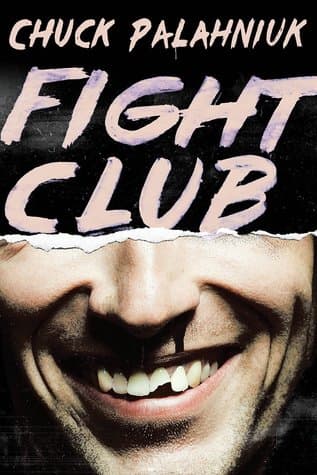
- Fight Club
Chuck Palahniuk
4.2 (499k) average on GoodreadsThrillerFeatures an unreliable narrator and explores themes of identity, rebellion, and reality-bending twists.
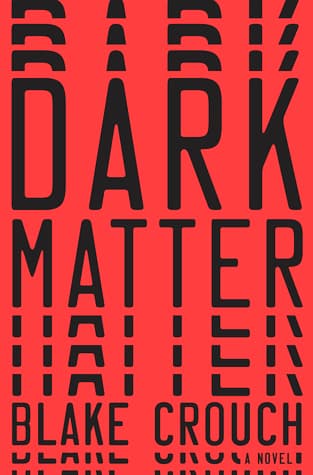
- Dark Matter
Blake Crouch
4.0 (11k) average on GoodreadsFantasyWhile both novels explore multiverse theory and identity, "Bad Monkeys" is more philosophical and satirical, delving into moral questions and organizational absurdity, whereas "Dark Matter" is a more straightforward, action-oriented hard science fiction thriller with a clearer narrative trajectory.
- Annihilation
Jeff VanderMeer
4.0 (5k) average on GoodreadsFantasyBoth works utilize unreliable narration and create a sense of unsettling mystery. However, "Annihilation" focuses on environmental horror and the unknown within a mysterious zone, while "Bad Monkeys" is more concerned with the human psyche, the nature of good vs. evil, and the absurdity of bureaucracy within a reality-bending context.
- Angels & Demons
Dan Brown
3.9 (2.7M) average on GoodreadsThrillerA Harvard symbologist races through Rome's ancient sites, deciphering cryptic clues to unmask the Illuminati and stop a vengeful plot to destroy the Vatican with a stolen antimatter weapon.
- Gone Girl
Gillian Flynn
4.1 (2.3M) average on GoodreadsThrillerA wife's sudden disappearance on her fifth anniversary reveals a web of lies and psychological warfare, exposing the secrets within a seemingly perfect marriage.
- The Girl on the Train
Paula Hawkins
3.9 (2.1M) average on GoodreadsThrillerA woman’s fascination with a seemingly perfect couple she watches from her daily train commute leads her into a dark investigation when she witnesses something that shatters their idyllic image.




Enjoyed the summary?
A summary gives you the shape of the book. The book itself has the detail, the examples and the voice.
Find Bad Monkeys on AmazonAs an Amazon Associate, BookBrief earns from qualifying purchases. How we're funded