
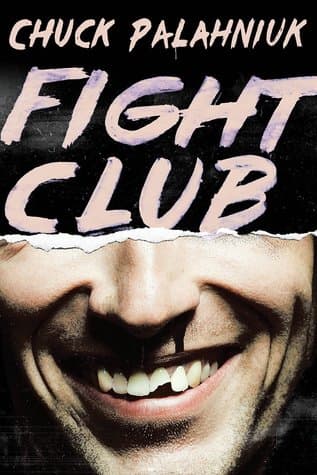
Synopsis
Covers the whole plot, including the ending.
- Difficulty
- Medium
- Pacing
- Fast
- Mood
- Dark, Cynical, Disturbing, Anarchic, Satirical
- Read it if
- You enjoy dark satire, psychological thrillers, and stories that challenge consumerism and societal norms with a raw, confrontational style.
- Skip it if
- You are sensitive to graphic violence, disturbing themes, or find nihilistic and anti-establishment narratives unappealing.
Fight Club Plot Summary
Covers the whole plot, including the ending.
Insomnia and Support Groups
The unnamed narrator has an unsatisfying job as a recall coordinator for a car company and cannot sleep. He blames this on feeling trapped in a materialistic life. Doctors offer no help, so he starts attending support groups for terminal illnesses like cancer. He finds that seeing real suffering and sharing emotions with others allows him to cry and then sleep. This works until Marla Singer, a woman who is also faking illness, starts attending the same groups, stopping his emotional release and bringing back his sleeplessness.
Tyler Durden and the Apartment Fire
On a business trip, the narrator meets Tyler Durden, a soap salesman, on a plane. They find common ground in their dislike for modern society. Soon after returning home, the narrator's apartment, filled with IKEA items, explodes due to a suspected gas leak. With nowhere to go, he calls Tyler, who lets him stay at his run-down house on Paper Street. This event makes the narrator get rid of his belongings and live a more chaotic life under Tyler's influence.
The Birth of Fight Club
Outside a bar, after drinking, Tyler Durden asks the narrator to hit him. The narrator agrees, and they have a street fight. This experience becomes a ritual, and soon, other men gather in the bar's basement to watch or join in these fights. They set rules for 'Fight Club,' the first rule being 'You do not talk about Fight Club,' and the second rule being 'You DO NOT talk about Fight Club.' The club quickly gets many followers, giving men an escape from their consumerist lives.
Marla's Return and Tyler's Affair
Marla Singer, the support group faker, reappears in the narrator's life, moving into the Paper Street house. To the narrator's discomfort, she and Tyler start a sexual relationship, often having loud encounters next to his room. Tyler makes the narrator promise not to talk to Marla about him. Marla's presence creates an awkward situation and shows the narrator's growing reliance on Tyler, as he feels ignored by his friend, especially when Marla is around.
Project Mayhem Begins
Tyler's plans grow beyond just fighting. He starts recruiting members from Fight Club for a more organized, destructive group called 'Project Mayhem.' The new recruits, called 'space monkeys,' move into the Paper Street house and undergo strict, often humiliating, training. Project Mayhem's actions go from small acts of vandalism against corporate art to more serious sabotage targeting symbols of consumerism and corporate power. The narrator becomes more worried by Tyler's extreme actions and loss of control.
The Narrator's Growing Unease
As Project Mayhem expands, its operations become more violent and widespread, with groups forming in different cities. The narrator sees Tyler's increasing control over the 'space monkeys' and their loyalty. He witnesses disturbing acts, like the destruction of a coffee shop and the making of homemade explosives. He also notices Tyler's frequent disappearances, often returning with new plans and recruits. The narrator feels alienated and powerless, realizing that Tyler is leading a movement far beyond what he first imagined, and he fears the consequences of their actions.
Tyler Disappears and the Revelation
Tyler Durden suddenly disappears, leaving the narrator to manage Project Mayhem, which is out of control. The narrator tries to find Tyler, following clues across different cities and meeting members of Project Mayhem who believe he is Tyler. During a talk with Marla Singer, she reveals that whenever she talked to Tyler, he would call the narrator by his name, suggesting a close link. This, along with his own memory gaps and the 'space monkeys' mistaking him for Tyler, makes the narrator face the truth: he and Tyler Durden are the same person, a split personality.
The Plan to Destroy the Credit Card Buildings
The narrator puts together Tyler's plan: to use the explosives made by Project Mayhem to destroy several skyscrapers that house major credit card companies. Tyler believes this will erase all debt, resetting modern civilization. The narrator, horrified by the plan, realizes he must stop Tyler, who is currently in control of his body during his 'blackouts.' He understands that Tyler has been using his body to plan Project Mayhem and that the destruction is about to happen.
Confrontation and the Bullet
The narrator rushes to the tallest of the targeted credit card buildings, where he finds Tyler setting up the last explosives. A struggle happens between the narrator's mind and Tyler's personality. Tyler says that the narrator is a 'host' and that Tyler will soon become the main personality permanently. In a desperate attempt to stop Tyler and Project Mayhem, the narrator puts a gun in his mouth. Tyler tries to stop him, but the narrator pulls the trigger, shooting himself through the cheek. This act, however, only kills the Tyler personality.
The Aftermath and the Space Monkeys
Even after shooting himself, the narrator lives. The bullet, passing through his cheek, does not kill him, but it removes Tyler's personality. He wakes up in what he thinks is heaven, but is actually a mental institution. Outside, the credit card buildings explode as planned, a success for Project Mayhem. The 'space monkeys' enter the institution, believing the narrator is Tyler. They tell him they are waiting for Tyler's return and that they have 'big plans' for him, leaving the narrator in a state of mixed triumph and terrifying uncertainty, stuck in the world Tyler created.
Fight Club Characters
The Narrator (Jack/Cornelius)
Protagonist
An insomniac, emasculated office worker who creates Tyler Durden as an alter ego.
The unnamed narrator, often referred to as 'Jack' or 'Cornelius' by Tyler and the 'space monkeys' (referencing a series of self-help articles he reads), is an alienated, insomniac recall coordinator for a car company. He is trapped in a consumerist lifestyle, defined by his IKEA furniture and material possessions, and feels disconnected from genuine emotion. His journey begins with a desperate search for relief from insomnia, leading him to support groups and ultimately to the creation of Tyler Durden. He initially finds Tyler liberating but gradually becomes horrified by his alter ego's escalating violence and nihilism. He represents the suppressed rage and yearning for authenticity within modern man.
Relationships: Tyler Durden (Alter ego, friend, mentor, tormentor); Marla Singer (Love interest, irritant, catalyst for revelation); Robert 'Bob' Paulson (Fellow support group member, Fight Club participant, tragic figure)
Tyler Durden
Antagonist/Alter Ego
The charismatic, anarchic, and destructive alter ego of the narrator, founder of Fight Club and Project Mayhem.
Tyler Durden is the embodiment of everything the narrator wishes he could be: charismatic, confident, fearless, and utterly unconcerned with societal norms. He's a soap salesman by day, but his true calling is to dismantle civilization's foundations. Tyler is a master manipulator, a philosopher of destruction, and the driving force behind both Fight Club and Project Mayhem. He believes that only through self-destruction and the rejection of materialism can true freedom be achieved. He pushes the narrator to his limits, forcing him to confront his deepest fears and desires, ultimately revealing himself to be the narrator's own repressed id.
Relationships: The Narrator (The other half of a dissociative identity, his host body); Marla Singer (Sexual partner, used to antagonize the narrator); Project Mayhem Members (Leader, cult figure)
Marla Singer
Supporting
A fellow 'tourist' in support groups who disrupts the narrator's routine and becomes Tyler's lover.
Marla Singer is a nihilistic, reckless woman who, like the narrator, attends support groups without actually having the illnesses. She is a mirror to the narrator's own desperation for genuine experience, though she expresses it more overtly. Her presence initially infuriates the narrator, as she breaks his therapeutic routine, but she later becomes a crucial figure in the unfolding mystery of Tyler Durden. Her sexual relationship with Tyler is a constant source of discomfort for the narrator and ultimately provides a key clue to Tyler's true identity. Marla represents a raw, unvarnished aspect of humanity that both repels and attracts the narrator.
Relationships: The Narrator (Acquaintance, object of annoyance, later a confidante); Tyler Durden (Sexual partner, source of chaotic intimacy)
Robert 'Bob' Paulson
Supporting
A former bodybuilder, now suffering from testicular cancer, who finds community in Fight Club.
Bob Paulson is a former bodybuilder whose use of steroids led to testicular cancer and the growth of breasts (gynecomastia). The narrator first meets him in a testicular cancer support group, where Bob's genuine suffering allows the narrator to cry. Bob later joins Fight Club and Project Mayhem, finding a new sense of purpose and belonging. His gentle nature and tragic backstory make him a sympathetic figure. His eventual death during a Project Mayhem operation highlights the increasing danger and moral compromises of Tyler's movement, deeply affecting the narrator and serving as a turning point in his realization of Tyler's destructive nature.
Relationships: The Narrator (Confidante in support groups, fellow Fight Club member); Tyler Durden (Leader, object of loyalty)
Angel Face
Supporting
A handsome, devoted member of Fight Club and Project Mayhem.
Angel Face is a strikingly handsome young man who joins Fight Club and quickly becomes one of Project Mayhem's most devoted members. He embodies the lost, directionless youth drawn to Tyler's ideology. His unwavering loyalty and almost angelic appearance make the brutal beating he receives from the narrator particularly shocking and pivotal. This scene is a moment of extreme violence, where the narrator, under Tyler's influence, deliberately disfigures Angel Face to prove a point about the destruction of beauty and individuality, and to experience a feeling of ultimate power.
Relationships: The Narrator (Leader (as Tyler), assailant); Tyler Durden (Leader, object of loyalty)
Commissioner Jacobs
Mentioned
A detective investigating the narrator's apartment explosion.
Commissioner Jacobs is the police detective who investigates the explosion at the narrator's condominium. He is a minor character, appearing briefly to question the narrator. His role is primarily to represent the 'normal' world and its attempts to impose order and logic onto the chaos that the narrator's life has become. His presence underscores the narrator's detachment from conventional reality and the growing gap between his internal world and external events.
Relationships: The Narrator (Investigator, suspect)
Chloe
Mentioned
A woman from a support group who dies, representing the genuine suffering the narrator exploits.
Chloe is a woman from one of the support groups, described as having a brain parasite that is slowly consuming her. She is a minor character, mentioned primarily to highlight the narrator's initial parasitic relationship with the support groups. Her genuine suffering and eventual death serve as a stark contrast to Marla and the narrator's 'tourism,' and her memory later haunts the narrator as he grapples with the morality of his actions.
Relationships: The Narrator (Fellow support group attendee)
Fight Club Themes
Identity and Self-Destruction
The main theme is about the narrator's split identity and his self-destruction as a way to find himself. His creation of Tyler Durden is an attempt to escape his ordinary, consumerist life and find a more real self. However, this pursuit quickly turns into self-destruction, as Tyler's nihilistic ideas lead to violence and chaos. The narrator's act of shooting himself to kill Tyler is a desperate attempt to get back his single identity, even if it means destroying a part of himself.
“It's only after we've lost everything that we're free to do anything.”
Consumerism and Alienation
The book strongly criticizes modern consumer culture and how it makes people feel alone. The narrator's early life is defined by his IKEA furniture and possessions, which offer no real satisfaction or connection. Tyler Durden appears as a radical rejection of this, advocating for the destruction of consumer symbols and a more primal, anti-materialistic life. Fight Club and Project Mayhem are direct responses to the feeling of being less masculine and meaningless that consumerism creates, offering a violent option to the sterile comfort of modern life.
“You are not your job, you're not how much money you have in the bank. You're not the car you drive. You're not the contents of your wallet. You're not your fucking khakis.”
Masculinity and Primal Urges
Fight Club looks at the challenges for men in society, where they feel less masculine due to corporate jobs, consumer culture, and a lack of real struggle. The fights are a return to a more basic form of masculinity, allowing men to feel pain, show dominance, and connect physically. Tyler Durden supports this aggressive masculinity, rejecting the 'domestication' of men. The theme questions what it means to be a man in a world that no longer needs traditional masculine roles, suggesting that suppressed urges can appear in destructive ways.
“We're a generation of men raised by women. I'm wondering if another woman is really the answer we need.”
Anarchy and Nihilism
Tyler Durden's ideas are rooted in anarchy and nihilism, supporting the complete breakdown of social structures and the rejection of all established values. Project Mayhem's actions, from vandalism to blowing up buildings, are meant to create chaos and 'reset' civilization. This theme explores how appealing nihilism can be for those who feel powerless and unhappy, offering a radical solution to perceived societal decay. However, the story also shows the dangerous, destructive results of such an idea when taken too far, as the narrator tries to control the monster he helped create.
“The first step to eternal life is you have to die.”
Plot Devices & Literary Techniques
Unreliable Narrator
The story is told from the perspective of a character whose mental state distorts reality.
The narrator's account of events is inherently unreliable due to his chronic insomnia, mental instability, and ultimately, his dissociative identity disorder. He frequently experiences blackouts and memory lapses, which are later revealed to be periods when Tyler Durden is in control. This device creates suspense and mystery, as the reader is gradually led to question the reality of the events and characters presented, culminating in the shocking revelation that Tyler is not a separate person. The unreliable narration forces the reader to re-evaluate everything they thought they knew about the story.
Dissociative Identity Disorder (DID)
The psychological condition driving the central conflict between the narrator and Tyler.
DID is the core plot device that underpins the entire narrative. The narrator, suffering from extreme alienation and a desire to escape his life, unconsciously creates Tyler Durden as a separate, more capable, and aggressive personality. This allows him to enact destructive fantasies and form Fight Club and Project Mayhem without conscious guilt. The gradual revelation of DID is the main twist of the novel, explaining the narrator's blackouts, Tyler's mysterious disappearances, and the 'space monkeys' mistaking the narrator for Tyler. It externalizes the internal conflict of self-destruction and rebellion.
Metaphor of the Fight
Physical fighting as a symbol for inner struggle and societal rebellion.
The act of fighting in Fight Club serves as a powerful metaphor on multiple levels. On a personal level, it represents the narrator's internal struggle with his own repressed anger and desire for authenticity. For the men of Fight Club, it's a way to feel alive, to connect, and to reclaim a sense of primal masculinity in a world that has emasculated them. On a societal level, the fights symbolize a rebellion against the sterile, consumerist, and emotionally detached modern world. The pain and violence are seen as necessary catalysts for self-awareness and liberation.
IKEA Catalogues and Consumer Brands
Specific brand names and consumer goods are used as symbols of materialism and conformity.
Palahniuk frequently mentions specific consumer brands, particularly IKEA, to highlight the narrator's initial entrapment in a materialistic lifestyle. The narrator's apartment is described in excruciating detail through the lens of an IKEA catalogue, emphasizing how his identity is defined by his possessions. Tyler's disdain for these brands and his encouragement to destroy them serve as a direct critique of consumerism. These brands become symbols of false comfort, conformity, and the superficiality that Fight Club and Project Mayhem aim to dismantle, making the critique of capitalism concrete and relatable.
Fight Club Quotes
“The first rule of Fight Club is: you do not talk about Fight Club.”
“The second rule of Fight Club is: you do not talk about Fight Club.”
“It's only after we've lost everything that we're free to do anything.”
“You are not your job, you're not how much money you have in the bank. You are not the car you drive. You're not the contents of your wallet.”
“We're the middle children of history, man. No purpose or place. We have no Great War. No Great Depression. Our Great War's a spiritual war... our Great Depression is our lives.”
“This is your life, and it's ending one minute at a time.”
“I am Jack's smirking revenge.”
“The things you own end up owning you.”
“You have to consider the possibility that God does not like you. He never wanted you. In all probability, he hates you.”
“Sticking feathers up your butt does not make you a chicken.”
“It's amazing how mature you can be when you're not afraid of dying.”
“We are consumers. We are by-products of a lifestyle obsession.”
“You are not a beautiful and unique snowflake. You are the same decaying organic matter as everyone else, and we are all part of the same compost pile.”
“I felt like destroying something beautiful.”
“On a long enough timeline, the survival rate for everyone drops to zero.”
Quiz
10 questions on the plot and the characters. Each answer comes with a short explanation.
Question 1
What is the narrator's job at the beginning of the novel?
- A car salesman
- A recall coordinator for a major car company
- A bartender
- A corporate lawyer
Show answer
B. A recall coordinator for a major car company The narrator works as a recall coordinator for a major automobile manufacturer, a job he describes as dull and unfulfilling, which contributes to his existential crisis.
Question 2
What is the first rule of Fight Club?
- You do not talk about Fight Club
- You fight until someone gives up
- No weapons allowed
- Only two men per fight
Show answer
A. You do not talk about Fight Club The first rule of Fight Club, repeatedly emphasized by Tyler Durden, is 'You do not talk about Fight Club,' establishing secrecy and exclusivity for the underground fighting group.
Question 3
What does the narrator's apartment building explode due to?
- A gas leak
- A bomb planted by Tyler Durden
- An electrical fire
- A fight club accident
Show answer
B. A bomb planted by Tyler Durden Tyler Durden plants a bomb in the narrator's apartment building as part of his plan to destroy material possessions and push the narrator toward a more primal, anarchic lifestyle.
Question 4
What is Project Mayhem?
- A support group for insomniacs
- A terrorist organization formed from Fight Club
- A corporate team-building exercise
- A charity event organized by Tyler
Show answer
B. A terrorist organization formed from Fight Club Project Mayhem is a terrorist organization that evolves from Fight Club, led by Tyler Durden, aiming to dismantle modern consumer society through acts of sabotage and chaos.
Question 5
Why does the narrator start attending support groups for various diseases?
- To research a book he is writing
- To cure his own terminal illness
- To experience emotional release and combat his insomnia
- To recruit members for Fight Club
Show answer
C. To experience emotional release and combat his insomnia The narrator attends support groups for diseases he doesn't have (like testicular cancer) because crying at these meetings helps him sleep, providing temporary relief from his insomnia and emotional numbness.
Question 6
What is the significance of the narrator's relationship with Marla Singer?
- She is his sister who helps him uncover the truth
- She is a fellow support group attendee who becomes a love interest and complicates his dynamic with Tyler
- She is a police officer investigating Fight Club
- She is Tyler Durden's ex-girlfriend
Show answer
B. She is a fellow support group attendee who becomes a love interest and complicates his dynamic with Tyler Marla Singer is another 'tourist' at support groups who forms a complex relationship with the narrator and Tyler, representing a connection to reality that challenges the narrator's dissociation and Tyler's influence.
Question 7
What does Tyler Durden do for a living?
- He is a filmmaker
- He works as a soap salesman and part-time movie projectionist
- He is a professional boxer
- He is unemployed and lives off the narrator's money
Show answer
B. He works as a soap salesman and part-time movie projectionist Tyler Durden makes artisanal soap from stolen human fat and works as a part-time movie projectionist, jobs that reflect his anti-consumerist philosophy and manipulative nature.
Question 8
What is the major twist revealed about Tyler Durden and the narrator?
- Tyler is the narrator's long-lost brother
- Tyler is a figment of the narrator's imagination, a dissociative identity
- Tyler is an undercover agent trying to stop Project Mayhem
- The narrator is actually Tyler's father
Show answer
B. Tyler is a figment of the narrator's imagination, a dissociative identity The novel reveals that Tyler Durden is a dissociative identity of the narrator, created to embody his repressed desires for chaos and rebellion, a twist that critiques modern masculinity and identity.
Question 9
What symbolic act does the narrator perform to try to stop Tyler/Project Mayhem?
- He burns all the Fight Club records
- He shoots himself in the mouth
- He turns himself in to the police
- He destroys the soap factory
Show answer
B. He shoots himself in the mouth In a climactic scene, the narrator shoots himself in the mouth (surviving due to the bullet passing through his cheek) to kill Tyler, as he realizes that Tyler is a part of his own psyche that he must destroy to regain control.
Question 10
Which theme is most central to 'Fight Club' as a satire of modern society?
- The importance of family bonds in a disconnected world
- The critique of consumerism and emasculation in contemporary life
- The celebration of technological advancement
- The virtues of peaceful protest and diplomacy
Show answer
B. The critique of consumerism and emasculation in contemporary life The book satirizes modern consumer culture and the emasculation of men in a sterile, corporate world, using Fight Club and Project Mayhem as extreme responses to reclaim identity and purpose.
Fight Club FAQ
What is 'Fight Club' about?
'Fight Club' follows an unnamed narrator, a disillusioned office worker suffering from insomnia, who meets the charismatic anarchist Tyler Durden. Together, they form an underground fight club where men beat each other to feel alive, which evolves into Project Mayhem—a domestic terrorist organization targeting consumerist society. The novel explores themes of masculinity, identity, and rebellion against modern emptiness.
Why should I read 'Fight Club'?
You should read 'Fight Club' for its sharp satire of consumer culture, toxic masculinity, and corporate conformity, delivered through Palahniuk's visceral, minimalist prose. It offers a darkly humorous and provocative critique of modern alienation, with shocking twists that challenge perceptions of reality and identity.
What is the background/setting of 'Fight Club'?
The novel is set in an unnamed American city in the 1990s, reflecting a bleak, generic urban environment dominated by corporate offices, IKEA-furnished apartments, and support groups. Key locations include the narrator's condo, Paper Street Soap Company (where Tyler makes soap from stolen liposuction fat), and the basements of bars where fight clubs are held.
What are the most memorable quotes?
Memorable quotes include: 'The first rule of Fight Club is: you do not talk about Fight Club,' highlighting secrecy and rebellion; 'It's only after we've lost everything that we're free to do anything,' reflecting nihilistic freedom; and 'You are not a beautiful and unique snowflake. You are the same decaying organic matter as everyone else,' critiquing consumerist individuality.
What writing style does the author use?
Chuck Palahniuk uses a minimalist, repetitive, and visceral writing style with short, punchy sentences and dark humor. The narrative is fragmented, mirroring the narrator's insomnia and fractured identity, and includes technical details (e.g., soap-making, explosives) to ground the absurdity in a gritty reality.
What minor details add significant meaning?
Minor details like the narrator's obsession with IKEA catalogues symbolize his empty consumerist life, while Tyler's job as a movie projectionist—splicing single frames of pornography into family films—foreshadows his subversive manipulation of reality. The recurring phrase 'I am Jack's [body part]' from old medical magazines underscores the narrator's detachment from his own body.
What are some subtle foreshadowing moments?
Foreshadowing includes the narrator's blackouts and unexplained injuries hinting at his dissociative identity disorder, Tyler's comment 'I look like you want to look, I fuck like you want to fuck' revealing their shared identity, and early references to Project Mayhem's plans (e.g., 'homework assignments') that escalate into terrorism.
What unexpected character connections exist?
The biggest connection is that Tyler Durden is a figment of the narrator's dissociative identity—they are the same person. Marla Singer, who attends the same support groups as the narrator, becomes entangled with both personas, and minor characters like Robert 'Bob' Paulson (a testicular cancer survivor) symbolize lost masculinity and become martyrs for Project Mayhem.
What are unspoken character motivations?
The narrator is motivated by a deep-seated desire to escape his meaningless, emasculated life and feel authentic pain, leading him to create Tyler as an idealized rebel. Tyler's unspoken drive is to destroy societal structures to force people into primal freedom, while Marla seeks connection and distraction from her own existential despair through chaos.
What psychological complexities do characters exhibit?
The narrator exhibits dissociative identity disorder, splitting into a passive, conformist self and Tyler, the aggressive id. Tyler represents repressed rage and anarchic ideals, while Marla displays nihilistic tendencies and codependency. Their interactions explore themes of mental illness, trauma, and the search for identity in a sanitized world.
What are the major emotional turning points?
Key turning points include the narrator's first fight with Tyler, which awakens his sense of vitality; the formation of Project Mayhem, shifting from personal catharsis to societal destruction; the death of Bob Paulson, causing guilt and disillusionment; and the narrator's realization that he is Tyler, leading to a climactic confrontation and self-sacrifice.
How do relationship dynamics evolve?
The narrator and Tyler start as mentor-protege but become adversarial as Tyler's extremism grows; their dynamic collapses when the narrator accepts they are one person. Marla shifts from a rival in support groups to a lover entangled with both personas, ultimately helping the narrator confront his psychosis by the end.
Which parts remain ambiguous or open-ended?
Ambiguities include whether the narrator fully integrates his identity after shooting himself, the fate of Project Mayhem's plans (e.g., the bombing of credit card companies), and Marla's ultimate role in his recovery. The ending, with buildings collapsing as 'everything's going to be fine,' leaves the success of Tyler's revolution uncertain.
What are controversial scenes or decisions?
Controversial elements include graphic violence in fight clubs glorifying brutality, Project Mayhem's terrorist acts (e.g., vandalism, bombings) as a critique of capitalism, and the novel's ambiguous stance on masculinity—both condemning toxic ideals and romanticizing primal rebellion. The twist of Tyler's nonexistence has sparked debate on mental health portrayal.
'Fight Club' ending explained: how it ends & what it means
The ending reveals the narrator and Tyler are the same person; to stop Tyler's plan to destroy credit card buildings, the narrator shoots himself in the mouth, killing the Tyler persona. He wakes up in a mental hospital, believing he's in heaven, with Project Mayhem members still following his orders. This suggests that while he has confronted his psychosis, the anarchic ideology he unleashed persists, critiquing the cyclical nature of rebellion and the difficulty of escaping societal decay.
About the author

Chuck Palahniuk is a highly influential contemporary author, best known for his debut novel "Fight Club." His works, including "Haunted" and "Guts," are characterized by their transgressive themes, dark humor, and often shocking narratives. Palahniuk's distinctive style has earned him a significant cult following and cemented his reputation as a master of postmodern fiction.
Similar books
- American Psycho
Bret Easton Ellis
3.8 (242k) average on GoodreadsThrillerExplores themes of consumerism, identity crisis, and extreme violence through a disturbed protagonist.
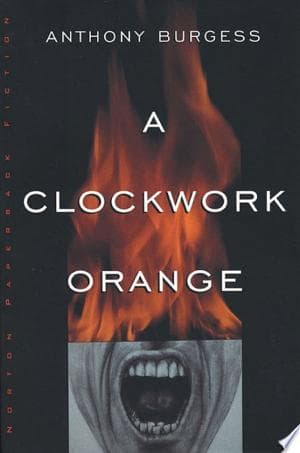
- A Clockwork Orange
Anthony Burgess
4.0 (601k) average on GoodreadsThrillerFeatures a rebellious, violent anti-hero challenging societal structures and exploring free will.
- Angels & Demons
Dan Brown
3.9 (2.7M) average on GoodreadsThrillerA Harvard symbologist races through Rome's ancient sites, deciphering cryptic clues to unmask the Illuminati and stop a vengeful plot to destroy the Vatican with a stolen antimatter weapon.
- Gone Girl
Gillian Flynn
4.1 (2.3M) average on GoodreadsThrillerA wife's sudden disappearance on her fifth anniversary reveals a web of lies and psychological warfare, exposing the secrets within a seemingly perfect marriage.
- The Girl on the Train
Paula Hawkins
3.9 (2.1M) average on GoodreadsThrillerA woman’s fascination with a seemingly perfect couple she watches from her daily train commute leads her into a dark investigation when she witnesses something that shatters their idyllic image.
- The Da Vinci Code
Dan Brown
3.9 (1.9M) average on GoodreadsThrillerA symbologist and a cryptologist race through European landmarks, deciphering ancient codes and uncovering a conspiracy that could rewrite the foundations of Christianity.





Enjoyed the summary?
A summary gives you the shape of the book. The book itself has the detail, the examples and the voice.
Find Fight Club on AmazonAs an Amazon Associate, BookBrief earns from qualifying purchases. How we're funded