Estimated read time: 10 min read
One Sentence Summary
Rebecca West’s "Black Lamb and Grey Falcon" is a sweeping travelogue and historical meditation exploring the culture, history, and politics of Yugoslavia on the eve of World War II.
Table of Contents
Introduction
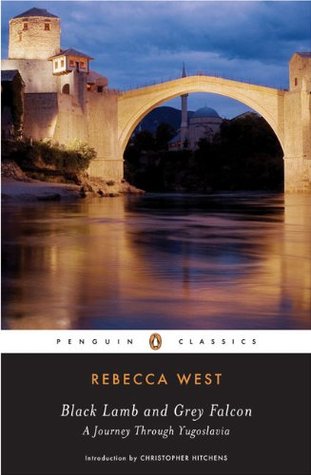
Ever wondered how a travel memoir could morph into a gripping historical epic, a sweeping character study, and a philosophical meditation—all in one? Black Lamb and Grey Falcon by Rebecca West does just that. Published in 1941, this monumental work transcends the boundaries of travel writing, plunging readers into the tumultuous heart of the Balkans just before World War II. Picture a British woman with wit sharper than a stiletto, journeying through Yugoslavia in 1937, determined to untangle its riddles. What she delivers is no ordinary guidebook—it’s a kaleidoscopic exploration of history, myth, politics, and the very soul of a region perpetually at the crossroads of empires.
West’s narrative is as dazzling as the landscape she describes, laced with humor, empathy, and biting social commentary. For college students and lecturers, Black Lamb and Grey Falcon is a rich resource—not just for Balkan studies, but for anyone fascinated by how personal experience blends with grand historical forces. If you’ve ever wanted to see how travel, literature, and history can spark off each other, this book is your ticket.
Historical Context
To appreciate Black Lamb and Grey Falcon, you need a crash course in Balkan history. The Balkans, that mountainous region in southeastern Europe, has long been a cultural and political tinderbox. By the time Rebecca West set out on her journey, Yugoslavia was a young country, cobbled together after World War I from fragments of the Austro-Hungarian and Ottoman Empires.
- Key Historical Events:
- Ottoman Rule (15th–19th centuries): The Ottoman Empire’s long presence left deep cultural and religious imprints.
- Austro-Hungarian Influence: Westernization efforts clashed with local traditions.
- World War I: The assassination of Archduke Franz Ferdinand in Sarajevo sparked the war.
- Formation of Yugoslavia (1918): A patchwork state uniting Serbs, Croats, Slovenes, Bosniaks, and others.
Rebecca West’s visit took place in 1937, on the eve of World War II. The scars of past empires and looming threats of fascism and communism hung heavy over the region. The book captures both a world on the brink and the echoes of centuries gone by.
- Notable Figures:
- Gavrilo Princip: Assassin of Archduke Franz Ferdinand.
- King Alexander I: Yugoslav monarch promoting unity (and authoritarianism).
Brief Synopsis
Plot Overview
On its surface, Black Lamb and Grey Falcon is the chronicle of a six-week journey through Yugoslavia by Rebecca West and her husband, “Constantine” (based on her real-life friend, Stanislav Vinaver), accompanied by their English friend, “Guy.” Yet, this is no mere travelogue. Each city, village, or ruined monastery visited sparks West’s deep dives into history, legend, and politics.
She weaves together her observations, the stories of those she meets, and her reflections on the recurring cycles of violence and hope in the Balkans. The book moves fluidly between the personal and the collective, the past and the present.
Setting
- Time: 1937, on the eve of World War II.
- Place: The Kingdom of Yugoslavia—modern-day Serbia, Croatia, Bosnia and Herzegovina, Montenegro, Macedonia, and Slovenia.
- Atmosphere: A land of breathtaking beauty and profound sorrow. West describes lush landscapes, Ottoman mosques, Orthodox monasteries, bustling cities, and remote villages, all shadowed by the weight of history and conflict.
Main Characters
Here’s a quick guide to the key figures on West’s journey:
| Name | Role | Key Traits | Importance to Plot |
|---|---|---|---|
| Rebecca West | Narrator, traveler, observer | Sharp, empathetic, analytical | Central voice; drives narrative and analysis |
| Constantine | Serbian companion (based on Vinaver) | Passionate, intellectual, nationalistic | Embodies Serb perspective and Balkan complexity |
| Guy | West’s English friend | Reserved, skeptical, practical | Foil to West and Constantine; offers outsider’s view |
| Yugoslav Locals | Guides, hosts, fellow travelers | Diverse, opinionated, hospitable | Provide local color and firsthand insights |
| Historical Figures | Referenced throughout | Varied | Populate West’s historical and philosophical musings |
Plot Summary
Rebecca West’s journey unfolds as a series of geographical and emotional stages, each deepening her understanding of Yugoslavia. Here’s how the narrative progresses, without major spoilers:
The Road to Yugoslavia
West’s voyage begins with anticipation and trepidation. Her initial impressions are colored by her own Britishness—orderly, rational, and somewhat naive about Balkan complexities. Her skepticism is soon shattered by the region’s vibrant contradictions.
Croatia and Dalmatia: Outposts of the West
West and her companions first explore Croatia’s coast, with its Venetian and Austro-Hungarian legacy. The glittering Adriatic towns, from Dubrovnik to Split, seem almost European—until West delves into their violent histories of conquest and resistance.
Bosnia and Herzegovina: The Ottoman Shadow
In Sarajevo and Mostar, West is mesmerized by the vestiges of the Ottoman Empire. Mosques, bazaars, and the haunting memory of the assassination that sparked World War I all blur into a tapestry of East and West. West’s encounters with local Muslims, Orthodox Serbs, and Catholic Croats bring the region’s religious and ethnic tensions to life.
Serbia: Heartland of Struggle
The journey moves to Serbia, which West presents as the emotional center of Yugoslavia. Here, the landscape is dotted with battlefields, monasteries, and folk tales of heroism and martyrdom. Through conversations with Constantine and Serbian hosts, West explores themes of sacrifice, national identity, and the legacy of Turkish oppression.
Macedonia and Kosovo: Lands of Legend
West’s travels culminate in Macedonia and Kosovo, where myths and memories swirl thickest. She visits the site of the legendary Battle of Kosovo (1389), reflecting on how history and myth shape current passions. The landscape is both beautiful and haunted, a symbol of the region’s perpetual struggle.
Return and Reflection
As West journeys homeward, she wrestles with what she’s learned—and what remains unknowable. The experience leaves her awed, troubled, and hopeful, determined to bear witness to a land both broken and resilient.
Themes and Motifs
West’s Black Lamb and Grey Falcon is a treasure trove of themes, many of which echo through the literature and politics of the twentieth century. Here are the major ones:
| Theme | Description and Relevance |
|---|---|
| History and Memory | West shows how the past shapes the present, especially in the Balkans where old wounds never heal. |
| Identity and Nationalism | The quest for identity—personal, religious, national—drives individuals and nations alike. |
| Violence and Sacrifice | The region’s cycles of violence and rituals of sacrifice are scrutinized, symbolized by the book’s title images. |
| East vs. West | West explores the cultural clash between “European” and “Oriental” influences, often questioning such binaries. |
| Gender and Power | West, as a woman traveler, reflects on gender roles in both the Balkans and her own society. |
| Faith and Doubt | Religious belief—Orthodox, Catholic, Muslim—is a force of both unity and division. West’s own spiritual searching infuses her observations. |
| The Role of the Outsider | West constantly analyzes her own outsider status and what it means to bear witness. |
Motifs:
- The “black lamb” (symbol of sacrifice) and the “grey falcon” (symbol of freedom and fate).
- Recurrent references to epic poetry, folk songs, and religious rituals.
Literary Techniques and Style
Rebecca West’s style is both lush and analytical. Here’s what stands out:
- Narrative Structure: The book is organized geographically, but often digresses into historical essays, philosophical reflections, and personal anecdotes.
- Symbolism: The “black lamb” (innocent sacrifice) and “grey falcon” (elusive freedom) recur throughout, encapsulating the book’s central dilemmas.
- Realism and Subjectivity: West is unsparing in her depiction of poverty and violence, but always filters observation through her own emotional and intellectual lens.
- Dialogue: Much of the book is driven by conversations—sometimes witty, sometimes heated—between West, Constantine, Guy, and locals.
- Intertextuality: West constantly references history, myth, literature, and even contemporary politics, drawing connections across time and space.
- Vivid Description: Landscapes, architecture, and even meals are described in rich, sensory detail, bringing Yugoslavia to life for the reader.
Author's Background
Rebecca West (born Cicely Isabel Fairfield, 1892–1983) was a British author, journalist, and literary critic renowned for her intellect, wit, and fiercely independent voice.
- Influences: West was shaped by her Irish-Scottish heritage, her early involvement in suffragism, and her engagement with the political upheavals of the 20th century.
- Writing Style: Her prose is both poetic and precise, capable of both grand historical argument and biting satire.
- Other Major Works:
- The Return of the Soldier (1918)
- A Train of Powder (1955)
- The Meaning of Treason (1949)
- Impact: West’s Black Lamb and Grey Falcon is often cited as one of the greatest travel books of all time. Her ability to fuse personal narrative with rigorous analysis has influenced generations of writers, historians, and travelers.
Key Takeaways
- The Balkans are a microcosm of the world’s conflicts, illustrating how history, myth, and memory shape national identity.
- Violence and sacrifice, whether personal or collective, are recurring motifs in the region’s history.
- Outsider perspectives can both illuminate and distort; West’s self-awareness is a model for responsible travel writing.
- Understanding a place requires attention to its people, landscape, and stories—not just its politics.
- The interplay of East and West, tradition and modernity, remains a global issue.
Reader's Takeaway
Black Lamb and Grey Falcon is more than a book—it’s an odyssey. For students, it’s a masterclass in how to weave narrative, history, and analysis into a compelling whole. For lecturers, it’s a treasure trove of discussion topics: nationalism, gender, the ethics of travel, and more.
Emotionally, the book is a rollercoaster. West’s deep empathy for the people she meets is matched by her rage at violence, her awe at beauty, and her sorrow at tragedy. You’ll laugh, fume, and—occasionally—need a stiff drink to process it all. This is travel writing at its most ambitious, a testimony to the power of witnessing with open eyes and a restless mind.
Conclusion
Rebecca West’s Black Lamb and Grey Falcon stands as a testament to the possibilities of literature. It is a book that refuses to be confined—by genre, by geography, or by time. Through her journey, West invites us to confront our own assumptions, to see the world’s complexity, and to understand that places are not just points on a map, but living tapestries of memory and hope.
If you’re looking for a book that will challenge, inspire, and haunt you long after you’ve finished, Black Lamb and Grey Falcon is essential reading. Dive in and let the Balkans—through West’s indelible prose—change the way you see history, identity, and the meaning of travel itself.
Black Lamb and Grey Falcon FAQ
What is 'Black Lamb and Grey Falcon' about?
'Black Lamb and Grey Falcon' is a travel memoir by Rebecca West, chronicling her six-week journey through Yugoslavia in 1937. It blends travel writing, history, politics, and cultural analysis to explore the complexities of the Balkans and the forces shaping its people and conflicts.
Who is the author of 'Black Lamb and Grey Falcon'?
The book is written by Rebecca West, a renowned British author, journalist, and literary critic known for her incisive commentary on politics and culture.
What regions does Rebecca West visit in the book?
Rebecca West travels through various regions of Yugoslavia, including Croatia, Dalmatia, Herzegovina, Bosnia, Serbia, Montenegro, and Macedonia.
Why is 'Black Lamb and Grey Falcon' considered significant?
The book is regarded as a masterpiece of 20th-century travel writing for its insightful analysis, vivid descriptions, and deep understanding of Balkan history and identity. It offers a unique perspective on the tensions that would later shape the region.
How is the book structured?
'Black Lamb and Grey Falcon' is structured into two volumes, with each section focusing on different parts of Yugoslavia and their histories, cultures, and politics. The narrative intertwines West's personal experiences with historical and philosophical reflections.
When was 'Black Lamb and Grey Falcon' first published?
The book was first published in 1941, just as World War II was unfolding in Europe.
What is the meaning behind the title 'Black Lamb and Grey Falcon'?
The title refers to Balkan folklore and symbolism: the black lamb is associated with sacrifice, while the grey falcon appears in Serbian epic poetry as a messenger of fate. Together, they represent the region’s enduring themes of tragedy and destiny.
Is prior knowledge of Balkan history needed to understand the book?
No prior knowledge is necessary; West provides extensive historical and cultural context throughout the book. However, readers may find it helpful to have some background understanding given the book's depth and detail.
How long is 'Black Lamb and Grey Falcon'?
The book is lengthy, totaling over 1,100 pages in most editions, reflecting the author's comprehensive approach to her subject.
What themes are explored in 'Black Lamb and Grey Falcon'?
Major themes include nationalism, identity, the cyclical nature of history, sacrifice, religion, and the complexity of cultural and ethnic relations in the Balkans.