
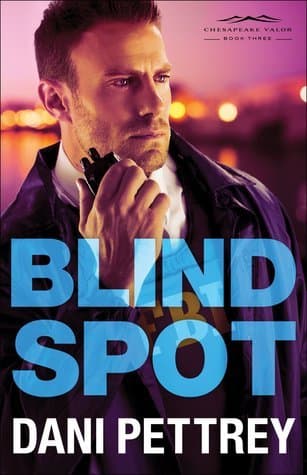
Synopsis
Covers the whole plot, including the ending.
- Difficulty
- Medium
- Pacing
- Fast
- Mood
- Suspenseful, Tense, Romantic, Action-packed
- Read it if
- You enjoy fast-paced thrillers with a blend of mystery, romance, and high-stakes espionage, featuring an FBI investigation into a domestic terror plot.
- Skip it if
- You prefer character-driven dramas over plot-driven thrillers, or are not a fan of romantic subplots in action stories.
Blind Spot Plot Summary
Covers the whole plot, including the ending.
A Cryptic Warning and a New Case
FBI Agent Declan Grey is in Washington D.C., working a case about possible terrorist activity. He receives a cryptic message from a known terrorist, warning him that "the wrath is coming." At the same time, he is assigned to investigate several disappearances and a possible human trafficking operation in a closed immigrant community in Cleveland, Ohio. The link between the terrorist threat and the local disappearances is unclear, but Declan senses they are connected. His supervisor, SAC Ben Carter, emphasizes the urgency and sensitivity of the case, especially given current politics around immigration.
Tanner Shaw's Return to the FBI
Tanner Shaw, a former international aid worker with much experience in refugee communities, recently joined the FBI as a crisis counselor. Her first assignment brings her to Cleveland, where she is to support families affected by the disappearances. This puts her directly in Declan Grey's path, creating immediate professional tension mixed with a clear personal spark. Despite their different methods, Tanner's understanding of cultural nuances and her ability to build trust in the immigrant community prove very helpful to Declan's investigation into the disappearances, which he believes are more serious than they seem.
Infiltrating the Community
Declan and Tanner start their investigation in Cleveland's close-knit immigrant community. They face significant resistance and suspicion from residents, who are wary of outsiders and law enforcement. Tanner's compassionate approach and her fluency in several languages help her slowly break down barriers, while Declan focuses on gathering information using traditional FBI methods. They learn about the community's strong ties to a local mosque and a charismatic spiritual leader, Imam Hassan. The disappearances seem to involve young men looking for better opportunities, but no one will openly discuss what happened to them.
A Disturbing Discovery
Following a tip from a frightened community member, Declan and Tanner find a hidden basement under a seemingly abandoned building in the community. Inside, they find evidence of radicalization – extremist literature, propaganda videos, and training materials. This discovery confirms Declan's fears that the disappearances are not just human trafficking but are part of a larger terrorist plot. The missing young men were likely recruited and prepared for something much more dangerous. This realization makes their mission more urgent, as they now believe they are dealing with a domestic terror cell.
The Network Unveiled
The evidence from the basement leads Declan and Tanner to uncover a complex network of people involved in the terror plot. They identify several key players, including a mysterious figure known only as 'The Architect' and a local contact helping with recruitment. The investigation shows that the cell is not just local but has ties to international terrorist groups. The 'wrath' warning from Declan's earlier case now seems directly linked to this Cleveland operation. They realize the cell is planning a major attack, but the target and method are unknown, putting great pressure on the team.
Personal Stakes and Growing Danger
As Tanner looks deeper into the lives of the missing young men, she discovers that one of them, a bright and hopeful teenager named Omar, had confided in her shortly before he disappeared. This personal connection strengthens her resolve and adds emotional depth to the case. The terror cell, aware that the FBI is getting close, starts to act more aggressively. Declan and Tanner face direct threats and close calls, making it clear their lives are in danger. The stakes are high, not only for the potential victims of the attack but for the agents themselves.
A Race Against Time
Through careful analysis of recovered documents, intercepted communications, and clever detective work, Declan and Tanner, with help from FBI tech specialists, finally solve the puzzle of the upcoming attack. They find out that the target is a major public event in Cleveland, and the method involves a coordinated series of bombings meant to cause many casualties and maximum terror. The 'wrath' is revealed to be a carefully planned act of domestic terrorism. With the attack hours away, the race against time becomes critical, requiring immediate action from the FBI.
The Climax: Confrontation and Disruption
In a tense, high-stakes climax, Declan and Tanner lead separate teams to infiltrate the locations where the bombs are set to detonate. Declan confronts 'The Architect,' a shadowy figure who has been manipulating the young recruits. Tanner, meanwhile, works to calm a volatile situation at another site, trying to convince a radicalized young man to abandon his mission. Gunfights, explosions, and intense psychological negotiations happen as the agents risk their lives to prevent the catastrophe. The city waits as the FBI battles against the clock and the terrorists.
Aftermath and Lingering Questions
The FBI successfully stops the main terrorist attack, limiting casualties, though there are some losses. 'The Architect' is caught, and the immediate terror cell is broken up. Afterward, Declan and Tanner deal with the emotional impact of the events. While the city breathes a collective sigh of relief, the experience leaves deep scars on the community and on the agents. They reflect on why such acts happen and how vulnerable impressionable people are. The case shows the ongoing challenges of counter-terrorism and the complexities of integrating diverse communities.
A Glimmer of Hope and Future Paths
With the immediate crisis over, Declan and Tanner begin to process the intense experience. Their shared ordeal has created a deeper bond between them, and their underlying romantic tension is now clear. They discuss their professional paths, with Declan considering the broader meaning of his work and Tanner confirming her dedication to helping vulnerable people. While the threat of terrorism is always there, their teamwork and growing connection offer hope for future challenges. The novel ends with them acknowledging the complexities of their world and the possibility of a future together, both professionally and personally.
Principal Figures
Declan Grey
Protagonist
A driven FBI agent haunted by past failures and committed to justice.
Declan Grey is a seasoned FBI agent, intelligent and highly analytical, but also burdened by a past incident where he failed to prevent a tragedy. This fuels his relentless pursuit of justice and makes him hyper-vigilant. He often relies on his instincts, which are usually spot-on, and can be single-minded in his focus. Despite his professional intensity, he possesses a dry wit and a deep sense of loyalty. He struggles with opening up emotionally, especially regarding his past, which sometimes creates a barrier between him and others.
Relationships: Tanner Shaw (Professional colleague with growing romantic tension and deep mutual respect.); SAC Ben Carter (His supervisor, a mentor figure who trusts Declan's judgment but also pushes him.); The Architect (His primary antagonist, a dangerous and manipulative terrorist leader.)
Tanner Shaw
Protagonist
A compassionate crisis counselor and former aid worker with a unique understanding of vulnerable communities.
Tanner Shaw is a brilliant and empathetic crisis counselor who brings a unique skillset to the FBI. Her extensive experience working with refugees and displaced populations around the world has given her deep cultural insight, linguistic abilities, and an unparalleled capacity for building trust. She is driven by a strong desire to protect the vulnerable and advocate for justice, often clashing with traditional law enforcement methods due to her more human-centric approach. She is resilient, courageous, and possesses a sharp mind, making her an invaluable asset.
Relationships: Declan Grey (Professional colleague with growing romantic tension and deep mutual respect.); Omar (A young, missing community member whom Tanner had a personal connection with, intensifying her drive to solve the case.)
SAC Ben Carter
Supporting
Declan's supervisor, a seasoned and pragmatic FBI Special Agent in Charge.
SAC Ben Carter is a high-ranking FBI official, serving as Declan Grey's Special Agent in Charge. He is a pragmatic and experienced leader who trusts his agents, particularly Declan, but also demands results and adherence to protocol. He provides strategic oversight and resources for the investigation, often acting as a buffer between his team and the political pressures of Washington D.C. While sometimes appearing stern, he genuinely cares about his agents' well-being and the success of their missions.
Relationships: Declan Grey (Supervisor and mentor.); Tanner Shaw (Her supervisor, who recognizes and values her unique skills.)
The Architect
Antagonist
The shadowy mastermind behind the terror plot.
The Architect is the primary antagonist, a highly intelligent and manipulative individual who orchestrates the domestic terror plot. This character operates from the shadows, recruiting impressionable young men and radicalizing them through a carefully constructed ideology. Their motivations are rooted in a twisted sense of grievance and a desire for widespread chaos and destruction. The Architect is cunning, methodical, and ruthless, making them a formidable foe for Declan and Tanner. Their identity is initially shrouded in mystery, adding to the suspense.
Relationships: Declan Grey (Primary adversary.); Tanner Shaw (An adversary whose compassionate approach briefly threatens their control over recruits.)
Imam Hassan
Supporting
The spiritual leader of the immigrant community.
Imam Hassan is the respected spiritual leader of the Cleveland immigrant community. He is a figure of authority and comfort within his community, but also initially wary and protective of his people when the FBI arrives. He struggles with the balance of cooperating with authorities while also safeguarding his community from external judgment and internal threats. He represents the complex dynamics within a community facing external scrutiny and internal vulnerabilities to radicalization.
Relationships: Declan Grey (Initially distrustful, later a reluctant informant.); Tanner Shaw (More open to Tanner due to her empathy and cultural understanding.)
Omar
Mentioned
A missing young man from the immigrant community who had confided in Tanner.
Omar is a bright and hopeful young man from the immigrant community who is among the first to disappear. He had a brief but meaningful interaction with Tanner Shaw, confiding in her about his dreams and struggles. His disappearance becomes a personal catalyst for Tanner, intensifying her resolve to find him and understand what happened. He symbolizes the vulnerability of impressionable youth within the community, easily targeted by radical elements.
Relationships: Tanner Shaw (A young man who briefly confided in Tanner, making his disappearance particularly impactful for her.)
Themes & Insights
Trust and Suspicion
The novel explores trust and suspicion, especially between law enforcement and isolated communities. Declan's initial approach is met with suspicion from the immigrant community, while Tanner's empathetic methods slowly build trust. The terrorists use existing distrust to recruit vulnerable people, showing how suspicion can be a weapon. The growing trust between Declan and Tanner, despite their different methods, also helps their success. This is clear when community members are at first hesitant to talk to the FBI but open up to Tanner after she shows genuine care.
“Trust wasn't given; it was earned, especially here, where fear of outsiders ran deep.”
The Nature of Justice
The book looks into different ideas of justice. Declan seeks justice through law and order, focused on catching criminals and preventing harm. Tanner, however, approaches justice from a humanitarian view, trying to understand root causes and protect the vulnerable. The story questions whether justice is only about punishment or if it also involves compassion, understanding, and rehabilitation. These different views often create tension between the protagonists but ultimately lead to a more complete pursuit of justice against the terror cell. For example, Tanner tries to talk down a radicalized youth, seeking a different kind of justice than immediate force.
“Justice isn't just about catching the bad guys, Declan. It's about protecting the innocent, sometimes even from themselves.”
Vulnerability and Exploitation
A major theme is how vulnerable marginalized communities are and how extremist groups exploit these weaknesses. The missing young men are often those looking for better lives, making them easy targets for radicalization by promises of belonging, purpose, or a better future. The novel shows how poverty, cultural displacement, and a feeling of alienation can be used by manipulative forces. The terror cell preys on these weaknesses, turning hope into a weapon. The story of Omar, who was lured by false promises, directly shows this exploitation.
“They prey on the lost, the hopeful, the ones who just want to belong. It's a twisted kind of recruitment.”
The Power of Connection
Despite the dark plot, human connection—both romantic and communal—is a strong force. The growing bond between Declan and Tanner, born from shared danger and mutual respect, highlights the importance of personal connection. Also, the strength of the immigrant community, despite its initial distrust, eventually helps the FBI, showing the resilience and power of communal ties. Tanner's ability to connect with community members on a human level is key to gaining their cooperation.
“In the face of such darkness, it was the small connections, the shared glances, that truly held them together.”
Plot Devices & Literary Techniques
Red Herring
Initial focus on human trafficking diverts attention from the true terror plot.
The initial investigation into the disappearances points towards a human trafficking ring, which serves as a red herring. This misdirection leads Declan and Tanner down a plausible but ultimately incorrect path for a period, increasing the suspense and allowing the true terror cell to operate with less immediate scrutiny. It also highlights the complexities of crime within diverse communities, where multiple illicit activities might coexist, making it harder to pinpoint the most dangerous threat.
Limited Omniscience (Alternating POVs)
Alternating perspectives between Declan and Tanner, and sometimes the antagonist, to build suspense.
The novel employs limited omniscient narration, primarily shifting between Declan Grey and Tanner Shaw's points of view. This allows readers to experience their individual thoughts, fears, and deductions, deepening character development and providing different insights into the investigation. Occasionally, the perspective shifts to the antagonist, offering glimpses into their planning and motives, which heightens tension and provides a broader scope of the unfolding threat, without revealing too much too soon.
The Ticking Clock
The impending terrorist attack creates intense time pressure for the protagonists.
The ticking clock device is central to the thriller aspect of the novel. Once Declan and Tanner realize a major terrorist attack is imminent, they are plunged into a desperate race against time to identify the target, method, and precise timing. This creates relentless urgency, forcing rapid decisions, increasing stakes, and maintaining a high level of suspense throughout the latter half of the book, culminating in the frantic climax to prevent the catastrophe.
The Outsider/Insider Dynamic
Tanner's role as an empathetic 'outsider' helps bridge the gap with the insular community.
This device highlights the contrast between Declan, representing traditional law enforcement and initially seen as an 'outsider' by the immigrant community, and Tanner, who despite being with the FBI, uses her 'insider' knowledge and empathy from her aid work to bridge the gap. Her ability to navigate cultural sensitivities and build trust allows the team to gain access and information that Declan's more direct methods initially fail to achieve. This dynamic is crucial for advancing the plot and understanding the community's complexities.
Blind Spot Quotes
“It was a blind spot, a place where all the careful plans, all the training, all the logic, simply ceased to exist.”
“Some truths weren't meant to be unearthed, not if the digging caused more damage than the truth itself.”
“The past was a relentless hunter, and eventually, it always caught up.”
“Fear was a powerful motivator, but love, in its purest form, was an even stronger one.”
“Trust was a fragile thing, easily shattered, almost impossible to fully repair.”
“Sometimes the most dangerous enemies were the ones you never saw coming.”
“Hope was a tiny spark in the darkest night, but even a spark could ignite a fire.”
“The silence wasn't empty; it was filled with unspoken words, with unacknowledged pain.”
“Every choice had a ripple effect, and sometimes, those ripples turned into tidal waves.”
“It wasn't about being fearless; it was about acting despite the fear.”
“Forgiveness wasn't about condoning the act; it was about releasing yourself from the prison of resentment.”
“The truth was a weapon, and in the wrong hands, it could be more destructive than any bullet.”
“Sometimes, the only way to find your way out of the dark was to acknowledge you were lost.”
Quiz
10 questions on the plot and the characters. Each answer comes with a short explanation.
Question 1
What is the primary warning given to FBI agent Declan Grey by a terrorist at the beginning of the novel?
- A bomb will detonate in a major city.
- The wrath is coming.
- He will be personally targeted.
- An informant will be exposed.
Show answer
B. The wrath is coming. The terrorist warns Declan Grey with the phrase 'the wrath is coming,' which sets the main conflict of the story.
Question 2
Why does Declan Grey seek out Tanner Shaw's help during his investigation?
- She has experience with bomb disposal.
- She is a skilled interrogator for high-profile cases.
- His investigation leads him to a closed immigrant community, and she has experience with refugees.
- She is a former FBI agent with knowledge of the terrorist group.
Show answer
C. His investigation leads him to a closed immigrant community, and she has experience with refugees. Declan seeks Tanner's help because his investigation takes him to a closed immigrant community, and Tanner has a background in seeking justice for refugees and the hurting.
Question 3
What is Tanner Shaw's new role within the FBI at the start of the book?
- Field Agent
- Crisis Counselor
- Forensic Analyst
- Intelligence Analyst
Show answer
B. Crisis Counselor Tanner Shaw has joined the FBI as a crisis counselor, which is stated in the book's description.
Question 4
What specific type of threat do Declan and Tanner discover evidence of during their investigation?
- A cyberattack on critical infrastructure.
- An assassination plot against a public official.
- A terror cell planning an attack.
- A drug trafficking ring.
Show answer
C. A terror cell planning an attack. Declan and Tanner discover evidence of a terror cell, which they then race against time to stop.
Question 5
What is the nature of the relationship between Declan Grey and Tanner Shaw, as described in the synopsis?
- Strictly professional and distant.
- They are long-time friends with no romantic interest.
- They butt heads but also share an undeniable spark.
- They are estranged siblings forced to work together.
Show answer
C. They butt heads but also share an undeniable spark. The synopsis mentions that Tanner's new role gives her 'more opportunity to butt heads with Declan. But that tension also includes a spark she can't deny, and she's pretty sure Declan feels the same.'
Question 6
What is Declan Grey's primary fear regarding the terrorist's warning of 'the wrath'?
- That he will be personally discredited by the FBI.
- That something horrible is about to be unleashed on American soil.
- That his family will be targeted by the terrorists.
- That the investigation will be taken over by another agency.
Show answer
B. That something horrible is about to be unleashed on American soil. Declan 'fears something horrible is about to be unleashed on American soil' after the terrorist's warning.
Question 7
What is the ultimate consequence Declan and Tanner are trying to prevent by stopping the coming 'wrath'?
- A major economic collapse.
- The exposure of classified government secrets.
- Thousands of lives being lost.
- A diplomatic crisis with another country.
Show answer
C. Thousands of lives being lost. The synopsis states they are in a 'race against the clock to stop the coming 'wrath' that could cost thousands their lives.'
Question 8
What specific area of the world has Tanner Shaw previously sought justice for the hurting?
- Within her local community only.
- Around the world.
- Specifically in war-torn European countries.
- Only within the United States legal system.
Show answer
B. Around the world. The description states Tanner 'sought justice for refugees and the hurting around the world,' indicating her broad experience.
Question 9
What kind of 'chase' is Declan Grey described as being in at the beginning of the novel?
- A pursuit of a known criminal mastermind.
- A chase where he isn't sure exactly what he's chasing after.
- A race against time to recover stolen government documents.
- A personal vendetta against a former adversary.
Show answer
B. A chase where he isn't sure exactly what he's chasing after. The opening line states Declan 'is in the chase of his life—but isn't sure exactly what he's chasing after,' highlighting the initial mystery.
Question 10
Before anything romantic can 'develop' between Declan and Tanner, what pivotal discovery do they make that shifts their immediate focus?
- Evidence of a mole within the FBI.
- A hidden message from the terrorist leader.
- Evidence of a terror cell.
- A connection to a cold case Declan previously worked.
Show answer
C. Evidence of a terror cell. The synopsis explicitly states, 'But before anything can develop between them, they discover evidence of a terror cell,' which then initiates their race against time.
Blind Spot FAQ
What is the central conflict or threat that FBI agent Declan Grey is investigating in 'Blind Spot'?
Declan Grey is pursuing a terrorist who has issued a cryptic warning: 'the wrath is coming.' He fears this threat signifies a major terror attack planned for American soil, driving his urgent investigation to uncover the nature and target of this impending disaster.
Who is Tanner Shaw and what is her initial role in the story?
Tanner Shaw is introduced as a crisis counselor who has joined the FBI. Her background includes a history of advocating for refugees and the hurting globally, making her uniquely qualified to assist Declan when his investigation leads him to a closed immigrant community.
How does Declan Grey's investigation lead him to involve Tanner Shaw?
Declan's pursuit of the 'wrath' threat takes him to a secluded immigrant community, a setting where his usual investigative methods might be less effective. Recognizing Tanner's expertise in working with vulnerable populations and her understanding of diverse cultures, he seeks her help to navigate this sensitive environment and gain trust.
What is the nature of the relationship between Declan Grey and Tanner Shaw?
Their relationship is characterized by professional tension, as they frequently 'butt heads' due to their differing approaches, yet it's underscored by an undeniable romantic spark. Both characters acknowledge this growing attraction, though the urgency of their mission often overshadows its development.
What is the ultimate goal Declan and Tanner are working towards in the book?
Declan and Tanner are in a desperate race against time to identify and dismantle a terror cell. Their primary objective is to prevent the 'coming wrath'—the large-scale terror attack—from being unleashed, which could result in the loss of thousands of lives.
Are there any specific cultural or community details about the immigrant community that are explored?
The book delves into the intricacies of a 'closed immigrant community,' suggesting cultural nuances and potential barriers to external investigation. Tanner Shaw's expertise is crucial here, indicating that the story explores themes of trust, cultural understanding, and the challenges of integration within such a setting.
How does the 'blind spot' in the title relate to Declan's investigation or personal perspective?
The 'blind spot' likely refers to Declan's initial lack of understanding or misdirection regarding the true nature of the threat or its perpetrators. It could also symbolize his personal biases or assumptions that prevent him from seeing the full picture, requiring Tanner's different perspective to fill in the gaps.
Does the book reveal the specific ideology or motivation behind the terrorist group's actions?
While the synopsis mentions a terrorist threatening 'wrath,' it doesn't explicitly state their ideology. The narrative will likely unveil their motivations, which could range from political, religious, or socio-economic grievances, as Declan and Tanner uncover more about the terror cell.
How does Tanner Shaw's past experience with refugees inform her approach to the investigation?
Tanner's history of seeking justice for refugees gives her a unique empathy and understanding for vulnerable populations. This background allows her to build rapport and trust within the closed immigrant community, offering insights that Declan, as an FBI agent, might not easily obtain.
What internal struggles does Declan Grey face as he chases an unknown threat?
Declan likely grapples with the immense pressure of the ticking clock and the uncertainty of what he's pursuing. His internal struggle would involve balancing his professional duty with the personal risks, and potentially confronting his own limitations or assumptions when faced with an elusive enemy.
How does the 'tension' and 'spark' between Declan and Tanner affect their professional dynamic during the crisis?
The romantic tension between them likely adds another layer of complexity to their collaboration. While it could fuel their determination and trust, it might also create distractions or moments of vulnerability, forcing them to navigate their personal feelings alongside their life-or-death mission.
In what ways might the 'closed immigrant community' be both a resource and a challenge for the FBI?
The community is a challenge due to potential distrust of authorities and cultural barriers, making it difficult for the FBI to gather intelligence. However, it could also be a vital resource if Tanner can establish trust, as community members might hold crucial information or insights into the terror cell's activities.
Is the 'wrath' a literal physical attack, or could it have a symbolic or broader socio-political meaning?
While the synopsis suggests a literal terror attack that could 'cost thousands their lives,' the term 'wrath' might also carry symbolic weight. It could represent not just a physical act, but also a broader aim to sow fear, destabilize society, or ignite social unrest beyond the immediate violence.
How might the story explore the ethical dilemmas of counter-terrorism, especially when dealing with vulnerable communities?
The presence of a 'closed immigrant community' and Tanner's role as a crisis counselor suggest the book will address the delicate balance between national security and civil liberties. It could explore the ethical challenges of surveillance, data collection, and potential profiling, especially when navigating diverse cultural sensitivities.
What role does faith or moral conviction play for the characters, given the author's usual themes?
Given Dani Pettrey's background, it's highly probable that faith and moral conviction play significant roles. Declan and Tanner likely draw strength from their beliefs, which would guide their ethical decisions, provide resilience in the face of danger, and influence their understanding of justice and compassion amidst the terror threat.
Are there any specific plot twists or red herrings suggested by the 'blind spot' theme?
The 'blind spot' theme strongly suggests misdirection. There could be a key piece of evidence overlooked, a seemingly innocent character who is actually involved, or the true target of the 'wrath' might be different from what Declan initially assumes, leading to a crucial plot twist.
How does the book balance the thriller and romance elements without one overshadowing the other?
The book aims to integrate both by having the romantic tension develop against the backdrop of the high-stakes thriller. The urgency of the terror plot provides shared experiences that intensify the characters' connection, while their personal feelings add emotional depth to the professional struggle, ensuring neither element feels secondary.
What internal conflict does Tanner face by joining the FBI as a crisis counselor, given her advocacy background?
Tanner likely faces an internal conflict reconciling her past role as an independent advocate for refugees with her new position within a government agency like the FBI. She might struggle with bureaucracy, potential compromises to her advocacy principles, or the inherent tension between law enforcement and the communities she aims to protect.
Similar books
- The Innocent
David Baldacci
3.8 (2k) average on GoodreadsHistorical FictionFeatures a government agent uncovering a vast conspiracy with high personal stakes.
- The Likeness
Tana French
4.0 (126k) average on GoodreadsThrillerWhile both novels deal with mysteries and infiltration, French's "The Likeness" delves significantly deeper into psychological complexity and character internal lives, creating richly textured protagonists and antagonists. "Blind Spot" maintains a more external, action-driven focus, making its character development less profound when compared to French's highly acclaimed and psychologically dense narratives.
- Angels & Demons
Dan Brown
3.9 (2.7M) average on GoodreadsThrillerA Harvard symbologist races through Rome's ancient sites, deciphering cryptic clues to unmask the Illuminati and stop a vengeful plot to destroy the Vatican with a stolen antimatter weapon.
- Gone Girl
Gillian Flynn
4.1 (2.3M) average on GoodreadsThrillerA wife's sudden disappearance on her fifth anniversary reveals a web of lies and psychological warfare, exposing the secrets within a seemingly perfect marriage.
- The Girl on the Train
Paula Hawkins
3.9 (2.1M) average on GoodreadsThrillerA woman’s fascination with a seemingly perfect couple she watches from her daily train commute leads her into a dark investigation when she witnesses something that shatters their idyllic image.
- The Da Vinci Code
Dan Brown
3.9 (1.9M) average on GoodreadsThrillerA symbologist and a cryptologist race through European landmarks, deciphering ancient codes and uncovering a conspiracy that could rewrite the foundations of Christianity.





Enjoyed the summary?
A summary gives you the shape of the book. The book itself has the detail, the examples and the voice.
Find Blind Spot on AmazonAs an Amazon Associate, BookBrief earns from qualifying purchases. How we're funded