

Synopsis
Covers the whole plot, including the ending.
- Difficulty
- Easy
- Pacing
- Fast
- Mood
- Suspenseful, Action-packed, Tense, Gritty
- Read it if
- You enjoy fast-paced thrillers with a reluctant hero and a conspiracy at its core.
- Skip it if
- You prefer character-driven dramas over plot-driven action, or are sensitive to violence.
The Innocent Plot Summary
Covers the whole plot, including the ending.
A Mission Gone Wrong
Will Robie, a skilled government assassin, goes to Washington D.C. to kill a target. The mission feels wrong from the start; the target, a woman, is home with her children, and the situation does not match Robie's usual assignments. For the first time, Robie hesitates. He cannot bring himself to shoot an innocent person. He aborts the mission, which immediately marks him as a rogue agent and a threat to his organization. He knows he must disappear before his handlers, especially his superior, Blue Man, send others to kill him.
Unexpected Encounter and Rescue
While trying to escape his pursuers, Robie finds a young girl, Julie Getty, being attacked by two men in an alley. Robie intervenes, killing the assailants quickly. He learns Julie is a fourteen-year-old runaway whose parents were recently murdered. Despite his training to avoid attachments, Robie feels he must protect her. He realizes that Julie's situation is more complex than a simple runaway case, and her life is in danger, connecting her to a larger conspiracy.
A Reluctant Alliance
Robie, now a target of his agency and responsible for Julie, begins a desperate flight. They are hunted by government operatives and the shadowy figures who murdered Julie's parents. Robie uses his skills in evasion and combat to keep them safe, but he struggles with involving Julie in his dangerous world. Julie, initially distrustful and traumatized, slowly begins to rely on Robie, though her sharp wit often challenges his quiet nature. Their journey becomes a race against time and a search for answers.
Unraveling Julie's Past
As they move from safe house to safe house, Robie investigates Julie's past. He discovers that her parents, Dr. and Mrs. Getty, were scientists working on a top-secret government project related to advanced energy or weaponry. Their murder was not random; it was a deliberate silencing. Robie suspects that Julie has important information or is linked to their work, making her a target. This discovery deepens Robie's commitment to protecting her, as he realizes the conspiracy reaches high levels.
First Contact with Blue Man
Robie eventually contacts Blue Man, his handler and the head of his unit. Blue Man tries to persuade Robie to return, stressing the seriousness of his defection and the consequences. He hints that Robie's initial target was not as innocent as she seemed and that Robie has disrupted a critical operation. Blue Man's words are a mix of threats and veiled offers, meant to manipulate Robie. Robie, however, remains skeptical, sensing that Blue Man is hiding information and that his loyalty is being tested for reasons beyond the aborted mission.
The Hunt Intensifies
The pursuit intensifies, with Robie and Julie constantly moving. They face multiple assassination attempts from government black ops teams and the group responsible for Julie's parents' deaths. Robie's skills are pushed to their limits as he navigates cities and remote areas, always thinking ahead. Julie, despite her fear, proves to be resilient and resourceful, even helping Robie identify threats and find safe paths. Their bond strengthens under pressure, becoming a genuine partnership for survival.
The Revelation of Project Chimera
Through daring infiltrations and information gathering, Robie uncovers 'Project Chimera,' a sensitive and potentially devastating program developed by Julie's parents. The project involves advanced psychological manipulation and control, capable of turning people into unwitting assassins or agents. The woman Robie was ordered to kill was a key figure in this project, and her elimination was meant to cover up its existence. Julie's parents were murdered because they tried to expose or stop the project, and Julie herself holds vital data or knowledge about it.
The Betrayal and the Mastermind
Robie faces the chilling realization that Blue Man, his handler and mentor, knows about Project Chimera and is actively involved in its operation, possibly even its architect. The initial mission to kill the woman was a test for Robie, or an attempt to eliminate a loose end related to Chimera. Blue Man's manipulation and lies become clear, showing a betrayal that shatters Robie's view of his work and his loyalty to the government. The stakes are now higher than ever, as Robie must fight his former superior.
Confrontation and Resolution
Armed with the truth, Robie plans a final confrontation with Blue Man and the forces behind Project Chimera. He uses his intelligence and tactical skills to expose the project and its architects to authorities, leaking information to the right channels while ensuring Julie's safety. The climax involves intense fighting and psychological battles, as Robie uses his assassin skills not to kill, but to dismantle the corrupt network. He secures the evidence needed to bring down the project and its orchestrators, saving many lives and preventing a global disaster.
A New Beginning
Afterward, Project Chimera is exposed and its key players are brought to justice. Robie, though still wanted for his past actions, is no longer actively hunted by his former agency, which undergoes significant changes. He ensures Julie is placed in a safe environment, free from threats, and with a chance to heal. Robie finds a new purpose beyond being a government tool. He accepts that his life as an assassin is over, and while his future is uncertain, he has found a moral compass and a reason to live outside the shadows.
Principal Figures
Will Robie
Protagonist
A highly skilled government assassin who develops a conscience.
Will Robie is a meticulous, disciplined, and lethally efficient government assassin. Known as 'The Cleaner,' he operates with unwavering focus, never questioning orders until his fateful mission in D.C. He is a master of disguise, surveillance, and combat, with a profound understanding of human nature and psychology. Robie is initially detached and emotionally guarded, having suppressed personal feelings to excel in his profession. His moral awakening is triggered by the innocent target and solidified by his unexpected connection with Julie Getty.
Relationships: Julie Getty (Protector, mentor, and eventual father figure.); Blue Man (Handler and mentor, later revealed as a primary antagonist and betrayer.)
Julie Getty
Supporting
A resilient and intelligent fourteen-year-old runaway caught in a vast conspiracy.
Julie Getty is a sharp, independent, and traumatized fourteen-year-old. Orphaned by the mysterious murder of her scientist parents, she has been shuffled through the foster care system, fostering a deep distrust of authority. Despite her youth, she possesses remarkable resilience, resourcefulness, and an intuitive understanding of situations. She is intelligent and observant, often picking up on details that help Robie. Her parents' work and her own hidden knowledge make her a central figure in the conspiracy Robie uncovers.
Relationships: Will Robie (Initially a reluctant protector, evolving into a trusted guardian and friend.)
Blue Man
Antagonist
Will Robie's enigmatic handler, who is deeply involved in the conspiracy.
Blue Man is Robie's shadowy and highly influential handler, operating at the highest echelons of a covert government agency. He is a master manipulator, calm under pressure, and possesses a deep understanding of human psychology, which he uses to control his assets, including Robie. His true motives are obscured behind a veil of national security, but he is ultimately revealed to be a key architect or facilitator of Project Chimera, prioritizing its goals over individual lives or ethical considerations. He represents the corrupting influence of unchecked power.
Relationships: Will Robie (Superior and handler, who ultimately betrays Robie's trust.)
Dr. Getty
Mentioned
Julie's deceased father, a brilliant scientist involved in Project Chimera.
Dr. Getty was a highly intelligent scientist, one of the primary developers of Project Chimera. He, along with his wife, eventually realized the dangerous implications and unethical nature of their creation. His attempts to expose or stop the project led to his and his wife's murder. His work and his moral awakening are central to the backstory of the conspiracy and the reason Julie is targeted.
Relationships: Julie Getty (Father, whose work inadvertently endangered her.); Mrs. Getty (Wife and fellow scientist.)
Mrs. Getty
Mentioned
Julie's deceased mother, also a scientist involved in Project Chimera.
Mrs. Getty was a brilliant scientist and Dr. Getty's wife, deeply involved in the development of Project Chimera. Like her husband, she eventually recognized the project's unethical and dangerous potential. Her decision to work with her husband to expose or dismantle it led to their assassinations. Her scientific contributions and moral awakening are crucial to understanding the origins of the conspiracy and the significance of Julie's connection to it.
Relationships: Julie Getty (Mother, whose work inadvertently endangered her.); Dr. Getty (Husband and fellow scientist.)
The Woman in D.C.
Mentioned
Robie's initial target, whose innocence sparked his moral crisis.
The woman in Washington D.C. was Robie's intended target at the beginning of the novel. Her apparent innocence, being a mother in her home, directly contradicted Robie's perception of his usual targets and triggered his moral crisis, leading him to abort the mission. She is later revealed to be connected to Project Chimera, though perhaps not in the way Blue Man initially implied, adding layers of complexity to Robie's initial decision.
Relationships: Will Robie (Intended victim, whose life Robie spared.)
Themes & Insights
Moral Awakening and Redemption
The main theme is Will Robie's journey from an unfeeling government assassin to a man guided by his conscience. His refusal to kill an innocent woman, which goes against his training, begins his moral awakening. This is strengthened by his decision to protect Julie, an act driven by empathy. He seeks redemption for his past actions by exposing the corrupt system he once served, choosing to save lives instead of taking them. This theme is clear when he protects Julie instead of abandoning her, defying his ingrained professional habits.
“He had always been the one doing the killing. Now he was the one trying to save a life, and it felt... different.”
The Corrupting Influence of Power
This theme explores how unchecked power, especially in secret government operations, can lead to ethical compromises and villainy. Project Chimera, with its goal of psychological manipulation and control, shows this corruption. Blue Man, operating at high levels, abuses his authority and trust to further his agenda, betraying his agents and endangering innocent lives. The story shows how the pursuit of national security can be twisted to justify morally wrong actions, highlighting the dangers when there is no accountability. Blue Man's betrayal is a prime example of this theme.
“The lines between right and wrong had blurred so completely that they had ceased to exist for some people.”
Trust and Betrayal
Trust is fragile in 'The Innocent,' constantly tested and often broken. Robie's career is built on blind trust in his superiors, especially Blue Man, only to discover it was a deep betrayal. Similarly, Julie, traumatized by her parents' murder, struggles to trust anyone, especially Robie. Their alliance is built on small acts of faith. The novel explores the devastating impact of betrayal on individuals and the need to earn trust in a world full of deception. Blue Man's manipulation and eventual exposure as a villain are central to this theme.
“He had trusted Blue Man with his life, with his soul. And Blue Man had sold them both.”
The Search for Truth and Justice
Both Robie and Julie are driven by a desperate need to uncover the truth behind Julie's parents' murders and the larger conspiracy. Robie's search for truth is tied to his redemption, as he tries to correct the wrongs done by his former organization. Julie's search is personal, a desire for understanding and justice for her family. Together, they pursue clues, piece together information, and confront dangerous enemies to expose the truth, even when it means challenging powerful forces. Their combined efforts to expose Project Chimera show this theme.
“The truth, like a shadow, was always there, just waiting for the light to expose it.”
Plot Devices & Literary Techniques
The MacGuffin: Project Chimera
The secret government project that drives the central conflict.
Project Chimera serves as the primary MacGuffin in the narrative. It's a top-secret, highly dangerous government program involving advanced psychological manipulation. Its exact nature is gradually revealed, but its existence and the efforts to cover it up are what fuel the plot. Julie's parents were involved in its creation and then murdered for trying to expose it, making Julie a target. The project provides the ultimate stakes and the reason for the extensive conspiracy, giving Robie and Julie a concrete goal to pursue and expose.
The Reluctant Protector
A hardened protagonist unexpectedly takes on the role of guardian for an innocent.
This device centers on Will Robie, a professional killer, being forced into the role of protector for a vulnerable, innocent teenage girl, Julie. It creates immediate internal and external conflict for Robie, challenging his detached nature and professional code. His initial reluctance to help Julie, followed by his unwavering commitment, highlights his moral transformation and humanizes him. This dynamic allows for character development, as Robie learns empathy, and Julie learns to trust, forming the emotional core of the story.
The Betrayal of Authority
The protagonist's trusted superior is revealed to be the antagonist.
This device is powerfully employed through the character of Blue Man. Initially presented as Robie's enigmatic but trusted handler and a figure of authority, he is gradually exposed as a key antagonist and orchestrator of the very conspiracy Robie is fighting against. This betrayal shatters Robie's worldview and his sense of loyalty, forcing him to question everything he believed in. It raises the personal stakes significantly, turning Robie's fight into a deeply personal one against a former mentor and making the conflict more complex than a simple good-versus-evil scenario.
The Innocent Quotes
“The past is never dead. It's not even past.”
“Sometimes the only way to save a life is to take one.”
“Truth is a stubborn thing. It has a way of coming out, no matter how hard you try to bury it.”
“Love, like war, makes men do things they never thought themselves capable of.”
“There are no innocent people, only varying degrees of guilt.”
“A man without a country is a man without a soul.”
“The greatest lies are often told in silence.”
“To forgive is divine, but to forget is foolish.”
“Hope is a dangerous thing. It can keep you alive, or it can kill you.”
“Every hero has his demons, and every villain, his reasons.”
“The most secure prison is one you build for yourself.”
“Sometimes, the only way to move forward is to destroy what's behind you.”
“A secret shared is no longer a secret, but a burden transferred.”
Quiz
10 questions on the plot and the characters. Each answer comes with a short explanation.
Question 1
What is Will Robie's profession at the beginning of the novel?
- FBI Agent
- Military Sniper
- Government Hitman
- Private Investigator
Show answer
C. Government Hitman Will Robie is introduced as a 'stone cold hitman' employed by the U.S. government to eliminate threats.
Question 2
What unusual action does Will Robie take during a mission in Washington, D.C.?
- He accidentally kills the wrong target.
- He refuses to kill his assigned target.
- He reveals his identity to the target.
- He calls for backup during a solo mission.
Show answer
B. He refuses to kill his assigned target. The synopsis states that Robie 'does the unthinkable. He refuses to kill,' marking the turning point of his career.
Question 3
Who does Robie encounter after his botched mission, and what is her situation?
- A police detective investigating the hit.
- A rival hitman sent to eliminate him.
- A fourteen-year-old runaway whose parents were murdered.
- A journalist seeking information on government secrets.
Show answer
C. A fourteen-year-old runaway whose parents were murdered. Robie 'crosses paths with a wayward teenage girl, a fourteen-year-old runaway from a foster home,' whose parents were murdered.
Question 4
Why does Robie become a target himself after the failed mission?
- He accidentally exposed a government secret.
- He refused to follow orders and kill his target.
- He was framed for a crime he didn't commit.
- He tried to extort money from his handlers.
Show answer
B. He refused to follow orders and kill his target. After refusing to kill, Robie 'becomes a target himself and must escape from his own people,' indicating his defiance made him an enemy.
Question 5
What is the primary reason Robie decides to help the runaway girl, despite his professional habits?
- He feels guilty for his past actions as a hitman.
- He recognizes she is connected to a larger cover-up that might involve him.
- He sees her as a potential decoy to escape his pursuers.
- He is romantically attracted to her.
Show answer
B. He recognizes she is connected to a larger cover-up that might involve him. The synopsis states, 'the more Robie learns about the girl, the more he's convinced she is at the center of a vast cover-up, one that may explain her parents' deaths.'
Question 6
What does the phrase 'step out of the shadows' imply about Robie's character development?
- He will literally hide in plain sight to avoid detection.
- He will abandon his life of secrecy and anonymity to fight for justice.
- He will use his stealth skills to track down his enemies.
- He will become a public figure to expose corruption.
Show answer
B. He will abandon his life of secrecy and anonymity to fight for justice. As a hitman, Robie operates in the 'shadows.' 'Stepping out' implies abandoning his hidden, unquestioning role to actively confront the forces at play.
Question 7
What is the primary motivation for Robie's initial 'hit gone wrong' in Washington, D.C.?
- His target was a close personal friend.
- He believed the target was innocent.
- Something about the mission 'doesn't seem right' to him.
- He was ordered to kill someone in a public place.
Show answer
C. Something about the mission 'doesn't seem right' to him. The synopsis states, 'But something about this mission doesn't seem right to Robie, and he does the unthinkable. He refuses to kill.'
Question 8
What specific detail about the runaway girl's background makes Robie suspect a larger conspiracy?
- She has a unique tattoo that links her to a criminal organization.
- Her parents were murdered, and her own life is in danger.
- She possesses classified government documents.
- She claims to be the daughter of a high-ranking government official.
Show answer
B. Her parents were murdered, and her own life is in danger. The text explicitly states: 'her parents were murdered, and her own life is in danger,' and later, 'the more Robie learns about the girl, the more he's convinced she is at the center of a vast cover-up, one that may explain her parents' deaths.'
Question 9
The synopsis highlights Robie as a 'stone cold hitman who never questions orders and always nails his target.' How does his interaction with the girl challenge this established character trait?
- He immediately tries to kill her, demonstrating his coldness.
- He questions her story, showing he's not easily fooled.
- He 'rescues her and finds he can't walk away,' defying his detached nature.
- He attempts to recruit her as an accomplice for his next mission.
Show answer
C. He 'rescues her and finds he can't walk away,' defying his detached nature. Robie is portrayed as detached and professional. His decision to rescue and help the girl, despite his 'professional habits,' shows a significant shift from his 'stone cold' nature.
Question 10
What is the ultimate scope of the 'vast cover-up' Robie believes the girl is involved in?
- It involves a local crime syndicate and drug trafficking.
- It stretches to 'unimaginable levels of power' within the government.
- It is a personal vendetta against her family by a rival business.
- It is a simple case of mistaken identity.
Show answer
B. It stretches to 'unimaginable levels of power' within the government. The synopsis explicitly states the cover-up 'stretch[es] to unimaginable levels of power,' suggesting a high-level government conspiracy.
The Innocent FAQ
What prompts Will Robie to deviate from his usual 'stone cold hitman' persona and refuse a mission?
Will Robie is dispatched to eliminate a target unusually close to home in Washington, D.C. Something about the mission feels off to him, leading him to question the orders and ultimately refuse to kill, an unprecedented act in his career.
Who is the 'wayward teenage girl' Robie encounters, and what is her initial situation?
The girl is a fourteen-year-old runaway from a foster home. Her parents were murdered, and her own life is in danger, making her situation far more complex and perilous than a typical runaway.
How does Robie's encounter with the teenage girl change his immediate priorities and professional habits?
Despite his professional training to remain detached, Robie rescues the girl and finds he cannot walk away. He decides to help her, a significant departure from his usual solitary and mission-focused existence, putting him at further risk.
What larger conspiracy does Robie uncover that connects to the teenage girl's past?
Robie learns that the girl is at the center of a vast cover-up, which he suspects explains her parents' deaths. This conspiracy stretches to unimaginable levels of power, implicating high-ranking officials and organizations.
What are the immediate consequences for Robie after he refuses to complete his assigned hit?
After refusing the kill, Robie immediately becomes a target himself. He must escape from his own people, who are now actively hunting him for his insubordination and perceived betrayal.
What specific detail about the initial target or mission makes Robie feel 'something doesn't seem right'?
The book implies the target was unexpectedly close to home in Washington, D.C., and potentially someone Robie had intel on or a connection to, which triggered his unusual doubt. The inherent nature of the target or the proximity to his own operational base might have raised red flags.
Are there any subtle clues early in the narrative that foreshadow the vast cover-up Robie uncovers?
The narrative might hint at the cover-up through the extreme measures taken against Robie once he deviates, suggesting the organization he works for has deep secrets. The urgency and ruthlessness of his pursuers could indicate the high stakes involved even before the girl's story unfolds.
How does the organization Robie works for typically handle operatives who fail or question orders, and how does this compare to Robie's treatment?
Historically, Robie's organization would likely eliminate operatives who fail or question orders without hesitation, maintaining absolute operational security. Robie's treatment as a target, rather than a debriefed or reassigned agent, underscores the gravity of his refusal and the sensitive nature of the mission.
What internal conflict does Robie face regarding his identity as a 'stone cold hitman' versus his emerging protective instincts?
Robie grapples with the dissonance between his professional identity, which demands ruthless efficiency and emotional detachment, and his unexpected urge to protect the vulnerable teenage girl. This conflict forces him to re-evaluate his moral compass and purpose.
How does the traumatic past of the teenage girl resonate with or influence Robie's own psychological state?
While Robie's past isn't explicitly detailed, his willingness to connect with and protect the girl suggests a buried empathy or perhaps a past experience that makes him unwilling to see another innocent suffer. Her vulnerability might trigger a dormant sense of responsibility within him.
What psychological impact does becoming a target of his own people have on Robie, given his previous role as the hunter?
Becoming the hunted after years of being the hunter forces Robie into a profound psychological shift. He must adapt to constant paranoia, question former allies, and confront the ultimate betrayal, which likely erodes his trust and sense of belonging.
How does Robie's decision to save the girl represent a fundamental shift in his moral code or worldview?
His decision to save the girl is a radical departure from his previous 'orders-first, no-questions-asked' morality. It signifies a move from blind obedience to a personal ethical stance, prioritizing an innocent life over organizational directives, thus reshaping his entire worldview.
Is Robie's refusal to kill primarily an act of conscience, or is there an element of self-preservation or suspicion about the mission's true intent?
While conscience plays a role, Robie's suspicion that 'something about this mission doesn't seem right' suggests his refusal is also driven by an acute professional instinct warning him of a deeper trap or a morally compromised objective, blending self-preservation with burgeoning ethics.
Could the 'unimaginable levels of power' involved in the cover-up imply a critique of governmental overreach or corruption within intelligence agencies?
Yes, the description of 'unimaginable levels of power' strongly suggests a critique of governmental overreach and inherent corruption within intelligence or higher agencies. It implies that those entrusted with power can abuse it for personal or illicit gains, even at the cost of innocent lives.
How does the inclusion of a 'wayward teenage girl' challenge typical action thriller tropes, and what message does it convey?
Including a vulnerable teenage girl challenges the solitary, hardened male protagonist trope by forcing Robie into a paternal, protective role. It conveys a message that even the most hardened individuals can be redeemed or find purpose through compassion, humanizing the often-cold world of espionage.
What is the significance of the target being 'unusually close to home in Washington, D.C.' for Robie's character development?
The proximity of the target to Washington, D.C., and potentially to Robie's operational base, forces him to confront the immediate implications of his actions and the reality of his work in his own backyard. It personalizes the mission, making it harder to maintain his usual detachment and initiating his character's transformation.
Does the book suggest that Robie's 'innocence' is restored or merely redefined by his actions to protect the girl?
The book suggests Robie's 'innocence' is more redefined than fully restored. While he acts with a newfound moral compass, his past as a hitman isn't erased. He gains a different kind of integrity by choosing to protect, but his hands remain stained by his former life, leading to a complex, nuanced redemption.
About the author
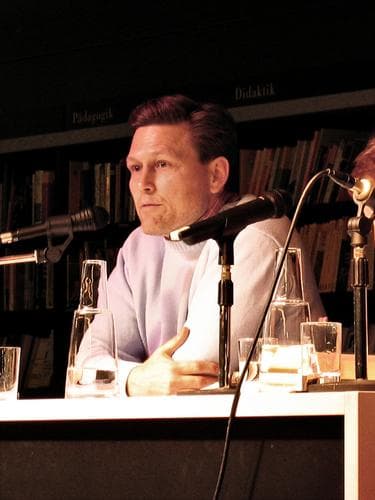
David Baldacci is a globally best-selling author known for his gripping thrillers. His prolific career includes numerous New York Times bestsellers such as 'The Escape,' 'Memory Man,' and 'Wish You Well.' Baldacci masterfully blends suspense, intricate plots, and compelling characters, making him a prominent figure in the fiction genre.
Similar books
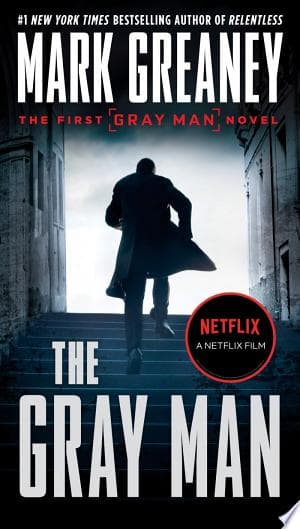
- The Gray Man
Mark Greaney
4.2 (52k) average on GoodreadsFictionFeatures a highly skilled, rogue operative hunted by his own people.
- Gone Girl
Gillian Flynn
4.1 (2.3M) average on GoodreadsThrillerInvolves a complex mystery and a web of deception that keeps you guessing.
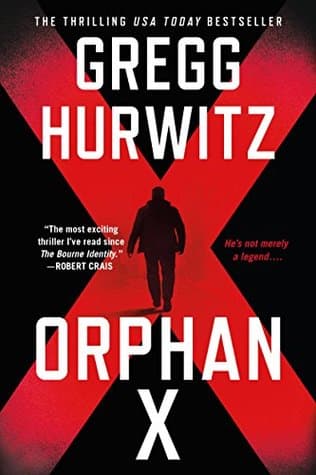
- Orphan X
Gregg Hurwitz
4.1 (34k) average on GoodreadsThrillerShowcases a protagonist with a lethal skillset who uses it to help those in need.
- The Pillars of the Earth
Ken Follett
4.3 (649k) average on GoodreadsFantasyFollett's work is a benchmark for historical fiction, meticulously integrating the socio-political, architectural, and religious details of 12th-century England into a sprawling, character-driven narrative. 'The Innocent' likely lacks this deep historical immersion, using history more as a backdrop for a thriller rather than the essence of the story, as Follett masterfully does.
- Outlander
Diana Gabaldon
4.2 (824k) average on GoodreadsFantasyGabaldon's series expertly blends historical fiction with a passionate, complex romance and elements of adventure. Her characters are deeply developed, and the historical period is richly detailed. 'The Innocent' likely presents a more conventional and less nuanced romance, and potentially a less robust historical framework, prioritizing plot over the intricate character and historical depth found in 'Outlander'.
- The Da Vinci Code
Dan Brown
3.9 (1.9M) average on GoodreadsThrillerBrown's novel, while a thriller, cleverly integrates historical and art historical elements as central to its mystery and plot. While 'The Innocent' also features a 'revelation' and 'mastermind,' Baldacci's historical details might be less intricately woven into the core mystery, potentially serving more as a setting than as key puzzle pieces, unlike Brown's approach.




Enjoyed the summary?
A summary gives you the shape of the book. The book itself has the detail, the examples and the voice.
Find The Innocent on AmazonAs an Amazon Associate, BookBrief earns from qualifying purchases. How we're funded