
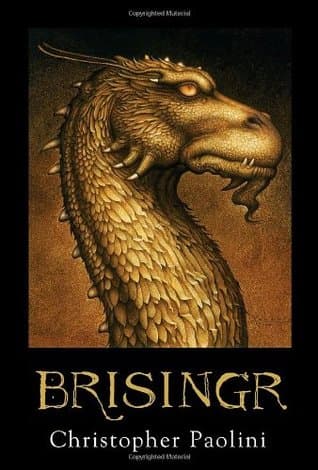
Synopsis
Covers the whole plot, including the ending.
- Difficulty
- Medium
- Pacing
- Moderate
- Mood
- Epic, Adventurous, Heroic, Melancholy
- Read it if
- You enjoy epic fantasy with dragons, magic, and a clear good-versus-evil narrative, and are already invested in the 'Inheritance Cycle' series.
- Skip it if
- You prefer standalone novels, dislike lengthy fantasy series, or are looking for a fast-paced plot without extensive world-building and character development.
Brisingr Plot Summary
Covers the whole plot, including the ending.
The Rescue of Katrina
After the Battle of the Burning Plains, Eragon, Saphira, and Roran travel to Helgrind, the dark mountain stronghold of the Ra'zac, to rescue Roran's beloved, Katrina. Eragon uses his magic to scout the area and create a diversion. Roran, driven by desperate love, charges into the lair. They find Katrina, alive but deeply shaken, and also find Sloan, Katrina's father, imprisoned there. Sloan, who betrayed Carvahall, is blinded by Eragon as punishment, fulfilling a prophecy. The rescue succeeds, but the emotional cost is high, especially for Katrina and Sloan, whose fates remain tied to Eragon's choices.
Sloan's Judgment and the Varden's March
After rescuing Katrina and Sloan, Eragon faces a dilemma about Sloan's fate. Bound by his promise to Katrina not to kill her father, and by his own moral compass, Eragon decides to send Sloan to Du Weldenvarden, the elves' forest, under their care. There, Sloan will be unable to harm anyone and may find repentance. Eragon places a magical geis on Sloan to ensure his compliance. Rejoining the Varden, Eragon and Saphira find the rebel forces preparing to march on the Empire's strongholds, with Nasuada now leading as the new leader, following Ajihad's death.
The Dwarf Succession Crisis
Eragon and Saphira are called to Farthen Dûr to attend the funeral of King Hrothgar, killed by Murtagh and Thorn. This causes a succession crisis among the dwarf clans, as no clear heir is established. Eragon, as an honorary member of the Dûrgrimst Ingeitum clan, is expected to participate in the selection process. He survives several assassination attempts from the Az Sweldn rak Anhûbin clan, who are secretly allied with Galbatorix. This period is filled with political maneuvering and suspicion, showing the fragile unity of the Varden's allies.
Orik Becomes King
During the dwarf succession trials, Eragon uses his influence and status as a Dragon Rider to support Orik, his friend and former guide, for the throne. Eragon's magic and Saphira's presence are key in swaying undecided clans. After a series of challenges and debates, Orik is elected King of the dwarves. This outcome strengthens the dwarves' allegiance to the Varden and provides stable leadership for their contribution to the war against Galbatorix, ensuring continued support and resources.
Travel to Ellesméra and the Eldunarí
After the dwarf succession, Eragon and Saphira return to Ellesméra, the elves' capital, to continue their training with Oromis and Glaedr. During this time, Eragon learns more advanced magic and sword fighting. A significant moment occurs when Glaedr reveals the existence of the Eldunarí, the Dragon Hearts of Hearts, which allow dragons to live on after their physical bodies die. Glaedr, sensing his own coming death, entrusts his Eldunarí to Eragon, giving him immense power and knowledge, and offering a direct connection to his wisdom even after his body dies.
Oromis and Glaedr's Last Stand
While Eragon and Saphira are in Ellesméra, Murtagh and Thorn launch a surprise attack on the elves. Oromis and Glaedr engage them in a desperate battle. Despite their experience, the combined power of Murtagh, enhanced by Galbatorix's dark magic, and the formidable Thorn proves too great. Oromis is killed, and Glaedr's physical body is slain, though his Eldunarí survives with Eragon. This devastating loss deeply affects Eragon. It reminds him of Galbatorix's power and the personal cost of the war, further fueling his determination.
The Word of Power
Following Oromis's death, Eragon is consumed by grief and feels inadequate. He struggles with the weight of his responsibilities and Galbatorix's immense power. Driven by a desperate need for an advantage, Eragon explores the deepest mysteries of magic. Through thought and the guidance of Glaedr's Eldunarí, he finally discovers the true name of the Ancient Language itself—a single, all-encompassing word that grants ultimate control over magic. This discovery is a monumental turning point, giving Eragon unprecedented power, though he fears its potential for misuse.
The Battle of Feinster
Eragon and Saphira rejoin the Varden, who are besieging the city of Feinster. During the fierce battle, a powerful sorceress named Trianna accidentally summons a Shade, a terrifying spirit of dark magic. The Shade, named Varaug, causes chaos among the Varden's forces. Eragon, using his newly discovered Word of Power, confronts Varaug. With great effort and a deep understanding of magic, he defeats the Shade. This shows the incredible potential and danger of his new knowledge. This victory boosts Varden morale but also reveals the destructive capabilities of dark magic.
Roran's Leadership and Sacrifice
Throughout the Varden's campaign, Roran continues to prove himself as a formidable warrior and a natural leader. He leads his group of Carvahall villagers and other Varden soldiers in many skirmishes and sieges, including the Battle of Feinster. Roran consistently puts his men's safety first, earning their unwavering loyalty. His strong determination and willingness to make personal sacrifices for the greater good and for Katrina's memory show his growth from a simple farmer to a key figure in the rebellion. He often fights with a hammer as his signature weapon.
The Dragon Eggs and the Future
Towards the end of the book, Eragon and Saphira learn from Glaedr's Eldunarí about more dragon eggs hidden by Galbatorix. This discovery is a strong sign of hope for Alagaësia's future and the potential rebirth of the Dragon Riders. The existence of these eggs means the Riders are not truly extinct, and a new generation could be trained to restore balance to the land. This knowledge invigorates Eragon and Saphira, giving them a renewed sense of purpose in their fight against Galbatorix and a vision for a world beyond the war.
Principal Figures
Eragon
Protagonist
A young Dragon Rider destined to overthrow Galbatorix.
Eragon is a farm boy who became a Dragon Rider, bonded with Saphira. He is earnest, compassionate, and deeply committed to justice, but also struggles with the immense responsibility placed upon him. He grapples with guilt over his past actions and the sacrifices required by the war. His primary motivations are protecting his loved ones, avenging those wronged by the Empire, and restoring freedom to Alagaësia. He often doubts his own strength and wisdom, despite his growing power.
Relationships: Saphira (Dragon companion, telepathic bond, sister-like); Roran (Cousin, close bond, often seeks his approval); Arya (Elf warrior, unrequited love, mentor/student dynamic); Oromis (Elf mentor, teacher of magic and swordplay); Glaedr (Dragon mentor, source of ancient wisdom); Nasuada (Varden leader, ally, friend, sometimes a source of conflict)
Saphira Bjartskular
Protagonist
Eragon's loyal, fierce, and wise dragon companion.
Saphira is Eragon's dragon, bonded to him since hatching. She is fiercely loyal, protective, and possesses a sharp wit and deep wisdom. Her motivations are intertwined with Eragon's: to protect him, to restore the Riders, and to defeat Galbatorix. She often acts as Eragon's conscience and confidante, offering guidance and perspective. Her connection to Eragon is telepathic and deeply emotional, forming the core of their shared identity as Dragon Rider and dragon.
Relationships: Eragon (Dragon Rider, telepathic bond, brother-like); Glaedr (Mentor, elder dragon, source of wisdom); Arya (Respectful ally, fellow warrior)
Roran Garrowsson
Supporting
Eragon's cousin, a determined warrior seeking to protect his family.
Roran is Eragon's older cousin, a strong and stubborn farmer driven by an unyielding love for Katrina and a deep sense of loyalty to his people. He is courageous and resourceful, often relying on brute strength and strategic thinking rather than magic. His primary motivation is to protect Katrina and ensure the safety of Carvahall. He struggles with Eragon's magical abilities, sometimes feeling overshadowed, but ultimately respects his cousin's path. He becomes a respected leader within the Varden's ranks.
Relationships: Eragon (Cousin, close bond, sometimes competitive); Katrina (Fiancée, deep love, unwavering devotion); Sloan (Father-in-law, complex hatred and pity)
Katrina
Supporting
Roran's fiancée, rescued from the Ra'zac, deeply traumatized.
Katrina is Roran's fiancée, a kind and gentle woman from Carvahall. She is deeply in love with Roran and longs for a peaceful life. Her abduction by the Ra'zac leaves her severely traumatized, both physically and psychologically. Her primary motivation is to be reunited with Roran and escape the horrors she endured. She is a symbol of the innocent lives caught in Galbatorix's tyranny and her suffering highlights the personal cost of the war.
Relationships: Roran (Fiancée, deep love, source of strength); Sloan (Father, complicated relationship due to his betrayal and imprisonment)
Oromis
Supporting
An ancient elven Rider and Eragon's mentor in magic and swordplay.
Oromis is an ancient elven Dragon Rider, the last living Rider besides Eragon and Murtagh, and Glaedr's Rider. He serves as Eragon's primary mentor in Ellesméra, teaching him advanced magic, sword fighting, and the philosophy of the Riders. He carries the physical and emotional scars of his past torture by Galbatorix, which limits his magical abilities and causes him great pain. His motivations are to prepare Eragon to defeat Galbatorix and to restore the glory of the Riders.
Relationships: Eragon (Student, mentee, close bond); Glaedr (Dragon companion, deep bond, shared history); Arya (Fellow elf, respected elder)
Glaedr
Supporting
An ancient golden dragon, Oromis's dragon, and Eragon's mentor.
Glaedr is an ancient golden dragon, Oromis's Dragon, and a profound source of wisdom and knowledge. He is one of the last free dragons and takes on the role of Saphira's mentor, and by extension, Eragon's. He is wise, patient, and deeply understanding, but also bears the weight of centuries of loss and the impending doom of his own physical body. His motivations are to ensure the survival of the dragon race and to guide Eragon and Saphira to victory against Galbatorix. He gives Eragon his Eldunarí.
Relationships: Oromis (Dragon Rider, deep bond, shared history); Saphira (Student, mentee, fellow dragon); Eragon (Student, mentee, imparts wisdom through Eldunarí)
Murtagh
Antagonist
Eragon's half-brother, forced into service by Galbatorix, a tragic figure.
Murtagh is Eragon's half-brother and a Dragon Rider, bonded with the red dragon Thorn. He is a tragic figure, forced to serve Galbatorix due to an unbreakable oath and dark magic. Despite his forced allegiance, hints of his former morality and internal conflict surface. He is powerful, skilled in magic and swordplay, and deeply resentful of his fate. His motivations are complex, driven by self-preservation, a twisted sense of loyalty to Galbatorix (due to his oath), and a lingering desire for freedom.
Relationships: Eragon (Half-brother, rival, complex relationship of familial bond and antagonism); Thorn (Dragon companion, loyal bond, also enslaved); Galbatorix (Enslaving master, source of fear and forced loyalty)
Nasuada
Supporting
Leader of the Varden, a strong and determined strategist.
Nasuada is the daughter of Ajihad and the new leader of the Varden. She is a strong, intelligent, and determined woman, capable of making difficult decisions for the rebellion. She is deeply committed to defeating Galbatorix and establishing a free Alagaësia. Her motivations are justice, freedom, and the welfare of her people. She relies on Eragon and Saphira but also asserts her own authority, sometimes creating tension with Eragon over strategic choices.
Relationships: Eragon (Ally, Dragon Rider, valued resource, friend); Orik (Ally, King of the Dwarves, strategic partner); Arya (Close advisor, trusted ally)
Orik
Supporting
A loyal dwarf, Eragon's friend, and eventually King of the Dwarves.
Orik is a kind, honorable, and loyal dwarf, a member of the Dûrgrimst Ingeitum clan. He serves as Eragon's friend and guide within the dwarven society. He is brave, skilled in battle, and deeply devoted to his clan and the Varden's cause. His primary motivation is to protect his people and ensure the dwarves' continued participation in the war against Galbatorix. He eventually becomes King of the Dwarves, a position he takes seriously, working to unite the clans.
Relationships: Eragon (Friend, ally, Dragon Rider); Nasuada (Ally, Varden leader, strategic partner)
Arya Dröttningu
Supporting
An elven princess, skilled warrior, and ambassador.
Arya is an elven princess, a skilled warrior, and a powerful spellcaster. She serves as an ambassador between the elves and the Varden, and is a trusted ally to Eragon. She is stoic, disciplined, and fiercely dedicated to the cause of freedom. Her primary motivations are to defeat Galbatorix and protect her people. She maintains a formal demeanor, often keeping her emotions guarded, especially regarding Eragon's affections for her.
Relationships: Eragon (Ally, fellow warrior, object of his affection, respectful friend); Nasuada (Close advisor, trusted ally); Oromis (Fellow elf, respected elder)
Themes & Insights
The Weight of Oaths and Promises
Throughout 'Brisingr', characters are bound by oaths, both willingly made and forced, which heavily shape their actions and moral dilemmas. Eragon's promise to Roran to rescue Katrina, his oath to Sloan, and his deeper loyalty to the Varden and freedom constantly conflict. Murtagh's unbreakable oath to Galbatorix shows the tragic results of such bonds. The story explores how these commitments, even with good intentions, can lead to unforeseen sacrifices and moral compromises, forcing characters to choose between conflicting loyalties. This is clear in Eragon's decision about Sloan's fate, where he must balance his promise to Katrina against the justice Sloan deserves.
“An oath is not a promise, Eragon, it is a statement of intent. It is a vow that you will do what you say, come hell or high water. And once spoken, it cannot be broken. Not by magic, not by strength, not by anything.”
The Nature of Power and Responsibility
The theme of power and its responsibility is central to Eragon's journey. As he gains immense magical abilities, especially with the discovery of the True Name of the Ancient Language, he grapples with the potential for misuse. The novel contrasts Eragon's ethical approach to power with Galbatorix's tyrannical abuse and Murtagh's forced subjugation. Eragon's internal struggles, such as his fear of becoming like Galbatorix, highlight the moral burden of his strength. The Eldunarí and Oromis's teachings emphasize that true power is not just magical might, but also wisdom, restraint, and the courage to make difficult, selfless choices, as seen when Eragon uses his power to defeat the Shade Varaug, but not to dominate.
“Power is a dangerous thing. It can corrupt the best of men, and it can save the worst. The trick is to use it wisely, Eragon, and never to let it master you.”
Loss, Grief, and Resilience
Loss and grief are common themes, deeply affecting the characters and fueling their resolve. King Hrothgar's death, Oromis and Glaedr's brutal demise, and Katrina's trauma all show the heavy cost of the war. Eragon's deep sorrow over Oromis's death drives him to seek greater power, leading to the discovery of the True Name. Characters like Roran, who has lost his father and nearly Katrina, channel their grief into fierce determination. The story explores how individuals cope with devastating losses, finding strength and resilience in their shared purpose and in their commitment to a better future, often turning personal sorrow into a catalyst for action.
“Grief is the price we pay for love, and love is worth a thousand times the price.”
Leadership and Sacrifice
The novel explores various forms of leadership and the sacrifices they require. Nasuada's leadership of the Varden demands difficult strategic decisions and personal risks. Orik's rise to King of the Dwarves requires diplomacy and uniting different clans. Roran, through his loyalty and courage, emerges as a natural leader among the villagers, inspiring his men through sheer will and personal example. Eragon, as the destined hero, faces the ultimate sacrifice of personal desires for the greater good. The story emphasizes that effective leadership often means putting the needs of many above personal comfort or safety, exemplified by Oromis and Glaedr's final stand.
“The greatest leaders are not those who have the most power, but those who are willing to sacrifice the most for the sake of others.”
The Cycle of Violence and Hope for Renewal
The war against Galbatorix creates a cycle of violence, loss, and suffering. However, 'Brisingr' also introduces elements of hope for breaking this cycle. The discovery of the hidden dragon eggs is a strong symbol of renewal, offering the possibility of rebuilding the Dragon Riders and restoring balance to Alagaësia. Eragon's ethical use of his power and his commitment to justice, in contrast to Galbatorix's tyranny, suggest a path towards a more peaceful future. The story hints that while the current conflict is brutal, the potential for a new era of peace and prosperity, guided by wise leadership and the return of the dragons, remains a driving force for the rebellion.
“Though the night is dark, the dawn will surely come.”
Plot Devices & Literary Techniques
The True Name of the Ancient Language
A magical word granting ultimate control over magic.
This is a pivotal plot device. The True Name of the Ancient Language is a single, all-encompassing word that, when known, grants its speaker absolute control over all magic and the ability to manipulate reality itself. Its discovery by Eragon represents a monumental increase in his power, potentially making him equal to or even surpassing Galbatorix. It functions as a classic 'ultimate weapon' or 'cheat code' within the magic system, but its immense power also comes with profound moral responsibility, forcing Eragon to consider the ethical implications of its use and the temptation to abuse it, adding a layer of internal conflict.
Eldunarí (Hearts of Hearts)
Crystals containing a dragon's consciousness after death.
Eldunarí are crystallized organs found within some dragons that contain their consciousness and accumulated knowledge, allowing them to survive and communicate after their physical body dies. Glaedr's Eldunarí, given to Eragon, serves as a continuous source of ancient wisdom, magical power, and a direct link to a deceased dragon's mind. This device provides Eragon and Saphira with invaluable guidance, foresight, and a significant power boost, effectively giving them a mentor who is always present. It also introduces the concept of eternal life for dragons and a path to potentially rebuilding the Dragon Riders, offering hope for the future.
The Geis (Magical Compulsion)
A magical oath or compulsion placed upon a person.
A geis is a magical compulsion or oath, often unbreakable, that forces an individual to perform or refrain from certain actions. Eragon places a geis on Sloan, compelling him to travel to Ellesméra and preventing him from harming others or revealing certain information. This device resolves the immediate problem of Sloan's fate, fulfilling Eragon's oath to Katrina while also delivering a form of justice. It highlights the power and ethical complexities of such magic, as it removes an individual's free will, even if for what is perceived as a greater good or a just punishment.
Prophecies and Omens
Foreshadowing events and guiding character actions.
Prophecies and omens, often vague and open to interpretation, guide and influence the characters' understanding of their destiny and the unfolding war. The fulfillment of the prophecy regarding Sloan's blindness, foreseen by Angela, is a key example. These devices create a sense of predetermined fate while still allowing for character agency. They add mystery and anticipation to the narrative, hinting at future events and reinforcing the epic scope of the story, often serving to validate Eragon's path or provide crucial, if cryptic, direction.
The Sword Brisingr
Eragon's magically forged sword that bursts into flame.
Forged by Rhunön for Eragon, the sword Brisingr is unique because it bursts into flames whenever Eragon utters its name in the Ancient Language. This device is not just a weapon but a symbol of Eragon's identity and growing mastery of magic. It provides a visual and literal representation of his power, particularly his affinity for fire magic. Its creation by an elf who swore never to make another Rider's sword underscores the special circumstances of Eragon's role and the urgency of the war, making it a powerful personal and symbolic artifact.
Brisingr Quotes
“Live in the present, remember the past, and fear not the future, for it doesn't exist and never will. There is only now.”
“The greatest enemy is one's own doubt.”
“It is far better to be a hammer than an anvil.”
“Words are like a dragon's breath: they can create or destroy.”
“A true leader does not seek power, but is sought by it, and then accepts it as a duty.”
“To forget the dead is to die a second time.”
“Brisingr!”
“The past cannot be changed, but the future is still in your power.”
“Love is a choice, not a feeling.”
“You cannot truly appreciate the light until you have known the darkness.”
“Strength is not just in the muscles, but in the will.”
“There are no easy answers, only difficult choices.”
“Sometimes the greatest victories are not won on the battlefield, but in the heart.”
“The world is not always as it seems, Eragon. Look deeper.”
Quiz
10 questions on the plot and the characters. Each answer comes with a short explanation.
Question 1
What is the primary oath Eragon feels compelled to fulfill for his cousin Roran at the beginning of 'Brisingr'?
- To help Roran become a Dragon Rider.
- To help rescue Roran's beloved, Katrina, from King Galbatorix's clutches.
- To assist Roran in leading the villagers of Carvahall.
- To teach Roran the ancient language.
Show answer
B. To help rescue Roran's beloved, Katrina, from King Galbatorix's clutches. One of Eragon's most pressing promises is to help Roran retrieve Katrina, who was captured by the Ra'zac and is being held by King Galbatorix.
Question 2
What significant weapon does Eragon forge with the help of Rhunön, the elven smith, in 'Brisingr'?
- A new bow for Arya.
- A powerful shield for the Varden.
- His new sword, Brisingr.
- A set of armor for Saphira.
Show answer
C. His new sword, Brisingr. Eragon travels to Du Weldenvarden to have a new sword forged by Rhunön, which he names Brisingr, meaning 'fire' in the ancient language.
Question 3
Which dwarf clan leader does Eragon help to secure his position as king of the dwarves in 'Brisingr'?
- Hrothgar
- Orik
- Thorn
- Vermund
Show answer
B. Orik Eragon pledges his support to Orik during the dwarf clanmeet, helping him to become the new king of the dwarves.
Question 4
What critical knowledge does Eragon gain about the true name of the ancient language in 'Brisingr'?
- That it can only be spoken by Dragon Riders.
- That its true name is a single, unpronounceable sound.
- That its true name is a concept, not a word, and cannot be spoken.
- That its true name is 'Alagaësia'.
Show answer
C. That its true name is a concept, not a word, and cannot be spoken. Eragon learns from Oromis that the true name of the ancient language is not a word but an underlying concept that cannot be uttered, granting immense power to those who understand it.
Question 5
What is the name of the monstrous creature that holds Katrina captive and is ultimately defeated by Eragon and Roran?
- The Urgals
- The Ra'zac
- The Lethrblaka
- The Shade Durza
Show answer
. While Katrina was captured by the Ra'zac, she is held in Helgrind, and Eragon and Roran confront the last of the Ra'zac and their Lethrblaka mounts.
Question 6
What pivotal role does Saphira play in the dwarf succession crisis in 'Brisingr'?
- She helps Eragon negotiate with the dwarf clans.
- She performs a ritual to bless Orik's kingship.
- She intimidates rival dwarf leaders into submission.
- She discovers evidence of a plot against Orik.
Show answer
B. She performs a ritual to bless Orik's kingship. Saphira, as a dragon, performs the ritual of the 'Blood-oath Celebration' for Orik, which legitimizes his claim to the throne in the eyes of the dwarves.
Question 7
What is the primary reason behind Eragon's constant internal struggle regarding his loyalties in 'Brisingr'?
- He wants to leave Alagaësia and live a simple life.
- He is torn between his personal promises (like to Roran) and his duties to the Varden, elves, and dwarves.
- He is unsure if he should join Galbatorix.
- He is trying to decide whether to pursue Arya or Nasuada.
Show answer
B. He is torn between his personal promises (like to Roran) and his duties to the Varden, elves, and dwarves. The book explicitly states, 'Eragon finds himself bound by a tangle of promises he may not be able to keep,' highlighting his struggle between personal allegiances and the greater war effort.
Question 8
Which critical piece of ancient Rider history does Eragon uncover regarding the Eldunarí (dragon heart of hearts) in 'Brisingr'?
- That all Eldunarí are inherently evil.
- That the Eldunarí can transfer a dragon's consciousness and power even after the dragon's physical death.
- That Eldunarí are only found within wild dragons, not Rider dragons.
- That Galbatorix destroyed all Eldunarí except for his own.
Show answer
B. That the Eldunarí can transfer a dragon's consciousness and power even after the dragon's physical death. Oromis and Glaedr reveal to Eragon the existence and true nature of the Eldunarí, explaining how dragons can live on after death and share their power through them.
Question 9
What is the ultimate fate of Glaedr's physical body during the events of 'Brisingr'?
- He survives the war and lives peacefully with Oromis.
- He is killed in battle by Galbatorix, but his Eldunarí remains intact.
- He is captured by the Empire and forced to serve Galbatorix.
- He retreats to a hidden lair and is not seen again.
Show answer
B. He is killed in battle by Galbatorix, but his Eldunarí remains intact. During a battle, Glaedr's physical body is killed by Galbatorix and Murtagh, but his Eldunarí had been given to Eragon, preserving his consciousness and power.
Question 10
What moral dilemma does Eragon face regarding the use of magic and the ancient language in 'Brisingr'?
- Whether to use magic for personal gain or for the greater good.
- The ethical implications of controlling the minds of others with the ancient language.
- If he should teach the ancient language to non-magic users.
- If magic should be used to heal or only to harm.
Show answer
B. The ethical implications of controlling the minds of others with the ancient language. Eragon grapples with the power of the ancient language, particularly the ability to compel others, and the moral boundaries of using such power, exemplified in situations where he could force people to act against their will.
Brisingr FAQ
What is the primary quest Eragon undertakes at the beginning of 'Brisingr' related to his family?
Eragon's initial and most pressing quest is to fulfill his oath to his cousin, Roran, by helping him rescue Katrina from Helgrind, the lair of the Ra'zac. This mission takes precedence for Roran, and Eragon feels honor-bound to assist, despite the Varden's immediate needs.
What significant magical artifact does Eragon acquire and learn to use in 'Brisingr'?
Eragon acquires and learns to wield a new Rider's sword, also named Brisingr, which he forges himself with the help of Rhunön, the elven sword-smith. This sword is unique because it bursts into flames whenever Eragon utters its name, reflecting his growing power and connection to fire magic.
How do the dwarves play a role in the Varden's war efforts and Eragon's journey in this book?
The dwarves, under King Orik, become crucial allies to the Varden, providing military support and strategic locations. Eragon also travels to the dwarf capital, Tronjheim, to witness Orik's coronation, solidifying the alliance and gaining the dwarves' full commitment to the war against Galbatorix.
What major political event occurs among the elves that directly impacts Eragon?
Eragon travels to Ellesméra to continue his training and ends up meeting Oromis and Glaedr again. During his time there, he learns more about the ancient pacts and the true nature of magic, deepening his understanding of the elves' long-standing conflict with Galbatorix and their hopes for the future.
What is the significance of the Eldunarí revealed in 'Brisingr'?
The Eldunarí are revealed to be the hearts of dragons, allowing a dragon's consciousness to survive even after its physical body dies. Eragon and Saphira discover a cache of these from fallen Riders and dragons, providing a powerful new source of wisdom and magical energy that could turn the tide of the war.
How does the forging of Brisingr (the sword) reveal deeper aspects of Eragon's heritage or destiny?
The forging of the sword 'Brisingr' by Eragon's own hand, guided by Rhunön, symbolizes his coming of age as a true Dragon Rider and his unique connection to ancient magic. Rhunön's initial refusal to forge a sword for a Rider, only to relent for Eragon, hints at his extraordinary destiny and potential to surpass previous Riders.
What is the true nature of the bond between Eragon and Saphira as explored in this book, particularly regarding their shared pain?
The book delves deeper into the profound mental and emotional bond between Eragon and Saphira. They experience each other's physical pain and emotional turmoil, a connection that is both a source of strength and vulnerability, highlighting the unique symbiosis between a Rider and their dragon, especially when Saphira is injured.
What is the deeper implication of Eragon's injury to his back and its magical remediation by the elves?
Eragon's back injury, sustained in the first book, is magically healed by the elves in 'Brisingr', but the process leaves him with an elven-like strength and agility, subtly altering his human physiology. This transformation hints at the blurring lines between races and his unique role as a bridge between them.
How does Eragon's internal conflict regarding his loyalties to Roran vs. the Varden evolve and challenge his sense of self?
Eragon grapples intensely with the competing demands of his personal oath to Roran and his duty as a Dragon Rider to the Varden. This conflict forces him to confront the weight of his responsibilities and makes him question whether he can truly serve both, revealing his struggle to balance personal bonds with the greater good.
Analyze the psychological impact of Eragon's discovery of the Eldunarí on his perception of power and mortality.
The revelation of the Eldunarí profoundly shifts Eragon's understanding of power, mortality, and the legacy of the Riders. He realizes that true power can exist beyond physical form and that the wisdom of past dragons can endure, giving him both a sense of hope and the immense burden of inheriting such ancient knowledge.
How does Roran's unwavering determination to rescue Katrina, even to the point of defying orders, reflect his core psychological traits?
Roran's relentless pursuit of Katrina, despite the dangers and military strategy, showcases his fierce loyalty, stubborn resolve, and deep love. His actions highlight a 'common man's' unwavering dedication to personal justice, contrasting with Eragon's more expansive, world-saving responsibilities, but both driven by strong moral compasses.
What psychological toll does Arya's role as a leader and warrior take on her, and how does Eragon perceive this?
Arya carries immense responsibility and the weight of her people's survival, often appearing stoic and guarded. Eragon perceives her as strong and enigmatic, but also recognizes her internal burdens, which adds layers to his admiration and complicated feelings for her, understanding the sacrifices she makes.
Does Eragon's growing power make him more like Galbatorix, or does his journey reinforce his differentiation from the king?
While Eragon gains immense power and knowledge, his journey in 'Brisingr' consistently reinforces his differentiation from Galbatorix. Eragon's choices are driven by empathy, loyalty, and a desire to protect, contrasting with Galbatorix's tyrannical control and pursuit of power for its own sake, solidifying Eragon as a force for good.
Is the ultimate success of the Varden's rebellion inevitable, or are there moments in 'Brisingr' that suggest a more precarious outcome?
The success of the rebellion is far from inevitable in 'Brisingr'; the Varden face numerous setbacks, fierce Imperial resistance, and internal strife, such as unrest among the dwarves. The book emphasizes the immense sacrifices and the narrow escapes, highlighting the precarious balance and the very real possibility of failure if not for key interventions.
How does the theme of oaths and promises, particularly Eragon's multiple commitments, drive the narrative and foreshadow future conflicts?
The theme of oaths is central, with Eragon's promises to Roran, the Varden, and even himself creating a tangled web of obligations. This drives much of the narrative's tension, forcing difficult choices and foreshadowing future conflicts where his loyalties will be tested even further, potentially leading to tragic consequences or profound sacrifices.
What is the thematic significance of the Ra'zac's defeat at Helgrind, beyond just rescuing Katrina?
The defeat of the Ra'zac at Helgrind is thematically significant as it represents Eragon overcoming one of his oldest and most personal fears, tied to the murder of his uncle, Garrow. It symbolizes his growth from a hunted farm boy to a powerful Rider capable of confronting and vanquishing his childhood nightmares, while also avenging his family.
How does the narrative challenge the traditional fantasy trope of a 'chosen one' through Eragon's struggles and doubts?
While Eragon is a 'chosen one,' the narrative consistently challenges this trope by highlighting his doubts, mistakes, and the immense personal cost of his role. He frequently questions his abilities and decisions, demonstrating that destiny is not a clear path but one fraught with personal and moral struggles, making his heroism earned rather than inherent.
What is the broader political message conveyed by the alliance of elves, dwarves, and humans against Galbatorix?
The alliance of elves, dwarves, and humans against Galbatorix conveys a powerful political message about unity in the face of tyranny. It suggests that despite historical rivalries and cultural differences, common oppression can forge strong bonds, and that collective strength and cooperation across diverse peoples are essential to overthrowing oppressive regimes.
About the author
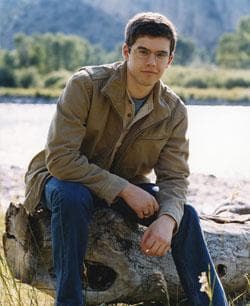
Christopher Paolini is the bestselling author of The Inheritance Cycle, a fantasy series that began with Eragon. Published when he was just 19, the series has sold over 40 million copies worldwide and was adapted into a major motion picture. Paolini's intricate world-building and epic storytelling have captivated millions of readers globally.
Similar books
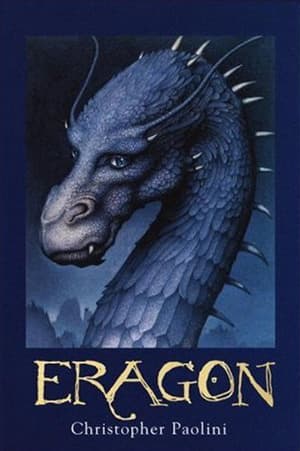
- Eragon
Christopher Paolini
3.9 (1.4M) average on GoodreadsFantasyIt's the preceding book in the same series, sharing characters, world, and themes.
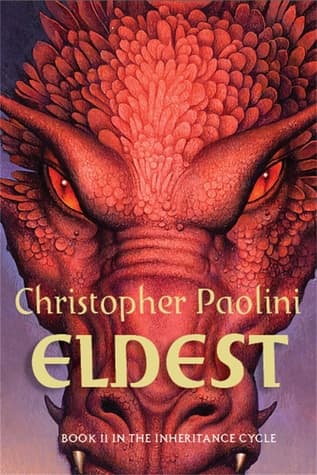
- Eldest
Christopher Paolini
4.0 (355k) average on GoodreadsFantasyIt's the preceding book in the same series, sharing characters, world, and themes.
- A Wizard of Earthsea
Ursula K. Le Guin
4.0 (241k) average on GoodreadsFantasyFeatures a young magic-user's journey, training, and confrontation with a dark power.
- The Hunger Games
Suzanne Collins
4.3 (6.4M) average on GoodreadsFantasyCompared to The Hunger Games, Brisingr suffers from a less relentless pace. Collins's trilogy maintains a constant sense of urgency and direct conflict, keeping the reader on edge. Brisingr, while having moments of high tension, often diverts into political subplots and world-building that, while rich, can slow the primary narrative momentum. This makes The Hunger Games feel more focused and immediate in its storytelling.
- Harry Potter and the Sorcerer's Stone
J.K. Rowling
4.5 (7M) average on GoodreadsFantasyRescued from a miserable life under the stairs, an orphaned boy discovers he's a wizard destined for a magical school, where he uncovers a dangerous secret tied to the dark wizard who murdered his parents.
- 1984
George Orwell
4.2 (3.1M) average on GoodreadsPoliticsIn a future where surveillance and thought control are absolute, a man's search for truth clashes with the Party, showing that hope can be a form of rebellion.




Enjoyed the summary?
A summary gives you the shape of the book. The book itself has the detail, the examples and the voice.
Find Brisingr on AmazonAs an Amazon Associate, BookBrief earns from qualifying purchases. How we're funded