

Synopsis
Covers the whole plot, including the ending.
- Difficulty
- Easy
- Pacing
- Moderate
- Mood
- Atmospheric, Melancholy, Romantic, Suspenseful
- Read it if
- You enjoy gothic romance with a supernatural twist, historical settings, and a tragic love story.
- Skip it if
- You prefer fast-paced action over character development, or are not a fan of tragic endings.
Camille Plot Summary
Covers the whole plot, including the ending.
A Moonlit Hunt and a Mysterious Stranger
Sixteen-year-old Camille Kennecott and her guardian, Dr. Bennett, are hunting a werewolf in the English countryside during a full moon. Their unusual life involves studying and hunting these creatures. During their hunt, a young man, Nathaniel Strider, accidentally comes into their path and sees the transformed beast. He is bitten by the werewolf, but he doesn't transform right away. Intrigued by this resistance and the chance for scientific study, Dr. Bennett decides to bring Nathaniel back to their estate, hoping to find a cure for lycanthropy, instead of killing him as they usually would a transformed creature. Camille, though wary at first, is drawn to Nathaniel's handsome looks and mysterious manner.
Nathaniel's Captivity and the Seeds of Affection
Nathaniel is brought to Dr. Bennett's estate and kept in a room for observation. Dr. Bennett, a renowned but eccentric scientist, starts a series of experiments, trying to understand and fight the lycanthropic infection. Camille helps her guardian, but she feels increasingly conflicted by Nathaniel's presence. She brings him food, books, and talks with him, slowly learning about his life as a cartographer and artist. Despite being a captive and the threat of transformation, Nathaniel remains calm and charming. A cautious attraction begins between Camille and Nathaniel, complicated by their unusual situation and the danger he poses.
Growing Connection Amidst Failed Experiments
Days pass, and Dr. Bennett's remedies and observations do not yield a cure or an explanation for Nathaniel's delayed transformation. He tries different mixtures and monitors Nathaniel's health, but the infection continues, subtly changing Nathaniel. During this time, Camille spends more and more time with Nathaniel, reading to him, sketching with him, and sharing stories. Their conversations show a shared love for art and nature, and their initial cautious attraction grows into real affection. Camille starts to question the rightness of their mission, struggling with the idea of destroying someone she cares for, even if he might become a monster.
The First Transformation and Its Aftermath
As the next full moon nears, Nathaniel's condition worsens. He feels intense pain and fever, and his temper becomes more unstable. Despite Dr. Bennett's efforts to prevent it, Nathaniel fully transforms into a werewolf during the full moon. The beast is terrifying and violent, a stark contrast to the gentle man Camille has come to love. Dr. Bennett and Camille must subdue him, seeing the destructive power of lycanthropy. The transformation confirms their fears but also strengthens Camille's resolve to find a cure, even as the emotional cost of seeing Nathaniel as a monster weighs on her.
A Glimmer of Hope and a Desperate Search
After Nathaniel's first transformation, Dr. Bennett becomes more desperate, studying ancient texts and obscure folklore, looking for any forgotten remedy or ritual. He believes there might be a non-scientific solution. Meanwhile, Camille struggles with the horror of Nathaniel's transformation but refuses to give up on him. During the daytime, when Nathaniel is human, she tries to connect with him, reminding him of their shared moments and their growing affection, hoping to anchor his humanity against the beast within. She believes that love and emotional connection might be a key, or at least a comfort, in his struggle.
Nathaniel's Growing Awareness and Inner Conflict
As the month goes on, Nathaniel starts to have fragmented, terrifying memories of his transformed state. He remembers flashes of violence and a primal hunger, which fills him with guilt and despair. He becomes withdrawn and fearful of the approaching full moon, knowing the monster he becomes. This growing awareness increases his inner conflict and makes him question his own humanity. He urges Camille to leave him, fearing he will eventually harm her, but her devotion only makes his struggle more difficult, showing the sad irony of their situation.
The Proposal and a Race Against Time
Realizing he cannot escape his fate and the danger he poses, Nathaniel makes a heartbreaking request: he asks Camille to destroy him before the next full moon, while he is still human and can make the choice. He cannot bear the thought of harming her or anyone else he cares for. This proposal shatters Camille, forcing her to face the final result of their mission. Dr. Bennett, however, becomes even more determined, convinced that a specific ancient ritual or ingredient might still work, pushing the timeline to the very limit.
The Final Experiment and a Desperate Plea
On the eve of the next full moon, Dr. Bennett prepares a final experiment based on an old text, involving a rare herb and a complex ritual. The stakes are high, as this is their last chance. Meanwhile, Camille spends her last human hours with Nathaniel. Their conversation is full of sorrow, love, and unspoken goodbyes. She tries one last time to appeal to his human heart, reinforcing their bond and the beauty they found together, hoping that their love might somehow provide an antidote or a shield against the beast, even as she prepares for the difficult decision she might have to make.
A Sacrifice and an Uncertain Future
As the full moon rises, Nathaniel begins his agonizing transformation. Dr. Bennett administers his final concoction, performing the ancient ritual with frantic precision. The scene is chaotic and terrifying. The ritual, however, does not cure Nathaniel as they hoped. Instead, it seems to sacrifice his human consciousness entirely, leaving behind a docile, almost pet-like werewolf, without its former ferocity but also without Nathaniel's intellect and personality. Camille is left heartbroken, mourning the loss of the man she loved, even as his physical form remains. The outcome is a tragic success, saving lives but costing Camille her love and making her rethink her life's purpose and what humanity means.
Principal Figures
Camille Kennecott
Protagonist
Sixteen-year-old orphan, torn between duty and forbidden love.
Camille is a bright, compassionate, and somewhat sheltered sixteen-year-old girl who has been raised by Dr. Bennett to assist him in his dangerous work of hunting and studying werewolves. She is skilled with a crossbow and knowledgeable about lycanthropy, but her heart is more sensitive than her grim profession suggests. Her encounter with Nathaniel Strider challenges her worldview, forcing her to question the black-and-white morality of her life's mission. She grapples with the ethical implications of their experiments and the emotional turmoil of falling in love with a creature she is trained to destroy.
Relationships: Dr. Bennett (Guardian and mentor); Nathaniel Strider (Love interest and tragic subject of study)
Dr. Bennett
Supporting
Camille's eccentric, brilliant, and single-minded guardian and scientist.
Dr. Bennett is Camille's guardian and a brilliant, though unconventional, scientist obsessed with studying and eradicating lycanthropy. He is driven by a desire to find a scientific cure for the affliction, viewing werewolves primarily as specimens for study rather than sentient beings. His dedication to his research often blinds him to the emotional complexities of his actions, especially concerning Camille's growing affection for Nathaniel. He is a man of logic and reason, but his pursuit of knowledge borders on ruthlessness, making him a complex figure who is both a protector and a potential catalyst for tragedy.
Relationships: Camille Kennecott (Ward and assistant); Nathaniel Strider (Subject of scientific study)
Nathaniel Strider
Love Interest/Antagonist (unwilling)
A gentle cartographer turned tragic victim of lycanthropy.
Nathaniel Strider is a kind, artistic, and intelligent young man working as a cartographer and artist when he is tragically bitten by a werewolf. His initial resistance to immediate transformation makes him a unique and valuable subject for Dr. Bennett's research. Despite his captivity and the terrifying changes within him, Nathaniel maintains his dignity and charm, drawing Camille into a forbidden romance. He struggles deeply with the loss of his humanity and the potential to harm others, eventually making the heartbreaking request for Camille to end his life before he fully succumbs to the beast.
Relationships: Camille Kennecott (Love interest); Dr. Bennett (Captor and experimenter)
The Werewolf
Antagonist/Plot Device
The primal, dangerous force of lycanthropy personified.
The werewolf, initially encountered by Camille and Dr. Bennett, is the catalyst for Nathaniel's infection and the central conflict of the story. It represents the untamed, monstrous side of nature and the horror of unchecked savagery. While not a character in the traditional sense, its presence and actions drive the plot, forcing Camille and Dr. Bennett into their dangerous profession and ultimately leading to Nathaniel's tragic fate. It is the embodiment of the very thing they are trying to understand and conquer.
Themes & Insights
Love vs. Duty
This theme is central to Camille's internal struggle. She has been raised to hunt and study werewolves, seeing them as monsters. But her growing love for Nathaniel, a victim of lycanthropy, challenges this duty. She struggles with the morality of sacrificing the man she loves for the greater good, constantly weighing her personal feelings against her guardian's scientific mission. This tension drives much of her emotional development and choices.
“How could I kill the boy who had stolen my heart?”
Humanity and Monstrosity
The novel explores the unclear lines between humanity and monstrosity. Nathaniel, despite changing into a beast, keeps his human consciousness for a time, raising questions about what truly makes a human. Is it physical form, consciousness, or the ability to love and empathize? Dr. Bennett sees the werewolf as purely a monster, while Camille sees the human in Nathaniel, even after his transformations. The tragic outcome of the 'cure' further complicates this theme, suggesting that erasing the 'monster' might also erase the essence of the human.
“Beneath the irresistible exterior, Nathaniel is transforming into a flesh-tearing monster, and as each experiment fails, Camille loses another inch of her soul to him.”
The Ethics of Scientific Pursuit
Dr. Bennett's pursuit of a cure for lycanthropy brings up ethical questions. He treats Nathaniel more as a specimen than a person, justifying his confinement and experiments with the potential for a scientific discovery. The story quietly questions single-minded scientific work when it ignores human suffering and emotional cost. Camille often acts as the moral guide, questioning her guardian's methods and the dehumanizing parts of their research.
“Finding a scientific key to unlocking the mystery of lycanthropy would end their late night excursions.”
Loss and Sacrifice
The story is full of themes of loss and sacrifice. Camille ultimately sacrifices her love for Nathaniel, and Nathaniel sacrifices his humanity because of his condition. The 'cure' itself is a form of sacrifice, as it removes the 'monster' but at the cost of Nathaniel's identity and consciousness. This theme shows the tragic nature of their situation, where even a 'successful' outcome comes with personal loss, leaving the characters changed by their experiences.
“In a month’s time, she must face the prospect of destroying the boy who has stolen her heart.”
Plot Devices & Literary Techniques
The Full Moon Cycle
A ticking clock device that amplifies suspense and marks the progression of Nathaniel's condition.
The recurring full moon serves as a powerful ticking clock in the narrative. Each full moon marks a critical point for Nathaniel, intensifying his transformation and the urgency of Dr. Bennett's research. It creates inherent suspense, as characters race against time before the next full moon brings another terrifying transformation. This device not only structures the plot but also symbolizes the uncontrollable, primal forces at play, contrasting with the characters' attempts at scientific control.
Confined Setting (The Estate)
A gothic, isolated setting that heightens intimacy and tension.
Dr. Bennett's secluded estate functions as a confined setting, isolating Camille, Dr. Bennett, and Nathaniel from the outside world. This isolation intensifies the emotional and dramatic stakes, forcing the characters into close proximity and accelerating the development of Camille and Nathaniel's relationship. The gothic atmosphere of the estate, with its hidden laboratories and ancient texts, also contributes to the sense of mystery and foreboding, making it a crucible for their desperate experiments and forbidden romance.
The Unconventional Guardian-Ward Relationship
A unique dynamic that shapes Camille's upbringing and moral compass.
The relationship between Camille and Dr. Bennett is far from typical. He is her guardian, but also her mentor in a dangerous and morally ambiguous 'profession.' This dynamic allows Camille to be both sheltered and exposed to extreme situations. It shapes her initial worldview, making her question his methods when her heart becomes involved. This device highlights the tension between familial loyalty and personal conscience, and the influence of upbringing on one's moral framework.
Camille Quotes
“In a world where magic was forbidden, I found it in the most unexpected places—in the curve of a smile, the whisper of the wind, and the courage to defy.”
“Love is not a gentle breeze; it is a storm that sweeps you off your feet and leaves you forever changed.”
“History is written by the victors, but it is lived by those who dare to dream of a different future.”
“Sometimes the greatest battles are fought not with swords, but with the quiet strength of a heart that refuses to break.”
“In the shadows of an ancient castle, I learned that secrets have a weight all their own, and some are too heavy to bear alone.”
“To be young is to feel everything with a fire that time cannot extinguish, only temper.”
“The past is a ghost that haunts us, but it is also a teacher if we are brave enough to listen.”
“In a society that prized conformity, my greatest rebellion was simply to be myself.”
“Magic is not a gift; it is a responsibility—one that demands we use it to heal, not to harm.”
“The heart does not care for titles or bloodlines; it beats for the soul that understands its rhythm.”
“Courage is not the absence of fear, but the decision to move forward even when every instinct screams to turn back.”
“In the tapestry of fate, every thread matters, and sometimes the smallest choice weaves the grandest design.”
“To love someone is to see the world through their eyes, and in doing so, discover colors you never knew existed.”
“The whispers of the old forest held more truth than the loudest proclamations of kings.”
“In the end, it is not the years that define us, but the moments that take our breath away.”
Quiz
10 questions on the plot and the characters. Each answer comes with a short explanation.
Question 1
What is the primary occupation of Camille Kennecott and her guardian, Dr. Bennett?
- They are physicians treating supernatural ailments.
- They are werewolf hunters and researchers.
- They are socialites navigating high society.
- They are teachers of proper etiquette.
Show answer
B. They are werewolf hunters and researchers. The book establishes that Camille and Dr. Bennett hunt werewolves and conduct experiments to study lycanthropy, aiming to find a scientific solution to end their dangerous pursuits.
Question 2
How does Nathaniel Strider first become involved with Camille and Dr. Bennett?
- He seeks them out for help with his condition.
- He is a friend of the family introduced at a social event.
- He wanders into one of their werewolf hunts during a full moon.
- He is hired as an assistant for their research.
Show answer
C. He wanders into one of their werewolf hunts during a full moon. Nathaniel is described as an unwitting victim who accidentally encounters Camille and Dr. Bennett during a full moon hunt, leading them to capture him for study.
Question 3
What is the main goal of Camille and Dr. Bennett's experiments on Nathaniel?
- To cure Nathaniel of his lycanthropy.
- To find a scientific key to unlock the mystery of lycanthropy.
- To train Nathaniel to control his transformations.
- To prove the existence of werewolves to society.
Show answer
B. To find a scientific key to unlock the mystery of lycanthropy. The book states that finding a scientific key to lycanthropy would end their dangerous hunts, indicating their experiments aim to understand and potentially solve the condition, not necessarily cure Nathaniel specifically.
Question 4
What internal conflict does Camille face as the experiments on Nathaniel progress?
- She struggles with societal expectations of proper etiquette.
- She loses parts of her soul to Nathaniel with each failed experiment.
- She doubts Dr. Bennett's scientific methods.
- She fears becoming a werewolf herself.
Show answer
B. She loses parts of her soul to Nathaniel with each failed experiment. The book describes Camille losing 'another inch of her soul to him' with each failed experiment, highlighting her emotional and moral deterioration as she grows attached to Nathaniel.
Question 5
What is the time frame Camille has to make a critical decision about Nathaniel?
- One week
- One month
- One year
- One full moon cycle
Show answer
B. One month The book specifies that 'in a month’s time, she must face the prospect of destroying the boy who has stolen her heart,' indicating a one-month deadline for her decision.
Question 6
Which theme is most directly explored through Camille's relationship with Nathaniel?
- The conflict between science and superstition.
- The tension between love and duty.
- The importance of social conformity.
- The pursuit of academic knowledge.
Show answer
B. The tension between love and duty. Camille's dilemma of potentially having to destroy Nathaniel, whom she loves, versus her duty to hunt werewolves and support Dr. Bennett's research, centralizes the theme of love versus duty.
Question 7
How does the setting of strict societal rules contrast with Camille's life?
- It forces her to hide her werewolf hunting from society.
- It highlights the unconventional nature of her werewolf hunting with Dr. Bennett.
- It makes her reject all social norms entirely.
- It causes conflicts with Dr. Bennett over propriety.
Show answer
B. It highlights the unconventional nature of her werewolf hunting with Dr. Bennett. The book opens by noting that society adheres to strict rules and proper etiquette, while Camille and Dr. Bennett live 'a most unconventional life' hunting werewolves, creating a stark contrast.
Question 8
What does the description of Nathaniel as having an 'irresistible exterior' but transforming into a 'flesh-tearing monster' symbolize?
- The duality of human nature and monstrous instincts.
- The inevitability of physical decay.
- The superficiality of societal beauty standards.
- The danger of scientific experimentation.
Show answer
A. The duality of human nature and monstrous instincts. This contrast emphasizes the inner conflict between Nathaniel's appealing human side and his violent werewolf nature, reflecting broader themes of duality and hidden darkness.
Question 9
Why might Camille and Dr. Bennett view Nathaniel as a 'specimen' rather than a person initially?
- Because they are cruel and lack empathy.
- Because their scientific pursuit of lycanthropy dehumanizes him in their eyes.
- Because Nathaniel is already fully transformed into a monster.
- Because society views werewolves as non-human.
Show answer
B. Because their scientific pursuit of lycanthropy dehumanizes him in their eyes. Their focus on finding a 'scientific key' to lycanthropy leads them to treat Nathaniel as an object of study, prioritizing research over his humanity, which changes as Camille develops feelings for him.
Question 10
What does the phrase 'loses another inch of her soul to him' metaphorically represent in Camille's journey?
- Her physical health deteriorating due to stress.
- Her gradual moral and emotional compromise as she falls in love with Nathaniel.
- Her loss of interest in werewolf hunting.
- Her increasing fear of Nathaniel's transformations.
Show answer
B. Her gradual moral and emotional compromise as she falls in love with Nathaniel. This metaphor illustrates Camille's inner conflict: as experiments fail and she grows closer to Nathaniel, her soul (representing her morals, identity, and emotional well-being) is eroded by her attachment to someone she may have to destroy.
Camille FAQ
What is 'Camille' by Tess Oliver about?
Set in a strict historical society, the novel follows sixteen-year-old Camille Kennecott and her guardian Dr. Bennett, who secretly hunt werewolves. Their lives change when they capture Nathaniel Strider, a young man transforming into a werewolf, hoping to find a scientific cure for lycanthropy. As experiments fail, Camille falls for Nathaniel, forcing her to choose between her duty and her heart.
Why should I read 'Camille'?
This book blends fantasy, historical fiction, and romance with a unique premise of werewolf hunting in a rigid Victorian-like society. It explores themes of love versus duty, scientific obsession, and monstrous transformation through Camille's emotional journey as she grapples with her feelings for Nathaniel.
What is the background/setting of 'Camille'?
The story is set in a historical era with strict social rules and proper etiquette, contrasting sharply with Camille and Dr. Bennett's secret life of hunting werewolves. This setting amplifies the tension between societal conformity and their unconventional, dangerous pursuits.
What are the most memorable quotes from 'Camille'?
While specific quotes aren't provided in the summary, key themes include lines about Camille losing 'another inch of her soul' to Nathaniel and facing 'the prospect of destroying the boy who has stolen her heart,' highlighting the novel's emotional and moral conflicts.
What writing style does Tess Oliver use in 'Camille'?
Oliver employs a descriptive and atmospheric style, blending historical detail with fantasy elements to create tension. The prose focuses on Camille's internal struggles, using vivid imagery to convey the horror of lycanthropy and the intensity of her romantic dilemma.
What minor details add significant meaning in 'Camille'?
Details like the 'full moon pursuits' and the 'month's time' deadline underscore the urgency and cyclical nature of Nathaniel's transformations. Camille's gradual loss of 'another inch of her soul' with each failed experiment symbolizes her moral and emotional erosion.
What are some subtle foreshadowing moments in 'Camille'?
Early references to Nathaniel's 'irresistible exterior' hint at Camille's eventual attraction, while Dr. Bennett's scientific obsession foreshadows the ethical compromises and failures in their experiments. The 'flesh-tearing monster' description subtly warns of Nathaniel's dangerous potential.
What unexpected character connections exist in 'Camille'?
The connection between Camille and Nathaniel evolves from hunter and specimen to romantic entanglement, defying their initial roles. Dr. Bennett's guardian relationship with Camille adds complexity, as his scientific goals clash with her emotional attachment to Nathaniel.
What are unspoken character motivations in 'Camille'?
Dr. Bennett is driven by a hidden desire for scientific acclaim or personal redemption through curing lycanthropy. Camille's initial compliance with hunting masks a deeper yearning for connection, which Nathaniel fulfills, leading to her internal conflict between duty and love.
What psychological complexities do characters exhibit in 'Camille'?
Camille grapples with guilt and attraction as she humanizes Nathaniel despite his monstrous side. Nathaniel struggles with his identity and loss of control during transformations. Dr. Bennett shows obsession, prioritizing science over empathy, creating a triad of conflicting psyches.
What are the major emotional turning points in 'Camille'?
Key moments include Camille's realization of her feelings for Nathaniel, each failed experiment that deepens her despair, and the climax where she must decide whether to destroy him. These turning points escalate the romantic and moral stakes.
How do relationship dynamics evolve in 'Camille'?
Camille and Nathaniel's relationship shifts from captor-captive to a forbidden romance, complicating her loyalty to Dr. Bennett. Dr. Bennett's role changes from protector to antagonist as his scientific rigor clashes with Camille's emotional investment, straining their guardian-ward bond.
Which parts of 'Camille' remain ambiguous or open-ended?
The outcome of Camille's decision to destroy Nathaniel or save him is left unresolved in the summary, suggesting an open-ended or morally complex conclusion. The effectiveness of Dr. Bennett's experiments and the true nature of lycanthropy may also have ambiguous elements.
What are controversial scenes or decisions in 'Camille'?
Controversial aspects include Dr. Bennett's unethical experimentation on Nathaniel, treating him as a 'specimen' rather than a person. Camille's romantic involvement with a werewolf challenges societal norms and raises questions about consent and morality in their power-imbalanced relationship.
'Camille' ending explained: how it ends & what it means
Based on the summary, the ending likely revolves around Camille's final choice to either kill Nathaniel to stop his monstrous transformations or find another way, symbolizing the conflict between love and duty. It may suggest themes of sacrifice, redemption, or the impossibility of curing 'monstrosity' through science alone.
Similar books
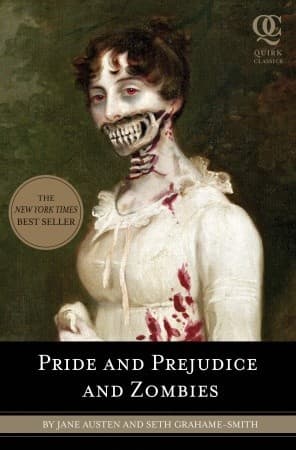
- Pride and Prejudice and Zombies
Seth Grahame-Smith
3.3 (129k) average on GoodreadsFantasyCombines classic historical romance with a supernatural monster-hunting twist.
- A Great and Terrible Beauty
Libba Bray
3.8 (208k) average on GoodreadsFantasyFeatures a young protagonist in a historical setting dealing with supernatural elements and dark secrets.
- Shiver
Maggie Stiefvater
4.0 (2k) average on GoodreadsFantasyA young adult romance centered around a girl falling in love with a werewolf, facing the threat of his transformation.
- Outlander
Diana Gabaldon
4.2 (824k) average on GoodreadsFantasy"Outlander" also blends historical fiction and romance, but utilizes time travel as its fantastical element and targets a more mature audience. Gabaldon's series offers a deeper, more complex exploration of historical immersion and character relationships, with greater psychological depth, whereas "Camille" is distinctly YA and introduces overt fantasy elements earlier.
- A Court of Thorns and Roses
Sarah J. Maas
4.2 (476k) average on GoodreadsFantasyBoth "Camille" and Maas's series blend fantasy and romance for a YA audience. However, Maas's work prioritizes intricate high fantasy world-building and magic systems, often with less emphasis on historical realism. "Camille" attempts to ground its fantasy in a tangible historical reality, making its fantastical elements feel more surprising, but its magic system is less defined than Maas's.
- Harry Potter and the Sorcerer's Stone
J.K. Rowling
4.5 (7M) average on GoodreadsFantasyRescued from a miserable life under the stairs, an orphaned boy discovers he's a wizard destined for a magical school, where he uncovers a dangerous secret tied to the dark wizard who murdered his parents.



Enjoyed the summary?
A summary gives you the shape of the book. The book itself has the detail, the examples and the voice.
Find Camille on AmazonAs an Amazon Associate, BookBrief earns from qualifying purchases. How we're funded