
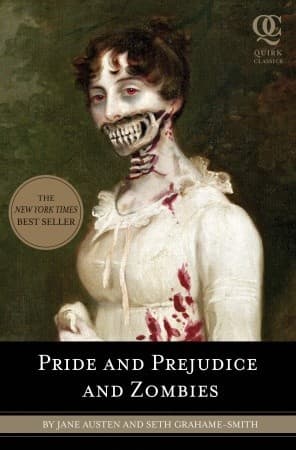
Synopsis
Covers the whole plot, including the ending.
- Difficulty
- Easy
- Pacing
- Moderate
- Mood
- Humorous, Action-packed, Romantic, Bloody
- Read it if
- You love Jane Austen but wish there were more ninjas and zombies.
- Skip it if
- You are a purist who believes classic literature should never be altered.
Pride and Prejudice and Zombies Plot Summary
Covers the whole plot, including the ending.
The Meryton Assembly and the Unmentionables
The five Bennet sisters, trained in combat, attend the Meryton Assembly Ball. Mrs. Bennet hopes to find husbands for her daughters. The arrival of Mr. Bingley and Mr. Darcy disrupts the evening. Darcy immediately offends Elizabeth Bennet, judging her looks and family. He does not recognize her fighting skills. A surprise zombie attack complicates the assembly, but the Bennet sisters, especially Elizabeth and Jane, easily defeat them, showing their unique upbringing in a world with the 'Prejudice' plague.
Jane's Illness and Netherfield Stay
Jane Bennet is invited to Netherfield by the Bingley sisters. On her way, she gets caught in a rainstorm and becomes ill with a fever. Mrs. Bennet worries she might turn into a zombie. Elizabeth goes to Netherfield to care for Jane. During her stay, Elizabeth endures Miss Bingley's snobbery and continues to argue with Mr. Darcy. Their arguments reveal a mutual respect for each other's intelligence and fighting skills, even as Darcy struggles with Elizabeth's family's manners and his own social biases.
Mr. Collins's Proposal and Lady Catherine's Training
Mr. Collins, a pompous clergyman and heir to Longbourn, proposes to Elizabeth. He stresses the need for a wife to manage his home and help with zombie defense. Elizabeth rejects him, to her mother's dismay. Soon after, Charlotte Lucas, Elizabeth's practical friend, accepts Mr. Collins's proposal, choosing security over love in a dangerous world. Elizabeth later learns that Lady Catherine de Bourgh, Mr. Darcy's aunt, is a famous zombie hunter and martial arts master who trained her own army. This adds to the complex social hierarchy and the constant threat of the undead.
The Netherfield Ball and Wickham's Accusations
The Netherfield Ball takes place. Elizabeth, despite her earlier promise, dances with Mr. Darcy. Their dance is tense but shows a hidden attraction. During the ball, George Wickham, a charming officer, tells Elizabeth a false story. He claims Darcy cheated him out of his inheritance. Wickham portrays Darcy as cruel, strengthening Elizabeth's negative view of him. Small fights with the undead happen throughout the night, which the guests are used to handling.
The Bingley's Departure and Elizabeth's Visit to Rosings
The Bingley family suddenly leaves Netherfield, leaving Jane heartbroken. Elizabeth suspects Darcy and Miss Bingley interfered. Later, Elizabeth visits Charlotte and Mr. Collins at Hunsford, near Rosings Park, Lady Catherine de Bourgh's estate. Lady Catherine, a known zombie hunter and martial arts master, often questions Elizabeth's manners and combat training, comparing her to Darcy. During these visits, Elizabeth often encounters Darcy, leading to more awkward, but interesting, interactions.
Darcy's First Proposal and Letter
While Elizabeth visits Rosings, Mr. Darcy unexpectedly proposes marriage. His proposal is arrogant, highlighting her family's lower status. Elizabeth, angry at his condescension and believing Wickham's lies, rejects him. She accuses him of mistreating Wickham and separating Jane and Bingley. The next day, Darcy sends a letter explaining his actions: Wickham tried to elope with Darcy's fifteen-year-old sister, Georgiana, for her money. Darcy also believed Jane's feelings for Bingley were not strong enough for society's pressures and the zombie threat.
Elizabeth's Change of Heart and Pemberley Encounter
Darcy's letter makes Elizabeth rethink her biases. She realizes Wickham lied and starts to see Darcy's character differently, recognizing his honesty and concern for his sister. Later, while touring Derbyshire with her aunt and uncle, the Gardiners, Elizabeth visits Pemberley, Darcy's estate. She is impressed by its size and his servants' respect for him. Darcy unexpectedly returns early and meets Elizabeth. Their interaction is now more civil and shows mutual respect, as he demonstrates his own zombie-hunting skills.
Lydia's Elopement and the Hunt for Wickham
A scandal hits the Bennet family: Lydia, the youngest sister, has run off with George Wickham. This act, given Wickham's true nature and the constant danger, threatens to ruin the family's reputation. Elizabeth is upset, believing her family's honor is lost. Mr. Bennet and Mr. Gardiner search for Lydia and Wickham, fearing social disgrace and Lydia falling victim to Wickham or the zombies.
Darcy's Intervention and Lydia's Marriage
To Elizabeth's surprise, Mr. Darcy finds Wickham and Lydia. He uses his resources to make Wickham marry Lydia, paying his debts and getting him a military position in the North. Darcy keeps his help a secret, wanting no credit. This saves the Bennet family from disgrace and ensures Lydia's respectability, though in difficult circumstances. Elizabeth learns of Darcy's actions from Mrs. Gardiner, further changing her view of him.
Bingley's Return and Proposal to Jane
Mr. Bingley, informed by Darcy of Jane's true feelings, returns to Netherfield. He quickly proposes to Jane, who accepts. Their engagement brings relief and happiness to the Bennet family, especially Mrs. Bennet. Jane's marriage to a wealthy, kind man brings stability and hope amid social worries and the zombie threat, showing that love can overcome both social hurdles and the walking dead.
Lady Catherine's Confrontation
Lady Catherine de Bourgh hears rumors of an engagement between Elizabeth and her nephew, Mr. Darcy. She makes a furious visit to Longbourn. She confronts Elizabeth, demanding she promise never to marry Darcy, citing Elizabeth's lower connections. Lady Catherine, a skilled fighter, even challenges Elizabeth to a duel, which Elizabeth defiantly refuses. Elizabeth bravely refuses to make such a promise, asserting her independence and right to choose, showing her spirit and resolve.
Darcy's Second Proposal and Elizabeth's Acceptance
Inspired by Elizabeth's stand against Lady Catherine, and having overcome his own pride and biases, Mr. Darcy proposes to Elizabeth a second time. This time, his proposal is humble and sincere, admitting his past mistakes and expressing his love and admiration for her strength. Elizabeth, having realized her love for him and his true character, accepts. Their engagement concludes their difficult courtship, uniting two strong individuals who can handle both society and a zombie-filled world, finding happiness and a powerful partnership.
Principal Figures
Elizabeth Bennet
Protagonist
A witty, intelligent, and highly skilled zombie slayer.
Elizabeth is the second eldest Bennet sister, known for her sharp wit, independent spirit, and exceptional martial arts skills. Trained in the deadly arts since childhood, she is a formidable opponent to both the undead and societal expectations. She values integrity, honesty, and genuine affection, often clashing with the superficiality of Georgian society. Her initial prejudice against Mr. Darcy stems from his perceived arrogance and the false accusations of Wickham.
Relationships: Mr. Darcy (Love interest, initially antagonistic, later deeply affectionate and respectful.); Jane Bennet (Closest sister, confidante.); Mr. Bennet (Beloved father, shares intellectual kinship.); Charlotte Lucas (Close friend, though they have differing views on marriage.)
Mr. Darcy
Protagonist/Love Interest
A wealthy, proud, and honorable gentleman with formidable combat skills.
Mr. Fitzwilliam Darcy is a very wealthy and aristocratic gentleman, initially appearing aloof and arrogant. He is a master of combat, having received extensive training, and takes his responsibilities seriously, particularly the protection of his family and estate. His pride often leads him to misjudge others, especially those of lower social standing, but beneath his reserved exterior lies a deep sense of honor, integrity, and a capacity for profound love. He is a formidable zombie hunter.
Relationships: Elizabeth Bennet (Love interest, initially antagonistic, later deeply affectionate and respectful.); Mr. Bingley (Close friend, loyal and supportive.); Georgiana Darcy (Beloved younger sister, very protective.); Lady Catherine de Bourgh (Aunt, influential and overbearing.)
Jane Bennet
Supporting
The eldest Bennet sister, beautiful, kind, and an adept zombie slayer.
Jane is the eldest and most beautiful of the Bennet sisters, known for her gentle nature, kindness, and unwavering optimism. She is also a skilled combatant, having received the same rigorous training as her sisters. Jane tends to see the best in everyone, sometimes to her detriment, and possesses a quiet strength. Her affections for Mr. Bingley are genuine and deep, but she is reserved in expressing them, leading to misunderstandings.
Relationships: Elizabeth Bennet (Closest sister, confidante.); Mr. Bingley (Love interest, later husband.)
Mr. Bingley
Supporting
A wealthy, amiable, and easily influenced gentleman.
Mr. Charles Bingley is a wealthy and good-natured gentleman who moves to Netherfield. He is charming, friendly, and possesses a genuine warmth that makes him popular. However, he is also somewhat easily influenced by his sisters and Mr. Darcy, leading to his temporary separation from Jane. Bingley is a decent zombie hunter, though not as proficient as Darcy or the Bennet sisters. He values kindness and happiness above social climbing.
Relationships: Jane Bennet (Love interest, later husband.); Mr. Darcy (Close friend, loyal and supportive.)
Mr. Bennet
Supporting
The intelligent and sarcastic patriarch of the Bennet family.
Mr. Bennet is the patriarch of the Bennet family, a man of wit, sarcasm, and intelligence. He often retreats to his library to escape the incessant chatter of his wife and younger daughters, finding solace in books and the company of Elizabeth. While he values his daughters' education in the deadly arts, he is somewhat detached from the practicalities of finding them husbands, leaving much of that burden to Mrs. Bennet. He is a skilled but reluctant zombie hunter.
Relationships: Elizabeth Bennet (Favorite daughter, shares intellectual kinship.); Mrs. Bennet (Wife, often exasperated by her.); Lydia Bennet (Youngest daughter, often a source of worry.)
Mrs. Bennet
Supporting
The overbearing and socially anxious mother of the Bennet sisters.
Mrs. Bennet is the mother of the five Bennet daughters, whose primary goal in life is to see them all advantageously married to wealthy gentlemen. She is often depicted as loud, gossipy, and prone to hysterics, especially when faced with social setbacks or the omnipresent threat of the undead. Despite her flaws, her intentions are rooted in a desire to secure her daughters' futures in a precarious world, though her methods are often embarrassing and counterproductive.
Relationships: Mr. Bennet (Husband, often exasperated by.); Her Daughters (Mother, overly concerned with their marital prospects.)
George Wickham
Antagonist
A charming but deceitful militia officer with a dark past.
George Wickham is a handsome and superficially charming militia officer who initially captivates Elizabeth with his tales of woe concerning Mr. Darcy. He is, however, a manipulative and unscrupulous individual, driven by greed and a lack of moral character. He attempts to elope with Darcy's younger sister for her fortune and later absconds with Lydia Bennet, causing immense scandal. He is a mediocre combatant, relying more on cunning than skill.
Relationships: Mr. Darcy (Childhood acquaintance, later sworn enemy due to Wickham's treachery.); Lydia Bennet (Elopes with, later forced to marry.)
Lady Catherine de Bourgh
Supporting
Mr. Darcy's formidable and arrogant aunt, a renowned zombie hunter.
Lady Catherine de Bourgh is Mr. Darcy's wealthy and aristocratic aunt, a woman of immense pride and condescension. She is also a renowned and formidable zombie hunter, having personally trained her own militia and possessing considerable martial arts skills. She expects deference from all and attempts to dictate the lives of those around her, particularly her nephew and his potential romantic interests. Her imperious nature is a source of both intimidation and occasional amusement.
Relationships: Mr. Darcy (Nephew, whom she expects to marry her daughter.); Elizabeth Bennet (Antagonistic, sees her as unsuitable for Darcy.)
Lydia Bennet
Supporting
The youngest and most frivolous Bennet sister.
Lydia is the youngest of the Bennet sisters, known for her impulsiveness, flirtatiousness, and lack of good judgment. She is more interested in officers and balls than in refining her combat skills or considering the consequences of her actions. Her elopement with Wickham brings scandal upon the entire family, highlighting her immaturity and the dangers of a world where social decorum often takes a backseat to survival.
Relationships: Kitty Bennet (Closest sister, shares frivolous interests.); George Wickham (Elopes with, later marries.)
Charlotte Lucas
Supporting
Elizabeth's practical friend who marries Mr. Collins.
Charlotte Lucas is Elizabeth Bennet's pragmatic and sensible friend. She is not beautiful or wealthy, and her primary concern is securing a comfortable future in a society where women have limited options and the threat of the undead is constant. She marries Mr. Collins not out of love, but for the security and establishment he can offer, a decision that Elizabeth struggles to understand but ultimately respects as a necessary choice for Charlotte.
Relationships: Elizabeth Bennet (Close friend, though they have differing views on marriage.); Mr. Collins (Husband, chosen for security.)
Themes & Insights
Social Class and the Undead Threat
The novel blends Jane Austen's social class critique with the constant danger of zombies. Strict social rules, wealth, and the pressure to marry well are all increased because 'unmentionables' could appear at any time. While characters like Mrs. Bennet focus on social climbing, the Bennet sisters' combat skills, developed out of necessity, often ignore class differences, showing survival skills as the true equalizer. Darcy's initial pride comes from his high social standing, but Elizabeth's fighting ability eventually earns his respect. This shows that true worth goes beyond birth in this changed world.
“It is a truth universally acknowledged, that a zombie in possession of brains, must be in want of more brains.”
Prejudice and First Impressions
The main theme of prejudice, from the original novel, gains a new aspect. Elizabeth's initial prejudice against Mr. Darcy comes from his haughty manner and Wickham's false stories, which are more believable due to the chaos and distrust in a zombie-infested world. Darcy's prejudice against Elizabeth's family comes from their perceived lack of manners and lower social standing, which he believes makes them unprepared for danger. Both characters must overcome their fixed ideas through direct experience and a willingness to face the truth, often during dramatic zombie encounters that reveal true character.
“I had not known you a month before I felt that you were the last man in the world whom I could ever be prevailed on to marry.”
The Role of Women and Combat
In this reimagined world, women's traditional roles change a lot. While marriage and social standing remain important, the Bennet sisters are also skilled warriors, good with swords and martial arts. This dual role challenges old ideas of femininity. Women like Elizabeth and Jane are both elegant ladies and fierce protectors. Their combat skills are not just a novelty; they are essential for survival and a source of personal power and respect. This allows them to have a more active role than women in the original story. Lady Catherine de Bourgh also shows this, being a powerful noblewoman and a strong zombie hunter.
“A lady's accomplishments, beyond the usual needlework and music, must now include a proficiency with the blade and a keen eye for the unmentionables.”
Love and Survival
The search for love and marriage is complicated by the constant threat of death. Relationships are tested not only by social rules but also by the need for a partner who can protect and survive. Elizabeth and Darcy's love story is built on mutual respect for each other's fighting skills and intelligence. They recognize that a strong partnership is vital in a dangerous world. The novel explores if love can thrive amid such peril, concluding that true affection and a shared commitment to survival can overcome even gruesome obstacles. Marriage becomes not just a social contract, but a bond forged in shared battles against the undead.
“I could not have been happy with him, had his character been ever so amiable, unless I could have also esteemed him as a formidable slayer of the undead.”
Plot Devices & Literary Techniques
The 'Prejudice' Plague / Zombie Apocalypse
The pervasive zombie outbreak that reshapes Georgian England.
The zombie apocalypse, referred to as the 'Prejudice' plague, is the central plot device that transforms Austen's world. It provides constant external conflict, forcing characters to develop combat skills and altering societal norms. The threat of the undead introduces urgency, violence, and a darker humor, impacting everything from travel to social gatherings. It acts as a catalyst for character development, revealing true courage and villainy, and often serves as a backdrop for the romantic and social conflicts to play out, making the stakes of every decision much higher.
Martial Arts Training
The specialized combat skills possessed by the Bennet sisters and other characters.
The martial arts training, particularly the 'deadly arts' learned by the Bennet sisters in China, is a crucial plot device. It elevates the female characters beyond their traditional roles, making them active agents in their own survival and protection. This training provides opportunities for action sequences, showcases their strength and independence, and challenges gender stereotypes. It also serves as a point of connection and respect between characters like Elizabeth and Darcy, who recognize each other's formidable abilities, ultimately contributing to their mutual admiration and love.
The Unmentionables / Dreadfuls
Euphemisms for the zombies, highlighting societal discomfort and fear.
The use of euphemisms like 'unmentionables' or 'dreadfuls' for zombies is a stylistic plot device that maintains a veneer of polite society even in the face of horror. It reflects the Georgian era's emphasis on decorum, even when discussing the grotesque. This linguistic choice adds a layer of dark comedy and highlights the absurdity of clinging to social niceties when facing literal flesh-eating monsters. It also subtly reinforces the 'prejudice' theme, as characters often try to ignore or downplay the gruesome reality of their world, much as they might ignore social discomforts.
The Letter from Darcy
Darcy's explanatory letter to Elizabeth, revealing truths and shifting perspectives.
Darcy's letter, a direct lift and alteration from the original novel, is a pivotal plot device. It serves to clarify misunderstandings, expose Wickham's true character, and explain Darcy's actions regarding Jane and Bingley. In this version, it might also detail specific zombie encounters or defensive strategies. The letter forces Elizabeth to re-evaluate her strong prejudices and consider Darcy's perspective, initiating a significant shift in her feelings towards him. It's a moment of quiet revelation amidst the chaos, allowing for intellectual and emotional transformation.
Pride and Prejudice and Zombies Quotes
“It is a truth universally acknowledged, that a zombie in possession of brains, must be in want of more brains.”
“My courage always rises at every attempt to intimidate me.”
“A lady's imagination is very rapid; it jumps from admiration to love, from love to matrimony in a moment. I, however, have been trained to kill the undead, so my imagination is far more concerned with decapitation and disembowelment.”
“You are mistaken, Mr. Darcy, if you suppose that the mode of your declaration affected me in any other way, than as it proved your arrogance, your conceit, and your selfish disdain of my feelings. Your character was unfolded in every word.”
“What are men to rocks and mountains? Or, for that matter, to the undead hordes that now roam the English countryside?”
“She had a lively, playful disposition, which delighted in anything ridiculous. Especially when that ridiculous thing was a severed zombie head rolling down a hill.”
“I could easily forgive his pride, if he had not mortified mine. But to insult my family, and then to attack my fighting skills? Unpardonable!”
“Bingley was sure of being loved by the whole family, and Jane was certain of a zombie attack before the end of the week.”
“To be fond of dancing was a certain step towards falling in love; and very often the first symptom of zombie contagion.”
“My dear, I have been fighting the undead since before you were a twinkle in your father's eye. I know a zombie when I see one. And that, my dear, is not one.”
“There is a stubbornness about me that never can bear to be frightened at the will of others. My courage always rises at every attempt to intimidate me. And it rises even higher when facing down a shambling horde of the undead.”
“Lady Catherine was a woman of formidable presence. Her voice, when raised in anger, could curdle milk and stop a zombie in its tracks.”
“He was the proudest, most disagreeable man in the world, and Elizabeth was determined to hate him, even if he did save her from a zombie ambush.”
“A single man in possession of a good fortune, must be in want of a wife. Or, at the very least, a well-fortified estate and a trained militia to protect him from the unmentionables.”
Quiz
10 questions on the plot and the characters. Each answer comes with a short explanation.
Question 1
What is the 'truth universally acknowledged' that begins the novel 'Pride and Prejudice and Zombies'?
- A single man in possession of a good fortune must be in want of a wife.
- A zombie in possession of brains must be in want of more brains.
- The dead are returning to life in the quiet English village of Meryton.
- Elizabeth Bennet is determined to wipe out the zombie menace.
Show answer
B. A zombie in possession of brains must be in want of more brains. The opening line of 'Pride and Prejudice and Zombies' is a direct parody of Jane Austen's original, altered to reflect the zombie apocalypse.
Question 2
In the context of the zombie plague, what is Elizabeth Bennet's primary skill and determination?
- To secure a wealthy husband for herself and her sisters.
- To master the art of piano playing and singing.
- To wipe out the zombie menace with her martial arts training.
- To avoid all contact with the haughty and arrogant Mr. Darcy.
Show answer
C. To wipe out the zombie menace with her martial arts training. The synopsis explicitly states, 'Feisty heroine Elizabeth Bennet is determined to wipe out the zombie menace,' highlighting her role as a skilled fighter.
Question 3
What kind of 'sparring' is mentioned as occurring between Elizabeth Bennet and Mr. Darcy?
- Only violent sparring on the blood-soaked battlefield.
- Only civilized sparring, a comedy of manners.
- Both civilized sparring and violent sparring.
- Sparring for dance partners at Meryton balls.
Show answer
C. Both civilized sparring and violent sparring. The description states, 'What ensues is a delightful comedy of manners with plenty of civilized sparring between the two young lovers—and even more violent sparring on the blood-soaked battlefield.'
Question 4
Where did the Bennet sisters receive their martial arts training in 'Pride and Prejudice and Zombies'?
- They were trained at a prestigious finishing school in London.
- They were sent to China for training at the Shaolin Temple.
- They learned from a retired mercenary living near Longbourn.
- They were self-taught from ancient scrolls found in the family library.
Show answer
B. They were sent to China for training at the Shaolin Temple. In the novel, the Bennet sisters, along with other high-born ladies, are sent to China for rigorous martial arts training, often at the Shaolin Temple, to prepare them for fighting zombies.
Question 5
What is Mr. Darcy's initial impression of Elizabeth Bennet's fighting style and social standing?
- He finds her fighting uncouth but her social standing acceptable.
- He is impressed by her fighting prowess but dismissive of her family's social connections.
- He finds both her fighting and her family's social standing to be beneath him.
- He admires both her fighting skills and her family's wealth.
Show answer
B. He is impressed by her fighting prowess but dismissive of her family's social connections. Darcy, initially, finds Elizabeth's family connection to the lower gentry and their lack of refinement off-putting, but he cannot deny her exceptional skill in dispatching zombies.
Question 6
What significant event occurs at the Meryton Assembly in 'Pride and Prejudice and Zombies' that deviates from the original novel?
- Mr. Darcy proposes to Elizabeth Bennet during a dance.
- A zombie outbreak interrupts the dancing, leading to a fight.
- Mr. Bingley declares his love for Jane Bennet publicly.
- Elizabeth Bennet refuses a dance with Mr. Collins.
Show answer
B. A zombie outbreak interrupts the dancing, leading to a fight. The Meryton Assembly, a key social event, is dramatically interrupted by a zombie attack, forcing the ladies to draw their weapons and fight, showcasing their unique skills.
Question 7
What is the primary method of preventing the spread of the zombie plague in this novel, besides killing the undead?
- Maintaining strict quarantines and isolation of infected areas.
- The use of advanced medical antidotes and vaccines.
- The establishment of 'safe zones' and fortified estates.
- Burning all corpses to ashes immediately after death.
Show answer
C. The establishment of 'safe zones' and fortified estates. The novel depicts a world where fortified estates and 'safe zones' are crucial for survival against the constant threat of the undead, with many characters living in walled-off properties.
Question 8
What is the significance of the 'Unmentionables' (zombies) in the class-conscious society of 'Pride and Prejudice and Zombies'?
- They represent a common enemy that unites all social classes.
- They highlight the fragility of social distinctions when faced with existential threat.
- They are primarily a threat to the lower classes, leaving the gentry unaffected.
- They are a convenient excuse for the gentry to avoid social obligations.
Show answer
B. They highlight the fragility of social distinctions when faced with existential threat. While the zombie threat is universal, the novel often contrasts the gentry's attempts to maintain social decorum and class distinctions with the brutal reality of survival, showing how the 'Unmentionables' make such concerns seem trivial yet still persistent.
Question 9
How does Lady Catherine de Bourgh's character adapt to the zombie apocalypse in 'Pride and Prejudice and Zombies'?
- She becomes a renowned healer, dedicating her time to finding a cure.
- She maintains her haughty demeanor but is also a formidable samurai warrior.
- She retreats into isolation, refusing to engage with the outside world.
- She loses her wealth and influence, becoming dependent on others.
Show answer
B. She maintains her haughty demeanor but is also a formidable samurai warrior. Lady Catherine retains her imperious nature but is also portrayed as a highly skilled and dangerous samurai warrior, fitting the novel's blend of period manners and zombie action.
Question 10
What is the primary symbolic function of the 'Prejudice' and 'Pride' in a world overrun by zombies?
- They are completely irrelevant, as survival is the only concern.
- They continue to be obstacles, emphasizing humanity's enduring flaws even amidst apocalypse.
- They are transformed into tools for fighting zombies, like 'proud' warriors.
- They represent the initial causes of the zombie plague.
Show answer
B. They continue to be obstacles, emphasizing humanity's enduring flaws even amidst apocalypse. The core themes of 'Pride and Prejudice' persist in the zombie-infested world, highlighting how human flaws like social prejudice and personal pride remain significant challenges even when facing an existential threat, adding depth to the satire.
Pride and Prejudice and Zombies FAQ
What is the core premise of 'Pride and Prejudice and Zombies' and how does it differ from the original 'Pride and Prejudice'?
The core premise is Jane Austen's classic romance between Elizabeth Bennet and Mr. Darcy, but set in an alternate 19th-century England plagued by a zombie apocalypse. The key difference is the constant threat of the 'unmentionables,' transforming the Bennet sisters into trained zombie hunters proficient in martial arts and weaponry, rather than solely focusing on social graces and marriage prospects.
How does the zombie plague impact the social conventions and daily life of the gentry in this altered Regency era?
The zombie plague fundamentally alters social conventions by making combat training and self-defense essential skills for young ladies, often taking precedence over accomplishments like piano playing. While balls and social gatherings still occur, they are frequently interrupted by zombie attacks, and the threat of the undead adds a layer of practical urgency to securing a financially stable marriage, often with a capable protector.
Describe Elizabeth Bennet's transformation into a zombie-fighting heroine. What skills does she possess?
Elizabeth Bennet is portrayed as a formidable warrior, having trained in China's Shaolin temples, making her highly skilled in martial arts, swordsmanship, and various other weapons. Her feisty independence from Austen's original is amplified by her deadly proficiency in dispatching zombies, often preferring a blade to polite conversation when faced with a threat.
How does Mr. Darcy's character adapt to the zombie-infested world, and what are his unique contributions to fighting the unmentionables?
Mr. Darcy, already a proud and capable figure, is depicted as an equally skilled zombie slayer, often leading the charge in battles and possessing a formidable estate, Pemberley, that doubles as a fortified stronghold. His wealth and influence are not just social advantages but practical assets for funding and organizing defenses against the hordes of undead, showcasing his protective nature.
What role do the 'Four Humours' play in understanding the zombie plague and potential cures in the book?
The 'Four Humours' are presented as an ancient, quasi-scientific theory for understanding the zombie plague, suggesting that imbalances in bodily fluids contribute to the affliction or even potential immunity. While seemingly archaic, it provides a unique pseudo-medical framework for characters like Mr. Darcy to discuss the nature of the infection and possible, albeit often unsuccessful, treatments.
Are there any specific characters whose fates are significantly altered by the zombie narrative compared to Austen's original?
Yes, several characters experience altered fates. For instance, Lady Catherine de Bourgh is revealed to be an accomplished ninja master, adding a surprising layer to her formidable personality. Also, characters like Mr. Wickham are even more villainous, often using the chaos of the zombie apocalypse to further their nefarious schemes, including collaborating with the undead.
How do the 'Unmentionables' themselves evolve or present different threats throughout the story?
The 'Unmentionables' are not a monolithic threat; they evolve. Initially, they are simply shambling corpses, but later, more dangerous variants appear, such as 'super-zombies' or those with remnants of their former intellect, making them more cunning and difficult to defeat. This escalation keeps the threat fresh and challenges the protagonists' combat skills.
What is the significance of the 'Grand Kicking' ritual mentioned in the book, and how does it relate to zombie defense?
The 'Grand Kicking' is a ceremonial and practical demonstration of martial prowess, particularly for the Bennet sisters, signifying their readiness and skill in combat. It's a public display of their ability to defend themselves and their family, serving as both a deterrent to potential zombie attacks and a testament to their unique upbringing.
How does Elizabeth's psychological resilience and independence manifest differently in a world with zombies?
Elizabeth's psychological resilience is amplified by her constant exposure to death and danger; her independence is not just social but also physical, as she is capable of defending herself and her family. Her wit and judgment are sharpened by the need for quick decisions in life-or-death situations, making her a more pragmatic and self-reliant heroine.
Analyze Mr. Darcy's pride and prejudice through the lens of the zombie apocalypse. Does it change how he perceives social class or capability?
Mr. Darcy's pride and prejudice are initially still strong, but the zombie apocalypse forces him to re-evaluate his judgments. While he still values breeding, he increasingly respects capability and courage above mere social standing, especially in the face of the undead. His admiration for Elizabeth's combat skills ultimately overshadows his initial disdain for her family's lower status.
How does the constant threat of death affect the characters' emotional responses to romance and heartbreak?
The constant threat of death adds an urgent, almost desperate, layer to romance and heartbreak. Emotions are heightened; love can feel more precious when life is fleeting, and heartbreak can be compounded by the knowledge that any moment could be one's last. This existential pressure often accelerates emotional arcs and makes declarations of affection more poignant.
What psychological impact does living in a zombie-infested world have on the Bennet family, particularly Mrs. Bennet?
Living in a zombie-infested world profoundly impacts the Bennet family. Mrs. Bennet's anxieties are exacerbated; her focus on securing advantageous marriages for her daughters becomes even more frantic, viewing a wealthy husband as a protector from both social ruin and zombie attack. The constant danger, however, also reveals a surprising resilience in some, while others, like Lydia, remain oblivious or reckless.
Is 'Pride and Prejudice and Zombies' a critique of Regency-era social norms, or does it merely add a fantastical element to them?
It functions as both. While undeniably adding a fantastical element, the zombie apocalypse often serves as an exaggerated lens through which to critique Regency-era social norms. The absurdity of maintaining polite society while battling the undead highlights the inherent frivolity and sometimes misplaced priorities of the original era's class distinctions and expectations.
How does the novel balance the romantic comedy elements of Austen with the gore and horror of the zombie genre?
The novel balances these elements by weaving the zombie attacks directly into classic Austen scenes, often with comedic effect. A polite conversation might be interrupted by a sudden beheading, or a romantic stroll might turn into a desperate fight for survival. This juxtaposition creates a unique tone where the absurdity of the situation enhances both the humor and the underlying romantic tension.
What is the book's stance on the nature of humanity, given the presence of both civilized gentry and cannibalistic undead?
The book explores the dual nature of humanity: the capacity for civility, love, and growth, contrasted with the primal, destructive urges represented by the zombies. It suggests that even in a 'civilized' society, there are internal 'unmentionables' (prejudice, snobbery) that can be as destructive as the external ones, and true heroism lies in fighting both.
Does the ending provide a definitive resolution to the zombie threat, or is it left open for continued conflict?
While the immediate threats are often dealt with, the ending typically implies that the zombie threat is an ongoing, pervasive reality, rather than a problem that can be definitively 'solved.' The protagonists achieve personal happiness and safety, but the world remains one where the 'unmentionables' are a constant presence, suggesting a continued struggle.
How does the book use humor to blend the two disparate genres, and what kind of humor is most prevalent?
The book primarily uses situational and dark humor, often derived from the absurd juxtaposition of formal Regency manners with gruesome zombie violence. The humor comes from characters reacting with polite exasperation or witty one-liners while engaging in bloody combat, creating a consistently unexpected and often laugh-out-loud experience.
What message, if any, does the author convey about female empowerment through characters like Elizabeth Bennet?
The author strongly conveys a message of female empowerment, enhancing Elizabeth Bennet's already strong will with formidable physical prowess. Her ability to defend herself and others, often outperforming male counterparts, asserts that a woman's strength and independence are not just intellectual but can also be physical, making her a complete and capable heroine.
About the author

Seth Grahame-Smith is an American author known for his unique blend of horror and classic literature. He gained recognition for his novels "Pride and Prejudice and Zombies," which reimagines Jane Austen's classic, and "Abraham Lincoln: Vampire Hunter," which presents an alternate history of the U.S. president. His works often combine humor with elements of the supernatural.
Similar books
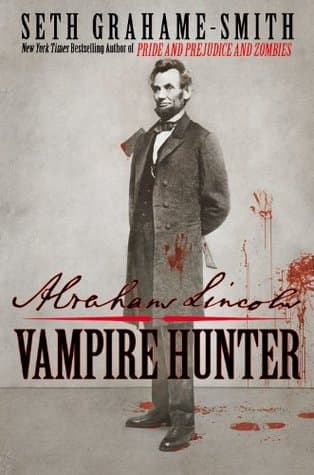
- Abraham Lincoln: Vampire Hunter
Seth Grahame-Smith
3.7 (131k) average on GoodreadsFantasySame author, combining historical figures with supernatural action.
- Harry Potter and the Sorcerer's Stone
J.K. Rowling
4.5 (7M) average on GoodreadsFantasyRescued from a miserable life under the stairs, an orphaned boy discovers he's a wizard destined for a magical school, where he uncovers a dangerous secret tied to the dark wizard who murdered his parents.
- The Hunger Games
Suzanne Collins
4.3 (6.4M) average on GoodreadsFantasyIn a future where children fight to the death on live television, Katniss Everdeen volunteers for the arena, turning a death sentence into a fight for survival and a spark of rebellion.
- 1984
George Orwell
4.2 (3.1M) average on GoodreadsPoliticsIn a future where surveillance and thought control are absolute, a man's search for truth clashes with the Party, showing that hope can be a form of rebellion.
- Divergent
Veronica Roth
4.2 (2.9M) average on GoodreadsFantasyIn a society divided by virtues, a sixteen-year-old's difference from the norm starts a rebellion that threatens her world.
- The Hobbit, or There and Back Again
J.R.R. Tolkien
4.3 (2.9M) average on GoodreadsFantasyA comfort-loving hobbit named Bilbo Baggins is whisked away by a mischievous wizard and a band of dwarves on an unexpected journey to reclaim stolen treasure from a fearsome dragon, discovering courage and a magical ring along the way.





Enjoyed the summary?
A summary gives you the shape of the book. The book itself has the detail, the examples and the voice.
Find Pride and Prejudice and Zombies on AmazonAs an Amazon Associate, BookBrief earns from qualifying purchases. How we're funded