
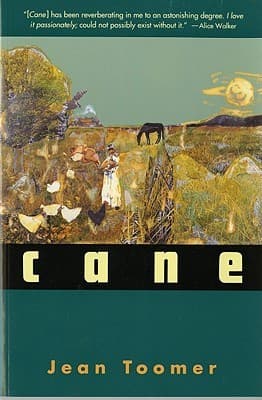
Synopsis
Covers the whole plot, including the ending.
- Difficulty
- Medium
- Pacing
- Variable
- Mood
- Atmospheric, Poetic, Melancholy, Evocative, Reflective
- Read it if
- You appreciate experimental literary forms, lyrical prose, and a deep exploration of racial identity and the Southern Gothic tradition.
- Skip it if
- You prefer linear narratives with clear plot resolutions and conventional character arcs.
Cane Plot Summary
Covers the whole plot, including the ending.
Karintha
Karintha is a woman of striking beauty in the rural South. She is so captivating that men are drawn to her from childhood. Her beauty, however, becomes a burden, as she is constantly desired and seen as an object. The story hints at her inner trouble and a deep, unfulfilled longing, perhaps for freedom or understanding beyond her situation. She had a child at fifteen, and in a disturbing scene, she throws the baby into a fire. This desperate act shows her deep psychological distress and the tragic results of her inability to find control or comfort in her life. This first sketch sets a tone of beauty mixed with pain and destructive forces in the Southern landscape.
Fern
Fern is another beautiful woman in the South. Her eyes have a deep, almost spiritual quality that mesmerizes men. They are drawn to her, seeking something they cannot name, often wanting physical intimacy. However, Fern remains distant and emotionally unattached, never finding true connection or satisfaction in these encounters. She longs for a deeper, perhaps spiritual, fulfillment that her suitors cannot give. The story suggests that her beauty, like Karintha's, is both a source of power and isolation. It leaves her always searching for an unknown comfort, her eyes showing a deep, almost cosmic sadness that men mistake for an invitation.
Rhobert
Rhobert is a deeply religious Black man, weighed down by his sins and a strong desire for salvation. He is always seeking purification, spending his life in prayer and self-denial. He believes that only through extreme devotion can he achieve grace. His wife, who is not named, quietly observes his spiritual struggles. The story shows him as so consumed by his religious fervor that he neglects worldly matters, including his own well-being and perhaps his family. His journey is one of intense spiritual search, almost to the point of obsession, highlighting the complex link between faith, suffering, and the search for meaning in the lives of Black Southerners.
Blood-Burning Moon
This story focuses on a tragic love triangle involving Louisa, a Black woman, and two men: Tom Burwell, a Black man, and Bob Stone, a white man. Louisa is drawn to both, but their rivalry grows stronger under the oppressive Southern night. Tom, driven by jealousy and a sense of ownership, confronts Bob. The tension rises, fueled by racial hatred and the simmering violence of the Jim Crow South. The conflict ends in a brutal fight where Tom kills Bob. Tom is then lynched by a white mob, his body burned under the blood-red moon. Louisa is left to deal with the devastating results, symbolizing the destructive impact of racial and sexual tensions in the South.
Esther
Esther is a young Black woman in a Southern town, working in her father's store. From childhood, she is fascinated by Barlo, a charismatic, almost mystical preacher. As she gets older, her fascination with Barlo deepens, mixing with a new sexual awakening and confusion about her own identity and desires. She idealizes him, seeing him as a powerful, almost divine presence. Years later, she visits Barlo, now a disheveled and seemingly ordinary man, in a juke joint. The meeting shatters her idealized image, leaving her disappointed and unable to match her youthful dreams with the harsh reality. This highlights the challenges of self-discovery and the disappointment that can come with growing up.
Kabnis
Ralph Kabnis, a Northern-educated Black man, comes to a Black industrial school in rural Georgia as a teacher. He is deeply troubled, haunted by spiritual unease and an inability to connect with the Southern Black experience he finds. He struggles with his identity, feeling separate from both the white world and his ancestors' traditions. Kabnis is troubled by guilt, fear, and a sense of artistic paralysis. He seeks comfort in drinking and philosophical talks with the local Black community, including Father John, an old, almost mythical figure representing the suffering and endurance of the past. The story explores his internal fight to balance his intellect with his emotional and racial heritage, often through fragmented, poetic prose.
Seventh Street
This section shifts from the rural South to the urban North, specifically Washington D.C.'s Seventh Street. It presents a vivid picture of Black urban life, marked by its energy, music, and a sense of both opportunity and struggle. The street is described as a 'brawling, sprawling, wide-awake' place, where Black culture thrives amid the realities of city life. The story highlights the differences between the perceived freedom of the city and the struggles of poverty, racial discrimination, and the search for identity. It acts as a bridge, showing the migration of Black people from the agricultural South to the industrial North and the new forms of expression and challenges they faced.
Portrait in Georgia
The poem uses stark, disturbing images to describe a Black woman's features by comparing them to instruments of racial violence. Her hair is like 'pine needles' and 'charred wood,' her lips like 'blood-burning' and 'gashed.' Her body is described with images of a 'lynching rope' and 'bleeding trees.' The poem is a chilling comment on how racial prejudice and violence twist perception, turning beauty into something brutalized and scarred. It captures the constant threat and psychological impact of lynching and racial terror on Black women in the South, even without explicitly stating a violent act.
Beehive
The poem 'Beehive' uses the metaphor of a beehive to describe the busy activity and collective experience of Black people in a city. It evokes a sense of shared work, purpose, and perhaps a loss of individual identity within the larger community. The sounds and movements described are those of a busy, enclosed space, suggesting both productivity and confinement. It hints at the complex social structures and the constant hum of life in the city, where individuals contribute to a larger whole, yet their distinct voices might be lost in the collective drone. This piece continues to explore urban Black life, contrasting it with the more isolated, natural settings of the South.
Box Seat
Dan Moore is a Black man living in Washington D.C., deeply alienated and searching for meaning. He is drawn to Muriel, a young woman who attends a revival meeting. Dan feels a deep disconnect from the urban environment and the superficiality he sees around him. He struggles with his masculinity, his intellect, and his place in the world. He attends the revival meeting, watching Muriel and the fervent preacher, but he remains an outsider. He cannot fully take part or find the spiritual comfort he wants. His internal thoughts show a deep frustration and a longing for a more authentic life, highlighting the psychological cost of urban alienation and racial identity.
Bona and Paul
Paul, a light-skinned Black man, and Bona, a white woman, attend a university in Chicago. Their relationship faces racial tension and societal judgment, which Paul struggles to handle. Bona is deeply in love with Paul, but he is reserved and intellectually distant, always aware of the racial implications of their bond. The story explores the anxieties and desires within their interracial romance, set in a Northern city that, while seemingly more liberal than the South, still holds deep-seated prejudices. Paul's internal conflict reflects the broader challenges of identity and belonging for Black individuals in a racially divided society, and the pressure of navigating such a relationship.
Karintha (reprise in Kabnis)
In the final section, 'Kabnis,' Karintha from the opening story is mentioned, though not directly present. Her tragic beauty and unfulfilled desires echo through Kabnis's own spiritual and existential struggles. As Kabnis deals with the past and the weight of his racial heritage in the rural South, Karintha becomes a symbol of the suffering and lost potential of Black women. Her story, along with those of Fern and Esther, highlights the themes of beauty, desire, and destructive forces in the Southern landscape, showing how the past continues to affect the present experiences of Black individuals.
Father John's Revelation
Within 'Kabnis,' Father John, an ancient, blind Black man who works at the industrial school, represents the deep historical memory of slavery and the Black experience. He delivers a powerful, almost prophetic sermon to Kabnis and others. He speaks in fragmented, mystical language about his people's suffering, resilience, and spiritual depth. His words are a direct link to the past, filled with images of bondage, toil, and the enduring spirit of Black Americans. Father John's presence and sermon offer a deep, rooted understanding of Black identity and spirituality. This contrasts with Kabnis's intellectual anxieties, even as Kabnis struggles to fully grasp it.
Principal Figures
Karintha
Supporting
A woman of mythical beauty in the rural South, burdened by objectification and inner turmoil.
Karintha is a figure of striking, almost supernatural beauty, so captivating that men are drawn to her from a young age. Her physical allure, however, is a source of profound suffering and isolation rather than empowerment. She embodies a deep, unfulfilled yearning and an inability to articulate or find solace for her inner pain. Her actions, like throwing her baby into a fire, suggest a desperate struggle against the confines of her existence and the expectations placed upon her. She represents the tragic beauty and suppressed agency of black women in the South.
Fern
Supporting
A beautiful Southern woman whose captivating eyes draw men, yet she remains emotionally distant and unfulfilled.
Fern is another enigmatic and beautiful woman in the South, known for her profound, almost spiritual eyes that mesmerize men. Despite the constant attention she receives, she remains emotionally detached and unable to form deep connections. Her beauty seems to be a veil behind which she hides a deep, unarticulated longing for spiritual or emotional fulfillment that her suitors cannot provide. She symbolizes the elusive nature of true connection and the burden of being perceived solely for one's physical attributes, embodying a quiet sorrow and a perpetual search for meaning.
Louisa
Supporting
A black woman caught in a fatal love triangle between a black man and a white man.
Louisa is a young black woman in the rural South, at the center of the tragic 'Blood-Burning Moon' story. She is desired by both Tom Burwell, a black man, and Bob Stone, a white man. Her character embodies the precarious position of black women caught in the racial and sexual tensions of the Jim Crow South. While she expresses affection for both men, her agency is limited by the societal structures and the violent possessiveness of her suitors. Her fate is inextricably linked to the racial violence that ultimately consumes the men in her life.
Relationships: Tom Burwell (lover, black man, ultimately killed); Bob Stone (lover, white man, ultimately killed)
Ralph Kabnis
Protagonist
A Northern-educated black man who returns to the rural South, struggling with his identity, spirituality, and artistic expression.
Ralph Kabnis is the central figure of the final, longest section of 'Cane.' He is an educated black man from the North who takes a teaching position in rural Georgia. Kabnis is deeply conflicted, alienated from both his black heritage and the white intellectual world he aspired to. He struggles with a profound sense of spiritual emptiness, artistic paralysis, and a pervasive guilt over his perceived disconnect from the suffering of his ancestors. He is introspective and verbose, often engaging in philosophical debates, but ultimately unable to reconcile his intellect with his emotional and racial identity. He represents the crisis of identity for educated black individuals navigating a racially divided America.
Relationships: Father John (mentor/spiritual guide, an embodiment of the past); Lewis (colleague, represents a more grounded, integrated black identity)
Father John
Supporting
An ancient, blind black man who embodies the historical memory and spiritual suffering of his people.
Father John is an almost mythical figure in the 'Kabnis' section, an ancient, blind black man who works at the industrial school. He is a living repository of the black past, symbolizing the enduring suffering, resilience, and spiritual depth forged through generations of slavery and oppression. His fragmented, prophetic pronouncements offer a profound, mystical understanding of black identity and history, contrasting sharply with Kabnis's intellectual anxieties. He is a connection to the oral traditions and deep spiritual roots of the black South, a figure of wisdom and tragic experience.
Relationships: Ralph Kabnis (spiritual guide, though Kabnis struggles to fully comprehend him)
Dan Moore
Protagonist
An alienated black man in Washington D.C. who struggles with his identity and desire for authentic connection.
Dan Moore is a central character in the urban section of 'Cane,' specifically 'Box Seat.' He is a black man living in Washington D.C., deeply introspective and alienated from the superficiality he perceives in urban life. He grapples with his masculinity, his intellectualism, and a profound desire for genuine connection and meaning. His internal monologues reveal a man wrestling with his place in a society that often denies him full agency and authentic expression. He represents the psychological toll of urban alienation and the search for spiritual and emotional truth amidst a racially complex environment.
Relationships: Muriel (object of his fascination and desire for connection)
Paul
Protagonist
A light-skinned black man in an interracial relationship, navigating racial identity and societal judgment.
Paul is a light-skinned black man attending university in Chicago, who is in an interracial relationship with a white woman named Bona. He is intelligent and reserved, constantly aware of the racial implications of his relationship and his own racial identity. He embodies the complexities of passing and the psychological burden of navigating a racially divided society, even in the supposedly more liberal North. His struggles highlight the internal and external pressures faced by those who straddle racial lines, and the difficulty of finding a secure sense of self amidst societal prejudice.
Relationships: Bona (white girlfriend, deeply infatuated with him)
Barlo
Supporting
A charismatic, almost mystical preacher figure in a Southern town, who later appears disheveled and ordinary.
Barlo is a preacher figure in the story 'Esther,' initially depicted as charismatic and almost mystical, captivating the young Esther. He represents a powerful, perhaps primal, form of black spirituality and leadership in the rural South. His later appearance as a disheveled, ordinary man in a juke joint serves as a symbol of disillusionment and the harsh realities that can erode idealized perceptions. He embodies the complexities of spiritual authority and the gap between youthful idealism and the often-gritty truth of life.
Relationships: Esther (object of her childhood fascination and later disillusionment)
Themes & Insights
The Burden of Black Beauty and Sexuality
Toomer often explores how the beauty of Black women, especially in the South, becomes a source of both allure and great suffering. Characters like Karintha and Fern are objectified and desired, but this attention often leads to their isolation, exploitation, or tragic ends. Their beauty is not empowering but a burden, drawing a destructive gaze that ignores their inner lives and agency. 'Blood-Burning Moon' further shows this, as Louisa's desirability to both Black and white men leads to a violent, racially charged climax. This theme highlights the unique pressures and dangers faced by Black women in a society that both fetishizes and devalues them.
“Karintha, at twelve, was a wild flash that could not be caught. Lord, she was beautiful!”
Racial Identity and Alienation
'Cane' deeply examines the complexities of Black identity, especially for those moving from the rural South to the urban North. Characters like Ralph Kabnis and Dan Moore struggle with a deep sense of alienation—from their heritage, their communities, and often themselves. Kabnis, a Northern-educated Black man in the South, feels separate from his ancestors' spiritual depth and the realities of Southern Black life, yet also separate from the white intellectual world. Paul, in 'Bona and Paul,' deals with his light-skinned identity and the pressures of an interracial relationship in Chicago. This theme emphasizes the psychological cost of racial prejudice and the search for an authentic self in a racially fragmented society.
“Ralph Kabnis, looking at the stars, saw not stars, but God's eyes. God, he thought, is a ghost. The world is a ghost. I am a ghost.”
The Dying South and the Urban North
A main theme is the rural South as a fading, yet spiritually strong, landscape, and the urban North as a harsh, often isolating reality. The Southern sections are rich with natural images, spiritual longing, and a sense of deep, though tragic, history. Toomer suggests that the unique Black culture and spirituality nurtured in the South are slowly being lost to modernization and migration. The Northern sections, like 'Seventh Street' and 'Box Seat,' show a landscape of asphalt and steel, where individuals like Dan Moore struggle with anonymity and a loss of connection. The book implicitly asks what is lost and gained in this migration, and whether true spiritual or cultural fulfillment can be found in the urban environment.
“Seventh Street is a brawling, sprawling, wide-awake strumpet. ... The Dixie Pike has grown from a goat path in Georgia to a highway through the Carolinas.”
Spiritual Search and Disillusionment
Many characters in 'Cane' are on a spiritual quest, often seeking a deeper meaning or connection that they cannot find. Rhobert is consumed by his strong desire for salvation, while Fern and Karintha long for an unnamed spiritual comfort. Esther idealizes Barlo as a spiritual figure, only to be disappointed by his ordinary reality. Ralph Kabnis's struggles are deeply spiritual, a search for a 'soul' that he feels he lacks. This theme highlights the longing for transcendence and meaning in the face of suffering, and the often unfulfilled nature of these quests. It suggests that true spiritual fulfillment is complex and not easily found, especially within societal pressures.
“Her eyes, unusually long, and drawn into a sort of almond shape, rested on men with a strange stillness... It was as if the soul of her came up to sit in the pupils of her eyes and yearn at the men.”
The Legacy of Slavery and Racial Violence
The lasting impact of slavery and widespread racial violence is a fundamental theme, particularly in the Southern sections. The land itself seems to hold the echoes of past suffering, and the threat of lynching and racial terror is always present, as tragically shown in 'Blood-Burning Moon.' Father John, in 'Kabnis,' embodies the historical memory of this suffering. His words powerfully show the endurance of a people scarred by generations of oppression. The poem 'Portrait in Georgia' chillingly illustrates how racial violence distorts perception, turning Black beauty into images of brutality. This theme underscores the deep historical wounds that continue to shape the lives and minds of Black Americans.
“White blood and black blood, song of the cane. The sun, moon, and stars, and the earth, and the seasons—they are all in the cane.”
Plot Devices & Literary Techniques
Impressionistic and Lyrical Prose
Toomer uses evocative, sensory language to create vivid, dreamlike descriptions rather than straightforward narrative.
Toomer's prose is highly impressionistic and poetic, relying heavily on imagery, symbolism, and sensory details to convey mood and meaning. Rather than linear storytelling, he crafts 'sketches' that evoke emotions, landscapes, and character states of mind. This device allows him to explore complex themes of race, identity, and spirituality through suggestion and atmosphere, creating a rich, almost musical quality in the text. It blurs the lines between poetry and prose, inviting the reader to experience the world of 'Cane' emotionally and intuitively rather than purely logically, reflecting the subjective inner lives of his characters.
Interweaving of Poetry and Prose
The book seamlessly transitions between short stories, vignettes, and poems to create a multifaceted narrative.
One of the most distinctive plot devices in 'Cane' is its hybrid form, moving fluidly between short stories, poetic interludes, and dramatic sketches. This interweaving allows Toomer to explore similar themes and motifs from different angles, enriching the overall tapestry of the black experience he portrays. The poems often distill the emotional essence of the preceding or following prose, providing moments of lyrical reflection or stark commentary. This structure reflects the fragmented yet interconnected nature of black life in America, and prevents a single, monolithic narrative from dominating, instead presenting a mosaic of voices and experiences.
Symbolism of Nature and Landscape
Natural elements like cane, dusk, and fire are imbued with symbolic meaning, reflecting human emotions and societal conditions.
Toomer extensively uses natural imagery, particularly elements of the Southern landscape, as powerful symbols. Sugarcane, for instance, represents the beauty, sweetness, and labor of the South, but also the pain and exploitation associated with its history. Dusk and twilight often symbolize transitions, ambiguity, and the merging of different states of being, reflecting the characters' internal conflicts. Fire can represent both destruction and purification, as seen in Karintha's tragic act and the lynching in 'Blood-Burning Moon.' These natural symbols connect the characters' inner lives to their environment, grounding their experiences in the rich, often violent, Southern soil.
Folkloric and Mythic Elements
Characters and events often take on larger-than-life, almost legendary qualities, blurring the line between reality and myth.
Many characters in 'Cane,' particularly in the Southern sections, are presented with a folkloric or mythic quality. Karintha and Fern, with their mesmerizing beauty and enigmatic presence, feel less like ordinary individuals and more like archetypes or legends. Figures like Barlo and Father John possess a mystical aura, embodying ancestral wisdom or spiritual power. This device elevates the personal struggles of the characters to a broader, more universal level, connecting them to the deep cultural and spiritual traditions of black oral storytelling. It imbues the narrative with a timeless quality, suggesting that these experiences are part of a larger, enduring human and racial saga.
Cane Quotes
“Pine-needles are smooth and soft to the feet. The red soil of Georgia is a delight to the eye.”
“Karintha, at fifteen, an enigma. . . . She was a beautiful embodiment of the symbol, flesh, and the word.”
“Her body was a song. . . . Her soul a growing thing, reaching for the light.”
“Face flowing into her hair, her eyes into the soft clouds, her lips into the red earth.”
“Money burned the pockets of the men, and restlessly they stirred, and grew angry.”
“Men were walking in the cane. . . . They were going to burn her, to burn her, to burn her.”
“The cane-brake is a mile long. It is a mile wide. It is a mile high.”
“White faces, pain-paled, and dark faces, pain-paled, and faces that were neither white nor dark, but a blend of both.”
“Cotton-bolls like white birds flying. . . . The sun a red ball. . . . Sky, a blue bowl.”
“Her soul is like a little flower, that has sprung up in the midst of a great desert.”
“The earth is a mother. She is a lover. She is a friend.”
“Come, brother, let us walk in the cane. Let us walk in the cane and sing.”
“He saw the South as a land of spiritual decay, of beauty and brutality, of ancient wrongs and new hopes.”
“The cane-brake, it is a mystery. . . . It is a song. It is a dream.”
Quiz
10 questions on the plot and the characters. Each answer comes with a short explanation.
Question 1
In 'Karintha,' what is the primary natural element associated with Karintha's sensuality and ultimate fate?
- The flowing river
- Sugarcane fields and smoke
- Ancient oak trees
- Desert sands
Show answer
B. Sugarcane fields and smoke Karintha is repeatedly associated with the burning of sugarcane fields and the smoke that rises from them, symbolizing her intense, untamed sensuality and the destructive forces around her.
Question 2
Which character in 'Blood-Burning Moon' is caught in a love triangle that leads to a violent climax?
- Kabnis
- Fern
- Louisa
- Doro
Show answer
C. Louisa Louisa is the central figure in 'Blood-Burning Moon,' desired by both Tom Burwell and Bob Stone, leading to Tom's lynching.
Question 3
What is the primary setting for the first section of 'Cane'?
- Northern urban centers
- The American South, particularly rural areas
- Caribbean islands
- Midwestern farmlands
Show answer
B. The American South, particularly rural areas The first section of 'Cane' is largely set in the rural American South, exploring the lives and landscapes of African Americans there.
Question 4
In the poem 'Georgia Dusk,' what image is used to represent the spiritual and historical weight carried by the black community?
- The bustling city streets
- The 'song of a drowsy folk' rising from the fields
- The bright lights of a juke joint
- The arrival of a train
Show answer
B. The 'song of a drowsy folk' rising from the fields 'Georgia Dusk' features the 'song of a drowsy folk' rising from the fields, connecting the present labor with ancestral voices and the deep, often melancholic, spiritual heritage.
Question 5
Which female character is described as having eyes that 'had in them all the sadness of the world,' causing men to feel 'weak and futile'?
- Karintha
- Fern
- Avey
- Dorothy
Show answer
B. Fern Fern is depicted with eyes that hold a profound, almost cosmic sadness, which deeply affects the men who encounter her, making them feel inadequate.
Question 6
What is the primary reason for the narrator's disillusionment with Esther in the story of the same name?
- She rejects his marriage proposal.
- She becomes involved with another man.
- She fails to fulfill the idealized, almost spiritual, role he projects onto her.
- She moves away to the North.
Show answer
C. She fails to fulfill the idealized, almost spiritual, role he projects onto her. The narrator in 'Esther' is disappointed when Esther, particularly after her encounter with Barlo, does not transform into the mystical, pure figure he had envisioned, failing to meet his idealized expectations.
Question 7
The second section of 'Cane' primarily shifts its focus to which geographical and social context?
- Rural Southern plantations
- Northern urban environments, specifically Washington D.C.
- The American West
- Small Southern towns
Show answer
B. Northern urban environments, specifically Washington D.C. The second section of 'Cane' moves from the rural South to the urban North, with stories like 'Bona and Paul' and 'Box Seat' set in Washington D.C., exploring the complexities of black identity in a new environment.
Question 8
In 'Kabnis,' what does the protagonist primarily struggle with throughout the narrative?
- His desire to escape the South for economic opportunity
- His spiritual and intellectual paralysis, and the search for authentic expression amidst the decay of the South
- His forbidden love for a white woman
- His efforts to organize a labor union
Show answer
B. His spiritual and intellectual paralysis, and the search for authentic expression amidst the decay of the South Kabnis is a tormented figure, an intellectual from the North, who struggles deeply with his identity, his inability to articulate his profound feelings, and his search for meaning and spiritual truth in the decaying Southern landscape.
Question 9
The structure of 'Cane' is highly experimental, moving between prose sketches, poems, and short stories. What overarching theme does this fragmented structure most effectively convey?
- The linear progression of time and history
- The unified and singular identity of the African American experience
- The complex, multifaceted, and often fractured nature of black identity and experience across different geographies and social contexts
- The superiority of Southern black culture over Northern black culture
Show answer
C. The complex, multifaceted, and often fractured nature of black identity and experience across different geographies and social contexts The innovative, non-linear, and genre-blending structure of 'Cane' reflects the complex, often contradictory, and fragmented reality of African American life, showing both continuity and disjuncture between the rural South and urban North.
Question 10
In 'Box Seat,' what does Dan Moore's intense, almost violent, reaction to the elderly woman in the theatre symbolize?
- His deep respect for elder figures in the community
- His frustration with the performative and superficial aspects of urban life and the suppression of authentic emotion
- His desire to physically harm women
- His longing for a return to traditional Southern values
Show answer
B. His frustration with the performative and superficial aspects of urban life and the suppression of authentic emotion Dan Moore's eruption in 'Box Seat' against the elderly woman (who represents conventional, suppressed emotion) and the general artificiality of the urban setting, symbolizes his profound spiritual and emotional frustration with the constraints and superficiality of modern urban black life, contrasting sharply with the raw authenticity of the South.
Cane FAQ
What is the overarching structure of Jean Toomer's 'Cane'?
'Cane' is structured in three parts. Part One focuses on the lives of black women in rural Georgia, Part Two shifts to urban settings and the experiences of black men and women in Washington D.C. and Chicago, and Part Three consists of the novella 'Kabnis,' which returns to the rural South and explores spiritual and racial identity.
Who are some of the key female characters introduced in Part One of 'Cane'?
Part One features various poignant portraits of black women, including Karintha, a beautiful mixed-race woman desired by many; Becky, an outcast white woman who had two black sons; and Fern, whose eyes hold a mysterious, deep sorrow that men find both alluring and unsettling. Each story explores their unique struggles with beauty, race, and societal expectations in the rural South.
How does the setting change from Part One to Part Two, and what does this signify?
Part One is set in the rural South, characterized by natural beauty, cane fields, and a deep connection to ancestral roots. Part Two moves to urban environments like Washington D.C. and Chicago, signifying a shift to the challenges of modernity, racial alienation, and the search for identity away from the land, often depicted with harsh asphalt streets and a loss of spiritual connection.
What is the significance of the character Dan Moore in Part Two?
Dan Moore appears in the story 'Bona and Paul' and represents the struggle of a light-skinned black man trying to navigate a white-dominated society. His internal conflict and the challenges he faces in his relationship with Bona highlight the pressures of assimilation and the search for an authentic racial identity in the city.
What is the central conflict explored in the novella 'Kabnis'?
'Kabnis' follows Ralph Kabnis, a Northern-educated black man who returns to the rural South as a school teacher. His central conflict is a profound spiritual crisis, marked by his inability to reconcile his intellectual aspirations with the raw, visceral experiences of his Southern heritage and the deep-seated racial injustices he encounters.
How do the recurring images of 'smoke, sugarcane, dusk, and flame' connect the different sections of the book?
These images serve as powerful motifs linking the Southern landscape and its inhabitants. Sugarcane symbolizes both the beauty and the exploitation of the land and its people, while smoke, dusk, and flame evoke a sense of mystery, sensuality, and the burning intensity of life and suffering within the black community, providing a consistent atmospheric thread.
What is the subtle connection between the unnamed narrator in some Part One stories and Ralph Kabnis?
While not explicitly stated as the same person, the unnamed male narrators in stories like 'Fern' and 'Karintha' share a similar sensibility and intellectual detachment with Ralph Kabnis. They observe and analyze the Southern black women from a distance, hinting at a recurring theme of a Northern-influenced black man grappling with and failing to fully connect with the deep, intuitive spirituality of the South, foreshadowing Kabnis's struggles.
Are there any symbolic connections between the character Fern and the landscape of the South?
Fern's character is deeply intertwined with the Southern landscape. Her eyes, described as holding 'all the suffering of the world,' reflect the deep-seated pain and beauty of the land itself. Her inability to find peace or resolution, despite men's desires, mirrors the South's complex history and its unresolved spiritual burdens, making her an embodiment of its enigmatic essence.
How does the character of Father John in 'Kabnis' serve as a hidden link to ancestral knowledge?
Father John, an ancient, deaf, and blind black man, appears as a seemingly insignificant figure but embodies the deep, unspoken history and ancestral wisdom of the South. His presence, particularly when he speaks in a prophetic, guttural chant, represents the primal, pre-rational connection to Africa and the spiritual heritage that Kabnis, despite his education, struggles to access and understand.
Analyze the psychological impact of unfulfilled desire on characters like Karintha and Fern.
Karintha and Fern both experience intense, often destructive, unfulfilled desires. Karintha's beauty attracts destructive male lust, leading to tragedy, while Fern's profound inner sorrow leaves her perpetually unfulfilled, unable to reciprocate the love men offer. Psychologically, their experiences highlight the burden of being objectified and the internal void created when genuine connection is elusive, leading to isolation and despair.
How does Ralph Kabnis's Northern education contribute to his psychological alienation in the South?
Kabnis's Northern education has instilled in him an intellectual, rationalistic worldview that clashes severely with the intuitive, spiritual, and often brutal realities of the rural South. This creates a profound psychological alienation, making him feel like an outsider, unable to fully participate in or comprehend the deep emotional and spiritual life of his people, leading to his constant anguish and self-doubt.
What psychological complexities are revealed through the character of Becky?
Becky, a white woman outcast for having black children, reveals the psychological complexities of racial prejudice and societal rejection. Her isolation and eventual mental deterioration demonstrate the devastating impact of social stigma, while her children's disappearance and her solitary death symbolize the erasure and suffering inflicted upon those who defy racial boundaries in the Jim Crow South.
Discuss the psychological toll of assimilation on characters in the urban sections of 'Cane'.
Characters in the urban sections, like Dan Moore, experience significant psychological toll from assimilation pressures. They grapple with a fractured identity, trying to fit into a white-dominated society while feeling disconnected from their racial roots. This often leads to internal conflict, loneliness, and a sense of spiritual emptiness, as they lose touch with the vibrant, if challenging, heritage of the South.
To what extent does 'Cane' offer a critique of the 'New Negro' movement's emphasis on urban sophistication?
'Cane' subtly critiques the 'New Negro' movement by portraying the urban experience as often sterile, alienating, and spiritually depleting, in contrast to the rich, albeit painful, spiritual vitality of the South. While acknowledging the challenges of the rural South, Toomer suggests that the urban quest for sophistication can lead to a loss of authentic racial identity and a disconnect from ancestral roots, questioning the path forward.
Is 'Cane' ultimately pessimistic or hopeful about the future of African Americans?
The interpretation of 'Cane' as pessimistic or hopeful is often debated. While it vividly portrays the suffering, alienation, and spiritual crisis of black life, particularly in Kabnis's struggle, the sheer artistry, the celebration of black women's beauty, and the enduring connection to the land suggest a latent power and resilience. It's arguably more a complex exploration of identity in crisis than a definitive statement of despair or triumph.
How does Toomer use a blend of prose, poetry, and drama to convey his themes, and what is its effect?
Toomer's innovative blend of prose sketches, lyrical poetry, and dramatic monologue (in 'Kabnis') allows him to explore his themes from multiple perspectives and emotional registers. This fragmentation mirrors the fragmented identity of black Americans, creating an impressionistic, almost mosaic-like portrayal that emphasizes the sensuous, spiritual, and often contradictory nature of their experiences, moving beyond conventional narrative forms.
What is the role of sexuality and sensuality in 'Cane', and how does it relate to racial identity?
Sexuality and sensuality are central to 'Cane,' often depicted as a powerful, primal force deeply intertwined with the landscape and racial identity. For characters like Karintha and Fern, their sensuality is both a source of beauty and a burden, attracting destructive desires. It explores how black bodies and desires are perceived and exploited, but also how they embody a deep, uninhibited connection to life and ancestral energy, challenging puritanical norms.
In what ways can 'Cane' be seen as a lament for a vanishing way of life?
'Cane' can be interpreted as a lament for the vanishing folk culture and spiritual rootedness of the rural South as black Americans migrated North and faced modernization. The book vividly captures the unique beauty, traditions, and struggles of this agrarian existence, implying a loss of connection to the land and a distinct cultural identity that the younger, urbanized generation, like Kabnis, struggles to reclaim or even understand.
About the author
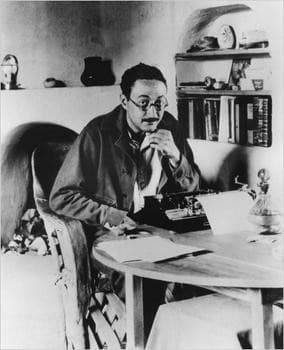
Jean Toomer was an American poet and novelist associated with the Harlem Renaissance. He is best known for his work "Cane," a groundbreaking exploration of African American life and identity through a blend of poetry and prose. Toomer's writing is noted for its lyrical style and innovative structure.
Similar books
- Their Eyes Were Watching God
Zora Neale Hurston
3.9 (266k) average on GoodreadsReferenceExplores Black Southern life and identity with lyrical prose, though more novelistic.
- Invisible Man
Ralph Ellison
3.9 (157k) average on GoodreadsLiterary FictionAddresses themes of racial identity, alienation, and the Black experience in both the South and the North.
- Dubliners
James Joyce
3.9 (123k) average on GoodreadsLiterary FictionA collection of interconnected stories and sketches depicting a specific time and place with symbolic depth.
- Native Son
Richard Wright
4.0 (89k) average on GoodreadsHistorical FictionWright's novel is a stark, naturalistic, and politically charged examination of racial oppression and its psychological impact on an urban Black man. "Cane" operates on a more poetic, symbolic, and spiritual plane, exploring internal struggles and cultural hybridity rather than focusing purely on the sociological determinism of racism, and its form is far more experimental than Wright's more conventional narrative structure.
- Nineteen Eighty-Four
George Orwell
4.2 (5.5M) average on GoodreadsFictionWinston Smith dreams of truth and rebellion in a world where Big Brother watches all, but he confronts the terrifying power of a regime that controls not just actions, but thoughts.
- The Frozen River
Ariel Lawhon
4.4 (600k) average on GoodreadsFictionIn 1789 Maine, a heroic midwife's diary helps her expose a murder and get justice in a town that wants to silence her.




Enjoyed the summary?
A summary gives you the shape of the book. The book itself has the detail, the examples and the voice.
Find Cane on AmazonAs an Amazon Associate, BookBrief earns from qualifying purchases. How we're funded