
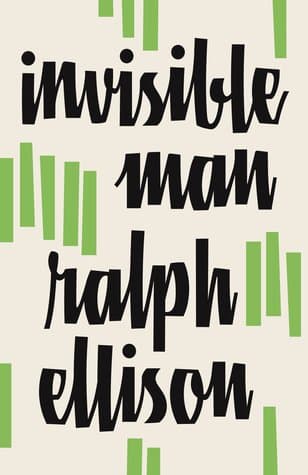
Synopsis
Covers the whole plot, including the ending.
- Difficulty
- Hard
- Pacing
- Moderate
- Mood
- Philosophical, Sardonic, Disillusioned, Intense, Insightful
- Read it if
- You want to explore themes of identity, race, and the struggle for self-discovery in a complex, allegorical narrative. You appreciate rich, poetic prose and a deep dive into the psychological impact of societal prejudice.
- Skip it if
- You prefer fast-paced, plot-driven stories with straightforward resolutions. The philosophical depth and extensive internal monologues might feel slow or challenging.
Invisible Man Plot Summary
Covers the whole plot, including the ending.
The Battle Royal and the Scholarship
The unnamed narrator, a bright young Black man from the South, tells of a traumatic experience as a teenager. He is invited to a 'smoker' hosted by the town's white citizens, where he is forced to participate in a 'battle royal' with other Black youths. Blindfolded, the boys fight each other for entertainment, then scramble for fake gold coins on an electrified rug. After this humiliating event, the narrator gives his graduation speech on humility and progress, earning him a scholarship to a Black college. He does not understand the true nature of his exploitation, seeing it as a step towards success.
College and Dr. Bledsoe's Betrayal
At college, the narrator excels, wanting to be like the president, Dr. Bledsoe. During a drive, the narrator accidentally shows Mr. Norton, a rich white trustee and founder of the college, the less pleasant parts of the surrounding Black community. He takes Norton to see Jim Trueblood, a sharecropper who impregnated his own daughter, and then to a juke joint called the Golden Day, full of shell-shocked Black veterans. Bledsoe, angry that the narrator showed the 'true' South to Norton, expels him. He gives the narrator letters of recommendation to supposed benefactors in New York, which are secretly letters of denunciation.
Arrival in Harlem and Initial Disillusionment
In Harlem, the narrator first feels free and hopeful. He tries to deliver Dr. Bledsoe's letters, but after weeks of being dismissed and meeting condescending white philanthropists, he learns the truth: the letters are condemnations, making sure he will not be hired. He confronts one recipient, Mr. Emerson, who, out of pity, reveals Bledsoe's betrayal. This revelation destroys the narrator's faith in Bledsoe and his earlier understanding of the world, leaving him lost in the big, indifferent city.
The Liberty Paints Factory
Desperate for work, the narrator finds a job at the Liberty Paints factory, which makes 'Optic White' paint, claiming it can cover anything. He is assigned to the mixing room, where he adds a black drop to each bucket of white paint, showing the hidden Black contribution to a seemingly 'pure' white product. He meets Lucius Brockway, an older Black man who dislikes him, and later works with a white union man named Kimbro. An explosion in the factory's basement, caused by sabotage or accident, leaves the narrator concussed and confused, leading to a surreal hospital experience where he gets experimental electric shock therapy.
The Speech and the Brotherhood
After he recovers, the narrator walks through Harlem, seeing an elderly Black couple evicted. Angry at the injustice, he gives an unplanned speech to the crowd, expressing their frustrations and suffering. His speech gets the attention of Brother Jack, a white leader of the 'Brotherhood,' a political organization. Jack invites the narrator to join, promising him a platform to speak for his people and make social change. Interested and hopeful for a new purpose, the narrator accepts, seeing it as a chance to make a difference.
Training and Rise within the Brotherhood
The Brotherhood assigns the narrator to their Harlem branch, where he trains in rhetoric and ideology. He gets a new identity, a new apartment, and is told to forget his past, including his Southern accent. With Brother Hambro's help, he improves his public speaking and becomes a speaker, drawing crowds and inspiring the Harlem community. He quickly rises in the Brotherhood's efforts to organize and empower the Black community, believing he is contributing to a cause and finding his voice.
Internal Conflicts and the Tod Clifton Incident
As the narrator gains influence, he notices problems and manipulation within the Brotherhood. He argues with Brother Clifton, a fellow Black leader, about the organization's policies, especially their changing focus away from Harlem's immediate needs. The narrator is temporarily moved from Harlem, a move he suspects is to control his growing independent influence. When he returns, he finds Clifton selling Sambo dolls on the street, having left the Brotherhood. Clifton is then shot and killed by a white police officer, an event that affects the narrator and increases his disappointment.
The Funeral and the Riot
The narrator organizes a large, emotional funeral for Tod Clifton, using the event to energize the community and challenge the Brotherhood's detached approach. The funeral becomes a protest, but the Brotherhood later criticizes him for acting alone and for his 'emotional' leadership. As tensions grow in Harlem, caused by poverty and racial injustice, a riot happens. The narrator sees the chaos, looting, and destruction, realizing how the Brotherhood manipulated the community's anger for their own goals, rather than for genuine improvement.
Running from the Brotherhood and Ras the Exhorter
During the riot, the narrator is hunted by both the Brotherhood, who see him as a problem, and Ras the Exhorter, an anti-white nationalist leader who sees the Brotherhood as a tool of white oppression. Ras, now calling himself 'the Destroyer,' leads a violent group, urging a race war. The narrator, trying to escape, wears dark glasses and a wide-brimmed hat, finding that people mistake him for someone else, further showing his invisibility. He narrowly avoids capture and injury, seeing the violence and destruction.
The Sewer and the Underground Lair
Fleeing the riot, the narrator falls into a manhole, escaping the chaos above ground. He finds refuge in an abandoned basement, connecting it to the city's power grid to light his new sanctuary. Surrounded by 1,369 light bulbs, he thinks about his life, recognizing how he has been used, manipulated, and made 'invisible' by various groups and individuals—from the white benefactors and Dr. Bledsoe to the Brotherhood. He concludes that his invisibility is not a curse but a condition of his existence, a metaphor for how society does not see him as a complex individual, only as a stereotype.
Epilogue: Living in the Hole
In the epilogue, the narrator, still in his underground hole, details his intellectual and psychological journey. He admits his past naivety and how he allowed himself to be defined by others. He realizes that true vision comes from within and that his invisibility has given him a unique view of American society and race relations. He considers coming out of his hibernation, not to fight society's blindness directly, but to use his understanding of invisibility as a weapon and a tool for self-definition. He believes that despite his invisibility, he still has a role to play in shaping the world, even from the periphery.
Principal Figures
The Narrator (Invisible Man)
Protagonist
An unnamed, intelligent Black man searching for identity and agency in a racially prejudiced America.
The narrator is a bright, idealistic young Black man from the South who begins his journey seeking validation and success within the existing social structures. Initially naive, he believes in the American Dream and the promises of upward mobility, only to be repeatedly exploited and betrayed by both white and Black figures of authority. He is a keen observer, but often slow to understand the true motives of those around him. His journey is one of disillusionment and a gradual, painful awakening to the reality of his 'invisibility' in a society that refuses to see him as an individual. He is driven by a desire for self-definition and a voice.
Relationships: Dr. Bledsoe (mentor/betrayer); Brother Jack (ideological leader/manipulator); Tod Clifton (fellow Brotherhood member/tragic friend); Ras the Exhorter (ideological opponent/antagonist)
Dr. Bledsoe
Antagonist/Supporting
The powerful, hypocritical president of the Black college.
Dr. Bledsoe is the cunning and self-serving president of the Black college in the South. He presents himself as a dignified leader of his people, but secretly manipulates both white benefactors and his Black students to maintain his own power and privilege. He embodies the corrupting influence of power and the ways in which some Black leaders perpetuate systems of oppression for personal gain. He exploits the narrator's ambition, ultimately expelling him and sending him to Harlem with deceptive letters, ensuring his downfall to protect his own image and position.
Relationships: The Narrator (mentor/betrayer); Mr. Norton (subservient/manipulative)
Brother Jack
Antagonist
The manipulative, one-eyed leader of the Brotherhood.
Brother Jack is the charismatic but ruthless leader of the Brotherhood, a communist-like political organization. He recruits the narrator, grooming him to be a powerful orator for their cause, but views him and other Black members as mere instruments to advance the Brotherhood's agenda. He represents the danger of ideological dogma and how even seemingly progressive movements can exploit individuals for abstract goals. His missing eye symbolizes his partial, biased vision, unable or unwilling to see the narrator as a complete human being. He eventually discards the narrator when he becomes too independent.
Relationships: The Narrator (leader/manipulator); Other Brotherhood members (colleague/subordinate)
Tod Clifton
Supporting
A charismatic Brotherhood youth leader who becomes disillusioned.
Tod Clifton is a passionate and charismatic young Black leader within the Brotherhood, initially a comrade and friend to the narrator. He represents the struggle of maintaining individual identity and agency within a rigid ideological structure. His eventual disillusionment with the Brotherhood's hypocrisy leads him to abandon the organization and sell Sambo dolls on the street, a symbolic act of self-degradation and despair. His tragic death at the hands of a white police officer becomes a pivotal moment, catalyzing the Harlem riot and deepening the narrator's understanding of systemic injustice and the Brotherhood's manipulative tactics.
Relationships: The Narrator (comrade/friend); Brotherhood (member/disillusioned former member)
Ras the Exhorter (or the Destroyer)
Antagonist
A militant Black nationalist leader in Harlem.
Ras the Exhorter is a fiery, charismatic Black nationalist leader in Harlem who advocates for racial separatism and violent resistance against white oppression. He vehemently opposes the Brotherhood, viewing them as a tool of white control. He represents a powerful, albeit often destructive, response to racial injustice, embodying the anger and frustration of the Black community. During the Harlem riot, he transforms into 'Ras the Destroyer,' leading a violent, armed faction, directly clashing with the narrator and highlighting the dangerous extremes of racial conflict and identity politics.
Relationships: The Narrator (ideological opponent/antagonist)
Mr. Norton
Supporting
A wealthy white trustee and founder of the Black college.
Mr. Norton is a wealthy, paternalistic white trustee and benefactor of the narrator's college. He views the college and its students as part of his 'destiny' and a means to atone for past sins, seeing Black people through a romanticized, idealized lens. His encounter with Jim Trueblood and the veterans at the Golden Day shatters his illusions, revealing the harsh realities of Black life that he preferred to ignore. He represents the well-meaning but ultimately self-serving and racially biased white liberal who cannot see Black individuals beyond their preconceived notions.
Relationships: The Narrator (benefactor/disappointed figure); Dr. Bledsoe (employer/manipulated figure)
Mary Rambo
Supporting
A kind and nurturing Black woman who provides the narrator refuge in Harlem.
Mary Rambo is a warm, maternal Black woman in Harlem who offers the narrator lodging and comfort when he is penniless and adrift. She represents the enduring strength, resilience, and communal spirit of the Black community, particularly its women. She embodies an authentic, unpretentious form of Black identity and compassion, urging the narrator to be 'a credit to his race' in a genuine,而非exploitative way. Her home provides a temporary haven, a stark contrast to the manipulative environments he encounters elsewhere, though he eventually leaves her to pursue the Brotherhood's promises.
Relationships: The Narrator (landlady/maternal figure)
Brother Hambro
Supporting
The Brotherhood ideologue who trains the narrator in rhetoric.
Brother Hambro is a dedicated and highly intellectual member of the Brotherhood, responsible for training the narrator in the organization's ideology and rhetorical techniques. He teaches the narrator how to craft powerful speeches and manipulate crowds, stripping away his individual voice in favor of the Brotherhood's collective message. Hambro represents the intellectual rigor and persuasive power of the Brotherhood, but also its dogmatism and the way it demands conformity from its members, effectively making them invisible to themselves in service of the 'cause.'
Relationships: The Narrator (trainer/ideological guide)
Jim Trueblood
Mentioned/Supporting
A controversial sharecropper who committed incest.
Jim Trueblood is a Black sharecropper whom the narrator escorts Mr. Norton to visit. Trueblood openly recounts his story of impregnating his own daughter, a taboo subject that both fascinates and repulses Mr. Norton. Trueblood represents a raw, unvarnished aspect of Black life that defies the sanitized image presented by Dr. Bledsoe. His story, though shocking, is told with a strange, almost mythical quality, highlighting the complex and often uncomfortable realities that the dominant society prefers to ignore, further contributing to the narrator's early exposure to the hidden depths of his community.
Relationships: The Narrator (brief acquaintance); Mr. Norton (subject of fascination/disgust)
Themes & Insights
Identity and Self-Discovery
The novel is a quest for identity. The unnamed narrator constantly tries to define himself in a world that forces identities upon him. From the college's 'model Negro' to the Brotherhood's 'Harlem spokesman,' he is always seen through others' expectations. His journey is about shedding these forced identities, realizing that self-discovery comes from within, not from external approval. His final retreat into the underground allows him to think about who he is, independent of societal labels, and to acknowledge his complex individuality.
“'I am an invisible man. No, I am not a spook like those who haunted Edgar Allan Poe; nor am I one of your Hollywood-movie ectoplasms. I am a man of substance, of flesh and bone, fiber and liquids — and I might even be said to possess a mind. I am invisible, understand, simply because people refuse to see me.”
Racism and Invisibility
Ellison explores racism not just as overt discrimination, but as a systemic force that makes Black individuals 'invisible' by denying their humanity and complexity. The narrator is constantly seen as a type or a symbol, rather than an individual. White characters project their stereotypes onto him, while even Black leaders like Bledsoe and the Brotherhood manipulate him for their own goals. This invisibility leads to alienation and a struggle for recognition, showing how societal prejudice takes away individuals' agency and self-worth, making them unseen and unheard.
“That invisibility to which I refer occurs because of a peculiar disposition of the eyes of those with whom I come in contact. A matter of the construction of their inner eyes, those eyes with which they look through their physical eyes upon reality.”
Betrayal and Disillusionment
A central theme is the narrator's repeated experience of betrayal, which increases his disappointment. He is betrayed by Dr. Bledsoe, who pretends to be a mentor while secretly sabotaging his future; by Mr. Norton, who shows paternalistic racism; and most significantly, by the Brotherhood, which promises liberation but delivers manipulation. Each betrayal removes another layer of his naive idealism, forcing him to face the realities of power dynamics and the self-serving nature of various ideologies, leading him to question all authority and external guidance.
“I was pulled this way and that way, like a Punch-and-Judy puppet. It was a most confusing and painful period, for I was still trying to grin and bear it, to be a credit to my race.”
The Dangers of Ideology and Dogma
The novel examines the dangers of rigid ideologies, especially through the Brotherhood. While advocating for social justice, the Brotherhood's dogmatic approach stifles individual thought, demands conformity, and uses people as means to an end. They prioritize their abstract 'theory' over the concrete needs and identities of the Black community. The narrator's experience shows how even well-intentioned movements can become oppressive when they forget individual humanity, forcing members into predetermined roles and silencing dissenting voices, making them invisible within the cause itself.
“They were not at all interested in my communicating to the people. They were interested in my communicating to the people what they told me to communicate.”
The American Dream and Opportunity
The narrator begins his journey believing in the American Dream—that hard work and conformity will lead to success and acceptance. His scholarship, his job at Liberty Paints, and his role in the Brotherhood all represent perceived chances to achieve this dream. However, each chance turns out to be an illusion, hiding exploitation, tokenism, or manipulation. The novel criticizes the illusion of opportunity for Black Americans, showing how the 'Dream' is often unavailable or comes at the cost of one's identity and dignity, leading the narrator to question American society.
“I had to be careful not to make any mistakes, not to do anything that would discredit my people. For I was a credit to my race, a good example, and I must keep it that way.”
Plot Devices & Literary Techniques
First-Person Narrator (Epistolary Frame)
The story is told retrospectively by the nameless protagonist from his underground lair.
The entire novel is narrated in the first person by the protagonist, who is writing from his self-imposed underground exile. This narrative frame allows for both immediate, visceral descriptions of events and retrospective, philosophical reflection. The narrator's 'invisibility' is reinforced by his namelessness, forcing the reader to focus on his experiences and internal journey. The retrospective nature means the narrator often comments on his past naivety, providing dramatic irony and a deeper understanding of his psychological transformation, as he already knows the outcome of his struggles.
Symbolism of Light and Darkness (Invisibility)
Light represents recognition and truth, while darkness and invisibility signify societal blindness and hidden realities.
Light and darkness are pervasive symbols. The narrator's 'invisibility' is central, representing society's refusal to see him. The 'Optic White' paint at the factory symbolizes a superficial, dominant white culture that ironically requires a drop of black to achieve its purity. His underground lair, illuminated by 1,369 light bulbs, is a defiant act against his invisibility, where he literally creates his own light to see himself and the world more clearly. Conversely, the literal and metaphorical blindness of characters like Brother Jack (one-eyed) and the white men at the battle royal underscores their inability to perceive the narrator's full humanity.
The Sambo Doll
A derogatory racial caricature symbolizing self-degradation and the commodification of Black identity.
The Sambo doll appears first in the narrator's youth, then critically when Tod Clifton is selling them in Harlem. These dancing, grotesque caricatures embody the demeaning stereotypes imposed upon Black Americans. Clifton's act of selling them signifies his profound disillusionment and self-hatred, a surrender to the very stereotypes he once fought against. For the narrator, they represent the ultimate betrayal of Black humanity, a stark reminder of how Black identity can be commodified and reduced to an object of entertainment or scorn, further contributing to his sense of invisibility and the erosion of dignity.
The Briefcase
A container of the narrator's identity and the tools of his exploitation.
The briefcase, given to the narrator after the battle royal, becomes a recurring symbol of his journey and his attempts to define himself. It initially holds his scholarship, then the deceptive letters from Bledsoe, then the Brotherhood's propaganda, and finally, various objects from his past that he collects. It represents the burdens of his past, the documents that both promise and betray him, and the fragmented pieces of his identity. Ultimately, it also holds the chain from the Sambo doll, signifying his confrontation with racial degradation, and the contents are eventually burned, symbolizing a shedding of past illusions.
The Underground Lair
A symbolic space for isolation, reflection, and eventual rebirth.
The narrator's underground home is a central symbolic setting. It is a literal and metaphorical 'hole' where he retreats from the visible world, embracing his invisibility. It functions as a womb or a tomb, a place of hibernation and profound introspection. Here, he is safe from external manipulation and can finally process his experiences, analyze his past, and formulate his own understanding of self and society. The 1,369 light bulbs signify his quest for enlightenment and his defiant act of shedding light on his own existence, preparing for a potential re-emergence with a newly forged identity.
Invisible Man Quotes
“I am an invisible man. No, I am not a spook like those who haunted Edgar Allan Poe; nor am I one of your Hollywood movie ectoplasms. I am a man of substance, of flesh and bone, fiber and liquids — and I can be seen, heard, touched, but nevertheless, I am invisible.”
“When I discover who I am, I'll be free.”
“What did I do to be so blue? What did I do to be so me?”
“Light confirms my reality, gives birth to my form... without light I am not only invisible, but formless as well; and to be unaware of one's form is to live a death.”
“Our white is so white you can paint a chunka coal and you'd have to put it in the sun to see if it's black.”
“I was looking for myself and for the moment I found a crowd.”
“I was pushed out of the South, and now I was being pushed out of the North. I was a man without a country, a man without a home.”
“The world is a possibility if only you'll discover it.”
“To be invisible and to be seen, these are two very different things.”
“Life is to be lived, not controlled; and humanity is won by not being afraid to make mistakes.”
“You can't make a revolution without a good song.”
“I was a spokesman, a voice, but not myself.”
“Who knows but that, on the lower frequencies, I speak for you?”
“The truth is the truth, and it's all that matters.”
“Power doesn't have to show itself. Power is the manifestation of the will.”
Quiz
10 questions on the plot and the characters. Each answer comes with a short explanation.
Question 1
At the 'battle royal,' what does the narrator mistakenly believe is his reward for participating?
- A scholarship to a prestigious northern university
- A brand new car
- A brief case containing gold coins
- A scholarship to the state college for Negroes
Show answer
D. A scholarship to the state college for Negroes The narrator is invited to give a speech after the humiliating 'battle royal,' and the briefcase he receives contains not only a scholarship to the state college but also a speech from the superintendent, which he reads to the white townspeople.
Question 2
What is the name of the college president who expels the narrator?
- Dr. Bledsoe
- Brother Jack
- Ras the Exhorter
- Tod Clifton
Show answer
A. Dr. Bledsoe Dr. Bledsoe, the president of the Negro college, expels the narrator for inadvertently exposing Mr. Norton to the realities of black life outside the college's carefully constructed image.
Question 3
What does Dr. Bledsoe give the narrator to help him find work in New York, which are actually letters of betrayal?
- Letters of recommendation
- Letters of introduction
- Letters condemning him
- Letters of credit
Show answer
C. Letters condemning him Dr. Bledsoe gives the narrator seven sealed letters of introduction, which the narrator later discovers are actually letters condemning him and ensuring he will never find a job with the powerful white trustees.
Question 4
What is the name of the organization the narrator joins in Harlem, which he initially believes is working for racial equality?
- The Brotherhood
- The Black Nationalist Party
- The Marcus Garvey Movement
- The Harlem Renaissance Society
Show answer
A. The Brotherhood After being fired from the paint factory, the narrator is recruited by a mysterious organization called 'The Brotherhood,' which purports to fight for the rights of the oppressed, but ultimately exploits its members.
Question 5
What is the significance of the Sambo dolls that Tod Clifton begins selling on the streets of Harlem?
- They represent a rejection of the Brotherhood's ideology and a return to stereotypical black imagery.
- They are a new form of protest art against white oppression.
- They symbolize the narrator's growing disillusionment with the Brotherhood.
- They are a subtle critique of capitalism within the black community.
Show answer
A. They represent a rejection of the Brotherhood's ideology and a return to stereotypical black imagery. Tod Clifton, disillusioned with the Brotherhood, begins selling racist Sambo dolls that dance on strings. This act symbolizes his despair and the way black men are still manipulated and controlled, even by those who claim to help them.
Question 6
Which character serves as a foil to the narrator's initial optimism and belief in the American Dream, embodying a more cynical and realistic view of racial inequality?
- Brother Jack
- Ras the Exhorter
- Trueblood
- Mr. Norton
Show answer
C. Trueblood Trueblood, the sharecropper who committed incest, lives an unvarnished and unapologetic existence, contrasting sharply with the narrator's early attempts to conform and achieve respectability through white institutions. His story deeply disturbs Mr. Norton and challenges the narrator's preconceived notions.
Question 7
What leads the narrator to flee into the underground hole where he spends the rest of his life writing his story?
- He is arrested by the police during a riot.
- He is injured during the Harlem riot and seeks refuge.
- He is pursued by Ras the Exhorter's followers.
- He is betrayed by the Brotherhood and goes into hiding.
Show answer
B. He is injured during the Harlem riot and seeks refuge. During the climactic Harlem riot, the narrator is caught in the chaos and falls into a manhole, which he then uses as his permanent dwelling. This physical descent into the 'underground' symbolizes his withdrawal from society and his journey inward to understand his own identity.
Question 8
The narrator's realization that he is 'invisible' primarily stems from what understanding?
- That people literally cannot see him.
- That people refuse to see him as an individual, only as a stereotype or a tool for their own agendas.
- That he lacks the physical presence to make an impact on the world.
- That he is a ghost haunting the streets of New York.
Show answer
B. That people refuse to see him as an individual, only as a stereotype or a tool for their own agendas. The central theme of invisibility in the novel refers to the narrator's experience of being unseen and unacknowledged as a unique human being. White society, and even factions within the black community, project their own expectations and stereotypes onto him, preventing them from seeing his true self.
Question 9
What does the narrator's grandfather's dying advice, 'Overcome 'em with yeses, undermine 'em with grins, agree 'em to death and destruction,' suggest about the nature of resistance?
- It advocates for violent confrontation against oppressors.
- It suggests a strategy of passive aggression and subversive conformity.
- It encourages assimilation into white culture to gain power.
- It promotes open defiance and rebellion.
Show answer
B. It suggests a strategy of passive aggression and subversive conformity. The grandfather's advice is a complex instruction for survival and resistance in a racist society. It suggests that outward conformity can be a mask for inward subversion, a way to navigate and ultimately undermine oppressive systems without direct, overt confrontation.
Question 10
What is the symbolic significance of the narrator's burning of his belongings in the coal bin before moving into his underground dwelling?
- It signifies his attempt to destroy evidence of his past actions.
- It represents a purification ritual to cleanse himself of his former identities and illusions.
- It is an act of anger and frustration directed at the systems that have oppressed him.
- It is a practical measure to reduce clutter before moving into a smaller space.
Show answer
B. It represents a purification ritual to cleanse himself of his former identities and illusions. The burning of his belongings, particularly the briefcase from the battle royal and other symbols of his past affiliations, represents a symbolic shedding of all the false identities and expectations imposed upon him. It's a purification, preparing him for the self-discovery that will occur in his underground sanctuary.
Invisible Man FAQ
What is Invisible Man about?
Invisible Man follows the unnamed Black protagonist's journey from the Jim Crow South to the dynamic but deceptive streets of Harlem. He grapples with various ideologies and organizations—from the college administration to the Brotherhood—all of which attempt to define and exploit him, leading him to realize his 'invisibility' in a society that refuses to see him as an individual.
Why should I read Invisible Man?
You should read Invisible Man for its profound exploration of identity, race, and power in America. Ellison masterfully blends realism with surrealism, offering a searing critique of both overt racism and the subtle, insidious ways institutions manipulate individuals, making it a foundational text for understanding the Black experience and existentialism.
What is the background/setting of Invisible Man?
The novel is set primarily in the 1930s, moving from an unnamed Black college in the Deep South, reminiscent of Tuskegee, to the vibrant and tumultuous streets of Harlem, New York. This backdrop allows Ellison to explore the differing faces of racism and the complexities of Black identity in both rural and urban environments during a pivotal era.
What are the most memorable quotes?
Some memorable quotes include: "I am an invisible man... I am invisible, understand, simply because people refuse to see me." and "When I discover who I am, I'll be free." These lines encapsulate the protagonist's struggle for recognition and self-definition in a society that consistently denies his individuality.
What writing style does the author use?
Ralph Ellison employs a rich, complex, and often satirical prose style that blends realism with surreal, dreamlike sequences. His narrative voice is highly intellectual and introspective, utilizing jazz-like rhythms, symbolism, and a wide range of literary allusions to create a uniquely American literary voice that is both eloquent and biting.
What minor details add significant meaning?
The Sambo doll that the protagonist initially dismisses but later finds himself performing with, and the coin bank in the shape of a grinning Black man, are minor details that powerfully symbolize the dehumanizing caricatures and economic exploitation Black individuals faced. They serve as constant, unsettling reminders of how society expects him to perform a role.
What are some subtle foreshadowing moments?
Early in the novel, the protagonist's grandfather's deathbed confession—that he was a 'spy in the enemy's country' and that 'humility is the best weapon'—subtly foreshadows the protagonist's own eventual disillusionment with societal expectations and his retreat into invisibility. This advice, initially confusing, gains clarity as the protagonist's journey unfolds.
What unexpected character connections exist?
An unexpected connection is between the protagonist and the wealthy white trustees of the college, particularly Mr. Norton, who funded the institution. Their benevolent facade hides a deeply paternalistic and self-serving interest in maintaining the racial status quo, revealing how even seemingly positive interactions are fraught with power imbalances.
What are unspoken character motivations?
One unspoken motivation for many characters, including the Brotherhood leaders like Brother Jack, is the desire for control and the perpetuation of their own ideological power, rather than genuine upliftment of the Black community. They see the protagonist as a tool to be molded for their cause, not an individual with his own aspirations.
What psychological complexities do characters exhibit?
The protagonist exhibits profound psychological complexities, grappling with his fragmented identity, the pressure to conform, and his struggle to reconcile his internal self with the roles society imposes. His journey is a constant battle against self-erasure and the psychological burden of being 'invisible' to others.
What are the major emotional turning points?
Key emotional turning points include the 'battle royal' which shatters his naive optimism, his expulsion from college which forces him into the wider world, and his disillusionment with the Brotherhood after Tod Clifton's death and the Harlem riot. Each event strips away another layer of his illusions, forcing him to confront harsh realities.
How do relationship dynamics evolve?
Relationship dynamics consistently evolve from initial trust and mentorship to betrayal and manipulation. For instance, the protagonist's relationship with Dr. Bledsoe goes from admiration to bitter disillusionment, and his bond with the Brotherhood transforms from hopeful allegiance to cynical rejection, mirroring his loss of faith in various ideologies.
Which parts remain ambiguous or open-ended?
The protagonist's ultimate future after emerging from his underground hibernation remains ambiguous. While he asserts his intention to re-enter the world, the novel does not explicitly detail his actions or success, leaving readers to ponder whether he will truly find a way to be seen or if his 'invisibility' is an inescapable condition.
What are controversial scenes or decisions?
The 'battle royal' scene is particularly controversial and disturbing due to its graphic depiction of young Black men being forced to brutalize each other for white entertainment. The protagonist's decision to join and then leave the Brotherhood, an organization with ostensibly progressive ideals but ultimately manipulative practices, is also a point of debate regarding the efficacy of such movements.
Invisible Man ending explained: how it ends & what it means
The novel ends with the protagonist living in an underground hole, powered by 1,369 light bulbs, reflecting on his experiences and the nature of his 'invisibility.' He declares his intention to emerge from his hibernation, suggesting a newfound understanding of his identity and a readiness to engage with the world on his own terms, not as defined by others. It signifies a move towards self-awareness and potential agency.
About the author
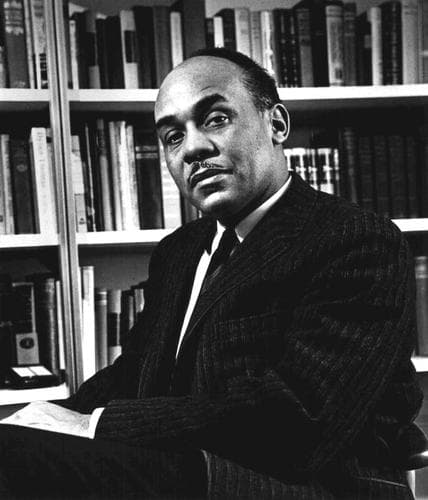
Ralph Ellison was an American novelist and essayist best known for his exploration of African American identity and social issues. His notable works include "Invisible Man," which addresses themes of race and individuality, and "Juneteenth," a posthumously published novel that continues his examination of the African American experience.
Similar books
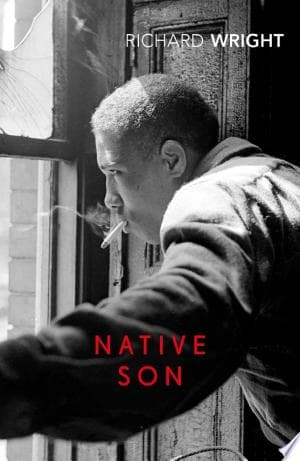
- Native Son
Richard Wright
4.0 (89k) average on GoodreadsHistorical FictionExplores racial injustice and the psychological toll of oppression on a Black protagonist in a raw and powerful way.
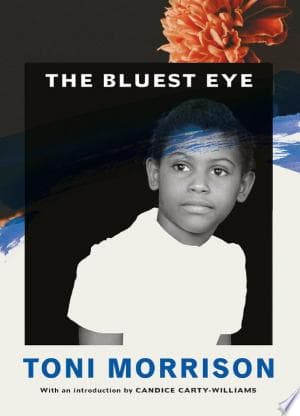
- The Bluest Eye
Toni Morrison
4.1 (173k) average on GoodreadsLiterary FictionDelves into the devastating impact of racism and societal beauty standards on the identity and self-worth of Black characters.
- A Portrait of the Artist as a Young Man
James Joyce
3.6 (128k) average on GoodreadsLiterary FictionA classic bildungsroman focusing on a protagonist's intellectual and artistic awakening, with a similar stream-of-consciousness style.
- Go Tell it on the Mountain
James Baldwin
4.0 (51k) average on GoodreadsLiterary FictionInvisible Man and Go Tell It on the Mountain (1953) both explore the complexities of Black identity, but they differ significantly in focus and style. Baldwin's novel is a deeply personal, semi-autobiographical account centered on religious experience, family dynamics, and the search for salvation within a specific community (Harlem in the 1930s). Its prose is lyrical and emotionally intense, focusing on the spiritual and psychological struggles of a young man. Ellison's work, while also set in Harlem, is broader in scope, encompassing a wider range of political and social movements, and is more overtly allegorical and philosophical. Ellison's narrator grapples with systemic invisibility and ideological manipulation on a grander, more intellectual scale, whereas Baldwin's protagonist, John Grimes, confronts his identity primarily through the lens of faith and familial legacy.
- The Old Man and the Sea
Ernest Hemingway
3.8 (831k) average on GoodreadsLiterary FictionA Cuban fisherman's long struggle with a giant marlin becomes a story of endurance and dignity, now retold for young adults with illustrations, phonetic guides, and writing prompts in Traditional Chinese.
- One Hundred Years of Solitude
Gabriel García Márquez
4.1 (753k) average on GoodreadsLiterary FictionThrough the multi-generational story of the Buendía family, a mythical town deals with the repeating patterns of time, love, and solitude, as the extraordinary mixes with the ordinary.


Enjoyed the summary?
A summary gives you the shape of the book. The book itself has the detail, the examples and the voice.
Find Invisible Man on AmazonAs an Amazon Associate, BookBrief earns from qualifying purchases. How we're funded