
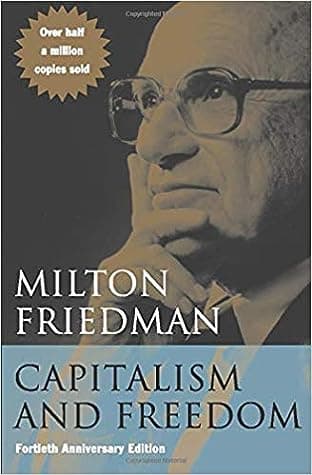
Core Idea
- Difficulty
- Medium
- Read it if
- You are interested in the philosophical and practical arguments for limited government, free markets, and individual liberty, or you want to understand the foundational ideas of modern libertarian and conservative economic thought.
- Skip it if
- You are firmly convinced that significant government intervention is necessary for social welfare and economic stability, or you are looking for a critique of capitalism rather than its defense.
Key Takeaways from Capitalism and Freedom
The Inseparable Link: Economic and Political Freedom
Competitive capitalism is not just an economic system, but a prerequisite for political liberty.
Friedman argues that economic freedom is not just a good result of a free society but its very basis. He states that a free market, with competitive capitalism, spreads power and gives individuals other ways to earn money and have influence. This prevents power from being concentrated in the government. Without economic choices, individuals rely on the government for their living, making disagreement or opposition very difficult. This connection means that any loss of economic freedom will endanger political freedom, as the state gains more control over individuals' lives and choices.
“Economic freedom is an indispensable means toward the achievement of political freedom.”
In the book: Friedman frequently references totalitarian regimes (e.g., Soviet Union, Nazi Germany) where state control over the economy directly led to the suppression of political freedoms, demonstrating that without private property and free exchange, political dissent is stifled.
Try this: Evaluate government policies not only on their stated economic goals but also on their potential impact on individual economic autonomy and the decentralization of power. Support policies that expand market choices and reduce state monopolies.
Related ideas: economic-freedom, political-freedom, capitalism
The Perils of Paternalism: The State as Benevolent Despot
Government intervention, even with good intentions, often undermines individual responsibility and freedom.
Friedman doubts the government's ability to act as a kind, all-knowing guardian of its citizens. He believes that when the state takes on the role of 'protector' or 'provider' beyond its basic duties, it takes away individual liberty. Policies meant to 'help' individuals often have unintended negative results, create dependence, and reduce personal choice and responsibility. The difficulty of central planning, combined with bureaucrats' self-interest, means that government solutions are often inefficient, unchangeable, and ultimately harmful to real societal progress. Once the state's power grows, it is rarely reduced easily.
“The great advances of civilization, whether in architecture or painting, in science or literature, in industry or agriculture, have never come from centralized government.”
In the book: Friedman critiques specific government programs like Social Security, arguing that while well-intentioned, they reduce individual savings and responsibility, and create a system of forced participation rather than voluntary provision for old age.
Try this: Before advocating for new government programs, critically assess whether the problem could be solved more effectively through market mechanisms, private charity, or individual initiative. Prioritize solutions that empower individuals rather than relying on state mandates.
Related ideas: paternalism, limited-government, unintended-consequences
The Role of Government: Rules, Not Rulers
Government's legitimate functions are limited to enforcing contracts, protecting property, and maintaining order.
Friedman supports a very limited role for government, defining its main legitimate functions as those needed to create and maintain a system for voluntary exchange. This includes enforcing contracts, protecting private property rights, providing for national defense, and administering justice. Beyond these basic tasks, he argues that government involvement distorts market signals, wastes resources, and ultimately reduces overall well-being and freedom. He particularly criticizes government attempts to redistribute wealth or manage economic activity, viewing these as violations of individual liberty and the market's natural efficiency. The government should be an umpire, not a player, in the economic game.
“The consistent liberal of the nineteenth century was a individualist and a believer in laissez faire. He was a believer in limited government, and he believed that the state should not interfere in economic affairs.”
In the book: Friedman points to the success of market economies when property rights are secure and contracts enforceable, contrasting this with the stagnation often seen in economies with extensive government control and unclear legal frameworks.
Try this: Advocate for policies that strengthen legal frameworks, protect individual rights, and reduce government involvement in areas where private markets or voluntary associations can function effectively. Question any expansion of government power beyond these core functions.
Related ideas: limited-government, rule-of-law, property-rights
Money Matters: The Dangers of Central Bank Discretion
Monetary policy should be governed by clear rules, not the discretionary decisions of central bankers.
Friedman famously said that inflation is mainly a monetary issue, caused by too much money growing compared to the amount of goods and services produced. He strongly criticizes central banks' power to change the money supply, arguing that such power always leads to economic instability, inflation, and boom-and-bust cycles. Instead, he suggests a fixed monetary rule, like a steady, predictable increase in the money supply (e.g., 3-5% annually), to provide a stable financial environment. This rule-based approach would remove political influence and human error from monetary policy, creating more predictability and long-term economic stability, which is important for individual planning and investment.
“Inflation is always and everywhere a monetary phenomenon.”
In the book: Friedman and Anna Schwartz's seminal work, 'A Monetary History of the United States,' meticulously details how discretionary monetary policy contributed to the Great Depression and other economic downturns, arguing for a more predictable, rule-based approach.
Try this: Support calls for greater transparency and accountability in central banking, and advocate for policies that limit discretionary power in favor of clear, predictable monetary rules. Understand the long-term inflationary impact of excessive money printing.
Related ideas: monetary-policy, inflation, central-banking, monetarism
Education Vouchers: Empowering Parents, Improving Schools
Introducing market mechanisms into education can enhance quality and equity by giving parents choice.
Friedman argues for a major change in the education system through school vouchers. He believes that the current system of publicly funded and run schools creates a monopoly, leading to inefficiency, a lack of new ideas, and a one-size-fits-all approach that does not meet different student needs. Vouchers would let parents use public funds to send their children to any approved school—public or private—which would create competition among schools. This competition, he believes, would force schools to improve their quality, innovate, and respond better to parents' and students' demands, ultimately leading to better educational results for everyone, especially disadvantaged groups who currently lack choice.
“The parent is the one who is responsible for the child; the parent is the one who is in the best position to make decisions about the child's education.”
In the book: Friedman points to the success of market-driven sectors in responding to consumer demands, contrasting it with the perceived stagnation and bureaucratic inertia of public education systems, which lack competitive pressures.
Try this: Advocate for educational reforms that empower parents with choice, such as voucher programs or charter schools, to foster competition and innovation in the education sector. Research and support initiatives that decentralize educational decision-making.
Related ideas: education-reform, school-vouchers, parental-choice, market-mechanisms
Occupational Licensing: A Barrier to Opportunity
Government-mandated occupational licensing often serves to protect incumbents, not the public.
Friedman examines occupational licensing, arguing that while it is often presented as a way to protect the public from unskilled workers, it often limits new competitors. These rules, he suggests, are usually pushed by existing workers to limit supply, raise prices, and protect their own financial interests, rather than truly ensuring quality. This creates artificial scarcity, limits consumer choice, and unfairly harms people from lower economic backgrounds who face big obstacles to enter licensed professions. Friedman supports minimal regulation, perhaps limited to certification or registration, allowing consumers to make informed choices based on reputation and proven skill.
“Occupational licensure is a major source of monopoly power and a major barrier to entry in many occupations.”
In the book: Friedman highlights examples of professions, from doctors to hairdressers, where licensing requirements are excessively stringent and often unrelated to actual competence, serving primarily to reduce competition and inflate wages for those already licensed.
Try this: Support efforts to reform or repeal unnecessary occupational licensing laws. Research the licensing requirements in various professions and advocate for less restrictive alternatives like certification or voluntary accreditation.
Related ideas: occupational-licensing, barriers-to-entry, monopoly-power, deregulation
Social Security: A Compulsory and Inefficient System
The government-run Social Security system is an inefficient, intergenerational transfer that reduces individual freedom.
Friedman strongly criticizes Social Security, seeing it not as a true insurance program but as a mandatory tax and transfer system. He argues that it forces individuals to participate in a system that may not match their personal preferences for savings and retirement planning. Furthermore, he believes that it changes individual savings behavior, discourages private saving for old age, and creates a reliance on government. Friedman believes that individuals, given freedom, would make more efficient and personalized choices for their retirement, leading to greater overall wealth and security. The system, he states, also creates political pressure for ever-increasing benefits, straining future generations.
“Social Security is a compulsory system whereby the young are forced to support the old.”
In the book: Friedman contrasts Social Security with private insurance markets, highlighting how the former lacks the actuarial soundness and voluntary nature of the latter, effectively making it a 'pay-as-you-go' system reliant on future generations.
Try this: Advocate for reforms that introduce greater individual choice and control over retirement savings, such as allowing individuals to opt out of Social Security into private alternatives, or promoting personal savings vehicles.
Related ideas: social-security, compulsory-savings, intergenerational-transfer, retirement-planning
The Fallacy of Social Responsibility: Profit as Purpose
The primary social responsibility of business is to increase its profits within the rules of the game.
While not a specific chapter in 'Capitalism and Freedom,' Friedman's later, consistent views on corporate social responsibility come from its principles. He argues that the main duty of business executives is to maximize profits for their shareholders, within legal and ethical limits. Any attempt by corporations to pursue 'social good' beyond this, using shareholder money, is essentially a form of taxation without representation, taking resources from their rightful owners. He believes that individuals, not corporations, are the proper agents of social change, and that a free market, where businesses focus on profit, ultimately serves society best by efficiently distributing resources and creating wealth.
“There is one and only one social responsibility of business—to use its resources and engage in activities designed to increase its profits so long as it stays within the rules of the game.”
In the book: Friedman contrasts the clear accountability of profit-seeking with the vague and often politically motivated pursuits of 'social responsibility,' arguing that the latter can lead to corporate executives acting as unelected social engineers.
Try this: When evaluating corporate actions, prioritize those that clearly benefit shareholders and operate within legal and ethical frameworks. Be skeptical of companies that claim to pursue 'social good' at the expense of profit, as this can often mask inefficiencies or self-serving agendas.
Related ideas: corporate-social-responsibility, shareholder-value, profit-motive, free-market-ethics
Foreign Aid: A Misguided Benevolence
Government-to-government foreign aid often harms recipient nations and serves donor interests.
Friedman strongly criticizes government-to-government foreign aid, arguing that it often makes poverty worse rather than better in recipient nations. He believes that such aid typically supports corrupt or authoritarian governments, stops private sector growth, and creates dependence, rather than fostering real economic growth. The aid, he suggests, rarely reaches those truly in need and instead serves the political and economic interests of the donor country or the ruling groups of the recipient country. He instead supports private charitable giving and, more importantly, policies that promote free trade and open markets, allowing developing nations to join the global economy and achieve self-sustaining growth.
“Foreign aid is a method by which poor people in rich countries subsidize rich people in poor countries.”
In the book: Friedman cites numerous examples where foreign aid has failed to improve living standards, instead fueling corruption, funding white elephant projects, and undermining local entrepreneurial efforts in developing countries.
Try this: Support policies that promote free trade and open markets with developing nations, rather than relying on government-to-government aid. When considering international assistance, prioritize private charities or direct person-to-person initiatives.
Related ideas: foreign-aid, economic-development, free-trade, government-corruption
The Power of Voluntary Exchange: The Invisible Hand in Action
Voluntary transactions in a free market are inherently efficient and mutually beneficial.
At the core of Friedman's ideas is a firm belief in the power of voluntary exchange. He argues that when individuals are free to interact and trade with each other without force, both parties benefit, or they would not participate. This 'invisible hand' of self-interest, working within clear rules and property rights, leads to an efficient use of resources, new ideas, and overall societal prosperity. Voluntary exchange allows for specialization, creates wealth, and encourages cooperation, all without the need for central planning or government direction. It is the most effective way to meet diverse human needs and desires while keeping individual liberty.
“The great virtue of a free market is that it permits an extraordinary degree of diversity while at the same time promoting coordination through voluntary exchange.”
In the book: Friedman frequently uses the example of a simple market transaction, like buying a loaf of bread, to illustrate how countless individuals, acting in their own self-interest, contribute to a complex, coordinated process that benefits everyone involved, without any central command.
Try this: Seek out opportunities for voluntary exchange in your personal and professional life. Be wary of policies that restrict voluntary transactions or impose involuntary exchanges, as these often lead to inefficiencies and reduced welfare.
Related ideas: voluntary-exchange, invisible-hand, free-market, economic-efficiency
Capitalism and Freedom Quotes
“The great advances of civilization, whether in physics or biology, medicine or sociology, have never come from an attempt to achieve a specific social goal.”
“The consistent liberal, of the 19th century brand, was a believer in freedom, in the individual, in the rule of law, in limited government.”
“Economic freedom is an indispensable means toward the achievement of political freedom.”
“Government has three primary functions: to protect us from foreign enemies, to protect us from our fellow citizens, and to provide certain public works and institutions that cannot be provided through the market.”
“There is one and only one social responsibility of business—to use its resources and engage in activities designed to increase its profits so long as it stays within the rules of the game, which is to say, engages in open and free competition without deception or fraud.”
“The most important single central fact about the free market is that no exchange takes place unless both parties benefit.”
“Inflation is always and everywhere a monetary phenomenon.”
“A society that puts equality—in the sense of equality of outcome—ahead of freedom will end up with neither equality nor freedom.”
“Competition is a more effective protection against discrimination than the law.”
“The role of government in a free society is to do something that the market cannot do for itself, namely, to determine, arbitrate, and enforce the rules of the game.”
“The case for a free society rests on the argument that it gives the individual the greatest possible opportunity to pursue his own objectives.”
“The problem of social organization is how to set up an arrangement under which it is possible for people to pursue their own interests and at the same time promote the general interest.”
“Concentrated power is not rendered harmless by the good intentions of those who create it.”
“The greatest enemy of freedom is the absence of alternatives.”
Quiz
10 questions on the main ideas. Each answer comes with a short explanation.
Question 1
According to Friedman in 'Capitalism and Freedom,' what is the primary relationship between competitive capitalism and political freedom?
- Competitive capitalism is a potential threat to political freedom, requiring strong government regulation.
- Competitive capitalism is a device for achieving economic freedom but is unrelated to political freedom.
- Competitive capitalism serves as both a device for achieving economic freedom and a necessary condition for political freedom.
- Competitive capitalism is a result of political freedom, not a prerequisite.
Show answer
C. Competitive capitalism serves as both a device for achieving economic freedom and a necessary condition for political freedom. Friedman explicitly argues that competitive capitalism is not only a means to economic freedom but also a necessary condition for political freedom, acting as a check on governmental power.
Question 2
Friedman argues that a free society requires a clear distinction between which two types of activities?
- Monetary policy and fiscal policy.
- Voluntary exchange and coercive exchange.
- Public goods and private goods.
- Production and consumption.
Show answer
B. Voluntary exchange and coercive exchange. A core tenet of Friedman's philosophy is the emphasis on voluntary exchange as the foundation of a free market, in contrast to coercive exchanges often associated with government intervention.
Question 3
Which of the following government roles does Friedman generally support as legitimate within a free society?
- Extensive regulation of industries to prevent monopolies.
- Providing a universal basic income to all citizens.
- Enforcement of contracts and maintenance of law and order.
- Direct provision of housing and healthcare for all citizens.
Show answer
C. Enforcement of contracts and maintenance of law and order. Friedman advocated for a minimal government role, primarily focused on protecting individual rights, enforcing contracts, and maintaining law and order, which are essential for a functioning free market.
Question 4
Friedman criticizes occupational licensure primarily because it:
- Increases competition among professionals.
- Ensures higher quality services for consumers.
- Restricts entry into professions, raising costs and limiting individual freedom.
- Leads to greater innovation in licensed fields.
Show answer
C. Restricts entry into professions, raising costs and limiting individual freedom. Friedman views occupational licensure as a barrier to entry that restricts individual economic freedom, limits competition, and often serves the interests of existing practitioners rather than consumers.
Question 5
What is Friedman's main argument against government price controls, such as minimum wage laws?
- They always lead to hyperinflation.
- They distort market signals and create unemployment or shortages.
- They are unconstitutional under all circumstances.
- They primarily benefit large corporations at the expense of small businesses.
Show answer
B. They distort market signals and create unemployment or shortages. Friedman argues that price controls interfere with the natural functioning of supply and demand, leading to unintended consequences like unemployment (for minimum wage) or shortages (for price ceilings).
Question 6
In the context of education, Friedman advocates for which policy to enhance individual freedom and efficiency?
- Complete nationalization of all schools.
- Increased funding for public schools and stricter curriculum standards.
- A system of educational vouchers allowing parents to choose schools.
- Mandatory homeschooling for all children.
Show answer
C. A system of educational vouchers allowing parents to choose schools. Friedman famously proposed a system of educational vouchers to introduce competition into the education sector, giving parents more choice and making schools more accountable.
Question 7
Friedman argues that the fundamental threat posed by government is its potential to:
- Increase national debt.
- Infringe upon individual freedom and coerce conformity.
- Fail to provide adequate public goods.
- Lead to international conflicts.
Show answer
B. Infringe upon individual freedom and coerce conformity. The core theme of the book is how to benefit from government's promise while avoiding its threat to individual freedom, primarily through its capacity for coercion and control.
Question 8
Regarding social welfare programs, Friedman generally argues that:
- They are necessary to ensure complete equality of outcome.
- They should be replaced by a negative income tax to minimize bureaucracy and preserve incentives.
- Existing programs are generally well-designed and efficient.
- Private charity should be entirely outlawed to make way for government programs.
Show answer
B. They should be replaced by a negative income tax to minimize bureaucracy and preserve incentives. Friedman criticized existing welfare programs for their inefficiencies and disincentives, proposing the negative income tax as a more market-oriented and less coercive alternative for poverty relief.
Question 9
What is Friedman's primary concern with the concept of 'social responsibility' for corporations?
- It distracts corporations from their primary goal of maximizing profits for shareholders.
- It leads to excessive government regulation.
- It is an inherently altruistic concept that is difficult to implement.
- It only applies to publicly traded companies, not private ones.
Show answer
A. It distracts corporations from their primary goal of maximizing profits for shareholders. Friedman famously argued that the 'social responsibility of business is to increase its profits,' operating within the rules of the game, without deception or fraud. He saw other 'social responsibilities' as a diversion from this primary duty and a form of taxation without representation.
Question 10
Friedman argues that the role of government in monetary policy should primarily be to:
- Actively manage interest rates to stimulate or slow the economy.
- Maintain a stable and predictable growth rate of the money supply.
- Eliminate all forms of central banking.
- Directly allocate credit to specific industries.
Show answer
B. Maintain a stable and predictable growth rate of the money supply. Friedman, a staunch monetarist, advocated for a rule-based monetary policy, specifically a steady and predictable increase in the money supply, rather than discretionary fine-tuning by central banks.
Capitalism and Freedom FAQ
What is the main argument of Milton Friedman's 'Capitalism and Freedom'?
The book argues that competitive capitalism is not only a mechanism for achieving economic freedom but also an essential prerequisite for political freedom. Friedman explores how market mechanisms can allow individuals to cooperate without coercion.
Does 'Capitalism and Freedom' advocate for the complete absence of government intervention?
While advocating for limited government, Friedman acknowledges that government has legitimate roles, such as enforcing contracts, protecting property rights, and providing for national defense. He argues against government intervention in areas where markets can function effectively.
What is the concept of 'economic freedom' as presented in the book?
Economic freedom, according to Friedman, is the freedom of individuals to engage in voluntary economic transactions without coercion or undue government interference. It encompasses the freedom to choose one's occupation, spend one's money, and own property.
How does 'Capitalism and Freedom' differ from socialist or communist economic philosophies?
The book fundamentally contrasts with socialist and communist philosophies by emphasizing individual liberty, private property, and free markets as the most effective means to achieve both prosperity and freedom, rather than state control over economic activity.
Does Friedman's argument for competitive capitalism still hold true in today's global economy?
Many of Friedman's arguments for free markets and limited government remain highly relevant in contemporary discussions about economic policy, globalization, and individual liberties, though their application in specific contexts is continually debated.
What role does government play in 'Capitalism and Freedom' to avoid threatening individual freedom?
Friedman posits that government's role should be limited to maintaining law and order, enforcing contracts, and protecting property rights. He suggests that when government expands beyond these essential functions, it begins to infringe upon individual liberties.
How does 'Capitalism and Freedom' address issues of inequality?
Friedman argues that while free markets may lead to some inequality of outcomes, they offer greater equality of opportunity compared to systems with extensive government intervention. He believes that attempts to enforce equality of outcome often come at the expense of freedom.
Is 'Capitalism and Freedom' a difficult book for a general reader to understand?
Despite its profound economic and philosophical insights, 'Capitalism and Freedom' is written in an accessible style, making it understandable for a broad audience. Friedman aimed to clearly articulate his ideas without overly technical jargon.
About the author
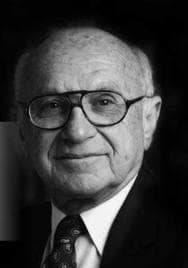
Milton Friedman was an American economist known for his contributions to the fields of economics and public policy. He is particularly recognized for his book "Capitalism and Freedom," which explores the relationship between economic and political freedom. Friedman was awarded the Nobel Memorial Prize in Economic Sciences in 1976 for his research on consumption analysis and monetary history.
Similar books
- The Road to Serfdom
Friedrich A. Hayek
4.2 (19k) average on GoodreadsBusinessExplores the dangers of central planning and the link between economic and political freedom.
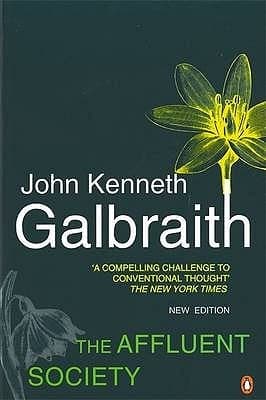
- The Affluent Society
John Kenneth Galbraith
4.0 (2k) average on GoodreadsBusinessGalbraith's The Affluent Society (1958) critiques the excesses of private consumption in the post-war era and argues for greater public investment in social goods. While Friedman emphasizes individual choice and private sector efficiency, Galbraith highlights the 'social imbalance' created by underfunded public services amidst private wealth. Galbraith would likely argue that Friedman's minimal state would exacerbate this imbalance, neglecting crucial collective needs.
- Steve Jobs
Walter Isaacson
4.1 (957k) average on GoodreadsBusinessSteve Jobs was a visionary who fused creativity and technology to revolutionize six industries and shape our digital world.
- Freakonomics: A Rogue Economist Explores the Hidden Side of Everything
Steven D. Levitt
4.0 (709k) average on GoodreadsBusinessThis book uses economic principles to reveal the surprising incentives behind everything from drug dealing and real estate to cheating teachers and the decline of crime.
- The Tipping Point: How Little Things Can Make a Big Difference
Malcolm Gladwell
4.0 (690k) average on GoodreadsBusinessMalcolm Gladwell explains how small, targeted actions can start widespread changes in trends, behaviors, and ideas.
- Outliers: The Story of Success
Malcolm Gladwell
4.2 (556k) average on GoodreadsBusinessMalcolm Gladwell argues that true success is not just about individual talent, but about the hidden advantages of culture, opportunity, and unique experiences that shape extraordinary lives.





Enjoyed the summary?
A summary gives you the shape of the book. The book itself has the detail, the examples and the voice.
Find Capitalism and Freedom on AmazonAs an Amazon Associate, BookBrief earns from qualifying purchases. How we're funded