
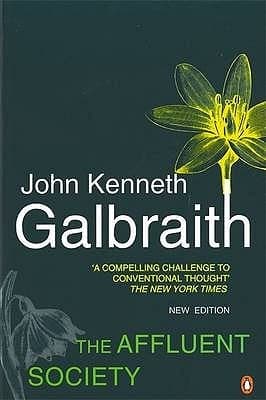
Core Idea
- Difficulty
- Medium
- Read it if
- You are interested in a foundational critique of post-war capitalism, the origins of modern economic thought on public goods, or the historical argument for greater public investment.
- Skip it if
- You are looking for a practical guide to personal finance, a defense of free-market fundamentalism, or a modern analysis of globalized economics.
Key Takeaways from The Affluent Society
The Conventional Wisdom's Flaw
Outdated economic beliefs hinder progress in an age of affluence.
Galbraith introduces 'conventional wisdom'—a set of widely accepted and comfortable ideas that form the basis of public discussion and policy. He argues that this wisdom, especially in economics, is mostly a leftover from an earlier, poorer time when scarcity was the main concern. In a rich society, these established truths become not just unhelpful but harmful. They stop us from seeing and solving new problems. The comfort of old ideas keeps us from pursuing effective solutions for today's challenges. This attachment to old ways means problems unique to abundance go unsolved because the tools used to analyze them are still focused on scarcity.
“The enemy of the conventional wisdom is not ideas but the march of events.”
In the book: Galbraith points to the persistent focus on increasing production and curbing inflation as primary economic goals, even when the society has achieved unprecedented levels of output and the threat of depression (born of underconsumption) has largely receded. The 'conventional wisdom' still frames these as paramount, ignoring new issues like public squalor amidst private wealth.
Try this: Challenge deeply held assumptions in your field or industry. Regularly question the 'way things have always been done' to identify if those methods are still serving current realities or are merely relics of past conditions. Embrace new data and trends, even if they contradict comfortable narratives.
Related ideas: conventional-wisdom, economic-paradigm-shift, intellectual-inertia
Private Affluence, Public Squalor
An imbalance in resource allocation prioritizes private goods over essential public services.
One of Galbraith's strongest criticisms is the sharp difference between the wealth of the private sector and the neglect of the public sector in rich societies. While individuals enjoy many consumer goods—cars with more chrome, many household items—public services like education, infrastructure, and city planning suffer from a lack of funds. This imbalance is not by chance; it results from common belief that private production is the only measure of economic health and that public spending is a burden. This leads to a society where people might drive new cars on broken roads or live in nice homes while their children attend underfunded schools. The social costs of this imbalance are great, reducing collective well-being despite individual prosperity.
“The line which divides our public from our private life has been a matter of increasing concern for the future of our society.”
In the book: Galbraith vividly contrasts the aggressive marketing and production of private automobiles with the deteriorating quality of public roads, parks, and schools. He notes the political ease of supporting tax cuts for private enterprise versus the political difficulty of securing funding for essential public services.
Try this: Advocate for balanced investment across sectors. As a citizen, support policies that allocate sufficient resources to public goods like education, healthcare, and infrastructure. As a business leader, consider the societal impact of your industry's externalities and support public-private partnerships that address shared community needs.
Related ideas: public-goods, market-failure, social-capital, infrastructure-deficit
The Dependence Effect
Advertising creates artificial desires, making consumption less about need and more about manipulation.
Galbraith introduces the 'dependence effect,' arguing that in a rich society, making goods often creates the demand for them. Through clever advertising and sales, desires are made rather than being natural. This challenges the classical economic idea that wants are decided independently and production simply meets them. If wants are created by production itself, then the need to increase production to meet these 'needs' becomes a circular argument. This manipulation of desire means much of what we consume is not driven by real need, but by created dissatisfaction and the constant search for new things. This weakens the traditional reason for always increasing output and points to a deeper societal problem where real desire is lost.
“As production becomes more complex, the needs to which it ministers are less directly the result of the individual's own desires and more of those which have been created for him.”
In the book: Galbraith highlights the massive advertising industry, whose sole purpose is to persuade consumers that they 'need' products they previously didn't even know existed. He contrasts this with genuine, organic needs like food or shelter in less affluent societies.
Try this: Cultivate critical consumer habits. Before purchasing, ask if the desire is intrinsic or if it has been externally influenced. Support businesses that focus on genuine utility and sustainability rather than engineered obsolescence and constant novelty. Question the messaging of advertising and its impact on your perception of needs.
Related ideas: consumerism, artificial-demand, advertising-impact, manufactured-wants
The Myth of Production Urgency
The relentless pursuit of increased output loses its moral imperative in an age of abundance.
For classical economics, increasing production was a moral duty, directly linked to reducing poverty and improving human well-being. Galbraith argues that in a rich society, this urgency is mostly a myth. When basic needs are met and much production serves artificially created wants, the societal benefits of ever-increasing output drop significantly. The constant focus on production leads to using up resources too quickly, harming the environment, and making society focus on material goods instead of other forms of well-being. The 'production imperative' becomes a reason to keep existing power structures and avoid hard questions about how resources are used, fairness, and what real progress means. It also adds to a culture of overwork and stress, where people feel forced to produce and consume constantly.
“The notion that the production of goods and services is the only source of well-being is a dangerous illusion.”
In the book: Galbraith challenges the idea that a larger GDP automatically translates into greater societal well-being, especially when much of that GDP is driven by industries creating and satisfying non-essential, advertised wants. He suggests that beyond a certain point, more production yields diminishing returns in terms of genuine human flourishing.
Try this: Re-evaluate personal and societal priorities beyond mere economic growth. Advocate for metrics of progress that include environmental health, social equity, and quality of life, not just GDP. Consider how your work contributes to genuine needs versus manufactured desires.
Related ideas: post-scarcity-economy, beyond-gdp, sustainable-development, quality-of-life
The Problem of Social Imbalance
Wealth accumulation in the private sector does not automatically trickle down to public needs.
Galbraith points out a basic social imbalance: while the private sector is good at making and selling consumer goods, it cannot adequately provide for collective needs. The things that drive private production—profit, market competition—do not work well for public services like education, healthcare, infrastructure, or environmental protection. Traditional thinking, however, often assumes that a strong private sector will somehow create the resources or solutions for public problems, or that public spending is always wasteful. This leads to a constant lack of investment in the very foundations of a good society, creating a situation where great private wealth exists alongside widespread public neglect. The problem is not a lack of resources, but a misallocation caused by biased ideas.
“The more goods we have, the more we have to worry about disposing of them.”
In the book: Galbraith points out that the affluence created by private industry often creates new public problems (e.g., pollution from factories, traffic congestion from cars) that the private sector is ill-equipped or unwilling to address, thus necessitating public intervention which is then criticized as 'wasteful'.
Try this: Recognize the distinct roles of the private and public sectors. Support policies that empower government to effectively address collective needs where market mechanisms fail. As a citizen, be willing to contribute to public goods through taxation, understanding its vital role in societal well-being.
Related ideas: collective-action-problem, public-sector-role, economic-inequality, resource-allocation
Inflation as the Scapegoat
Inflation is often a convenient distraction from deeper structural economic issues.
Galbraith criticizes the too strong focus on inflation as the main economic problem, arguing that it often serves as an easy excuse, distracting from deeper issues in a rich society. While inflation can be a problem, the obsession with stopping it, often by causing unemployment, ignores that a truly rich society should be able to manage stable prices without giving up other important social goals. He suggests that the fear of inflation is deeply rooted in common beliefs, comes from times of real economic instability, and is often used to justify policies that benefit some parts of society (e.g., creditors) at the expense of others (e.g., workers, public services). This fixation prevents a balanced understanding of economic health and takes attention away from issues like inequality or public investment.
“Inflation has become an almost theological problem, a subject of deep and solemn incantation.”
In the book: Galbraith discusses how economists and policymakers often react to even mild inflation with alarm, advocating for austerity measures that cut public spending or raise interest rates, potentially increasing unemployment, rather than addressing the root causes of imbalance.
Try this: Approach economic debates with skepticism, especially when a single issue like inflation is presented as the paramount concern. Seek to understand the underlying structural issues and the potential trade-offs of proposed solutions, rather than accepting simplistic narratives. Advocate for balanced economic policies that consider multiple objectives, not just price stability.
Related ideas: economic-dogma, monetary-policy, full-employment, political-economy
The Role of Education
Investment in human capital is crucial for societal progress, yet often neglected.
Galbraith strongly supports public investment in education, seeing it as a key part of societal progress and a solution to the problems of wealth. He argues that in a high-tech and complex economy, human capital—skilled, educated people—becomes the most valuable resource. Neglecting education, especially public education, is a self-defeating plan that increases inequality and slows innovation. While private industry may benefit from skilled workers, it cannot, and should not, be solely responsible for creating them. A well-educated population is essential not only for economic output but also for informed citizenship, critical thinking, and adapting to changing economic realities. This makes public education a necessary public good that a wealthy society must prioritize.
“The ultimate source of economic growth is the human mind.”
In the book: Galbraith highlights the paradox of a society rich in consumer goods but often stingy with its support for public schools, leading to underpaid teachers, outdated facilities, and a less competitive future workforce.
Try this: Prioritize and advocate for strong public education systems at all levels. As an individual, continuously pursue learning and skill development. As a leader, invest in employee training and development, recognizing human capital as a core asset.
Related ideas: human-capital, public-education, innovation-economy, social-mobility
Security and Leisure Over Production
An affluent society can afford to prioritize stability and quality of life.
Galbraith suggests that once basic material needs are met, a rich society should change its priorities from maximizing production to increasing security and leisure. The constant pressure to produce and consume leads to anxious, overworked people, sacrificing quality of life for an endless stream of often unnecessary goods. Instead, resources should go towards providing more economic security (e.g., through social safety nets, unemployment insurance) and expanding chances for leisure, thinking, and personal growth. This change would show a more mature understanding of human well-being, moving beyond just getting more material things to a richer, more satisfying life. It implies rethinking the 'work ethic' itself, questioning its absolute value in a time when much work serves artificial ends.
“The greatest source of social unrest is not poverty but inequality.”
In the book: Galbraith observes that the fear of unemployment, even in a wealthy society, drives a relentless work ethic and consumption pattern, even when much of the work contributes to unnecessary production. He argues that this fear could be mitigated by robust social safety nets, allowing for greater personal freedom and less anxiety.
Try this: Advocate for policies that prioritize social safety nets, healthcare, and work-life balance. As an individual, consciously prioritize leisure, personal growth, and community engagement over endless work and consumption. Re-evaluate your definition of 'success' beyond material accumulation.
Related ideas: leisure-economy, social-safety-net, work-life-balance, post-materialism
The Need for a New Economic Paradigm
Outdated economic theories are insufficient for addressing the challenges of abundance.
Galbraith's main message is the urgent need for a new economic system, one made for the realities of wealth rather than scarcity. The old economic theories, developed in a world of widespread poverty and limited production, are simply not equipped to analyze and solve the problems of a society where abundance is normal. Continuing to use these outdated frameworks leads to policy mistakes, wrong use of resources, and a failure to address important issues like social imbalance, environmental harm, and created wants. A new system must recognize the power of corporations, the role of advertising in shaping demand, the importance of public goods, and the decreasing returns of simply growing production. It requires courage to let go of comfortable but old ideas and embrace a more complete view of societal well-being.
“The ultimate problem is not how to make more things, but how to make the things we have better.”
In the book: Galbraith repeatedly shows how the conventional wisdom, rooted in classical economics, fails to explain or offer solutions for phenomena like the dependence effect or public squalor amidst private wealth. He argues these are not failures of the system, but failures of the analytical framework.
Try this: Be open to challenging foundational theories in your field when they no longer align with current realities. Seek interdisciplinary approaches to complex problems. Support economic thinkers and policymakers who advocate for innovative solutions rather than simply reinforcing existing dogmas.
Related ideas: economic-rethinking, paradigm-shift, institutional-economics, holistic-economics
The Affluent Society Quotes
“To have failed to solve the problem of producing a sufficiency of goods would have been to have failed, in a material sense, to have made good the promise of American life.”
“The final consequence of the productive preoccupation is the great modern industry. It is a world in which the production of goods is not the end but the means.”
“The greatest need in the affluent society is not for more and better products but for a more discriminating use of what we have.”
“The problem of poverty is not so much a problem of insufficient production as it is a problem of maldistribution.”
“The accepted ideas of economics, like the accepted ideas of politics and much else, are the ideas which are convenient to the user.”
“The more goods people have, the more they are persuaded that they need more.”
“The case for social balance rests on the fact that when private production is increased, there is a strong tendency for public services to lag.”
“The central problem of the modern economy is no longer how to produce enough, but how to consume enough.”
“Affluence has brought a new kind of poverty, which is the poverty of public services.”
“Inflation is a device for transferring wealth from the politically weak to the politically strong.”
“The individual's wants are not original with himself. They are a product of the society in which he lives.”
“The modern economy is a vast and intricate machine for converting the individual's wants into the state's needs.”
“In the affluent society, the production of goods is not the goal but the means to the goal of employment.”
“The line between what is private and what is public, what is individual and what is social, is one of the most difficult, and perhaps the most important, to draw in our time.”
Quiz
10 questions on the main ideas. Each answer comes with a short explanation.
Question 1
According to Galbraith in 'The Affluent Society', what is a primary reason for the continued emphasis on increased production in affluent societies, despite many goods being superfluous?
- The inherent human desire for continuous material improvement.
- The perpetuation of classical economic thought that originated in an era of scarcity.
- The natural depletion of resources requiring constant innovation in production.
- Government mandates to maintain full employment through industrial output.
Show answer
B. The perpetuation of classical economic thought that originated in an era of scarcity. Galbraith argues that classical economic ideas, born in an era of mass poverty and scarcity, continue to influence our thinking, leading us to overemphasize production even when many goods are artificially desired rather than truly needed in an affluent society.
Question 2
Galbraith criticizes the 'conventional wisdom' for its tendency to:
- Embrace radical new ideas too quickly.
- Resist adaptation to new circumstances and cling to outdated beliefs.
- Over-analyze complex economic data.
- Prioritize public welfare over private consumption.
Show answer
B. Resist adaptation to new circumstances and cling to outdated beliefs. A central theme of 'The Affluent Society' is Galbraith's critique of 'conventional wisdom' – ideas that are accepted because they are familiar and comfortable, even if they no longer fit current realities, particularly regarding economic abundance.
Question 3
What does Galbraith identify as the 'dependence effect' in 'The Affluent Society'?
- The reliance of developing nations on aid from affluent societies.
- The way in which production creates the wants it seeks to satisfy through advertising and salesmanship.
- The economic interdependence between the public and private sectors.
- The diminishing returns of increased capital investment.
Show answer
B. The way in which production creates the wants it seeks to satisfy through advertising and salesmanship. The 'dependence effect' is a key concept where Galbraith argues that in an affluent society, wants are increasingly not innate but are instead created by the very process of production through advertising and sales, making the satisfaction of these wants less indicative of true well-being.
Question 4
Galbraith argues that the imbalance between private affluence and public squalor is a direct result of:
- Over-taxation of private wealth.
- The disproportionate focus on private production and consumption over public services.
- Insufficient charitable donations from the wealthy.
- The inherent inefficiency of government programs.
Show answer
B. The disproportionate focus on private production and consumption over public services. A core argument of the book is that while private households enjoy increasing luxury, public services and infrastructure (like schools, parks, and sanitation) are neglected and underfunded, leading to a stark contrast between private affluence and public squalor.
Question 5
What does Galbraith mean by the term 'social balance'?
- The equilibrium between supply and demand in a free market.
- The appropriate relationship between private goods and public services.
- The distribution of wealth among different social classes.
- The stability of the global economic system.
Show answer
B. The appropriate relationship between private goods and public services. Galbraith uses 'social balance' to describe the proper distribution of resources between the private sector (producing consumer goods) and the public sector (providing essential services like education, infrastructure, and healthcare). He argues that this balance is often skewed towards private consumption.
Question 6
Galbraith suggests that the 'emancipation from the treadmill' of increasing production would allow society to focus more on:
- Expanding military spending.
- Leisure, education, and public services.
- Aggressive international trade policies.
- Further technological advancements in consumer goods.
Show answer
B. Leisure, education, and public services. By questioning the endless pursuit of material goods, Galbraith opens the door to considering how an affluent society could redirect its efforts towards enhancing quality of life through increased leisure, better education, and robust public services, rather than solely focusing on private consumption.
Question 7
What historical economic context does Galbraith argue classical economics was 'born in' and is therefore ill-adapted to modern affluence?
- The post-World War II economic boom.
- An era of mass poverty and scarcity.
- The Great Depression of the 1930s.
- The rise of mercantilism.
Show answer
B. An era of mass poverty and scarcity. Galbraith explicitly states that classical economics emerged from a world characterized by widespread poverty. This historical context shaped its focus on production and efficiency, which he argues is no longer entirely relevant or beneficial in an affluent society where basic needs are largely met.
Question 8
Galbraith suggests that the 'priority of production' is maintained in an affluent society partly because:
- It is the most efficient way to achieve income equality.
- It serves as a primary justification for the existing distribution of income and power.
- It is essential for national security in a competitive world.
- It guarantees environmental sustainability.
Show answer
B. It serves as a primary justification for the existing distribution of income and power. Galbraith argues that the emphasis on production serves not only economic goals but also social and political ones, providing a powerful justification for the current economic structure and the benefits enjoyed by those at the top.
Question 9
In 'The Affluent Society', Galbraith challenges the common assumption that economic growth inherently leads to:
- Increased national debt.
- Greater social well-being and satisfaction.
- Higher rates of inflation.
- A more powerful central government.
Show answer
B. Greater social well-being and satisfaction. A central critique is that the relentless pursuit of economic growth, particularly in private consumption, does not automatically translate into a higher quality of life or greater overall social well-being, especially when public needs are neglected.
Question 10
Galbraith suggests that the solution to 'economic inequality' in an affluent society requires a shift from:
- Increased private charity to government welfare programs.
- Focusing solely on increasing production to addressing the distribution of wealth and public goods.
- International trade agreements to domestic protectionism.
- Monetary policy adjustments to fiscal policy reforms.
Show answer
B. Focusing solely on increasing production to addressing the distribution of wealth and public goods. Galbraith argues that simply producing more goods doesn't solve inequality or improve overall societal well-being. Instead, he advocates for a broader focus that includes ensuring a more equitable distribution of the wealth generated and adequately funding public services.
The Affluent Society FAQ
What is the main argument of 'The Affluent Society'?
Galbraith argues that classical economic theories, developed during times of scarcity, are ill-suited for modern affluent societies. He critiques the obsession with production and private consumption while public services are neglected, highlighting the artificial creation of needs through advertising.
What is the 'conventional wisdom' that Galbraith critiques?
Conventional wisdom refers to the widely accepted economic beliefs and ideas that Galbraith challenges. He suggests these ideas, while once relevant, have become outdated and hinder our ability to address the unique problems of an affluent society, leading to misplaced priorities.
Does the 'trickle-down' effect work according to Galbraith?
Galbraith's work implicitly questions the effectiveness of 'trickle-down' economics by pointing out the imbalance between private affluence and public squalor. He suggests that simply increasing private wealth doesn't automatically solve societal problems or adequately fund public goods.
How does 'The Affluent Society' differ from classical economic texts?
Unlike classical economics, which often focuses on production efficiency and resource allocation in conditions of scarcity, Galbraith's book analyzes the problems arising from abundance. He shifts the focus to societal priorities, the role of advertising, and the neglected public sector.
What is 'private opulence and public squalor'?
This phrase encapsulates Galbraith's core observation that affluent societies often boast abundant private goods (cars, appliances) while public services (schools, parks, infrastructure) suffer from underfunding and neglect. It highlights a fundamental imbalance in resource allocation.
How does advertising play a role in the affluent society?
Galbraith argues that advertising creates 'artificial needs' to sustain demand for ever-increasing private production. This process contributes to the societal obsession with private consumption and diverts attention from genuine public needs.
Is 'The Affluent Society' still relevant today?
Yes, the book remains highly relevant. Its critiques of economic inequality, the influence of advertising, and the underfunding of public services resonate strongly with contemporary issues, making its insights valuable for understanding modern economic challenges.
What solutions does Galbraith propose for the problems of affluence?
Galbraith advocates for a rebalancing of societal priorities, emphasizing greater investment in public services and a more critical look at the necessity of endless private production. He calls for a shift from a production-centric to a more human-centric economic focus.
How is Galbraith's view different from libertarian economic thought?
Galbraith's views contrast sharply with libertarian thought, which typically advocates for minimal government intervention and maximal private sector freedom. Galbraith, a proponent of liberalism, argues for significant public sector investment and government action to address market failures and societal imbalances.
About the author
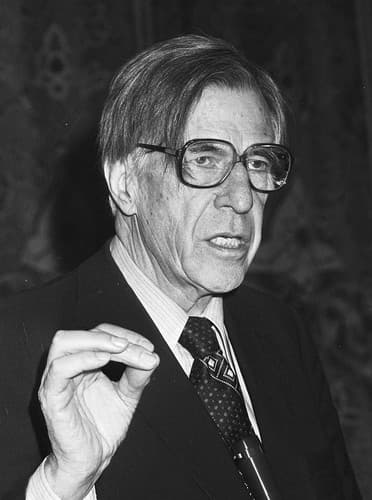
John Kenneth Galbraith was an American economist and author known for his influential works on economic theory and policy. His notable book, The Affluent Society, critiques consumerism and explores the relationship between wealth and social welfare. Galbraith's writings have significantly shaped discussions on economics in the 20th century.
Similar books
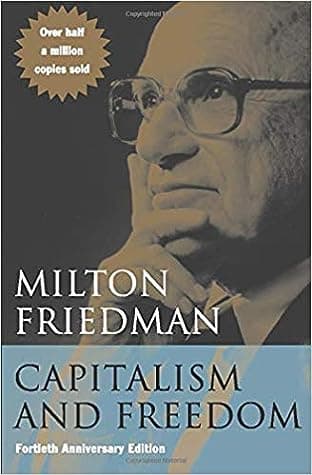
- Capitalism and Freedom
Milton Friedman
3.9 (11k) average on GoodreadsBusinessFriedman's Capitalism and Freedom (1962) stands in direct opposition to Galbraith's arguments. While Galbraith advocated for increased public spending and a more active role for government in correcting market imbalances, Friedman championed the virtues of free markets and limited government intervention. Friedman would argue that 'public squalor' is often a result of government inefficiency and distortion, not a failure of the market, and that individual liberty is best protected through economic freedom. Where Galbraith saw a need for collective action to address societal imbalance, Friedman saw the dangers of concentrated power and the superior efficiency of individual choice.
- The Road to Serfdom
Friedrich A. Hayek
4.2 (19k) average on GoodreadsBusinessHayek's The Road to Serfdom (1944) offers a philosophical and economic counterpoint to Galbraith's more interventionist leanings. While written earlier, Hayek's arguments against central planning and for the spontaneous order of the market would view Galbraith's proposed solutions as a dangerous step towards collectivism and a threat to individual liberty. Hayek emphasized the impossibility of central planners possessing all the necessary information to efficiently allocate resources, a stark contrast to Galbraith's implicit faith in the ability of informed public policy to correct societal imbalances. Hayek would likely see Galbraith's 'Dependence Effect' as an overreach, diminishing individual agency and justifying state control over consumer choices.
- Steve Jobs
Walter Isaacson
4.1 (957k) average on GoodreadsBusinessSteve Jobs was a visionary who fused creativity and technology to revolutionize six industries and shape our digital world.
- Freakonomics: A Rogue Economist Explores the Hidden Side of Everything
Steven D. Levitt
4.0 (709k) average on GoodreadsBusinessThis book uses economic principles to reveal the surprising incentives behind everything from drug dealing and real estate to cheating teachers and the decline of crime.
- The Tipping Point: How Little Things Can Make a Big Difference
Malcolm Gladwell
4.0 (690k) average on GoodreadsBusinessMalcolm Gladwell explains how small, targeted actions can start widespread changes in trends, behaviors, and ideas.
- Outliers: The Story of Success
Malcolm Gladwell
4.2 (556k) average on GoodreadsBusinessMalcolm Gladwell argues that true success is not just about individual talent, but about the hidden advantages of culture, opportunity, and unique experiences that shape extraordinary lives.





Enjoyed the summary?
A summary gives you the shape of the book. The book itself has the detail, the examples and the voice.
Find The Affluent Society on AmazonAs an Amazon Associate, BookBrief earns from qualifying purchases. How we're funded