
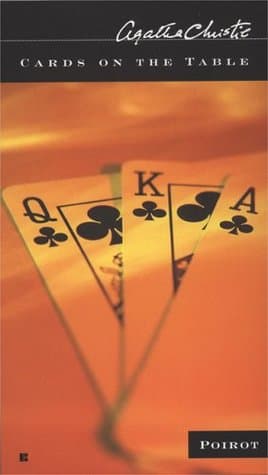
Synopsis
Covers the whole plot, including the ending.
- Difficulty
- Medium
- Pacing
- Moderate
- Mood
- Intriguing, Puzzling, Cerebral, Suspenseful
- Read it if
- You enjoy classic 'locked-room' style mysteries where the puzzle is paramount, and you like a large cast of suspects with hidden pasts.
- Skip it if
- You prefer fast-paced thrillers or mysteries with extensive action sequences, or you dislike a more cerebral, dialogue-driven investigation.
Cards on the Table Plot Summary
Covers the whole plot, including the ending.
Mr. Shaitana's Unconventional Dinner Party
Mr. Shaitana, a rich and unusual collector, hosts a dinner party for eight guests. The group includes four people he believes are 'successful murderers' and four well-known detectives: Hercule Poirot, Colonel Race, Superintendent Battle, and Ariadne Oliver. During the evening, Shaitana talks about his 'collection' of murderers to the detectives, hinting at their past wrongdoings. He then sets up a bridge game, putting the four suspected murderers in one room and the four detectives in another. This arrangement is meant to be a social experiment, letting Shaitana watch how both groups react, especially the 'murderers' under the unspoken gaze of the 'detectives'.
The Murder in Plain Sight
As the evening continues, with both bridge games going on, Shaitana stands by the fireplace in the room with the four suspected murderers: Dr. Roberts, Mrs. Lorrimer, Major Despard, and Anne Meredith. After some time, when the bridge games end, the guests find Shaitana's body. He has been stabbed with a stiletto, which is still in his chest. The shocking part is that Shaitana was in a room with only the four suspects, all of whom were focused on their bridge game, seemingly unable to commit the act without being seen by the others at their table. The room was well-lit, and the other table of detectives was in a separate room, making it seem impossible to identify the killer immediately.
Poirot's Investigation Begins
Hercule Poirot recognizes the unusual nature of a murder committed in such a closed and observed setting, so he immediately takes charge of the investigation. Colonel Race, Superintendent Battle, and Ariadne Oliver assist him. They agree that one of the four bridge players—Dr. Roberts, Mrs. Lorrimer, Major Despard, or Anne Meredith—must be the killer. Poirot decides to solve the case by looking into the psychological histories and past secrets of each suspect, rather than relying on the few traditional forensic clues. He believes the motive and opportunity will become clear once their prior 'successful' murders, as Shaitana suggested, are revealed. Each detective investigates a different suspect.
Dr. Roberts's Past
Poirot and Superintendent Battle begin their investigation into Dr. Roberts. They find that Roberts, a respected doctor, had an elderly, rich patient who died suddenly under suspicious circumstances. The man had an incurable illness, and his death was officially called natural, but there were rumors of an overdose of a sedative. Poirot suspects Roberts might have given a fatal dose, either out of a misguided sense of kindness or for money, as the patient had left a large sum to a charity Roberts was involved with. This past event fits with Shaitana's claim that Roberts was a 'successful murderer'.
Mrs. Lorrimer's Secret
Ariadne Oliver investigates Mrs. Lorrimer, a quiet and elegant woman. Mrs. Lorrimer eventually tells Poirot that she murdered her husband many years ago, poisoning him with arsenic. She says it was an act of desperation because he was abusive. Her confession, however, is delivered with a strange calm and lack of detail that makes Poirot suspicious. He wonders if she is confessing to protect someone else or if her confession is a planned move to mislead the investigation. The timing and way she admits it are too convenient, leading Poirot to look closer at the circumstances of her husband's death and her current relationships.
Major Despard's Expedition
Colonel Race focuses on Major Despard, a well-known explorer. Race uncovers an event from Despard's past during an expedition in the Amazon jungle, where a fellow explorer was shot and killed. Despard claimed it was an accident, a hunting rifle misfiring. However, there were whispers that Despard, perhaps fearing the other explorer would expose some illegal activity or claim a valuable discovery, deliberately caused the 'accident.' The remote location and lack of witnesses made it impossible to prove otherwise. This matches Shaitana's description of Despard as a murderer who escaped justice, adding suspicion to the current case.
Anne Meredith's Inheritance
Superintendent Battle investigates Anne Meredith, the youngest and seemingly most innocent of the suspects. They discover that Anne had been living as a companion to an elderly, rich woman who died suddenly, leaving Anne a large inheritance. The death was attributed to an accidental overdose of sleeping medicine. However, Battle finds evidence that Anne had a history of money problems and a tendency for petty theft. This pattern, along with the convenient inheritance, suggests Anne might have deliberately caused the overdose or withheld necessary medication to secure her financial future. Her seemingly delicate manner hides a possible ruthlessness, making her a strong suspect.
The Second Death and False Confession
As the investigation becomes more intense, Mrs. Lorrimer is found dead, having been poisoned. This complicates the case, as she had already confessed to her husband's murder. Shortly after, Anne Meredith tries to kill herself by poisoning but is saved. In a later interview, Anne confesses to murdering both Shaitana and Mrs. Lorrimer. She claims she killed Shaitana in a panic and Mrs. Lorrimer to silence her because Mrs. Lorrimer knew of her past wrongdoings. However, Poirot finds inconsistencies in her confession, especially about the details of Shaitana's murder, leading him to believe she is either being forced or protecting someone else.
Poirot Unravels the Truth
Poirot rejects Anne's confession and carefully reconstructs the bridge game, focusing on the seating, the scoring, and the specific hands played. He realizes that the murder could only have been committed by someone who had a moment of distraction or opportunity during the game. He pays close attention to the scoring pads and small details of the evening. Poirot understands that the killer must have manipulated the situation, perhaps by subtly changing the score or creating a diversion, to ensure the other players at their table were looking away at the crucial moment. This careful reconstruction reveals the killer's clever way of creating an alibi in plain sight.
The True Killer Revealed
Poirot finally reveals Dr. Roberts as the murderer of Mr. Shaitana and Mrs. Lorrimer. Roberts, a skilled card player, had subtly changed the bridge scorepad during the game. He had deliberately miscounted a trick or score, causing a brief moment of confusion and distraction among the other three players at his table (Mrs. Lorrimer, Major Despard, and Anne Meredith) as they checked the score. In that precise, quick moment when all eyes were on the scorepad, Roberts quickly stabbed Shaitana with the stiletto he had hidden. He then murdered Mrs. Lorrimer because she had realized his guilt and was about to expose him. Anne Meredith's confession was Roberts's desperate attempt to frame her, knowing her past made her a believable suspect. Poirot's careful analysis of the bridge scores and the psychology of the game proved Roberts's guilt, ending the complex case.
Principal Figures
Hercule Poirot
Protagonist
The meticulous Belgian detective who solves the seemingly impossible murder.
Poirot is a renowned private detective, known for his fastidious nature, his 'little grey cells,' and his belief in psychological analysis over brute force in solving crimes. He is observant, intelligent, and often uses an understanding of human nature to unravel complex mysteries. In this case, he is invited by Mr. Shaitana to observe a collection of murderers, which quickly turns into a real murder investigation. He takes the lead in piecing together the psychological profiles and alibis of the suspects.
Relationships: Mr. Shaitana (Acquaintance, host, victim); Colonel Race (Colleague, fellow investigator); Superintendent Battle (Colleague, fellow investigator); Ariadne Oliver (Colleague, fellow investigator, friend)
Mr. Shaitana
Victim/Catalyst
The eccentric, wealthy host who orchestrates his own demise.
Mr. Shaitana is a flamboyant and enigmatic figure, known for his love of the macabre and his manipulative nature. He views murder as an art form and enjoys 'collecting' individuals he believes have committed successful, unpunished crimes. His dinner party is a psychological experiment designed to bring these 'murderers' into contact with detectives. His provocative nature and desire to play games ultimately lead to his own murder, serving as the central catalyst for the plot.
Relationships: Hercule Poirot (Acquaintance, a detective he admires and challenges); Dr. Roberts (Guest, suspected murderer, actual murderer); Mrs. Lorrimer (Guest, suspected murderer, victim); Major Despard (Guest, suspected murderer); Anne Meredith (Guest, suspected murderer)
Dr. Roberts
Antagonist/Murderer
A respected doctor with a dark past and a cunning mind.
Dr. Roberts is a seemingly charming and highly respected physician, presented as one of Shaitana's 'successful murderers.' He is intelligent, composed, and an excellent bridge player. His past involves the suspicious death of a wealthy patient. He is initially one of the four suspects, but Poirot eventually unmasks him as the killer of both Mr. Shaitana and Mrs. Lorrimer. His motive stems from a desire to maintain his impeccable reputation and prevent exposure of his past crimes, using his sharp intellect to create a seemingly perfect alibi.
Relationships: Mr. Shaitana (Victim, host); Mrs. Lorrimer (Fellow suspect, later victim); Hercule Poirot (Investigator)
Mrs. Lorrimer
Suspect/Victim
An elegant, quiet woman with a dark secret and a tragic fate.
Mrs. Lorrimer is a well-bred, reserved woman who is one of the four suspected murderers. She possesses a quiet dignity and is a formidable bridge player. She eventually confesses to Poirot that she murdered her abusive husband years ago, but her confession is later revealed to be a partial truth or a strategic move. Her calm demeanor hides a deep understanding of human nature and a capacity for decisive action. She becomes the second victim, murdered to prevent her from revealing the true killer.
Relationships: Mr. Shaitana (Host, victim); Dr. Roberts (Fellow suspect, her murderer); Hercule Poirot (Investigator)
Major Despard
Suspect
A rugged explorer with a history of suspicious 'accidents'.
Major Despard is a seasoned explorer, brave and adventurous, and one of the four suspected murderers. His past includes a controversial incident during an expedition where a companion died under mysterious circumstances, attributed to a hunting accident. He is portrayed as honorable and straightforward, despite the cloud over his past. He cooperates with the investigation, maintaining his innocence in both the past and present murders. His character serves to highlight the difficulty of proving guilt in remote or unwitnessed situations.
Relationships: Mr. Shaitana (Host, victim); Anne Meredith (Fellow suspect, later love interest); Colonel Race (Investigator)
Anne Meredith
Suspect/Red Herring
A seemingly naive young woman with a history of petty crime and a convenient inheritance.
Anne Meredith is the youngest of the four suspected murderers, seemingly innocent and fragile. She has a history of petty theft and gained a significant inheritance after the suspicious death of her elderly employer. She is easily flustered and prone to emotional outbursts. She attempts suicide and confesses to the murders, but her confession is ultimately revealed to be false, manipulated by the true killer. She serves as a major red herring, her past making her a plausible, albeit easily framed, suspect.
Relationships: Mr. Shaitana (Host, victim); Major Despard (Fellow suspect, later love interest); Superintendent Battle (Investigator)
Colonel Race
Supporting
A calm, experienced Secret Service agent assisting Poirot.
Colonel Race is a highly capable and unflappable agent from the Secret Service. He is intelligent, practical, and offers a grounded perspective to the investigation. He works closely with Poirot, often handling the more physical aspects of the inquiry or following leads that require a more direct approach. His experience in international espionage and his calm demeanor make him an invaluable asset in the team of detectives.
Relationships: Hercule Poirot (Colleague, fellow investigator); Superintendent Battle (Colleague, fellow investigator); Ariadne Oliver (Colleague, fellow investigator); Major Despard (His assigned suspect)
Superintendent Battle
Supporting
A steady Scotland Yard detective, a reliable and practical investigator.
Superintendent Battle is a solid, dependable detective from Scotland Yard. He is practical, methodical, and provides the official police perspective to the investigation. He is less concerned with psychological nuances than Poirot but excels at gathering facts and maintaining order. His presence grounds the more theoretical aspects of Poirot's investigation, ensuring that all procedural avenues are explored.
Relationships: Hercule Poirot (Colleague, fellow investigator); Colonel Race (Colleague, fellow investigator); Ariadne Oliver (Colleague, fellow investigator); Anne Meredith (His assigned suspect)
Ariadne Oliver
Supporting
A famous mystery novelist, offering intuitive insights and a touch of comic relief.
Ariadne Oliver is a well-known writer of detective fiction, often serving as a stand-in for Agatha Christie herself. She is intuitive, somewhat disorganized, and prone to dramatic pronouncements. While not a professional detective, her understanding of human nature and her creative mind sometimes provide unexpected insights. She is tasked with investigating Mrs. Lorrimer and adds a unique, often humorous, perspective to the team, sometimes stumbling upon truths through less conventional means.
Relationships: Hercule Poirot (Colleague, fellow investigator, friend); Colonel Race (Colleague, fellow investigator); Superintendent Battle (Colleague, fellow investigator); Mrs. Lorrimer (Her assigned suspect)
Themes & Insights
The Nature of Justice and Unpunished Crime
The novel explores the idea of justice, especially for 'successful murderers' who have avoided legal consequences. Shaitana's reason for the party is to expose these individuals, even if just for his own entertainment. Poirot deals with the concept of these unpunished crimes affecting the present. The investigation looks into the suspects' past 'murders', showing how past actions, even if not legally proven, continue to shape their lives and interactions, eventually leading to a new murder to cover the old ones.
“'There are murderers who are still at large... who have been successful... who have never been found out.'”
Psychological Observation vs. Forensic Evidence
Poirot clearly states that this case will be solved through understanding people rather than traditional forensic evidence, which is scarce. The murder happens in plain sight, making the 'how' less about physical evidence and more about understanding human behavior, motive, and what people notice. Poirot and his team carefully analyze the personalities, pasts, and reactions of the suspects, believing the truth lies in their minds and actions. The bridge game itself becomes a psychological battleground, where the killer's method relies on using human attention and distraction.
“'This is a case, my friends, that will be solved not by the finding of fingerprints, nor by the discovery of a weapon, but by the study of the human heart and mind.'”
The Illusion of Control and Perception
Mr. Shaitana believes he is in control, setting up a clever social experiment. However, his attempt to play God results in his own death, showing that control is an illusion when dealing with dangerous people. The murder itself is a lesson in perception: it happens in a well-lit room with four witnesses, yet no one sees it. This shows how easily human perception can be tricked by distraction, expectation, and the seemingly harmless details of a social game like bridge. The killer expertly uses this to create an alibi that is openly visible.
“'The most dangerous game of all is to play with human lives.'”
The Mask of Respectability
Many of the characters, especially Dr. Roberts and Mrs. Lorrimer, present themselves as respectable and normal to the world. Dr. Roberts is a well-regarded doctor, and Mrs. Lorrimer is an elegant socialite. Yet, underneath these appearances lie dark secrets and past crimes. The novel explores how people maintain these facades and the lengths they will go to protect them. The murder of Shaitana, and later Mrs. Lorrimer, are direct results of the killer's desperate efforts to keep their true nature from being exposed.
“'It is always the quiet ones, is it not? The ones who seem so respectable.'”
Plot Devices & Literary Techniques
The Locked Room Mystery (Psychological Variant)
A murder committed in a seemingly impossible setting, challenging conventional detection.
While not a literal locked room, the murder of Mr. Shaitana presents the characteristics of one. He is killed in a room with only four other people, all of whom are engrossed in a bridge game and ostensibly facing away from him or otherwise occupied. The impossibility isn't physical but perceptual. This device forces Poirot to look beyond physical evidence and focus on the psychological dynamics, timing, and subtle manipulations of attention to uncover how the killer created an 'invisible' moment for the crime.
The Red Herring
Misleading clues and false suspects designed to divert the investigation.
The novel is rich with red herrings. Each of the four suspected murderers has a plausible past 'successful' murder, making them all strong initial candidates. Mrs. Lorrimer's confession to her husband's murder, and later Anne Meredith's false confession to both murders, are significant red herrings designed to mislead Poirot and the other detectives. These diversions force the investigators to constantly question assumptions and delve deeper into the true motives and methods, rather than accepting convenient explanations.
The Expert Bridge Game
A central element that provides the setting, alibi, and crucial clues for the murder.
The bridge game is more than just a backdrop; it is integral to the murder's execution and detection. The specific seating arrangements, the concentration required by the players, and especially the scoring process become the key to understanding how the killer created a moment of distraction. Poirot's meticulous reconstruction of the game, down to the scorepad entries, is what ultimately exposes the murderer. It serves as both the perfect alibi and the undoing of the killer.
The Parallel Investigations
Four detectives each focus on one primary suspect, combining their findings.
Instead of a single detective, Poirot orchestrates a team effort where each of the four detectives (Poirot, Race, Battle, Oliver) takes primary responsibility for investigating one of the four suspects. This device allows for a comprehensive and multi-faceted approach to uncovering the pasts and personalities of each individual. The pooling of their distinct findings and perspectives helps to build a complete picture, revealing connections and contradictions that a solo investigation might miss, ultimately contributing to the final solution.
Cards on the Table Quotes
“The most important thing to remember about a murderer is that he is a human being. Not a monster, not a fiend, but a human being.”
“I do not approve of murder. But when a man is a bore, it is a great temptation.”
“If you want to know what a man is really like, take a good look at how he treats his inferiors, not his equals.”
“There are some people who are naturally born to be victims. They invite trouble.”
“It is the small things, the insignificant things, that often give the game away.”
“Everyone has a secret. Some are just better at keeping them than others.”
“The truth, my friend, is often far stranger than fiction.”
“One does not commit murder in the hope of getting caught.”
“The human mind is a very curious thing. It plays tricks on us, makes us see what we want to see.”
“It is not always the obvious suspect who is the guilty one.”
“A game of bridge is a very revealing thing. It shows you the true character of a person.”
“There is no such thing as a perfect crime. Only imperfect detection.”
“Fear can make people do very foolish things.”
“The greatest enemy of truth is very often not the lie, but the myth, the persistent, persuasive, and unrealistic myth.”
“It is not the face but the expressions that make a woman beautiful.”
Quiz
10 questions on the plot and the characters. Each answer comes with a short explanation.
Question 1
What is the specific setup of Mr. Shaitana's dinner party that leads to his murder?
- Guests are playing charades in separate rooms.
- Guests are playing two simultaneous bridge games in two separate rooms, with Mr. Shaitana in one room by himself 'observing'.
- Guests are watching a magic show in the drawing-room.
- Guests are engaged in a scavenger hunt throughout the house.
Show answer
B. Guests are playing two simultaneous bridge games in two separate rooms, with Mr. Shaitana in one room by himself 'observing'. Mr. Shaitana arranged his party so that two bridge games were played in separate rooms, while he sat by the fire in one of the rooms, seemingly observing, but actually setting himself up to be murdered unseen by the bridge players.
Question 2
Which of the following detectives is NOT part of the 'Four Musketeers' investigating team assembled by Poirot?
- Superintendent Battle
- Colonel Race
- Chief Inspector Japp
- Mrs. Ariadne Oliver
Show answer
C. Chief Inspector Japp The 'Four Musketeers' are Hercule Poirot, Superintendent Battle, Colonel Race, and Mrs. Ariadne Oliver. Chief Inspector Japp is a frequent associate of Poirot but is not part of this specific investigative team.
Question 3
What is the unique 'collection' Mr. Shaitana boasts about to Poirot, which foreshadows the evening's events?
- A collection of rare antique playing cards.
- A collection of people who have committed murder and gotten away with it.
- A collection of exotic poisons.
- A collection of first edition mystery novels.
Show answer
B. A collection of people who have committed murder and gotten away with it. Mr. Shaitana's 'collection' is the eight specific guests at his party, four of whom he believes are murderers who have escaped justice, and four of whom are detectives.
Question 4
What is the murder weapon used to kill Mr. Shaitana?
- A poisoned drink.
- A stiletto taken from his own display.
- A heavy poker from the fireplace.
- A gunshot from a small pistol.
Show answer
B. A stiletto taken from his own display. Mr. Shaitana was stabbed with one of the ornamental stilettos from his own wall display, which was conveniently located near his chair.
Question 5
Which character is known for writing detective novels and contributes to the psychological profiling of the suspects?
- Dr. Roberts
- Mrs. Lorrimer
- Mrs. Ariadne Oliver
- Miss Meredith
Show answer
C. Mrs. Ariadne Oliver Mrs. Ariadne Oliver is a well-known detective novelist in the story, and her insights into human nature and the mechanics of murder are often humorous but also insightful for the investigation.
Question 6
What is the primary motive Poirot attributes to Mr. Shaitana for inviting the specific group of people to his party?
- To find a new bridge partner.
- To expose the murderers he believed were among them.
- To indulge his morbid curiosity and manipulate people, seeing if one of the murderers would kill again.
- To test the skills of the famous detectives.
Show answer
C. To indulge his morbid curiosity and manipulate people, seeing if one of the murderers would kill again. Shaitana was a master manipulator who enjoyed playing dangerous games. He wasn't necessarily trying to expose the murderers, but rather to observe their reactions and perhaps provoke one of them into a new 'performance'.
Question 7
What common characteristic defines the four 'murderer' suspects in Shaitana's eyes?
- They all have a history of gambling debts.
- They have all committed a past murder that was never officially solved.
- They are all known for their exceptional bridge skills.
- They all had a personal grudge against Mr. Shaitana.
Show answer
B. They have all committed a past murder that was never officially solved. Shaitana's 'collection' was made up of individuals he suspected had committed murder and evaded justice, which was the premise of his dangerous game.
Question 8
What is the crucial piece of evidence related to the bridge game that Poirot uses to deduce the killer's identity?
- A dropped playing card found near Shaitana.
- The irregular bidding and play of the bridge hands, indicating distraction or deliberate misplay.
- A marked deck of cards used in one of the games.
- The absence of a specific player during a critical moment.
Show answer
B. The irregular bidding and play of the bridge hands, indicating distraction or deliberate misplay. Poirot meticulously analyzes the score sheets and the actual play of the bridge hands. He realizes that one player's erratic and uncharacteristic bidding and play indicate they were preoccupied and committing a murder during the game.
Question 9
What is the ultimate fate of the murderer of Mr. Shaitana?
- They are arrested and stand trial.
- They commit suicide after being exposed by Poirot.
- They escape the country and are never caught.
- They are accidentally killed by another character.
Show answer
B. They commit suicide after being exposed by Poirot. After Poirot exposes the killer, the individual commits suicide by an overdose of sleeping draught, mirroring one of their previous 'unsolved' murders.
Question 10
Which of the following best describes the overall theme of 'Cards on the Table'?
- The triumph of good over evil through direct confrontation.
- The psychological study of murderers and the subtle art of detection.
- The inherent unfairness of the justice system for the wealthy.
- The importance of social status in solving crimes.
Show answer
B. The psychological study of murderers and the subtle art of detection. The novel delves deeply into the psychology of the 'undetected' murderers and how their past acts shape their present, making it a psychological study rather than just a simple whodunit. Poirot's method focuses heavily on the suspects' minds and motives.
Cards on the Table FAQ
What is the central premise of 'Cards on the Table'?
The novel centers on the murder of the eccentric and manipulative Mr. Shaitana during a dinner party. He is found dead in his armchair after a game of bridge, with eight guests present in the room, four of whom are detectives invited by Shaitana himself, and the other four are his suspected murderers.
Who are the four detectives Mr. Shaitana invites to his dinner party?
Mr. Shaitana's unique dinner party includes four distinguished investigators: Hercule Poirot, Superintendent Battle of Scotland Yard, Colonel Race of the Secret Service, and the crime novelist Mrs. Ariadne Oliver. They are invited not to solve a crime, but to observe potential murderers.
Who are the four individuals suspected of Mr. Shaitana's murder?
The four suspects are Dr. Roberts, Mrs. Lorrimer, Major Despard, and Miss Meredith. Each of them has a past history that Mr. Shaitana, in his manipulative way, has uncovered and uses to 'collect' them as potential murderers.
What is Mr. Shaitana's motive for inviting both detectives and suspected murderers to the same party?
Mr. Shaitana, an aesthete of crime, considers murder an art form and views himself as a collector of murderers. His motive is to stage a real-life 'exhibition' where the detectives can observe his 'collection' of potential killers, finding amusement in the dangerous game he orchestrates.
How is Mr. Shaitana murdered, and why is it so perplexing?
Mr. Shaitana is stabbed with a stiletto during the bridge game, while all eight guests are in the same room. The perplexing nature comes from the fact that he is killed in plain sight, yet no one claims to have seen anything, making it seem impossible that one of the four suspects committed the crime without detection.
What is the significance of the bridge scores in the investigation?
The bridge scores are crucial because they reveal who played with whom and the intensity of their focus. Poirot uses these details to deduce who was most likely distracted or who had an opportunity, as well as to understand the psychological state of the players during the murder.
How does Poirot use Mrs. Ariadne Oliver's insights in the case?
Mrs. Ariadne Oliver, though a novelist, offers valuable insights not through direct detection but through her understanding of human nature and motive, often from a writer's perspective. Her observations, particularly about the subtle behaviors of the suspects, help Poirot piece together the psychological puzzle.
What is the 'hidden detail' regarding Miss Meredith's past that Shaitana knew?
Mr. Shaitana knew that Miss Meredith had previously poisoned a former employer, Miss Anne Meredith, out of greed. This past crime, which went unpunished, is the 'card' Shaitana held against her, making her one of his 'collectables' and a prime suspect.
What is the true nature of Mrs. Lorrimer's 'confession' and its implications?
Mrs. Lorrimer 'confesses' to Poirot that she killed her husband, but this is later revealed to be a partial truth and a misdirection. She takes the blame to protect Major Despard, whom she mistakenly believes committed the murder, highlighting her deep affection and self-sacrificing nature.
How does Dr. Roberts' profession influence his psychological profile as a suspect?
As a doctor, Roberts possesses knowledge of poisons and medical procedures, which makes him a plausible murderer in Shaitana's eyes, as he previously murdered a patient. His professional detachment and ability to act without immediate suspicion contribute to his psychological complexity.
What psychological insight does Poirot gain from observing the suspects' bridge playing styles?
Poirot observes that the suspects' bridge playing styles reflect their personalities and emotional states. For example, Mrs. Lorrimer's precise, controlled play suggests a meticulous mind, while Miss Meredith's nervous, inconsistent play hints at underlying anxiety and guilt.
How does Mr. Shaitana's own personality contribute to the psychological tension of the novel?
Mr. Shaitana's manipulative, theatrical, and amoral personality sets the stage for the entire conflict. His enjoyment of psychological games and his desire to 'collect' murderers create an atmosphere of intense tension and paranoia among his guests, leading directly to his demise.
What role does guilt play in the behavior of the four suspects?
Guilt plays a significant role, driving the suspects' actions and reactions throughout the investigation. Miss Meredith's nervousness, Mrs. Lorrimer's self-sacrificing confession, and Dr. Roberts's dismissive attitude are all rooted in their past transgressions, which Shaitana exploited.
Is Mr. Shaitana's murder a 'justified' act given his manipulative nature?
This is debatable. While Shaitana's manipulation and enjoyment of others' past crimes are morally reprehensible, his murder is still a crime. The novel explores the idea that even those who toy with evil do not necessarily deserve a violent end, but it also highlights the extreme provocation he inflicted.
How does the novel challenge the reader's perception of 'fair play' in detective fiction?
The novel challenges 'fair play' by presenting a murder committed in plain sight, seemingly defying logical explanation. The true method relies on subtle psychological manipulation and an unexpected twist regarding the murderer's identity, which is hidden in plain view, forcing the reader to re-evaluate what constitutes an observable clue.
What is the ultimate message about justice that 'Cards on the Table' conveys?
The novel suggests that while some crimes may escape legal justice, there is a form of poetic justice or consequence for those who live with their past actions. Shaitana, by playing with fire, ultimately meets his end, and the murderer, though clever, is eventually exposed, reinforcing the idea that truth will out.
How does the structure of the four detectives working together influence the investigation?
The collaborative yet distinct approaches of Poirot, Battle, Race, and Oliver provide a multi-faceted investigation. Poirot focuses on psychology, Battle on police procedure, Race on international connections, and Oliver on human nature, allowing for a comprehensive attack on the problem from various angles.
What is the significance of the title 'Cards on the Table'?
The title refers literally to the bridge game played during the murder, but metaphorically to the concept of truth and revelation. Shaitana's 'cards' are the past crimes of his guests, which he lays 'on the table.' Poirot's task is to reveal the murderer's hidden 'card' and lay all truths bare.
About the author
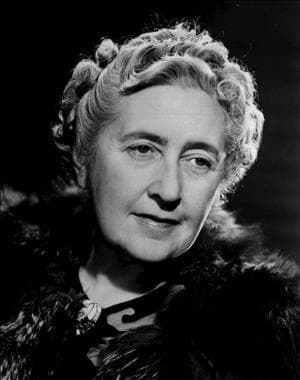
Dame Agatha Mary Clarissa Christie, Lady Mallowan, was an English writer known for her 66 detective novels and 14 short story collections, particularly those revolving around fictional detectives Hercule Poirot and Miss Marple. She also wrote the world's longest-running play, the murder mystery The Mousetrap, which has been performed in the West End since 1952. A writer during the "Golden Age of Detective Fiction", Christie has been called the "Queen of Crime". She also wrote six novels under the pseudonym Mary Westmacott. In 1971, she was made a Dame (DBE) by Queen Elizabeth II for her contributions to literature. Guinness World Records lists Christie as the best-selling fiction writer of all time, her novels having sold more than two billion copies.
Similar books
- And Then There Were None
Agatha Christie
4.3 (822k) average on GoodreadsThrillerFeatures a group of people with past secrets brought together, leading to murder.
- The Big Sleep
Raymond Chandler
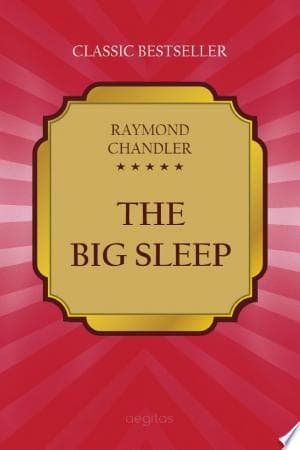
4.0 (126k) average on GoodreadsThrillerChandler's 'The Big Sleep' (1939) represents a stark contrast in the detective genre. While 'Cards on the Table' is a 'fair play' puzzle relying on intellectual deduction and carefully laid clues, 'The Big Sleep' embodies hard-boiled detective fiction, emphasizing atmosphere, moral ambiguity, and the gritty realities of crime in a corrupt world. Poirot's logical, almost clinical approach differs significantly from Philip Marlowe's cynical, street-smart investigation, often uncovering more than just the killer but also the societal rot beneath. The focus in 'Cards' is strictly on the 'who' and 'how'; in 'The Big Sleep,' it's often more about the 'why' and the pervading sense of moral decay.
- Angels & Demons
Dan Brown
3.9 (2.7M) average on GoodreadsThrillerA Harvard symbologist races through Rome's ancient sites, deciphering cryptic clues to unmask the Illuminati and stop a vengeful plot to destroy the Vatican with a stolen antimatter weapon.
- Gone Girl
Gillian Flynn
4.1 (2.3M) average on GoodreadsThrillerA wife's sudden disappearance on her fifth anniversary reveals a web of lies and psychological warfare, exposing the secrets within a seemingly perfect marriage.
- The Girl on the Train
Paula Hawkins
3.9 (2.1M) average on GoodreadsThrillerA woman’s fascination with a seemingly perfect couple she watches from her daily train commute leads her into a dark investigation when she witnesses something that shatters their idyllic image.
- The Da Vinci Code
Dan Brown
3.9 (1.9M) average on GoodreadsThrillerA symbologist and a cryptologist race through European landmarks, deciphering ancient codes and uncovering a conspiracy that could rewrite the foundations of Christianity.





Enjoyed the summary?
A summary gives you the shape of the book. The book itself has the detail, the examples and the voice.
Find Cards on the Table on AmazonAs an Amazon Associate, BookBrief earns from qualifying purchases. How we're funded