
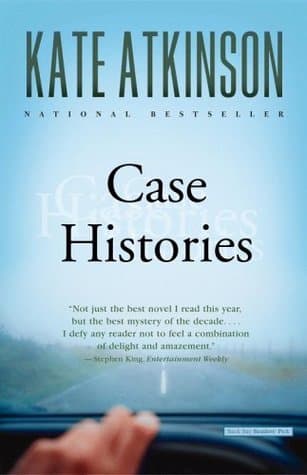
Synopsis
Covers the whole plot, including the ending.
- Difficulty
- Medium
- Pacing
- Moderate
- Mood
- Melancholy, Introspective, Witty, Suspenseful
- Read it if
- You enjoy character-driven mysteries with multiple interwoven plotlines, a touch of literary flair, and a melancholic yet hopeful tone.
- Skip it if
- You prefer fast-paced, action-heavy thrillers or straightforward, single-case mysteries.
Case Histories Plot Summary
Covers the whole plot, including the ending.
Olivia's Disappearance and the Caster-Chambers Family Tragedy
In 1970, five-year-old Olivia Caster-Chambers disappears from her family's garden in Suffolk while her sisters, Amelia and Julia, play nearby. The family, including parents Graham and Binky, and governess Miss MacDonald, are distraught. Olivia is never found. The incident breaks the family; Graham withdraws, Binky drinks and later dies by suicide, and the sisters carry deep emotional scars. Thirty years later, Amelia, a successful lawyer, still feels the weight of her sister's disappearance. She hires private investigator Jackson Brodie, prompted by her sister Julia, who thinks she saw Olivia recently.
Laura Wyre's Murder and the Office Betrayals
In 1994, young office worker Laura Wyre is murdered in her father's office in Cambridge. Her father, a solicitor named Philip Wyre, finds her body. The police investigation, led by Inspector Marcus, focuses on a recent ex-boyfriend, but no one is convicted. Laura's older sister, Joanna, a doctor, feels deep guilt and unresolved grief. Years later, Joanna, still troubled by her sister's unsolved murder, contacts Jackson Brodie after seeing his advertisement. She wants answers, believing there is more to Laura's death than a random attack, especially after a former colleague, Neil Hunter, died by suicide.
Michelle's Desperation and the Axford Family's Demise
In 1979, Michelle Axford, a young mother overwhelmed by her demanding baby, Adam, and her controlling husband, Patrick, breaks. In a fit of desperation, she kills both her baby and her husband with an axe in their home. Michelle then flees, leaving the bodies undiscovered for days. The gruesome scene is found, and Michelle is the main suspect. She is caught but found mentally unfit for trial and institutionalized. Decades later, Michelle is released and tries to rebuild her life. She works at a local library and tries to stay unnoticed, but the past continues to affect her and those around her.
Jackson Brodie's Personal Life and the Start of Investigations
Jackson Brodie, a former police inspector, is now a private investigator in Cambridge. He recently divorced his wife, Josie, and struggles with the emotional fallout, including limited time with his son, Nathan. Jackson is also haunted by his own sister Niamh's unsolved murder years ago, which makes him understand his clients' pain. He takes Amelia Caster-Chambers's case, interested in Olivia's decades-old disappearance. Soon after, Joanna Wyre asks him about her sister Laura's murder. Jackson starts looking into the past, sifting through old police reports, interviewing surviving witnesses, and putting together fractured memories.
Connections in the Caster-Chambers Case
Jackson's investigation into Olivia's disappearance shows a troubled family. He interviews Miss MacDonald, the former governess, who is now elderly. Miss MacDonald hints at Graham Caster-Chambers's controlling nature and his obsession with his children. Jackson also learns about the family's financial problems despite their aristocratic image. He finds out that Olivia was not Graham's biological child, but the result of an affair Binky had with an American soldier. This adds a new layer of motive and secrecy to the family's history, suggesting Graham might have wanted Olivia gone, or at least to hide her true parentage.
Unraveling Laura Wyre's Office Life
Jackson's investigation into Laura Wyre's murder looks at her life at the solicitor's office. He interviews former colleagues, including Neil Hunter, who later died by suicide. He learns that Laura was having an affair with a married colleague, John Jones, and that other female employees, especially Shirley, who was secretly in love with John, felt jealousy and resentment towards her. Jackson discovers that Laura was pregnant and had an abortion shortly before her death. This new information suggests a more complex motive than a random attack, implicating someone close to Laura who might have felt betrayed or threatened by her secrets.
The Axford Family's Hidden Past
Jackson's investigation into the Caster-Chambers case leads him to the area where the Axford family lived. He learns about the horrific axe murders committed by Michelle Axford. Michelle, now working in a library, tries to avoid anyone who might recognize her past. Jackson eventually meets Michelle, and the details of her crime slowly come out. He learns about her severe postpartum depression, her husband Patrick's dismissive attitude, and the desperate situation that led her to commit the murders. This case, though seemingly separate, shows the destructive power of desperation and the lasting effect of unresolved trauma.
The Intertwined Fates of the Caster-Chambers and Wyre Families
Jackson finds a link between the Caster-Chambers and Wyre cases: Philip Wyre, Laura's father, was the solicitor who handled the Caster-Chambers's affairs around the time Olivia disappeared. He also learns that Philip Wyre had an affair with Binky Caster-Chambers, making him Olivia's biological father. This explains Binky's sadness and Graham's resentment. It also suggests that Laura Wyre might have found out this secret, possibly leading to her murder. The connection between the two families shows a web of infidelity, secrets, and betrayal that spans decades and directly links the two cases.
The Truth Behind Olivia's Disappearance
Through his investigation, Jackson uncovers the truth about Olivia's disappearance. He discovers that Graham Caster-Chambers, angry about his wife's affair and Olivia's true father, arranged Olivia's disappearance, making it look like an abduction. He then gave Olivia to an acquaintance, a woman named Shirley, to be raised elsewhere. Shirley, the same Shirley who worked with Laura Wyre, was having an affair with Philip Wyre. This shows a chilling conspiracy and the extent of Graham's cruelty. Olivia, now an adult, lives under a different name, unaware of her true parents until Jackson's investigation reveals it.
Resolution of Laura Wyre's Murder
Jackson puts together the final pieces of Laura Wyre's murder. He discovers that Shirley, the same woman who raised Olivia and had an affair with Philip Wyre, also killed Laura. Shirley, driven by jealousy and the fear that Laura would expose her affair with Philip and the truth about Olivia's parentage, murdered Laura in the office. The motive was not random but deeply personal, mixed with the secrets of both families. Jackson presents his findings, bringing some closure to Joanna Wyre and exposing the long-hidden truths that connected the tragic events.
Jackson's Personal Reflections and Future
With the Caster-Chambers and Wyre cases mostly solved, Jackson thinks about grief, secrets, and the lasting effects of the past. He finds satisfaction in bringing answers to his clients, even if the truths are painful. While these cases provide some emotional release, his own sister Niamh's murder remains unsolved, a constant ache that drives his work. The experience deepens his understanding of people and family relationships. He continues to navigate his personal life, working for a better relationship with his son and moving forward, ready for the next case.
Principal Figures
Jackson Brodie
Protagonist
A former police inspector turned private investigator haunted by his past.
Jackson Brodie is a melancholic but empathetic private investigator. A former police inspector, he carries the heavy burden of his sister Niamh's unsolved murder from his childhood, which profoundly influences his dedication to bringing closure to others. He is recently divorced from Josie and struggles with co-parenting their son, Nathan. Jackson often finds himself drawn to cases with deep emotional resonance, particularly those involving missing children or unsolved family tragedies. He is observant, persistent, and possesses a dry wit, often reflecting on the absurdities of life and the complexities of human nature. He is driven by a deep sense of justice and a desire to understand the 'why' behind people's actions.
Relationships: Josie (ex-wife); Nathan (son); Niamh (deceased sister)
Amelia Caster-Chambers
Supporting
Eldest sister, seeking answers about her missing sibling.
Amelia is the eldest of the Caster-Chambers sisters, a successful and seemingly composed lawyer who has spent decades trying to suppress the trauma of Olivia's disappearance. She is practical and rational but beneath her polished exterior lies profound grief and guilt. She hires Jackson Brodie, prompted by her sister Julia's erratic behavior, in a desperate attempt to find closure for her family. Amelia represents the long-term psychological impact of unresolved trauma on a survivor, constantly questioning what happened and whether she could have prevented it. Her journey is about confronting the painful truths of her family's past.
Relationships: Olivia Caster-Chambers (missing sister); Julia Caster-Chambers (sister); Graham Caster-Chambers (father); Binky Caster-Chambers (mother)
Julia Caster-Chambers
Supporting
Eccentric sister whose fragmented memories spark the investigation.
Julia is the middle Caster-Chambers sister, deeply affected by Olivia's disappearance to the point of becoming reclusive and somewhat unstable. She has vivid, often fragmented, memories of the day Olivia vanished and believes she has seen her sister as an adult. Her erratic behavior and insistence on Olivia's return are what ultimately drive Amelia to hire Jackson. Julia symbolizes the lasting psychological damage of trauma and the way it can warp perception and memory. Her vulnerability and persistent hope, despite her mental fragility, are central to the unfolding of the Caster-Chambers mystery.
Relationships: Olivia Caster-Chambers (missing sister); Amelia Caster-Chambers (sister); Graham Caster-Chambers (father); Binky Caster-Chambers (mother)
Joanna Wyre
Supporting
Doctor seeking answers for her sister Laura's brutal murder.
Joanna is a compassionate doctor, haunted by the brutal, unsolved murder of her younger sister, Laura. She carries immense guilt, feeling she failed to protect Laura, and is desperate for justice and understanding. Joanna hires Jackson Brodie after years of living with the unresolved trauma, hoping he can uncover what the police couldn't. She is intelligent and tenacious, representing the enduring pain of a grieving sibling and the need for closure, even decades later. Her quiet determination provides a contrast to the more outwardly dramatic Caster-Chambers family, yet her suffering is equally profound.
Relationships: Laura Wyre (deceased sister); Philip Wyre (father)
Michelle Axford
Supporting
A woman whose past holds a dark secret of infanticide and spousal murder.
Michelle Axford is a tragic figure, a young mother who, overwhelmed by severe postpartum depression, murdered her infant son Adam and her husband Patrick with an axe. After years in a psychiatric institution, she is released and attempts to live a quiet life, working at a library. She is fragile, remorseful, and constantly on edge, fearing discovery. Her story highlights the devastating impact of mental illness and societal pressures on new mothers, and the long shadow of unforgivable acts. Her presence in the narrative serves as a stark reminder of the dark undercurrents of human desperation and the difficulty of escaping one's past.
Relationships: Patrick Axford (deceased husband); Adam Axford (deceased son)
Philip Wyre
Supporting
Laura's father and a solicitor with a hidden past.
Philip Wyre is a solicitor and Laura's father, who discovered his daughter's body. He initially appears as a grieving parent, but Jackson's investigation reveals his complicity in several deceptions. Philip had an affair with Binky Caster-Chambers and is Olivia's biological father, a secret he kept for decades. He also had an affair with Shirley, his secretary, who later became Olivia's adoptive mother and Laura's killer. Philip represents the moral ambiguities of the upper-middle class, where reputation and secrets are fiercely guarded, often with devastating consequences. His character is central to connecting the seemingly disparate cases.
Relationships: Laura Wyre (daughter); Joanna Wyre (daughter); Binky Caster-Chambers (lover, mother of his child); Shirley (secretary, lover)
Shirley
Antagonist
Philip Wyre's secretary and the killer of Laura Wyre, also Olivia's adoptive mother.
Shirley is a seemingly unassuming secretary to Philip Wyre. She is revealed to be a central, manipulative figure connecting all three cases. She had an affair with Philip Wyre and, more significantly, was the woman to whom Graham Caster-Chambers gave Olivia to raise. Years later, she murders Laura Wyre to prevent her from exposing the truth about Olivia's parentage and her affair with Philip. Shirley embodies the quiet, overlooked individual capable of great deception and violence when her secrets and perceived security are threatened. Her character highlights themes of class, resentment, and the lengths people will go to protect their fabricated lives.
Relationships: Philip Wyre (employer, lover); Laura Wyre (victim); Olivia Caster-Chambers (adoptive daughter); Graham Caster-Chambers (conspirator)
Olivia Caster-Chambers (later 'Kelly')
Supporting
The missing girl, whose disappearance is the catalyst for the Caster-Chambers case.
Five-year-old Olivia vanishes from her garden in 1970, setting in motion decades of grief and mystery for her family. She is later revealed to be the biological daughter of Binky Caster-Chambers and Philip Wyre, making her a secret that Graham Caster-Chambers wanted to eliminate. She is given to Shirley to be raised under a different name, unaware of her true origins. As an adult, she is portrayed as a seemingly ordinary woman named Kelly, living a life disconnected from her past. Olivia represents the innocent victim of adult deceptions and the profound impact of secrets on identity, embodying the 'case history' that Jackson Brodie investigates.
Relationships: Binky Caster-Chambers (biological mother); Philip Wyre (biological father); Graham Caster-Chambers (adoptive father, orchestrator of her disappearance); Amelia Caster-Chambers (sister); Julia Caster-Chambers (sister); Shirley (adoptive mother)
Binky Caster-Chambers
Mentioned
Olivia's mother, whose affair triggers the family's tragedy.
Binky is the mother of Amelia, Julia, and Olivia. She had an affair with Philip Wyre, resulting in Olivia's birth. Her deep secret and subsequent despair over Olivia's disappearance lead her to alcoholism and ultimately suicide. Binky represents the hidden emotional turmoil within a seemingly perfect family, and her actions are the root cause of much of the Caster-Chambers tragedy. Her character, though deceased, is central to understanding the motives and secrets that fueled the decades-long mystery.
Relationships: Graham Caster-Chambers (husband); Philip Wyre (lover); Olivia Caster-Chambers (daughter); Amelia Caster-Chambers (daughter); Julia Caster-Chambers (daughter)
Graham Caster-Chambers
Antagonist
Olivia's adoptive father and the orchestrator of her disappearance.
Graham is the patriarch of the Caster-Chambers family, a controlling and emotionally abusive man who discovers his wife Binky's affair and Olivia's true paternity. Enraged and humiliated, he orchestrates Olivia's 'disappearance' by giving her away to Shirley, effectively erasing her from his family's life. He then lives with the lie for decades, contributing to his family's dysfunction and Binky's eventual suicide. Graham represents the dark side of patriarchal control and the destructive power of pride and resentment, willing to sacrifice an innocent child to protect his ego and family image.
Relationships: Binky Caster-Chambers (wife); Olivia Caster-Chambers (adoptive daughter); Amelia Caster-Chambers (daughter); Julia Caster-Chambers (daughter); Shirley (conspirator)
Themes & Insights
The Enduring Power of Grief and Trauma
The novel shows how unresolved grief and trauma, especially from childhood, can shape lives for decades. Amelia and Julia Caster-Chambers are permanently marked by Olivia's disappearance, living with a pervasive sense of loss and unanswered questions. Joanna Wyre's life is similarly defined by her sister Laura's murder, leading to deep guilt and a relentless search for justice. Jackson Brodie himself is moved by his own sister's unsolved murder. The lasting psychological effects of these past events show how trauma does not just fade but actively influences present-day actions and relationships, demanding resolution.
“Grief was a house that had no doors or windows, a place where you could never get out.”
Secrets and Deception within Families
At the core of all three cases are family secrets and deceptions. The Caster-Chambers family is built on the lie of Olivia's paternity and Graham's planned removal of her. Philip Wyre's affairs and his role as Olivia's biological father are carefully hidden, directly contributing to Laura's murder. Michelle Axford's horrific act is a secret she desperately tries to bury. The novel shows how these hidden truths, often kept to protect reputation or avoid scandal, fester and ultimately cause more devastation than the truth itself. Uncovering these secrets is central to Jackson's investigation and the eventual, though painful, resolution for the characters.
“Secrets were like weeds, always finding their way to the surface, no matter how deeply you buried them.”
The Elusiveness of Truth and Memory
The story emphasizes that memory is often subjective and unreliable, especially when colored by trauma and time. Jackson Brodie often hears conflicting accounts, forgotten details, and deliberate evasions. Julia Caster-Chambers's fragmented memories are key to her sister's case, yet they are also affected by her mental state. Witnesses' recollections are often incomplete or biased, forcing Jackson to piece together the truth from different fragments. This theme shows how hard it is to accurately reconstruct past events and how personal stories can differ, making the investigator's role one of not just finding facts, but interpreting the nuances of human experience.
“Memory was a capricious thing, unreliable and prone to embellishment.”
Justice and Closure vs. Vengeance
The characters in 'Case Histories' all want some form of justice or closure, but their reasons vary. Amelia and Joanna mainly want answers and to understand 'why.' Jackson Brodie, while driven by a professional sense of justice, also seeks personal closure for his own sister's death. The novel explores the difference between these desires and pure vengeance, suggesting that true closure often comes from understanding and acceptance rather than retribution. The resolutions, while bringing truth, are rarely fully satisfying or easy, showing the lasting pain of loss even when the person responsible is found.
“Closure, he thought, was a word invented by people who had never experienced true grief.”
The Interconnectedness of Human Lives
A main theme is how seemingly separate lives and tragedies are unexpectedly and deeply connected. The three 'case histories' initially seem unrelated, yet Jackson Brodie uncovers a complex web of relationships, affairs, and coincidences that link them all. Shirley, Philip Wyre, and the Caster-Chambers family are all intertwined through various levels of involvement and victimhood. This theme suggests that individual actions have effects far beyond their immediate impact, creating a picture of human experience where no event truly exists alone. It shows that fate and chance play big roles in shaping destinies.
“It was as if the universe had a dark, mischievous sense of humor, weaving disparate threads into a single, tragic tapestry.”
Plot Devices & Literary Techniques
Multiple Perspectives and Shifting POVs
Narrative shifts between characters to reveal layered truths.
The novel employs multiple third-person perspectives, allowing the reader access to the thoughts and experiences of Jackson Brodie, Amelia, Julia, Joanna, and even Michelle Axford. This technique builds a rich, multifaceted understanding of the emotional landscape and the complexities of each case. By shifting perspectives, Atkinson reveals how different characters interpret the same events and how their individual traumas shape their realities, creating dramatic irony and slowly unveiling the intricate connections between their stories. This device deepens the mystery by presenting a fragmented view of the truth, mirroring Jackson's own investigative process.
Dual Timeline/Flashbacks
Interweaving past and present to gradually reveal decades-old secrets.
The narrative skillfully interweaves past events (the original disappearances and murders) with Jackson Brodie's present-day investigation. Flashbacks to 1970, 1979, and 1994 are not presented chronologically but are strategically placed to reveal crucial pieces of information as Jackson's investigation progresses. This dual timeline creates suspense and allows the reader to experience the gradual uncovering of secrets alongside the protagonist, highlighting the long-lasting impact of these historical events on the present-day characters and their unresolved grief. It also emphasizes that the past is never truly 'past' but continues to resonate.
The Unreliable Narrator/Memory
Characters' subjective and flawed recollections drive the mystery.
While not a single unreliable narrator, the novel extensively uses the unreliability of memory as a plot device. Characters like Julia Caster-Chambers have fragmented and potentially distorted recollections, while others have deliberately suppressed or altered memories. This forces both Jackson and the reader to question what is true, what is remembered, and what is fabricated. This device underscores the theme of the elusiveness of truth and makes the process of solving the mysteries more complex, as Jackson must sift through layers of subjective experience to find objective facts. It creates a sense of psychological depth and realism.
Coincidence and Serendipity
Seemingly random connections drive the plot towards a unified resolution.
The plot heavily relies on a series of seemingly improbable coincidences that ultimately connect the three disparate cases. The fact that Philip Wyre was Binky Caster-Chambers's lover, Olivia's biological father, and Shirley's employer (and lover), and that Shirley was Olivia's adoptive mother and Laura's killer, stretches the bounds of plausibility. However, this device is used to create a richly interconnected narrative, emphasizing the theme of interconnectedness and suggesting a kind of fateful, almost predestined, unfolding of events. It allows Atkinson to bring all the threads together into a single, cohesive, albeit complex, resolution.
Literary Allusions and Epigraphs
Quotes from classical literature provide thematic depth and foreshadowing.
Kate Atkinson frequently uses epigraphs at the beginning of chapters and incorporates literary allusions throughout the text, often drawing from classical Greek tragedies or Shakespeare. These allusions provide thematic depth, foreshadow events, and highlight the timeless nature of the human dilemmas explored in the novel—grief, betrayal, fate, and the search for meaning. They elevate the murder mystery beyond a simple whodunit, grounding it in broader literary traditions and offering additional layers of interpretation for the reader, enriching the emotional and intellectual experience of the story.
Case Histories Quotes
“What we remember from childhood we remember forever — permanent ghosts, stamped, inked, imprinted, eternally seen.”
“The past is a foreign country; they do things differently there.”
“The dead are never exactly that. They're always with us, in one way or another.”
“Life is a series of accidents, really. A string of random events that sometimes add up to something.”
“We're all just trying to make sense of the chaos.”
“The truth is rarely pure and never simple.”
“Sometimes the smallest detail can change everything.”
“Grief is a private thing. It doesn't show itself to strangers.”
“We are all detectives in our own lives, trying to piece together the story.”
“The world is full of lost things, and lost people.”
“Hope is a dangerous thing. It can keep you going or break you completely.”
“Every family has its secrets. Some are just better at hiding them.”
“You can't change the past, but you can learn to live with it.”
Quiz
10 questions on the plot and the characters. Each answer comes with a short explanation.
Question 1
What is Jackson Brodie's profession in 'Case Histories'?
- Police detective
- Journalist
- Private investigator
- Lawyer
Show answer
C. Private investigator Jackson Brodie is a private investigator who takes on three cold cases in Cambridge, as established in the book's premise and throughout the narrative.
Question 2
How many seemingly unconnected family mysteries does Jackson Brodie investigate in the book?
- Two
- Three
- Four
- Five
Show answer
B. Three The book centers on three distinct cases: a missing girl, an office worker's attack, and a new mother's violent escape, which Jackson investigates and finds connections between.
Question 3
In which city do the investigations in 'Case Histories' primarily take place?
- London
- Oxford
- Cambridge
- Edinburgh
Show answer
C. Cambridge The story is set in Cambridge, England, where Jackson Brodie investigates the three cold cases, as mentioned in the book description.
Question 4
What is the time gap between the first incident and Jackson Brodie's investigation?
- 10 years
- 20 years
- 30 years
- 40 years
Show answer
C. 30 years The book description states that Jackson begins investigating 'thirty years after the first incident,' referring to the case of the missing girl, making these cold cases.
Question 5
Which of the following best describes the connection between the three cases?
- They are all committed by the same perpetrator
- They involve members of the same family
- They share thematic links of family trauma and violence
- They occur in the same building
Show answer
C. They share thematic links of family trauma and violence While the cases initially seem unconnected, they converge through themes of family dysfunction, loss, and violence, revealing deeper societal and personal truths as Jackson investigates.
Question 6
What motivates the new mother in case three to commit a violent act?
- Financial desperation
- A fit of rage from feeling trapped
- Revenge for infidelity
- Protection from an intruder
Show answer
B. A fit of rage from feeling trapped As per the book description, the new mother feels trapped by her needy baby and demanding husband, leading to 'a fit of rage' that results in a 'grisly, bloody escape.'
Question 7
How does the book structure the narrative of the three cases?
- In chronological order from oldest to newest
- Through alternating perspectives and timelines
- As a single linear story from Jackson's viewpoint
- Via flashbacks only at the end
Show answer
B. Through alternating perspectives and timelines 'Case Histories' uses a complex narrative structure, shifting between different characters' perspectives and timelines (past and present) to unravel the mysteries and their connections.
Question 8
What role does Jackson Brodie's personal life play in the investigation?
- It is completely separate from the cases
- It provides comic relief without affecting the plot
- It mirrors the themes of loss and family in the cases
- It distracts him, causing him to miss key clues
Show answer
C. It mirrors the themes of loss and family in the cases Jackson's own experiences with loss and family issues (e.g., his past and relationships) deepen his empathy and insight into the cases, reflecting the book's exploration of trauma and human connections.
Question 9
Which literary figure praised 'Case Histories' as 'The best mystery of the decade'?
- Agatha Christie
- Stephen King
- J.K. Rowling
- Ian Rankin
Show answer
B. Stephen King As noted in the book description, Stephen King called it 'The best mystery of the decade,' highlighting its acclaim in the thriller and mystery genres.
Question 10
What is a key element that distinguishes 'Case Histories' from traditional mystery novels?
- It has no detective character
- It focuses solely on action scenes
- It emphasizes psychological depth and character development over plot twists
- It is set in a fictional world
Show answer
C. It emphasizes psychological depth and character development over plot twists While it is a mystery thriller, the book is noted for its literary quality, delving deeply into characters' psyches, family dynamics, and emotional truths, rather than relying only on conventional plot-driven twists.
Case Histories FAQ
What is 'Case Histories' about?
'Case Histories' follows private investigator Jackson Brodie as he investigates three seemingly unrelated cold cases in Cambridge: the 1970 disappearance of 3-year-old Olivia Land, the 1994 random stabbing murder of 18-year-old Laura Wyre, and the 1979 case of Michelle Fletcher who killed her abusive husband with an ax. As Jackson digs deeper, he uncovers startling connections between these family tragedies spanning decades.
Why should I read 'Case Histories'?
This novel transcends typical mystery conventions by blending intricate plotting with profound character studies and dark humor. Stephen King called it 'the best mystery of the decade' for its emotional depth and literary quality. Atkinson explores how past traumas shape present lives while delivering satisfying detective work through Jackson Brodie's investigations.
What is the background/setting of 'Case Histories'?
The story is primarily set in contemporary Cambridge, England, with flashbacks to the 1970s and 1990s when the original crimes occurred. The academic atmosphere of Cambridge contrasts sharply with the domestic violence, family secrets, and psychological trauma that form the core of the three cases Jackson investigates.
What are the most memorable quotes?
Key quotes include Jackson's observation 'Nothing ever really goes away, it just changes into something else' reflecting the novel's theme of lingering trauma, and 'The past is never dead. It's not even past' which underscores how the cold cases continue affecting characters decades later. Michelle Fletcher's realization 'She had become a different person, a person who could kill' captures the psychological transformation central to her story.
What writing style does the author use?
Kate Atkinson employs a literary, multi-perspective narrative that shifts between Jackson's investigation and the viewpoints of various characters connected to the cases. Her style blends dark humor with psychological insight, using precise domestic details to reveal character while maintaining suspense through the interconnected mysteries.
What minor details add significant meaning?
The recurring motif of lost toys—particularly Olivia's blue mouse and Laura's childhood teddy bear—symbolizes vanished innocence and unresolved grief. Jackson's own daughter's safety becomes a parallel concern, while seemingly trivial domestic objects like Michelle's ax gain horrific significance through context and memory.
What are some subtle foreshadowing moments?
Early references to 'things buried in gardens' foreshadow both literal discoveries and metaphorical secrets. Jackson's casual observation about 'families destroying themselves from within' hints at the domestic violence revelations. The repeated appearance of water imagery—rivers, baths, rain—subtly connects the cases before their explicit links are revealed.
What unexpected character connections exist?
The most shocking connection reveals that Theo Wyre (Laura's father) was the defense barrister for Michelle Fletcher decades earlier, creating a professional link between cases two and three. More subtly, various characters' paths cross through Cambridge locations and shared traumas that Jackson gradually uncovers, showing how apparently separate lives intersect through tragedy.
What are unspoken character motivations?
Jackson's drive to solve cold cases stems from his own unresolved grief over his sister's long-ago murder, though he rarely acknowledges this connection. Michelle Fletcher's ax murder of her husband emerges from years of suppressed rage at domestic entrapment rather than sudden madness. Theo Wyre's obsessive investigation of his daughter's death masks his guilt over not protecting her.
What psychological complexities do characters exhibit?
Jackson displays classic detective loneliness and cynicism while secretly nurturing paternal protectiveness. The Land sisters—Amelia, Julia, and Sylvia—each developed distinct coping mechanisms for Olivia's disappearance: obsessive memorialization, sexual promiscuity, and emotional withdrawal respectively. Michelle Fletcher embodies the psychological transformation from victim to perpetrator through sustained abuse.
What are the major emotional turning points?
The discovery of Olivia's remains in her own garden shatters the Land family's fragile denial. Theo Wyre's realization that his daughter's 'random' murder actually connected to a troubled young man she briefly dated destroys his coping narrative. Jackson's confrontation with his own family trauma while protecting a threatened child forces him to acknowledge his emotional investment in the cases.
How do relationship dynamics evolve?
Jackson's professional detachment gradually erodes as he becomes emotionally involved with both the cases and the damaged families. The Land sisters move from decades of estrangement toward tentative reconciliation through shared grief. Theo Wyre's marriage collapses under the weight of unresolved mourning, while his relationship with Jackson shifts from client to something resembling friendship through their shared investigative journey.
Which parts remain ambiguous or open-ended?
The exact circumstances of Olivia's death remain partially ambiguous—whether it was accidental or involved negligence. The ultimate fate of the troubled young man connected to Laura's murder is left unresolved. Jackson's romantic future with various women he encounters remains uncertain, reflecting the novel's focus on process rather than tidy resolutions.
What are controversial scenes or decisions?
Michelle's ax murder of her abusive husband raises complex questions about justified violence versus criminal act. Jackson's occasional ethical compromises in his investigations—withholding information, manipulating witnesses—spark debate about ends justifying means. The novel's sympathetic portrayal of a child murderer (in Olivia's case) challenges readers' moral certainties.
'Case Histories' ending explained: how it ends & what it means
The novel concludes with Jackson solving the mysteries but finding no neat justice: Olivia's death was accidental at her sister's hands, Laura's killer is dead by suicide, and Michelle served her prison time. The ending suggests that understanding and connection provide more healing than punishment, with Jackson continuing his work despite the emotional toll, representing resilience in facing life's irreducible tragedies.
About the author
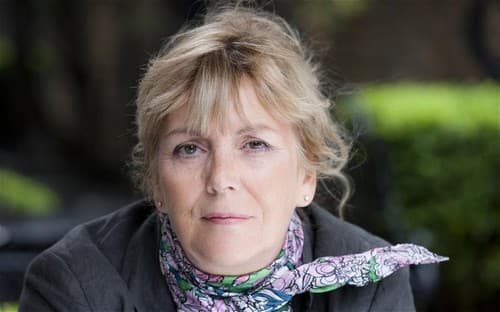
Kate Atkinson is a British author known for her fiction, particularly her exploration of themes such as time and memory. Her notable works include "Life After Life," which examines multiple lives lived by the same character, and "Case Histories," a detective novel featuring private investigator Jackson Brodie. Other significant titles include "One Good Turn," "Behind the Scenes at the Museum," and "Human Croquet."
Similar books
- Big Little Lies
Liane Moriarty
4.3 (748k) average on GoodreadsThrillerMultiple perspectives, domestic secrets, and a central mystery that unravels gradually.
- The Likeness
Tana French
4.0 (126k) average on GoodreadsThrillerLiterary crime fiction with deep psychological insight and intricate plotting.
- Mystic River
Dennis Lehane
4.2 (128k) average on GoodreadsThrillerExplores the long-term impact of past crimes on interconnected characters and communities.
- The Cuckoo's Calling
Robert Galbraith
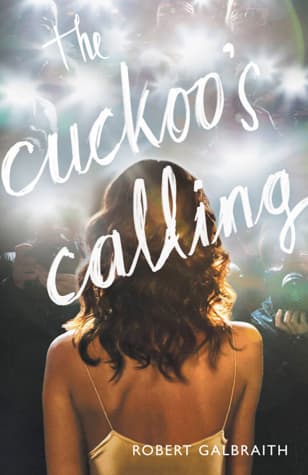
3.9 (482k) average on GoodreadsThrillerCompared to 'The Cuckoo's Calling', Atkinson's 'Case Histories' is far less conventional in its mystery structure. While Galbraith's Cormoran Strike series adheres more closely to classic detective novel tropes—a clear central mystery, a capable detective solving clues, and a definitive resolution—Atkinson deliberately blurs these lines. 'Case Histories' is more interested in the psychological aftermath and the interconnectedness of seemingly disparate tragedies, whereas 'The Cuckoo's Calling' focuses on the methodical unravelling of a single, complex case. Atkinson's prose is also arguably more literary and less genre-bound than Galbraith's.
- Gone Girl
Gillian Flynn
4.1 (2.3M) average on GoodreadsThrillerWhile both 'Case Histories' and 'Gone Girl' delve into the dark underbelly of human relationships and past traumas, their approaches differ significantly. Flynn's 'Gone Girl' is a high-tension, psychological thriller driven by a single, shocking disappearance and unreliable narration, designed to keep the reader constantly guessing with twists and turns. 'Case Histories', in contrast, is less about immediate suspense and more about the lingering echoes of past crimes. Atkinson's novel is a more contemplative, character-driven study of grief and memory spread across multiple narratives, rather than the intense, focused psychological cat-and-mouse game presented by Flynn.
- Angels & Demons
Dan Brown
3.9 (2.7M) average on GoodreadsThrillerA Harvard symbologist races through Rome's ancient sites, deciphering cryptic clues to unmask the Illuminati and stop a vengeful plot to destroy the Vatican with a stolen antimatter weapon.





Enjoyed the summary?
A summary gives you the shape of the book. The book itself has the detail, the examples and the voice.
Find Case Histories on AmazonAs an Amazon Associate, BookBrief earns from qualifying purchases. How we're funded