
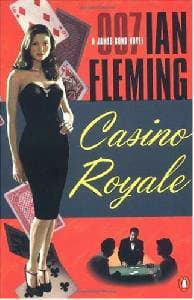
Synopsis
Covers the whole plot, including the ending.
- Difficulty
- Easy
- Pacing
- Moderate
- Mood
- Suspenseful, Sophisticated, Cynical, Tragic
- Read it if
- You want to read the very first adventure of James Bond and see his origins, his ruthlessness, and the tragic romance that shapes him.
- Skip it if
- You prefer modern spy thrillers with complex gadgets and less focus on internal monologue and gambling.
Casino Royale Plot Summary
Covers the whole plot, including the ending.
The Mission Briefing
James Bond, a 00-agent with the British Secret Service, gets a mission from M: bankrupt Le Chiffre, SMERSH's paymaster in France, at a high-stakes baccarat game at Casino Royale. Le Chiffre has embezzled 50 million francs of SMERSH funds and needs to win it back before his superiors execute him. M believes that if Le Chiffre is ruined, he will have to defect and share Soviet intelligence. Bond receives 10 million francs to play with, and his cover story is that he is a wealthy Jamaican planter. He meets René Mathis, head of the Deuxième Bureau, and Felix Leiter, a CIA agent, who are also part of the operation. Bond also meets Vesper Lynd, a Treasury agent supervising his funds.
Arrival at Casino Royale
Bond arrives at Royale-les-Eaux and meets his team. He is immediately struck by Vesper Lynd's beauty and mysterious manner. He finds her attractive but also suspects she is more complex than she seems. Mathis, the French intelligence chief, provides local support and information. Felix Leiter, from the CIA, offers extra resources, including more money if Bond needs it. The atmosphere is tense; everyone understands the pressure on Bond to win. Bond prepares for the game carefully, studying Le Chiffre's habits and mind, knowing the stakes involve national security and human lives, not just money.
The First Night at the Baccarat Table
Bond sits at the baccarat table, facing Le Chiffre. The game begins, and Bond quickly finds his rhythm, watching Le Chiffre's tells and playing style. Le Chiffre, a strange figure with a nervous tic, plays with desperate intensity. Bond initially wins a lot, putting Le Chiffre under great pressure. The tension in the casino is clear, with onlookers drawn to the high stakes. However, Le Chiffre, showing his cleverness, turns the game around, winning back much of what he lost and even exceeding Bond's starting capital. Bond finds himself in a bad spot, having lost a large part of the Secret Service's money.
Le Chiffre's Counterattack and Leiter's Intervention
As the baccarat game continues, Le Chiffre, using a risky strategy and some luck, significantly depletes Bond's funds. Bond, despite his skill, is outmaneuvered and almost bankrupt. The mission appears about to fail. In a key moment, Felix Leiter, seeing Bond's trouble, quietly approaches him. Leiter, acting for the CIA, offers Bond an additional 32 million francs to keep playing. This money is a lifeline, letting Bond re-enter the game and giving him another chance to complete his mission. The gesture strengthens the bond between the two agents.
The Climax of the Game
With Leiter's money, Bond returns to the baccarat table, determined to win. He uses an aggressive, high-stakes strategy, betting huge amounts. The game becomes a battle of wills between Bond and Le Chiffre, each trying to outsmart the other. Bond, using his intuition and sharp observation, spots Le Chiffre's subtle tells and uses them. In a dramatic final hand, Bond places a huge bet and wins, completely bankrupting Le Chiffre. Relief washes over Bond's team, and the casino reacts with a mix of awe and disappointment from other gamblers. Le Chiffre, utterly defeated, is left with nothing.
The Assassination Attempt
After his win, Bond, feeling triumphant and tired, leaves the casino. As he drives away, two of Le Chiffre's Bulgarian henchmen ambush him. They try to kill him by putting a bomb under his car. Bond, thinking quickly and using his training, spots the device and barely escapes the explosion, getting only minor injuries. The incident is a sharp reminder of his job's deadly consequences and his enemies' ruthless nature. Vesper Lynd, who was with him, is shaken but unharmed, further showing the danger they are in.
Kidnapped by Le Chiffre
After the assassination attempt, Bond and Vesper are led into a trap. Vesper is seemingly kidnapped, and Bond, rushing to help her, is also captured by Le Chiffre and his remaining thugs. They are taken to a secluded villa. Le Chiffre, desperate to get the money and information, tortures Bond. He uses a carpet beater to brutally beat Bond's genitals, trying to force him to reveal where the funds he won are. Bond, despite the extreme pain, stays calm and refuses to break, showing his amazing resilience and dedication to his mission.
The Intervention of SMERSH
Just as Le Chiffre's torture reaches its worst, a group of SMERSH agents bursts into the villa. They are not there to rescue Le Chiffre, but to execute him for embezzling their funds and failing to get them back. The SMERSH agent, a cold and professional operative, shoots Le Chiffre dead without hesitation. The agents then briefly think about killing Bond but decide not to, leaving him wounded but alive. Vesper, who was also held captive, is freed. This unexpected event saves Bond from certain death, but leaves him badly injured and traumatized.
Recovery and Romance
Bond goes to a hospital to recover from his terrible injuries. Vesper Lynd stays with him, caring for him and offering comfort. While he recovers, Bond and Vesper become very close. Bond, who usually keeps an emotional distance, finds himself falling deeply in love with Vesper, imagining a future where he can leave the Secret Service and live a normal life with her. He proposes marriage, and she accepts, showing a deep emotional change for the usually detached agent. Their time together is peaceful, a sharp contrast to the violence and espionage of Bond's world.
The Betrayal Revealed
As Bond recovers, he notices small inconsistencies in Vesper's behavior and story. He starts to suspect she is not who she claims to be. His suspicions are confirmed when he intercepts a coded message and learns that Vesper has been a double agent, working for the Soviets all along. She had been forced to work for SMERSH, who held her Polish lover hostage. Her role was to ensure Bond's failure or capture. The realization shatters Bond; he feels completely betrayed by the woman he loved and planned to marry. The emotional devastation is deep, tearing apart his new happiness.
Vesper's Suicide
Faced with Bond's discovery, Vesper Lynd, overcome by guilt, despair, and her impossible situation, chooses a tragic escape. She leaves a note confessing her double life and her love for Bond, explaining SMERSH's coercion. Bond finds her dead in her hotel room; she has taken her own life. Her suicide is a devastating blow to Bond, confirming her deception but also revealing her deep inner conflict and suffering. The event hardens Bond, reinforcing his cynical view of the world and the dangers of emotional attachment in his job.
Bond's Hardening and the 'Bitch' Remark
Vesper Lynd's betrayal and death deeply affect James Bond. He calls his superiors, cold and detached, to report Vesper's true allegiance and her suicide. When asked what to do about her, Bond, in a moment of disillusionment and new ruthlessness, declares, 'The bitch is dead.' This iconic line shows Bond's complete emotional detachment and his transformation into the cold, hardened agent he will become. The experience solidifies his resolve to never again let personal feelings compromise his mission or leave him vulnerable. He embraces his role as a weapon, without sentimentality.
Casino Royale Characters
James Bond
Protagonist
A British Secret Service agent, 007, known for his skill, charm, and ruthlessness.
James Bond is an elite British Secret Service agent, codenamed 007, with a license to kill. He is a sophisticated, intelligent, and highly skilled operative, adept at espionage, combat, and gambling. Beneath his polished exterior lies a cold, professional ruthlessness, tempered by a surprising capacity for emotion. He values efficiency and success in his missions above all else, often relying on his intuition and quick thinking. He possesses a strong moral code, albeit one that is adapted to the brutal realities of his profession.
Relationships: Vesper Lynd (Love interest, then a betrayer, leading to deep emotional pain.); Le Chiffre (Primary antagonist, a financial and psychological adversary.); M (His superior, a figure of authority and command.); René Mathis (French intelligence contact and ally.); Felix Leiter (CIA ally and friend who provides crucial support.)
Vesper Lynd
Supporting/Love Interest/Antagonist
A beautiful and enigmatic Treasury agent who becomes Bond's love interest and ultimately his betrayer.
Vesper Lynd is a strikingly beautiful and intelligent Treasury agent assigned to oversee Bond's funds. She possesses a sharp wit, a mysterious aura, and a vulnerability that attracts Bond deeply. Initially appearing as a loyal ally, Vesper is revealed to be a double agent, coerced by SMERSH into betraying Bond due to a threat against her Polish lover. Her internal conflict between her forced allegiance and her genuine feelings for Bond makes her a tragic figure, torn between duty and desire. She is intelligent and resourceful, but ultimately trapped by circumstances beyond her control.
Relationships: James Bond (Love interest, fiancé, and ultimately the person she betrays.); Le Chiffre (Indirectly works with him due to SMERSH coercion.); SMERSH (Her coercers, holding her lover hostage.)
Le Chiffre
Antagonist
The paymaster for SMERSH, a ruthless and desperate gambler.
Le Chiffre is the primary antagonist, a grotesque and physically unappealing man with a nervous tic in his eye. He serves as the paymaster for SMERSH in France but has embezzled a large sum of money, leading to his desperate attempt to win it back at the baccarat table. He is an intelligent and cunning gambler, capable of ruthlessness and cruelty, as demonstrated by his torture of Bond. His desperation makes him unpredictable and dangerous, driven by the fear of SMERSH's retribution. He represents the financial and psychological threat Bond must overcome.
Relationships: James Bond (Primary adversary at the baccarat table and in physical confrontation.); SMERSH (His employers, who ultimately execute him for his failure.)
Felix Leiter
Supporting
A resourceful CIA agent who assists Bond in the mission.
Felix Leiter is a seasoned CIA agent who acts as Bond's American counterpart and ally during the mission at Casino Royale. He is pragmatic, reliable, and provides crucial support to Bond, most notably by supplying the additional funds Bond needs to continue playing against Le Chiffre. Leiter is a loyal friend and a capable operative, representing the collaborative spirit between British and American intelligence. He is observant and understands the high stakes of the game, offering a sense of camaraderie to Bond in an otherwise solitary profession.
Relationships: James Bond (Ally and friend, providing crucial assistance.)
René Mathis
Supporting
The head of the Deuxième Bureau (French Secret Service) and Bond's local contact.
René Mathis is the French intelligence chief, providing local support and intelligence to Bond's operation. He is a shrewd and experienced operative, familiar with the intricacies of espionage in France. Mathis is a valuable asset, offering practical assistance and a deeper understanding of the local criminal underworld. He is generally supportive of Bond, though he also displays a degree of cynicism characteristic of his profession. He helps manage the logistics and security surrounding the mission, acting as a bridge between British and French intelligence.
Relationships: James Bond (Local contact and ally in the mission.)
M
Supporting/Mentioned
The stern and authoritative head of the British Secret Service.
M is the unseen but commanding head of the British Secret Service, James Bond's superior. He is a figure of immense authority and strategic vision, responsible for assigning Bond's missions and overseeing the agency's operations. M is characterized by his demanding nature and his unwavering focus on national security. He trusts Bond's abilities but expects absolute results, embodying the rigid hierarchy and high stakes of the intelligence world. His presence is felt through his directives and Bond's interactions with his orders.
Relationships: James Bond (Superior officer and mission assigner.)
SMERSH
Antagonist (collective)
The Soviet counter-intelligence agency, a ruthless and omnipresent threat.
SMERSH (Smyert Shpionam, 'Death to Spies') is the Soviet counter-intelligence agency, serving as the overarching antagonist. They are depicted as a brutal, efficient, and utterly ruthless organization, quick to punish failure and eliminate perceived threats. SMERSH is the ultimate power behind Le Chiffre, and their intervention ultimately leads to his demise. They represent the cold, calculating force of Soviet espionage, a constant and deadly threat to Bond and the Western world. Their methods are brutal and their reach is far-ranging, instilling fear in their own agents as much as their enemies.
Relationships: Le Chiffre (His employers, who he embezzles from and who ultimately execute him.); Vesper Lynd (Coerces her into working for them.)
The Bulgarian Henchmen
Mentioned
Le Chiffre's enforcers, attempting to assassinate Bond.
These are two of Le Chiffre's desperate and violent henchmen, tasked with carrying out his dirty work. They are responsible for the assassination attempt on Bond after the baccarat game, planting a bomb under his car. Later, they participate in the abduction and initial torture of Bond and Vesper. They are depicted as brutal and loyal to Le Chiffre, driven by fear or financial incentive. Their presence underscores the physical danger Bond faces beyond the gambling table. They are ultimately interchangeable, serving as instruments of Le Chiffre's malice.
Relationships: Le Chiffre (His subordinates and enforcers.)
Casino Royale Themes
The Price of Espionage and Emotional Detachment
The novel explores the psychological cost of a life in espionage, particularly the need for and danger of emotional distance. Bond, initially a professional, develops real feelings for Vesper Lynd. This relationship, however, leads to his greatest pain and betrayal, forcing him to face how vulnerable love makes him in his line of work. The climax, where he coldly dismisses Vesper as 'the bitch,' shows his forced hardening and the high price of survival and effectiveness as a spy. This theme is key to understanding Bond's character development and the brutal realities of his job.
“Bond saw that he was a professional, a professional who enjoyed his work... He was aware of the dangers but was too experienced to let them affect his play. He was a man who lived without hope.”
Betrayal and Trust
Betrayal is a central theme, shown most strongly through Vesper Lynd's actions. Bond, who rarely trusts or loves, puts his complete faith in Vesper, only to find she is a double agent coerced by SMERSH. This betrayal shatters his emotional defenses and fundamentally changes his view of the world, making him cynical and wary of future attachments. The theme also includes Le Chiffre's betrayal of SMERSH, which leads to his downfall, showing that treachery has consequences for everyone involved, regardless of loyalty. The novel suggests that in espionage, trust is a dangerous luxury.
“He knew that one day he would have to pay. He didn't care. All he wanted was to be with her. To be with her always.”
Good vs. Evil and Moral Ambiguity
While seemingly a clear conflict between Western and Soviet powers, the novel looks at the moral gray areas in the 'good vs. evil' fight. Bond, despite fighting for the 'good' side, does ruthless things, including sanctioned killing and severe violence. Le Chiffre, though evil, is driven by desperation and fear of his own superiors (SMERSH), blurring the lines of pure villainy. The methods used by both sides are often brutal and morally questionable. The story suggests that in the shadowy world of espionage, 'good' is often a matter of perspective, and heroes sometimes must act like villains to achieve their goals, leaving them morally compromised.
“He thought of his own profession. The world of espionage was a wilderness of mirrors, reflecting and distorting, where good and evil were often indistinguishable.”
Gambling and Chance
The baccarat game is not just a plot device but a central symbol for Bond's life and the inherent risks of espionage. Gambling represents chance and the high stakes in his job, where success or failure can depend on a single card turn or a split-second decision. Bond's skill and intuition at the table reflect his ability as an agent, but he is also subject to luck, as when Le Chiffre first turns the tide. The theme highlights the precarious nature of Bond's existence, where calculated risks and sheer fortune often combine to decide his fate.
“Bond mistrusted luck. He was a professional. He knew that luck was simply the other side of the coin of skill.”
The Nature of Identity
The novel explores how people create and present their identities, especially in a world of deception. Bond takes on the identity of a wealthy planter, while Vesper maintains a carefully built facade as a Treasury agent. Le Chiffre, despite his strange appearance, is a financial genius. The constant need for agents to use aliases and keep secrets blurs the lines between their true selves and their operational identities. Vesper's ultimate tragedy is the impossibility of reconciling her true feelings with her forced identity as a double agent, which leads to her downfall. The theme questions the authenticity of self in a world built on lies.
“He had accepted the role, and he played it with the detachment of an actor. It was a part he knew well. The part of James Bond.”
Plot Devices & Literary Techniques
The Baccarat Game
A high-stakes card game serving as the central arena for the conflict.
The baccarat game at Casino Royale is the primary plot device, serving as the literal and metaphorical battleground between Bond and Le Chiffre. It drives the initial narrative, providing the mechanism for Bond to bankrupt Le Chiffre and force his defection. Beyond its literal function, the game acts as a microcosm of espionage: a high-stakes contest of skill, intuition, psychology, and chance, with severe consequences for failure. It allows Fleming to showcase Bond's intelligence, nerve, and observational skills under pressure, while also building intense suspense and revealing character through gameplay.
The Torture Scene
A brutal interrogation sequence that reveals Bond's resilience and Le Chiffre's cruelty.
The torture scene, where Le Chiffre brutally beats Bond's genitals with a carpet beater, is a shocking and pivotal plot device. It serves multiple functions: it escalates the stakes dramatically, demonstrating Le Chiffre's extreme desperation and sadism. More importantly, it highlights Bond's extraordinary physical and mental resilience, his refusal to break under unimaginable pain, solidifying his status as a hardened, unyielding agent. The scene also provides a moment of unexpected salvation through SMERSH's intervention, adding a layer of ironic justice and emphasizing the ruthless nature of all parties involved in the espionage world.
Vesper Lynd's Betrayal
The revelation of Vesper as a double agent, a major turning point for Bond's character.
Vesper Lynd's betrayal is the most significant plot device for Bond's character development. Her initial role as a love interest lulls both Bond and the reader into a false sense of security, making the eventual revelation of her being a double agent all the more impactful. This betrayal shatters Bond's emotional detachment, forcing him to experience deep love and then profound heartbreak. It serves to harden him into the cynical, emotionally guarded agent he becomes in subsequent novels, shaping his iconic 'womanizer' persona as a defense mechanism against future vulnerability. Her suicide seals this transformation.
The License to Kill (00 Status)
Bond's official authorization to commit murder in the line of duty.
Bond's '00' status, granting him a license to kill, is a foundational plot device that establishes his unique position within the Secret Service. It immediately signals his lethality and the gravity of his profession. While not explicitly used for a kill in the main plot of Casino Royale, its presence defines Bond's character from the outset, explaining his cold efficiency and willingness to use violence. It sets the tone for his ruthlessness and separates him from conventional agents, allowing for the moral ambiguities explored throughout the narrative without questioning his authority to act as he does.
Casino Royale Quotes
“I’m going to get you for this, you bastard.”
“A dry martini, 'Mr. Bond.' He looked at me. 'One moment. Three measures of Gordon's, one of vodka, half a measure of Kina Lillet. Shake it very well until it's ice-cold, then add a large thin slice of lemon peel. Got it?'”
“The secret of a successful game of chemin-de-fer, or for that matter of any gambling game, is not to play too long.”
“Surround yourself with human beings, my dear, you shouldn't be so afraid of them.”
“He knew that he was now in the presence of a man of great brain and great cruelty, and he was excited by the danger.”
“Bond reflected that good Americans were fine people and that most of them seemed to come from Texas.”
“Live and let die, my dear. That’s my motto.”
“He had discovered that there was a secret of life – the game, the challenge, the excitement of it.”
“The scent and the feel of her was a sweet drug to him.”
“He had no right to be a hero, no right to get involved in the personal lives of others.”
“I can resist everything except temptation.”
“The world was full of people who were content to exist, to let life come and go without ever truly living it.”
“He knew that he would never be free of the memory of her, or of the pain.”
“Bond felt nothing. He was numb with shock and anger.”
Quiz
10 questions on the plot and the characters. Each answer comes with a short explanation.
Question 1
What game does James Bond play against Le Chiffre at the Casino Royale?
- Roulette
- Poker
- Baccarat
- Blackjack
Show answer
C. Baccarat Bond's primary mission to ruin Le Chiffre financially is carried out over a high-stakes game of Baccarat at the Casino Royale.
Question 2
What is Le Chiffre's primary role or affiliation described in the synopsis?
- A rival British agent
- A high-rolling Russian operative
- An international arms dealer
- A French intelligence chief
Show answer
B. A high-rolling Russian operative The synopsis explicitly states Le Chiffre is a 'lethal, high-rolling Russian operative' who Bond must neutralize.
Question 3
What is the ultimate goal of Bond's mission regarding Le Chiffre's finances?
- To recruit him for British intelligence
- To force his Soviet spymasters to 'retire' him
- To arrest him for espionage
- To recover stolen government funds
Show answer
B. To force his Soviet spymasters to 'retire' him Bond's mission is to ruin Le Chiffre at the Baccarat table, thereby forcing his Soviet spymasters to 'retire' him.
Question 4
What character trait is NOT used to describe James Bond in the synopsis?
- Charming
- Naive
- Ruthless
- Sophisticated
Show answer
B. Naive The synopsis describes Bond as 'charming, sophisticated, handsome, chillingly ruthless', but not 'naive'.
Question 5
What leads Bond to 'disaster' according to the synopsis?
- His overconfidence at the Baccarat table
- Le Chiffre's unexpected winning streak
- His attraction to a beautiful female agent
- A betrayal by his own intelligence agency
Show answer
C. His attraction to a beautiful female agent The synopsis states that 'Bond's attraction to a beautiful female agent leads him to disaster'.
Question 6
What specific phrase indicates Bond's official standing as an agent?
- He is a 'secret agent 007'
- He is 'licensed to kill'
- He is a 'British operative'
- He is 'on a mission'
Show answer
B. He is 'licensed to kill' The phrase 'licensed to kill' is a key detail that highlights Bond's official authority and ruthlessness.
Question 7
What is the primary method Bond uses to try and 'neutralize' Le Chiffre?
- Direct combat and assassination
- Ruining him at the Baccarat table
- Exposing his network to the authorities
- Blackmailing him with compromising information
Show answer
B. Ruining him at the Baccarat table Bond's mission is to 'neutralize a lethal, high-rolling Russian operative called simply 'le Chiffre' -- by ruining him at the Baccarat table'.
Question 8
What unexpected turn of events occurs regarding Le Chiffre's luck during the game?
- He experiences an unprecedented winning streak
- He suffers a significant losing streak
- He cheats, causing the game to be called off
- He runs out of money before the game begins
Show answer
B. He suffers a significant losing streak The synopsis notes that 'lady luck is taken with 007 -- le Chiffre has hit a losing streak', which aids Bond's mission.
Question 9
The synopsis implies a central theme related to rules and morality. Which statement best captures this theme?
- Luck is the most important factor in espionage.
- Some individuals refuse to adhere to established rules.
- Attraction always leads to negative consequences.
- Financial ruin is the ultimate form of neutralization.
Show answer
B. Some individuals refuse to adhere to established rules. The line 'But some people just refuse to play by the rules' directly alludes to a theme of morality and adherence (or lack thereof) to established norms, especially in the context of the antagonists.
Question 10
Who or what ultimately provides Bond with 'an unexpected savior' after his disaster?
- His own quick thinking and combat skills
- A last-minute intervention by British intelligence
- The synopsis does not specify, leaving it a mystery
- Le Chiffre's unexpected change of heart
Show answer
C. The synopsis does not specify, leaving it a mystery The synopsis mentions 'an unexpected savior' but does not reveal the identity of this savior, leaving it as an intriguing plot point for the reader to discover.
Casino Royale FAQ
What is James Bond's primary mission in 'Casino Royale' and why is it crucial?
Bond's mission is to bankrupt Le Chiffre, a SMERSH operative, at the baccarat table in Casino Royale. Le Chiffre embezzled 50 million francs from SMERSH and invested it in a chain of brothels, which failed, leaving him desperate to win back the money. By financially ruining Le Chiffre, Bond aims to force SMERSH to eliminate him, preventing him from further funding Soviet operations and potentially defecting with valuable intelligence.
Who is Vesper Lynd and what is her role in Bond's mission?
Vesper Lynd is a beautiful British agent from Section S of the Foreign Office, assigned to assist Bond and ensure the mission's financial integrity. She is responsible for providing Bond with the 50 million francs stake for the baccarat game. Her presence introduces a complex romantic and emotional dynamic, ultimately leading to a profound impact on Bond.
Describe the climactic baccarat game between Bond and Le Chiffre.
The baccarat game is a tense, high-stakes marathon where Bond, initially losing a significant sum, is saved by Felix Leiter's timely loan. Bond's strategic play and calculated risks eventually turn the tide, culminating in him winning all of Le Chiffre's money. This victory financially cripples Le Chiffre and sets the stage for the subsequent brutal confrontation.
What happens to Bond after he wins the baccarat game?
After winning, Bond is abducted by Le Chiffre's henchmen along with Vesper Lynd. He is taken to a villa and subjected to brutal torture by Le Chiffre, who attempts to extract the winnings from him. Bond endures extreme pain and interrogation, refusing to break, until he is unexpectedly saved by a SMERSH assassin.
How does the novel conclude regarding Vesper Lynd and Bond's emotional state?
Vesper Lynd tragically commits suicide after revealing her true allegiance as a double agent working for SMERSH, having been blackmailed into betraying Bond. Her death leaves Bond deeply scarred and emotionally detached, leading to his iconic declaration, 'The bitch is dead now.' This event solidifies his cynical and ruthless persona.
What is the significance of Bond's car accident early in the book?
Bond's car accident, which he attributes to Le Chiffre's men, is a subtle early warning of the danger surrounding him and a test of his resilience. It foreshadows the more direct and brutal attempts on his life later. It also serves to establish his physical prowess and ability to recover quickly from injury.
What role does Felix Leiter play, beyond simply lending Bond money?
Felix Leiter, Bond's CIA contact, represents the broader Western intelligence alliance and provides crucial support when Bond is at his lowest point during the baccarat game. His intervention highlights the collaborative nature of the Cold War espionage, and he becomes a recurring ally for Bond in future novels, symbolizing a trusted friendship.
What details about Le Chiffre's physical appearance and habits are emphasized?
Le Chiffre is described as corpulent, pale, and with a distinctive 'third eyelid' due to his constant use of a contact lens after an eye injury. He frequently uses an inhaler for his asthma. These details paint him as physically weak and somewhat grotesque, contrasting sharply with Bond's athletic physique and projecting a sense of his inherent vulnerability despite his intelligence.
How does Bond's internal monologue reveal his evolving perspective on love and trust?
Bond's internal thoughts, particularly regarding Vesper, initially show him resisting deep emotional attachment, viewing women as potential liabilities. However, as he falls for Vesper, his guard lowers, revealing a yearning for a normal life and trust. Her betrayal shatters this newfound vulnerability, hardening his resolve against emotional entanglement and shaping his future interactions.
Analyze Bond's reaction to torture and what it reveals about his character.
Bond's ability to endure severe torture without breaking demonstrates his extraordinary mental fortitude, physical resilience, and unwavering commitment to his mission. He uses his pain to fuel his defiance, proving his capacity for extreme suffering and his refusal to betray his country or his principles, even under duress. This scene establishes his core ruthlessness and resilience.
How does Fleming portray the psychological toll of espionage on Bond?
Fleming portrays the psychological toll through Bond's cynicism, his reliance on alcohol and cigarettes, and his internal struggle with the morality of his 'licensed to kill' status. The events with Vesper Lynd inflict a deep wound, leaving him emotionally scarred and reinforcing his detached, almost nihilistic approach to life, as a coping mechanism against the constant threat of betrayal and loss.
What is the significance of Bond's 'gambler's philosophy'?
Bond's 'gambler's philosophy' is a fatalistic worldview where life is seen as a game of chance, and he must play his hand with skill and detachment. It allows him to confront death and danger without fear, accepting that fate plays a significant role. This philosophy helps him rationalize his dangerous profession and the moral ambiguities involved, providing a mental framework for survival.
Is Vesper Lynd a truly sympathetic character, or is she primarily a plot device?
Vesper Lynd is arguably both. While she serves as a crucial plot device to introduce betrayal and harden Bond, Fleming imbues her with enough internal conflict and tragic circumstances (blackmail by SMERSH due to her Polish lover) to elicit sympathy. Her ultimate suicide suggests a character deeply tormented by her choices, making her more than just a simple antagonist.
How does 'Casino Royale' establish the foundational elements of the James Bond mythos?
'Casino Royale' introduces Bond's signature martini ('shaken, not stirred'), his love for fast cars and luxury, his ruthlessness, his attraction to dangerous women, and his iconic '007' status. More importantly, it establishes his emotional detachment and cynicism, forged by betrayal, which becomes a defining trait for his character throughout the series.
What deeper message about the nature of good and evil does the novel convey?
The novel blurs the lines between good and evil, suggesting that in the world of espionage, 'heroes' like Bond must often employ methods as ruthless as their enemies. Le Chiffre, while villainous, is also a desperate figure. Vesper's betrayal further complicates this, showing that allies can be compromised, leading Bond to conclude that trust is a dangerous luxury and absolute moral purity is impossible in his line of work.
How does the setting of Casino Royale contribute to the novel's atmosphere?
The opulent yet tense atmosphere of the Casino Royale, with its high stakes and hushed intensity, perfectly reflects the glamorous but deadly world of espionage. It serves as a microcosm of the Cold War, where fortunes are won and lost, and lives hang in the balance, creating a backdrop of sophisticated danger and moral ambiguity.
What is the significance of Bond's 'coldness' at the end of the novel?
Bond's 'coldness' at the end, particularly his stark 'The bitch is dead now,' signifies a profound psychological transformation. It marks his deliberate choice to shut down emotionally as a defense mechanism against future pain and betrayal. This hardened detachment becomes a defining characteristic, allowing him to operate effectively in a world where sentiment is a fatal weakness.
Does Bond genuinely love Vesper, or is it a fleeting attraction?
The novel strongly suggests Bond genuinely falls in love with Vesper, a rare vulnerability for him. His willingness to resign from the Secret Service to be with her and his deep despair after her death indicate more than mere attraction. Her betrayal, therefore, is so devastating precisely because it shatters a genuine emotional connection he allowed himself to feel.
About the author
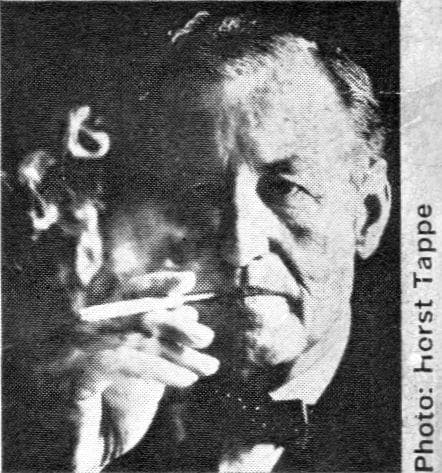
Ian Lancaster Fleming was a British writer, best known for his postwar James Bond series of spy novels. Fleming came from a wealthy family connected to the merchant bank Robert Fleming & Co., and his father was the Member of Parliament (MP) for Henley from 1910 until his death on the Western Front in 1917. Educated at Eton, Sandhurst, and, briefly, the universities of Munich and Geneva, Fleming moved through several jobs before he started writing.
Similar books
- The Spy Who Came in from the Cold
John le Carré
4.1 (77k) average on GoodreadsThrillerA darker, more realistic portrayal of espionage and its moral ambiguities, offering a counterpoint to Bond's heroism.
- Angels & Demons
Dan Brown
3.9 (2.7M) average on GoodreadsThrillerA Harvard symbologist races through Rome's ancient sites, deciphering cryptic clues to unmask the Illuminati and stop a vengeful plot to destroy the Vatican with a stolen antimatter weapon.
- Gone Girl
Gillian Flynn
4.1 (2.3M) average on GoodreadsThrillerA wife's sudden disappearance on her fifth anniversary reveals a web of lies and psychological warfare, exposing the secrets within a seemingly perfect marriage.
- The Girl on the Train
Paula Hawkins
3.9 (2.1M) average on GoodreadsThrillerA woman’s fascination with a seemingly perfect couple she watches from her daily train commute leads her into a dark investigation when she witnesses something that shatters their idyllic image.
- The Da Vinci Code
Dan Brown
3.9 (1.9M) average on GoodreadsThrillerA symbologist and a cryptologist race through European landmarks, deciphering ancient codes and uncovering a conspiracy that could rewrite the foundations of Christianity.
- The Guest List
Lucy Foley
3.8 (1.3M) average on GoodreadsThrillerOn a remote Irish island, a glamorous wedding descends into a deadly whodunnit when a guest is found murdered, trapping everyone with their secrets as a storm rages.






Enjoyed the summary?
A summary gives you the shape of the book. The book itself has the detail, the examples and the voice.
Find Casino Royale on AmazonAs an Amazon Associate, BookBrief earns from qualifying purchases. How we're funded