
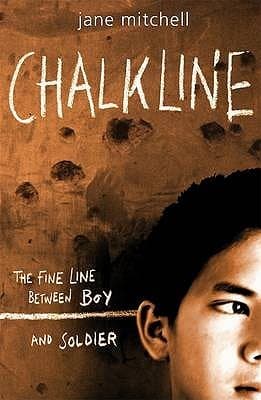
Synopsis
Covers the whole plot, including the ending.
- Difficulty
- Medium
- Pacing
- Moderate
- Mood
- Somber, Thought-provoking, Intense, Hopeful
- Read it if
- You are looking for a powerful and poignant story about the psychological impact of radicalization and the enduring strength of family bonds.
- Skip it if
- You prefer lighthearted reads or find stories about child soldiers and indoctrination too distressing.
Chalkline Plot Summary
Covers the whole plot, including the ending.
A Boy's Simple Life in the Village
Rafiq, a young boy, enjoys a simple life in his village, helping his father, Baba, with farming and spending time with his younger brother, Adil, and sister, Zara. His mother, Amma, cares for the family. The village is remote, but news of the growing conflict in the region, particularly the presence of 'the cause' and its followers, starts to filter in. Rafiq is a curious and impressionable boy, often listening to the stories and rumors that circulate among the men. His family tries to shield him from the worst of it, emphasizing peace and family.
The Arrival of the Preacher
A charismatic preacher, Maulana, arrives in Rafiq's village, delivering powerful sermons that captivate many of the villagers, especially the younger men. Maulana speaks of the purity of their faith, the injustice they face, and the glory of defending their land and beliefs against perceived enemies. Rafiq, drawn in by the preacher's impassioned words and the sense of purpose he offers, attends these gatherings more frequently, much to the quiet concern of his parents. The Maulana's message slowly starts to take root in Rafiq's impressionable mind, offering an escape from the mundane and a promise of significance.
Rafiq's Growing Indoctrination
Under the influence of Maulana and his followers, Rafiq's behavior begins to change. He spends less time with his family, often skipping his chores to attend the preacher's sessions or meet with the older boys who are now openly discussing joining the cause. He starts to parrot the slogans and beliefs he hears, seeing the world in stark black and white terms. His parents, particularly Baba, try to reason with him, reminding him of his responsibilities and the dangers of such extremism, but Rafiq dismisses their concerns, viewing them as old-fashioned and lacking understanding of the 'true' path.
Leaving Home for the Training Camp
Driven by idealism, a desire for belonging, and the promise of glory, Rafiq decides to leave his family and join the 'cause'. He departs with a group of other young men and boys from his village, heading to a remote training camp. The separation is painful for his family, especially Amma, but Rafiq is convinced he is doing the right thing. At the camp, he is immediately immersed in a harsh, disciplined environment, where indoctrination intensifies, and military training begins. The camp becomes his new reality, severing his ties to his past life.
Life in the Training Camp
Life in the training camp is brutal. Rafiq is subjected to physical conditioning, weapons training, and relentless ideological indoctrination. The trainers reinforce the teachings of Maulana, dehumanizing the 'enemy' and glorifying martyrdom. Rafiq learns to handle a rifle, participate in drills, and suppress his emotions. He witnesses violence and becomes desensitized to it, slowly losing his childhood innocence. The camaraderie with his fellow recruits, albeit forged in a harsh environment, gives him a sense of belonging and purpose, further solidifying his commitment to the cause. He is given a new name, shedding his old identity.
First Taste of Combat
After weeks of training, Rafiq and his unit are sent on their first mission. The experience is terrifying and chaotic, a stark contrast to the controlled environment of the training camp. He witnesses the horrors of combat, the fear, the pain, and the loss of life. While he performs his duties, the reality of what he is doing begins to chip away at the rigid ideology he has been fed. He is forced to confront the direct consequences of the violence he has been trained to inflict, and the image of the 'enemy' becomes less abstract and more human.
Doubts and Memories
As Rafiq continues to participate in missions, the violence and suffering take a toll. He starts to have flashbacks and nightmares, memories of his family and his peaceful village life resurfacing. These memories, particularly of his younger siblings, Adil and Zara, create a conflict within him, clashing with the ruthless ideology he has adopted. He sees the fear in the eyes of others, and sometimes, a flicker of humanity in the 'enemy'. These moments of doubt are dangerous, and he tries to suppress them, but they persist, challenging the absolute certainty he once felt.
A Message from Home
Back in the village, Rafiq's family never gives up hope. Baba and Amma, with the help of a brave old woman, a former neighbor, try to send messages to Rafiq through an informal network of sympathetic villagers and traders who move between the conflict zones. They want him to know they remember him, they love him, and they want him to come home. These messages are risky to transmit and even riskier for Rafiq to receive, but his family believes that the bonds of love and family are stronger than any ideology.
The Planned Atrocity
Rafiq's unit is assigned to a mission that involves a brutal act against a civilian target, designed to instill terror and make a statement. The plan is to attack a marketplace or a school, causing maximum casualties. Rafiq is given a specific role in this operation. The full horror of the intended act dawns on him, and the last vestiges of his childhood conscience scream against it. He sees the faces of his own family in the potential victims, and the indoctrination begins to crumble under the weight of this moral crisis.
The Moment of Decision
Just before the planned attack, Rafiq receives one of the messages from his family – a small, familiar object or a simple phrase that reminds him powerfully of his past self and their unwavering love. This, combined with the extreme nature of the impending atrocity, pushes him to a breaking point. He looks at the weapon in his hand, then at the innocent people, and the boy he once was re-emerges. He makes a snap decision, a desperate act of defiance against the cause he had once embraced, choosing redemption over atrocity.
Aftermath and Hope
Rafiq's decision prevents the full scale of the planned atrocity, though it puts him in grave danger. The immediate aftermath is chaotic, and he is forced to flee or is apprehended. The exact outcome of his defiance is left somewhat open, but the narrative implies a path towards a potential reunion with his family and a long, difficult journey of healing and reintegration. His family, though still anxious, holds onto the hope that the boy they knew, the boy who chose humanity, is finally on his way back home.
Principal Figures
Rafiq
Protagonist
An impressionable boy transformed into a child soldier, who ultimately finds his way back to humanity.
Rafiq begins as a curious and obedient village boy, deeply connected to his family and the simple rhythms of rural life. He is sensitive and easily influenced, making him vulnerable to the charismatic rhetoric of Maulana. As he is indoctrinated, he becomes hardened, losing his innocence and identity as he adopts the persona of a soldier for 'the cause'. However, deep down, his memories of family and his inherent moral compass eventually resurface, leading to a profound internal conflict. His journey is one of loss, indoctrination, and ultimately, a redemptive choice.
Relationships: Baba (father, source of traditional values); Amma (mother, source of unconditional love and memory); Adil (younger brother, symbol of his lost innocence); Zara (younger sister, symbol of his lost innocence); Maulana (mentor/indoctrinator, spiritual guide to extremism)
Baba
Supporting
Rafiq's father, a wise and traditional farmer who tries to protect his family from the conflict.
Baba is the patriarch of Rafiq's family, a farmer who values peace, hard work, and the stability of village life. He is grounded and pragmatic, deeply worried by the encroaching extremism and its effect on his son. He tries to reason with Rafiq, reminding him of his duties and the dangers of the 'cause', but his words initially fall on deaf ears. Despite the heartbreak of Rafiq leaving, Baba never gives up on his son, quietly working with Amma to maintain a connection and hope for his return. He represents the traditional values Rafiq abandons.
Relationships: Rafiq (son, object of his concern and hope); Amma (wife, partner in their shared grief and determination); Adil (son); Zara (daughter)
Amma
Supporting
Rafiq's mother, who embodies unconditional love and the enduring memory of her son's true self.
Amma is Rafiq's mother, a figure of profound love, grief, and unwavering hope. She is devastated by Rafiq's transformation and departure, but her love never wavers. She holds onto the memories of the boy he was, often recalling specific details or moments that define his true character. Amma is instrumental in the family's efforts to reach out to Rafiq, believing that the bond of family is stronger than any ideology. She represents the emotional core of the family and the persistent beacon of home that Rafiq eventually turns towards.
Relationships: Rafiq (son, her beloved child); Baba (husband, partner in their shared grief and determination); Adil (son); Zara (daughter)
Adil
Supporting
Rafiq's younger brother, a symbol of childhood innocence and the family Rafiq left behind.
Adil is Rafiq's younger brother, often looking up to him and playing together in the village. He represents the innocent childhood that Rafiq abandons when he joins 'the cause'. His presence in Rafiq's memories serves as a powerful reminder of the life and values Rafiq lost, and the potential future he jeopardized. Adil's innocence and vulnerability are stark contrasts to the harsh reality Rafiq enters, making him a poignant symbol of what Rafiq is fighting against when he eventually chooses redemption.
Relationships: Rafiq (older brother); Baba (father); Amma (mother); Zara (sister)
Zara
Supporting
Rafiq's younger sister, another embodiment of his cherished family and the life he left.
Zara is Rafiq's younger sister, completing the picture of his close-knit family. Like Adil, she symbolizes the innocent life Rafiq forsakes for the 'cause'. Her image, along with Adil's, frequently appears in Rafiq's memories and nightmares, acting as a powerful pull back to his humanity. She represents the vulnerability of children and the devastating impact of conflict on families, reinforcing the stakes of Rafiq's choices. Her innocence is a direct contrast to the violence Rafiq is trained to inflict.
Relationships: Rafiq (older brother); Baba (father); Amma (mother); Adil (brother)
Maulana
Antagonist
A charismatic and manipulative preacher who indoctrinates Rafiq and other boys into extremism.
Maulana is the charismatic preacher who arrives in Rafiq's village and systematically indoctrinates the young boys, including Rafiq, into 'the cause'. He uses powerful rhetoric, religious fervor, and nationalist sentiment to manipulate their impressionable minds, promising purpose, glory, and a clear path to righteousness. He is the primary agent of Rafiq's transformation from a boy to a child soldier, representing the insidious nature of extremist ideology. He embodies the external force that pulls Rafiq away from his family and towards violence.
Relationships: Rafiq (disciple/victim of his ideology); Villagers (followers/audience of his sermons)
Old Woman/Neighbor
Supporting
A brave villager who helps Rafiq's family maintain contact with him.
This unnamed old woman is a courageous and compassionate neighbor who acts as a crucial link between Rafiq and his family. She risks her own safety to carry messages and small mementos, bridging the dangerous gap between the village and the conflict zones where Rafiq operates. She embodies the quiet resistance and enduring humanity found within the community, demonstrating that not everyone succumbs to fear or extremism. Her actions are vital in providing the means for Rafiq's family to reach him at his most critical moment.
Relationships: Baba (fellow villager, co-conspirator in reaching Rafiq); Amma (fellow villager, co-conspirator in reaching Rafiq)
Trainer/Commander
Supporting
The harsh and unyielding figures responsible for the physical and mental transformation of the child soldiers.
These are the anonymous but influential figures at the training camp who oversee Rafiq's transformation. They are ruthless and efficient, ensuring the boys are physically hardened and ideologically purified. They embody the cold, dehumanizing aspect of the militant organization, stripping the recruits of their individual identities and replacing them with a collective, violent purpose. Their methods are designed to break down the boys' former selves and rebuild them as unthinking instruments of the cause, representing the direct force of military indoctrination.
Relationships: Rafiq (subordinate/recruit under their command); Other Recruits (soldiers under their command)
Themes & Insights
Loss of Innocence
The central theme of 'Chalkline' is the tragic loss of Rafiq's childhood innocence. He begins as a typical village boy, but is systematically stripped of his naivete through indoctrination and exposure to violence. The training camp and combat experiences force him to shed his former self, replacing it with the hardened exterior of a child soldier. This theme is conveyed through his memories of his younger siblings, Adil and Zara, who represent the purity and peace he leaves behind, and whose images haunt him as he commits acts of violence.
“He looked at the rifle in his hands, then at his calloused fingers, and wondered how they had ever held a kite string.”
The Power of Indoctrination and Propaganda
The novel shows how easily impressionable minds, especially those of children, can be manipulated by charismatic figures and extremist ideologies. Maulana's sermons twist religious and nationalistic sentiments to recruit young boys like Rafiq. The training camp further solidifies this indoctrination through repetition, isolation, and the dehumanization of the 'enemy'. This theme explores the psychological mechanisms that transform ordinary children into instruments of violence, showing the danger of unchallenged rhetoric and the construction of 'us vs. them' narratives.
“The Maulana's words were like honey, sweet and sticky, making everything else seem bland and wrong.”
Family and Redemption
Despite Rafiq's transformation, the unwavering love and memory of his family is a powerful counterforce to the indoctrination. His parents, Baba and Amma, never give up on him, actively seeking to remind him of who he truly is. The small messages and memories they send become important in Rafiq's moment of crisis, pulling him back from the brink of committing an atrocity. This theme emphasizes the enduring strength of familial bonds and the possibility of redemption, suggesting that even in the darkest circumstances, love can offer a path back to humanity.
“They remembered the boy he was, when he could no longer recognize himself.”
Moral Choice and Consequence
A theme is Rafiq's struggle with moral choice, particularly as he is faced with participating in a heinous act. The story builds towards a moment where Rafiq must choose between following orders to commit an atrocity and reclaiming his humanity. This choice is fraught with danger and personal cost, but it signifies his reawakening conscience. The theme explores the weight of individual responsibility, even for those coerced into violence, and the impact of a single decision on one's destiny and identity.
“The chalkline was not just on the ground, but drawn across his soul, demanding a choice.”
Plot Devices & Literary Techniques
The Chalkline
A potent symbol representing division, choice, and a point of no return.
The 'chalkline' of the title is a recurring symbolic device. It literally represents boundaries and divisions, often used in military or training contexts to mark a line that should not be crossed. Metaphorically, it signifies the stark choices Rafiq faces: the line between innocence and violence, between family and 'the cause', and ultimately, between humanity and atrocity. It embodies the point of no return for Rafiq, but also the line he must consciously refuse to cross to reclaim his true self. It's a visual metaphor for his internal and external conflicts.
Memory and Flashbacks
A narrative technique used to highlight Rafiq's internal conflict and the remnants of his past.
As Rafiq becomes more deeply involved in the conflict, the narrative frequently employs flashbacks and vivid memories of his family and village life. These serve to contrast his current brutal reality with his innocent past, creating an internal struggle within him. The memories of Adil and Zara, in particular, are powerful reminders of the humanity and love he has forsaken. This device allows the reader to understand the boy Rafiq once was and to witness the slow erosion, and eventual reawakening, of his conscience.
The Charismatic Antagonist (Maulana)
A character archetype used to embody the seductive power of extremist ideology.
Maulana functions as a classic charismatic antagonist, a figure whose persuasive rhetoric and perceived authority draw vulnerable individuals like Rafiq into a destructive path. He doesn't wield physical power directly over Rafiq in the same way a commander does, but his ideological influence is profound. This device highlights how ideas, when presented compellingly and tapping into existing grievances, can be more potent and dangerous than brute force, initiating the tragic transformation of the protagonist.
Symbolic Objects/Messages from Home
Small, everyday items that become powerful symbols of connection and memory.
Throughout the story, and particularly towards the climax, small, mundane objects or simple phrases from Rafiq's past life are sent to him by his family. These are not grand gestures but familiar, intimate tokens – perhaps a piece of fabric, a drawing, or a specific saying. These items act as powerful symbolic anchors to his former identity and family love, cutting through the layers of indoctrination. They are the tangible manifestations of his family's unwavering memory and serve as the final catalyst for his moral awakening.
Chalkline Quotes
“The chalkline, once drawn, is a boundary, not a path.”
“Some truths are best left smudged, like old pencil marks on a school desk.”
“Memory isn't a photograph; it's a painting, constantly being retouched with new light and shadow.”
“It's easier to forgive a stranger than it is to forgive the person who knows your flaws by heart.”
“The quietest moments often hold the loudest revelations.”
“We build our lives on assumptions, and then we're surprised when the foundations crack.”
“Every secret kept is a stone carried, and eventually, the weight becomes unbearable.”
“Love isn't about perfect lines, but about embracing the beautiful, messy smudges.”
“Sometimes, the hardest thing to do is to step outside the line you've always believed defined you.”
“The past is a stubborn ghost, always lingering in the corners of the present.”
“Hope is a fragile thing, easily erased, but stubbornly redrawn.”
“We all carry our own chalklines, invisible to others, but fiercely felt within.”
“The truth doesn't always set you free; sometimes it just redraws your prison.”
“It's not the fall that breaks you, but the refusal to get back up, even if it's outside the lines.”
Quiz
10 questions on the plot and the characters. Each answer comes with a short explanation.
Question 1
What is the primary catalyst for Rafiq's transformation into a child soldier?
- He was kidnapped from his home by force.
- He willingly joined after being convinced by a charismatic leader.
- He was gradually indoctrinated into a fanatical cause.
- He sought revenge for a personal tragedy.
Show answer
C. He was gradually indoctrinated into a fanatical cause. The book explicitly states that Rafiq 'is indoctrinated into the cause of fanatical belief,' indicating a gradual process of influence rather than an immediate event.
Question 2
What is the central theme concerning Rafiq's identity as he becomes a boy soldier?
- His struggle to choose between two different loyalties.
- His inability to recognize who he has become.
- His desire to forget his past and embrace a new identity.
- His pride in his new role and the power it gives him.
Show answer
B. His inability to recognize who he has become. The description states, 'when he can no longer recognise himself,' highlighting the profound loss of his former identity.
Question 3
Who ultimately remembers the boy Rafiq was before his transformation?
- His former friends from his village.
- The leaders of the fanatical cause.
- His family.
- A sympathetic outsider.
Show answer
C. His family. The text clearly states, 'But his family have not forgotten him... they remember the boy he was.'
Question 4
What is Rafiq's trajectory described as before his family intervenes?
- He is rising through the ranks of the cause.
- He is seeking a way to escape his situation.
- He is spiraling towards a final act of atrocity.
- He is becoming increasingly disillusioned with the cause.
Show answer
C. He is spiraling towards a final act of atrocity. The book says he 'spirals towards a final act of atrocity,' indicating a descent into extreme actions.
Question 5
What action does Rafiq's family take to try and save him?
- They report him to the authorities.
- They attempt to physically rescue him.
- They reach out a hand of redemption.
- They try to convince his leaders to release him.
Show answer
C. They reach out a hand of redemption. The description mentions they 'reach out a hand of redemption,' implying an attempt to offer him a path back or forgiveness.
Question 6
The term 'chalkline' in the title might metaphorically refer to what aspect of Rafiq's life?
- The strict boundaries imposed by his new life as a soldier.
- The white uniforms worn by the child soldiers.
- A specific marking used in their training exercises.
- The dusty roads he travels during his missions.
Show answer
A. The strict boundaries imposed by his new life as a soldier. Given the context of indoctrination and transformation, 'chalkline' likely symbolizes the rigid, defined, and perhaps inescapable path or boundaries set for Rafiq once he enters the world of the boy soldiers.
Question 7
What is the primary conflict Rafiq faces, as suggested by the summary?
- An external conflict between his group and an opposing force.
- An internal conflict over his lost identity and the person he has become.
- A conflict with his family who refuse to accept his new role.
- A societal conflict against poverty and injustice.
Show answer
B. An internal conflict over his lost identity and the person he has become. The summary emphasizes his inability to recognize himself and his family remembering the boy he was, pointing to a profound internal struggle with his identity.
Question 8
How does the book characterize the belief system Rafiq is indoctrinated into?
- A patriotic and nationalistic ideology.
- A humanitarian and peace-oriented philosophy.
- A fanatical belief.
- A traditional and ancestral spiritual practice.
Show answer
C. A fanatical belief. The summary explicitly states he is indoctrinated into 'the cause of fanatical belief,' indicating its extreme and uncompromising nature.
Question 9
The 'redemption' offered by Rafiq's family implies what about their view of his actions?
- They believe he is entirely innocent and blameless.
- They acknowledge his involvement but believe he can still be saved or forgiven.
- They are seeking to punish him for his choices.
- They are trying to exploit his position for their own gain.
Show answer
B. They acknowledge his involvement but believe he can still be saved or forgiven. Redemption implies forgiveness or salvation from past wrongs. This suggests the family recognizes his actions but still believes in his potential to return to his former self, rather than simply excusing him.
Question 10
What is the significance of the phrase 'from child to boy soldier' in describing Rafiq's journey?
- It highlights the rapid physical growth he experiences.
- It emphasizes the loss of innocence and childhood due to militarization.
- It denotes a formal promotion within the military hierarchy.
- It distinguishes him from adult soldiers in the same group.
Show answer
B. It emphasizes the loss of innocence and childhood due to militarization. The transition 'from child to boy soldier' underscores the tragic loss of his childhood and the forced maturity into a violent role, a common theme in stories about child soldiers.
Chalkline FAQ
What is Chalkline about?
Chalkline tells the harrowing story of Rafiq, a young boy who is gradually indoctrinated into a fanatical cause and transformed into a child soldier. It explores his loss of innocence, the psychological manipulation he undergoes, and his family's desperate attempts to reclaim him before he commits a final, irreversible act of violence.
Why should I read Chalkline?
You should read Chalkline for its powerful and unflinching exploration of child soldiery, indoctrination, and the enduring strength of family bonds. It offers a deeply emotional and thought-provoking narrative that highlights the human cost of conflict and extremism, making it a compelling read for those interested in social issues and psychological drama.
What is the background/setting of Chalkline?
The book is set in an unspecified conflict zone, likely in a developing nation, where a fanatical group actively recruits and indoctrinates children. The setting emphasizes the harsh realities of war-torn regions and the vulnerability of young lives caught in the crossfire of ideological battles.
What writing style does the author use?
Jane Mitchell employs a poignant and often stark writing style, using vivid imagery to convey Rafiq's deteriorating mental state and the brutal environment he inhabits. The narrative is deeply immersive, often shifting perspective to reflect Rafiq's internal struggles and the external pressures he faces, making the reader intimately connected to his journey.
What minor details add significant meaning?
The 'chalkline' itself is a recurring motif, symbolizing the invisible yet rigid boundaries drawn by the extremist group, separating Rafiq from his past and humanity. Small acts of kindness or memories of his family, like the smell of his mother's cooking, serve as crucial anchors to his former self, highlighting the subtle tug-of-war for his soul.
What are some subtle foreshadowing moments?
Early descriptions of Rafiq's curiosity and desire for belonging subtly foreshadow his susceptibility to the charismatic leaders of the extremist group. The gradual desensitization he experiences through small tasks, like watching rather than participating in violence, foreshadows his eventual readiness for more extreme actions.
What unexpected character connections exist?
While not explicitly 'unexpected' in a twist sense, the enduring connection between Rafiq and his family, despite his transformation, is a profound bond. His younger sibling, who still remembers the 'old' Rafiq, provides a crucial, almost innocent, counterpoint to the hardened soldier, making their eventual reunion particularly impactful.
What are unspoken character motivations?
Rafiq's initial motivation for joining the cause is largely unspoken, driven by a desire for belonging, purpose, and perhaps escape from a mundane or difficult home life, which the extremists expertly exploit. The leaders' motivations are purely ideological and power-driven, rarely articulated beyond their rhetoric, but evident in their manipulative tactics.
What psychological complexities do characters exhibit?
Rafiq exhibits severe psychological complexities, including cognitive dissonance as he tries to reconcile his past with his indoctrinated present, and the trauma-induced detachment common in child soldiers. His family, particularly his mother, shows immense resilience and unwavering hope, grappling with grief, fear, and an enduring love for the boy they remember.
What are the major emotional turning points?
A major emotional turning point is when Rafiq witnesses an act of violence that deeply disturbs him, momentarily cracking his indoctrinated facade. Another is the first direct contact from his family, which forces him to confront the boy he was and the monster he is becoming, triggering immense internal conflict.
How do relationship dynamics evolve?
Rafiq's relationship with his family degrades from loving and trusting to one of alienation and fear, as he is taught to view them as 'outsiders.' Conversely, his relationship with his extremist handlers evolves from admiration and obedience to a more complex mix of fear, dependence, and eventual disillusionment as he questions their true intentions.
Which parts remain ambiguous or open-ended?
The ultimate fate of the conflict itself and the broader societal implications of such widespread indoctrination remain largely ambiguous. While Rafiq's personal journey reaches a climax, the larger struggle against extremism is presented as ongoing, leaving readers to ponder the long-term impact on the community.
What are controversial scenes or decisions?
The most controversial aspect lies in the graphic depiction of child indoctrination and the psychological manipulation employed by the extremist group, which can be difficult for some readers. Rafiq's internal struggle with committing his final act of atrocity, and the moral dilemma he faces, also presents a deeply controversial and challenging decision point.
Chalkline ending explained: how it ends & what it means
The ending of Chalkline sees Rafiq on the brink of committing a final, devastating act of atrocity, driven by his indoctrination. However, his family's persistent efforts to reach him, reminding him of his past identity, culminate in a pivotal moment where he must choose between the path of destruction and the glimmer of redemption they offer. The ending signifies the enduring power of humanity and family love against the forces of hatred, even when hope seems lost.
Similar books
- A Long Way Gone: Memoirs of a Boy Soldier
Ishmael Beah
4.2 (163k) average on GoodreadsBiographyExplores the harrowing experiences of a child soldier and the journey to recovery.
- The Kite Runner
Khaled Hosseini
4.3 (2.4M) average on GoodreadsHistorical FictionDeals with themes of childhood, betrayal, and redemption in a war-torn setting.
- Beasts of No Nation
Uzodinma Iweala
3.8 (5k) average on GoodreadsHistorical FictionIweala's novel is known for its visceral and often graphic depiction of a child soldier's brutalization and descent into savagery. 'Chalkline' presents a less graphic, though equally potent, portrayal of violence, often implying rather than explicitly detailing it. Mitchell's focus leans more heavily into the post-conflict psychological landscape and the arduous journey towards healing and reintegration, offering a different narrative arc than Iweala's concentrated depiction of active combat.
- Harry Potter and the Sorcerer's Stone
J.K. Rowling
4.5 (7M) average on GoodreadsFantasyRescued from a miserable life under the stairs, an orphaned boy discovers he's a wizard destined for a magical school, where he uncovers a dangerous secret tied to the dark wizard who murdered his parents.
- The Hunger Games
Suzanne Collins
4.3 (6.4M) average on GoodreadsFantasyIn a future where children fight to the death on live television, Katniss Everdeen volunteers for the arena, turning a death sentence into a fight for survival and a spark of rebellion.
- Nineteen Eighty-Four
George Orwell
4.2 (5.5M) average on GoodreadsFictionWinston Smith dreams of truth and rebellion in a world where Big Brother watches all, but he confronts the terrifying power of a regime that controls not just actions, but thoughts.





Enjoyed the summary?
A summary gives you the shape of the book. The book itself has the detail, the examples and the voice.
Find Chalkline on AmazonAs an Amazon Associate, BookBrief earns from qualifying purchases. How we're funded