
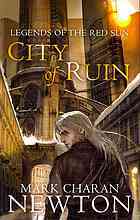
Synopsis
Covers the whole plot, including the ending.
- Difficulty
- Medium
- Pacing
- Variable
- Mood
- Dark, Atmospheric, Suspenseful, Gritty, Desperate
- Read it if
- You enjoy dark, gritty fantasy with strong mystery elements, a sense of impending doom, and complex world-building.
- Skip it if
- You prefer lighthearted fantasy, clear-cut heroes and villains, or straightforward plots without moral ambiguity.
City of Ruin Plot Summary
Covers the whole plot, including the ending.
The Looming Threat and a Missing Guard
Villiren, a city already teetering on the brink of chaos with its hybrid creatures and gang warfare, is under the command of Brynd Lathraea, leader of the Night Guard. Brynd is tasked with preparing the city for an imminent invasion by a terrifying race from another realm, a race that has already devastated vast swathes of the Empire. Amidst this threat, a Night Guard soldier, Theron, disappears without a trace. This internal mystery, seemingly minor compared to the external war, prompts Brynd to seek assistance from Inquisitor Jeryd, a newly arrived Imperial investigator, hoping his expertise can shed light on the unusual vanishing. The city's internal decay and external danger create tension, setting the stage for a dual conflict.
Jeryd's Arrival and the Expanding Mystery
Inquisitor Jeryd arrives in Villiren, a city he finds unsettling with its rampant corruption and strange inhabitants. Brynd briefs him on Theron's disappearance, but Jeryd's investigations quickly reveal that Theron is not an isolated case. He discovers a terrifying pattern: hundreds of people have vanished from their homes across Villiren, leaving no signs of forced entry or struggle. The disappearances are far more widespread and systematic than a simple missing person case, pointing towards a highly organized and subtle predator. Jeryd's methodical approach begins to reveal a threat that defies conventional understanding.
Unnatural Abductions and the 'Weaver'
As Jeryd investigates, he and Brynd gather evidence suggesting the disappearances are not the work of any human or even known hybrid gang. The sheer scale, the lack of struggle, and the specific types of individuals targeted (often those on the fringes of society or with hidden talents) indicate a highly intelligent, non-human entity. They begin to refer to this elusive perpetrator as the 'Weaver' due to the intricate and undetectable way it 'collects' its victims. This realization shifts their focus from a criminal investigation to something more arcane and terrifying, pushing the boundaries of what the Night Guard is equipped to handle and increasing the city's paranoia.
The Invasion Begins and Internal Strife
While Jeryd and Brynd grapple with the 'Weaver,' the external threat materializes. The invaders, identified as the 'Void-touched,' breach Villiren's outer defenses, unleashing horrific creatures and devastating attacks upon the city. The Night Guard, already stretched thin, struggles to mount an effective defense. This external onslaught exacerbates Villiren's internal turmoil, with gangs seizing opportunities for power grabs and the populace descending into panic. The city becomes a battleground on multiple fronts, with the Night Guard fighting both the Void-touched and the escalating chaos within its own walls.
Clues to the Weaver's Nature
Jeryd, using his inquisitorial training and access to obscure archives, uncovers ancient texts and forgotten lore that hint at entities capable of operating outside conventional reality, subtly 'weaving' themselves into existence. These texts suggest the 'Weaver' is not merely a serial killer but something older and more powerful, possibly linked to Villiren's foundational magic or suppressed history. The clues point towards a being that manipulates space and perception, explaining the inexplicable nature of the abductions. This discovery adds a layer of cosmic horror to the mystery, elevating the Weaver's threat.
The Void-touched Strategy and the City's Divisions
Brynd, leading the desperate defense, realizes the Void-touched invasion is not random. They are strategically targeting key infrastructure, magical conduits, and areas where Villiren's diverse and often hostile factions are most prevalent. This deliberate strategy aims to further divide and conquer the city, preventing any unified resistance. The gangs, the ruling council, and the various species within Villiren cannot set aside their differences, making the city vulnerable. Brynd struggles to coordinate a cohesive defense amidst the political infighting and widespread panic.
Confronting the Weaver's Lair
Following a trail of subtle, almost imperceptible disturbances, Jeryd and Brynd eventually pinpoint the Weaver's lair deep beneath Villiren. This hidden space defies conventional architecture and reality, a nexus of distorted dimensions and stolen memories. Inside, they discover the truth: the Weaver is not merely killing its victims but harvesting their essence, their skills, and memories, incorporating them into its own being or using them for some unknown purpose. The lair is a chilling sign of the Weaver's immense power and its alien nature, forcing them to confront a creature beyond their comprehension.
The Dual Battle for Villiren
As the Void-touched invasion reaches its peak on the streets above, with Brynd and the Night Guard fighting a losing battle against overwhelming odds, Jeryd faces the Weaver in its subterranean domain. The city is being torn apart from both above and below. Brynd's fight is one of brute force and tactical retreat against an external army, while Jeryd's is a psychological and magical struggle against an entity that distorts reality itself. The narrative interweaves these two desperate battles, highlighting the simultaneous threats that Villiren faces and the immense pressure on its defenders to save a city already in ruins.
Sacrifice and a Pyrrhic Victory
In the climactic confrontation, both Brynd and Jeryd are pushed to their limits. Brynd, through cunning and a desperate rallying of the remaining Night Guard and even some gang members, manages to temporarily repel the main Void-touched assault, but at a tremendous cost in lives and infrastructure. Jeryd, utilizing forbidden knowledge and willpower, manages to disrupt the Weaver's operations, severing its connection to its harvested victims and preventing further abductions. However, the Weaver itself is not entirely destroyed, merely driven back or crippled. The city is saved from complete annihilation, but it is a costly victory, leaving Villiren devastated and its future uncertain.
Aftermath and Lingering Shadows
In the aftermath, Villiren is a city in ruins, its population decimated, its infrastructure shattered, and its spirit broken. Brynd surveys the devastation, knowing that the fight against the Void-touched is far from over, merely postponed. Jeryd, though successful in stopping the Weaver's immediate threat, understands that such an entity cannot be truly killed and that its influence might linger. The disappearances have ceased, but the fear remains. The city's corruption and divisions are exposed, and its future as a functional entity is questionable. The lingering shadows of both external and internal threats suggest that Villiren's struggle for survival is a continuous, uphill battle.
City of Ruin Characters
Commander Brynd Lathraea
Protagonist
The embattled and pragmatic commander of Villiren's Night Guard.
Brynd Lathraea is a seasoned military officer, pragmatic and weary, yet deeply committed to his duty to protect Villiren. He commands the Night Guard, a force perpetually understaffed and facing an impossible task. Brynd is cynical about Villiren's inherent corruption but recognizes the value of its people, even the most unsavory. He is a tactician, capable of making difficult decisions under immense pressure, and possesses a strong moral compass despite the morally ambiguous world he inhabits. His pragmatism often clashes with Jeryd's more rigid inquisitorial approach.
Relationships: Inquisitor Jeryd (professional partnership, evolving into mutual respect despite differing methods); Night Guard Soldiers (leader and protector, responsible for their lives and morale)
Inquisitor Jeryd
Protagonist
A methodical and perceptive Imperial Inquisitor investigating unnatural phenomena.
Jeryd is a meticulous and intelligent Imperial Inquisitor, recently arrived in Villiren. He is an outsider, initially repulsed by the city's depravity and strange customs. His training emphasizes logic, evidence, and the eradication of unnatural threats. Jeryd is perceptive, able to connect seemingly disparate clues, and possesses a deep understanding of arcane lore and forbidden knowledge. Despite his initial aloofness, he develops a strong sense of duty towards Villiren and its people, even if he doesn't fully understand them. He is driven by a desire for truth and justice, even in the darkest of places.
Relationships: Commander Brynd Lathraea (professional partnership, evolving into mutual respect despite differing methods)
The Weaver
Antagonist
An elusive, non-human entity abducting hundreds from Villiren for unknown purposes.
The Weaver is a terrifying, non-corporeal or reality-bending entity responsible for the systematic disappearance of hundreds of Villiren's citizens. It operates with impossible subtlety, leaving no trace, suggesting a mastery over space and perception. Its motives are alien, seemingly harvesting the essence, skills, or memories of its victims for an unknown purpose. The Weaver represents a primal, ancient horror, a threat that defies conventional understanding and weaponization, making it particularly insidious. It embodies the hidden, dark undercurrents of Villiren itself, a forgotten power reawakened.
Relationships: Villiren's populace (predator and prey, a source of sustenance or resources)
The Void-touched
Antagonist
An alien race from another realm, invading Villiren with destructive force.
The Void-touched are an external, monstrous race that has broken through from another realm, laying waste to vast swathes of the Empire before reaching Villiren. They are depicted as horrifying, destructive creatures, driven by an alien agenda. Their invasion is a direct, overwhelming military threat, contrasting sharply with the subtle menace of the Weaver. They represent the forces of chaos and annihilation, a physical manifestation of the external dangers that constantly threaten the Empire. Their presence forces Villiren's disparate factions to consider a unified defense, though often to little avail.
Relationships: Villiren's populace (invader and victim)
Captain Elara
Supporting
A loyal and capable officer under Commander Brynd's command.
Captain Elara is one of Brynd's most trusted and competent officers in the Night Guard. She is pragmatic, brave, and deeply dedicated to her city and her commander. Elara often acts as Brynd's sounding board and carries out his orders with efficiency, even when facing overwhelming odds. She represents the dwindling professionalism and integrity within Villiren's struggling defenses, a beacon of hope amidst the chaos. Her loyalty and combat skills are invaluable in the desperate fight to protect the city.
Relationships: Commander Brynd Lathraea (subordinate and trusted confidante)
Theron
Mentioned
The missing Night Guard soldier whose disappearance sparks Jeryd's investigation.
Theron is a Night Guard soldier whose sudden and inexplicable disappearance is the catalyst for Inquisitor Jeryd's involvement in Villiren. While he is not a central character, his vanishing act highlights the unsettling nature of the 'Weaver's' abductions and sets the tone for the mystery. His fate serves as a grim warning of the dangers lurking within Villiren's shadows, and the search for him quickly expands to encompass hundreds of other missing persons, revealing the true scope of the threat.
Relationships: Commander Brynd Lathraea (subordinate, his disappearance causes concern)
The Council of Villiren
Supporting
The corrupt and divided ruling body of Villiren.
The Council of Villiren is the city's governing body, largely depicted as corrupt, self-serving, and ineffective. Composed of various powerful, often squabbling, factions and wealthy merchants, they are more concerned with maintaining their own power and wealth than with the welfare of the city. Their inability to unite or make decisive actions in the face of both the Weaver and the Void-touched invasion severely hampers Villiren's defense, highlighting the systemic rot within the city's leadership. They represent the political and social decay that weakens Villiren from within.
Relationships: Commander Brynd Lathraea (authority figures often hindering Brynd's efforts); Villiren's populace (rulers, largely seen as uncaring or incompetent)
The Gang Lords
Supporting
Leaders of Villiren's numerous criminal factions.
The Gang Lords control various districts and illicit trades within Villiren, constantly vying for power and turf. They are ruthless, opportunistic, and represent the lawless underbelly of the city. While primarily antagonists to the Night Guard, the existential threats posed by the Weaver and the Void-touched occasionally force uneasy alliances or create opportunities for them to play a role in the city's defense, albeit for their own self-preservation. They embody the chaos and fractured nature of Villiren's society.
Relationships: Commander Brynd Lathraea (adversaries, sometimes uneasy allies of convenience); Villiren's populace (exploiters and protectors (of their own territory))
City of Ruin Themes
The Decay of Civilization
Villiren itself is a metaphor for a civilization in terminal decline. The city is falling apart, plagued by internal corruption, social stratification, and rampant crime even before the external invasion. The hybrid creatures, the ineffective council, and the turf wars illustrate a society that has lost its moral compass and structural integrity. This theme is evident in Brynd's weary perspective and Jeryd's initial repulsion, showing how a city can be a ruin long before its walls are breached.
“How can anyone save a city that is already a ruin?”
The Nature of Fear and the Unknown
The novel explores different facets of fear. The Void-touched represent a direct, overwhelming fear of physical annihilation, a tangible external threat. The Weaver embodies a more insidious, primal fear of the unknown, of an enemy that cannot be seen, understood, or fought conventionally. The disappearances instill a quiet, pervasive terror that undermines trust and security more effectively than open warfare. This contrast highlights how different types of threats evoke different forms of dread, challenging the characters' understanding of danger.
“It was the silence, the utter lack of struggle, that truly terrified him. No screams, no broken doors. Just... gone.”
Duty vs. Despair
Commander Brynd and Inquisitor Jeryd are both driven by a strong sense of duty, yet they operate in a world that constantly threatens to overwhelm them with despair. Brynd's duty is to a city he knows is broken, and Jeryd's is to an Imperial ideal that seems distant and irrelevant in Villiren's squalor. The characters repeatedly face impossible odds and overwhelming devastation, forcing them to choose whether to succumb to hopelessness or continue fighting despite the futility. Their resilience in the face of such odds shows the enduring power of commitment.
“He knew the city was lost, perhaps always had been, but that didn't mean he would stop fighting for the few souls still worth saving.”
The Burden of Knowledge
Jeryd, as an Inquisitor, has access to ancient lore and forbidden knowledge, which is crucial in understanding the Weaver. However, this knowledge often comes with a heavy burden, revealing horrors that defy easy solutions and challenging his sanity. The more he learns, the more terrifying the true nature of the threats becomes, pushing him to the limits of his understanding and forcing him to confront truths that others would rather ignore. This theme highlights the double-edged sword of enlightenment in a dark world.
“Some truths, once seen, cannot be unseen. And some, once understood, become a weight upon the soul.”
Plot Devices & Literary Techniques
The Unreliable Environment
Villiren itself acts as a character, a hostile and unpredictable setting.
Villiren is more than just a backdrop; it's an active participant in the story, a city that is inherently hostile and unpredictable. Its labyrinthine streets, hidden passages, hybrid creatures, and warring gangs create an environment that constantly works against the protagonists. The city's physical and social decay makes it difficult to navigate, gather information, or establish order, effectively increasing the difficulty of their mission and acting as an antagonist in its own right. This device enhances the feeling of claustrophobia and desperation.
Dual Antagonists
Two distinct and equally threatening enemies operate simultaneously.
The novel employs dual antagonists: the external, physically destructive Void-touched, and the internal, subtly insidious Weaver. This device creates a multi-layered conflict, forcing the protagonists to divide their resources and attention. The contrast between brute force and psychological terror amplifies the sense of overwhelming odds and prevents the narrative from becoming one-dimensional. It also highlights the different ways a city can be threatened, from outward invasion to internal rot and unseen predation.
Forbidden Lore / Ancient Texts
Hidden knowledge and historical records provide crucial, yet dangerous, insights.
Inquisitor Jeryd's access to and interpretation of ancient texts and forbidden lore is a critical plot device. These obscure writings provide the only clues to understanding the Weaver's true nature and capabilities, allowing the protagonists to move beyond simple guesswork. However, the information is often cryptic, fragmented, and hints at horrors that were intentionally suppressed, adding a layer of danger and psychological strain to the pursuit of knowledge. It serves to elevate the threats from mundane to cosmic.
The MacGuffin of the Missing
The missing Night Guard and hundreds of others drive the initial mystery.
The initial disappearance of Night Guard soldier Theron, quickly followed by the discovery of hundreds of other missing citizens, serves as the primary MacGuffin. While the ultimate goal is to save the city, the immediate impetus for Jeryd's investigation and the unraveling of the Weaver's plot stems from these unexplained vanishings. The 'missing' itself isn't the key, but the pursuit of understanding *why* they are missing drives the discovery of the true threat, propelling the narrative forward.
City of Ruin Quotes
“The city was a wound, festering and beautiful, a testament to what ambition could build and what hubris could destroy.”
“Justice, I've found, is often less about truth and more about who tells the most convincing lie.”
“Every secret has a shelf life, and the longer it's kept, the more explosive its eventual revelation.”
“The past is never truly dead; it merely waits for the opportune moment to claw its way back into the present.”
“There are no monsters, only men who have forgotten what it means to be human.”
“Even the mightiest walls will crumble if their foundations are built on lies.”
“Hope is a dangerous thing, especially when it's the only thing you have left.”
“The future is not a path to be walked, but a canvas to be painted, often with blood.”
“Knowledge is power, but power without wisdom is a blade in the hands of a child.”
“Sometimes, the greatest mysteries aren't found in the shadows, but hidden in plain sight.”
“The world doesn't care about your intentions, only your actions and their consequences.”
“Fear is a currency, and some men are masters at spending it.”
“To forget history is to be condemned to repeat its cruelest lessons.”
Quiz
10 questions on the plot and the characters. Each answer comes with a short explanation.
Question 1
What is the primary role of Commander Brynd Lathraea in Villiren?
- To investigate disappearances across the city.
- To lead the Night Guard and plan the city's defense.
- To negotiate with the invading race from another realm.
- To maintain peace between rival gangs and hybrid creatures.
Show answer
B. To lead the Night Guard and plan the city's defense. Brynd Lathraea is the commander of the Night Guard and is tasked with planning Villiren's defense against the invading race.
Question 2
What kind of creature or entity is tearing Villiren apart from the inside?
- The invading race from another realm.
- Hybrid creatures and barely human gangs.
- A newly discovered ancient curse.
- Corrupt officials within the city's government.
Show answer
B. Hybrid creatures and barely human gangs. The description states that Villiren is being torn apart by 'hybrid creatures shamble through shadows and barely human gangs fight turf wars'.
Question 3
Who does Brynd Lathraea request help from when a Night Guard soldier goes missing?
- The city's mayor.
- A seasoned detective from the Imperial Guard.
- The recently arrived Inquisitor Jeryd.
- A sorcerer specializing in tracking missing persons.
Show answer
C. The recently arrived Inquisitor Jeryd. Brynd requests help from 'the recently arrived Inquisitor Jeryd' after a Night Guard soldier disappears.
Question 4
What is the primary external threat facing Villiren?
- A rebellion from within the Empire's own ranks.
- A plague spreading rapidly through the population.
- A race that has broken through from another realm and slaughtered hundreds of thousands.
- An economic collapse leading to widespread famine.
Show answer
C. A race that has broken through from another realm and slaughtered hundreds of thousands. The external threat is described as 'a race that has broken through from some other realm and already slaughtered hundreds of thousands of the Empire’s people'.
Question 5
What realization does Brynd make about the disappearances after involving Inquisitor Jeryd?
- The Night Guard soldier deserted his post.
- The disappearances are isolated incidents, not connected.
- Many other people are also disappearing, indicating a serial killer.
- The missing persons are being recruited by the invading race.
Show answer
C. Many other people are also disappearing, indicating a serial killer. Brynd 'discovers this is not the only disappearance' and that 'a serial killer of the most horrific kind is on the loose, taking hundreds of people'.
Question 6
What characteristic is attributed to the serial killer responsible for the disappearances?
- They are a rogue member of the Night Guard.
- They are an exceptionally skilled human assassin.
- They cannot possibly be human.
- They are being controlled by the invading race.
Show answer
C. They cannot possibly be human. The text explicitly states the killer is 'A killer that cannot possibly be human'.
Question 7
What is the overarching theme or challenge presented by the title 'City of Ruin'?
- The city is literally falling apart due to structural decay.
- Villiren is already deeply corrupted and fractured internally, making its external defense difficult.
- The city is named 'Ruin' due to an ancient prophecy of its destruction.
- The citizens of Villiren are famous for ruining other cities.
Show answer
B. Villiren is already deeply corrupted and fractured internally, making its external defense difficult. The title 'City of Ruin' and the concluding question 'But how can anyone save a city that is already a ruin?' refer to Villiren's internal decay from sin, gangs, and hybrid creatures, making its defense problematic.
Question 8
Which of the following best describes the internal state of Villiren at the beginning of the story?
- A peaceful and orderly metropolis.
- A city struggling with minor crime but otherwise stable.
- A city of sin, torn apart by hybrid creatures and gang warfare.
- A city united against a common external foe.
Show answer
C. A city of sin, torn apart by hybrid creatures and gang warfare. Villiren is described as 'a city of sin that is being torn apart from the inside' by 'hybrid creatures shamble through shadows and barely human gangs fight turf wars'.
Question 9
What is the ultimate imperative for the population of Villiren to survive the dual threats they face?
- To evacuate the city and seek refuge elsewhere.
- To find a powerful artifact to repel the invaders.
- To unite and face the impossible surge of violent and unnatural enemies.
- To surrender to the invading race in exchange for peace.
Show answer
C. To unite and face the impossible surge of violent and unnatural enemies. The text states, 'The entire population of Villiren must unite to face an impossible surge of violent and unnatural enemies or the city will fall.'
Question 10
How many people have the invading race from another realm already slaughtered before reaching Villiren?
- Thousands.
- Tens of thousands.
- Hundreds of thousands.
- Millions.
Show answer
C. Hundreds of thousands. The invading race has 'already slaughtered hundreds of thousands of the Empire’s people'.
City of Ruin FAQ
What is the central conflict facing the city of Villiren at the beginning of 'City of Ruin'?
Villiren is under imminent threat of invasion from an otherworldly race that has already devastated vast portions of the Empire. Commander Brynd Lathraea is tasked with organizing the city's defense while simultaneously grappling with internal strife and a horrifying series of disappearances plaguing the populace.
Who is Commander Brynd Lathraea and what is his primary role in Villiren?
Brynd Lathraea is the commander of the Night Guard, the primary law enforcement and defense force within Villiren. His main responsibility is to maintain order, investigate crimes, and, critically, to prepare the city's defenses against the encroaching external threat.
What kind of creatures inhabit the shadows and streets of Villiren?
Villiren is home to various unsettling entities, including hybrid creatures that shamble through the darker parts of the city. The streets are also contested by barely human gangs, indicating a breakdown of traditional societal structures and an infusion of the grotesque.
What prompts Brynd to seek assistance from Inquisitor Jeryd?
Brynd requests Jeryd's help after a Night Guard soldier goes missing, an event that raises immediate alarm. This disappearance soon reveals itself to be part of a larger pattern, suggesting a more sinister and widespread problem than initially perceived.
What is the nature of the serial killer terrorizing Villiren, and why is it considered 'impossible'?
A serial killer is abducting hundreds of people from their homes, a scale and method that defies human capability. The sheer volume and seemingly supernatural nature of the disappearances lead Brynd and Jeryd to conclude that the perpetrator cannot be human, suggesting an otherworldly or monstrous entity.
How do the disappearances tie into the larger narrative of Villiren's ruin?
The disappearances, far from being a mere subplot, exacerbate the city's internal decay and fear, weakening its ability to unite against the external invasion. They reveal a parasitic internal threat that mirrors and perhaps facilitates the city's 'ruin' even before the external enemies fully arrive.
Are the 'hybrid creatures' and 'barely human gangs' merely background color, or do they play a more significant role in the plot?
These elements are more than just atmosphere; they represent the deep-seated corruption and mutation within Villiren itself, hinting at ancient forces or magical contamination. They embody the 'ruin' from within, potentially connected to the serial killer or the invading entities, making Villiren vulnerable.
What is the significance of the invaders 'breaking through from some other realm'?
This detail suggests a blurring of dimensional barriers, indicating that the threat isn't just a conventional war but an interdimensional incursion. It implies a source of power and origin for the invaders that is fundamentally different and perhaps more ancient than the Empire understands, possibly connecting to the nature of the serial killer.
How does Brynd's experience as a commander influence his psychological state amidst the chaos?
Brynd's role as commander likely instills a deep sense of responsibility and burden, forcing him to make difficult decisions under immense pressure. The constant threat, both internal and external, would test his leadership, resilience, and potentially his sanity, leading to moral compromises or a hardening of his character.
What psychological impact does the 'unnatural' nature of the serial killer have on Villiren's population and its defenders?
The unnatural nature of the killer would induce a profound, existential terror beyond that of typical crime, eroding trust in safety and reality itself. It would foster widespread paranoia, panic, and a sense of helplessness, making it difficult for citizens to unite and for defenders like Brynd to maintain morale.
How does the 'city of sin' aspect contribute to the characters' psychological burdens and decisions?
Living in a 'city of sin' likely means characters are desensitized to depravity but also constantly exposed to moral decay, potentially blurring their own ethical lines. This environment could force difficult choices, where 'good' actions are rare or come at a high cost, and characters might struggle with their own complicity in the city's degradation.
In what ways might Inquisitor Jeryd's perspective differ from Brynd's, given his arrival from outside Villiren?
Jeryd, as an Inquisitor, likely brings an outsider's objective, perhaps more ruthless, perspective, unburdened by Villiren's specific history or loyalties. His methods might be more extreme or detached, potentially clashing with Brynd's more localized concerns and understanding of his people.
Is Villiren's 'ruin' primarily a physical state, a moral one, or both?
Villiren's 'ruin' is profoundly both physical and moral. The presence of hybrid creatures and warring gangs signifies physical decay and a breakdown of order, while the pervasive 'sin' and the horrific serial killer point to a deep-seated moral and spiritual corruption that has weakened the city from within, making it vulnerable to external threats.
The tagline asks, 'But how can anyone save a city that is already a ruin?' What philosophical questions does this raise about hope and redemption?
This question implies that salvation might not be about restoring a pristine state, but about finding value or purpose within decay. It challenges the characters, and the reader, to consider if redemption is possible for something so inherently flawed, or if survival itself, in any form, constitutes a victory, even for a 'ruin.'
Does the book suggest that the external invaders are a consequence or a catalyst for Villiren's internal decay?
The book likely positions the invaders as both a consequence and a catalyst. Villiren's internal decay, its 'sin' and 'ruin,' might have weakened its defenses or even attracted the extra-dimensional entities. Conversely, the invasion acts as a harsh catalyst, exposing and accelerating the city's pre-existing flaws and pushing it further into its ruined state.
What role does the 'Empire' play in the narrative, given that its people have already been slaughtered?
The Empire's suffering underscores the immense scale and severity of the threat facing Villiren, indicating that the city is part of a larger, failing system. It suggests that Villiren might be one of the last bastions, or perhaps a sacrificed pawn, in a wider, losing war, isolating its plight but also giving its struggle greater stakes.
Could the 'unnatural enemies' and the serial killer be connected to the 'other realm' the invaders broke through from?
It is highly probable that the serial killer and the 'unnatural enemies' share a common origin or are directly connected to the 'other realm' from which the main invaders emerged. This would unify the internal and external threats, suggesting a coordinated assault or a pervasive influence from that alien dimension.
How does the blend of 'Fantasy, Mystery, Science Fiction' influence the potential solutions or explanations for the city's problems?
This genre blend allows for a wide array of solutions: magical abilities or ancient lore (fantasy), deductive reasoning and uncovering hidden truths (mystery), and advanced technology or extra-dimensional physics (science fiction). This means the explanations for the threats, and the methods to combat them, could be highly unconventional and unpredictable, drawing from all three domains.
Similar books
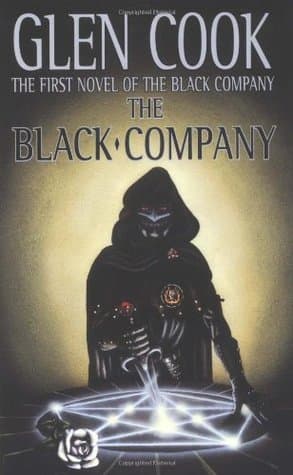
- The Black Company
Glen Cook
3.9 (42k) average on GoodreadsFantasyFeatures a morally ambiguous military fantasy with a focus on gritty realism and a sense of constant threat.
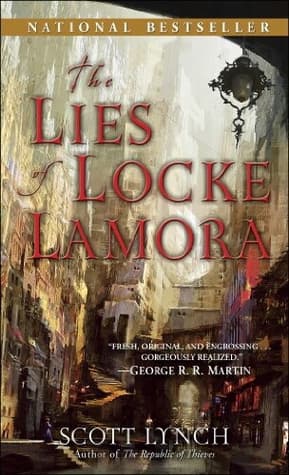
- The Lies of Locke Lamora
Scott Lynch
4.3 (222k) average on GoodreadsFantasyOffers a complex, crime-ridden city setting with intricate plots and a focus on survival against overwhelming odds.
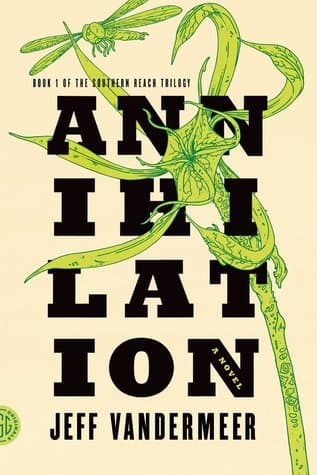
- Annihilation
Jeff VanderMeer
4.0 (5k) average on GoodreadsFantasyBoth "City of Ruin" and VanderMeer's Annihilation delve into the unsettling nature of an alien, transformative threat that alters its environment and victims. They both build tension through a sense of creeping dread and the gradual revelation of an incomprehensible force. However, Annihilation achieves a more seamless and unified sense of weirdness, with its ecological horror feeling deeply integrated into every aspect of the narrative. Newton's blend of fantasy and cosmic sci-fi, while ambitious, occasionally feels slightly less cohesive in its genre synthesis compared to VanderMeer's singular vision.
- Harry Potter and the Sorcerer's Stone
J.K. Rowling
4.5 (7M) average on GoodreadsFantasyRescued from a miserable life under the stairs, an orphaned boy discovers he's a wizard destined for a magical school, where he uncovers a dangerous secret tied to the dark wizard who murdered his parents.
- The Hunger Games
Suzanne Collins
4.3 (6.4M) average on GoodreadsFantasyIn a future where children fight to the death on live television, Katniss Everdeen volunteers for the arena, turning a death sentence into a fight for survival and a spark of rebellion.
- 1984
George Orwell
4.2 (3.1M) average on GoodreadsPoliticsIn a future where surveillance and thought control are absolute, a man's search for truth clashes with the Party, showing that hope can be a form of rebellion.



Enjoyed the summary?
A summary gives you the shape of the book. The book itself has the detail, the examples and the voice.
Find City of Ruin on AmazonAs an Amazon Associate, BookBrief earns from qualifying purchases. How we're funded