“The world is a beautiful place, but you have to know how to look at it.”
— Miloš reflecting on his observations at the railway station.

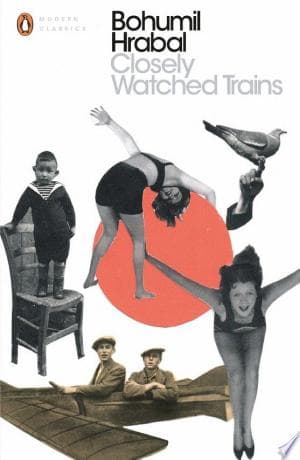
Sign in to track this book
Amidst the comedic chaos of a sleepy Czech railway station and the burden of his own virginity, a young apprentice finds himself drawn into an unexpected act of wartime heroism against the occupying Germans.
Ask anything about Closely Watched Trains and get instant answers grounded in the summary.
Milos Hrma, a twenty-two-year-old apprentice railwayman, works at the small, provincial Lodenice station in German-occupied Czechoslovakia during World War II. He is socially awkward, introspective, and preoccupied with his virginity and his perceived inadequacy as a man. His main romantic interest is Masha, a train conductor. The station itself is a microcosm of bizarre human behavior: the eccentric station master obsessed with pigeons and stamps, and the womanizing dispatcher Hubicka, who openly flirts with telegraphist Zdenka and even stamps her buttocks with official seals. Milos observes these goings-on, feeling like an outsider and struggling with his own sexual inexperience, which culminated in a humiliating suicide attempt after a failed encounter with a woman.
The station is abuzz with the scandal involving dispatcher Hubicka, who, in a fit of playful passion, stamps the bare buttocks of the telegraphist Zdenka with official station seals. This incident leads to a formal investigation by railway authorities, much to the amusement and exasperation of the station master. Amidst this chaos, Milos attempts to further his relationship with Masha. He takes her to a hotel, hoping to finally consummate their love, but his nervousness and inexperience lead to another humiliating failure, leaving him feeling even more inadequate and despondent about his masculinity. Masha, though understanding, cannot fully alleviate his self-doubt.
Beyond the personal dramas, the shadow of the war and German occupation looms. Milos gradually becomes aware of the subtle, yet growing, resistance movement. He notices coded messages and hushed conversations among some of the railway workers. A key figure in this resistance is Hubicka, who, despite his frivolous exterior, is secretly involved in sabotage. Milos begins to see a different side to Hubicka, recognizing a deeper purpose behind his seemingly carefree actions. This realization starts to stir a sense of duty and a desire for a more meaningful existence within Milos, contrasting sharply with his earlier self-absorption.
Hubicka reveals his involvement with the resistance and enlists Milos in a mission: to blow up a German ammunition train, specifically an 'express' train carrying war supplies. The plan involves placing explosives on the tracks at a precise moment. Milos, initially hesitant due to his timid nature and lack of experience in such matters, is drawn into the gravity of the situation. This request forces him to confront his fears and consider a role beyond his mundane duties and personal anxieties. The mission offers a path to proving his worth, not just to himself, but in a larger, national context.
On the night of the planned sabotage, a female resistance agent, Viktoria Freie, arrives at the Lodenice station. She is disguised as a passenger and carries the explosives hidden in a suitcase. Her arrival brings a heightened sense of tension and urgency to the station. Milos, who is tasked with assisting Hubicka, is immediately captivated by Viktoria's beauty and poise. Her presence not only signifies the imminent danger of the mission but also stirs an unexpected awakening within Milos, pushing his personal journey of self-discovery into an entirely new, physical dimension.
In a moment, Milos, still grappling with his virginity and self-doubt, finds himself alone with Viktoria Freie. Recognizing his inexperience and perhaps sensing his desperate need for affirmation, Viktoria takes the initiative and seduces him. This unexpected encounter is Milos's first sexual experience, a transformative event that shatters his previous anxieties and insecurities. He feels a surge of confidence and a newfound sense of masculinity, finally shedding the burden of his virginity. This personal triumph occurs just moments before he is to embark on the most dangerous mission of his life.
With newfound resolve and a sense of purpose, Milos joins Hubicka in carrying out the sabotage. They leave the station under the cover of darkness, making their way to the designated spot on the railway line. The 'closely watched train' — a heavily guarded German ammunition transport — is due to pass through. Milos is tasked with placing the explosives on the tracks, a task he approaches with a surprising calmness and determination, a stark contrast to his earlier timid self. The tension is palpable as they wait for the precise moment, knowing that failure means certain death.
As the German ammunition train approaches, Milos places the explosives on the tracks. The resulting explosion is massive, derailing the train and causing a catastrophic fire, a significant blow to the German war effort. However, during the chaos, Milos is spotted by a German soldier. In a brief, desperate struggle, Milos is shot and falls, mortally wounded. He dies, but not before witnessing the success of the mission. His death is presented with a mix of tragedy and a strange, almost serene acceptance, as if his earlier anxieties have been replaced by a final, heroic purpose.
In the aftermath, life at the Lodenice station slowly returns to its peculiar routine. The German authorities investigate the sabotage, but the perpetrators remain officially unknown. The station master continues with his pigeons and stamps, and Hubicka, though shaken, maintains his outwardly nonchalant demeanor. Milos's act of heroism, while perhaps not widely celebrated or even fully understood by all, leaves an indelible mark on the small community. His transformation from a timid, insecure boy to a courageous resistor becomes a quiet, yet powerful, story of the human spirit in the face of oppression, echoing through the mundane existence of the station.
The Protagonist
Milos evolves from a self-conscious, sexually frustrated youth into a confident and ultimately heroic resistance fighter, finding purpose in self-sacrifice.
The Supporting
Hubicka remains outwardly consistent in his eccentricities but reveals his deeper commitment to the resistance, acting as a crucial mentor.
The Supporting
The Station Master remains largely static, serving as a symbol of unchanging, bureaucratic routine amidst chaos.
The Supporting
Masha serves as a catalyst for Milos's initial sexual frustrations but does not experience significant development herself.
The Supporting
Viktoria acts as a catalyst for Milos's sexual and personal awakening, fulfilling her mission without extensive personal arc.
The Supporting
Zdenka remains a static character, primarily serving as a plot device for Hubicka's antics.
The Mentioned
Councillor Siska serves as a temporary antagonist to Hubicka, representing external authority.
The Mentioned
Milos's Grandfather is a static, legendary figure from the past, influencing Milos's perception of heroism.
Milos's journey is about finding his identity, particularly his masculinity and purpose. He begins as a timid, sexually frustrated young man, plagued by his virginity and a sense of inadequacy. His failed suicide attempt shows this crisis. The encounter with Viktoria Freie is a moment, providing him with a sexual awakening that empowers him. This newfound confidence directly fuels his courage to participate in the dangerous act of sabotage, ultimately leading to his self-realization and a heroic death. His personal transformation is intertwined with his political awakening.
“And it was at that moment that I, Milos Hrma, saw myself as a man.”
The novel explores different facets of heroism. Milos is an unlikely hero, a bumbling, sexually insecure apprentice who, through a series of events, performs a courageous act of resistance. His heroism is not grand or theatrical but arises from personal transformation and a quiet sense of duty. Hubicka, with his scandalous antics, also embodies an anti-heroic quality, masking his true bravery behind a facade of frivolity. The book suggests that heroism can emerge from unexpected places and people, often intertwined with human flaws and desires, rather than idealized virtue.
“We're all just little people, but sometimes little people can do big things.”
Hrabal blends the tragic reality of war with moments of dark humor and absurdity. The Lodenice station itself is a microcosm of this, with the station master's obsession with pigeons and stamps, and Hubicka's scandalous antics, occurring against the backdrop of German occupation and impending sabotage. This juxtaposition shows the human tendency to find meaning, escape, and even humor in the most dire circumstances. The mundane and the heroic, the personal and the political, constantly collide, creating a surreal and poignant portrayal of life during wartime.
“Here, even the most serious matters had a touch of the ridiculous about them.”
Milos's struggle with his virginity and perceived lack of virility is a central theme. His failed sexual encounters and subsequent suicide attempt show his deep-seated anxiety about his manhood. The novel posits that sexual fulfillment is a component of his self-actualization. His transformative encounter with Viktoria Freie is not merely a physical act but a psychological liberation, granting him the confidence and sense of power he needs. This personal triumph directly precedes and empowers his act of political resistance, suggesting a strong link between personal and political liberation.
“I was a man, I was finally a man, and I would do what I had to do.”
Milos's journey from naive youth to mature, purposeful individual.
The narrative follows Milos Hrma's psychological and emotional development as he transitions from adolescence to adulthood. His struggles with identity, particularly his sexual inexperience, are central to this arc. The climax of his personal journey, his sexual awakening with Viktoria Freie, directly enables his participation in the resistance. This device allows the author to explore themes of masculinity, courage, and self-discovery within the larger context of wartime, showing how personal growth can be intertwined with external conflict.
Represents fate, progress, destruction, and the inexorable march of war.
Trains in the novel carry multiple symbolic meanings. They are symbols of routine and the mundane existence at the station, but also of the relentless march of war, carrying soldiers and ammunition. The 'closely watched train' specifically symbolizes the German war machine and the oppressive power it wields. Milos's ultimate act of blowing up this train is a symbolic act of defiance against this overwhelming force, asserting agency against a predetermined fate. The railway itself becomes a stage for both personal drama and historical events.
Contrasting everyday station life with the gravity of war and resistance.
Hrabal frequently places seemingly trivial, even absurd, daily occurrences at the Lodenice station (like the station master's pigeons or Hubicka's stamping scandal) directly alongside the looming threat of war and the high-stakes resistance activities. This literary device highlights the resilience of the human spirit in finding normalcy or humor amidst chaos, but also emphasizes the sudden, shocking shifts in reality. It creates a unique tone that is both darkly comic and deeply poignant, reflecting the surreal nature of life under occupation.
Milos recounts his story with a blend of naiveté and eventual wisdom.
The story is told from Milos Hrma's first-person perspective, often with a retrospective quality, allowing him to reflect on his past self with a degree of distance and understanding. This narrative choice gives intimate access to Milos's internal struggles, anxieties, and eventual transformation. The tone shifts from his initial self-pity and sexual preoccupation to a more determined and purposeful voice as he recounts his heroic act. This allows the reader to experience his journey of self-discovery directly through his eyes and thoughts.
“The world is a beautiful place, but you have to know how to look at it.”
— Miloš reflecting on his observations at the railway station.
“I am a railwayman, and a railwayman must be punctual.”
— Miloš stating his professional duty.
“Everything is a matter of timing.”
— Miloš contemplating life and trains.
“A man must have something to believe in, even if it's only a train schedule.”
— Miloš finding meaning in his work.
“The trains are like life: they come and go, and you never know what they're carrying.”
— Miloš philosophizing about his job.
“I watch the trains, and they watch me back.”
— Miloš feeling a connection to the trains.
“In war, even the smallest things become important.”
— Reflecting on the significance of details during wartime.
“Sometimes the most ordinary moments are the most extraordinary.”
— Miloš appreciating the mundane aspects of life.
“A railway station is a world in miniature.”
— Describing the station as a microcosm of society.
“You can learn a lot about people by watching them wait for a train.”
— Miloš observing passengers at the station.
“The whistle of a train is the sound of freedom.”
— Miloš associating trains with escape and possibility.
“Every train has a story, and every passenger a secret.”
— Miloš imagining the lives of those on the trains.
“In the end, we are all just passengers on the same journey.”
— Miloš reflecting on the shared human experience.
Ready to see how well you understood this book? Take our interactive quiz with 10 questions.
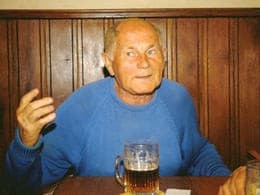
Bohumil Hrabal was a Czech writer, often named among the best Czech writers of the 20th century.

Ashley Antoinette
4.6

Mark McDonald
4.4

Luo Guanzhong
4.4

Mia McKenzie
4.3
Dorothy Parker
4.3

Joaquim Maria Machado de Assis
4.3
James Thurber
4.2

Terry Kay
4.2
Support the author — grab the full book.
As an Amazon Associate, BookBrief earns from qualifying purchases, at no extra cost to you. How we're funded.