

Synopsis
Covers the whole plot, including the ending.
- Difficulty
- Easy
- Pacing
- Moderate
- Mood
- Eerie, Suspenseful, Brave, Whimsical (darkly)
- Read it if
- You enjoy dark fairy tales, stories about brave children facing terrifying odds, or want a children's book that isn't afraid to be genuinely creepy.
- Skip it if
- You dislike horror elements in children's literature, or prefer lighthearted, whimsical fantasy without any unsettling themes.
Coraline Plot Summary
Covers the whole plot, including the ending.
A New Home and a Mysterious Locked Door
Coraline Jones and her parents move into a new flat in an old house divided into apartments. Her parents are often busy with work, leaving Coraline to entertain herself. She explores the house and its garden, meeting her neighbors: Miss Spink and Miss Forcible, two retired actresses, and the Crazy Old Man Upstairs, who says he trains a mouse circus. One rainy day, Coraline counts the doors in their flat and finds a locked one in the drawing-room. Her mother opens it with a rusty key, showing only a brick wall. Coraline's mother explains the door connects to the empty flat next door.
Passage to the Other World
Later that night, Coraline wakes up to a noise and finds her mother's black key. She unlocks the drawing-room door again, but this time, there is a dark, long corridor instead of a brick wall. Coraline crawls through the passage and enters a flat identical to her own, but with subtle differences. The 'Other Mother' greets her, looking exactly like her real mother but taller, thinner, with long, dark red fingernails, and unsettling black buttons for eyes. The 'Other Father,' also with button eyes, is more cheerful and attentive than her real father. The food is delicious, the toys are magical, and everything seems more exciting.
The Allure and the Warning
Coraline spends a pleasant evening in the other world, where the 'Other Mother' and 'Other Father' give her much attention and magical entertainment. The 'Other Miss Spink' and 'Other Miss Forcible' perform an endless show, and the 'Other Old Man Upstairs' has a wonderful, performing mouse circus. The other world seems to give her all the fun and attention she wants. However, when it is time to leave, the 'Other Mother' suggests Coraline stay forever, but only if she allows them to sew buttons into her eyes, like theirs. Coraline is horrified and immediately refuses, saying she wants her real parents.
A Return to a Grim Reality
Coraline crawls back through the passage, relieved to be home, but finds her parents are gone. She searches the house, calling for them, but only finds a note from her mother saying they have visited Miss Spink and Miss Forcible, which Coraline knows is not true. She feels uneasy. The next morning, she finds a message written on the mirror in green, gloopy writing: 'HELP US.' Coraline realizes her parents have been kidnapped by the 'Other Mother' and are trapped in the other world. She talks to the black cat, who speaks to her for the first time, warning her of the danger and telling her to be brave and smart.
The Cat's Guidance and the Other World's True Nature
Determined to rescue her parents, Coraline returns to the other world, with the black cat, who can move between both worlds and speaks only in the other. This time, the other world looks less bright and more sinister. The food is bland, the 'Other Father' is sad and distant, and the 'Other Mother' is increasingly threatening, showing her true nature. The cat reveals the 'Other Mother' is an old, evil being known as the 'Beldam' or 'Other Mother,' who lures children into her world, traps them, and eventually consumes their souls after sewing buttons into their eyes.
The Ghost Children and a Dangerous Game
The 'Other Mother' punishes Coraline for refusing her offer by locking her in a small, dark room behind a mirror. There, Coraline meets three ghost children previously trapped by the 'Other Mother.' They tell her their stories, how they were lured and tricked, and ask her to find their eyes so they can be free. Coraline realizes she must defeat the 'Other Mother' and free her parents and these ghost children. She proposes a game to the 'Other Mother': if Coraline can find her parents and the three lost children's eyes, they will all be set free. If she fails, Coraline will stay forever and have buttons sewn into her eyes.
The Quest for the Ghost Eyes
The 'Other Mother' reluctantly agrees to the game, but makes it clear she will cheat. Coraline, using her wits and the cat's advice, begins her search. She first visits the 'Other Miss Spink' and 'Other Miss Forcible,' whose performance is now a grotesque mess. She finds the first ghost child's eye, a marble, among the decaying props in their flat. Next, she goes to the 'Other Old Man Upstairs,' whose mouse circus is now a collection of rat skeletons. With the cat's help, she finds the second ghost eye, a button, in a rat's nest.
The Final Eye and the Parents' Location
Coraline returns to her 'other' home, where the 'Other Mother' is becoming more monstrous and the house is falling apart. She tricks the 'Other Father,' who is now a puppet, into telling her where the third ghost child's eye is hidden in the garden. She gets it, a small, green button. With all three eyes collected, Coraline faces the 'Other Mother.' The 'Other Mother' reveals Coraline's real parents are trapped inside a snow globe on the mantelpiece, a miniature version of their home, where they do not know their situation.
The Escape and the Trap
Coraline, using her cleverness, throws the black cat at the 'Other Mother,' distracting her. In the confusion, Coraline grabs the snow globe with her parents and races back to the connecting door. As she crawls through the passage, the 'Other Mother' tries to grab her, but Coraline slams the door shut, severing the 'Other Mother's' hand. The door disappears, leaving only the brick wall again. Coraline returns to her real home, exhausted but victorious, her parents safe but still confused from their ordeal. The ghost children appear, briefly visible, to thank her before fading away, finally free.
The Hand's Revenge and the Well
Coraline's parents return to normal, with no memory of their time in the other world. Coraline, however, knows the danger is not over. The 'Other Mother's' severed, crawling hand, a monstrous, spider-like entity, has followed her back and wants to get the black key. Coraline suspects it needs the key to reopen the door or trap more children. Coraline plans: she lures the hand to an old, deep well in the garden, covers the well with a blanket, and then tricks the hand into falling into it, securing it with a large stone. The key, which the hand wanted, falls into the well with it, finally ending the threat from the other world.
Coraline Characters
Coraline Jones
Protagonist
A brave and curious young girl who faces a malevolent entity.
Coraline is an adventurous, imaginative, and remarkably brave young girl, often feeling neglected by her busy parents. She is not easily intimidated and possesses a strong sense of right and wrong. Despite her youth, she demonstrates incredible resourcefulness and quick thinking when faced with the terrifying 'Other Mother.' Her curiosity initially leads her into danger, but her stubborn determination and love for her family drive her to overcome it. She learns to appreciate her ordinary life and the love of her real, albeit sometimes inattentive, parents.
Relationships: Mr. Jones (Father) (Loving but often distracted); Mrs. Jones (Mother) (Loving but often distracted); Other Mother (Antagonist, a twisted mirror of her mother); Other Father (Puppet of the Other Mother); The Cat (Mysterious guide and ally); Miss Spink (Eccentric neighbor); Miss Forcible (Eccentric neighbor); The Crazy Old Man Upstairs (Eccentric neighbor)
The Other Mother (Beldam)
Antagonist
A malevolent, spider-like entity who preys on lonely children.
The 'Other Mother,' also known as the Beldam, is the primary antagonist. She is a powerful, ancient, and utterly evil entity who creates a seemingly perfect, magical world to lure children, offering them everything they desire. Her true form is skeletal, spider-like, and terrifying, but she initially appears as a loving, attentive mother with unsettling button eyes. She thrives on stealing children's souls, sewing buttons into their eyes to trap them forever. She is manipulative, cruel, and will stop at nothing to get what she wants, possessing immense magical power and a keen understanding of children's desires.
Relationships: Coraline Jones (Prey, target of her desires); Other Father (Subservient puppet); Ghost Children (Previous victims)
The Cat
Supporting
A mysterious, talking black cat who serves as Coraline's guide and ally.
The black cat is a sarcastic, cynical, yet ultimately helpful companion to Coraline. It can speak in the other world and move freely between both realities. It has no name, stating that it doesn't need one. The cat provides Coraline with crucial advice and insights into the 'Other Mother's' nature and weaknesses. It represents a connection to the wild, untamed aspects of the world and is the only other creature in the other world not under the 'Other Mother's' direct control, acting as a crucial mentor and protector for Coraline.
Relationships: Coraline Jones (Ally and guide); Other Mother (Enemy)
Coraline's Mother (Mrs. Jones)
Supporting
Coraline's real mother, busy but caring.
Mrs. Jones is Coraline's real mother, portrayed as a loving but often distracted parent, engrossed in her work. She is practical and somewhat dismissive of Coraline's imaginative pronouncements. Her initial lack of attention inadvertently makes the 'Other Mother's' allure stronger for Coraline. She is kidnapped early in the story and trapped in the other world, becoming a motivation for Coraline's heroic journey. Her return signifies Coraline's success in preserving her normal life.
Relationships: Coraline Jones (Mother-daughter); Mr. Jones (Father) (Wife-husband)
Coraline's Father (Mr. Jones)
Supporting
Coraline's real father, also busy and often cooking strange meals.
Mr. Jones is Coraline's real father, similar to her mother in his preoccupation with work, often seen typing at his computer. He tries to be playful but can be somewhat awkward and provides Coraline with unappetizing recipes. Like Mrs. Jones, he is kidnapped by the 'Other Mother' and becomes a motivation for Coraline's quest. His initial inattentiveness highlights the 'Other Father's' initial appeal, but Coraline ultimately chooses her real father's genuine, if imperfect, love.
Relationships: Coraline Jones (Father-daughter); Mrs. Jones (Mother) (Husband-wife)
The Other Father
Supporting
A puppet of the Other Mother, designed to entertain Coraline.
The 'Other Father' is a creation of the 'Other Mother,' designed to mimic Coraline's real father but be more attentive and fun. He initially plays the piano and sings songs for Coraline. As the 'Other Mother's' control tightens and Coraline resists, he becomes more withdrawn, sad, and eventually a grotesque, barely functional puppet, his body often merging with the house. He is a tragic figure, trapped and controlled by the 'Other Mother,' eventually providing a small, involuntary hint to Coraline about the ghost children's eyes.
Relationships: Coraline Jones (Initially a fun, 'better' father figure, then a pitiable puppet); Other Mother (Controller and creator)
Miss Spink and Miss Forcible
Supporting
Eccentric elderly actresses living below Coraline, who offer cryptic warnings.
Miss Spink and Miss Forcible are two elderly, retired actresses who live in the flat below Coraline. They are often seen bickering, have a collection of Scottish Terriers, and read tea leaves. They provide Coraline with an ominous warning early in the story, giving her a stone with a hole in it to look through, which proves useful later. Their 'other' versions are grotesque parodies of their former selves, performing an endless, decaying show, and guarding one of the ghost children's eyes.
Relationships: Coraline Jones (Eccentric neighbors, minor allies); Miss Forcible (Long-term cohabitants, bickering friends); Miss Spink (Long-term cohabitants, bickering friends)
The Crazy Old Man Upstairs
Supporting
Coraline's peculiar upstairs neighbor who claims to train a mouse circus.
The Crazy Old Man Upstairs is an eccentric, unnamed resident of the flat above Coraline. He is obsessed with training a mouse circus, which Coraline initially dismisses. He also delivers a cryptic message from his mice to Coraline, warning her not to go through the door. His 'other' version is a grotesque parody, his mice replaced by rats, and he becomes a mere extension of the 'Other Mother's' will, guarding another ghost child's eye.
Relationships: Coraline Jones (Eccentric neighbor, source of initial warnings)
The Ghost Children
Mentioned
The trapped souls of children previously lured and consumed by the Other Mother.
The three ghost children are the spectral victims of the 'Other Mother' who Coraline encounters in the dark room behind the mirror. They are transparent and fading, having been trapped for varying lengths of time, some for centuries. They guide Coraline, explaining the 'Other Mother's' evil nature and begging her to find their eyes so they can be freed. They represent the ultimate fate Coraline narrowly avoids and serve as a powerful motivation for her to defeat the 'Other Mother,' not just for herself and her parents, but for them as well.
Relationships: Coraline Jones (Fellow victims, then a liberator); Other Mother (Captor and tormentor)
Coraline Themes
The Allure and Danger of Escapism
The 'other world' first offers an escape from Coraline's ordinary life and inattentive parents, with magic, attention, and delicious food. But this escape quickly turns sinister, showing the 'Other Mother's' true, evil intentions. The theme explores how what seems like a perfect solution to loneliness or boredom can hide dark, manipulative motives. It shows that true happiness and safety come from facing reality, even if it is imperfect, rather than giving in to false, appealing illusions.
“'We're not like your mum and dad,' said the other mother. 'We love you.”
Courage and Resourcefulness
Coraline's journey shows true courage, which is not being unafraid but acting despite fear. She is a young girl facing an old, powerful evil, yet she never gives up. Her resourcefulness is clear in how she uses her wits, the cat's advice, and even small objects (like a stone with a hole) to outsmart the 'Other Mother.' This theme highlights that bravery and cleverness are not limited by age or size and are needed to overcome big problems.
“Because,' she said, 'when you're scared but you still do it anyway, that's brave.”
The Value of Imperfect Reality
At first, Coraline feels ignored by her busy, ordinary parents. The 'other world' offers a 'better' version of everything. But through her experience, Coraline learns to value her real parents, her real home, and her real life, despite its flaws. The 'Other Mother's' world, though appealing at first, is a decaying, dangerous facade. This theme shows that real love and safety exist in the real, sometimes messy, world, and that things are not always better elsewhere, especially when 'better' is a trap.
“I don't want whatever I want. Nobody does. Not really. What kind of fun would it be if I just got everything I ever wanted? Just like that, and it didn't mean anything. What then?”
Identity and Self-Discovery
Coraline's journey makes her face who she is and what she values. She is not just 'Coraline, who never listens to her parents,' but Coraline, the brave and clever girl who saves her family. By facing the 'Other Mother,' Coraline finds her inner strength and her ability to be a hero. Choosing to reject the 'Other Mother's' offer of a 'perfect' but false life strengthens her true identity and her connection to her real family, solidifying her sense of self.
“I'm Coraline,' said Coraline. 'Not Caroline. Coraline.”
Plot Devices & Literary Techniques
The Locked Door/Passage
A portal between the mundane and the magical, symbolizing temptation and transition.
The locked door and the subsequent passage serve as the central plot device, literally and metaphorically. It's the gateway to the 'other world' and the catalyst for the entire story. Initially, it represents mystery and forbidden knowledge, then becomes a symbol of the dangerous allure of escapism. Its transformation from a brick wall to a tunnel highlights the 'Other Mother's' deceptive power. The act of entering and exiting this passage marks Coraline's transitions between her ordinary life and her extraordinary challenges.
Button Eyes
A chilling symbol of control, conformity, and loss of individuality.
The button eyes of the 'Other Mother' and all her creations are a profoundly unsettling symbol. They represent the 'Other Mother's' desire to possess and control, to strip away individuality and emotion, replacing true sight and soul with a manufactured, unseeing facade. For the ghost children, having buttons sewn into their eyes signifies their ultimate entrapment and the consumption of their souls. Coraline's steadfast refusal to have buttons sewn into her eyes is a powerful act of defiance and a declaration of her autonomy.
The Black Cat
A magical, cynical guide and a symbol of independent, untamed wisdom.
The black cat functions as a classic archetypal guide. It possesses knowledge of the 'other world' and the 'Other Mother's' true nature, which it imparts to Coraline. Its ability to speak only in the other world and move freely between realities highlights its unique position. The cat represents independence, instinct, and a connection to ancient magic, offering pragmatic, often cynical, advice that helps Coraline navigate the dangers. It is immune to the 'Other Mother's' power, serving as a beacon of truth and resistance.
The Stone with a Hole
A minor magical artifact providing insight and protection.
Given to Coraline by Miss Spink, the stone with a hole in it is a seemingly innocuous object that proves invaluable. It allows Coraline to see things as they truly are, stripping away the 'Other Mother's' illusions and revealing the hidden ghost children. It functions as a small magical tool, a symbol of intuition and foresight, and a physical manifestation of the advice and warnings given by the eccentric neighbors. It underscores that even small, seemingly insignificant items can hold great power or utility when courageously wielded.
The Other World's Decay
The gradual deterioration of the 'other world' reflecting the 'Other Mother's' true nature.
As Coraline defies the 'Other Mother,' the 'other world' itself begins to decay, becoming increasingly drab, dusty, and grotesque. The food loses its flavor, the 'Other Father' becomes a puppet, and the house starts to dissolve. This decay is a powerful visual metaphor for the 'Other Mother's' true, barren nature and the emptiness of her false promises. It shows that her magic is unsustainable without the life force of children and that her world is merely a fragile, malevolent illusion that cannot withstand genuine resistance.
Coraline Quotes
“Coraline was not a name that most people could get right.”
“She was not a monster. She was just a woman with a child who had a lot of buttons.”
“When you're scared but you still do it anyway, that's brave.”
“We are small, but we are many. We are small, but we are many.”
“I don't want whatever I want. Nobody does. Not really. What kind of fun would it be if I just got everything I wanted?”
“Because, Coraline, when you're in a situation like this, you have to be brave.”
“It wasn't a dream. It was the other place. And it's still there. And it's still waiting.”
“I'm not a kitten. I'm a cat. And I don't like to be petted. I like to be respected.”
“She had to be brave. She had to be clever. She had to be quick.”
“The world is a dangerous place, Coraline, and there are many people in it who are not what they seem.”
“She knew that when you are a child, you are allowed to be selfish.”
“You know I love you, Coraline. I love you more than anything.”
“She was not a monster. She was just a woman with a child who had a lot of buttons.”
“And she was in the Other Mother's house, and the Other Mother was in her house, and it was all wrong.”
Quiz
10 questions on the plot and the characters. Each answer comes with a short explanation.
Question 1
What is initially behind the locked fourteenth door in Coraline's new flat?
- A secret garden
- A brick wall
- A broom closet
- Her parents' bedroom
Show answer
B. A brick wall When Coraline first opens the locked fourteenth door, she finds it leads only to a brick wall, which later changes to a passage.
Question 2
What is the primary difference in the 'other flat' that first appeals to Coraline?
- Her parents are less busy
- The food is better and toys are magical
- There are other children to play with
- She has her own pet cat
Show answer
B. The food is better and toys are magical The description highlights that the food is better and the toy box is filled with marvelous, animated toys, making the 'other flat' initially seem appealing.
Question 3
What do the 'other mother' and 'other father' want Coraline to do to stay with them permanently?
- Give them her old toys
- Sew buttons over her eyes
- Promise to never go back home
- Learn to cook their favorite meals
Show answer
B. Sew buttons over her eyes The 'other mother' and 'other father' want Coraline to replace her eyes with buttons, a chilling detail that signifies her permanent entrapment.
Question 4
What kind of creatures are in the toy box in the 'other flat'?
- Talking teddy bears
- Wind-up angels that flutter
- Singing porcelain dolls
- Toy soldiers that march
Show answer
B. Wind-up angels that flutter The text explicitly states the toy box is filled with 'wind-up angels that flutter around the bedroom', showcasing the magical nature of the other world.
Question 5
Who are the 'lost souls behind the mirrors' in the other flat?
- Her real parents
- Other children trapped by the Other Mother
- Imaginary friends of Coraline
- The other mother's past victims who transformed into monsters
Show answer
B. Other children trapped by the Other Mother The description clearly states that 'Other children are trapped there as well, lost souls behind the mirrors', indicating Coraline is not the first victim.
Question 6
What is Coraline's primary motivation for fighting the 'other mother'?
- To gain magical powers herself
- To return to her ordinary life and save the trapped children and her parents
- To prove she is braver than her parents
- To take over the 'other flat' for herself
Show answer
B. To return to her ordinary life and save the trapped children and her parents The summary states Coraline's goal is to 'save the lost children, her ordinary life, and herself', highlighting her selfless and self-preservation motivations.
Question 7
What specific characteristic do the books in the 'other flat' possess?
- They sing songs
- Their pictures writhe and crawl and shimmer
- They tell fortunes
- They glow in the dark
Show answer
B. Their pictures writhe and crawl and shimmer The text describes the books as having 'pictures whose pictures writhe and crawl and shimmer', adding to the uncanny and magical atmosphere of the other world.
Question 8
What is implied about the 'other mother's' intentions regarding Coraline?
- She wants Coraline to be her assistant
- She wants Coraline to replace her own lost child
- She wants to change Coraline and never let her go
- She wants Coraline to help her escape to the real world
Show answer
C. She wants to change Coraline and never let her go The summary explicitly states, 'They want to change her and never let her go,' indicating a sinister and possessive intent from the 'other mother'.
Question 9
How many windows are in Coraline's family's new flat?
- Thirteen
- Fourteen
- Twenty-one
- Twenty-four
Show answer
C. Twenty-one The opening sentence of the description states, 'In Coraline's family's new flat are twenty-one windows and fourteen doors.'
Question 10
What thematic struggle does Coraline represent in her journey?
- The struggle between siblings for parental attention
- The allure of escapism versus the value of one's imperfect reality
- The power of friendship over loneliness
- The conflict between nature and technology
Show answer
B. The allure of escapism versus the value of one's imperfect reality Coraline is drawn to the 'marvelous' other flat but discovers its sinister nature, highlighting the theme of appreciating one's 'ordinary life' despite its flaws, over a seemingly perfect but dangerous alternative.
Coraline FAQ
What is Coraline about?
Coraline Jones, a young girl, discovers a hidden door in her new house that leads to an alternate reality. This 'Other World' mirrors her own but is initially more exciting and attentive, featuring an 'Other Mother' and 'Other Father' with button eyes who try to lure Coraline into staying forever, eventually revealing their sinister, soul-stealing intentions.
Why should I read Coraline?
You should read Coraline for its unique blend of dark fantasy, suspense, and a powerful message about appreciating one's ordinary life and the true meaning of courage. Neil Gaiman crafts a chilling atmosphere and a resourceful protagonist who faces her fears head-on, making it a compelling read for both children and adults.
What is the background/setting of Coraline?
The story is primarily set in an old, somewhat dreary house that Coraline's family has recently moved into, specifically in their new flat. This house also contains the portal to the 'Other World,' a distorted, enchanted, yet ultimately menacing version of her home, created by the Other Mother to trap children.
What are the most memorable quotes?
One memorable quote is, 'Because,' she said, 'when you're scared but you still do it anyway, that's brave.' Another is the Other Mother's chilling plea, 'We want you to stay with us. Forever and ever and ever.'
What writing style does the author use?
Neil Gaiman employs a concise, direct, yet richly atmospheric writing style. He uses vivid, often unsettling imagery to build a sense of wonder and dread, maintaining a child's perspective while never shying away from dark themes, making the prose accessible yet deeply evocative.
What minor details add significant meaning?
The 'biscuit' Coraline's real mother gives her, which Coraline finds 'too plain,' subtly highlights her initial dissatisfaction with her mundane life, contrasting with the Other Mother's 'delicious' food. The garden, initially a symbol of neglect, becomes a place where Coraline hides the key, signifying her growing resourcefulness.
What are some subtle foreshadowing moments?
The locked door that initially opens to a brick wall subtly foreshadows the existence of a hidden passage and the Other World's deceptive nature. The cat's ability to speak only in the Other World, and its warnings, hint at the magical rules and dangers of that realm long before Coraline fully understands them.
What unexpected character connections exist?
While not a direct connection, the forgotten children's ghosts in the Other World are profoundly connected to Coraline's quest, as she is their only hope for freedom. Their silent pleas and the stories they impart to her through the mirror drive her determination to defeat the Other Mother.
What are unspoken character motivations?
Coraline's unspoken motivation to explore the Other World stems from a sense of boredom and feeling neglected by her busy, writing-focused parents. The Other Mother's motivation is purely to consume souls and collect children, driven by an insatiable, parasitic hunger to fill a void.
What psychological complexities do characters exhibit?
Coraline exhibits remarkable psychological resilience and a profound shift from childish petulance to genuine bravery, facing immense fear to save not only herself but others. The Other Mother embodies pure, predatory narcissism, creating a seemingly perfect world solely to manipulate and devour.
What are the major emotional turning points?
A major emotional turning point is when Coraline realizes the Other Mother's true, terrifying nature after her real parents are kidnapped, transforming her initial curiosity into determined courage. Another is when she finds the ghost children, solidifying her resolve to be brave and save them all.
How do relationship dynamics evolve?
Coraline's relationship with her real parents deepens significantly; her initial frustration with their inattentiveness transforms into a profound appreciation and love after she experiences the terrifying alternative. Her relationship with the Cat also evolves from wary acceptance to a trusting partnership.
Which parts remain ambiguous or open-ended?
The ultimate fate or origin of the Other Mother (the 'beldam') remains somewhat ambiguous; her true form and the extent of her power are hinted at but never fully explained. The exact mechanism of her creation of the Other World also leaves room for interpretation.
What are controversial scenes or decisions?
The decision by the Other Mother to replace Coraline's parents with button-eyed versions and then kidnap her real parents is a particularly dark and unsettling plot point for a children's book, pushing the boundaries of what is typically considered appropriate for the genre.
Coraline ending explained: how it ends & what it means
Coraline defeats the Other Mother by tricking her into opening the portal to the real world, trapping her hand, and then casting the key into the old well. This act symbolizes Coraline's complete rejection of the Other World's false allure and her acceptance of her own life, emphasizing the themes of courage, resourcefulness, and appreciating reality over dangerous fantasy.
About the author

Neil Richard MacKinnon Gaiman is an English author of short fiction, novels, comic books, graphic novels, audio theatre, and a screenwriter. His works include the comic book series The Sandman and the novels Good Omens, Stardust, Anansi Boys, American Gods, Coraline, and The Graveyard Book. He has won numerous awards, including the Hugo, Nebula, and Bram Stoker awards, as well as the Newbery and Carnegie medals. He is the first author to win both the Newbery and the Carnegie medals for the same work, The Graveyard Book (2008). In 2013, The Ocean at the End of the Lane was voted Book of the Year in the British National Book Awards. It was later adapted into a critically acclaimed stage play at the Royal National Theatre in London.
Similar books
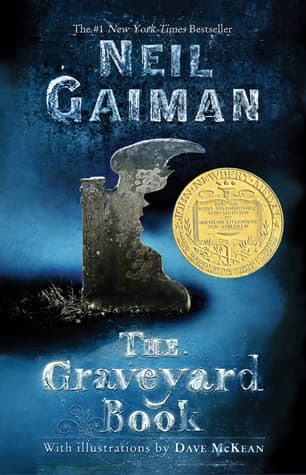
- The Graveyard Book
Neil Gaiman
4.1 (438k) average on GoodreadsFantasyFeatures a child protagonist navigating a magical, often dangerous, hidden world with supernatural guardians.
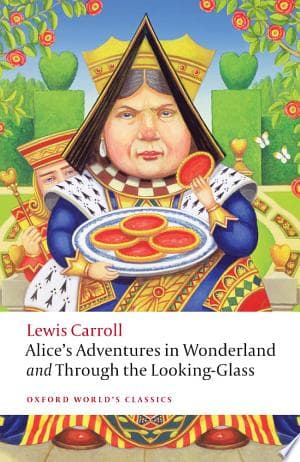
- Alice's Adventures in Wonderland
Lewis Carroll
4.0 (245k) average on GoodreadsFantasyA young girl falls into a bizarre, inverted reality with strange inhabitants and must find her way back home.
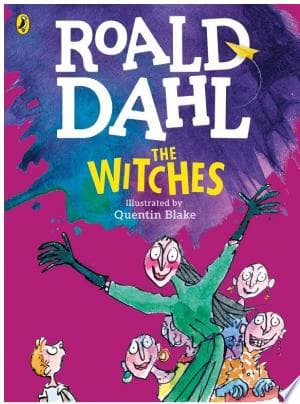
- The Witches
Roald Dahl
4.2 (314k) average on GoodreadsFantasyA brave child faces off against genuinely frightening supernatural villains who want to harm children.
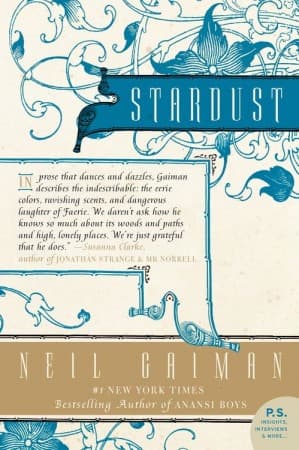
- Stardust
Neil Gaiman
4.1 (359k) average on GoodreadsFantasyStardust is a more traditional, high fantasy adventure aimed at a slightly older audience, featuring a quest, magical realms, and romantic subplots. While both showcase Gaiman's imaginative world-building, Coraline is a darker, more intimate psychological horror story set predominantly in a distorted version of a mundane reality, focusing on existential threats to a child's identity, whereas Stardust is an epic journey through a wondrous and whimsical fantasy land.
- Harry Potter and the Sorcerer's Stone
J.K. Rowling
4.5 (7M) average on GoodreadsFantasyRescued from a miserable life under the stairs, an orphaned boy discovers he's a wizard destined for a magical school, where he uncovers a dangerous secret tied to the dark wizard who murdered his parents.
- The Hunger Games
Suzanne Collins
4.3 (6.4M) average on GoodreadsFantasyIn a future where children fight to the death on live television, Katniss Everdeen volunteers for the arena, turning a death sentence into a fight for survival and a spark of rebellion.


Enjoyed the summary?
A summary gives you the shape of the book. The book itself has the detail, the examples and the voice.
Find Coraline on AmazonAs an Amazon Associate, BookBrief earns from qualifying purchases. How we're funded