
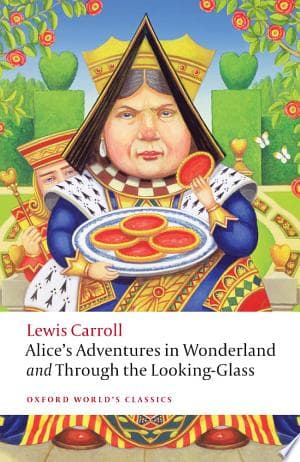
Synopsis
Covers the whole plot, including the ending.
- Difficulty
- Easy
- Pacing
- Moderate
- Mood
- Whimsical, Absurd, Dreamlike, Humorous
- Read it if
- You enjoy whimsical, nonsensical stories, surreal humor, and exploring themes of logic vs. illogic, and childhood imagination.
- Skip it if
- You prefer linear plots, clear resolutions, or stories grounded in reality and strict logic.
Alice's Adventures in Wonderland Plot Summary
Covers the whole plot, including the ending.
The Fall Down the Rabbit-Hole
One warm summer afternoon, young Alice sits on the riverbank with her sister, bored as her sister reads a book without pictures or conversations. Suddenly, a White Rabbit with pink eyes, dressed in a waistcoat and muttering to himself about being late, runs past her. Curious, Alice follows the Rabbit as he pops down a large rabbit-hole. Without thinking, she tumbles down after him, falling for a surprisingly long time. During her fall, she notices shelves, maps, and even a jar of marmalade, wondering if she will ever reach the bottom or if she will fall through the Earth to the Antipathies. She eventually lands in a long, low hall with many locked doors.
The Pool of Tears and Size Transformations
In the hall, Alice finds a tiny golden key that fits a small door, showing a beautiful garden. However, she is too large to fit through. She then finds a bottle labeled 'DRINK ME,' which makes her shrink enough for the door, but she forgets the key on the table. Frustrated, she eats a cake labeled 'EAT ME,' causing her to grow very large, hitting her head on the ceiling. Overwhelmed, Alice starts to cry, making a large pool of tears. She shrinks again, this time from fanning herself with a fan she found, and nearly drowns in her own tears. She meets a Mouse, who is also swimming in the pool.
The Caucus-Race and Dry Discussions
Alice, the Mouse, and other animals and birds — including a Dodo, a Lory, and an Eaglet — struggle out of the Pool of Tears onto the bank. To dry everyone off, the Dodo suggests a 'Caucus-race.' The race involves everyone running around in a circle as they please, for an arbitrary amount of time, with no clear winner or loser, until the Dodo says it is over. After the race, everyone wins and gets a thimble from Alice. The Mouse then tries to tell a long, confusing story about why he hates cats and dogs, which Alice interrupts with tales of her own cat, Dinah, scaring off the other animals.
The White Rabbit's House and Growing Pains
The White Rabbit reappears, frantically looking for his gloves and fan, mistaking Alice for his maid, Mary Ann, and telling her to get them from his house. Alice, confused but obedient, goes to his small cottage. Inside, she finds another bottle and, despite her earlier experiences, drinks from it. This makes her grow so large that her arm shoots out the window and her leg up the chimney, completely filling the house and trapping her. The White Rabbit and his gardener, Pat, try to get her out by throwing pebbles, which turn into small cakes. Alice eats one, shrinks, and escapes, only to be chased by a crowd of animals.
Advice from a Caterpillar
After escaping the Rabbit's house, Alice wanders into a wood and meets a large blue Caterpillar sitting on a mushroom, smoking a hookah. The Caterpillar is rude and philosophical, asking Alice who she is and why she keeps changing size. He asks her to recite 'You Are Old, Father William,' which she does incorrectly. Before crawling away, the Caterpillar tells Alice that one side of the mushroom will make her grow taller and the other side will make her grow shorter. Alice tries the mushroom pieces, shrinking and growing erratically, almost losing her temper, until she gets back to her normal height.
The Duchess's Kitchen and the Cheshire Cat
Alice finds herself outside a house, where a Fish-Footman delivers an invitation to a Frog-Footman. She enters to find a chaotic scene in the Duchess's kitchen: a cook throwing dishes, a baby sneezing constantly because of pepper, and the Duchess singing a lullaby while rocking the screaming infant. The Cheshire Cat is also there, grinning. The Duchess is rude and violent, eventually tossing the baby to Alice. Alice takes the baby outside, only for it to change into a pig in her arms. She then meets the Cheshire Cat again, who tells her to go to the Mad Hatter's tea party.
A Mad Tea-Party
Alice approaches a long table set for a tea party, where the Mad Hatter, the March Hare, and a sleeping Dormouse are seated. They tell her there's 'no room,' despite plenty of space. The party is chaotic, always stuck at six o'clock (tea-time) because the Hatter had a fight with Time. They ask Alice unanswerable riddles, tell nonsensical stories, and offer her imaginary tea. The Dormouse occasionally speaks up with irrelevant remarks about treacle. Alice finds their conversation frustrating and illogical, eventually giving up on trying to understand it and leaving in disgust, calling it the stupidest tea-party she has ever attended.
The Queen's Croquet-Ground
Alice wanders into a beautiful garden where she sees three gardeners painting white roses red, fearing the Queen of Hearts' anger if she finds out they planted the wrong color. The Queen of Hearts, a tyrannical and short-tempered monarch, arrives with her group, often ordering 'Off with his head!' for small mistakes. Alice is invited, or rather commanded, to play croquet. The game is utterly chaotic: the mallets are flamingos, the balls are hedgehogs, and the hoops are soldiers bent double. Everyone cheats, the Queen constantly threatens beheadings, and the game quickly becomes pandemonium, with no one following any rules.
The Mock Turtle's Story
The Queen, still angry and demanding beheadings, orders Alice to be taken by the Gryphon to meet the Mock Turtle. The Gryphon is friendly but equally nonsensical. They find the Mock Turtle, who is always sad and sighs mournfully. The Mock Turtle tells about his 'education' at a school under the sea, describing strange subjects like 'Reeling and Writhing,' 'Ambition, Distraction, Uglification, and Derision.' He also sings the sad song 'Turtle Soup.' Alice finds his stories and songs confusing and full of puns, but listens patiently, though she struggles to understand the logic behind his tales.
Who Stole the Tarts?
Alice is suddenly called to a courtroom where the Knave of Hearts is on trial, accused of stealing the Queen's tarts. The King of Hearts serves as judge, helped by the White Rabbit as herald. The jury has various animals who are easily distracted. Witnesses include the Mad Hatter, who gives confusing and irrelevant testimony about tea, and the Duchess's cook, who only says that tarts are made of pepper. Alice, having grown very large again, feels stifled and is called as a witness, but her testimony is dismissed as unimportant. The King tries to introduce a nonsensical 'Rule 42' to condemn the Knave.
Alice's Awakening
During the trial, the King tries to apply a nonsensical rule, and the White Rabbit reads some anonymous verses that implicate the Knave, though the logic is weak. Alice, now huge and feeling angry about the absurdity of the trial, says they are 'nothing but a pack of cards!' The entire deck of cards rises into the air and flies down upon her. Alice screams and finds herself awake on the riverbank, with her head in her sister's lap. Her sister gently brushes away some leaves, and Alice tells her extraordinary dream. Her sister then dreams of Alice's adventures herself, thinking about the 'simple and loving heart' of her little sister.
Principal Figures
Alice
Protagonist
A curious and imaginative young girl who falls into Wonderland.
Alice is a curious, intelligent, and often polite young girl, though she can be assertive and easily frustrated by the illogical nature of Wonderland. She constantly tries to apply logic and reason to the bizarre situations she encounters, often to no avail. Her journey through Wonderland is a quest for understanding and control, as she grapples with her changing size and the nonsensical characters around her. She maintains a strong sense of self, despite the challenges to her identity. Her imagination and ability to adapt, even if with exasperation, drive the narrative.
Relationships: White Rabbit (pursues him into Wonderland); Caterpillar (receives advice from him); Mad Hatter (attends his tea party, finds him frustrating); Cheshire Cat (seeks guidance from him); Queen of Hearts (antagonistic relationship, challenges her authority)
White Rabbit
Supporting
A perpetually late and anxious rabbit who leads Alice to Wonderland.
The White Rabbit is Alice's initial guide into Wonderland, though he is rarely helpful. He is constantly worried about being late, checking his pocket watch, and fretting over the Duchess and the Queen of Hearts. He embodies the frantic, illogical pace of Wonderland. Despite his high-strung nature, he also plays roles as a messenger for the Duchess and the herald in the trial of the Knave of Hearts, indicating a certain level of social standing within this strange world. His anxieties and hurried demeanor are a constant source of amusement and bewilderment for Alice.
Relationships: Alice (unwittingly leads her to Wonderland, mistakes her for his maid); Queen of Hearts (serves her as a herald)
Queen of Hearts
Antagonist
The tyrannical and short-tempered ruler of Wonderland.
The Queen of Hearts is a formidable and terrifying character, known for her frequent cries of 'Off with his head!' at the slightest provocation. She rules Wonderland with an iron fist, demanding absolute obedience and showing no mercy. Her character embodies arbitrary authority and irrationality, as her punishments are disproportionate and her croquet game is chaotic. She is more a force of nature than a reasoned antagonist, providing a constant threat to Alice and the other inhabitants of Wonderland. Her over-the-top cruelty is ultimately rendered harmless by the dream logic of the story.
Relationships: Alice (antagonistic, attempts to intimidate and punish her); King of Hearts (her less assertive husband); White Rabbit (her herald, fears her)
Cheshire Cat
Supporting
A grinning, disappearing cat who offers philosophical advice.
The Cheshire Cat is a mysterious and enigmatic character, known for his wide, disembodied grin and his ability to appear and disappear at will, often leaving only his grin behind. He offers Alice cryptic, philosophical, and often unhelpful advice, speaking in riddles and paradoxes. He represents the inherent madness and illogical nature of Wonderland, yet he is one of the few characters who seems to understand Alice's predicament and offers her some form of guidance, however bewildering. His detachment from the chaos makes him a unique observer of the Wonderland world.
Relationships: Alice (offers her cryptic advice and directions)
Mad Hatter
Supporting
The host of the perpetual tea party, obsessed with riddles and time.
The Mad Hatter is one of the most iconic characters, presiding over a tea party that is forever stuck at six o'clock (tea-time). He is characterized by his nonsensical riddles, his rude behavior, and his eccentric fashion. His quarrel with Time has condemned him and his companions to an endless tea party. He embodies the absurd and illogical nature of Wonderland, where social conventions are inverted and time itself is broken. His questions and statements are designed to confuse and frustrate, reflecting the overall disorienting experience of Alice's dream.
Relationships: Alice (rude host at the tea party); March Hare (constant companion at the tea party); Dormouse (constant companion at the tea party)
March Hare
Supporting
The Mad Hatter's equally mad companion at the tea party.
The March Hare is another inhabitant of the perpetual tea party, equally as mad and illogical as the Mad Hatter. He frequently offers Alice 'more tea' when she's had none, and his conversations are filled with non-sequiturs and absurd logic. His character reinforces the theme of madness and the breakdown of conventional communication within Wonderland. He is less prominent than the Hatter but contributes significantly to the overall atmosphere of cheerful chaos and illogic at the tea party, further frustrating Alice's attempts to find reason.
Relationships: Alice (rude guest at the tea party); Mad Hatter (constant companion at the tea party); Dormouse (constant companion at the tea party)
Dormouse
Supporting
A sleepy participant at the tea party, prone to irrelevant remarks.
The Dormouse is the third member of the Mad Hatter's tea party, often dozing off and being prodded awake by his companions. When awake, he tells rambling, nonsensical stories, particularly about treacle, and interjects with irrelevant comments. His sleepy, confused state adds another layer of absurdity to the tea party, highlighting the futility of seeking sensible conversation. He serves as a humorous element, his drowsiness and sudden, strange contributions further emphasizing the chaotic and unpredictable nature of Alice's dream world.
Relationships: Alice (sleepy guest at the tea party); Mad Hatter (constant companion at the tea party); March Hare (constant companion at the tea party)
Caterpillar
Supporting
A hookah-smoking insect who gives Alice advice on controlling her size.
The Caterpillar is a pompous and philosophical character who sits on a mushroom, smoking a hookah. He is rather rude and dismissive towards Alice, questioning her identity and her inability to remain one size. Despite his condescending attitude, he provides Alice with crucial information about the mushroom's properties, which allows her to control her size. He represents a form of detached, intellectual, and slightly arrogant wisdom within Wonderland, forcing Alice to confront her own identity and the fluidity of her experiences.
Relationships: Alice (gives her cryptic advice about the mushroom)
Duchess
Supporting
A rude, violent, and later moralizing character.
The Duchess is initially encountered in a chaotic kitchen, where she is rude, violent, and prone to throwing objects and singing a distressing lullaby to a sneezing baby. Later, she reappears at the croquet game, having softened her demeanor and becoming overly moralizing, finding a 'moral' in everything she sees, no matter how tenuous. Her character embodies extreme shifts in personality and highlights the arbitrary nature of behavior in Wonderland. She serves as a commentary on forced morality and the unpleasantness of certain social interactions.
Relationships: Alice (initially hostile, later overly preachy); Cook (her violent cook); Cheshire Cat (her cat)
Mock Turtle
Supporting
A melancholic creature who recounts his nonsensical education.
The Mock Turtle is a perpetually sad and sentimental creature, encountered with the Gryphon. He is a pun on 'mock turtle soup' and is depicted with the head and feet of a calf, but the shell of a turtle. He recounts his education in absurd subjects like 'Reeling and Writhing' and 'Uglification,' and sings mournful songs like 'Turtle Soup.' His character adds another layer of whimsical sadness and wordplay to Wonderland, highlighting the pervasive presence of illogical and humorous elements, even in moments of apparent despair.
Relationships: Alice (tells her his life story and sings to her); Gryphon (his companion)
Themes & Insights
Identity and Self-Discovery
Alice's journey focuses on her struggle with identity. Her constant changes in size make her question 'Who am I?', forcing her to re-evaluate her sense of self. Characters like the Caterpillar directly ask 'Who ARE you?' Alice's internal thoughts show her attempts to keep a consistent sense of self amidst the external chaos and physical changes. This theme explores how identity changes in childhood and the search for self amidst confusing experiences.
“Who are YOU?' said the Caterpillar. This was not an encouraging opening for a conversation. Alice replied, rather shyly, 'I—I hardly know, sir, just at present—at least I know who I WAS when I got up this morning, but I think I must have been changed several times since then.”
Logic vs. Nonsense
The main conflict of the book is Alice's attempts to apply her Victorian-era logic and common sense to the illogical world of Wonderland. From the Caucus-race to the Mad Hatter's tea party and the Queen's croquet game, every interaction defies rational understanding. Alice's frustration at the lack of rules, consistency, and polite conversation highlights the clash between her ordered world and Wonderland's chaotic absurdity. This theme explores the limits of logic and the freeing, yet confusing, power of imagination and nonsense.
“'It's a poor sort of memory that only works backwards,' the Queen remarked.”
The Nature of Dreams and Reality
The entire adventure is a dream of Alice's, blurring the lines between fantasy and reality. The fantastical elements, the sudden shifts in scenery, the illogical events, and the ultimate awakening all point to the dreamlike nature of the story. The book explores how dreams can show internal anxieties, desires, and the subconscious processing of everyday experiences, though in a distorted way. Alice's sister's final thoughts on Alice's dream further emphasize the interplay between imagination and the real world, suggesting the dream's lasting impact.
“Lastly, she pictured to herself how this same little sister of hers would, in a future day, be herself a grown woman; and how she would keep, through all her riper years, the simple and loving heart of her childhood: and how she would gather about her other little children, and make their eyes bright and eager with many a wonderful tale, perhaps even with the dream of Wonderland of long ago: and how she would feel with all their simple sorrows, and find a pleasure in all their simple joys, remembering her own child-life, and the happy summer days.”
The Absurdity of Authority
Wonderland is full of arbitrary and often tyrannical authority figures, especially the Queen of Hearts and, to a lesser extent, the King of Hearts. Their rules are nonsensical, their judgments are irrational, and their punishments are extreme ('Off with his head!'). Alice repeatedly challenges this absurd authority, particularly during the trial of the Knave of Hearts. This theme critiques the arbitrary nature of power, the misuse of authority, and the dangers of a society where logic and fairness are ignored for whim and emotion.
“Stuff and nonsense!' said Alice loudly. 'The idea of having the sentence first and the verdict afterwards!”
Growth and Transformation
Alice's physical changes, especially her changes in size, are a central element. These literal growths and shrinkages symbolize the tumultuous and often confusing experience of growing up and navigating the world. They reflect the feeling of being too small to control one's environment and then suddenly too large to fit in. This theme explores the challenges of physical and emotional development, the loss of childhood innocence, and the constant adaptation needed during the transition from childhood to adolescence.
“I wish I hadn't cried so much!' said Alice, as she swam about, trying to find her way out. 'I shall be punished for it now, I suppose, by being drowned in my own tears! That will be a queer thing, to be sure! However, everything is queer to-day.”
Plot Devices & Literary Techniques
Anthropomorphism
Giving human characteristics to animals and inanimate objects.
Lewis Carroll extensively uses anthropomorphism to create the bizarre inhabitants of Wonderland. Animals like the White Rabbit, the Mouse, the Dodo, the March Hare, and the Dormouse all speak, dress, and behave with human-like qualities and social roles. Even playing cards are personified as soldiers and royalty. This device makes the fantastical world relatable yet utterly alien, as these familiar creatures behave in wildly unpredictable and illogical ways, challenging Alice's (and the reader's) expectations.
Nonsense and Wordplay
The use of illogical language, puns, and absurd riddles.
Nonsense is a pervasive element in Wonderland, manifesting through illogical dialogue, unanswerable riddles (like 'Why is a raven like a writing-desk?'), and extensive wordplay and puns. The Mock Turtle's 'education' is a prime example, with subjects like 'Reeling and Writhing.' This device creates a constant sense of disorientation for Alice and the reader, highlighting the breakdown of conventional communication and the subversion of language itself. It emphasizes the dreamlike quality where meaning is fluid and often absent.
Dream Vision Narrative
Framing the entire story as a vivid dream.
The entire adventure in Wonderland is explicitly revealed to be a dream at the story's end. This narrative device allows for the suspension of disbelief, justifying the fantastical and illogical events without needing rational explanations. It provides a convenient framework for the episodic structure, the arbitrary character appearances, and the ultimate return to reality. The dream vision also allows for deeper psychological interpretations, as the events can be seen as reflections of Alice's subconscious anxieties and desires.
Shifting Perspectives and Size Changes
Alice's frequent and drastic alterations in physical size.
Alice's recurrent changes in size are a central plot device that physically manifests her feeling of powerlessness and disorientation. Being too large or too small constantly alters her perspective on her environment and her interactions with others. This device creates immediate obstacles and forces Alice to adapt, symbolizing the challenges of childhood development and the feeling of being out of sync with the world. It also serves as a source of physical comedy and visual absurdity, reinforcing the dreamlike nature of her journey.
Alice's Adventures in Wonderland Quotes
“Why, sometimes I've believed as many as six impossible things before breakfast.”
“Curiouser and curiouser!”
“We're all mad here. I'm mad. You're mad.”
“It's no use going back to yesterday, because I was a different person then.”
“Off with their heads!”
“I can't go back to yesterday because I was a different person then.”
“Begin at the beginning and go on till you come to the end: then stop.”
“If everybody minded their own business, the world would go round a deal faster than it does.”
“Who in the world am I? Ah, that's the great puzzle.”
“Sentence first—verdict afterwards.”
“I give myself very good advice, but I very seldom follow it.”
“Everything's got a moral, if only you can find it.”
“Twinkle, twinkle, little bat! How I wonder what you're at!”
“I'm not a mile high, but I'm very well brought up.”
Quiz
10 questions on the plot and the characters. Each answer comes with a short explanation.
Question 1
What does Alice follow down the rabbit hole that starts her adventure?
- A white rabbit with pink eyes
- A white rabbit checking a pocket watch
- A black cat with a smile
- A blue caterpillar smoking a hookah
Show answer
B. A white rabbit checking a pocket watch Alice's adventure begins when she follows a white rabbit who exclaims 'Oh dear! Oh dear! I shall be too late!' while checking a pocket watch, leading her down the rabbit hole.
Question 2
What does Alice find and consume that makes her shrink to a very small size?
- A bottle labeled 'DRINK ME'
- A cake with 'EAT ME' written on it
- A mushroom offered by the Caterpillar
- A potion from the Mad Hatter
Show answer
A. A bottle labeled 'DRINK ME' After falling down the rabbit hole, Alice finds a small bottle labeled 'DRINK ME' on a table, which causes her to shrink to only ten inches tall.
Question 3
Who is constantly shouting 'Off with their heads!' in the story?
- The King of Hearts
- The Duchess
- The Queen of Hearts
- The Mad Hatter
Show answer
C. The Queen of Hearts The Queen of Hearts is known for her quick temper and frequent orders of 'Off with their heads!' during the croquet game and trial, though executions rarely occur.
Question 4
What riddle does the Mad Hatter ask at the tea party that has no answer?
- Why is a raven like a writing-desk?
- How many miles to Babylon?
- What is the air-speed velocity of an unladen swallow?
- When is a door not a door?
Show answer
A. Why is a raven like a writing-desk? At the Mad Tea Party, the Hatter poses the famous riddle 'Why is a raven like a writing-desk?' and later admits he doesn't know the answer, highlighting the nonsense logic of Wonderland.
Question 5
What does the Cheshire Cat famously do that disturbs Alice?
- It sings off-key songs
- It disappears and reappears, leaving only its grin
- It steals the Queen's tarts
- It turns into a butterfly
Show answer
B. It disappears and reappears, leaving only its grin The Cheshire Cat is known for its ability to vanish gradually, often leaving its grin visible last, which Alice finds puzzling and unsettling during their conversations.
Question 6
Why is the Mad Hatter's tea party described as 'mad'?
- Because they serve only imaginary tea
- Because they are celebrating a unbirthday
- Because they are stuck at 6 o'clock forever
- Because Alice is the only sane one there
Show answer
C. Because they are stuck at 6 o'clock forever The Hatter explains that Time punished him by stopping at 6 o'clock (tea time), so they are perpetually having tea and moving around the table, creating a chaotic, endless party.
Question 7
What event causes Alice to finally wake up from her dream?
- She eats a mushroom and returns to normal size
- The Queen of Hearts sentences her to execution
- She grows to a giant size and disrupts the trial
- The White Rabbit leads her back to the rabbit hole
Show answer
C. She grows to a giant size and disrupts the trial During the trial of the Knave of Hearts, Alice grows to a huge size, argues with the Queen, and declares 'You're nothing but a pack of cards!', causing the cards to fly up and wake her.
Question 8
What lesson does the Caterpillar teach Alice about identity in Wonderland?
- That she should always be polite to strangers
- That size changes do not affect who she is
- That she must recite poems perfectly to prove herself
- That she is not sure who she is after so many changes
Show answer
D. That she is not sure who she is after so many changes When the Caterpillar asks 'Who are you?', Alice struggles to answer because her frequent size changes have confused her sense of self, reflecting themes of identity and growth.
Question 9
In the croquet game, what unusual item is used as a mallet?
- A flamingo
- A hedgehog
- A playing card
- A rabbit's pocket watch
Show answer
A. A flamingo The Queen's croquet game uses live flamingos as mallets and hedgehogs as balls, adding to the absurdity and chaos of Wonderland that Alice experiences.
Question 10
How does the story frame Alice's adventures in Wonderland?
- As a punishment for her curiosity
- As a lesson in obedience from her sister
- As a dream she has while napping
- As a parallel reality she can revisit
Show answer
C. As a dream she has while napping The book begins with Alice drowsily by a riverbank and ends with her waking up to her sister, revealing that the entire adventure was a dream, emphasizing imagination and childhood fantasy.
Alice's Adventures in Wonderland FAQ
What is 'Alice's Adventures in Wonderland' about?
The story follows young Alice, who falls down a rabbit hole into a fantastical world called Wonderland. There, she encounters bizarre characters like the White Rabbit, the Cheshire Cat, and the Queen of Hearts, navigating nonsensical events such as the Mad Hatter's tea party and a chaotic croquet game. Throughout her journey, Alice constantly changes size and questions the illogical rules of this strange land, ultimately waking to find it was all a dream.
Why should I read 'Alice's Adventures in Wonderland'?
This classic offers a whimsical yet thought-provoking exploration of childhood curiosity, logic, and identity through its imaginative nonsense. Carroll's playful language, memorable characters like the grinning Cheshire Cat, and satirical take on Victorian society make it enjoyable for both children and adults. It's a foundational work of fantasy that challenges readers to question norms and embrace absurdity.
What is the background/setting of 'Alice's Adventures in Wonderland'?
The story begins in mid-19th century England, where Alice is bored on a riverbank before falling into Wonderland. Wonderland itself is a surreal, dreamlike realm with locations like the Rabbit's house, the Duchess's kitchen, and the Queen's croquet ground, all governed by illogical rules. The setting reflects Carroll's interest in mathematics and logic turned upside down, serving as a metaphor for the confusing transition from childhood to adulthood.
What are the most memorable quotes from 'Alice's Adventures in Wonderland'?
Key quotes include the Cheshire Cat's 'We're all mad here,' highlighting Wonderland's absurdity, and Alice's realization 'Curiouser and curiouser!' as she experiences bizarre changes. The Duchess's moral 'Everything's got a moral, if only you can find it' satirizes Victorian didacticism, while the Queen's frequent 'Off with their head!' underscores the arbitrary violence and tyranny in Wonderland.
What writing style does Lewis Carroll use in 'Alice's Adventures in Wonderland'?
Carroll employs a playful, nonsensical style filled with puns, riddles, and parodies of Victorian poetry, such as 'You Are Old, Father William.' The narrative blends logical absurdity with dreamlike sequences, using Alice's straightforward perspective to contrast with Wonderland's chaos. This style critiques societal norms while engaging readers with whimsical humor and imaginative wordplay.
What minor details add significant meaning to 'Alice's Adventures in Wonderland'?
Small details like the White Rabbit's pocket watch symbolize the obsession with time and punctuality in Victorian society, while Alice's size changes reflect her struggle with identity and growth. The playing cards painting roses red for the Queen shows how fear drives conformity, and the 'Drink Me' bottles and 'Eat Me' cakes represent the unpredictable consequences of curiosity and experimentation.
What are some subtle foreshadowing moments in 'Alice's Adventures in Wonderland'?
Early on, Alice's remark 'what is the use of a book without pictures or conversations?' foreshadows Wonderland's visual and dialog-driven nature. The White Rabbit's anxiety about being late hints at the time-themed absurdities later, like the Mad Hatter's tea party. Alice's initial fall down the rabbit hole, described as 'either falling very slowly or not at all,' prefigures the dreamlike, distorted reality of her entire adventure.
What unexpected character connections exist in 'Alice's Adventures in Wonderland'?
Characters are loosely connected through shared absurdity rather than plot, such as the Duchess's cook who appears at the trial, linking earlier chaos to the finale. The Cheshire Cat knows both the Mad Hatter and the Queen, acting as a guide who reveals their madness. Alice herself connects all events as the only consistent observer, with her dream weaving together disparate encounters like the Caterpillar and the Mock Turtle.
What are unspoken character motivations in 'Alice's Adventures in Wonderland'?
The White Rabbit is driven by a fear of authority and punctuality, reflecting societal pressures, while the Queen of Hearts uses threats to mask her insecurity and maintain control. Alice's curiosity masks a deeper desire to understand her changing self and the adult world, and the Mad Hatter's endless tea party suggests a rebellion against time and convention, stemming from a trapped existence.
What psychological complexities do characters exhibit in 'Alice's Adventures in Wonderland'?
Alice grapples with identity confusion, shifting sizes and questioning her own name, mirroring adolescent self-discovery. The Cheshire Cat displays detached amusement, offering paradoxical wisdom that challenges logic, while the Duchess embodies chaotic morality, switching between cruelty and kindness. The Queen of Hearts shows tyrannical behavior rooted in capriciousness, representing irrational authority figures in a child's perception.
What are the major emotional turning points in 'Alice's Adventures in Wonderland'?
Alice's initial fear upon shrinking and growing triggers her determination to navigate Wonderland. Her frustration peaks at the Mad Hatter's tea party, where nonsense overwhelms her, leading to a more assertive attitude. The climax at the trial, where she defies the Queen by declaring 'You're nothing but a pack of cards!', marks her emotional growth from confusion to confidence, culminating in her awakening from the dream.
How do relationship dynamics evolve in 'Alice's Adventures in Wonderland'?
Alice starts as a passive observer but grows to challenge characters like the Caterpillar and Queen, shifting from submission to defiance. Her interactions with the Cheshire Cat evolve from bewilderment to using his advice strategically. The Queen's relationship with subjects remains static, based on fear, but Alice's bond with Wonderland changes from curiosity to rejection as she realizes its absurdity and wakes up.
Which parts of 'Alice's Adventures in Wonderland' remain ambiguous or open-ended?
The nature of Wonderland is ambiguous—whether it's a dream, a psychological state, or a real place is never clarified. The Mad Hatter's riddle 'Why is a raven like a writing-desk?' has no answer, emphasizing nonsense. The trial's outcome is left unresolved as Alice wakes, and the Cheshire Cat's origins and true purpose remain mysterious, inviting interpretation about logic and madness.
What are controversial scenes or decisions in 'Alice's Adventures in Wonderland'?
The Duchess's violent treatment of her baby and the Cook's pepper-throwing have been criticized for dark humor unsuitable for children. Alice's frequent size changes, involving bodily discomfort, raise questions about body image and control. The Queen's arbitrary death sentences, like 'Off with their head!', spark debate on whether they satire tyranny or normalize violence, reflecting Carroll's subversive take on authority.
'Alice's Adventures in Wonderland' ending explained: how it ends & what it means
The story ends with Alice waking up on the riverbank, revealing her adventure was a dream. She defies the Queen and court by growing giant and dismissing them as 'nothing but a pack of cards,' symbolizing her rejection of irrational authority. This conclusion suggests that Wonderland represents the confusion of growing up, with Alice's awakening marking a return to reality, wiser and more self-assured after confronting absurdity.
About the author
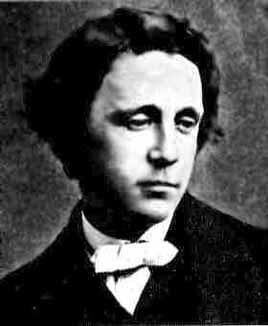
Charles Lutwidge Dodgson, better known by his pen name Lewis Carroll, was an English author, poet and mathematician. His most notable works are Alice's Adventures in Wonderland (1865) and its sequel Through the Looking-Glass (1871). He was noted for his facility with word play, logic, and fantasy. His poems Jabberwocky (1871) and The Hunting of the Snark (1876) are classified in the genre of literary nonsense.
Similar books
- The Phantom Tollbooth
Norton Juster
4.2 (242k) average on GoodreadsFantasyFeatures a young protagonist entering a magical land filled with wordplay, puns, and personified concepts.
- Peter Pan
J.M. Barrie
4.0 (277k) average on GoodreadsFantasyA classic children's fantasy about a child entering a magical, imaginative world and encountering fantastical characters.
- Harry Potter and the Sorcerer's Stone
J.K. Rowling
4.5 (7M) average on GoodreadsFantasyRescued from a miserable life under the stairs, an orphaned boy discovers he's a wizard destined for a magical school, where he uncovers a dangerous secret tied to the dark wizard who murdered his parents.
- The Hunger Games
Suzanne Collins
4.3 (6.4M) average on GoodreadsFantasyIn a future where children fight to the death on live television, Katniss Everdeen volunteers for the arena, turning a death sentence into a fight for survival and a spark of rebellion.
- 1984
George Orwell
4.2 (3.1M) average on GoodreadsPoliticsIn a future where surveillance and thought control are absolute, a man's search for truth clashes with the Party, showing that hope can be a form of rebellion.
- Divergent
Veronica Roth
4.2 (2.9M) average on GoodreadsFantasyIn a society divided by virtues, a sixteen-year-old's difference from the norm starts a rebellion that threatens her world.




Enjoyed the summary?
A summary gives you the shape of the book. The book itself has the detail, the examples and the voice.
Find Alice's Adventures in Wonderland on AmazonAs an Amazon Associate, BookBrief earns from qualifying purchases. How we're funded