

Core Idea
- Difficulty
- Hard
- Read it if
- You are a student of linguistics, philosophy, semiotics, or literary theory and want to understand the foundational text of structuralism and modern linguistics. You are interested in the theoretical underpinnings of how language functions as a system.
- Skip it if
- You are looking for a practical guide to language learning, a book on historical linguistics, or an easy-to-digest introduction to language. The text is dense and highly theoretical, not an empirical study.
Key Takeaways from Course in General Linguistics
Language as a System of Signs
Understanding language requires analyzing it as a self-contained system, not just a historical collection.
Saussure changed linguistics by arguing that language is not just names for things, but a complex system of signs. Each sign has two parts: a 'signifier' (the sound or written form) and a 'signified' (the idea it represents). The connection between them is arbitrary, meaning there is no natural link. This arbitrariness allows language to be a social agreement within a community. To understand language, one must study the internal relationships and structures of this system, not just its history or what it refers to externally. This shift created structuralism, focusing on how meaning comes from relationships.
“Language is a system of signs that express ideas, and is therefore comparable to a system of writing, the alphabet of deaf-mutes, symbolic rites, forms of politeness, military signals, etc. It is simply the most important of these systems.”
In the book: Saussure's core definition of the linguistic sign and its arbitrary nature, contrasted with previous views that saw words as simply labels for pre-existing concepts.
Try this: When analyzing any system of meaning (e.g., fashion, mythology, advertising), look beyond individual elements to understand the underlying structure and the arbitrary relationships between its components. Consider how meaning is generated by difference within the system.
Related ideas: linguistic-sign, arbitrariness, structuralism
Langue vs. Parole
Distinguishing between the abstract language system and its individual instances of use.
Saussure introduced the difference between 'langue' and 'parole.' 'Langue' is the abstract language system, the shared grammar, vocabulary, and rules that exist in the minds of a speech community. It is the potential for speech. 'Parole' is the individual act of speaking or writing, the actual utterance. It is how 'langue' appears in specific cases. Saussure argued that linguistics should focus on 'langue' because it is systematic and can be studied scientifically, while 'parole' is too varied. This allowed for a systematic study of language's structure, separate from individual communication.
“Language is a system of signs that express ideas, and is therefore comparable to a system of writing, the alphabet of deaf-mutes, symbolic rites, forms of politeness, military signals, etc. It is simply the most important of these systems.”
In the book: Saussure's analogy of 'langue' as the score of a symphony (the potential, systematic whole) and 'parole' as the individual performances (the actual, varied realizations).
Try this: When studying any social phenomenon, differentiate between the underlying rules, conventions, or structures (the 'langue') and the individual acts or expressions (the 'parole'). For instance, analyze the rules of chess ('langue') versus a specific game being played ('parole').
Related ideas: langue, parole, system-vs-performance
Synchrony vs. Diachrony
Analyzing language at a specific point in time is distinct from studying its historical evolution.
One of Saussure's new ideas was the difference between synchronous and diachronic linguistics. 'Synchrony' means studying a language system at one point in time, without looking at its history. It is like a snapshot of the language, analyzing its internal relationships as they are now. 'Diachrony' means studying how language changes over time, looking at how words and grammar evolve. Saussure argued that these two approaches are different and should not be mixed. He criticized earlier methods for being too diachronic, which hid the systematic nature of language at any given moment. This distinction led to structural linguistics, which focuses on a system's internal consistency at a specific time.
“The true and only object of linguistics is language studied in and for itself.”
In the book: Saussure's analogy of a chess game: a synchronic study analyzes the state of the board at a given moment, while a diachronic study tracks the moves that led to that state. Both are valid but distinct inquiries.
Try this: When analyzing any complex system (e.g., an organization, a cultural trend), first understand its current structure and relationships (synchrony) before attempting to trace its historical development (diachrony). A clear understanding of the present state is crucial for meaningful historical analysis.
Related ideas: synchrony, diachrony, historical-linguistics
The Arbitrary Nature of the Sign
There is no natural or inherent connection between a word and the concept it represents.
The arbitrary nature of the linguistic sign is central to Saussure's theory. It means that the link between a sound (signifier, e.g., the word 'tree') and the idea it brings to mind (signified, e.g., the mental image of a tree) is not based on any natural reason. This is clear because different languages use different sounds for the same idea (e.g., 'tree' in English, 'arbre' in French, 'Baum' in German). This arbitrariness shows that language is a social convention, a collective agreement. It also means meaning comes from the system of differences within language itself, not from external reality. This idea was new, challenging the old belief that words were just labels for existing things.
“The bond between the signifier and the signified is arbitrary.”
In the book: The existence of multiple languages, each with its own unique set of words for the same objects or concepts, is the primary evidence for the arbitrary nature of the sign.
Try this: When analyzing symbols, cultural practices, or even brand names, recognize that their meaning is largely arbitrary and culturally constructed. Focus on how meaning is established through social convention and differentiation within a system, rather than seeking an inherent connection to reality.
Related ideas: arbitrariness, signifier, signified
Value and Difference
Meaning is not intrinsic but arises from the differential relations within the language system.
Saussure argued that a linguistic sign's 'value' is not set by its individual traits or its link to something real, but by its relationships to other signs within the system. Meaning comes from 'difference.' For example, the meaning of 'sheep' in English is partly defined by how it differs from 'lamb,' 'ewe,' or 'mutton.' In French, 'mouton' includes both the animal and its meat, showing a different system of differentiation and thus a different 'value.' This means language is a system where each term's value comes only from the other terms being present at the same time. This relational view of meaning was a big change from traditional theories and is a core part of structuralism, affecting many fields.
“In language there are only differences without positive terms.”
In the book: The example of 'mouton' in French, which covers both the live animal and its meat, whereas English differentiates between 'sheep' and 'mutton,' demonstrating how different language systems carve up reality differently through their internal distinctions.
Try this: When analyzing any system (e.g., a classification system, a social hierarchy, a set of artistic styles), look for how the 'value' or meaning of each element is defined by its contrast and relationship to other elements within that system, rather than by its isolated characteristics.
Related ideas: linguistic-value, difference, relational-meaning
Syntagmatic and Associative Relations
Signs combine in linear sequences and evoke mental associations.
Saussure identified two basic types of relationships between linguistic units: syntagmatic and associative (or paradigmatic). 'Syntagmatic relations' are linear, based on words arranged in a sequence in a sentence. For example, in 'The cat sat on the mat,' each word's position and link to its neighbors create meaning. These relations are 'in praesentia' – the elements are together in the utterance. 'Associative relations,' on the other hand, are 'in absentia.' They are mental links between words that share something, even if they do not appear together in a sentence. For instance, 'education' might link to 'school,' 'teacher,' 'learning,' 'book,' or 'knowledge.' Understanding these two types of relations is important for seeing how language creates meaning, both through sequence and through mental networks.
“The linearity of the signifier is something that must be taken into consideration.”
In the book: The example of a grammatical sentence (syntagm) versus a list of related words like 'education, instruction, learning, apprenticeship' (associative series).
Try this: When analyzing communication or narratives, consider both the explicit sequence of elements (syntagmatic) and the implicit network of related concepts, synonyms, or antonyms that are evoked (associative). In marketing, this means both the ad's storyline and the brand's associated mental concepts.
Related ideas: syntagmatic, associative, paradigmatic, linearity
Language as a Social Fact
Language exists as a collective institution, independent of individual will.
Saussure said that 'langue' – the language system – is a social institution, a collective product that exists independently of any individual's will. No person can unilaterally change a language's rules; it is a shared agreement kept by the community. This social aspect makes language stable enough for communication, while also allowing for slow, collective change over time (though these changes are diachronic, not synchronic). This view places language as a social fact, influencing later theories that looked at how collective ideas shape individual experience. It shows that language is not just a tool, but a basic structure of human society.
“Language is a system of signs that express ideas, and is therefore comparable to a system of writing, the alphabet of deaf-mutes, symbolic rites, forms of politeness, military signals, etc. It is simply the most important of these systems.”
In the book: The impossibility of an individual inventing a new language and expecting others to understand it, or unilaterally changing the meaning of a word.
Try this: When studying social norms, cultural traditions, or institutional practices, recognize their collective, supra-individual nature. Understand that these systems are maintained by shared agreement and resist individual attempts at radical change, much like language.
Related ideas: social-fact, collective-consciousness, linguistic-community
The Immutability and Mutability of the Sign
While resistant to individual change, language systems evolve collectively over time.
Saussure argued for both the unchanging and changing nature of the linguistic sign. On one hand, the sign is 'unchanging' because an individual speaker cannot arbitrarily change the link between a signifier and a signified. The social agreement of language is too strong for individual will to alter it. This ensures stability and mutual understanding. On the other hand, language 'changes' over time. The sign's arbitrary nature means there is no inherent reason for it to stay fixed. Through collective use and gradual shifts across generations, the link between a signifier and a signified can and does change (e.g., words getting new meanings, sounds evolving). This shows the tension in language: a stable system at any moment, yet always undergoing slow, collective change.
“The linguistic sign is arbitrary, but it is not freely chosen. It is immutable.”
In the book: The example of historical linguistic change, such as the evolution of Latin into various Romance languages, demonstrating gradual but profound shifts in vocabulary and grammar over centuries, despite individual speakers having no control over the process.
Try this: When observing cultural trends or social institutions, recognize that while they may appear fixed and resistant to individual intervention, they are also subject to slow, collective evolution over long periods. Understand that what seems immutable today may be mutable over generations.
Related ideas: immutability, mutability, linguistic-change
Language as Form, Not Substance
Language organizes amorphous thought and sound into structured meaning.
Saussure famously stated that language is 'form, not substance.' This means language does not just label existing ideas or sounds; instead, it actively shapes the otherwise undefined areas of thought and sound. Before language, thought is a 'nebulous mass,' and sound is a continuous flow. Language carves out distinct ideas from this 'thought-substance' and connects them with distinct sounds from the 'sound-substance.' The relational system – the differences – creates meaning and structure, rather than any quality of the sounds or thoughts themselves. This view suggests that our perception and understanding of the world are shaped by the language system we use.
“Language is a form and not a substance.”
In the book: The idea that different languages 'carve up' the color spectrum differently (e.g., some languages having one word for blue/green), demonstrating how language imposes form on a continuous sensory experience.
Try this: When analyzing how a particular field or discipline understands the world, consider how its specialized vocabulary and conceptual frameworks (its 'form') shape and limit what can be thought or expressed, rather than simply reflecting an objective 'substance.'
Related ideas: form-vs-substance, structuring-thought, linguistic-relativity
The Primacy of Oral Language
Written language is a secondary representation of spoken language, not its origin.
Saussure established that spoken language is primary over written language. He argued that writing is a 'secondary system of signs' meant only to represent spoken language. This corrected the common idea that writing is more fundamental than speech. Saussure highlighted that spoken language is a natural human ability, learned instinctively, while writing is an artificial, learned convention. He warned against the 'tyranny of the letter,' where linguists might analyze language through its written form, missing the true phonetic and structural realities of speech. This focus on speech as the true subject of linguistic study was basic for modern phonetics and phonology.
“Language and writing are two distinct systems of signs; the second exists for the sole purpose of representing the first.”
In the book: The fact that all human societies possess spoken language, but not all possess a writing system, and that children learn to speak naturally before they learn to write.
Try this: When evaluating communication, always consider the original medium and context. Don't let the written representation of something (e.g., a transcript of a speech, a musical score) overshadow the nuances and complexities of its primary, often oral or performative, form.
Related ideas: oral-primacy, writing-system, phonetics, speech-vs-writing
Course in General Linguistics Quotes
“Language is a system of interdependent terms in which the value of each term results solely from the simultaneous presence of the others.”
“The linguistic sign is arbitrary.”
“The bond between the signifier and the signified is arbitrary.”
“Language is a form and not a substance.”
“The linguistic sign is bilateral.”
“Synchronic linguistics will be concerned with the relations that unite coexisting terms in a system, as perceived by the same collective consciousness.”
“Diachronic linguistics, on the contrary, will study relations between successive terms not perceived by the same collective consciousness, which are substituted for one another without forming a system among themselves.”
“The true and unique object of linguistics is language studied in and for itself.”
“In language there are only differences without positive terms.”
“Language is a social institution.”
“The meaning of a word is determined by its relations to other words within the system.”
“The linguistic system is a series of differences of sounds combined with a series of differences of ideas.”
“Speech is an individual act of will and intelligence.”
“Language is a self-contained whole and a principle of classification.”
Quiz
10 questions on the main ideas. Each answer comes with a short explanation.
Question 1
Which of the following best describes Saussure's primary critique of previous linguistic studies?
- They focused too much on syntax and not enough on semantics.
- They were exclusively concerned with the origins of language.
- They were primarily historical and comparativist, neglecting the synchronic system.
- They failed to acknowledge the arbitrary nature of the linguistic sign.
Show answer
C. They were primarily historical and comparativist, neglecting the synchronic system. Saussure argued that linguistics before him was overly focused on diachronic (historical) and comparative analysis, rather than studying language as a self-contained system at a given point in time (synchronic).
Question 2
According to Saussure, what are the two inseparable components of the linguistic sign?
- Phoneme and morpheme
- Signifier and signified
- Langue and parole
- Syntagm and association
Show answer
B. Signifier and signified Saussure defines the linguistic sign as a union of a concept (the signified) and a sound-image (the signifier), which are psychological and inseparable.
Question 3
What does Saussure mean by the 'arbitrary nature of the sign'?
- That signs can be chosen randomly by individuals.
- That the link between the signifier and the signified is unmotivated and conventional.
- That language changes unpredictably over time.
- That the meaning of a word is entirely dependent on context.
Show answer
B. That the link between the signifier and the signified is unmotivated and conventional. The arbitrary nature of the sign means there's no inherent, natural, or logical connection between the sound-image (signifier) and the concept (signified); their link is purely conventional and established by the linguistic community.
Question 4
Saussure distinguishes between 'langue' and 'parole'. Which of the following statements accurately describes 'langue'?
- The individual act of speaking or writing.
- The collective system of language, a social institution independent of the individual.
- The historical evolution of a language.
- The study of how language is acquired by children.
Show answer
B. The collective system of language, a social institution independent of the individual. Langue refers to the abstract, systematic structure of language, the shared grammar and vocabulary that exists independently of any individual speaker, while parole is the individual, concrete act of speaking.
Question 5
In Saussure's framework, what is the primary way that linguistic signs acquire their value?
- Through their direct reference to objects in the real world.
- Through their inherent, natural properties.
- Through their differences and oppositions with other signs within the system.
- Through the speaker's intention and emotional expression.
Show answer
C. Through their differences and oppositions with other signs within the system. Saussure emphasizes that linguistic value is differential, meaning a sign's value is determined not by its positive content, but by its relations of difference with other signs in the linguistic system.
Question 6
The 'linearity of the signifier' is a key principle in Saussure's theory. What does this principle state?
- That the relationship between a signifier and signified is always direct.
- That signifiers are auditory and unfold in time as a sequence.
- That language can be perfectly translated from one system to another.
- That all languages follow the same grammatical structure.
Show answer
B. That signifiers are auditory and unfold in time as a sequence. The linearity of the signifier refers to the fact that auditory signifiers (speech sounds) unfold in a temporal sequence, one after another, forming a chain. This is crucial for understanding syntagmatic relations.
Question 7
Saussure introduces the concepts of syntagmatic and associative (paradigmatic) relations. Which type of relation concerns the in praesentia combination of units in a sequence?
- Associative relations
- Paradigmatic relations
- Syntagmatic relations
- Diachronic relations
Show answer
C. Syntagmatic relations Syntagmatic relations are 'in praesentia' – they involve elements that are present together in a sequence, like words in a sentence. Associative (paradigmatic) relations are 'in absentia', referring to potential substitutions.
Question 8
Why did Saussure emphasize the distinction between synchronic and diachronic linguistics as fundamental?
- To argue that historical change is irrelevant to language study.
- To establish that language is a system that can be studied independently of its evolution.
- To prove that all languages evolve in the same predictable stages.
- To suggest that only ancient languages are worthy of scientific study.
Show answer
B. To establish that language is a system that can be studied independently of its evolution. Saussure's insistence on the synchronic/diachronic distinction allows for the scientific study of language as a coherent system at a specific point in time, without the complications of historical change. While both are valid, he argued for the primacy of the synchronic for understanding language's systematic nature.
Question 9
The 'Course in General Linguistics' was not written by Saussure himself but reconstructed from student notes. What implication does this have for interpreting his work?
- It means the concepts presented are largely speculative and unverified.
- It suggests that Saussure's ideas were incomplete and lacked a coherent structure.
- It implies that the text might not perfectly reflect Saussure's exact words or final intentions.
- It confirms that Saussure intended his work to be a foundational text for structuralism in other fields.
Show answer
C. It implies that the text might not perfectly reflect Saussure's exact words or final intentions. The fact that the 'Course' is a posthumous reconstruction from student notes means there's a degree of editorial interpretation and potential for slight inaccuracies or omissions compared to a text directly authored by Saussure himself. It's a testament to his influence that these notes were compiled.
Question 10
Saussure's work is considered foundational to Structuralism. How does his approach to language contribute to the broader structuralist movement in other disciplines?
- By demonstrating that all cultural phenomena are purely arbitrary and have no inherent meaning.
- By providing a methodology to analyze phenomena as systems of interrelated elements where meaning arises from difference.
- By asserting the universal applicability of linguistic grammar to all forms of human thought.
- By proving that historical development is the sole determinant of cultural structures.
Show answer
B. By providing a methodology to analyze phenomena as systems of interrelated elements where meaning arises from difference. Structuralism in other fields adopted Saussure's core idea that meaning is generated not by intrinsic properties, but by the relations and differences between elements within a system. This allowed for the analysis of art, literature, anthropology, etc., as structured systems analogous to language.
Course in General Linguistics FAQ
What is the 'Course in General Linguistics' about?
Ferdinand de Saussure's 'Course in General Linguistics' is a foundational text in modern linguistics, compiled posthumously from his students' notes. It introduces a revolutionary approach to the study of language, moving beyond historical analysis to establish language as a self-contained system of signs.
What is Structuralism, as introduced by Saussure?
Structuralism, as pioneered by Saussure, is a method of inquiry that views language (and later other systems) as a structure of interconnected elements where each element's meaning is derived from its relationship to others within the system, rather than from external references or historical development.
Does Saussure's theory of the linguistic sign still hold relevance today?
Yes, Saussure's theory of the linguistic sign, comprising a 'signifier' (sound-image) and a 'signified' (concept), remains highly influential. While some aspects have been debated or refined, its emphasis on the arbitrary and conventional nature of the sign is fundamental to understanding how language functions.
How did Saussure's approach differ from previous linguistic studies?
Saussure's approach radically differed by shifting focus from diachronic (historical and comparative) linguistics to synchronic linguistics, analyzing language as a complete system at a specific point in time. He sought to understand the underlying structure rather than just its evolution.
What is the distinction between 'langue' and 'parole'?
Saussure distinguished between 'langue,' the abstract, systemic structure of language shared by a community, and 'parole,' the individual acts of speech or specific utterances. 'Langue' represents the rules and conventions, while 'parole' is their actual application.
How did Saussure influence fields beyond linguistics?
Saussure's structuralist methodology extended far beyond linguistics, impacting disciplines such as anthropology (Lévi-Strauss), literary criticism (Roland Barthes), philosophy, and even psychoanalysis. His ideas provided a framework for analyzing systems of meaning in various cultural phenomena.
What does Saussure mean by the 'arbitrary nature of the sign'?
The 'arbitrary nature of the sign' refers to Saussure's idea that there is no inherent, natural, or logical connection between the sound-image (signifier) and the concept (signified). The link is purely conventional and agreed upon by a linguistic community, allowing for language change and diversity.
Is the 'Course in General Linguistics' a difficult book to read for beginners?
While foundational, the 'Course in General Linguistics' can be challenging for beginners due to its abstract concepts and dense theoretical arguments. It often benefits from secondary readings or introductory texts on linguistics and structuralism to fully grasp its implications.
How does Saussure's work compare to Noam Chomsky's theories?
Saussure's structuralism, focusing on the social system of 'langue,' contrasts with Chomsky's generative grammar, which emphasizes innate linguistic competence ('I-language') and the individual's capacity for language generation. While both are foundational, they approach language from different theoretical standpoints.
About the author
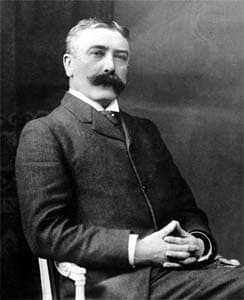
Ferdinand de Saussure was a Swiss linguist whose work laid the foundation for many modern linguistic theories. He is best known for "Course in General Linguistics," which explores the structure of language and the relationship between signs and meanings. His ideas have significantly influenced the fields of linguistics, semiotics, and structuralism.
Similar books
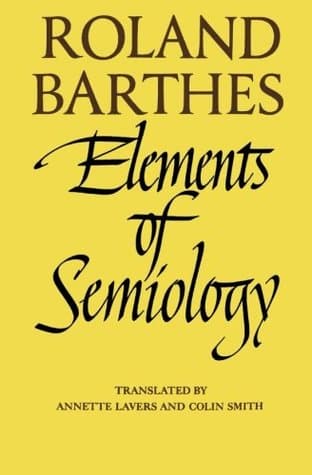
- Elements of Semiology
Roland Barthes
3.8 (847) average on GoodreadsPhilosophyApplies Saussurean concepts to a broader range of cultural phenomena, extending semiotics.
- The Story of Art
E.H. Gombrich
3.9 (311k) average on GoodreadsReferenceExplore thousands of years of human creativity, from ancient cave art to modern masterpieces, with Gombrich's classic account, updated with new insights into art's changing story.
- The New Drawing on the Right Side of the Brain
Betty Edwards
3.9 (297k) average on GoodreadsPsychologyLearn to draw by using the often-ignored visual side of your brain, changing how you see the world.
- Go Ask Alice
Anonymous
3.7 (293k) average on GoodreadsReferenceA teenage girl's diary chronicles her swift decline into 1970s drug culture, from an innocent game to addiction, ending in her tragic death.
- Their Eyes Were Watching God
Zora Neale Hurston
3.9 (266k) average on GoodreadsReferenceIn early 20th-century Florida, Janie Crawford searches for identity, love, and independence, defying social norms to find her voice.
- On Writing: A Memoir of the Craft
Stephen King
4.3 (222k) average on GoodreadsBiography





Enjoyed the summary?
A summary gives you the shape of the book. The book itself has the detail, the examples and the voice.
Find Course in General Linguistics on AmazonAs an Amazon Associate, BookBrief earns from qualifying purchases. How we're funded