
Core Idea
- Difficulty
- Easy
Key Takeaways from On Writing
The Writer's Toolbox: Foundation First
Master the basics of vocabulary, grammar, and style before attempting grand narratives.
King argues that good writing depends on understanding basic tools: vocabulary, grammar, and style. He compares them to a carpenter's essential items, necessary for any craftsperson. He advises writers to expand their vocabulary by reading widely and to learn grammar rules so well they become natural. This allows for clear expression. It's not about following old rules strictly but about writing clearly and effectively. Without this foundation, even the best ideas can become unclear. This idea is helpful because it shows writing as a skill anyone can learn, not just something people are born with.
“The language of fiction is not like the language of science, it is not concerned with facts but with truth.”
In the book: King's detailed breakdown of grammar rules (e.g., adverbs, passive voice) and his recommendation for constant reading to expand vocabulary.
Try this: Actively read diverse genres, paying attention to word choice and sentence structure. Use a style guide or grammar checker, but understand the 'why' behind the rules. Practice writing concise, clear sentences daily.
Read a Lot, Write a Lot
The symbiotic relationship between consumption and creation is non-negotiable for aspiring writers.
This is King's most direct and useful advice. He says that reading many types of books not only builds vocabulary and understanding of how stories work but also provides constant ideas and learning. For King, reading is an active way to learn what works and what doesn't in writing. At the same time, writing regularly – daily, if possible – is important for finding one's unique voice, improving skills, and building endurance. He stresses that writing is like a muscle that needs regular exercise. This combination of reading and writing is central to his entire approach.
“If you want to be a writer, you must do two things above all others: read a lot and write a lot.”
In the book: King’s own daily routines of reading and writing, even during periods of immense personal hardship.
Try this: Set aside dedicated time each day for both reading and writing. Keep a reading journal to note effective techniques or interesting ideas. Treat writing as a regular habit, not just when inspiration strikes.
The Door Shut: Writing for Yourself
Create your first draft in a private, uninhibited space, free from external judgment.
King uses the image of writing 'with the door closed' for the first draft. This means creating a private space without distractions, where the writer can focus on the story without judging themselves or worrying about readers. The goal is to get the story down, to explore the narrative freely. This first stage is about discovering and creating without aiming for perfection. This idea helps writers overcome writer's block and the fear of judgment, allowing creativity to flow. Only after this initial writing should the writer 'open the door' for editing and feedback.
“Write with the door closed, rewrite with the door open.”
In the book: King's description of his early writing process in cramped, private spaces, focusing solely on the story.
Try this: Designate a specific time and place for writing your first draft. Turn off internet access and silence notifications. Allow yourself to write freely, without editing or criticizing, for a set period.
Story First, Theme Later
Allow themes to emerge organically from the narrative rather than imposing them from the outset.
King believes a writer should focus on telling an engaging story, letting themes and deeper meanings appear naturally during writing and editing. He warns against starting with a theme and then forcing a story to fit it, which often leads to preachy or artificial narratives. Instead, he suggests beginning with an interesting 'what if' situation, good characters, and a developing plot. The story's true meaning and themes will show themselves as the narrative unfolds. This method puts authentic storytelling first, which is a refreshing view for many aspiring literary writers.
“Stories are found things, like fossils in the ground.”
In the book: King's own method of starting with a situation or character and letting the story evolve, as seen in his descriptions of how many of his famous novels began.
Try this: When brainstorming, focus on characters, conflicts, and plot points rather than abstract themes. Write a draft and then, during revision, look for recurring motifs or ideas that could be strengthened.
Adverbs are the Enemy
Rely on strong verbs and precise nouns to convey action and description, avoiding unnecessary adverbs.
King is known for his strong stance against adverbs, especially those ending in '-ly' that describe how someone speaks or acts. He argues that adverbs often make up for weak verbs, showing a lack of precise word choice. Instead of writing 'he said angrily,' King suggests using a stronger verb like 'he snarled' or 'he raged.' This encourages writers to use more active and purposeful language, making their writing more lively and effective. While some might think this is too simple, King's point is to make writers search for the exact word, improving clarity and impact. This is one of the book's most memorable and practical pieces of advice.
“The adverb is not your friend.”
In the book: King's specific examples of how substituting weak verb-adverb combinations with stronger verbs improves sentence impact.
Try this: During revision, highlight every adverb and challenge its necessity. Can the verb be stronger? Can the meaning be conveyed through a more precise noun or a descriptive phrase instead?
The Power of Description: Show, Don't Tell
Engage the reader's imagination through sensory details rather than abstract declarations.
King highlights the importance of description in drawing the reader into the story. He supports 'showing' rather than 'telling,' meaning writers should use clear, sensory details so readers can experience the scene themselves, instead of just being told facts or emotions. For example, instead of saying 'the room was scary,' describe the flickering shadows, the cold air, or the unsettling quiet. King advises against too much description, suggesting that a few well-chosen details are better than a long list. The aim is to spark the reader's imagination, making them an active part of building the story's reality. This is a classic writing rule, but King's examples make it feel fresh.
“Description is what makes the reader a sensory participant in the story.”
In the book: King's own masterful descriptive passages in his novels, which create palpable atmospheres and memorable characters through precise details.
Try this: When writing a scene, ask yourself: 'What would a character see, hear, smell, taste, or feel?' Choose 2-3 strong sensory details rather than trying to describe everything. Avoid abstract adjectives where concrete nouns and verbs can do the work.
Revision is Key: Kill Your Darlings
Embrace the ruthless editing process, removing anything that doesn't serve the story.
King champions the often-difficult but necessary process of editing. He urges writers to be their own toughest critics, willing to remove favorite sentences, paragraphs, or even entire subplots if they don't help the story. This idea of 'killing your darlings' means putting the story's overall strength above personal attachment to specific writing. He suggests a two-step editing process: first, a pass for major structural problems, then a more detailed line-by-line edit. This careful approach is what turns rough drafts into polished, effective works. This is arguably the most challenging but ultimately rewarding advice for any writer.
“Kill your darlings, kill your darlings, even when it breaks your egocentric little scribbler's heart, kill 'em.”
In the book: King's anecdote about cutting a significant portion of 'The Stand' for its paperback release, demonstrating a willingness to sacrifice for the story's improvement.
Try this: After finishing a draft, take a break from it. Then, read it critically, imagining you are an editor. Look for redundancy, weak passages, and anything that distracts from the main plot. Be prepared to make significant cuts.
The Importance of the 'What If'
Great stories often spring from a simple, compelling hypothetical question.
King reveals that many of his stories began with a simple 'what if' question. These are not complex philosophical questions but concrete, interesting situations that spark ideas. 'What if a rabid dog trapped a woman and her son in a car?' ('Cujo'). 'What if a high school outcast gained telekinetic powers?' ('Carrie'). This simple framework provides a strong starting point for developing a story, letting the writer explore what happens from a unique idea. This insight makes the origin of creative ideas less mysterious, showing that good stories often come from straightforward, yet powerful, hypothetical situations. It encourages writers to look for interesting scenarios in everyday life or news.
“The most important things are the hardest to say. They are the things you get ashamed of, because words diminish them.”
In the book: King's direct examples of how many of his iconic novels originated from a single 'what if' question.
Try this: Keep a notebook for 'what if' ideas. When you encounter an interesting person, place, or event, ask yourself how it could be twisted or exaggerated into a story. Don't overthink; just capture the initial spark.
Writing as Telepathy
The ultimate goal of writing is to transfer thoughts and images directly from the writer's mind to the reader's.
King presents a view of writing as a form of telepathy. He argues that a writer's main goal is to use words to send a clear image or idea from their mind directly into the reader's, overcoming language limits as much as possible. When this 'telepathy' works, the reader experiences the story almost as if they are living it, seeing what the writer sees and feeling what they feel. This comparison elevates writing beyond just storytelling into a powerful act of connection and shared experience. It emphasizes the importance of clarity, precision, and emotional truth in writing, all to achieve this direct mental transfer.
“Writing is telepathy, of course.”
In the book: King's vivid descriptions of his own reading experiences, where he feels completely immersed and transported by a writer's words.
Try this: As you write, continually ask: 'Is this clear? Will the reader see exactly what I intend? Am I conveying the emotion effectively?' Read your work aloud to catch awkward phrasing that breaks this 'telepathic' connection.
The Indispensable Role of Persistence
Talent is important, but consistent effort and resilience are paramount to a writing career.
While acknowledging that talent plays a part, King stresses that persistence, resilience, and hard work are much more important for a writer's success. He shares stories of his early struggles, rejections, and the many hours he spent writing, often in difficult situations, before becoming recognized. His experience with a serious accident and his recovery, driven by his desire to return to writing, further supports this point. Writing is not just art but a demanding job that requires discipline, the ability to handle criticism, and the commitment to continue, even when inspiration is low or problems arise. This view offers a realistic and encouraging perspective for aspiring writers, suggesting that success is possible through consistent effort.
“Talent is cheaper than table salt. What separates the talented individual from the successful one is a lot of hard work.”
In the book: King's personal narrative of rejection letters for 'Carrie' and his tenacious dedication to writing through poverty and a serious accident.
Try this: Establish a consistent writing schedule and stick to it, even on days you don't feel inspired. Learn to accept and learn from rejection. View setbacks not as failures but as opportunities to refine your craft and build resilience.
On Writing FAQ
What is Stephen King's book about writing?
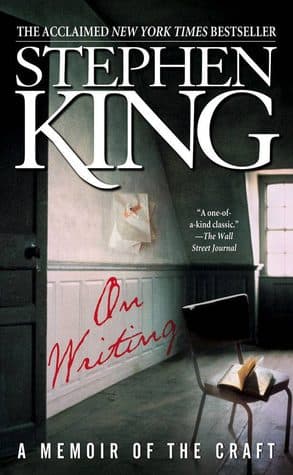
Stephen King's "On Writing: A Memoir of the Craft" is a unique blend of memoir and master class. It offers practical advice on the writing craft, drawing from King's personal experiences, from his childhood to his success as a bestselling author and his recovery from a near-fatal accident.
Is "On Writing" just for aspiring writers?
While "On Writing" is an invaluable resource for aspiring writers, it's also highly recommended for fans of Stephen King and anyone who appreciates a well-told story. King's engaging narrative and insights into the creative process make it an enjoyable read for a broad audience.
What kind of writing advice does Stephen King offer?
King provides practical advice on the fundamental tools of the writing trade. He emphasizes clarity, directness, and the importance of building a strong vocabulary. His guidance is grounded in his own experiences and the lessons learned throughout his career.
How does Stephen King's personal life relate to his writing advice?
The book intricately weaves King's personal life with his writing advice. He shares vivid memories and discusses how his life experiences, including his struggles and his near-fatal accident, have shaped his perspective and fueled his recovery, highlighting the inextricable link between writing and living.
What are the key themes in "On Writing"?
Key themes include the dedication required for the craft of writing, the importance of reading extensively, the power of storytelling, and the resilience needed to overcome personal challenges. It also touches upon the writer's journey and the continuous process of learning and improving.
Does Stephen King discuss his famous books in "On Writing"?
While the book focuses more on the craft and his personal journey, King does allude to his experiences and the development of his writing style which ultimately led to his famous novels. The emphasis is on the process rather than specific book analyses.
Is "On Writing" a full biography?
No, "On Writing" is not a full biography. It's a memoir that focuses on the aspects of King's life that are most relevant to his development as a writer. It offers insights into his formative years and career milestones as they relate to his craft.
What makes Stephen King's advice unique?
King's advice is unique because it's delivered with his signature voice – honest, direct, and infused with personal anecdotes. He demystifies the writing process, making it accessible and relatable, and emphasizes the importance of passion and perseverance.
About the author
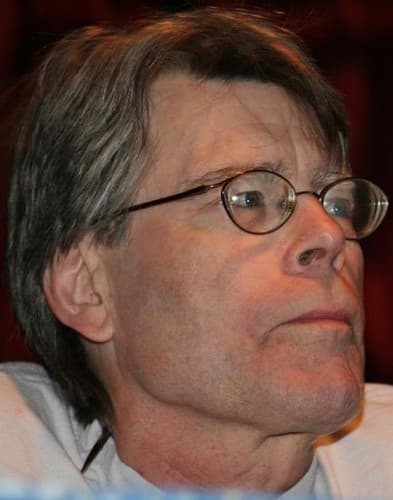
Stephen Edwin King is an American author of horror, supernatural fiction, suspense, crime, science-fiction, and fantasy novels. Described as the "King of Horror", his books have sold more than 350 million copies as of 2006, and many have been adapted into films, television series, miniseries, and comic books. King has published over 65 novels/novellas, including seven under the pen name Richard Bachman, and five non-fiction books. He has also written approximately 200 short stories, most of which have been published in book collections.
Similar books
- The Diary of a Young Girl
Anne Frank
4.2 (2.7M) average on GoodreadsBiographyDuring the Nazi occupation, a teenage girl's diary, written from a secret annex, shares observations on humanity, hope, and the wait for freedom.
- Eat, Pray, Love
Elizabeth Gilbert
3.6 (1.5M) average on GoodreadsLifestyleA heartbroken writer leaves her conventional life for a year-long global search for pleasure in Italy, spiritual devotion in India, and unexpected love and balance in Bali.
- Night
Elie Wiesel
4.3 (970k) average on GoodreadsBiographyIn the darkness of Auschwitz and Buchenwald, a teenage Elie Wiesel faces the extermination of his family, the loss of his faith, and the lasting scars of humanity's deepest cruelty.
- Steve Jobs
Walter Isaacson
4.1 (957k) average on GoodreadsBusinessSteve Jobs was a visionary who fused creativity and technology to revolutionize six industries and shape our digital world.
- The Glass Castle
Jeannette Walls
4.3 (903k) average on GoodreadsBiographyJeannette Walls's memoir describes her unusual childhood with brilliant, free-spirited parents whose poverty-stricken life shaped her independence and love despite family problems.
- Bossypants
Tina Fey
4.0 (848k) average on GoodreadsBiographyFrom a 'vicious nerd' with stress dreams to the comedic force behind Liz Lemon and 'Weekend Update,' Tina Fey chronicles her journey to proving that 'you're no one until someone calls you bossy.'






Enjoyed the summary?
A summary gives you the shape of the book. The book itself has the detail, the examples and the voice.
Find On Writing on AmazonAs an Amazon Associate, BookBrief earns from qualifying purchases. How we're funded