

Synopsis
Covers the whole plot, including the ending.
- Difficulty
- Medium
- Pacing
- Moderate
- Mood
- Atmospheric, Reflective, Suspenseful, Culturally Rich
- Read it if
- You enjoy mysteries rooted in unique cultural settings, with strong detective characters and a blend of modern investigation and ancient traditions.
- Skip it if
- You prefer fast-paced, action-heavy thrillers without much focus on cultural detail or internal character reflection.
Coyote Waits Plot Summary
Covers the whole plot, including the ending.
The Burning Car and the Silent Suspect
Navajo Tribal Policeman Jim Chee is devastated by the news that his friend and fellow officer, Delbert Nez, has been found dead inside his patrol car, which was set ablaze. Autopsy reveals Delbert was shot before the fire. The murder weapon, a .30-30 rifle, is found with Ashie Pinto, a respected but often drunken Hataalii (shaman), who is discovered near the scene. Pinto, known for his eccentricities and spiritual power, refuses to speak or offer any explanation for his involvement. This silence deepens the mystery, suggesting there is more to the story than a simple drunken act of violence.
Leaphorn's Skepticism and the Historical Clue
Lieutenant Joe Leaphorn, though officially retired, is drawn into the case due to his long-standing relationship with the tribal police and his keen investigative mind. He is skeptical of Ashie Pinto's guilt, finding the situation too neat. Leaphorn learns that Delbert Nez had been investigating a claim related to the 'Lost Canyon of Gold,' a historical site believed to hold a fortune in artifacts or minerals. This connection immediately interests Leaphorn, as such legends often attract unscrupulous individuals. He suspects Delbert's death might be tied to something more complex than a random act of violence by a shaman.
Chee's Personal Quest for Justice
Jim Chee, still reeling from Delbert's death, feels personally invested in uncovering the truth. He visits Ashie Pinto in jail, attempting to communicate with the silent shaman, but without success. Chee respects Pinto's spiritual standing and finds it hard to believe he would commit such a crime without provocation. His grief is compounded by the frustration of Pinto's silence, which blocks any easy path to justice. Chee's investigation becomes a deeply personal quest, driven by loyalty to his fallen friend and a growing suspicion that the official explanation is not enough.
The Japanese Tourist and the Ancient Skull
A Japanese anthropologist, Dr. Billy Tuve, arrives on the reservation, claiming to research ancient Navajo burial practices. He is particularly interested in a specific site and is found with an ancient human skull, which he claims is a valuable anthropological find. His presence and his interest in historical sites align with Leaphorn's suspicions about the 'Lost Canyon of Gold.' Tuve's evasiveness and his unusual interest in the specific geography of the reservation raise red flags for both Chee and Leaphorn, suggesting a deeper, possibly illicit, motive behind his research.
The Coyote Figure and Pinto's Ritual
Ashie Pinto, still in custody, begins to perform strange rituals and makes cryptic references to the Coyote, the mythical Navajo trickster figure. These actions further confuse the authorities but intrigue Chee, who understands the significance of Coyote in Navajo cosmology. Pinto's behavior suggests he is not simply a murderer but possibly a protector or an unwilling participant in a larger, more mystical conflict. His allusions to Coyote imply that deception and misdirection are at play, hinting at a hidden truth that defies conventional police work.
Unraveling the Lost Canyon Connection
Leaphorn's investigation into Delbert Nez's activities before his death reveals that Delbert had been looking into old land claims and historical records related to the 'Lost Canyon of Gold.' Leaphorn discovers that Dr. Billy Tuve's research is not purely academic but focuses on locating this mythical site, rumored to contain a vast hidden treasure, possibly gold or valuable artifacts. The presence of Tuve, combined with Delbert's prior investigation, confirms Leaphorn's theory that the murder is linked to the pursuit of this legendary fortune.
The Deception and the Real Killer's Identity
As Chee and Leaphorn combine their efforts, they discover that Dr. Billy Tuve is not the mastermind but a naive pawn in a larger scheme. The actual killer is someone within the local community, or closely connected to it, who has manipulated Tuve and used the legend of the Lost Canyon of Gold as a cover for their own greed. This individual, seeking to exploit the land for its hidden riches, murdered Delbert Nez when he got too close to uncovering their illicit activities, then framed Ashie Pinto to divert suspicion.
Ashie Pinto's Silent Testimony
The truth behind Ashie Pinto's silence finally comes to light. He wasn't silent out of guilt, but out of a complex blend of traditional Navajo belief and a desire to protect someone, or to prevent further harm. His cryptic references to Coyote and his rituals were a form of communication, a warning, and a way to manipulate events according to his spiritual understanding. Pinto had witnessed aspects of the crime or its aftermath and, in his own unique way, was trying to guide Chee towards the truth without directly breaking a taboo or endangering himself or others.
Confrontation and Resolution
Jim Chee and Joe Leaphorn, using their combined knowledge of modern police work and Navajo culture, piece together the final clues. They confront the true killer, who is a desperate and opportunistic individual driven by greed. The confrontation exposes the elaborate deception and the motives behind Delbert Nez's murder. Justice is ultimately served, not through a simple confession, but through the careful unraveling of a conspiracy that intertwined ancient legends, modern ambition, and the spiritual world of the Navajo.
The Aftermath and Lingering Questions
With the killer apprehended and Ashie Pinto cleared, the immediate crisis is resolved. However, the experience leaves a lasting impression on Jim Chee. He gains a deeper appreciation for the complexities of Navajo justice and the power of traditional beliefs. The influence of Coyote, the trickster, lingers, reminding him that appearances can be deceiving and that truth often hides behind layers of misdirection. Chee reflects on the personal cost of the investigation and the enduring mysteries that exist between the physical and spiritual worlds on the reservation.
Coyote Waits Characters
Jim Chee
Protagonist
A Navajo Tribal Police officer deeply connected to his culture and seeking justice for his friend.
Officer Jim Chee is a dedicated Navajo Tribal Policeman, a devout traditionalist, and a student of Navajo culture and healing. He often feels caught between the modern world of law enforcement and the spiritual world of his ancestors. He is intelligent, observant, and deeply empathetic, which sometimes complicates his professional duties. Chee is fiercely loyal to his friends and community, driving his personal quest for justice in Delbert Nez's murder. He struggles with the ambiguities of the case, particularly Ashie Pinto's silence, which challenges his understanding of both justice and tradition.
Relationships: Delbert Nez (Close friend and colleague, whose murder deeply affects Chee.); Ashie Pinto (Suspect whom Chee respects as a Hataalii, leading to internal conflict.); Joe Leaphorn (Mentor and colleague, with whom Chee often collaborates and learns from.)
Joe Leaphorn
Supporting
A retired, brilliant Navajo Tribal Police Lieutenant whose intellect guides the investigation.
Lieutenant Joe Leaphorn is a highly intelligent, analytical, and seasoned investigator, now officially retired but still deeply involved in the community's affairs. He is a pragmatic man, grounded in logic and experience, yet possesses a profound respect for Navajo traditions, even if he doesn't always adhere to them himself. Leaphorn's keen mind allows him to see beyond superficial clues and connect seemingly disparate events. He approaches the case with a detached professionalism, seeking the truth through meticulous deduction and an understanding of human nature, both Navajo and otherwise.
Relationships: Jim Chee (Colleague and mentee, whose more traditional perspective sometimes contrasts with Leaphorn's pragmatism.); Delbert Nez (Former subordinate, whose death draws Leaphorn back into active investigation.)
Ashie Pinto
Supporting
A respected, enigmatic Hataalii (shaman) and the prime suspect in Delbert Nez's murder.
Ashie Pinto is an old, revered Hataalii, or shaman, known for his spiritual powers, eccentric behavior, and occasional struggles with alcohol. He is a guardian of Navajo traditions and possesses a deep connection to the spiritual world. His silence following his arrest for Delbert Nez's murder is central to the mystery, baffling investigators and challenging conventional notions of guilt and innocence. Pinto's actions and cryptic references to Coyote suggest a deeper, more traditional understanding of the events unfolding around him, hinting at a protective or ritualistic motive rather than simple malice.
Relationships: Jim Chee (Suspect whom Chee respects, leading Chee to question his guilt.); Delbert Nez (Victim, with whom Pinto has an unknown connection that leads to his suspicion.)
Delbert Nez
Mentioned
A Navajo Tribal Policeman whose murder sets the plot in motion.
Delbert Nez is the victim whose death ignites the entire investigation. He was a fellow Navajo Tribal Policeman and a friend to Jim Chee. Though deceased, his character is revealed through the memories of others and the details of his final investigation. He was diligent and had been pursuing leads related to the 'Lost Canyon of Gold' legend, suggesting he stumbled upon something dangerous. His murder is not just a personal tragedy for Chee but a catalyst for uncovering a much larger conspiracy involving greed and historical secrets.
Relationships: Jim Chee (Close friend and colleague.); Joe Leaphorn (Former subordinate.)
Dr. Billy Tuve
Supporting
A Japanese anthropologist whose research becomes entangled in the murder investigation.
Dr. Billy Tuve is a Japanese anthropologist who arrives on the Navajo reservation under the guise of academic research into ancient burial sites. He is intelligent but somewhat naive, and his presence with an ancient skull and his interest in specific historical locations quickly raise suspicions. Tuve is ultimately revealed to be a pawn in a larger scheme, manipulated by the true killer due to his academic curiosity and perhaps his unwitting access to information regarding the 'Lost Canyon of Gold.' He represents the outsider who misinterprets or is exploited within the complex cultural landscape.
Relationships: Joe Leaphorn (Subject of Leaphorn's suspicion and investigation.); The True Killer (Unwitting accomplice and manipulated figure.)
Coyote
Mentioned
The mythical Navajo trickster figure, symbolizing deception and chaos.
Coyote is not a physical character but a powerful symbolic presence drawn from Navajo mythology. As the ultimate trickster, Coyote represents chaos, deception, and the unpredictable nature of the world. Ashie Pinto's references to Coyote are not merely superstitious but deeply meaningful, suggesting that the events unfolding are riddled with misdirection, hidden motives, and a blurring of truth and illusion. The presence of Coyote implies that the solution to the mystery will not be straightforward and will require an understanding beyond conventional logic, embracing the unexpected turns and hidden truths.
Coyote Waits Themes
Clash of Cultures and Justice Systems
The novel shows the tension between modern American law enforcement and traditional Navajo justice and beliefs. Jim Chee, a product of both worlds, constantly navigates this divide. Ashie Pinto's silence, for instance, is not a simple refusal to cooperate but a culturally significant act, interpreted differently by Chee (who understands the Navajo context) and by external authorities. Leaphorn, while more assimilated, still acknowledges the power and importance of these traditions. The pursuit of justice requires understanding both the legal framework and the underlying cultural truths, often leading to a more nuanced resolution than a simple arrest.
“There was the white man’s way of justice, and there was the Navajo way. And sometimes they were not the same.”
Greed and its Corrupting Influence
Greed is a central motivator for the criminal acts in the story. The legend of the 'Lost Canyon of Gold' attracts individuals willing to commit murder and deception to acquire wealth. This theme shows how the allure of a lost fortune can corrupt human nature, leading characters to betray trust, manipulate others, and ultimately take a life. The murder of Delbert Nez is a direct consequence of someone's desperate desire for this hidden treasure, showing how material avarice can override moral boundaries and lead to destructive outcomes, impacting an entire community.
“The hunger for gold, like the hunger for power, was a thing that could twist a man’s soul.”
The Power of Myth and Tradition
Navajo myths and traditions, particularly the figure of Coyote, play a role in shaping the story and understanding the characters' motivations. Ashie Pinto's actions, his silence, and his rituals are rooted in his role as a Hataalii and his understanding of the spiritual world. The legend of the 'Lost Canyon of Gold' itself is a powerful myth that drives the plot. These traditional elements are not just background but active forces that influence the characters' decisions, provide clues, and ultimately help unravel the mystery, demonstrating the enduring power of cultural heritage.
“Coyote was always there, waiting in the shadows, ready to twist things around.”
Appearance vs. Reality
Throughout the novel, what seems true is often a carefully constructed illusion. Ashie Pinto's guilt, Dr. Tuve's academic intentions, and the true nature of the 'Lost Canyon of Gold' are all initially presented in one light, only to be revealed as something entirely different. This theme shows that truth is rarely simple and often hidden beneath layers of deception and misdirection, much like the trickster Coyote. Both Chee and Leaphorn must constantly question initial assumptions and look beyond the obvious to uncover the underlying reality of the crime.
“Things are seldom what they seem, especially out here, where the old ways still hold sway.”
Plot Devices & Literary Techniques
The Silent Suspect (Ashie Pinto)
A key suspect who refuses to speak, creating a central mystery and forcing alternative investigative methods.
Ashie Pinto's deliberate silence is a powerful plot device. It immediately creates a profound mystery for Chee, who struggles to reconcile the shaman's respected status with his apparent guilt and baffling refusal to communicate. This silence forces Chee to look beyond conventional police interrogation and delve into Navajo cultural and spiritual interpretations. It also serves to protect the true killer initially, as the authorities are fixated on Pinto, allowing the real perpetrator to operate in the background. Pinto's eventual 'communication' through ritual and cryptic references guides Chee towards the truth in a non-linear, culturally specific way.
The Legend of the Lost Canyon of Gold
A historical myth that serves as the MacGuffin, driving the greed and conflict.
The legend of the 'Lost Canyon of Gold' functions as a classic MacGuffin, a plot device that drives the characters' motivations and the overall narrative, though its exact nature or existence is less important than its effect on the plot. It provides a powerful incentive for greed, drawing various characters into the story, including the victim, Delbert Nez, and the manipulative killer. This legend connects historical aspirations with present-day criminal activity, highlighting how the pursuit of mythical wealth can lead to very real and deadly consequences. Its ambiguity also allows for misdirection, as characters interpret its meaning differently.
Coyote Symbolism
The mythical trickster figure whose presence foreshadows deception and complexity.
The frequent invocation of Coyote, the Navajo trickster god, serves as a powerful symbolic plot device. It foreshadows the convoluted nature of the mystery, where deception, misdirection, and unexpected twists are paramount. Ashie Pinto's references to Coyote are not merely cultural embellishments but direct clues that the truth is obscured by trickery. This symbolism prepares the reader and Chee for a non-linear investigation, one where appearances are deceiving and the true culprit operates through cunning and manipulation, echoing Coyote's legendary ability to sow chaos and confusion.
Dual Protagonist Investigation
The collaborative yet distinct investigative approaches of Jim Chee and Joe Leaphorn.
The use of Jim Chee and Joe Leaphorn as dual protagonists, each with distinct investigative styles and cultural perspectives, is a crucial plot device. Chee's emotional involvement and traditional Navajo worldview provide one lens, while Leaphorn's pragmatic, analytical, and experienced approach offers another. Their collaboration allows for a more comprehensive and nuanced investigation, as they complement each other's strengths and fill in each other's blind spots. This dual perspective enables the story to explore both the modern and traditional aspects of the Navajo Nation, ultimately leading to a more complete understanding of the crime and its resolution.
Coyote Waits Quotes
“The wind was picking up now, blowing dust from the mesa tops, bringing with it the smell of rain that wouldn’t come.”
“The past was a road, long and winding, and sometimes you had to look back to see where you were going.”
“He’d learned long ago that the truth often had more than one face, especially when people were involved.”
“There was a different kind of silence in the desert at night, a silence that wasn't empty but full of unseen life.”
“Sometimes the cleverest thing a man could do was nothing at all.”
“The land itself seemed to hold secrets, ancient and unyielding, waiting for someone to listen.”
“Fear was a powerful thing, and it could make good people do bad things, and bad people do worse.”
“He knew that sometimes the solution to a mystery lay not in finding new facts, but in seeing old ones differently.”
“The desert taught you humility, showed you how small you were against the vastness.”
“Tradition wasn't just old ways; it was the accumulated wisdom of generations.”
“Every lie, no matter how small, created a ripple that could spread and distort the truth.”
“Sometimes the biggest dangers weren’t the ones you could see coming, but the ones hiding in plain sight.”
“The wind carried stories, if you knew how to listen, stories of the people and the land.”
“He understood that healing wasn't always about curing a sickness, but about restoring balance.”
Quiz
10 questions on the plot and the characters. Each answer comes with a short explanation.
Question 1
What was the initial cause of Delbert Nez's death, according to the investigation?
- A car accident
- A bullet wound
- Smoke inhalation from a car fire
- A fall from a cliff
Show answer
B. A bullet wound The book states that 'The car fire didn't kill Navajo Tribal Policeman Delbert Nez—a bullet did.' making the bullet wound the initial cause.
Question 2
Who is the primary suspect found in possession of the murder weapon?
- Officer Jim Chee
- Lieutenant Joe Leaphorn
- Ashie Pinto
- Delbert Nez's estranged brother
Show answer
C. Ashie Pinto The synopsis clearly states, 'And the old man in possession of the murder weapon is a whiskey-soaked shaman named Ashie Pinto.'
Question 3
Which officer is 'devastated by the slaying' of Delbert Nez and confounded by the suspect's silence?
- Lieutenant Joe Leaphorn
- Officer Jim Chee
- Sergeant Bisti
- Officer Begay
Show answer
B. Officer Jim Chee The text states, 'Officer Jim Chee is devastated by the slaying of his good friend Del, and confounded by the prime suspect's refusal to utter a single word of confession or denial.'
Question 4
What specific characteristic describes Ashie Pinto, the prime suspect?
- He is a renowned elder and storyteller.
- He is a whiskey-soaked shaman.
- He is a reclusive prospector.
- He is a former tribal council member.
Show answer
B. He is a whiskey-soaked shaman. The description of Ashie Pinto is 'a whiskey-soaked shaman named Ashie Pinto.'
Question 5
What does Lieutenant Joe Leaphorn believe about the murder of Delbert Nez?
- It was a random act of violence.
- Ashie Pinto is unequivocally guilty.
- There is much more to this outrage than what appears on the surface.
- It is connected to a rival tribal dispute.
Show answer
C. There is much more to this outrage than what appears on the surface. Lieutenant Joe Leaphorn believes 'there is much more to this outrage than what appears on the surface,' suggesting a deeper conspiracy.
Question 6
What elements are involved in the 'complex weave of greed and death' that Leaphorn and Chee unravel?
- A stolen horse and a family feud
- A historical find and a lost fortune
- Drug trafficking and a territorial dispute
- A poaching ring and an ancient curse
Show answer
B. A historical find and a lost fortune Leaphorn and Chee 'set out to unravel a complex weave of greed and death that involves a historical find and a lost fortune.'
Question 7
What mythical figure is mentioned as waiting in the shadows to add a 'strange and deadly new twist'?
- Raven
- Bear
- Coyote
- Spider Woman
Show answer
C. Coyote The title of the book and the final sentence explicitly mention, 'But the hungry and mythical trickster Coyote is waiting, as always, in the shadows to add a strange and deadly new twist.'
Question 8
Why is Ashie Pinto's refusal to speak significant to the investigation?
- It confirms his guilt, as he has nothing to say.
- It suggests he is under a spiritual vow of silence.
- It confounds Officer Jim Chee, making the case more mysterious.
- It means he cannot be charged until he speaks.
Show answer
C. It confounds Officer Jim Chee, making the case more mysterious. The text states that Jim Chee is 'confounded by the prime suspect's refusal to utter a single word of confession or denial,' highlighting its impact on Chee and the mystery.
Question 9
The involvement of a 'historical find' and a 'lost fortune' suggests what overarching theme in the novel?
- The importance of preserving ancient traditions.
- The corrupting influence of greed and its connection to past events.
- The challenges of modernizing indigenous communities.
- The struggle for land rights within the Navajo Nation.
Show answer
B. The corrupting influence of greed and its connection to past events. The 'complex weave of greed and death' directly links to the 'historical find and a lost fortune,' indicating that the pursuit of wealth from the past is a central corrupting force.
Question 10
How does the character of Coyote, the trickster, typically influence the narrative in Navajo mythology and, by extension, likely in this story?
- He provides wise counsel and guidance to the heroes.
- He acts as a benevolent protector of the innocent.
- He introduces chaos, deception, and unexpected complications.
- He symbolizes the triumph of good over evil.
Show answer
C. He introduces chaos, deception, and unexpected complications. Coyote is described as a 'trickster' who adds a 'strange and deadly new twist,' which aligns with the mythological role of Coyote in bringing chaos and unexpected turns, rather than benevolent or wise actions.
Coyote Waits FAQ
What is the central mystery that Jim Chee and Joe Leaphorn investigate?
The central mystery revolves around the murder of Navajo Tribal Policeman Delbert Nez, who was found dead in a burning car, but actually killed by a bullet. The prime suspect is Ashie Pinto, an elderly shaman found with the murder weapon, but his silence and the unusual circumstances prompt Chee and Leaphorn to look deeper into the case.
Who is Ashie Pinto and what is his initial role in the story?
Ashie Pinto is an old, whiskey-soaked Navajo shaman who is found in possession of the gun that killed Delbert Nez. He becomes the prime suspect in Del's murder but refuses to speak, complicating the investigation and leading Chee and Leaphorn to question the initial assumptions about the crime.
How do Jim Chee and Joe Leaphorn's approaches to the investigation differ?
Jim Chee is personally devastated by the death of his friend Delbert Nez and initially approaches the case with emotional intensity, focusing on Ashie Pinto. Lieutenant Joe Leaphorn, while also concerned, maintains a more detached, analytical perspective, seeking broader connections and patterns beyond the immediate suspect, which ultimately guides the more complex aspects of the investigation.
What is the significance of the 'historical find' and 'lost fortune' mentioned in the synopsis?
The historical find refers to ancient Anasazi artifacts, particularly a valuable kachina mask, which is linked to a lost fortune in Spanish gold. These elements become crucial motivators for the antagonists, driving the greed and violence that underpin Delbert Nez's murder and the subsequent events of the plot.
Who is the mythical trickster 'Coyote' and how does it relate to the narrative?
Coyote is a significant figure in Navajo mythology, known for his unpredictable, often chaotic, and sometimes dangerous nature. In the novel, Coyote represents the unforeseen twists, the dark humor, and the inexplicable, dangerous turns of events that complicate the investigation and challenge the characters' understanding of justice and reality.
What is the true motive behind Delbert Nez's murder, beyond Ashie Pinto's apparent involvement?
Delbert Nez was murdered because he stumbled upon the scheme involving the valuable Anasazi artifacts and the lost Spanish gold, specifically the efforts by antagonists to recover and profit from them. His death was not a random act but a calculated elimination to protect the illicit operation.
How does the character of Ashie Pinto serve as more than just a suspect?
Ashie Pinto, despite being the prime suspect, is also a custodian of traditional Navajo knowledge and spiritual practices. His silence is not just an obstruction but a reflection of his own complex understanding of justice and the spiritual world, hinting at deeper truths beyond the immediate crime and making him a pivot for Chee's internal conflict.
What specific 'hidden details' connect the Anasazi artifacts to the lost fortune?
The Anasazi artifacts, particularly a rare kachina mask, are not just valuable in themselves but serve as a key or map to the location of the lost Spanish gold. The antagonists believe that possessing and understanding these artifacts will lead them directly to the hidden treasure, making them central to their criminal enterprise.
Are there any characters who appear to be helping Chee or Leaphorn but are actually working against them?
Yes, there are characters who initially appear helpful or benign but are secretly involved in the scheme to recover the lost fortune and artifacts, manipulating Chee and Leaphorn for their own ends. Their deception adds layers of betrayal and danger to the investigation, making it harder for the officers to trust those around them.
How does Jim Chee's personal connection to Delbert Nez impact his psychological state during the investigation?
Jim Chee's deep friendship with Delbert Nez causes him significant emotional distress, leading to a more impulsive and less objective approach initially. He struggles with grief, anger, and a strong personal desire for justice, which sometimes clouds his judgment but also fuels his determination to uncover the truth.
What psychological pressures does Lieutenant Joe Leaphorn face, distinct from Chee's personal grief?
Lieutenant Joe Leaphorn faces the psychological pressure of maintaining objectivity and seeing the 'big picture' amidst the personal tragedy and emotional chaos. He must synthesize disparate clues, understand complex motivations, and navigate the cultural nuances of the Navajo Nation while dealing with the potential for widespread corruption and danger, all while guiding Chee's more emotional approach.
How does Ashie Pinto's silence psychologically affect Chee and Leaphorn?
Ashie Pinto's unwavering silence frustrates Chee, who seeks a direct confession or denial, leading to emotional turmoil. For Leaphorn, it's a psychological puzzle, signaling that there's a deeper, unspoken narrative at play, forcing him to consider cultural and spiritual motivations beyond simple criminal intent.
In what ways do the antagonists' psychological profiles contribute to the story's tension?
The antagonists are driven by intense greed and a sense of entitlement, exhibiting a ruthless disregard for human life and traditional Navajo values. Their calculating nature, combined with moments of desperation, creates a palpable tension as Chee and Leaphorn race against their dangerous schemes.
What is the novel's stance on the conflict between traditional Navajo beliefs and modern law enforcement?
The novel explores the ongoing tension between traditional Navajo beliefs, such as the role of shamans and the significance of ancestral lands, and the modern methods of law enforcement. It suggests that while distinct, both systems offer valid perspectives and sometimes clash, but can also offer unique insights necessary for understanding complex crimes within the Navajo Nation.
How does the 'Coyote' motif contribute to the overall themes of the book?
The 'Coyote' motif symbolizes the unpredictable, chaotic, and often amoral forces at play, reflecting themes of trickery, fate, and the unexpected twists of human nature and events. It suggests that not all outcomes are rational or just, and that random, dangerous elements can profoundly influence the course of life and death.
Does the book offer a clear resolution to the moral ambiguities presented, or does it leave room for debate?
While the immediate criminal mystery is resolved, the book leaves room for debate on moral ambiguities, particularly concerning traditional justice versus modern law, and the impact of cultural heritage on individual actions. The motivations behind some characters' choices, especially Ashie Pinto's, invite readers to ponder deeper ethical questions.
What is the author's broader commentary on greed and its destructive power in 'Coyote Waits'?
Tony Hillerman uses the pursuit of the lost fortune and artifacts to powerfully comment on the destructive nature of greed. He illustrates how it corrupts individuals, leads to violence, and threatens the cultural integrity and spiritual balance of the Navajo community, showing its capacity to override human decency and traditional values.
How does the setting of the Navajo Nation contribute to the unique atmosphere and challenges of the investigation?
The vast, rugged, and culturally rich landscape of the Navajo Nation is integral to the atmosphere, providing both beauty and isolation. It presents unique challenges for the investigation, including geographical difficulties, the need to navigate traditional customs, and the spiritual significance of the land, all of which influence character motivations and plot developments.
Is there a specific message about the importance of history and heritage embedded in the plot?
Yes, the plot underscores the profound importance of history and heritage, particularly through the focus on ancient Anasazi artifacts and the reverence for ancestral lands. It highlights how these elements are not just relics but living parts of cultural identity, worth protecting, and how their exploitation can lead to grave consequences.
About the author

Tony Hillerman was an American author known for his mystery novels set in the American Southwest, often featuring Navajo characters and culture. His notable works include "Listening Woman," "Dance Hall of the Dead," and "Coyote Waits," which are part of a series centered around Navajo Tribal Police officers. Hillerman's writing has contributed significantly to the genre of detective fiction.
Similar books
- Dance Hall of the Dead
Tony Hillerman
4.0 (11k) average on GoodreadsThrillerFeatures Jim Chee's early cases and deep dive into Navajo spirituality.
- The Da Vinci Code
Dan Brown
3.9 (1.9M) average on GoodreadsThriller"Coyote Waits" contrasts sharply with Dan Brown's "The Da Vinci Code." While both are mysteries involving historical clues, Hillerman's novel grounds its historical elements in genuine cultural anthropology and a specific indigenous worldview, whereas Brown's relies on speculative historical conspiracy theories. Hillerman's pace is more deliberate and reflective, focusing on character and cultural understanding, while Brown prioritizes rapid plot twists and high-stakes chases. Hillerman's mysteries are solved through careful observation and cultural insight, Brown's through deciphering elaborate codes and symbols, making Hillerman's work feel more organically tied to its setting and themes.
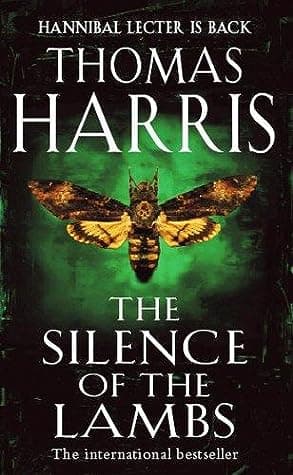
- The Silence of the Lambs
Thomas Harris
4.2 (464k) average on GoodreadsThrillerWhen compared to Thomas Harris's "The Silence of the Lambs," "Coyote Waits" offers a fundamentally different kind of thriller. Harris's novel is a psychological thriller driven by intense character confrontations, grotesque details, and a race against time to catch a serial killer. Hillerman's work, while having suspense, is less about psychological terror and more about unraveling a complex web of cultural misunderstandings, past grievances, and the nuances of justice within a bicultural context. The 'threat' in Hillerman is often more subtle, rooted in human greed or desperation, rather than the overt monstrousness found in Harris's antagonists. Hillerman's violence is less graphic, and his focus is on the intellectual and cultural puzzle rather than sheer visceral horror.
- Angels & Demons
Dan Brown
3.9 (2.7M) average on GoodreadsThrillerA Harvard symbologist races through Rome's ancient sites, deciphering cryptic clues to unmask the Illuminati and stop a vengeful plot to destroy the Vatican with a stolen antimatter weapon.
- Gone Girl
Gillian Flynn
4.1 (2.3M) average on GoodreadsThrillerA wife's sudden disappearance on her fifth anniversary reveals a web of lies and psychological warfare, exposing the secrets within a seemingly perfect marriage.
- The Girl on the Train
Paula Hawkins
3.9 (2.1M) average on GoodreadsThrillerA woman’s fascination with a seemingly perfect couple she watches from her daily train commute leads her into a dark investigation when she witnesses something that shatters their idyllic image.





Enjoyed the summary?
A summary gives you the shape of the book. The book itself has the detail, the examples and the voice.
Find Coyote Waits on AmazonAs an Amazon Associate, BookBrief earns from qualifying purchases. How we're funded