
Estimated read time: 6 min read
One Sentence Summary
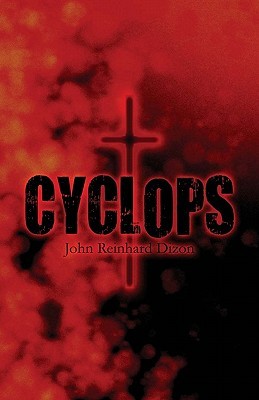
"Cyclops" by John Reinhard Dizon is a gripping novel that explores the haunting journey of a man confronting his inner demons and the consequences of his past actions.
Table of Contents
Introduction
John Reinhard Dizon’s Cyclops is a thought-provoking novel that dives deep into the human psyche, exploring themes of perception, identity, and the complexity of human relationships. This gripping narrative has captured the attention of college students and lecturers alike for its rich symbolism and psychological depth. Cyclops is not merely a story; it’s a journey into the fragmented self, challenging readers to reconsider how they see the world and themselves.
In this summary, we’ll unpack the intricate layers of Cyclops, exploring its historical backdrop, key characters, plot, themes, literary techniques, and the author’s background. Whether you’re a student preparing for a class discussion or a literature enthusiast, this guide will illuminate the core of Dizon’s work without spoiling its narrative surprises.
Historical Context
Set against the contemporary backdrop of the Philippines, Cyclops reflects the socio-political tensions and cultural dynamics of the early 21st century. The novel resonates with the Filipino experience of grappling with colonial legacies, identity crises, and modernity’s challenges.
Notably, the story draws inspiration from Greek mythology, particularly the figure of the Cyclops—one-eyed giants symbolizing both strength and blindness. This mythological framework offers a rich allegory for the novel’s exploration of perception and insight, blending classical motifs with contemporary Filipino realities.
Brief Synopsis
Plot Overview
At its heart, Cyclops follows the life of Elias, a man haunted by his past and struggling with his fragmented identity. After a traumatic event, Elias becomes metaphorically “one-eyed,” perceiving the world through a limited and distorted lens. The novel chronicles his journey toward self-discovery and healing as he confronts his personal demons and societal expectations.
The story weaves between present-day events and Elias’s memories, revealing layers of his character and the forces that shaped him. Through interactions with other characters, Elias’s story unfolds, touching on themes of love, betrayal, and redemption.
Setting
The novel is set primarily in Manila, a city teeming with contrasts—modern skyscrapers overshadow ancient neighborhoods, and vibrant street life masks underlying social struggles. This urban setting enhances the novel’s atmosphere, emphasizing themes of chaos, fragmentation, and the search for meaning amid disorder.
The time period is contemporary, though the narrative’s nonlinear structure allows for flashbacks that provide historical and personal context, enriching the reader’s understanding of Elias’s psychological landscape.
Main Characters
| Name | Role | Key Traits | Importance to the Plot |
|---|---|---|---|
| Elias | Protagonist | Traumatized, introspective, resilient | Central figure whose psychological journey drives the narrative |
| Mara | Love interest | Compassionate, complex, conflicted | Represents emotional grounding and challenges Elias’s perceptions |
| Tomas | Antagonist/foil | Manipulative, authoritative | Embodies societal pressures and personal antagonism |
| Lila | Friend and confidante | Loyal, insightful | Provides emotional support and narrative balance |
| The Cyclops | Symbolic figure | Mythological, enigmatic | Represents Elias’s internal struggle and broader themes of perception |
Plot Summary
Part 1: The Fracture
The novel opens with Elias’s traumatic incident—a turning point that fractures his perception of reality. This event serves as a catalyst for his emotional and psychological unraveling. We see Elias grappling with confusion, denial, and isolation, mirrored by the chaotic Manila streets around him.
Part 2: Blurred Vision
As Elias withdraws from society, his world becomes increasingly distorted. The narrative explores his internal conflicts, fears, and memories. Interactions with Mara and Lila offer glimpses of hope and connection, though Elias’s mistrust and pain often lead to misunderstandings.
Part 3: The Confrontation
Tomas emerges as a significant antagonist, representing external forces that exacerbate Elias’s struggles. Their confrontations highlight themes of power, control, and resistance. Elias begins to confront his own limitations and the societal structures that confine him.
Part 4: Towards Insight
In the final section, Elias embarks on a journey toward self-awareness. The metaphor of the Cyclops becomes central as he learns to reconcile his “one-eyed” perspective with a more holistic understanding of himself and his environment. The narrative closes with a cautiously optimistic tone, emphasizing growth and the potential for healing.
Themes and Motifs
Perception and Reality
Cyclops challenges the notion of objective reality by illustrating how personal trauma shapes perception. Elias’s “one-eyed” view symbolizes the limited and subjective ways individuals experience the world.
Identity and Self-Discovery
The novel delves into the fragmented self, exploring how identity is constructed and deconstructed through memory, trauma, and relationships. Elias’s journey underscores the fluidity and complexity of selfhood.
Power and Control
Through characters like Tomas, Cyclops critiques societal and interpersonal power dynamics. It explores how authority can oppress and distort individual freedom, paralleling Elias’s internal struggles.
Mythology and Symbolism
The Cyclops myth serves as a powerful motif, symbolizing both blindness and insight. This duality enriches the narrative, allowing readers to interpret Elias’s experiences on multiple levels.
Literary Techniques and Style
John Reinhard Dizon employs a nonlinear narrative structure, weaving past and present seamlessly to reflect Elias’s fragmented consciousness. This technique enhances the psychological realism of the novel.
Symbolism is pervasive, with the Cyclops figure as the central metaphor. Dizon’s prose is both poetic and accessible, balancing vivid imagery with introspective passages.
The author uses stream-of-consciousness moments to convey Elias’s inner turmoil, while dialogues are crafted to reveal character dynamics subtly.
Author’s Background
John Reinhard Dizon is a prominent Filipino writer known for his insightful explorations of identity and culture. His works often blend mythological themes with contemporary issues, reflecting his deep engagement with both local and universal narratives.
Dizon’s background in psychology informs his nuanced character portrayals, making his novels resonate with readers interested in the complexities of the human mind.
Key Takeaways
- Cyclops uses mythological symbolism to explore perception and identity.
- The novel’s nonlinear narrative mirrors the protagonist’s psychological state.
- Themes of power, trauma, and self-discovery are intricately woven into the story.
- The urban setting of Manila enhances the novel’s atmosphere and thematic depth.
- Elias’s journey offers insight into the human capacity for resilience and transformation.
Reader’s Takeaway
Reading Cyclops invites you to reflect on how personal experiences shape your worldview. It challenges you to consider the limitations of perception and the possibilities of insight beyond surface appearances. Emotionally, the novel offers a poignant exploration of pain and healing, resonating with anyone who has grappled with identity or trauma.
Conclusion
John Reinhard Dizon’s Cyclops is a compelling narrative that transcends its immediate story to probe profound questions about human nature. Its blend of myth, psychology, and social commentary makes it a significant work for both academic study and personal reflection. If you seek a novel that challenges your understanding of perception and identity while offering a richly textured story, Cyclops is a worthy addition to your reading list. Dive into Elias’s journey, and prepare to see the world—and yourself—with new eyes.
Cyclops FAQ
What is the main theme of 'Cyclops' by John Reinhard Dizon?
'Cyclops' explores themes of power, identity, and the consequences of unchecked ambition through its compelling narrative.
Who is the protagonist in 'Cyclops'?
The protagonist of 'Cyclops' is a complex character who struggles with inner demons and external challenges, driving the story forward.
Is 'Cyclops' based on mythology or is it an original story?
'Cyclops' by John Reinhard Dizon is an original story that may draw inspiration from mythological elements but presents a unique narrative.
What genre does 'Cyclops' belong to?
'Cyclops' falls under the genres of speculative fiction and fantasy, blending imaginative storytelling with profound themes.
Does 'Cyclops' have any sequels or is it a standalone novel?
'Cyclops' is a standalone novel, offering a complete and self-contained story.
What is the writing style of John Reinhard Dizon in 'Cyclops'?
John Reinhard Dizon's writing style in 'Cyclops' is evocative and immersive, combining vivid descriptions with deep character development.
Are there any notable symbols or motifs in 'Cyclops'?
Yes, the novel uses symbols such as the cyclops eye to represent perception, power, and isolation, enriching the story's depth.
Who would enjoy reading 'Cyclops'?
'Cyclops' is recommended for readers who enjoy thoughtful fantasy, complex characters, and stories that challenge conventional narratives.
Where can I purchase or read 'Cyclops' by John Reinhard Dizon?
'Cyclops' is available through various bookstores and online platforms such as Amazon and the publisher's website.