
Synopsis
Covers the whole plot, including the ending.
- Difficulty
- Easy
- Pacing
- Moderate
- Mood
- Thought-provoking, Intense, Uplifting
- Read it if
- You enjoy sports stories that tackle serious social issues like racism and prejudice, and appreciate character development through challenging experiences.
- Skip it if
- You prefer lighthearted sports narratives without heavy themes or intense conflict.
Danger Zone Plot Summary
Covers the whole plot, including the ending.
Jimmy Doyle's Unexpected Opportunity
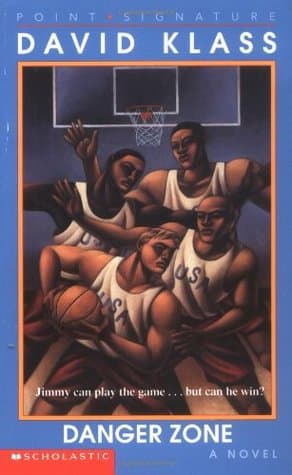
Jimmy Doyle, a star basketball player from a small town in Minnesota, is chosen to join the 'Teen Dream Team.' This is a group of high school players selected to represent the United States in an international tournament in Rome. Jimmy, who is white, is surprised to be the only white player among skilled Black athletes, most from cities. His coach, Mr. McClure, says the team represents the country. At first, Jimmy feels out of place and struggles to connect with his teammates, who are curious but also doubtful. He quickly sees that his life experience is very different from theirs, setting up cultural differences and personal growth.
Training Camp and Early Tensions
The team gathers for a tough training camp. The players, including the outgoing Marcus and the quiet Willie, start to bond on the court but stay somewhat separate off it. Jimmy, despite his talent, finds it hard to join the existing social groups. He feels alone, like an outsider because of his race and background. Coach McClure pushes the team hard, always reminding them of what is at stake and their duty. Small tensions appear as players deal with their differences; some teammates make comments that show Jimmy is 'other.' Jimmy wants to prove himself, as a player and a person, but the first days are hard.
Arrival in Rome and Initial Games
The Teen Dream Team arrives in Rome, excited but also aware of the pressure. They stay in a hotel and begin their first games. The team plays well at first, showing their talent. However, they soon face unexpected hostility from some European teams and their fans. Racist chants and gestures are aimed at the mostly Black American team, especially during games against Italian and German teams. Jimmy, for the first time, sees open racism directed at his teammates and, by extension, at himself. This experience is a wake-up call, making him face the reality of prejudice he had not known before. He starts to feel more connected to his teammates.
Escalating Hostility and Team Unity
As the tournament continues, racial insults and unfair acts become more frequent and aggressive, both during and after games. Opposing players use dirty tactics, and the crowds become more hostile. Marcus, Willie, and other teammates share their experiences with racism, some of which are very personal and painful. Jimmy listens, understanding the deep prejudice they face daily. Coach McClure tries to protect the team, but the constant attacks wear them down. The team's performance starts to drop due to the emotional stress. However, this shared difficulty also begins to create a stronger bond among the players, including Jimmy, who now understands the need to stand together.
The Incident at the Colosseum
During a team trip to the Colosseum, the team experiences a particularly harsh and public display of racism. A group of local thugs verbally attacks them, using racial slurs and making threats. Marcus, always the most vocal, confronts them, leading to a tense situation that almost becomes a physical fight. Jimmy, seeing the raw hatred, feels a surge of anger and a need to protect his teammates. This event changes things for him; he no longer feels like an outsider but part of the group targeted by prejudice. The team returns to the hotel shaken but more united than ever, determined to use their anger in their court performance.
The Semifinal Match and Rising Stakes
The Teen Dream Team reaches the semifinals, where they play a very competitive and openly hostile German team. The crowd is strongly against them, and the racial insults are at their peak. The game is very physical, with both teams playing aggressively. Coach McClure reminds the players to stay calm and focus on the game, but it is a huge challenge. Jimmy, now fully part of the team's spirit, plays with new intensity. He wants to win not just for the trophy, but as a statement against the prejudice they have faced. The game is close, showing the team's strength under extreme pressure.
The Final Game: A Battle for Dignity
The final game pits the Teen Dream Team against the host nation, Italy. This game is less about basketball and more about a fight for dignity. The Italian crowd is very nationalistic and openly racist, throwing objects onto the court and chanting hateful slurs. The Italian players play very roughly, seemingly encouraged by referees who ignore their fouls. The atmosphere is tense and dangerous. Jimmy, Marcus, Willie, and the rest of the team are pushed to their limits, physically and emotionally. They know this game is about more than a championship; it is about standing up for themselves and their race against overwhelming prejudice.
The Climax: A Confrontation and a Choice
In the final minutes of the championship game, with the score close and tension high, an Italian player's deliberate foul seriously injures an American teammate. This act pushes the American team too far. Marcus, furious, is ready to fight back physically, and the whole team is about to leave the game in a violent protest. Jimmy, however, remembers Coach McClure's words about staying calm and representing their country with honor. He, with Willie, helps calm the situation, urging the team to use their anger to win the game through skill and fairness, not violence. This moment is the real test of their unity and character.
Victory and Shared Understanding
Despite the extreme challenges and biased officiating, the Teen Dream Team rallies. They play with great focus and resolve, united in their goal. In a thrilling final play, they win the championship against Italy. The win is mixed, shadowed by the racism they faced, but it is also a victory of spirit. After the game, the team celebrates, not just the basketball win, but the bond they formed. Jimmy, no longer an outsider, stands with his teammates. He has learned much about racial prejudice and the strength found in unity. He has truly become part of the 'Teen Dream Team,' on and off the court.
Return Home and Lasting Impact
When he returns home, Jimmy is a changed person. The experiences in Rome have shown him the realities of racism and the importance of empathy and standing up for what is right. He thinks about his early innocence and the lessons he learned from his teammates, especially Marcus and Willie. The basketball championship is a big achievement, but his personal growth and the friendships made under pressure truly define his journey. Jimmy carries a new view on identity, prejudice, and unity, forever changed by his time with the Teen Dream Team. He understands that danger is not just on the court, but in the world's prejudices.
Danger Zone Characters
Jimmy Doyle
Protagonist
A talented white basketball player from Minnesota, forced to confront racism and his own preconceptions.
Jimmy is a skilled, observant, and initially somewhat naive high school basketball star from a predominantly white Minnesota town. He is chosen for the Teen Dream Team, where he becomes the sole white player. Throughout the story, Jimmy acts as the reader's entry point into the world of racial prejudice, experiencing it vicariously through his teammates and directly when targeted. He is initially quiet and struggles to connect, but his empathy and strong moral compass lead him to a deeper understanding of his teammates' experiences and the broader issue of racism. He is driven by a desire to prove himself on the court and to understand the world around him.
Relationships: Marcus (Teammate, initial rival, later close friend and mentor); Willie (Teammate, quiet confidant, and friend); Coach McClure (Team coach, authority figure, and mentor)
Marcus
Supporting
A charismatic and outspoken Black teammate, a natural leader who challenges Jimmy's perceptions.
Marcus is one of the star players on the Teen Dream Team, known for his incredible talent, charisma, and outspoken nature. He is a natural leader and often the first to react to racial injustices, sometimes impulsively. Marcus initially views Jimmy with skepticism, seeing him as an outsider who cannot possibly understand their experiences. However, as they face escalating racism, Marcus comes to respect Jimmy's growing awareness and solidarity. He is passionate, proud, and deeply affected by the prejudice they encounter, often channeling his anger into his play. He represents the voice of righteous indignation against racism.
Relationships: Jimmy Doyle (Teammate, initial rival, later close friend); Willie (Teammate, close friend)
Willie
Supporting
A quiet, intelligent, and insightful Black teammate who offers a calm perspective on racial issues.
Willie is another key player on the Teen Dream Team, characterized by his quiet demeanor, intelligence, and thoughtful observations. Unlike Marcus, Willie is less outwardly confrontational but possesses a deep understanding of the systemic nature of racism. He often acts as a calming influence on the team and provides Jimmy with subtle insights into the Black experience. Willie's strength lies in his resilience and his ability to articulate the emotional toll of prejudice without resorting to anger. He is a steadying presence and a loyal friend, offering a different facet of how individuals cope with racial adversity.
Relationships: Jimmy Doyle (Teammate and friend); Marcus (Teammate and friend)
Coach McClure
Supporting
The strict but caring coach of the Teen Dream Team, focused on discipline and representing the USA with honor.
Coach McClure is the head coach of the Teen Dream Team, responsible for guiding the players both on and off the court. He is a stern disciplinarian who emphasizes teamwork, respect, and the importance of representing the United States with dignity. Coach McClure is aware of the racial dynamics within the team and the potential for prejudice they might face abroad, attempting to prepare them for it. He tries to shield them from the worst of the racism but also uses the challenges to teach them resilience and unity. He struggles to balance his role as a mentor with the need to protect his players from escalating hostility.
Relationships: Jimmy Doyle (Coach and mentor); Marcus (Coach and authority figure); Willie (Coach and mentor)
The Italian Team
Antagonist
The host nation's basketball team, embodying the overt racism and unsportsmanlike conduct faced by the American team.
The Italian Team serves as the primary antagonist in the final game, representing the most extreme form of the racial prejudice and unsportsmanlike conduct encountered by the Teen Dream Team. Their players engage in dirty tactics, aggressive fouls, and seemingly deliberate attempts to injure the American players, often with the tacit approval of the biased referees and the rabid home crowd. They are driven by nationalistic fervor and a clear racist agenda, making the final game a battle for dignity and survival rather than just a championship. They are a collective antagonist, embodying the 'danger zone' of hatred.
Relationships: Teen Dream Team (Opponents, source of racial hostility)
The German Team
Supporting
An opposing team contributing to the escalating racial hostility faced by the American team in the semifinals.
The German Team is a formidable opponent faced by the Teen Dream Team in the semifinals. While not as overtly malicious as the Italian team in the final, they contribute significantly to the hostile atmosphere and racial tension. Their fans engage in racist chants, and their players are highly competitive, sometimes resorting to aggressive play. They serve to intensify the pressure and prejudice experienced by the American team leading up to the climax, further solidifying Jimmy's understanding of the widespread nature of the racism they are encountering.
Relationships: Teen Dream Team (Opponents in the semifinals, source of racial hostility)
Tony
Supporting
A teammate who initially struggles with Jimmy's presence but eventually forms a bond.
Tony is one of Jimmy's teammates, initially somewhat wary or even dismissive of Jimmy due to his different background. He represents a common reaction among some of the Black players, who might feel that Jimmy cannot truly understand their experiences. However, as the team faces external racism, Tony, like others, begins to see Jimmy as a part of their collective struggle. His character arc is subtle, showing the gradual breaking down of barriers within the team.
Relationships: Jimmy Doyle (Teammate); Marcus (Teammate)
Mr. & Mrs. Doyle
Mentioned
Jimmy's parents, representing his sheltered background and initial innocence.
Jimmy's parents are mentioned primarily in the context of his home life in Minnesota. They represent the comfortable, predominantly white environment from which Jimmy originates, an environment largely insulated from overt racial prejudice. Their concern for Jimmy's well-being and their pride in his achievements underscore the contrast between his sheltered upbringing and the harsh realities he faces in Rome. They are a touchstone for Jimmy's 'before' state, highlighting the extent of his transformation.
Relationships: Jimmy Doyle (Parents)
Danger Zone Themes
Racism and Prejudice
The main theme is the open and subtle forms of racism encountered by a mostly Black American basketball team in Europe. It shows how prejudice can appear in chants, dirty play, unfair officiating, and public aggression, forcing the characters, especially Jimmy, to face its harsh realities. The book compares Jimmy's protected experience with the daily prejudice his Black teammates face. It shows how widespread racial hatred is and how important it is to recognize and fight it. The incidents at the Colosseum and during the final game are clear examples of this theme.
“He had never seen hatred like this, not directed at him, not at anyone he knew. It was a cold, ugly thing, and it made him sick to his stomach.”
Identity and Belonging
This theme explores how people define themselves and find their place in a group, especially when facing outside opposition. Jimmy, as the only white player, at first struggles with his identity within the mostly Black team and feels like an outsider. However, as the team faces shared hardship and racism, he finds a new sense of belonging and unity. He realizes that shared experience can go beyond racial differences. The team's collective identity as 'Americans' and as Black athletes becomes a source of strength against European prejudice.
“He was one of them now. Not just a basketball player, but a part of something bigger, something that stretched beyond the court and into the world.”
Sportsmanship vs. Retaliation
The novel looks at the conflict between keeping sportsmanship and giving in to the urge to retaliate when facing extreme challenges and unfairness. The team, especially Marcus, is constantly tested by racist insults and dirty play, pushing them to the edge of violent response. Coach McClure always preaches discipline, but the climax of the final game forces the players to make a choice: to fight back with violence or to win with fairness and dignity. This theme explores the moral difficulties of responding to aggression and prejudice.
“We're here to play basketball, not to fight. We win this with our game, not with our fists.”
Coming of Age and Awareness
Jimmy's journey throughout the tournament is a powerful coming-of-age story. He starts as an innocent, protected teenager and must grow up quickly by facing the world's harsh realities. His experiences with racism, both seen and indirectly felt, break his innocent view of the world. They make him develop empathy, critical thinking, and a stronger moral sense. This change is not just about becoming a better basketball player, but about becoming a more aware and responsible person, understanding the complexities of social injustice.
“Rome had changed him. Not just the sights, but the ugliness, the hatred, and the way his teammates had faced it all.”
Plot Devices & Literary Techniques
The 'Teen Dream Team'
A symbolic microcosm of American diversity confronting global prejudice.
The 'Teen Dream Team' functions as a critical plot device by bringing together a diverse group of American teenagers, particularly highlighting the racial dynamic between the predominantly Black players and the sole white player, Jimmy. This composition allows the novel to explore internal team dynamics and prejudices. More importantly, when this diverse team faces external, overt racism in Europe, it amplifies the themes of prejudice, unity, and identity. The team's collective experience becomes a symbol of America's ongoing struggle with race and its representation on a global stage, forcing both the characters and the reader to confront uncomfortable truths.
The International Setting (Rome, Europe)
A foreign backdrop that externalizes and intensifies racial conflict.
The international setting of Rome and other European cities serves as a crucial plot device by displacing the American characters from their familiar environment. This allows for the externalization and intensification of racial prejudice, as the team encounters overt, uninhibited racism from crowds and opposing teams that might be less common or expressed differently in their home country. The 'otherness' of the setting highlights the universality of racism, while also making the characters feel more vulnerable and isolated, thus fostering a stronger sense of internal unity. It removes the comfort of home and forces a confrontation with a starker reality.
Basketball as a Metaphor
The game as a structured arena for confronting real-world social conflicts.
Basketball in 'Danger Zone' is more than just a sport; it acts as a powerful metaphor for the social and racial conflicts the characters face. The rules and boundaries of the court provide a structured environment where the team's ability to work together, overcome adversity, and maintain integrity is constantly tested. The physical nature of the game, with fouls and aggressive play, mirrors the real-world 'dirty play' of racism. Ultimately, winning the game becomes symbolic of overcoming prejudice and achieving dignity, while the 'danger zone' itself refers not just to a part of the court but to the dangerous realities of racial hatred in the world.
Jimmy Doyle's Perspective
A narrative lens for exploring racial prejudice through an outsider's awakening.
Jimmy Doyle's perspective as the sole white player on a predominantly Black team is a deliberate and effective plot device. By experiencing the events through his eyes, the reader, particularly those who might share a similar background to Jimmy, is invited to witness and understand racial prejudice from an initially naive, outsider's viewpoint. This allows for a journey of discovery and empathy, as Jimmy's preconceptions are challenged and his understanding deepens. His internal monologue and observations make the theme of racial awareness more accessible and impactful, demonstrating how an individual can come to terms with uncomfortable social truths.
Danger Zone Quotes
“The ball hung in the air, a perfect, beautiful thing, and I knew, I just knew, I had to hit it.”
“Sometimes you just have to swing, even if you don't know where it's going to land.”
“The coach always said, 'It's not about how hard you hit it, it's about where you put it.'”
“Fear can be a good thing. It keeps you sharp. Keeps you alive.”
“The weight of expectation can be heavier than any bat.”
“You can't live your life in the dugout, waiting for someone else to call you in.”
“Every game is a chance to prove yourself, not to anyone else, but to yourself.”
“The silence after a home run is almost as loud as the roar.”
“It's funny how one moment can change everything. One swing, one pitch, one decision.”
“Sometimes the biggest battles are fought inside your own head.”
“You learn more from your failures than your successes, if you're willing to look.”
“The game doesn't care about your feelings. It just is.”
“Being a hero isn't about hitting the home run. It's about showing up every day, ready to play.”
“The weight of the world, or at least the weight of the baseball world, felt like it was on my shoulders.”
Quiz
10 questions on the plot and the characters. Each answer comes with a short explanation.
Question 1
What is the primary reason Jimmy Doyle joins the 'Teen Dream Team'?
- To escape personal problems at home
- To represent the United States in an international basketball tournament
- To prove himself against better competition
- To travel to Rome for a vacation
Show answer
B. To represent the United States in an international basketball tournament The book states that Jimmy joins the team specifically to represent the United States in an international basketball tournament in Rome.
Question 2
What is the racial composition of the 'Teen Dream Team' that Jimmy Doyle joins?
- It is an all-white team.
- It is an all-black team.
- It is a predominantly black team.
- It is an equally diverse team of all races.
Show answer
C. It is a predominantly black team. The book description explicitly states that Jimmy joins a 'predominantly black' Teen Dream Team.
Question 3
Where is the international basketball tournament taking place?
- Paris
- London
- Rome
- Athens
Show answer
C. Rome The setting for the international basketball tournament is specified as Rome.
Question 4
What unexpected discoveries does Jimmy Doyle make during his time with the team?
- New basketball techniques and strategies
- The importance of teamwork and friendship
- Prejudice, racism, and politics
- His own hidden talents as a leader
Show answer
C. Prejudice, racism, and politics The novel's premise highlights Jimmy's 'unexpected discoveries about prejudice, racism, and politics' as central to his experience.
Question 5
How does the novel describe the climax of the story?
- A heartwarming conclusion about sportsmanship
- One of the most thrilling climaxes in recent sports writing
- A quiet and reflective ending for Jimmy
- An unsurprising victory for the American team
Show answer
B. One of the most thrilling climaxes in recent sports writing The book's description praises the climax as 'one of the most thrilling climaxes in recent sports writing,' indicating its intense and impactful nature.
Question 6
What major societal issue does Jimmy Doyle confront in the novel?
- Poverty in urban areas
- Gender inequality in sports
- Racism
- Environmental degradation
Show answer
C. Racism The book's description explicitly states that Jimmy 'confronts a nightmare of racism,' making it a central theme.
Question 7
What type of team is the 'Teen Dream Team'?
- A soccer team
- A basketball team
- A track and field team
- A gymnastics team
Show answer
B. A basketball team The context of the international tournament and 'sports writing' along with Jimmy being a 'young basketball star' confirms it's a basketball team.
Question 8
Given the themes, what kind of internal conflict is Jimmy Doyle most likely to experience?
- Struggling with his basketball skills against superior opponents
- Debating whether to pursue a career in sports or academics
- Challenging his own preconceived notions and biases about race
- Dealing with homesickness while abroad
Show answer
C. Challenging his own preconceived notions and biases about race Since Jimmy makes 'unexpected discoveries about prejudice, racism, and politics' and confronts 'a nightmare of racism,' his internal conflict would largely revolve around challenging his own understanding and biases related to these issues.
Question 9
Why might the 'predominantly black' composition of the team be significant for Jimmy Doyle's character arc?
- It allows him to learn about different basketball playing styles.
- It forces him to confront racial dynamics and his own potential biases firsthand.
- It makes him feel more comfortable as a minority player.
- It provides him with an opportunity to lead a diverse group.
Show answer
B. It forces him to confront racial dynamics and his own potential biases firsthand. The 'predominantly black' team composition, combined with Jimmy's 'discoveries about prejudice, racism, and politics,' strongly implies that his interactions within this team will be the catalyst for him confronting and understanding racial dynamics and his own perspectives.
Question 10
How does the description of the book hint at the narrative's overall tone?
- It suggests a lighthearted and humorous adventure.
- It implies a serious and dramatic exploration of social issues.
- It indicates a purely focused sports drama without deeper themes.
- It hints at a historical fiction piece set in the past.
Show answer
B. It implies a serious and dramatic exploration of social issues. Phrases like 'unexpected discoveries about prejudice, racism, and politics,' 'confronts a nightmare of racism,' and 'thrilling climaxes' all point to a serious, dramatic, and impactful tone, rather than a lighthearted one.
Danger Zone FAQ
What is "Danger Zone" about?
"Danger Zone" follows Jimmy Doyle, a talented white basketball player from Minnesota, as he joins the 'Teen Dream Team,' a predominantly Black squad representing the U.S. in an international tournament in Rome. Initially focused on basketball, Jimmy quickly confronts uncomfortable realities of prejudice, racism, and political tensions both within his team and from external forces, forcing him to re-evaluate his understanding of the world.
Why should I read "Danger Zone"?
You should read "Danger Zone" for its insightful exploration of racism and prejudice through the accessible lens of sports. It offers a compelling narrative about a young protagonist's awakening to societal injustices, featuring a diverse cast of characters and a thrilling, high-stakes climax that transcends the basketball court to address deeper political and social issues.
What is the background/setting of "Danger Zone"?
The story begins with Jimmy Doyle's recruitment to the 'Teen Dream Team' in the United States, but the primary setting for the international basketball tournament is Rome, Italy. This foreign backdrop amplifies the cultural clashes and exposes the team to different forms of prejudice and political intrigue that they might not have encountered at home.
What are the most memorable quotes?
While specific quotes are not provided in the summary, memorable moments often revolve around Jimmy's internal monologues as he grapples with racial slurs and stereotypes, and the powerful, confrontational dialogues between teammates like Jimmy and Marcus or Coach Evans, highlighting the raw emotions and difficult truths about racism and identity.
What writing style does the author use?
David Klass employs a direct and engaging writing style, characteristic of young adult literature, making complex themes accessible. He uses vivid descriptions of basketball action and emotionally charged dialogue to convey the intensity of both the games and the racial conflicts, building suspense towards the 'thrilling climax' mentioned in the summary.
What minor details add significant meaning?
Minor details often include the subtle microaggressions or casual stereotypes Jimmy initially overlooks or dismisses, which later gain significant meaning as he becomes more aware of systemic racism. The specific compositions of the opposing international teams and their reactions to the American players also add layers to the global perspective on prejudice.
What are some subtle foreshadowing moments?
Subtle foreshadowing includes early uneasy interactions or tensions between teammates, particularly regarding race, that hint at the larger conflicts to come. Also, initial dismissive comments about the political climate surrounding international sports might subtly foreshadow the later, more direct political threats the team faces.
What unexpected character connections exist?
Unexpected character connections often arise from shared vulnerability during moments of crisis, such as when Jimmy forms a deeper bond with a teammate like Marcus, initially an antagonist, through mutual respect forged under pressure. There might also be surprising alliances or understandings between team members and their international counterparts or even local Romans.
What are unspoken character motivations?
Unspoken motivations often involve characters like Coach Evans, who might carry the weight of past racial experiences, influencing his sternness or protective instincts towards his predominantly Black team. For teammates like Marcus, unspoken motivations could be a deep-seated desire to prove himself against stereotypes, driving both his excellence and his occasional anger towards perceived injustices.
What psychological complexities do characters exhibit?
Jimmy Doyle exhibits psychological complexity through his journey from naive ignorance to conscious awareness of racism, struggling with guilt, confusion, and ultimately, a sense of responsibility. Other characters, particularly the Black teammates, show the psychological toll of constantly navigating a world filled with prejudice, manifesting as defensiveness, resilience, or a sense of weary resignation.
What are the major emotional turning points?
A major emotional turning point for Jimmy is likely an incident where he directly witnesses or is implicated in an act of racism, forcing him to confront his own complicity or ignorance. Another is the 'thrilling climax' itself, which is described as a 'nightmare of racism,' suggesting a moment of intense fear and solidarity that profoundly shifts the team's emotional landscape.
How do relationship dynamics evolve?
Relationship dynamics evolve from initial skepticism and racial tension, particularly between Jimmy and his Black teammates, to a stronger sense of camaraderie and mutual understanding. Through shared challenges and confrontations with external prejudice, individual players learn to trust and rely on each other, transcending initial biases to form a cohesive unit.
Which parts remain ambiguous or open-ended?
While the summary highlights a definitive climax, the long-term impact of the experience on Jimmy's worldview or the team's collective future beyond the tournament might remain somewhat ambiguous. The resolution of certain individual character arcs, particularly how they will carry their new understandings forward, could also be left open-ended.
What are controversial scenes or decisions?
Controversial scenes likely involve direct confrontations over racial slurs or stereotypes, where characters make difficult decisions about how to respond to prejudice. The 'nightmare of racism' in the climax suggests a particularly contentious event, possibly involving political figures or external threats, forcing the team into a morally fraught situation.
"Danger Zone" ending explained: how it ends & what it means
The book culminates in 'one of the most thrilling climaxes in recent sports writing,' where the team confronts a 'nightmare of racism' that transcends the game itself. This ending likely involves the team, led by Jimmy, making a powerful stand against prejudice and political manipulation, signifying their growth from a sports team to a symbol of unity and resistance against injustice, leaving them forever changed by their experiences.
About the author

David Klass is an American author and screenwriter known for his young adult thrillers. His notable works include the "Danger Zone" series, which has been praised for its fast-paced plots and relatable teenage protagonists. Klass's writing often explores themes of suspense and adventure, appealing to a broad audience of young readers.
Similar books
- The Crossover
Kwame Alexander
4.3 (42k) average on GoodreadsChildren'sA sports story for young adults that delves into family, identity, and the love of basketball.
- Travel Team
Mike Lupica
4.1 (10k) average on GoodreadsChildren'sFocuses on youth sports and team dynamics, though less on social issues.
- Hatchet
Gary Paulsen
3.7 (309k) average on GoodreadsChildren'sHatchet offers a more intense and detailed exploration of a single protagonist's internal struggle and growth in a wilderness survival scenario. While Danger Zone features an ensemble cast and focuses on group dynamics, Hatchet delves deeper into the psychological impact of isolation and the meticulous learning process of survival, making Brian Robeson's character arc arguably more profound and realistic than some of the swift transformations seen in Klass's book.
- Life of Pi
Yann Martel
3.9 (1.3M) average on GoodreadsFantasyLife of Pi transcends the simple survival narrative by incorporating profound philosophical and spiritual themes. While Danger Zone provides an exciting adventure, Life of Pi uses its survival premise to explore questions of faith, storytelling, and the nature of reality, offering a much richer and more complex intellectual experience. Martel's protagonist, Pi, undergoes a more transformative journey that challenges the reader's perceptions, whereas Danger Zone prioritizes action and more straightforward moral lessons.
- Harry Potter and the Sorcerer's Stone
J.K. Rowling
4.5 (7M) average on GoodreadsFantasyRescued from a miserable life under the stairs, an orphaned boy discovers he's a wizard destined for a magical school, where he uncovers a dangerous secret tied to the dark wizard who murdered his parents.
- The Hunger Games
Suzanne Collins
4.3 (6.4M) average on GoodreadsFantasyIn a future where children fight to the death on live television, Katniss Everdeen volunteers for the arena, turning a death sentence into a fight for survival and a spark of rebellion.



Enjoyed the summary?
A summary gives you the shape of the book. The book itself has the detail, the examples and the voice.
Find Danger Zone on AmazonAs an Amazon Associate, BookBrief earns from qualifying purchases. How we're funded