
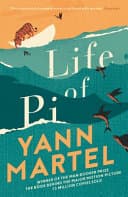
Synopsis
Covers the whole plot, including the ending.
- Difficulty
- Medium
- Pacing
- Variable
- Mood
- Philosophical, Suspenseful, Hopeful, Challenging
- Read it if
- You enjoy philosophical allegories, survival stories, and narratives that challenge your perception of reality and faith.
- Skip it if
- You prefer straightforward plots without ambiguity or find animal cruelty (even metaphorical) distressing.
Life of Pi Plot Summary
Covers the whole plot, including the ending.
A Childhood in Pondicherry
Piscine Molitor Patel, or Pi, tells about his childhood in Pondicherry, India, where his father owned a zoo. From a young age, Pi understood animal behavior, learning about their needs and dangers, especially from the Bengal tiger, Richard Parker. He also explored spirituality, practicing Hinduism, Christianity, and Islam at the same time, amusing and confusing his family and local religious leaders. Pi's father, a rationalist, tried to make him abandon his multi-faith devotion by showing him a tiger attacking a goat, demonstrating nature's brutal reality. This early exposure to both the beauty and savagery of animals, combined with his spiritual search, shaped Pi's view of the world.
The Decision to Emigrate
Because of political unrest and changes in India, Pi's father decided to sell the zoo animals and move to Canada, seeking a better life. This decision was a big change, uprooting Pi from his only home. The family arranged passage on a Japanese cargo ship, the *Tsimtsum*, which would take them and their remaining zoo animals across the Pacific Ocean. Pi, though sad about the move, approached it with both fear and curiosity, not knowing the disaster that awaited them at sea. The journey preparations showed the family's hope for a fresh start.
The Sinking of the Tsimtsum
In the middle of the Pacific Ocean, the *Tsimtsum* faced a violent storm and began to sink quickly. Pi, woken by the noise, went on deck and was thrown into a lifeboat by a crew member. From the lifeboat, he watched the ship disappear into the waves, taking his entire family – his mother, father, and brother Ravi – with it. The sudden, brutal event left Pi in shock and deep grief. He was completely alone, adrift in the vast ocean, his world shattered. This extreme trauma marked the start of his terrible ordeal, forcing him to face the raw reality of survival.
Unwelcome Company
After the *Tsimtsum* sank, Pi found he was not alone in the lifeboat. To his horror, he shared the small boat with a zebra with a broken leg, a hyena, an orangutan named Orange Juice, and eventually, the powerful Bengal tiger, Richard Parker. The lifeboat quickly became like a wild place, with the animals acting on instinct. The hyena brutally killed the zebra, then attacked and killed Orange Juice, leaving Pi traumatized and fearing for his own life. This sequence of events created a dangerous environment on the lifeboat, showing the immediate threat Pi faced from his fellow survivors.
The Emergence of Richard Parker
After the hyena's attack, Pi realized that Richard Parker, the Bengal tiger from his family's zoo, had been hiding under the tarpaulin covering part of the lifeboat. Richard Parker emerged and quickly killed the hyena, becoming the dominant predator. Pi now faced the terrifying reality of sharing a small lifeboat with a 450-pound tiger. He understood that his survival depended on his ability to manage and control Richard Parker. This realization changed Pi's focus from despair to a desperate will to survive, knowing he had to find a way to live with, or control, the tiger.
Training the Tiger
Using his knowledge of animal psychology from his father's zoo, Pi planned to show his dominance over Richard Parker. He used a whistle, the boat's rocking, and the tiger's seasickness to make his presence seem unpleasant. He also set a clear boundary on the lifeboat, marking his and the tiger's territory. Pi began to fish, providing food for Richard Parker, thus becoming the tiger's provider. This strategic training was essential for Pi's survival, turning the immediate threat into a manageable, though dangerous, companion. Their relationship became a delicate balance of fear and reliance.
Survival at Sea
Pi's days on the lifeboat were a constant fight for survival. He carefully collected rainwater, rationed his limited emergency supplies, and learned to fish and hunt turtles, providing food and water for both himself and Richard Parker. He developed clever methods, such as using a solar still for fresh water and a gaff for fishing. The constant threat of starvation, dehydration, and the unpredictable ocean pushed Pi to his physical and mental limits. He experienced deep despair, hallucinations, and spiritual comfort, relying on his cleverness and faith to endure the endless days and nights at sea.
The Blind Sailor and the Carnivorous Island
Months into his ordeal, Pi met another castaway, a blind French sailor, whose boat drifted near his. In a desperate state, both men, unaware of each other's blindness, tried to board the other's vessel. The sailor, driven by hunger, tried to attack Pi, but Richard Parker killed him. Later, Pi and Richard Parker drifted to a strange, seemingly miraculous island made entirely of algae, full of meerkats and fresh water. At first, it seemed like rescue, but Pi soon discovered the island was carnivorous, dissolving living creatures at night. He quickly realized the danger and left, barely escaping its deadly embrace.
Landfall in Mexico
After 227 days at sea, the lifeboat washed ashore on a beach in Mexico. Pi was completely exhausted, emaciated, and barely alive. As the boat landed, Richard Parker leaped out and, without a look back, disappeared into the jungle. Pi was heartbroken and deeply disappointed by the tiger's sudden departure, having expected some form of acknowledgment or farewell after their shared experience. Locals found him and took him to a hospital, ending his incredible journey of survival. His sadness at Richard Parker's leaving showed the complex bond they had formed.
The Japanese Investigators
While recovering in a Mexican hospital, Pi was interviewed by two Japanese Ministry of Transport officials, Mr. Tomohiro Okamoto and Mr. Atsuro Chiba, investigating the *Tsimtsum*'s sinking. They doubted Pi's fantastic story involving the animals, especially Richard Parker. Pi recounted his story in detail, but the investigators found it unbelievable. They pressed him for a more 'believable' account, one that fit their logical and factual expectations. This interview set up the book's central philosophical question: the nature of truth and storytelling.
The Second Story
Because the investigators disbelieved him, Pi offered an alternative version of his survival story, without animals. In this version, the zebra was a Taiwanese sailor with a broken leg, the hyena was the ship's cook, Orange Juice was Pi's mother, and Richard Parker was Pi himself. The cook brutally murdered the sailor and then Pi's mother, before Pi, driven by instinct and revenge, killed the cook. This second story is a grim, human-focused allegory of the first, mirroring the animal interactions with human cruelty and survival. It is a much darker, more plausible, yet equally horrifying account of the events at sea.
The Choice of Stories
After hearing both versions, the Japanese investigators had to decide which story they preferred. They admitted the second story, though horrific, was more factually plausible. However, they also agreed that the first story, with the animals, was 'the better story,' more imaginative and ultimately more comforting. Pi then asked them which story they would include in their report, and they chose the animal story. This moment highlights the novel's main idea about the power of storytelling and faith, suggesting that sometimes a more beautiful, less factual truth can offer greater meaning and comfort than a harsh reality.
Principal Figures
Piscine Molitor Patel (Pi)
Protagonist
A spiritual and resilient young man who survives a shipwreck
Pi is an intelligent, sensitive, and deeply spiritual Indian boy who grows up in a zoo. He practices Hinduism, Christianity, and Islam, demonstrating an open-minded and inclusive approach to faith. His deep understanding of animal behavior, learned from his father, proves crucial to his survival. Pi is resourceful, resilient, and possesses an extraordinary will to live, even in the face of unimaginable hardship. His ability to adapt, both physically and mentally, is key to his endurance at sea. He is also a gifted storyteller, shaping his experiences into narratives that convey profound truths.
Relationships: Richard Parker (complex relationship of fear, dependence, and eventual companionship); Santosh Patel (Father) (stern but loving, teaches Pi about animal danger and rationalism); Gita Patel (Mother) (nurturing, encourages Pi's intellectual and spiritual curiosity); Ravi Patel (Brother) (teasing but affectionate older brother)
Richard Parker
Antagonist/Companion
A 450-pound Royal Bengal tiger who shares the lifeboat with Pi
Richard Parker is a magnificent, dangerous Bengal tiger from Pi's family zoo. He represents the raw, untamed force of nature and the ultimate test of Pi's survival skills. Initially a terrifying threat, Richard Parker eventually becomes Pi's unlikely companion, albeit one that must be constantly managed and feared. His presence forces Pi to remain vigilant, active, and focused, preventing him from succumbing to despair. He is a symbol of both primal savagery and the strange bonds that can form in extreme circumstances. His abrupt departure at the end is a profound moment for Pi.
Relationships: Piscine Molitor Patel (Pi) (predator-prey dynamic that evolves into a fragile co-existence and mutual dependence)
The Hyena
Supporting/Antagonist
A brutal and opportunistic animal on the lifeboat
The hyena is a cruel and opportunistic animal that boards the lifeboat after the shipwreck. It quickly asserts its predatory nature, brutally killing the injured zebra and the orangutan, Orange Juice. The hyena embodies pure, unadulterated savagery and chaos, serving as an immediate and terrifying threat to Pi before Richard Parker's emergence. Its actions highlight the harsh realities of the wild and the fight for survival, forcing Pi to witness firsthand the brutal hierarchy of nature.
Relationships: Piscine Molitor Patel (Pi) (immediate threat); Orange Juice (prey); Zebra (prey)
Orange Juice
Supporting
A gentle orangutan who becomes a victim on the lifeboat
Orange Juice is a female orangutan from Pi's family zoo. She is a gentle and maternal figure, representing a sense of innocence and the tragic loss of Pi's family. Despite her initial strength in surviving the shipwreck, she is ultimately no match for the hyena's aggression and is brutally killed. Her death is a deeply emotional moment for Pi, symbolizing the loss of his mother and the harshness of his new reality. She offers a brief glimmer of familiarity and warmth before succumbing to the brutal realities of the wild.
Relationships: Piscine Molitor Patel (Pi) (brief, comforting presence, symbolic of his mother); The Hyena (victim/prey)
The Zebra
Supporting
An injured animal that is the first victim on the lifeboat
The zebra is one of the zoo animals that ends up on the lifeboat, severely injured with a broken leg. Its presence and subsequent brutal death at the hands of the hyena serve as the initial shock and demonstration of the raw, unforgiving nature of survival on the open sea. The zebra's suffering and demise set the tone for the desperate struggle that follows, highlighting the immediate dangers and the food chain dynamics that quickly establish themselves on the lifeboat. It is a stark reminder of the fragility of life.
Relationships: Piscine Molitor Patel (Pi) (witness to its suffering); The Hyena (prey)
Mr. Satish Kumar (Biology Teacher)
Supporting
Pi's atheist biology teacher who inspires his scientific curiosity
Mr. Kumar is Pi's biology teacher and an ardent atheist, a stark contrast to Pi's spiritual nature. He instills in Pi a love for science and the rational world, encouraging him to observe and understand the mechanics of life. Despite their differing worldviews, Pi holds him in high regard. Mr. Kumar represents the scientific, empirical side of knowledge, which, along with Pi's faith, forms a holistic understanding of the world. His influence is evident in Pi's ingenious problem-solving during his ordeal at sea.
Relationships: Piscine Molitor Patel (Pi) (mentor, intellectual inspiration)
Mr. Satish Kumar (Sufi Baker)
Supporting
Pi's Muslim religious teacher who fosters his spiritual growth
The other Mr. Kumar is a devout Sufi Muslim baker in Pondicherry. He introduces Pi to Islam and deepens his spiritual understanding, inspiring Pi's multi-faith journey. This Mr. Kumar embodies faith, peace, and the spiritual quest, providing a counterbalance to the scientific rationalism of the biology teacher. His kindness and devotion encourage Pi to embrace the beauty and mystery of religious belief. Both Mr. Kumars, though very different, leave a lasting impression on Pi's developing worldview.
Relationships: Piscine Molitor Patel (Pi) (mentor, spiritual guide)
Mr. Tomohiro Okamoto
Supporting
Japanese Ministry of Transport official investigating the shipwreck
Mr. Okamoto is the senior Japanese official investigating the sinking of the *Tsimtsum*. He is a practical, logical man who seeks factual, verifiable explanations for the shipwreck. He struggles to accept Pi's fantastical story of survival with animals, pushing for a more rational account. He represents the scientific, empirical world that demands concrete evidence. Despite his initial skepticism, he is ultimately moved by Pi's storytelling and acknowledges the power of a 'better story.'
Relationships: Piscine Molitor Patel (Pi) (interviewer, initially skeptical listener); Mr. Atsuro Chiba (colleague)
Mr. Atsuro Chiba
Supporting
Junior Japanese Ministry of Transport official
Mr. Chiba is Mr. Okamoto's younger, more impressionable assistant during the investigation. While also seeking factual answers, he is more open to the imaginative aspects of Pi's first story. He often defers to Okamoto's authority but shows a greater capacity for wonder and belief. He represents a slightly softer, more humanistic approach to truth, ultimately leaning towards the more beautiful narrative. His character allows for the nuanced discussion about the nature of truth at the end of the novel.
Relationships: Piscine Molitor Patel (Pi) (interviewer, more receptive listener); Mr. Tomohiro Okamoto (colleague)
Themes & Insights
The Power of Storytelling
The novel explores how stories shape our understanding of reality and give meaning. Pi offers two versions of his survival, one with animals and one with humans, asking the Japanese investigators which they prefer. The 'animal story,' though less likely, is called 'the better story' because it offers more beauty, hope, and wonder. This theme suggests that factual truth is not always the most important truth, and that narratives can provide comfort, purpose, and a way to cope with extreme trauma. The book's structure, framed by Pi's adult narration, supports the idea that life itself is a story we tell ourselves and others.
“And so it goes with God.”
Faith and Belief
Pi's multi-faith spiritual journey (Hinduism, Christianity, Islam) is central. His strong belief in God, even during extreme suffering, gives him strength and purpose. The book suggests that faith, no matter its specific form, provides a way to understand the world and endure hardship. The idea of choosing a 'better story' at the end is like choosing faith over pure reason or despair. Pi's ability to see the divine in nature and to pray, even in the worst situations, shows the resilience that belief can provide. The novel champions the human need for something greater than themselves.
“I suppose in the end, the whole of life becomes an act of letting go, but what hurts the most is not taking a moment to say goodbye.”
Survival and the Will to Live
At its heart, *Life of Pi* shows the human (and animal) will to survive. Pi's clever methods for collecting water, fishing, and training Richard Parker demonstrate his incredible resourcefulness and determination. The ocean's brutal realities – starvation, dehydration, and the constant threat from the tiger – push Pi to his limits, forcing him to face primal instincts. His mental and physical endurance, along with his ability to find a reason to continue, even amidst deep grief, highlights the powerful, innate drive to preserve life. The constant struggle against despair is a main part of this theme.
“To choose doubt as a philosophy of life is akin to choosing immobility as a means of transportation.”
The Nature of Reality and Truth
The novel constantly questions what 'truth' means and how subjective our view of reality can be. Pi's two conflicting stories to the Japanese investigators make the reader consider whether a factual account is more 'true' than a metaphorical one that conveys deeper emotional or spiritual truths. The uncertainty about Richard Parker's existence challenges the reader to engage with the story on multiple levels, blurring the lines between fact and fiction, reality and imagination. The book suggests that our personal truths are often built from the stories we accept.
“If you stumble about believability, what are you living for?”
Humanity and Animality
The relationship between Pi and Richard Parker, and the allegorical second story, explores the thin line between human and animal instincts. Pi's struggle to civilize Richard Parker mirrors his own fight to maintain his humanity in the face of extreme savagery and despair. The second story, where human characters take on the animals' roles, directly links the primal violence of the animal kingdom to the darkest aspects of human nature. The novel suggests that under extreme pressure, humans are capable of both deep cruelty and incredible resilience, blurring the differences we often make between ourselves and other creatures.
“I must say a word about fear. It is life's only true opponent. Only fear can defeat life.”
Plot Devices & Literary Techniques
Framing Device
A story told within a story, with an unreliable narrator
The novel is framed by an unnamed author's encounters with the adult Pi, who then narrates his incredible survival story. This device establishes an immediate sense of mystery and positions Pi as an unreliable narrator, as the author explicitly states that Pi's story will 'make you believe in God.' This framing invites the reader to question the veracity of the tale from the outset and prepares them for the choice between two stories at the end, emphasizing the power of narrative over objective truth.
Allegory
A story with a hidden meaning, often moral or political
The entire novel can be read as an allegory, particularly when Pi presents his second, human-centric version of events. In this allegorical interpretation, the animals on the lifeboat represent human survivors (the zebra as the injured sailor, the hyena as the cook, Orange Juice as Pi's mother, and Richard Parker as Pi himself). This device allows Martel to explore themes of human savagery, survival, and the primal instincts within us, without explicitly detailing horrific acts. It provides a layer of symbolic meaning that deepens the novel's philosophical questions about truth and storytelling.
Symbolism of Richard Parker
The tiger as a multifaceted symbol of fear, survival, and God
Richard Parker is a powerful symbol throughout the novel. Initially, he symbolizes raw, untamed nature and the fear of the unknown. As Pi learns to coexist with him, the tiger becomes a symbol of Pi's own primal survival instincts, forcing him to be resourceful and vigilant. In the allegorical second story, Richard Parker symbolizes Pi's own dark, animalistic side that commits violence to survive. For many readers, and as Pi himself suggests, the tiger can also represent God – a force that is both terrifying and life-sustaining, demanding faith and offering a reason to live.
Foreshadowing
Hints or clues about future events in the story
Foreshadowing is used early in the novel, particularly in Pi's childhood recollections. His father's demonstration of a tiger's ferocity using a goat, and Pi's early knowledge of animal behavior and the dangers of the zoo, subtly prepare the reader for the extreme challenges he will face with Richard Parker. The discussion of his multi-faith journey also foreshadows the deep spiritual resilience he will need. These early details, seemingly innocuous, lay the groundwork for the incredible events to come, making the extraordinary feel somewhat inevitable.
Life of Pi Quotes
“I must say a word about Ojibwe. It is a beautiful language, musical and intricate.”
“The world isn't just the way it is. It's how we understand it, no? And in understanding something, we change it, no?”
“I was not a lion tamer. I was a lion keeper. A zookeeper. I was a man who looked after animals, who understood them, who loved them.”
“To choose doubt as a philosophy of life is akin to choosing immobility as a means of transport.”
“I had to invent a story to live. I had to invent a story that would make sense of my suffering. I had to invent a story that would make me want to live.”
“You must take life the way it comes at you and make the best of it.”
“The matter of life and death is a matter of the mind.”
“Grief is a house that has been emptied of all its furniture.”
“When you've lost all you can lose, you have nothing to lose.”
“The shortest distance between two points is a straight line, but the shortest distance between two people is a story.”
“I suppose in the end, the whole of life becomes an act of letting go, but what always hurts the most is not taking a moment to say goodbye.”
“If you stumble about in a forest of doubt, it's hard to find your way to God.”
“It was a life of great hardship, but also of great beauty.”
“The lower you are, the higher your mind will want to soar.”
Quiz
10 questions on the plot and the characters. Each answer comes with a short explanation.
Question 1
What was the name of the cargo ship that sank, carrying Pi and his family?
- The Tsimtsum
- The Pacific Hope
- The Bengal Star
- The Oceanus
Show answer
A. The Tsimtsum The cargo ship that sank, leading to Pi's ordeal, was named The Tsimtsum.
Question 2
What three religions does Pi practice simultaneously before his journey at sea?
- Hinduism, Christianity, and Buddhism
- Hinduism, Islam, and Jainism
- Hinduism, Christianity, and Islam
- Buddhism, Islam, and Christianity
Show answer
C. Hinduism, Christianity, and Islam Pi embraces and practices Hinduism, Christianity, and Islam, finding truth and connection in each.
Question 3
What is the full name of the Royal Bengal tiger who shares the lifeboat with Pi?
- King Richard
- Richard Parker
- Sher Khan
- Mr. Orange
Show answer
B. Richard Parker The tiger's name is Richard Parker, a result of a clerical error at the time of his capture.
Question 4
Which of the following animals was NOT initially on the lifeboat with Pi after the sinking?
- A hyena
- A zebra
- A chimpanzee
- An orangutan
Show answer
C. A chimpanzee The lifeboat initially contained a hyena, a zebra, an orangutan (Orange Juice), and later Richard Parker. There was no chimpanzee.
Question 5
What significant object does Pi use to establish dominance and train Richard Parker?
- A whip made from rope
- A whistle and a taming stick
- A tranquilizer dart gun
- A loud air horn
Show answer
B. A whistle and a taming stick Pi uses a whistle and a taming stick (a gaff) to establish his territory and train Richard Parker, mimicking circus animal training techniques.
Question 6
What is the primary theme explored through the two versions of Pi's survival story presented to the Japanese investigators?
- The importance of scientific accuracy in reporting
- The power of storytelling and the nature of truth
- The challenges of interspecies communication
- The resilience of the human spirit in isolation
Show answer
B. The power of storytelling and the nature of truth The two versions of the story serve to highlight the power of storytelling and question the nature of truth, suggesting that the 'better story' is often preferred.
Question 7
What does Pi construct to keep himself safe from Richard Parker on the lifeboat?
- A small, reinforced metal cage
- A floating raft made of life jackets and oars
- A high platform built on the boat's mast
- A sturdy canvas tent in the middle of the boat
Show answer
B. A floating raft made of life jackets and oars Pi builds a raft out of life jackets and oars, tethered to the lifeboat, to provide himself with a safe distance from Richard Parker.
Question 8
What ultimately happens to Richard Parker after the lifeboat reaches the shore of Mexico?
- He is captured and sent to a zoo
- He is shot by local villagers
- He runs into the jungle and disappears without a backward glance
- He stays with Pi until help arrives
Show answer
C. He runs into the jungle and disappears without a backward glance After they reach Mexico, Richard Parker simply walks into the jungle and disappears, leaving Pi alone and saddened by his abrupt departure.
Question 9
The carnivorous island that Pi encounters is described as being made of what unusual substance?
- Solidified volcanic ash
- A giant, interconnected mass of algae
- Petrified coral reefs
- Floating pumice stone
Show answer
B. A giant, interconnected mass of algae Pi discovers a mysterious, carnivorous island made entirely of algae, which sustains meerkats during the day but becomes deadly at night.
Question 10
In the alternative, more gruesome story Pi tells the Japanese investigators, who does Richard Parker represent?
- Pi's father
- The cook
- Pi himself
- The sailor
Show answer
B. The cook In the human-centric version of the story, Richard Parker represents the brutal and violent cook from the ship, while Pi himself is represented by the tiger in certain aspects of survival.
Life of Pi FAQ
What is the core premise of 'Life of Pi'?
The novel follows Pi Patel, a young Indian boy, who is the sole human survivor of a shipwreck while his family is relocating their zoo animals from India to Canada. He finds himself adrift in the Pacific Ocean on a lifeboat for 227 days, initially with a hyena, a zebra, an orangutan, and a Bengal tiger named Richard Parker.
Who is Richard Parker and what is his significance?
Richard Parker is a 450-pound Royal Bengal tiger who shares the lifeboat with Pi. He is a constant threat and companion, forcing Pi to develop survival strategies and maintain a delicate balance of fear and respect, ultimately becoming a powerful symbol in the story's alternate narrative.
How does Pi survive for so long in the Pacific Ocean?
Pi survives through a combination of ingenuity, resourcefulness, and sheer will. He builds a raft to create distance from Richard Parker, learns to fish and collect rainwater, and meticulously manages his limited supplies, constantly adapting to the harsh marine environment.
What happens to the other animals on the lifeboat besides Richard Parker?
Initially, a hyena kills the zebra and then the orangutan, Orange Juice. The hyena is then killed by Richard Parker. This brutal sequence of events leaves only Pi and Richard Parker, setting the stage for their prolonged, isolated struggle for survival.
Where does Pi's religious background play a role in his ordeal?
Pi practices Hinduism, Christianity, and Islam simultaneously, finding solace and strength in each faith. His deep spiritual devotion provides him with a moral compass, hope, and a framework for understanding his suffering and the natural world, even in the face of extreme hardship.
What is the significance of the mysterious carnivorous island Pi encounters?
The carnivorous island is a surreal, temporary haven where Pi and Richard Parker find food and fresh water. However, Pi discovers the island itself is alive and consumes anything that stays too long, symbolizing a false paradise or a place that offers life at the cost of one's own, prompting their departure.
How does Pi's knowledge of zoology aid his survival with Richard Parker?
Pi's upbringing in his father's zoo provides him with crucial insights into animal psychology and behavior. He understands dominance hierarchies and conditioning, which he applies to 'tame' Richard Parker using a whistle, a stick, and the rocking of the boat to assert his alpha status and maintain a fragile coexistence.
Are there any subtle clues that hint at the second, darker story earlier in the book?
Some readers point to Pi's unusual knowledge of animal savagery, the detailed descriptions of violence among the animals, and the blurred lines between animal and human traits in his observations as subtle foreshadowing. The initial, abrupt deaths of his family also hint at the brutal reality he later reveals.
Why does Richard Parker abandon Pi without looking back upon reaching land?
Richard Parker's immediate departure into the jungle without a backward glance symbolizes the raw, untamed nature of survival. It suggests that once the immediate need for coexistence is over, the primal bond forged in desperation dissolves, leaving Pi with a sense of loss but also the stark reality of their temporary alliance.
How does Pi's isolation affect his mental state during the ordeal?
Pi's prolonged isolation leads to intense psychological distress, including hallucinations, despair, and moments of near-madness. He grapples with profound loneliness, the loss of his family, and the constant threat of death, forcing him to confront his deepest fears and inner strength.
What role does storytelling play in Pi's psychological healing?
Storytelling is central to Pi's coping mechanism and healing process. By crafting a narrative, he attempts to make sense of unimaginable trauma, find meaning in suffering, and perhaps even protect himself from the full psychological impact of the horrific events he endured.
How does Pi's 'taming' of Richard Parker reflect his own internal struggle?
Pi's efforts to dominate and coexist with Richard Parker can be seen as an externalization of his internal struggle to control his own primal fears, despair, and savage instincts. By taming the tiger, he also tames the 'animal' within himself, maintaining his humanity in extreme circumstances.
What is the significance of the two stories Pi tells the Japanese investigators?
Pi offers two versions of his survival: one with animals, and a darker, more realistic one involving human brutality and cannibalism. He asks the investigators which story they prefer, implying that the 'better' story, the one with the tiger, offers more beauty, hope, and ultimately, truth for the human spirit.
Which of Pi's two stories is the 'true' one, according to the book?
The book deliberately leaves the 'truth' ambiguous, inviting the reader to choose. While the second story (with human survivors) is presented as the more plausible account by the investigators, Pi's preference for the animal story suggests that emotional and spiritual truth can transcend factual accuracy, making it 'truer' in a deeper sense.
What is the author's message about faith and belief through Pi's journey?
Yann Martel explores the power of faith and belief, suggesting that choosing to believe in a more beautiful, hopeful narrative (like the one with Richard Parker) can provide solace, meaning, and resilience in the face of suffering. It champions the human need for stories that elevate and inspire, regardless of their literal truth.
How does the ending, with the Japanese investigators, challenge the reader's perception?
The ending forces the reader to re-evaluate everything they've read, questioning the reliability of the narrator and the nature of truth itself. It highlights that perception shapes reality and that the 'better story' can offer a more profound, albeit not necessarily factual, understanding of human experience and survival.
What is the metaphorical interpretation of Richard Parker in the human-centric story?
In the human-centric story, Richard Parker is widely interpreted as Pi's own primal, savage alter ego or the manifestation of the cook. This interpretation suggests that Pi had to embrace or confront his own animalistic instincts and commit horrific acts to survive, with the tiger representing his dark, necessary side.
What does the name 'Richard Parker' signify?
The name 'Richard Parker' itself has literary precedence, appearing in Edgar Allan Poe's 'The Narrative of Arthur Gordon Pym of Nantucket' and a real-life shipwreck case, both involving cannibalism. This intertextual reference subtly foreshadows the darker, human-centric story and its themes of extreme survival and desperation.
About the author

Yann Martel, is a Canadian author who wrote the Man Booker Prize–winning novel Life of Pi, an international bestseller published in more than 50 territories. It has sold more than 12 million copies worldwide and spent more than a year on the bestseller lists of the New York Times and The Globe and Mail, among many other best-selling lists. Life of Pi was adapted for a movie directed by Ang Lee, garnering four Oscars including Best Director and winning the Golden Globe Award for Best Original Score.
Similar books
- The Old Man and the Sea
Ernest Hemingway
3.8 (831k) average on GoodreadsLiterary FictionFeatures a lone individual's struggle for survival against nature, with underlying philosophical themes.
- Robinson Crusoe
Daniel Defoe
3.7 (248k) average on GoodreadsHistorical FictionClassic tale of isolation and survival on a deserted land/sea, adapting to harsh conditions.
- THE ALCHEMIST
Paulo Coelho
3.6 (3k) average on GoodreadsFictionA journey of self-discovery and spiritual awakening, blending adventure with profound philosophical questions.
- Harry Potter and the Sorcerer's Stone
J.K. Rowling
4.5 (7M) average on GoodreadsFantasyRescued from a miserable life under the stairs, an orphaned boy discovers he's a wizard destined for a magical school, where he uncovers a dangerous secret tied to the dark wizard who murdered his parents.
- The Hunger Games
Suzanne Collins
4.3 (6.4M) average on GoodreadsFantasyIn a future where children fight to the death on live television, Katniss Everdeen volunteers for the arena, turning a death sentence into a fight for survival and a spark of rebellion.
- 1984
George Orwell
4.2 (3.1M) average on GoodreadsPoliticsIn a future where surveillance and thought control are absolute, a man's search for truth clashes with the Party, showing that hope can be a form of rebellion.





Enjoyed the summary?
A summary gives you the shape of the book. The book itself has the detail, the examples and the voice.
Find Life of Pi on AmazonAs an Amazon Associate, BookBrief earns from qualifying purchases. How we're funded