
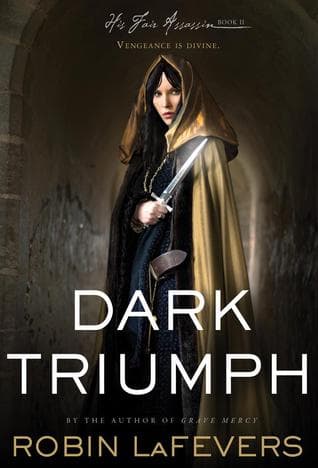
Synopsis
Covers the whole plot, including the ending.
- Difficulty
- Medium
- Pacing
- Variable
- Mood
- Dark, Suspenseful, Intense, Romantic
- Read it if
- You enjoy dark historical fantasy with strong female protagonists, intricate political intrigue, and a touch of gothic romance.
- Skip it if
- You are sensitive to themes of abuse, violence, and psychological torment, or prefer lighter fantasy reads.
Dark Triumph Plot Summary
Covers the whole plot, including the ending.
Return to the Hell of St. Mortain
Sybella, an assassin from the convent of St. Mortain, returns to her childhood home, the dangerous castle of St. Mortain in Brittany. Her mission, given by the abbess, is to find out if her family, especially her father and brother, are loyal to France or secretly helping the English. To avoid suspicion and her family's anger, Sybella pretends to be mad, a role she finds easy to adopt given her traumatic past. Her return immediately puts her back into the stifling atmosphere of her abusive father's court and the unsettling affection of her brother, Beast, who seems to recognize the real Sybella beneath her disguise, making her mission more dangerous.
The Imprisoned Knight
While exploring the castle, Sybella's feigned madness allows her into various parts of the fortress, including the dungeons. There, she finds a prisoner: a French knight named Sir Kaelen, held captive and tortured by her father. Kaelen is gravely injured, but Sybella sees him as a possible ally and a key to understanding her family's political leanings. Despite the risks, she secretly tends to his wounds, bringing him food, water, and basic medical supplies, all while keeping up her act as a deranged girl. This act of mercy starts a connection that challenges her assassin's detachment and her vows to St. Mortain.
Unraveling Family Secrets
As Sybella continues her observations, she finds evidence confirming her father's and brother's betrayal. They are negotiating with the English, planning to betray France and give the strategically important castle of St. Mortain to the enemy. Her father, a ruthless lord, is motivated by personal gain and a deep hatred for the French crown. Beast's reasons are more complex, tied to his disturbing possessiveness over Sybella. This discovery confirms her mission but also increases the danger, as her family's paranoia grows, and any mistake could expose her and cost her life, or Kaelen's.
A Dangerous Alliance
Sybella's continued care for Sir Kaelen slowly earns his trust. Despite his weakened state, Kaelen is sharp and observant, quickly realizing that Sybella's madness is an act and that she is more than she seems. They begin to communicate quietly, sharing information and forming a fragile alliance. Kaelen, a loyal French knight, wants to escape and warn his allies. Sybella needs his knowledge of military movements and connections to complete her mission. Their shared situation and secret interactions begin to forge an unexpected emotional connection between the hardened assassin and the honorable knight, complicating Sybella's detached view of her mission.
The Threat of Beast
Sybella's brother, Beast, is a constant and terrifying threat. He has an unnerving ability to see through her feigned madness, and his 'love' for her is a twisted, controlling obsession rooted in their shared traumatic past. He often seeks her out, his presence a chilling reminder of the abuse she endured. His jealousy and possessiveness grow as he senses a change in Sybella, even if he doesn't fully understand why. Beast's unpredictable temper and deep-seated psychological issues make him a volatile element, constantly risking Sybella's mission and her secret relationship with Kaelen, forcing her to be more cautious and cunning.
Escalating Danger
The situation at St. Mortain worsens with the arrival of English forces, led by a strong general. This signals that her father's treasonous negotiations are almost complete. The castle becomes busy, with English soldiers patrolling, making Sybella's movements more restricted and dangerous. The English presence also means Kaelen's life is in greater danger, as his value as a captive decreases, and his execution becomes a real possibility. Sybella realizes that their chance for escape is closing fast, and she must act before the castle falls completely to the English and they lose their opportunity.
Planning the Escape
Under immense pressure, Sybella begins to plan a daring escape. She carefully scouts the castle's defenses, identifies weaknesses, and calculates risks. Her plan involves freeing Kaelen and creating enough chaos to alert French forces to her family's betrayal. She uses her knowledge of the castle's secret passages and her assassin training to prepare for the breakout. Kaelen, despite his injuries, provides crucial information about English and French military strategies. Their collaboration strengthens their bond, turning a mission of duty into a shared fight for survival and justice, with their lives and the castle's fate at stake.
The Uprising
Recognizing the resentment among her father's mistreated servants and guards, Sybella subtly begins to encourage rebellion. She uses her 'madness' to spread discontent, offer hope, and recruit a small group of allies within the castle walls. These individuals, tired of her father's tyranny, become important in her escape plan, providing diversions, access to keys, and vital information. This leadership shows a different side of Sybella, not just a cold assassin, but someone who can inspire loyalty and fight for justice beyond her immediate mission, empowering those who have suffered under her family's rule.
The Escape and Betrayal
The escape is a blur of violence and chaos. Sybella, with her new allies, creates a large diversion, setting fires and orchestrating a prison break. She fights fiercely, using her assassin skills to kill guards and clear a path for Kaelen, who, though still recovering, fights with renewed strength. They manage to escape the castle, but their flight is noticed. Her father and Beast immediately pursue them, their rage and determination to recapture Sybella and Kaelen making their escape through the Breton landscape a relentless struggle against her own blood.
Confrontation in the Woods
As Sybella and Kaelen flee through the dense woods, Beast and her father's men hunt them. A confrontation happens between Sybella and her brother. Beast, driven by his twisted love, corners Sybella, forcing her to face their shared, traumatic past and his depravity. This is not just a physical fight but an emotional battle, as Sybella must break the last ties to her abusive past. Kaelen, despite his injuries, intervenes to protect Sybella, showing their deepening bond and the shift in Sybella's priorities from pure vengeance to protecting those she cares for.
The Final Stand
The pursuit ends in a brutal final stand. Sybella, Kaelen, and their remaining allies are cornered. Sybella must make a difficult decision about her family. She confronts her father, directly challenging his tyranny and exposing his treason. The battle is fierce, and Sybella, embracing her full identity as a Daughter of Death, fights with ferocity born of training and deep vengeance. She ensures that her family's betrayal is clear, and she makes a choice that breaks her ties with her past, solidifying her path forward and her loyalty to Kaelen and France.
Aftermath and New Beginnings
After the conflict, Sybella and Kaelen, having exposed her family's treason and secured vital information, report to the French court. Their mission is a success, though at great personal cost. Sybella, no longer held by her past, begins to heal and create a new identity beyond just an assassin. Her relationship with Kaelen has deepened into a strong love and partnership, offering her a future she never thought possible. While the shadows of her past may linger, Sybella has found a new purpose and a companion with whom to face the future, embracing life and love despite her vows to Death.
Dark Triumph Characters
Sybella
Protagonist
A Daughter of Death and assassin, haunted by her past.
Sybella is a highly skilled assassin, trained from a young age at the convent of St. Mortain to serve Death. She is fiercely intelligent, cunning, and resilient, capable of both brutal violence and profound empathy. Haunted by a horrific childhood of abuse at the hands of her father and brother, she carries deep emotional scars that manifest as a chilling detachment and a carefully constructed facade of madness. Her mission to expose her family's treason forces her to confront these traumas and re-evaluate her purpose.
Relationships: Sir Kaelen (Captive, ally, lover, and partner); Beast (Abusive brother, obsessive, tormentor); Sybella's Father (Abusive lord, traitor, Sybella's primary tormentor); Abbess (Mentor and leader at the convent)
Sir Kaelen
Love Interest / Supporting Protagonist
A loyal French knight, imprisoned and tortured by Sybella's family.
Sir Kaelen is an honorable, steadfast, and resilient French knight. Despite being severely injured and tortured while imprisoned, he maintains his integrity, courage, and loyalty to France. He is observant and intelligent, quickly seeing beyond Sybella's feigned madness to the fierce, capable woman beneath. His unwavering belief in justice and his gentle strength provide a stark contrast to Sybella's traumatic past, offering her a glimpse of a different kind of life and love. He is a skilled warrior and a strategic thinker.
Relationships: Sybella (Captor (initially), ally, lover, and partner); Beast (Tormentor); Sybella's Father (Captor, enemy)
Beast
Antagonist
Sybella's older brother, a brutal and obsessively possessive tormentor.
Beast, whose real name is not frequently used, is Sybella's older brother and a primary antagonist. He is a deeply disturbed and violent individual, characterized by an obsessive, twisted 'love' for Sybella that stems from their shared traumatic childhood. He is unpredictable, cruel, and possesses an unnerving ability to see through Sybella's facades. His loyalty to his father is secondary to his possessiveness over Sybella, making him a constant, dangerous threat throughout the narrative. He embodies the psychological scars of their family's abuse.
Relationships: Sybella (Sister, object of his obsessive 'love', victim of his abuse); Sybella's Father (Father, co-conspirator in abuse and treason); Sir Kaelen (Enemy, rival for Sybella's attention)
Sybella's Father (Lord of St. Mortain)
Antagonist
The cruel and treacherous lord of St. Mortain, Sybella's abusive father.
The Lord of St. Mortain is Sybella's biological father and the overarching antagonist. He is a brutal, power-hungry, and treacherous lord who rules his castle with an iron fist. He is deeply abusive, both physically and emotionally, and is responsible for much of Sybella's childhood trauma. His primary motivation is personal gain and a desire for power, leading him to conspire with the English against France. He represents the oppressive patriarchal authority and the source of the corruption that Sybella must ultimately overcome.
Relationships: Sybella (Daughter, victim of his abuse, his ultimate betrayer); Beast (Son, co-conspirator in abuse and treason); Sir Kaelen (Enemy, prisoner)
Abbess
Supporting
The enigmatic head of the convent of St. Mortain, Sybella's mentor.
The Abbess is the wise and often enigmatic leader of the convent of St. Mortain. She is a powerful figure, both spiritually and politically, who trains the Daughters of Death and dispatches them on missions. While seemingly detached, she cares deeply for her charges, understanding their unique abilities and burdens. She is a master manipulator, using her knowledge of human nature and political machinations to serve Death and France. She entrusts Sybella with the critical mission, knowing the personal torment it will cause, but also recognizing Sybella's strength.
Relationships: Sybella (Mentor, superior, dispatcher of missions); Other Daughters of Death (Leader, spiritual guide)
Annith
Mentioned
Sybella's fellow Daughter of Death, mentioned through their shared past.
Annith is a fellow Daughter of Death and Sybella's friend from the convent. While not physically present in the main narrative, her presence is felt through Sybella's memories and internal reflections. Annith represents Sybella's connection to her life at the convent and the sisterhood of assassins. Her perspective and loyalty are important to Sybella, serving as a reminder of her vows and her training, and highlighting the contrasts between the convent's world and the outside world.
Relationships: Sybella (Friend, fellow Daughter of Death)
The English General
Mentioned / Supporting Antagonist
The English commander negotiating with Sybella's father.
The English General is the formidable military leader who arrives at St. Mortain to finalize the treasonous alliance with Sybella's father. He represents the external threat to France and the immediate danger to Kaelen. He is a shrewd and experienced military man, adding to the pressure and urgency of Sybella's mission. His presence signifies the imminent betrayal of the castle and the escalation of the conflict.
Relationships: Sybella's Father (Ally in treason); Sir Kaelen (Enemy)
Dark Triumph Themes
Healing from Trauma and Abuse
Sybella's journey is about confronting and overcoming the trauma of her childhood abuse. Her feigned madness is a coping mechanism, but her interactions with Kaelen and her mission force her to process her past. The story explores how abuse shapes identity, the difficulty of breaking free from its psychological hold, and the power of human connection in healing. Her choice to protect Kaelen and seek a future beyond vengeance shows her growth beyond victimhood, as seen when she confronts Beast in the woods, severing his control.
“I am not mad. I am merely broken. And I have learned to use my brokenness as a weapon.”
Identity and Purpose
The novel explores Sybella's struggle with her identity as a Daughter of Death versus her growing sense of self as a woman capable of love and independent choice. Raised to be an instrument of Mortain, her purpose is clear: vengeance and duty. However, her connection with Kaelen challenges this focus, making her question whether her purpose can extend beyond death. This is clear in her internal conflict when she wants to save Kaelen for reasons beyond her mission, desiring a future with him.
“I am a Daughter of Death. I have no name, no past, no future. I am merely an instrument.”
Love as a Redemptive Force
Love, especially the romantic bond between Sybella and Kaelen, acts as a redemptive force. For Sybella, who has known only twisted love (from Beast) and the detached 'love' of Death, Kaelen's genuine affection and respect offer a path to healing and hope. Their relationship helps her rediscover her humanity, trust, and vulnerability. It contrasts with the darkness of her past and motivates her to fight not just for duty, but for a shared future, as seen in her fierce protection of him during their escape.
“His touch was a balm on wounds I hadn't realized were still bleeding.”
Duty vs. Desire
Sybella's main conflict involves her sacred duty to the convent and Mortain, and her personal desires for freedom, safety, and love with Kaelen. Her mission requires her to be ruthless and detached, but her growing feelings for Kaelen complicate this, forcing her to make hard choices. This theme is explored as she weighs exposing her family's treason against the impulse to simply escape with Kaelen, ultimately finding a way to fulfill both, but on her own terms. Her actions show that true strength means integrating, not sacrificing, one's desires.
“My vows were to Death, but my heart, it seemed, had other plans.”
The Nature of Madness
Sybella's feigned madness serves as a protective shield and a tool for manipulation, but it also blurs with her real psychological scars. The novel explores how trauma can appear as 'madness' and how society sees and treats those deemed insane. Sybella's ability to convincingly portray madness highlights her control, yet the ease with which she slips into it also shows the depth of her past suffering. Her eventual shedding of the 'madwoman' persona signals her reclaiming her sanity and agency.
“Madness, I was learning, was a cloak that could hide a multitude of sins—or a multitude of truths.”
Plot Devices & Literary Techniques
Feigned Madness
Sybella's strategic adoption of insanity as a disguise and coping mechanism.
Sybella adopts the persona of a madwoman upon her return to St. Mortain. This device serves multiple purposes: it protects her from immediate suspicion and allows her to move freely and observe without being taken seriously by her family. It also acts as a psychological shield, allowing her to distance herself from the traumatic memories of her past within the castle. The feigned madness is a key element in her deception, enabling her to gather intelligence and eventually orchestrate her escape, while simultaneously exploring the fine line between sanity and the psychological impact of trauma.
The Dungeon
A confined space representing captivity, suffering, and the catalyst for connection.
The dungeon where Sir Kaelen is imprisoned is a crucial plot device. It symbolizes the captivity and suffering endured by both Kaelen and, metaphorically, Sybella herself, trapped by her past. It is within this dark, confined space that the intimate and transformative connection between Sybella and Kaelen begins. The dungeon facilitates their secret communication, the tender care Sybella provides, and the forging of their alliance, making it the crucible for their developing relationship and the heart of their shared mission. Its oppressive nature underscores the urgency of their escape.
Secret Passages and Hidden Rooms
Architectural features used for clandestine movement and information gathering.
The castle of St. Mortain is riddled with secret passages and hidden rooms, which Sybella, due to her childhood knowledge and assassin training, utilizes extensively. These architectural devices allow her to move unseen, eavesdrop on conversations, and access restricted areas, crucial for gathering intelligence about her family's treason. They also provide escape routes and places for clandestine meetings with Kaelen and her nascent allies. These passages symbolize the hidden truths and deceptions within the castle and Sybella's own life, allowing her to navigate the dangerous environment and execute her plans.
The Convent's Vows (to Mortain)
A binding oath that dictates purpose and creates internal conflict.
The vows taken by the Daughters of Death to serve Mortain, the god of death, are a powerful plot device that define Sybella's initial purpose and create her central internal conflict. These vows demand absolute obedience, detachment, and a life dedicated to death, shaping her identity as an assassin. Her mission is a direct consequence of these vows. However, her growing feelings for Kaelen and her desire for a different future clash directly with these commitments, forcing her to confront the limitations and implications of her oath, leading to a profound re-evaluation of her life's purpose.
Dark Triumph Quotes
“Death is not the ending, but the beginning.”
“Sometimes, the only way to save a life is to take one.”
“Love is a dangerous weapon, more potent than any blade.”
“The past is a serpent, ever coiling around the present.”
“To truly live, one must first confront their own darkness.”
“Loyalty is a cage, but sometimes it is a cage that keeps us safe.”
“The greatest battles are not fought with swords, but within the heart.”
“Even in the darkest of places, a flicker of hope can ignite a revolution.”
“Family is not always blood. It is who you choose to fight for.”
“Fear is a companion, but it need not be a master.”
“The truth is a sharp edge, capable of both healing and harm.”
“Sometimes, the most powerful act of defiance is to choose joy.”
“To forgive is to release the prisoner, only to find the prisoner was you.”
“The world is a tapestry woven with threads of good and evil, and we are but a single stitch.”
“Every choice carves a new path, and every path leads to destiny.”
Quiz
10 questions on the plot and the characters. Each answer comes with a short explanation.
Question 1
What is the primary reason Sybella is returned to her family's home from the convent?
- To serve as a handmaiden to a visiting noblewoman.
- To assassinate her father and claim her inheritance.
- To marry a powerful lord and form a political alliance.
- To spy on her family and gather information for the convent.
Show answer
D. To spy on her family and gather information for the convent. Sybella is sent back to her family's home by the convent as an assassin, not to marry or for simple handmaiden duties, but to spy and gather intelligence on her family's activities.
Question 2
Which specific skill or 'gift' does Sybella possess that makes her a valuable asset to the convent of Saint Mortain?
- The ability to heal any wound with a touch.
- The power to manipulate shadows and disappear unseen.
- An innate connection to death and the ability to find and deliver it.
- Prophetic visions that foretell future events.
Show answer
C. An innate connection to death and the ability to find and deliver it. Sybella is a Daughter of Death, trained by the convent, and her unique 'gift' is her strong connection to death, allowing her to sense and carry out the will of Mortain.
Question 3
Who is the unexpected ally Sybella discovers imprisoned in her family's dungeons?
- Her long-lost mother, presumed dead.
- A knight of the French court, imprisoned by her father.
- A former novice from the convent, seeking refuge.
- Her abusive brother, secretly plotting against their father.
Show answer
B. A knight of the French court, imprisoned by her father. Sybella discovers the French knight, Beast, imprisoned in her family's dungeons, a discovery that significantly alters her mission and personal journey.
Question 4
What is the primary internal conflict Sybella faces throughout the novel regarding her mission from the convent?
- Her desire to abandon her faith versus her loyalty to the convent.
- Her love for her family versus her duty to Mortain to destroy them.
- Her yearning for a normal life versus her identity as an assassin.
- Her fear of failure versus her overwhelming confidence in her skills.
Show answer
C. Her yearning for a normal life versus her identity as an assassin. Sybella struggles with the person she has become – an assassin for Mortain – and the yearning for a life that is not defined by death and violence, especially as she develops feelings for Beast.
Question 5
What is the true nature of Sybella's brother's 'love' that is described as 'monstrous' in the synopsis?
- He is overly protective, preventing her from leaving the castle.
- He has an incestuous obsession with her, leading to abuse.
- He constantly tries to sabotage her missions out of jealousy.
- He forces her into dangerous situations for his own entertainment.
Show answer
B. He has an incestuous obsession with her, leading to abuse. Sybella's brother's 'love' is monstrous because it is an incestuous and abusive obsession that has deeply traumatized her, contributing to her fractured psyche.
Question 6
How does Sybella initially view the imprisoned knight, Beast, and how does this perception evolve?
- She sees him as a potential victim for Mortain but later views him as a rival.
- She sees him as a weak captive to be ignored, but he becomes her primary target.
- She sees him as a tool for her vengeance, but he gradually becomes a source of connection and affection.
- She sees him as a dangerous enemy, but he turns out to be a loyal servant of her father.
Show answer
C. She sees him as a tool for her vengeance, but he gradually becomes a source of connection and affection. Sybella initially considers Beast an asset or tool for her mission, but through their interactions, he becomes a significant emotional connection and a potential reason for her to live beyond vengeance.
Question 7
What specific historical context or conflict forms the backdrop for the political intrigue in 'Dark Triumph'?
- The English Civil War.
- The Crusades.
- The Hundred Years' War between England and France.
- The War of the Roses.
Show answer
C. The Hundred Years' War between England and France. The series is set against the historical backdrop of the Hundred Years' War, with the convent of Saint Mortain often playing a role in the political machinations between England and France.
Question 8
How does Sybella's fractured mental state, stemming from her past trauma, manifest in her daily life and interactions?
- She experiences frequent hallucinations and hears voices.
- She struggles with multiple personalities, shifting between them unconsciously.
- She suffers from extreme amnesia, forgetting her past entirely.
- She exhibits uncontrollable fits of rage and violence towards everyone.
Show answer
B. She struggles with multiple personalities, shifting between them unconsciously. Sybella's severe trauma manifests as a fragmented sense of self, leading her to have multiple 'selves' or personalities that she struggles to reconcile, particularly the 'monster' within.
Question 9
What is the ultimate goal of Sybella's father and brother, which the convent seeks to thwart through her mission?
- To seize control of the convent's lands and wealth.
- To align with the English and betray the Duchy of Brittany to them.
- To establish a new religious order independent of the Catholic Church.
- To usurp the Duke of Brittany and claim his title.
Show answer
B. To align with the English and betray the Duchy of Brittany to them. Sybella's mission is to uncover and prevent her family's treacherous plot to align with the English forces, which would destabilize the region and betray Brittany.
Question 10
The phrase 'will a daughter of Death find something other than vengeance to live for?' alludes to what major thematic shift for Sybella?
- Her decision to abandon her assassin training for a life of quiet contemplation.
- Her transition from an instrument of pure vengeance to someone capable of love and self-acceptance.
- Her realization that she prefers political intrigue over direct combat.
- Her discovery that her true calling is to lead the convent, not merely serve it.
Show answer
B. Her transition from an instrument of pure vengeance to someone capable of love and self-acceptance. This phrase encapsulates Sybella's journey from being solely defined by her role as an assassin seeking vengeance for her past, to finding genuine connection and love with Beast, which offers her a new reason to live.
Dark Triumph FAQ
What is Sybella's primary mission when she is sent back to her family?
Sybella is sent back to her family's formidable, isolated castle by the convent of St. Mortain to uncover a potential plot against Anne of Brittany. She must use her skills as an assassin, a Daughter of Death, to identify and neutralize any threats emanating from her father's domain, despite the personal trauma awaiting her there.
Who is Beast, and what is his initial relationship with Sybella?
Beast is an English knight, Sir Kaelen, imprisoned in Sybella's family dungeons. Initially, he is a captive and a potential pawn in her family's schemes. Sybella's initial interactions with him are driven by her need to gather information and, at times, to manipulate him, though she quickly finds herself drawn to his resilience and kindness.
How does Sybella's family dynamic contribute to her psychological state?
Sybella's family is deeply dysfunctional; her father is brutally abusive, and her brother, Pierre, exhibits a possessive and incestuous 'love' that is equally terrifying. This environment has instilled profound trauma, a sense of worthlessness, and a desperate need for control, often manifesting in self-harm and a struggle to trust genuine affection.
What role does the convent of St. Mortain play in Sybella's life?
The convent of St. Mortain serves as both a sanctuary and a training ground for Sybella. It is where she was rescued from her family and taught the deadly skills of a Daughter of Death. It gives her purpose and a sense of belonging, but also demands dangerous missions that force her to confront her past.
What is the significance of the 'red string' in Sybella's memories?
The 'red string' symbolizes Sybella's fragmented and repressed memories of her past trauma, particularly the abuse she suffered. It represents the thin, fragile threads of her sanity and the way she tries to compartmentalize or ignore painful events, often leading to disassociation and a struggle to piece together her own history.
How does Sybella's skill with poisons and blades contrast with her internal vulnerability?
Sybella is a highly skilled assassin, capable of precise and deadly acts with poisons and blades, reflecting her external strength and training. However, internally, she is deeply vulnerable, haunted by past trauma, prone to self-harm, and struggles with emotional intimacy, creating a stark contrast between her lethal exterior and her fragile inner world.
Are there any subtle indications of Beast's true identity or purpose early in the narrative?
Subtle hints about Beast's noble background and strategic importance are woven into his interactions; his educated speech, his refusal to break under torture, and his consistent honor despite his circumstances all suggest he is more than just a common soldier. His knowledge of courtly matters also points to a higher station.
What is the underlying motivation behind Sybella's self-harm?
Sybella's self-harm is a coping mechanism for her profound emotional pain and a way to exert control when she feels powerless. It allows her to externalize internal anguish and provides a perverse sense of agency in a life where she has been repeatedly victimized and stripped of control.
How does Sybella's perception of love evolve throughout the story?
Sybella initially views love through the distorted lenses of her family: her father's brutal 'love' and Pierre's monstrous 'love.' She associates it with pain, control, and violation. Through Beast's unconditional affection and respect, her perception gradually shifts to understand love as something pure, healing, and empowering, rather than destructive.
In what ways does Sybella display symptoms of PTSD?
Sybella exhibits several PTSD symptoms, including flashbacks, disassociation (her 'red string' memories), hypervigilance, and difficulty forming trusting relationships. Her intense fear response to her father and brother, coupled with her emotional numbing and self-destructive behaviors, are clear indicators of her psychological trauma.
How does Beast's unwavering kindness affect Sybella's healing process?
Beast's unwavering kindness, patience, and genuine affection are crucial to Sybella's healing. He provides a safe space for her to be vulnerable, challenges her distorted self-perception, and consistently offers unconditional acceptance, which allows her to begin trusting, processing her trauma, and believing in her own worth.
Is Sybella's ultimate decision to embrace her role as a Daughter of Death a triumph or a tragedy?
Sybella's ultimate embrace of her role as a Daughter of Death is presented as a complex triumph. While it involves violence, it is a choice made on her own terms, reclaiming agency from her past. It allows her to protect those she loves and fight for justice, transforming her trauma into a powerful, self-directed purpose.
How does the author use the setting of the isolated castle to enhance the themes of entrapment and psychological horror?
The isolated castle setting intensifies themes of entrapment by physically limiting Sybella's escape and amplifying her feeling of being caged by her past. Its desolate nature mirrors her internal desolation, while its dungeons and hidden passages contribute to the psychological horror, making escape seem impossible and amplifying her family's monstrous control.
To what extent is Sybella's 'madness' a product of her environment versus an inherent trait?
Sybella's 'madness' is overwhelmingly a product of her environment. Her early life of extreme abuse and trauma, coupled with her family's monstrous actions, pushed her to the brink of sanity. While she possesses an inherent resilience, her psychological struggles are direct consequences of the horrific circumstances she endured, not an inherent flaw.
What is the symbolic meaning of Sybella's frequent interactions with birds?
Sybella's interactions with birds symbolize her longing for freedom and escape from her oppressive life. Birds represent unburdened flight and wildness, echoing her own desire to break free from her metaphorical cage. They also symbolize the souls of the dead, connecting to her role as a Daughter of Death.
How does the historical context of Brittany's struggle for independence influence Sybella's personal journey?
The historical context of Brittany's struggle for independence provides a grander backdrop to Sybella's personal fight for freedom and agency. Just as Brittany seeks to escape French domination, Sybella seeks to escape her family's control and reclaim her own identity. Her mission serves the larger political cause, intertwining personal and national liberation.
Does Sybella truly find something other than vengeance to live for, or does vengeance remain a strong motivator?
While vengeance is a powerful initial motivator, Sybella ultimately finds something more profound to live for: love, self-acceptance, and the protection of innocent lives. Her connection with Beast, her growing sense of self-worth, and her commitment to the convent's cause shift her focus from purely personal retribution to a broader sense of justice and belonging.
About the author

Robin LaFevers is an author known for her works of fiction, particularly in the young adult genre. One of her notable books is "Dark Triumph," which is part of the His Fair Assassin series, blending historical elements with themes of adventure and intrigue. LaFevers's writing often features strong female protagonists and rich historical settings.
Similar books
- A Court of Thorns and Roses
Sarah J. Maas
4.2 (476k) average on GoodreadsFantasyFeatures a strong female lead navigating a dark, magical world with a dangerous romance.
- The Cruel Prince
Holly Black
4.1 (216k) average on GoodreadsFantasyFocuses on political intrigue, dangerous fae courts, and a protagonist caught between worlds.
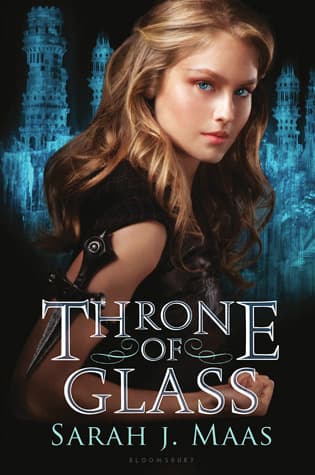
- Throne of Glass
Sarah J. Maas
4.2 (596k) average on GoodreadsFantasyWhile both "Dark Triumph" and "Throne of Glass" feature trained female assassins in fantastical historical settings with elements of romance and political intrigue, LaFevers' work tends to be more historically grounded and less overtly high fantasy. "Dark Triumph" offers a more nuanced and psychologically driven exploration of trauma and agency, whereas "Throne of Glass" often prioritizes fast-paced action, epic magical battles, and a broader, more expansive fantasy world, with its romance sometimes taking a more central and less integrated role in the protagonist's personal growth.
- An Ember in the Ashes
Sabaa Tahir
4.3 (182k) average on GoodreadsFantasyBoth novels feature protagonists navigating oppressive regimes and dangerous missions, with strong elements of romance and rebellion. However, "Dark Triumph" is more firmly rooted in a specific historical period (medieval Brittany) with subtle supernatural elements, while "An Ember in the Ashes" creates a fully imagined, Roman Empire-inspired fantasy world. LaFevers' narrative focuses intensely on Sybella's internal world and healing from past trauma, giving it a more intimate psychological depth. Tahir's series, while also exploring trauma, tends to feature a broader cast of characters and a more direct, fast-moving plot focused on large-scale resistance and military conflict.
- Harry Potter and the Sorcerer's Stone
J.K. Rowling
4.5 (7M) average on GoodreadsFantasyRescued from a miserable life under the stairs, an orphaned boy discovers he's a wizard destined for a magical school, where he uncovers a dangerous secret tied to the dark wizard who murdered his parents.
- The Hunger Games
Suzanne Collins
4.3 (6.4M) average on GoodreadsFantasyIn a future where children fight to the death on live television, Katniss Everdeen volunteers for the arena, turning a death sentence into a fight for survival and a spark of rebellion.





Enjoyed the summary?
A summary gives you the shape of the book. The book itself has the detail, the examples and the voice.
Find Dark Triumph on AmazonAs an Amazon Associate, BookBrief earns from qualifying purchases. How we're funded