

Synopsis
Covers the whole plot, including the ending.
- Difficulty
- Medium
- Pacing
- Fast
- Mood
- Dark, Suspenseful, Disturbing, Morally Complex
- Read it if
- You enjoy dark, morally ambiguous protagonists, psychological thrillers, and a unique take on the serial killer trope.
- Skip it if
- You are sensitive to graphic violence, dark themes, or don't appreciate a villain-as-hero narrative.
Darkly Dreaming Dexter Plot Summary
Covers the whole plot, including the ending.
A Routine Night and a Disturbing Discovery
Dexter Morgan, a blood spatter analyst for the Miami Metro Police Department, lives an ordered life, secretly killing other murderers who have escaped justice. His adoptive father, Harry, taught him 'The Code of Harry' to control his urges. One night, after getting rid of a victim, Dexter is called to a crime scene unlike any he has seen: a young prostitute has been expertly drained of blood and dismembered, with each piece carefully wrapped and placed in a cooler. The precision of the kill interests and disturbs Dexter, as it reflects his own hidden nature. This new killer, called the 'Ice Truck Killer' by the media, becomes an immediate focus for Dexter, especially because the methods feel familiar to his own dark impulses. He wonders if he is somehow involved or if there is a connection he is missing.
The Ice Truck Killer's Escalation and Personal Taunts
As the Ice Truck Killer kills more people, each victim is found completely drained of blood and dismembered. The killer starts leaving personal and cryptic clues, all referencing childhood memories only Dexter would recognize. These clues, like a perfectly preserved human hand with a familiar ring or a Barbie doll with its limbs removed and carefully wrapped, start to break down Dexter's emotional defenses. He gets involved in a strange game where the killer seems to know intimate details about his past, details Dexter himself has suppressed. This direct communication, meant only for him, makes Dexter realize this is not just a random killer; it is someone who knows him well and is trying to provoke him.
Debra's Romantic Entanglement and Dexter's Investigation
Dexter's adoptive sister, Debra, a vice cop who wants to prove herself in homicide, starts a relationship with Sergeant Doakes, which amuses and concerns Dexter. Meanwhile, Dexter continues his double life, investigating the Ice Truck Killer by day and hunting his own victims by night. He notices the killer's victims are all prostitutes, and the careful nature of the kills suggests a professional or someone with surgical knowledge. Dexter finds himself in a strange position, both a hunter and a potential target, as the killer's taunts become more direct. He begins to suspect the killer is not just copying him, but is trying to communicate something important about their shared nature, forcing Dexter to face parts of his own past he has long hidden.
The Revelation of Dexter's Childhood Trauma
The Ice Truck Killer's clues become specific to Dexter's repressed memories. One disturbing scene involves staged murders in an abandoned ice cream truck, with blood and body parts, designed to recreate a traumatic event from Dexter's early childhood. This setup triggers fragmented, horrifying flashbacks in Dexter's mind: a shipping container, a pool of blood, a woman screaming, and a child crying. He begins to understand the truth his adoptive father, Harry, had always kept from him. The killer is not just copying him; he is reminding Dexter of a shared, gruesome origin, suggesting they both saw the same horror as children, connecting them in a way Dexter never imagined.
The Killer's Identity is Revealed: Brian Moser
The final, most shocking revelation comes when the Ice Truck Killer kidnaps Debra. Dexter, following clues left by the killer, finds them at an abandoned meat packing plant. There, he confronts the killer, who reveals himself to be Brian Moser, Dexter's biological older brother. Brian explains that they were both found in a shipping container, soaked in their mother's blood after she was murdered by drug dealers. Harry adopted Dexter, but Brian was sent to an orphanage, leading to a lifetime of psychological pain and a shared trauma. Brian, like Dexter, developed a desire for blood and killing, and arranged the murders to help Dexter 'remember' their past and embrace his true nature as a killer, hoping to partner with him.
The Ultimate Choice: Debra or Brian
Brian, the Ice Truck Killer, has Debra strapped to a table. He wants Dexter to help murder her as a bonding ritual, a way to fully embrace their shared dark heritage. Dexter is torn between his loyalty to Harry's Code, which protects innocents like Debra, and the strange connection he feels to Brian, his only biological family. In this moment, Dexter understands Brian's desire for a sibling who shares his 'Dark Passenger.' However, the thought of harming Debra, who represents his last bit of humanity and Harry's influence, is too much. He realizes he cannot fully abandon the life Harry built for him, even for his brother. This forces a difficult decision upon Dexter, one that will define his moral compass.
The Tragic Resolution
Faced with the choice, Dexter chooses Debra. He kills Brian Moser, his biological brother, to save his adoptive sister. This act is a strong reaffirmation of Harry's Code and Dexter's commitment to protecting the innocent, even if it means sacrificing his only blood relative. He stages Brian's death to look like a suicide, making sure no one suspects his involvement. The emotional impact on Dexter is huge; he has lost a part of himself, the only other person who truly understood his dark urges. While he has saved Debra, the experience leaves him feeling isolated and with a new understanding of his own monstrous nature. The events strengthen his resolve to continue living by Harry's Code, even as the memory of Brian stays with him.
Aftermath and Lingering Questions
Afterward, Debra is traumatized but alive, unaware of Dexter's true role in Brian's death. She continues her career in homicide, now with a new view on human darkness. Dexter returns to his life as a blood spatter analyst, keeping up his normal facade. However, the meeting with Brian has changed him. He now carries the weight of knowing his true origins and the sacrifice he made. Sergeant Doakes remains suspicious of Dexter, unable to shake the feeling that there is something unsettling about him. Dexter's world, though outwardly normal, is changed forever, filled with the echoes of his brother's twisted love and the constant struggle to control his Dark Passenger while following the Code that connects him to humanity.
Principal Figures
Dexter Morgan
Protagonist
A serial killer who works as a blood spatter analyst for the Miami police, adhering to a strict moral code.
Dexter is a complex, emotionally detached individual who functions as a high-functioning sociopath. He feels no genuine human emotions but meticulously mimics them to blend into society. His 'Dark Passenger' is an insatiable urge to kill, which he channels by exclusively targeting other murderers who have evaded justice, following 'The Code of Harry' his adoptive father instilled in him. He is intelligent, methodical, and possesses a dark, sardonic wit. The arrival of the Ice Truck Killer forces Dexter to confront his repressed past and the true nature of his origins, challenging his carefully constructed identity.
Relationships: Harry Morgan (Adoptive father and creator of 'The Code of Harry'); Debra Morgan (Adoptive sister, whom he genuinely cares for in his own way); Brian Moser (Biological brother and the Ice Truck Killer); Rita Bennett (Girlfriend, part of his 'normal' facade); Sergeant Doakes (Colleague and suspicious adversary)
Debra Morgan
Supporting
Dexter's foul-mouthed, ambitious adoptive sister, a detective in the Miami police.
Debra is a driven and ambitious police officer, initially in Vice, desperate to prove herself in Homicide. She is loud, prone to swearing, and often insecure, constantly seeking her father's approval (even posthumously) and her brother's quiet validation. Despite her tough exterior, she is vulnerable and cares deeply for Dexter, often intuiting his emotional distance but attributing it to his unique personality. Her abduction by the Ice Truck Killer puts her directly in harm's way, forcing Dexter to make a pivotal choice that shapes her survival and their relationship.
Relationships: Dexter Morgan (Adoptive brother); Harry Morgan (Adoptive father); Sergeant Doakes (Superior officer and brief romantic interest)
Harry Morgan
Mentioned/Flashback
Dexter's deceased adoptive father, a police detective who created 'The Code of Harry'.
Harry Morgan is a legendary Miami police detective, deceased before the events of the book. He discovered young Dexter's psychopathic tendencies and, rather than despair, decided to channel them. He taught Dexter 'The Code of Harry,' a strict set of rules dictating that Dexter must only kill other murderers who have escaped justice, and never get caught. Harry's presence is felt throughout the narrative through Dexter's internal monologues and flashbacks, as Dexter constantly references and adheres to his father's teachings. Harry is Dexter's moral compass, albeit a dark one, and the architect of Dexter's unique existence.
Relationships: Dexter Morgan (Adoptive son, whom he guided and 'trained'); Debra Morgan (Adoptive daughter)
Brian Moser (The Ice Truck Killer)
Antagonist
Dexter's biological brother and a serial killer who mimics Dexter's style, seeking to reconnect with him.
Brian Moser is the primary antagonist, a highly intelligent and disturbed individual who operates under the moniker 'The Ice Truck Killer.' He shares Dexter's traumatic origin – both witnessed their mother's brutal murder as children. Unlike Dexter, who was adopted by Harry and given a 'code,' Brian was sent to an orphanage and suffered severe psychological damage, developing into a sadistic killer. He meticulously orchestrates his crimes to mirror Dexter's hidden urges and leaves personalized clues, all designed to force Dexter to remember their shared past and embrace their 'true' nature as a pair of serial killer brothers. His ultimate goal is to form a twisted familial bond with Dexter.
Relationships: Dexter Morgan (Biological brother and intended partner in crime)
Sergeant James Doakes
Supporting
A suspicious and observant police sergeant who instinctively distrusts Dexter.
Sergeant Doakes is a former special forces soldier turned police sergeant. He is gruff, intimidating, and possesses a keen instinct for danger. From the beginning, Doakes harbors a deep, unshakeable suspicion of Dexter, sensing an unnatural emptiness or darkness beneath Dexter's polite facade. He frequently glares at Dexter and makes subtle, cutting remarks, acting as a constant, low-level threat to Dexter's carefully constructed normalcy. Doakes is a persistent presence, often appearing at inopportune moments for Dexter, and his distrust serves as a constant reminder of the precariousness of Dexter's double life.
Relationships: Dexter Morgan (Colleague and suspicious observer); Debra Morgan (Superior officer and brief romantic interest)
Rita Bennett
Supporting
Dexter's girlfriend, a kind but fragile woman recovering from an abusive marriage.
Rita is Dexter's girlfriend, a gentle and somewhat fragile woman with two children, Astor and Cody. She is a survivor of severe domestic abuse from her ex-husband, Paul, which has left her wary of intimacy. Dexter maintains the relationship with Rita as part of his 'normal' human facade; he appreciates her lack of sexual expectations and her undemanding nature, which allows him to maintain his emotional distance. She represents a semblance of normalcy and domesticity in Dexter's otherwise dark life, and her children often elicit an unexpected, almost paternal, protectiveness from him, hinting at the potential for genuine human connection he denies having.
Relationships: Dexter Morgan (Girlfriend); Astor Bennett (Daughter); Cody Bennett (Son)
Angel Batista
Supporting
A friendly and somewhat naive detective in the Miami Metro Police Department.
Angel Batista is a detective in Homicide, a colleague and friend to Dexter (or at least as much of a friend as Dexter can have). He is generally good-natured, empathetic, and somewhat romantic, often offering Dexter advice on relationships or interpreting his strange behavior in benign ways. Batista is genuinely fond of Dexter and provides a contrast to Doakes's suspicion. He is a competent detective but lacks the darker insights that Dexter possesses, often relying on Dexter's forensic expertise without questioning his peculiar observations. He is a steady, amiable presence in the police department.
Relationships: Dexter Morgan (Colleague and friend); Debra Morgan (Colleague)
Lieutenant LaGuerta
Supporting
A flamboyant and often self-serving lieutenant in the Miami Metro Police Department.
Lieutenant Maria LaGuerta is the head of Homicide. She is ambitious, often more concerned with her public image and career advancement than with solving cases. She has a complicated relationship with Debra, often undermining her or taking credit for her work. LaGuerta is portrayed as somewhat superficial and flirtatious, particularly with male colleagues, including a brief, unreciprocated interest in Dexter (which Dexter finds repellent). Her leadership style often creates tension within the department, and she serves as a bureaucratic obstacle or minor annoyance for the more dedicated detectives.
Relationships: Dexter Morgan (Superior officer); Debra Morgan (Superior officer, often antagonistic); Angel Batista (Colleague)
Themes & Insights
Identity and Self-Discovery
Dexter's main struggle is with his identity: is he a monster, a human pretending to be a monster, or something else? The Ice Truck Killer, his biological brother Brian, makes Dexter face his repressed childhood trauma and the shared origins of their 'Dark Passengers.' This confrontation makes Dexter question his existence and the 'Code of Harry' he lives by. He ultimately chooses the identity Harry built for him over the one offered by his biological family. He learns that his identity comes from choice and upbringing, not just genetics.
“I am a very neat monster.”
The Nature of Evil
The novel explores different types of evil. Dexter thinks he is a monster, yet he only kills other murderers, following a twisted moral code. The Ice Truck Killer, Brian, shows a more chaotic and sadistic evil, driven by revenge and a desire to corrupt. The book looks at where evil comes from, suggesting that trauma can make people killers, but also asks if some are simply 'born' without a conscience. It questions if a 'good' serial killer can exist, and what makes Dexter's justice different from pure villainy.
“People fake a lot of things, but they never fake an orgasm or a sneeze or a death.”
Family and Belonging
Dexter, an orphan with no emotional capacity, wants to belong, even if he cannot express it. Harry and Debra give him an adoptive family, offering him a sense of normalcy and a 'code' to live by. Brian, his biological brother, makes Dexter choose between the family he created (and was created for him) and the family he was born into, united by shared trauma and dark urges. Dexter's choice to protect Debra over Brian shows his deep, though unacknowledged, loyalty to his adoptive family and Harry's values.
“I don't have feelings. But if I did, I would feel… something.”
The Mask of Normalcy
Dexter carefully creates and maintains a normal appearance to fit into society. His job, his relationship with Rita, and his interactions with colleagues are all rehearsed performances meant to hide his true nature as a serial killer. The theme explores the societal pressure to conform and how far people will go to hide who they really are. The Ice Truck Killer's actions threaten to break Dexter's mask, forcing him to face how fragile his constructed life is and how much effort it takes to maintain it in a world that would condemn him.
“All I know is that I have a vague, unpleasant feeling when I think of her.”
Plot Devices & Literary Techniques
The Code of Harry
A set of rules guiding Dexter's killings, instilled by his adoptive father.
The Code of Harry is the central ethical framework for Dexter's vigilantism. It dictates that Dexter must only kill other serial killers or heinous murderers who have escaped legal justice, and most importantly, he must never get caught. This device provides Dexter with a twisted moral compass, distinguishing him from other serial killers and creating a sense of 'justice' in his actions. It also serves as a constant internal monologue for Dexter, influencing his decisions and providing structure to his otherwise chaotic urges, allowing him to function within society while indulging his 'Dark Passenger.'
The Dark Passenger
Dexter's internal manifestation of his homicidal urges.
The Dark Passenger is Dexter's metaphorical representation of his insatiable urge to kill. It is a distinct, almost separate entity within him that drives his actions and provides a rationale for his lack of conventional emotions. This device externalizes Dexter's psychopathy, allowing him to perceive his murderous impulses as something beyond his full control, an inherent part of his being that demands satisfaction. It's a key to understanding his internal world and his constant battle to channel, rather than suppress, his darkest nature according to Harry's Code.
Repressed Childhood Trauma
The shared, forgotten origin of Dexter and Brian's psychopathy.
The repressed childhood trauma, gradually revealed through the Ice Truck Killer's clues, is the pivotal plot device that explains Dexter's (and Brian's) origins. It refers to the event where both young brothers witnessed their mother's brutal murder in a shipping container, leaving them soaked in her blood. This trauma is presented as the catalyst for their psychopathy, a shared wound that shaped them into killers. Its slow reveal builds suspense and provides the ultimate motivation for Brian's actions, aiming to 'awaken' Dexter to their shared past and true nature.
The Ice Truck Killer's Clues
Cryptic and personal messages left by the killer specifically for Dexter.
The Ice Truck Killer's clues are a series of meticulously crafted and increasingly personal messages left at crime scenes, designed to communicate directly with Dexter. These range from perfectly preserved body parts to staged tableaux recreating elements of Dexter's repressed past. This device serves multiple functions: it drives the plot forward, heightens the mystery, and acts as a psychological weapon against Dexter. The clues are not meant for the police; they are a direct, taunting form of communication between two serial killers, hinting at their shared history and forcing Dexter to confront his own forgotten memories and the identity of his antagonist.
Darkly Dreaming Dexter Quotes
“I'm a very neat monster.”
“There was no one like me, except for me. And that was a lonely thought.”
“I'm not a monster. I'm just a man who kills monsters.”
“Blood. So much blood. And I knew, with a certainty that was both chilling and comforting, that I was home.”
“I don't have good days or bad days. I have days, and then I have other days.”
“People are so predictable. They want to believe in something, anything, even if it makes no sense.”
“The world is full of monsters. And some of them are human.”
“My brain hummed with the quiet satisfaction of a job well done.”
“I often think of my life as a carefully constructed shell, designed to keep the real me hidden.”
“I am not a killer. I am a clean-up man.”
“The only thing that ever really interests me is the kill.”
“Most people are so busy trying to be good that they don't even notice how bad they are.”
“Sometimes I wonder if I'm not the hero of my own story.”
“I don't play well with others. Unless 'others' are dead.”
Quiz
10 questions on the plot and the characters. Each answer comes with a short explanation.
Question 1
What is Dexter Morgan's profession?
- Forensic psychologist
- Homicide detective
- Blood splatter analyst for Miami PD
- Medical examiner
Show answer
C. Blood splatter analyst for Miami PD Dexter works for the Miami Police Department as a blood splatter expert, which gives him access to crime scenes and potential victims.
Question 2
What is Dexter's 'one golden rule' for choosing his victims?
- He only kills people who have wronged him personally.
- He only kills other serial killers.
- He only kills people who are proven to be 'bad' and deserving.
- He only kills people who have escaped justice through legal loopholes.
Show answer
C. He only kills people who are proven to be 'bad' and deserving. Dexter's internal code, taught by his adoptive father Harry, dictates that he only kills other murderers or truly evil individuals who have eluded the justice system.
Question 3
What unique reaction does Dexter have when a series of brutal murders similar to his own style begin occurring in Miami?
- He immediately suspects his adoptive sister, Debra.
- He feels both flattered by the imitation and frightened by the perpetrator.
- He is solely focused on solving the case to prevent further killings.
- He assumes the new killer is trying to frame him.
Show answer
B. He feels both flattered by the imitation and frightened by the perpetrator. The synopsis explicitly states Dexter is 'caught between being flattered and being frightened—of himself or some other fiend,' highlighting his unusual perspective on the crimes.
Question 4
Who is Dexter's adoptive father, who taught him 'the Code'?
- Sergeant Doakes
- Harry Morgan
- Angel Batista
- LaGuerta
Show answer
B. Harry Morgan Harry Morgan, Dexter's adoptive father, recognized Dexter's dark urges early on and channeled them into 'the Code of Harry,' ensuring Dexter only killed other killers.
Question 5
What is the primary internal conflict Dexter faces throughout the story?
- Balancing his work with his social life.
- His struggle to understand and mimic human emotions.
- Deciding between a career in law enforcement or as a vigilante.
- Overcoming his fear of commitment in relationships.
Show answer
B. His struggle to understand and mimic human emotions. A core aspect of Dexter's character is his 'polite wolf in sheep's clothing' persona and his internal monologue often reveals his struggle to genuinely feel human emotions, instead mimicking appropriate responses.
Question 6
How does Dexter generally view his own killing activities?
- As a necessary evil he wishes he could stop.
- As a hobby that fulfills his 'Dark Passenger'.
- As a civic duty to rid society of its worst elements.
- As a form of therapy to cope with past trauma.
Show answer
B. As a hobby that fulfills his 'Dark Passenger'. Dexter frequently refers to his urge to kill as his 'Dark Passenger,' and he views the act of killing deserving victims as a satisfying, almost recreational activity.
Question 7
What is the primary reason Dexter works for the Miami Police Department?
- To gain respectability and appear normal to society.
- To solve crimes and bring justice to victims.
- To identify potential victims for his own 'hobby' among the criminals.
- To be close to his adoptive sister, Debra, who is also in law enforcement.
Show answer
C. To identify potential victims for his own 'hobby' among the criminals. Dexter's role as a blood splatter expert gives him unparalleled access to crime scenes and case files, allowing him to identify and vet his own targets according to his code.
Question 8
What is the overarching theme explored by Dexter's character and actions?
- The corrupting influence of power.
- The blurred lines between good and evil, and vigilante justice.
- The importance of family bonds in overcoming adversity.
- The consequences of a broken justice system.
Show answer
B. The blurred lines between good and evil, and vigilante justice. Dexter embodies the grey area between good and evil; he's a serial killer, but only targets other 'bad' people, making readers question the nature of justice and morality.
Question 9
Why is the emergence of a new serial killer, whose style mimics Dexter's, particularly unsettling for him?
- It threatens to expose his own secret activities to the police.
- It suggests a deeper, more personal connection to his own past trauma.
- It makes him question the effectiveness of his 'Dark Passenger' in controlling his urges.
- It means he might have to compete for victims, which he dislikes.
Show answer
B. It suggests a deeper, more personal connection to his own past trauma. While it could expose him, the deeper unsettling aspect is the uncanny similarity, which begins to hint at a connection to Dexter's own traumatic origins, making him question his identity and past.
Question 10
What does the title 'Darkly Dreaming Dexter' primarily refer to?
- Dexter's literal nightmares about his past.
- The hidden, dark desires and thoughts that occupy Dexter's mind.
- The mysterious and shadowy nature of Miami's criminal underworld.
- The dark, foreboding atmosphere of the crime scenes he investigates.
Show answer
B. The hidden, dark desires and thoughts that occupy Dexter's mind. The title refers to Dexter's inner world, his 'Dark Passenger,' and the constant, often disturbing, thoughts and urges that drive his actions, which he perceives as 'dreaming' of his true self.
Darkly Dreaming Dexter FAQ
What is 'Darkly Dreaming Dexter' about?
'Darkly Dreaming Dexter' introduces Dexter Morgan, a forensic blood splatter analyst for the Miami Metro Police Department who secretly moonlights as a serial killer. Guided by a strict moral code taught by his adoptive father, Harry, Dexter only targets other murderers who have escaped justice. His world is upended when a new serial killer emerges in Miami, mimicking Dexter's unique methods and leaving dismembered body parts meticulously drained of blood, leading Dexter to both fascination and fear.
Why should I read 'Darkly Dreaming Dexter'?
You should read 'Darkly Dreaming Dexter' for its unique premise: a serial killer protagonist you can't help but root for. It offers a fascinating, dark, and often darkly humorous exploration of morality, justice, and the human psyche, all wrapped in a compelling mystery as Dexter tries to catch a killer who seems to be an echo of himself. The internal monologues of Dexter provide a chillingly insightful perspective.
What is the background/setting of 'Darkly Dreaming Dexter'?
The book is set in the vibrant, often sweltering city of Miami, Florida. Dexter works for the Miami Metro Police Department, which provides him access to crime scenes and potential victims. The setting often provides a stark contrast between its sunny, tropical facade and the dark, hidden underbelly of crime and murder that Dexter navigates.
What are the most memorable quotes?
One memorable quote is, "I am Dexter, and I am not sure what I am. I am a monster, perhaps. Or perhaps I am simply a man trying to find his way in a world that wasn't designed for him." Another is, "I'm a fairly neat monster. I try to be, anyway." These quotes encapsulate Dexter's self-awareness and his struggle with his identity.
What writing style does the author use?
Jeff Lindsay employs a first-person narrative from Dexter's perspective, characterized by a sardonic, detached, and often darkly humorous tone. The writing is direct and visceral, providing deep insight into Dexter's unique thought processes and his 'Dark Passenger,' while maintaining a fast pace suitable for a thriller.
What minor details add significant meaning?
The constant references to Dexter's 'Dark Passenger' aren't just a metaphor; they represent the ingrained, almost sentient urge within him to kill, hinting at the depth of his psychological condition and the externalization of his impulses. Also, Dexter's inability to genuinely feel emotions like love or empathy, despite his attempts to mimic them, is a recurring subtle detail that emphasizes his profound otherness.
What are some subtle foreshadowing moments?
Early on, the Ice Truck Killer's meticulousness and artistic presentation of his victims, particularly the blood drainage, subtly foreshadow the reveal that he has a deep, personal connection to Dexter. The killer's fixation on blood and Dexter's own childhood trauma with blood are hinted at as being linked, long before the full truth is unveiled.
What unexpected character connections exist?
The most significant unexpected connection is between Dexter and the Ice Truck Killer, revealed to be Brian Moser, Dexter's biological older brother. This twist explains the killer's intimate knowledge of Dexter's past and his specific M.O., tying their shared traumatic childhood directly to the present murders.
What are unspoken character motivations?
Debra Morgan's unspoken motivation for striving so hard in her police career is often to gain her adoptive father Harry's approval, and later, Dexter's respect. Dexter's own motivation for maintaining his 'normal' facade is not just self-preservation, but also a deeper, almost instinctual need to belong, even if he doesn't fully understand or feel it himself.
What psychological complexities do characters exhibit?
Dexter exhibits psychopathy, characterized by a lack of empathy and remorse, yet he adheres to a strict moral code, creating a fascinating internal conflict. Debra struggles with imposter syndrome and a desperate need for validation, often masking her vulnerabilities with aggressive ambition. Harry's actions, though well-intentioned in 'guiding' Dexter's urges, show a complex, almost utilitarian approach to morality.
What are the major emotional turning points?
A major emotional turning point for Dexter is the discovery that the Ice Truck Killer is his biological brother, Brian. This forces Dexter to confront his past trauma directly and choose between his 'family' (Brian) and his carefully constructed 'normal' life with Debra. For Debra, the realization that her boyfriend, Rudy Cooper, is the killer, and then the subsequent revelation of his identity as Brian, shatters her trust and perception of reality.
How do relationship dynamics evolve?
Dexter's relationship with Debra evolves significantly as she becomes more involved in the Ice Truck Killer case, inadvertently drawing closer to the truth about him. His relationship with Rita, initially a convenient cover, develops a semblance of genuine care, though Dexter struggles with the emotional depth. The dynamic with Brian, his brother, is the most volatile, shifting from camaraderie to a final, tragic confrontation.
Which parts remain ambiguous or open-ended?
While the immediate threat of the Ice Truck Killer is resolved, the long-term impact of discovering his biological brother and making the choice to kill him leaves Dexter's future psychological state somewhat ambiguous. The extent to which his 'Dark Passenger' might evolve or be challenged by these events is left for future books, as is Debra's full recovery from her trauma.
What are controversial scenes or decisions?
The most controversial decision is Dexter's ultimate choice to kill his own biological brother, Brian Moser, to protect Debra and his own carefully constructed life. This act challenges the reader's sympathy for Dexter and raises questions about his 'code' – is it truly about justice, or merely self-preservation and convenience? Another controversial aspect is Harry's decision to train Dexter to be a serial killer, rather than seek psychological help, which some readers view as morally reprehensible.
'Darkly Dreaming Dexter' ending explained: how it ends & what it means
The book ends with Dexter confronting his biological brother, Brian Moser (the Ice Truck Killer), who has kidnapped Debra. Brian attempts to convince Dexter to join him in a life of killing, appealing to their shared trauma and 'true' nature. However, Dexter, choosing his adoptive sister Debra and his carefully constructed normalcy, ultimately kills Brian. This ending solidifies Dexter's commitment to Harry's Code and his 'normal' life, albeit with the profound knowledge of his origins and the sacrifice he made. It signifies his rejection of pure, unbridled chaos in favor of a controlled, coded darkness.
About the author

Jeff Lindsay is an American author best known for his Dexter series, which includes "Darkly Dreaming Dexter," "Dearly Devoted Dexter," "Dexter in the Dark," and "Dexter By Design." The series follows the life of Dexter Morgan, a forensic blood spatter analyst who leads a secret life as a vigilante serial killer. Lindsay's work has inspired a popular television adaptation, further increasing the series' visibility.
Similar books
- The Silence of the Lambs
Thomas Harris
4.2 (464k) average on GoodreadsThrillerFeatures a brilliant, disturbed killer and a psychological cat-and-mouse game.
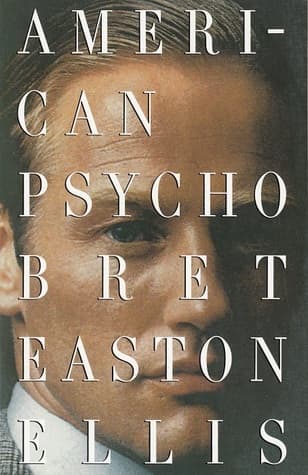
- American Psycho
Bret Easton Ellis
3.8 (242k) average on GoodreadsThrillerExplores the mind of a serial killer with a detached, first-person narrative.
- You
Caroline Kepnes
3.9 (151k) average on GoodreadsThrillerFollows a charming, intelligent stalker/killer with a deep dive into his twisted internal monologue.
- Angels & Demons
Dan Brown
3.9 (2.7M) average on GoodreadsThrillerA Harvard symbologist races through Rome's ancient sites, deciphering cryptic clues to unmask the Illuminati and stop a vengeful plot to destroy the Vatican with a stolen antimatter weapon.
- Gone Girl
Gillian Flynn
4.1 (2.3M) average on GoodreadsThrillerA wife's sudden disappearance on her fifth anniversary reveals a web of lies and psychological warfare, exposing the secrets within a seemingly perfect marriage.
- The Girl on the Train
Paula Hawkins
3.9 (2.1M) average on GoodreadsThrillerA woman’s fascination with a seemingly perfect couple she watches from her daily train commute leads her into a dark investigation when she witnesses something that shatters their idyllic image.





Enjoyed the summary?
A summary gives you the shape of the book. The book itself has the detail, the examples and the voice.
Find Darkly Dreaming Dexter on AmazonAs an Amazon Associate, BookBrief earns from qualifying purchases. How we're funded