

Synopsis
Covers the whole plot, including the ending.
- Difficulty
- Medium
- Pacing
- Moderate
- Mood
- Suspenseful, Mysterious, Tense, Emotional
- Read it if
- You enjoy psychological thrillers with a focus on family secrets and the unreliability of memory, especially in a young adult context.
- Skip it if
- You prefer fast-paced, action-driven thrillers over character-focused mysteries with a slower burn.
Dead to You Plot Summary
Covers the whole plot, including the ending.
The Return
Ethan, now sixteen, is found by police and returned to his family in the suburbs of Portland, Oregon, after being taken at age seven. His parents, Laura and Brian, and his younger sister, Cally, are overjoyed but also bewildered by the silent, withdrawn boy who barely remembers them. Ethan struggles to adapt to his old life, feeling like an imposter. He has no memories of his abduction or the nine years he spent away, only a vague sense of a man named 'Mr. Trent' and a dark, confined space. His family tries to welcome him back, but the years of absence have created a gap, making every interaction strained.
A New Life, A Familiar Stranger
Ethan starts school, where he meets Sarah, a kind girl who knew him before he was taken. Her attempts to help him remember are met with frustration, as his mind is blank about his past. He feels a strange connection to Sarah, but also uneasy. At home, his relationship with Cally is strained; she resents the disruption his return has caused and feels overlooked. Ethan spends his days trying to remember who he is, looking at old photographs and listening to his family's stories, but nothing feels real. He feels a constant pressure, a buzzing in his head, whenever someone tries to make him remember.
Whispers and Doubts
The initial joy of Ethan's return quickly fades as the family deals with his changed personality and memory loss. Laura is overly protective, while Brian becomes increasingly frustrated by Ethan's silence. Cally, feeling neglected, starts to doubt Ethan, pointing out how different he is and questioning if he's truly her brother. Her comments, though often dismissed as childish jealousy, create unease. Ethan overhears some of these conversations, adding to his turmoil and making him question his own identity and his place in this family.
Flashes of Memory
Ethan begins to experience brief, disorienting flashes of memory. These are not of his family or his old life, but of a dark room, a man's voice, and fear. He also recalls a specific, unsettling image: a small, dark closet. These fragmented memories are terrifying and confusing, making him more withdrawn. He does not share them with his family, fearing their reaction. The memories are accompanied by headaches and a growing sense of dread, suggesting that the truth of his past might be more sinister than a simple abduction.
The Unspoken Past
Driven by instinct, Ethan searches his old room, now redecorated, and finds a hidden box under a loose floorboard. Inside, he finds old drawings, a small toy, and a faded photograph of himself as a young boy with another boy, both looking happy. The most disturbing item is a child's drawing depicting a house with bars on the windows and a dark, shadowy figure. These objects, especially the drawing, stir a deep, unsettling feeling within him. He senses that his family is hiding crucial information about his past, and that his 'abduction' story might be incomplete or even false.
Confronting Sarah
Ethan, desperate for answers, confronts Sarah. He asks her if she remembers anything about his disappearance that the family hasn't told him. Hesitantly, Sarah reveals a crucial detail: the man who took Ethan was not a stranger, but Mr. Trent, a close family friend. This revelation shatters Ethan's perception of his abduction and his family's story. The fact that his parents never mentioned this detail makes him question everything they've told him. He feels betrayed and realizes that the truth is far more complex and personal than he initially imagined.
The Dark Room
The truth about Mr. Trent unlocks a flood of fragmented memories for Ethan. He remembers being taken by Trent, not from his yard, but from his own home, with his parents' knowledge. He recalls being kept in a dark room, subjected to Trent's strange and abusive 'lessons' and rituals. The memories are of psychological manipulation and a twisted form of 'education' rather than physical captivity. He realizes that his family had essentially given him away to Trent, believing it was for his own good, a 'remedy' for his perceived 'difficult' behavior as a child. This realization is devastating, changing his entire understanding of his past.
The Family's Secret
Armed with his recovered memories and the evidence from the box, Ethan confronts his parents. Laura and Brian, cornered, finally confess the truth. They admit that when Ethan was a difficult, defiant child, they sought help from Mr. Trent, a charismatic and manipulative man who convinced them he could 'cure' Ethan. They allowed Trent to take Ethan to his isolated home, believing he was providing a specialized, beneficial program. They were blinded by desperation and Trent's charm, refusing to acknowledge the signs of abuse. Their confession is filled with remorse and guilt, but it does little to ease Ethan's profound sense of betrayal and anger.
Cally's Perspective
Cally, overhearing the confrontation, adds her own piece to the puzzle. She confesses that she always remembered a 'dark room' and 'Mr. Trent' but was too young and afraid to say it. She also reveals her resentment stemmed from her parents' focus on Ethan's 'problem' and her own feelings of being overlooked. She felt the family's secret created unbearable tension and that his return only made it worse. Her perspective shows the damage caused by their parents' decision, affecting not just Ethan, but the entire family for years.
The Aftermath
The raw truth leaves the family shattered but also opens a path for genuine communication. Ethan, though deeply scarred, begins to process the trauma with the help of a therapist. His parents, overwhelmed with guilt, commit to rebuilding their relationships with both Ethan and Cally. The novel concludes with the family taking the first steps towards healing. The 'miracle' of Ethan's return is replaced by the difficult, painful work of confronting a hidden past and forging a new, honest future. It acknowledges that some wounds may never fully close, but can begin to mend.
Principal Figures
Ethan
Protagonist
A sixteen-year-old boy who returns home with no memory of his past, only to uncover a dark truth.
Ethan is a quiet, withdrawn sixteen-year-old, grappling with a profound nine-year memory void. He feels like an imposter in his own home, struggling to connect with his family and his 'old life.' His internal world is a landscape of confusion, anxiety, and a deep-seated sense of unease. He is driven by an instinctual need to understand his past, even as his mind resists, protecting him from painful truths. His silence is a shield, but also a barrier to genuine connection.
Relationships: Laura (Mother, initially overprotective, later remorseful and seeking forgiveness.); Brian (Father, initially frustrated, later guilt-ridden and seeking reconciliation.); Cally (Younger sister, initially resentful and suspicious, later understanding and supportive.); Sarah (Childhood friend, a source of comfort and crucial information.)
Laura
Supporting
Ethan's mother, consumed by guilt and a desperate hope for normalcy.
Laura is Ethan's mother, initially overjoyed by his return but quickly overwhelmed by the reality of his changed personality and memory loss. She is fiercely protective of Ethan, often to the detriment of Cally, and struggles to balance her grief for the child she lost with the son she has now. Her guilt over her past decisions regarding Mr. Trent is a heavy burden, manifesting as anxiety and a desperate need to make things right. She embodies the parents' misguided love and desperation.
Relationships: Ethan (Son, complex mix of love, guilt, and a desperate desire to reconnect.); Brian (Husband, shares a secret and a burden of guilt.); Cally (Daughter, often neglected in her focus on Ethan, leading to Cally's resentment.)
Brian
Supporting
Ethan's father, struggling with frustration, guilt, and the weight of a family secret.
Brian is Ethan's father, a man who tries to project strength and normalcy but is internally conflicted. He is frustrated by Ethan's silence and lack of memory, often pushing him to remember, which only creates more distance. He shares Laura's deep guilt over their past decision to involve Mr. Trent and struggles with how to confront it. Brian represents the more outwardly pragmatic but equally emotionally stunted parent, initially unwilling to face the full scope of their mistakes.
Relationships: Ethan (Son, strained relationship due to past decisions and current communication barriers.); Laura (Wife, partner in a shared secret and guilt.); Cally (Daughter, less demonstrative in his relationship compared to Laura.)
Cally
Supporting
Ethan's younger sister, resentful of his return and burdened by unspoken childhood memories.
Cally is Ethan's younger sister, who was only a toddler when he disappeared. Her world was shaped by his absence and her parents' grief, and his return disrupts her established life. She feels overlooked and resentful, often expressing her doubts about Ethan being 'the real one.' Beneath her resentment, however, lies a deeper trauma – fragmented memories of her own about Mr. Trent and the dark room, which she struggles to articulate. She is perceptive and a key voice in questioning the family's accepted narrative.
Relationships: Ethan (Brother, initially hostile and suspicious, later understanding and empathetic.); Laura (Mother, feels neglected and overshadowed by Ethan's return.); Brian (Father, struggles to connect with him amidst family tension.)
Sarah
Supporting
Ethan's kind childhood friend who holds a crucial piece of his past.
Sarah is a compassionate and understanding classmate who knew Ethan before his disappearance. She genuinely wants to help him and acts as a bridge to his past, even when his family struggles. She is hesitant to share painful truths but ultimately provides the critical information about Mr. Trent that begins to unlock Ethan's memories. Sarah represents an external, more objective perspective on Ethan's past, untainted by the family's denial and guilt.
Relationships: Ethan (Childhood friend and confidante, a source of truth and support.)
Mr. Trent
Antagonist
The manipulative neighbor who 'abducted' Ethan with his parents' consent.
Mr. Trent is the insidious figure at the heart of Ethan's trauma. He is described as charismatic and manipulative, preying on the vulnerability of desperate parents like Laura and Brian. He convinced them he could 'fix' their difficult child through his unconventional methods. His 'lessons' were a form of psychological abuse and manipulation, keeping Ethan isolated and controlled. He is not a stranger but a trusted neighbor, making his actions all the more shocking and betraying. He represents the danger of misplaced trust and the deceptive nature of evil cloaked in good intentions.
Relationships: Ethan (Abuser and manipulator.); Laura (Manipulated and deceived by him.); Brian (Manipulated and deceived by him.)
Themes & Insights
The Nature of Memory and Trauma
The novel explores how trauma can block memories, and the difficult, often painful, process of their recovery. Ethan's amnesia is a coping mechanism, protecting him from a truth too horrific to consciously recall. His fragmented memories, flashes of a dark room and a man's voice, slowly piece together, revealing the insidious nature of his past. The story highlights that while memory loss can be a shield, confronting the past is essential for true healing, even when it shatters one's understanding of self and family. This is clear in Ethan's struggle to recall anything before his return, and the physical and emotional pain he experiences as those memories resurface.
“It was like trying to scoop water with a sieve. The harder he tried to grasp it, the faster it slipped away.”
Family Secrets and Betrayal
At its core, the book is about a devastating family secret and the deep betrayal it holds. Ethan's parents, driven by desperation and misguided trust, allowed a neighbor to psychologically abuse their son. Their subsequent silence and the fabricated abduction story create a wall of deceit that poisons family relationships. The secret not only harms Ethan but also impacts Cally, who senses the unspoken tension. The revelation of this secret is the catalyst for the family's potential healing, forcing them to confront their complicity and the immense damage they caused. The parents' decision to 'give' Ethan to Mr. Trent rather than acknowledge their child's 'difficult' behavior shows a deep betrayal of trust.
“The truth was a heavy, suffocating blanket that had covered their lives for nine years.”
Identity and Belonging
Ethan's return forces him to grapple with a fractured identity. He does not remember the seven-year-old boy his family knew, nor does he fully understand the sixteen-year-old he has become. He feels like an alien in his own home, struggling to belong and connect. His journey is one of self-discovery, piecing together who he was, who he became under Mr. Trent's influence, and who he can be now. This theme is clear in his awkward interactions, his inability to recognize himself in old photos, and his constant questioning of his place within the family.
“He was a ghost in his own life, haunting a past he couldn't remember.”
The Corrupting Power of Desperation
The novel explores how desperation can lead well-meaning individuals to make catastrophic decisions. Laura and Brian, unable to cope with Ethan's challenging behavior as a young child, were vulnerable to Mr. Trent's manipulative promises of a 'cure.' Their desperate hope for a solution blinded them to the signs of abuse and led them to betray their son. This theme is a cautionary tale, showing how the desire to 'fix' a problem, when unchecked by reason and parental responsibility, can have devastating and unforeseen consequences, ultimately causing far more harm than the initial 'problem' itself.
“They had wanted a solution so badly, they’d accepted a monster.”
Plot Devices & Literary Techniques
Amnesia as a Protective Mechanism
Ethan's memory loss shields him from the trauma of his past.
Ethan's complete amnesia regarding his nine years away and his life before serves as a crucial plot device. It creates immediate mystery and suspense, forcing both the character and the reader to piece together the truth. More importantly, it functions as a psychological defense mechanism, protecting Ethan from the horrific reality of his 'abduction' and the betrayal by his parents. The slow, fragmented return of his memories builds tension and allows for a gradual reveal of the dark secret, rather than an immediate, overwhelming shock, making the eventual truth even more impactful.
The Unreliable Narrator (Implied)
The family's initial narrative of Ethan's abduction is a deliberate fabrication.
While not a first-person narrative directly, the plot relies on the initial 'unreliable' narrative provided by Ethan's family. They present a story of a random abduction, which the reader accepts at face value until Ethan's memories and Sarah's revelations begin to contradict it. This device creates a layer of dramatic irony and suspense, as the reader slowly realizes that the 'truth' presented at the beginning is a carefully constructed lie designed to protect the family's reputation and avoid confronting their guilt. It forces the reader to question what they are told and to empathize with Ethan's growing confusion.
Symbolism of the 'Dark Room' and Hidden Objects
Physical symbols represent Ethan's suppressed memories and the family's hidden truth.
The 'dark room' that appears in Ethan's fragmented memories and Cally's recollections symbolizes the literal confinement and psychological darkness of his abuse, but also the hidden, suppressed trauma within the family. The hidden box of childhood items, particularly the disturbing drawing, acts as a tangible link to Ethan's past and a catalyst for his memory retrieval. These objects are not merely clues but potent symbols of a buried truth, connecting the physical spaces of the past to the psychological landscape of the present, driving Ethan's quest for understanding.
Dead to You Quotes
“I didn't steal him, Ethan. I just... I loved him too.”
“Sometimes the people you think you know the best are the ones hiding the most.”
“The truth had a way of twisting itself, becoming something almost unrecognizable.”
“He was a ghost, a shadow in the corner of her mind, but he was real enough to hurt.”
“You can't outrun your past, no matter how fast you try to go.”
“Every family has its secrets. Ours just happened to be deadly.”
“Some memories are like a broken record, playing the same painful song over and over.”
“Trust was a fragile thing, easily shattered and almost impossible to repair.”
“He looked at her like she was the only thing that mattered, and for a moment, she believed it.”
“Sometimes, the monster isn't under the bed. It's in the mirror.”
“Silence can be louder than any scream when you're waiting for the truth.”
“The past wasn't just behind them; it was actively reaching out, pulling them back in.”
“Love wasn't supposed to feel like a trap, but sometimes, it just was.”
“He had returned, not as a savior, but as a catalyst for destruction.”
Quiz
10 questions on the plot and the characters. Each answer comes with a short explanation.
Question 1
What was Ethan's age when he was abducted from his front yard?
- Five years old
- Seven years old
- Nine years old
- Six years old
Show answer
B. Seven years old The book description explicitly states Ethan was seven years old when he was abducted.
Question 2
How old is Ethan when he returns to his family?
- Twelve years old
- Fourteen years old
- Sixteen years old
- Eighteen years old
Show answer
C. Sixteen years old The book description states that Ethan is sixteen when he returns to his family.
Question 3
What is the primary obstacle preventing Ethan from remembering his life before his abduction?
- A physical head injury sustained during his abduction
- A deliberate attempt by his abductor to erase his memories
- A psychological block due to 'something unspeakable'
- A natural amnesia that often follows traumatic events
Show answer
C. A psychological block due to 'something unspeakable' The synopsis mentions 'something that's keeping his memory blocked. Something unspeakable...', indicating a psychological rather than purely physical cause.
Question 4
Which of the following best describes the initial reaction of Ethan's family to his return?
- Immediate joy and seamless reintegration.
- Relief, but quickly followed by growing tensions and difficulties.
- Skepticism and doubt about his true identity.
- Overwhelming sadness and fear for his future.
Show answer
B. Relief, but quickly followed by growing tensions and difficulties. The description states, 'It's a miracle... at first. Then the tensions start to build. His reintroduction to his old life isn't going smoothly, and his family is tearing apart all over again.'
Question 5
What genre elements are explicitly mentioned in the book's description?
- Fantasy and Historical Fiction
- Thriller, Mystery, Young Adult, Romance
- Science Fiction and Contemporary
- Horror and Dystopian
Show answer
B. Thriller, Mystery, Young Adult, Romance The provided book information lists 'Thriller, Mystery, Young Adult, Romance' as its genres.
Question 6
What is the central conflict implied by the phrase 'Some memories are better left untouched'?
- Ethan's family wants him to forget his past nine years.
- The potential danger and trauma associated with uncovering Ethan's lost memories.
- Ethan's desire to forget his family and start a new life.
- The family's attempt to hide a secret from Ethan about his abduction.
Show answer
B. The potential danger and trauma associated with uncovering Ethan's lost memories. This phrase suggests that the truth behind Ethan's blocked memories, when uncovered, might be deeply disturbing or dangerous, implying a theme of suppressed trauma and its consequences.
Question 7
Which of the following best describes the state of Ethan's family after his return?
- They are overjoyed and more united than ever before.
- They are struggling with internal conflicts and 'tearing apart all over again'.
- They are suspicious of Ethan and his motives for returning.
- They are attempting to adjust to a new normal with minimal issues.
Show answer
B. They are struggling with internal conflicts and 'tearing apart all over again'. The synopsis clearly states, 'His reintroduction to his old life isn't going smoothly, and his family is tearing apart all over again.'
Question 8
What is the primary motivation for Ethan to try and remember his past, according to the description?
- To identify his abductor and bring them to justice.
- To understand why he was taken and what happened during his absence.
- To 'put the pieces back together' of his life and ease family tensions.
- To escape the difficulties of his current family situation.
Show answer
C. To 'put the pieces back together' of his life and ease family tensions. The text states, 'If only Ethan could remember something, anything, about his life before, he'd be able to put the pieces back together.' This implies a desire for personal coherence and to resolve current family strife.
Question 9
The description implies a shift in the family's perception of Ethan's return. What is this shift?
- From initial fear to eventual acceptance.
- From profound sadness to renewed hope.
- From a 'miracle' to a source of 'tensions' and family breakdown.
- From suspicion to complete trust.
Show answer
C. From a 'miracle' to a source of 'tensions' and family breakdown. The synopsis explicitly states, 'It's a miracle... at first. Then the tensions start to build. His reintroduction to his old life isn't going smoothly, and his family is tearing apart all over again.'
Question 10
What literary device is heavily suggested by the phrase 'Some memories are better left untouched' in a thriller/mystery context?
- Foreshadowing of a positive revelation.
- Dramatic irony, where the reader knows more than the characters.
- Foreshadowing of a dark or disturbing truth to be uncovered.
- A red herring to mislead the reader about the true plot.
Show answer
C. Foreshadowing of a dark or disturbing truth to be uncovered. In a thriller/mystery, a statement like 'Some memories are better left untouched' strongly foreshadows that the memories, if recalled, will reveal something disturbing, dangerous, or profoundly negative, contributing to the suspense.
Dead to You FAQ
What is the central premise of 'Dead to You'?
The book follows sixteen-year-old Ethan, who returns to his family nine years after being abducted at age seven. While initially a miracle, his reintroduction causes significant tension and disruption within his family, especially as he struggles with amnesia regarding his early childhood and abduction.
Who are the main characters in Ethan's immediate family?
Ethan's immediate family consists of his parents, his older sister Cloe, and his younger brother Josh. Each family member reacts differently to his return, contributing to the complex family dynamics and underlying tensions.
What is the primary mystery Ethan is trying to solve?
Ethan is desperately trying to recover his memories of his life before his abduction and the abduction itself. He feels a crucial piece is missing, and believes understanding what happened will help him reconnect with his family and resolve the unsettling feelings he experiences.
How does Ethan's return affect his sister, Cloe?
Cloe struggles significantly with Ethan's return, feeling displaced and resentful. She suspects Ethan isn't who he claims to be and her growing animosity towards him fuels much of the family conflict and suspense, making her a key antagonist to Ethan's reintegration.
What role does the 'unspeakable something' play in Ethan's memory loss?
The 'unspeakable something' is a traumatic event or secret from his past that his mind has repressed as a protective mechanism. This memory block is crucial to the plot, as its eventual revelation is the key to understanding the true nature of his abduction and identity.
What is the significance of the recurring dream Ethan experiences?
Ethan frequently dreams of a dark room and a sense of dread, which are fragmented memories trying to surface. These dreams are symbolic of the suppressed trauma and serve as clues, slowly guiding him towards the truth of his past and the circumstances of his abduction.
How does the author hint at Ethan's true identity before the reveal?
The author subtly hints at Ethan's true identity through Cloe's unwavering suspicion, Ethan's complete lack of recognition for childhood objects or places, and his inability to connect emotionally with his 'parents' in the way a returning child might. These inconsistencies build the suspense around his identity.
What is the crucial 'twist' regarding Ethan's identity?
The crucial twist is that the boy who returned as 'Ethan' is not the original Ethan, but rather another boy named David. David was abducted by the same individual who took Ethan, and was forced to assume Ethan's identity after the real Ethan's death, making him an unwilling impostor.
What is the connection between the 'abductor' and the family?
The abductor is revealed to be David's biological father, who also abducted the real Ethan. This connection adds a layer of tragic irony and complexity, as David is forced into a life with his father's victims, unknowingly living out a lie orchestrated by his own parent.
How does Ethan/David's amnesia serve as a psychological coping mechanism?
Ethan/David's amnesia is a profound psychological defense, protecting him from the trauma of his own abduction, the death of the real Ethan, and the horrific reality of being forced to impersonate another child by his own father. It allows him to attempt to build a new identity, albeit a false one.
Discuss the psychological impact of grief and loss on Cloe.
Cloe's initial grief over her brother's abduction was immense, and his return triggers a complex mix of emotions including resentment, suspicion, and a renewed sense of loss for the 'perfect' brother she remembered. Her inability to accept him stems from both her intuition and her unresolved trauma.
How do Ethan's 'parents' demonstrate denial and wish fulfillment?
Ethan's 'parents' display profound denial and wish fulfillment by desperately wanting the boy to be their son, despite mounting evidence and their daughter's protests. Their desire for their son's return overrides their ability to see the truth, highlighting the powerful psychological need for closure and hope.
What are the ethical implications of David living the life of Ethan?
The ethical implications are complex: David is a victim forced into this deception, but his presence prolongs the 'parents'' false hope and deepens Cloe's distress. It raises questions about truth versus comfort, and whether the 'family' could ever truly heal under such a fundamental lie.
Is Cloe's skepticism portrayed as intuition or paranoia?
Cloe's skepticism is initially dismissed as paranoia or jealousy, but it is ultimately validated as sharp intuition. Her emotional distress and logical observations about the 'new' Ethan's differences prove crucial in uncovering the truth, highlighting the importance of trusting one's gut feelings.
How does the ending offer resolution for David, if any?
The ending provides a nuanced resolution for David. While his true identity is revealed and the deception ends, he begins a path towards healing and establishing his own identity, free from the burden of being Ethan. It's a bittersweet freedom, acknowledging the trauma but offering hope for his future.
What is the author's commentary on memory and identity in the novel?
The novel deeply explores how memory shapes identity and how its absence or manipulation can shatter it. It suggests that identity is not solely tied to a name or past events, but also to how one internalizes experiences and forms connections, even under false pretenses.
How does the romance subplot between Ethan/David and Sarah contribute to the narrative?
The romance with Sarah offers Ethan/David a glimpse of genuine connection and acceptance, independent of his fabricated identity. It provides a moral anchor and a motivation for him to seek the truth, as he struggles with the guilt of deceiving someone he cares about, ultimately pushing him towards honesty.
What is the ultimate fate of the abductor?
The abductor, David's father, is ultimately apprehended, bringing a sense of justice and closure to the victims. His capture allows David to be truly free from his influence and for the 'Ethan' family to begin processing the real tragedy without further deception.
About the author

Lisa McMann is an American author known for her works of fiction, particularly in the young adult genre. Her notable books include "The Unwanteds," a fantasy series, as well as "Wake," "Fade," and "Dead to You," which explore themes of dreams and identity. She also wrote "Going Wild," a story that combines adventure with elements of nature.
Similar books
- The Girl on the Train
Paula Hawkins
3.9 (2.1M) average on GoodreadsThrillerFeatures unreliable memory and a central mystery surrounding a missing person.
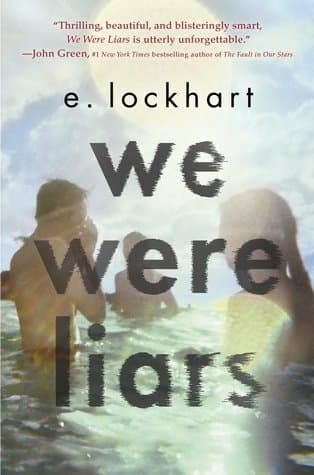
- We Were Liars
E. Lockhart
3.8 (465k) average on GoodreadsThrillerExplores family secrets, trauma, and a protagonist piecing together a forgotten past.
- Gone Girl
Gillian Flynn
4.1 (2.3M) average on GoodreadsThrillerDeals with a missing person, dark secrets within a relationship, and psychological suspense.
- One of Us Is Lying
Karen M. McManus
4.0 (216k) average on GoodreadsThrillerWhile both involve secrets, 'Dead to You' delves deeper into the internal landscape of a trauma survivor and the psychological impact on a family unit, whereas 'One of Us Is Lying' is a more traditional murder mystery with multiple POVs focusing on a group of suspects.
- Angels & Demons
Dan Brown
3.9 (2.7M) average on GoodreadsThrillerA Harvard symbologist races through Rome's ancient sites, deciphering cryptic clues to unmask the Illuminati and stop a vengeful plot to destroy the Vatican with a stolen antimatter weapon.
- The Da Vinci Code
Dan Brown
3.9 (1.9M) average on GoodreadsThrillerA symbologist and a cryptologist race through European landmarks, deciphering ancient codes and uncovering a conspiracy that could rewrite the foundations of Christianity.





Enjoyed the summary?
A summary gives you the shape of the book. The book itself has the detail, the examples and the voice.
Find Dead to You on AmazonAs an Amazon Associate, BookBrief earns from qualifying purchases. How we're funded