
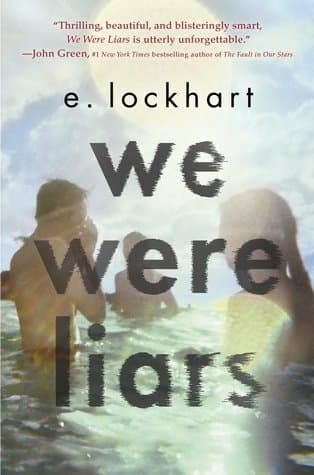
Synopsis
Covers the whole plot, including the ending.
- Difficulty
- Medium
- Pacing
- Moderate
- Mood
- Atmospheric, Suspenseful, Melancholy, Introspective
- Read it if
- You enjoy psychological thrillers with unreliable narrators, family secrets, and a twist that will make you gasp.
- Skip it if
- You prefer straightforward narratives without ambiguity or find stories with tragic endings too upsetting.
We Were Liars Plot Summary
Covers the whole plot, including the ending.
Summer One: The Golden Summer
Cadence Sinclair Eastman introduces her privileged, old-money family, the Sinclairs, who own a private island called Beechwood off Massachusetts. Each summer, the extended family gathers on the island, staying in three large houses: Windemere, Cuddledown, and Clairmont. Cadence describes her early childhood summers as idyllic, filled with the unspoken Sinclair rules – never showing weakness, always being perfect. Her grandfather, Harris Sinclair, is the patriarch, and her mother, Penny, is one of his three daughters. Cadence, with her cousins Johnny and Mirren, and Gat Patil – the nephew of her aunt Carrie's boyfriend – form a close group called 'The Liars'. Their bond is immediate and strong, built on shared summers and a rebellious spirit against their family's polished image.
Summer Two: The Accident
During Summer Fifteen, the summer Cadence turns fifteen, she has an accident. On Beechwood Island, she gets a severe head injury that causes amnesia about what happened before it. She remembers waking up on the beach, confused and in pain, with no clear memory of the incident. Her family avoids the topic and refuses to discuss it, further isolating Cadence. She suffers from migraines and chronic pain, needing strong medication. Her mother, Penny, takes her on a long trip to Europe, supposedly for recovery, but also to keep her away from Beechwood and The Liars for two years. This time away from the island and her cousins deepens Cadence's sense of loss and confusion.
Summer Three: The Return
After two years, Cadence returns to Beechwood for Summer Seventeen, against her mother's wishes. She wants to reunite with Johnny, Mirren, and Gat, hoping their presence will help her recall the missing memories of Summer Fifteen. However, she finds that things have changed. The Liars are distant and somewhat ethereal, treating her with a strange mix of affection and sadness. Grandfather Harris is more frail and authoritarian, and family dynamics are strained, marked by constant arguments over inheritance and property. Cadence feels uneasy and urgently needs to piece together her fragmented memories, believing The Liars hold the key.
The Ghosts of Clairmont
As Cadence spends more time on the island, she notices unsettling details. Clairmont, the house where she, Johnny, Mirren, and Gat often stayed, is now a burnt-out shell. Her family avoids discussing its destruction, simply saying it was an accident. The Liars themselves seem to appear and disappear without explanation, often wearing the same clothes, and their conversations are full of cryptic remarks about guilt, consequences, and secrets. Cadence experiences vivid dreams and memory flashes that feel real but are disjointed, leading her to believe the truth of Summer Fifteen is tied to Clairmont and The Liars' shared past. She feels the island is haunted, not by literal ghosts, but by the weight of unaddressed trauma.
Rebellion and Resentment
Cadence's interactions with Johnny, Mirren, and Gat show their deep resentment towards the Sinclair family's materialism, snobbery, and constant arguments over inheritance. They often express disgust at their mothers' (Penny, Carrie, and Bess) petty squabbles over heirlooms or how Grandfather Harris will divide his wealth. The Liars bond over their shared desire to challenge this superficiality and to shake the family out of its self-absorbed existence. They talk about making a statement, about forcing the family to confront their flaws, and about the unfairness Gat faces as an outsider, despite being a part of their group. This shared anger fuels their secret plans during Summer Fifteen.
Forbidden Love
Cadence and Gat's romantic relationship is central to their bond and a source of tension within the conservative Sinclair family. Gat, being Indian and not from the same social standing, faces subtle disapproval from Cadence's grandfather and some aunts. Despite this, their love deepens each summer, leading to a passionate connection during Summer Fifteen. Their romance symbolizes a rejection of the Sinclair family's superficial values, as Gat represents a world beyond their privileged bubble – a world of social justice, art, and intellectual curiosity. Their connection during Summer Seventeen becomes a poignant reminder of their past and helps Cadence recover her memory.
Piecing Together the Past
As Cadence keeps pressing The Liars for answers, her memories slowly surface in painful, fragmented flashes. She remembers a series of increasingly reckless and destructive acts by the group during Summer Fifteen, fueled by their anger and a misguided sense of rebellion. They stole items from their aunts' houses, vandalized property, and engaged in escalating acts of defiance against the family's rules. These recollections are unsettling, showing a group spiraling out of control, driven by a desire to disrupt the 'perfect' Sinclair image and make a statement about their unhappiness with the family's materialism and selfishness. Each recovered memory brings her closer to the truth.
The Night of the Fire
The crucial memory Cadence uncovers is the night Clairmont burned. During Summer Fifteen, The Liars, in a drunken and reckless act of protest against their families' greed and Grandfather Harris's favoritism, decided to set fire to Clairmont. Their goal was to destroy a symbol of the family's material wealth and force them to confront their destructive tendencies. They believed the house was empty. However, Cadence recalls seeing her dogs inside, and she ran back into the burning building to save them. This act led to her severe head injury and amnesia. The fire was meant to be a controlled act of rebellion, but it turned into a catastrophic tragedy.
The Horrifying Realization
As Cadence fully recovers her memories, the truth becomes clear. Clairmont burned down, and Johnny, Mirren, and Gat were inside when the fire spread. They did not get out. Her head injury happened while trying to save the dogs, after the fire had already engulfed the house with her cousins and Gat still inside. The shock of this realization is immense. The 'ghosts' she had been seeing, the ethereal nature of The Liars during Summer Seventeen, their cryptic remarks, and their unchanging clothes were all signs of her grief and denial. They were not distant; they were dead. Her family's silence and avoidance were not about her accident, but about the devastating loss of three children and the unspoken guilt surrounding the circumstances that led to the fire.
The Final Farewell
With the full truth revealed, Cadence is overwhelmed by sorrow and guilt. She understands why her family kept the secret – to protect her from the pain of remembering her role in the tragedy and the loss of her friends. In a heartbreaking scene, Cadence revisits the burnt ruins of Clairmont. She confronts the spirits of Johnny, Mirren, and Gat, acknowledging their presence and the love they shared. She apologizes for her part in their reckless plan and expresses her grief. Through this farewell, Cadence begins the painful process of accepting their deaths and moving towards healing, carrying their memory and the weight of their shared secret.
Principal Figures
Cadence Sinclair Eastman
Protagonist
The eldest Sinclair grandchild, a brilliant but damaged girl suffering from amnesia.
Cadence, often called Cady, is the narrator and protagonist. She is a sensitive, intelligent, and artistic girl who struggles with chronic pain and amnesia following a mysterious accident during Summer Fifteen. Her deep love for Gat and her cousins, Johnny and Mirren, drives her quest for the truth. Despite her family's wealth, she feels an underlying dissatisfaction with their superficiality. Her struggle to reclaim her memories defines her journey, revealing her resilience and vulnerability.
Relationships: Johnny Sinclair (Cousin and close friend, part of The Liars); Mirren Sinclair (Cousin and close friend, part of The Liars); Gat Patil (Love interest and close friend, part of The Liars); Penny Sinclair Eastman (Mother, protective and secretive); Harris Sinclair (Grandfather, patriarchal figure)
Gatwick Matthew Patil (Gat)
Love Interest / Supporting
An intelligent, passionate, and political boy, outsider to the Sinclair family.
Gat is an Indian-American boy, the nephew of Aunt Carrie's boyfriend, and an honorary member of The Liars. He is Cadence's primary love interest and a catalyst for her intellectual and emotional growth. Gat is insightful, artistic, and socially conscious, often challenging the Sinclairs' privileged and insular worldview. His presence on Beechwood highlights the family's subtle prejudices and exposes their superficiality. He is a driving force behind The Liars' rebellious spirit and desire for change.
Relationships: Cadence Sinclair Eastman (Love interest and close friend); Johnny Sinclair (Close friend, part of The Liars); Mirren Sinclair (Close friend, part of The Liars); Carrie Sinclair (Aunt of Cadence, Gat's uncle's girlfriend)
Johnny Sinclair
Supporting
Cadence's athletic and impulsive cousin, part of The Liars.
Johnny is Cadence's male cousin and one of The Liars. He is athletic, boisterous, and often the most impulsive of the group. Johnny is fiercely loyal to his cousins and Gat, and shares their disdain for the older Sinclairs' materialism and bickering. He often instigates their rebellious acts, fueled by a desire to shake up the family dynamic and assert his own identity. His energy and protective nature are a significant part of The Liars' collective personality.
Relationships: Cadence Sinclair Eastman (Cousin and close friend); Mirren Sinclair (Cousin and close friend); Gat Patil (Close friend); Bess Sinclair (Mother)
Mirren Sinclair
Supporting
Cadence's elegant and empathetic cousin, part of The Liars.
Mirren is Cadence's female cousin and the fourth member of The Liars. She is often described as elegant, gentle, and a bit of a peacemaker within the group, though she fully participates in their rebellious activities. Mirren is deeply empathetic and sensitive to the emotional undercurrents of the family. She worries about appearances but also shares the group's frustration with the Sinclairs' superficiality. Her presence provides a balance to Johnny's impulsiveness and Gat's intensity.
Relationships: Cadence Sinclair Eastman (Cousin and close friend); Johnny Sinclair (Cousin and close friend); Gat Patil (Close friend); Bess Sinclair (Mother)
Harris Sinclair
Antagonist / Supporting
The wealthy, patriarchal grandfather who controls the Sinclair family.
Harris Sinclair is the patriarch of the Sinclair family and owner of Beechwood Island. He is a powerful, controlling, and manipulative figure who uses his immense wealth to exert influence over his daughters and grandchildren, often pitting them against each other with the promise of inheritance. He embodies the superficiality and classism that The Liars despise. His favoritism and subtle prejudices are a significant source of tension and a driving force behind The Liars' rebellion. His decline in health adds another layer of urgency to the family's squabbles.
Relationships: Penny Sinclair Eastman (Daughter); Carrie Sinclair (Daughter); Bess Sinclair (Daughter); Cadence Sinclair Eastman (Granddaughter)
Penny Sinclair Eastman
Supporting
Cadence's mother, who struggles with her own desires and her father's control.
Penny is Cadence's mother and one of Harris Sinclair's three daughters. She is fiercely protective of Cadence, especially after the accident, going to great lengths to shield her from the truth. Penny is deeply entangled in the family's inheritance squabbles and her father's manipulations, often appearing frustrated and resentful but ultimately unable to fully break free. She loves Cadence deeply but makes questionable choices in her attempts to protect her daughter from pain, contributing to Cadence's confusion and delayed recovery of memories.
Relationships: Cadence Sinclair Eastman (Daughter); Harris Sinclair (Father); Carrie Sinclair (Sister); Bess Sinclair (Sister)
Themes & Insights
The Destructive Nature of Privilege and Greed
The novel shows how extreme wealth and the entitlement it creates can corrupt a family. The Sinclair family's constant arguments over inheritance, their superficiality, and their subtle prejudices (especially against Gat) are central to the story. The Liars' rebellion, ending in the burning of Clairmont, is a direct response to this moral decay. The tragedy of Summer Fifteen is a devastating result of the family's toxic dynamics, showing how their pursuit of material wealth leads to profound loss, as seen in the destructive fire caused by the Liars' protest against this greed.
“'We are Sinclairs. We are liars. We are beautiful and privileged. We are shattered.'”
Memory, Truth, and Denial
Cadence's amnesia is the central plot device, driving the mystery and exploring the relationship between memory, truth, and denial. The fragmented nature of her recollections, her migraines, and her family's evasiveness highlight the difficulty of facing painful realities. The story shows how memory can be suppressed as a coping mechanism, both individually (Cadence) and collectively (the Sinclair family). Cadence's slow, agonizing process of putting together the truth shows that sometimes the truth is too devastating to bear, and denial offers a temporary, though ultimately harmful, shield.
“'I remember everything. I remember nothing.'”
Love and Sacrifice
The deep love between The Liars – Cadence, Johnny, Mirren, and Gat – forms the emotional core of the novel. Their bond goes beyond typical family affection, rooted in shared experiences and a mutual understanding of their family's flaws. Cadence's love for Gat is particularly important, representing a connection that challenges the Sinclairs' narrow worldview. The tragic climax, where The Liars' shared love and misguided sacrifice lead to their deaths, highlights the destructive potential of intense loyalty when combined with reckless rebellion. Cadence's final acceptance of their sacrifice shows the enduring power of their love.
“'He was contemplation and logic, art and engineering. I was just a girl who loved him.'”
The Illusion of Perfection
The Sinclair family projects an image of perfect, affluent happiness, but underneath, they are deeply dysfunctional. The novel critiques this facade, showing how the pressure to maintain an outward appearance of flawlessness leads to suppressed emotions, internal conflict, and tragedy. The 'perfect' summers on Beechwood hide generations of unspoken resentments, greed, and a lack of real connection. The Liars' rebellion is an attempt to shatter this illusion, to force the family to see their imperfections, but it results in the destruction of that 'perfect' image and the loss of life. The burnt Clairmont house symbolizes this shattered illusion.
“'Always be a perfect Sinclair. Never admit weakness. Never show pain.'”
Plot Devices & Literary Techniques
Unreliable Narrator
Cadence's amnesia makes her an unreliable narrator, obscuring the truth until the end.
Cadence's amnesia and her fragmented memories are the primary mechanism through which the story is told, making her an unreliable narrator. The reader experiences the story through her distorted perception, sharing her confusion and gradual realization. This device allows Lockhart to withhold crucial information, building suspense and surprise. The ethereal descriptions of The Liars and Cadence's own internal struggles are interpreted differently by the reader before the final reveal, creating a powerful sense of shock and re-evaluation once the truth is known. It forces the reader to question what is real and what is a product of Cadence's trauma and denial.
Foreshadowing and Symbolism
Repeated imagery and subtle hints throughout the narrative foreshadow the tragic ending.
The novel employs extensive foreshadowing and symbolism, particularly through repeated imagery and Cadence's internal monologues. References to 'blood on the sand,' the decaying state of the island houses (Clairmont's eventual destruction), and Cadence's constant pain and migraines all hint at the underlying trauma. The 'Liars' themselves are a symbolic name, representing both their shared secret and the broader deception within the Sinclair family. The fairytale-like structure and Cadence's poetic descriptions often carry a melancholic undertone, subtly preparing the reader for a tragic rather than a happy ending. The 'story' of the summer is constantly being rewritten and re-evaluated by Cadence and the reader.
The Island as a Microcosm
Beechwood Island serves as a contained world reflecting the family's internal dynamics.
Beechwood Island functions as a microcosm, a self-contained world that amplifies the Sinclair family's internal dynamics and flaws. Its isolation from the mainland highlights the family's insularity and their belief in their own superiority. The island's inherent beauty, contrasted with the decay of some of its structures (especially Clairmont), mirrors the family's outward perfection masking internal rot. The limited setting also concentrates the narrative focus on the relationships and tensions within the family, making the tragic events of Summer Fifteen feel both inevitable and devastating within this confined, privileged space. It becomes a character in itself, holding secrets and memories.
We Were Liars Quotes
“Welcome to the beautiful Sinclair family. No one is a criminal. No one is an addict. No one is a failure.”
“Do you want to know a secret? I killed him.”
“My full name is Cadence Sinclair Eastman. I am the oldest of the grandchildren. I am an heiress.”
“He was my first love, and I was his first love. And we were liars.”
“Mirren, Johnny, Gat, and I. We were the Liars.”
“My mother says I am too emotional. She says I must be strong. She says I must be a Sinclair.”
“Be a little more kind than you have to.”
“I am a golden girl. I am a beautiful girl. I am a rich girl.”
“Accidents happen. We were all very young.”
“There is no such thing as a perfect family.”
“We are Sinclairs. We are elegant. We are beautiful. We are perfect.”
“He was not a Sinclair, but he was one of us.”
“And then I remembered.”
“Run away with me, Gat. I want to be free.”
Quiz
10 questions on the plot and the characters. Each answer comes with a short explanation.
Question 1
What is the name of the private island where the Sinclair family spends their summers?
- Seagull Island
- Beechwood Island
- Willow Creek Island
- Cedar Point Island
Show answer
B. Beechwood Island The Sinclair family's private island, where much of the story unfolds, is named Beechwood Island.
Question 2
Which of the following is NOT one of the 'Liars'?
- Cadence
- Johnny
- Bess
- Gat
Show answer
C. Bess The 'Liars' are Cadence, Johnny, Mirren, and Gat. Bess is one of the Sinclair daughters, but not part of the core group of friends known as the Liars.
Question 3
What type of accident does Cadence initially believe she suffered that caused her amnesia?
- A boating accident
- A fall from a cliff
- A swimming accident resulting in a head injury
- A car crash on the mainland
Show answer
C. A swimming accident resulting in a head injury Cadence initially remembers being found in the water after a swimming accident, which she believes caused her amnesia and migraines.
Question 4
What is the primary motivation behind the Liars' 'revolution' that leads to the tragic fire?
- To protest Grandad's authoritarian rule and materialism
- To get revenge on a specific family member for a past slight
- To scare away tourists from their private beach
- To make a grand gesture of love for Cadence and Gat
Show answer
A. To protest Grandad's authoritarian rule and materialism The Liars were frustrated with Grandad's control, his blatant favoritism, and the squabbling over inheritance among their mothers. Their 'revolution' was an attempt to make a statement against the family's materialism and perceived unfairness.
Question 5
Which of the following houses on Beechwood Island was NOT destroyed in the fire?
- Windemere
- Cuddledown
- Red Gate
- Clairmont
Show answer
D. Clairmont Windemere, Cuddledown, and Red Gate were the houses set on fire by the Liars. Clairmont, Grandad's main house, was not targeted and remained standing.
Question 6
What specific item did the Liars use to start the fire, believing it would only cause minor damage?
- Gasoline from a boat
- Fireworks left over from the Fourth of July
- Old rags soaked in lighter fluid
- Piles of old leaves and a match
Show answer
D. Piles of old leaves and a match The Liars, in their misguided attempt at a 'revolution,' piled up old leaves and set them alight, believing it would be a harmless protest, not a devastating fire.
Question 7
What is the ultimate truth revealed about the other three Liars (Johnny, Mirren, and Gat)?
- They moved away to avoid Cadence after the accident.
- They were never real; Cadence imagined them as a coping mechanism.
- They all died in the fire they started two years prior.
- They were secretly working with Cadence's mother to hide the truth.
Show answer
C. They all died in the fire they started two years prior. The devastating truth Cadence eventually uncovers is that Johnny, Mirren, and Gat perished in the fire they started two summers ago, and she herself barely survived.
Question 8
What specific physical injury does Cadence sustain from the fire, beyond her psychological trauma and amnesia?
- A broken leg that never healed properly.
- Severe burns over a significant portion of her body.
- Loss of hearing in one ear.
- Permanent damage to her vocal cords.
Show answer
B. Severe burns over a significant portion of her body. Cadence suffers severe burns on her body, particularly her arms and legs, which she often covers with long sleeves and pants. These burns are a constant physical reminder of the fire.
Question 9
The novel uses fairy tale allusions and fragmented narratives. How do these stylistic choices contribute to the overall theme of the story?
- They create a whimsical, lighthearted tone that contrasts with the dark subject matter.
- They emphasize the innocence of childhood and the purity of first love.
- They mirror Cadence's fractured memory and the idealized, deceptive facade of the Sinclair family.
- They provide clear moral lessons and a straightforward resolution to the mystery.
Show answer
C. They mirror Cadence's fractured memory and the idealized, deceptive facade of the Sinclair family. The fairy tale elements often present a distorted, idealized version of reality, much like the Sinclair family's image. The fragmented narrative directly reflects Cadence's own broken memory and her struggle to piece together the truth, highlighting the themes of illusion and deception.
Question 10
What is the significance of the phrase 'Always be a little kinder than necessary' in the context of the Sinclair family dynamics?
- It is a motto the family genuinely lives by, showing their deep compassion.
- It is a mantra Cadence tries to follow to overcome her own anger and resentment.
- It highlights the stark contrast between the family's outward appearance of perfection and their internal cruelty and greed.
- It represents Grandad's philosophy for maintaining peace among his daughters.
Show answer
C. It highlights the stark contrast between the family's outward appearance of perfection and their internal cruelty and greed. The phrase, often attributed to J.M. Barrie, is ironic in the context of the Sinclair family. Despite their outward appearance of wealth and distinction, their internal dynamics are marked by jealousy, materialism, and a lack of genuine kindness, especially in their treatment of Gat and the competition among the sisters for inheritance.
We Were Liars FAQ
What is the central premise of 'We Were Liars'?
'We Were Liars' centers on the wealthy, seemingly perfect Sinclair family and their summers on a private island called Beechwood. The protagonist, Cadence Sinclair Eastman, suffers a mysterious head injury during 'Summer Seventeen' and spends the subsequent summers trying to piece together her fragmented memories of what truly happened.
Who are the 'Liars' and what is their significance?
The 'Liars' are a close-knit group of cousins and a friend: Cadence, Johnny, Mirren, and Gat. They are inseparable during their summers on Beechwood Island, representing a bond that challenges the superficiality of the elder Sinclairs, and ultimately become central to the tragic events of 'Summer Seventeen'.
What is the primary mystery Cadence is trying to solve?
Cadence is desperately trying to remember the details surrounding an accident she had during 'Summer Seventeen' which left her with amnesia, debilitating migraines, and a profound sense of loss. She knows something terrible occurred but cannot recall the specifics, leading her to question everyone and everything.
How does Gat's presence challenge the Sinclair family dynamic?
Gat is the nephew of Ed, Carrie Sinclair's boyfriend, and is not a blood Sinclair. His intellectual curiosity, political awareness, and status as an outsider contrast sharply with the Sinclairs' emphasis on wealth, appearance, and maintaining their 'perfect' image, making him a disruptive yet beloved figure among the Liars.
What role does Grandfather Tipper Sinclair play in the family's structure?
Grandfather Tipper Sinclair is the patriarch and the controlling force of the Sinclair family. He wields immense financial power and emotional influence over his daughters and grandchildren, often manipulating them with promises of inheritance and demanding conformity to his ideals of perfection and wealth.
What is the significance of the various houses on Beechwood Island?
Each of the three Sinclair daughters—Penny, Carrie, and Bess—has her own house on Beechwood Island (Cuddledown, Windemere, and Clairmont), symbolizing their individual families and their dependence on Tipper. The destruction of Clairmont, specifically, holds immense symbolic weight in the narrative's climax.
How does Cadence's deteriorating health contribute to the narrative's unreliability?
Cadence's frequent migraines, memory loss, and reliance on painkillers make her an unreliable narrator, blurring the lines between reality and her subjective experience. Her physical and mental suffering directly impacts her perception of events and her ability to accurately recall the past.
What subtle clues hint at the major twist before its reveal?
Subtle clues include the fact that Cadence's family treats her with excessive care, the Liars never communicate with her outside of Beechwood, and her insistence that the Liars are 'ghosts' or 'spirits' in her later memories. Their consistent absence from her life off the island is a significant indicator.
How does the 'fairy tale' structure Cadence sometimes employs reflect her inner state?
Cadence's use of metaphorical 'fairy tales' to describe her family and their struggles reflects her coping mechanism for processing trauma and the often harsh realities of her privileged but dysfunctional family. These stories allow her to distance herself and find meaning in the chaos.
Analyze the psychological motivations behind the Liars' destructive act.
The Liars' destructive act stems from a deep-seated resentment towards the elders' materialism, their constant bickering over inheritance, and their emotional neglect. They sought to 'cleanse' the family of its avarice and force them to confront their superficiality, believing the fire would unite them.
How does Cadence's guilt manifest throughout the story?
Cadence's guilt manifests as severe physical pain (migraines), fragmented memories, and a pervasive sense of responsibility for an unknown tragedy. She feels an overwhelming burden, even before consciously remembering her role, which drives her relentless pursuit of the truth.
Discuss the theme of privilege and its corrupting influence on the Sinclair family.
The Sinclair family's immense wealth and privilege are shown to be corrupting, fostering greed, jealousy, and emotional detachment among the adults. They prioritize inheritance and appearances over genuine connection, leading to constant conflict and a hollow existence for many.
In what ways is Cadence's love for Gat both a source of comfort and conflict?
Cadence's love for Gat is a profound source of comfort, as he truly sees and challenges her, unlike her family. However, it's also a source of conflict due to their class differences, Gat's existing relationship, and the tragic circumstances that ultimately bind and separate them.
What is the ultimate message about truth and lies in the novel?
The novel suggests that while lies can protect and comfort, the truth, no matter how painful, is ultimately liberating. The characters, especially Cadence, suffer deeply from living with secrets and self-deception, highlighting the destructive power of dishonesty and the necessity of confronting reality.
How does the ending challenge traditional notions of justice and retribution?
The ending challenges traditional justice by revealing that the perpetrators of the fire (the Liars) suffered the ultimate retribution: their own deaths. There's no external legal consequence, but a profound internal and familial tragedy, leaving the surviving Sinclairs to grapple with their grief and the devastating truth.
What is the significance of the phrase 'Be a little more kind than you have to'?
This phrase, attributed to Gat's Aunt Bess, represents a moral compass missing from much of the Sinclair family's interactions. It advocates for empathy and generosity, contrasting sharply with the elders' self-serving behavior and serving as a guiding principle for the Liars' attempts to 'fix' their family.
How do the 'gifts' Cadence receives from her family members reflect their attempts to control or comfort her?
The 'gifts' Cadence receives, such as money, her mother's artwork, or her father's absence, are often superficial or indicative of attempts to manage her grief and memory loss without truly addressing the underlying trauma. They highlight the family's discomfort with genuine emotional engagement and their reliance on material solutions.
Discuss the symbolism of the island itself and its various states of upkeep.
Beechwood Island symbolizes the Sinclair family's insulated, seemingly perfect world, carefully curated by Tipper. Its neglect and disrepair in later summers reflect the family's internal decay and the unraveling of their carefully constructed facade following the tragedy.
About the author

E. Lockhart is the author of the bestselling novel "We Were Liars," a New York Times Notable Book and a Michael L. Printz Honor book. She also penned the acclaimed "Genuine Fraud." Lockhart is known for her compelling young adult fiction, often exploring themes of memory, identity, and suspense with a distinctive narrative voice.
Similar books
- Gone Girl
Gillian Flynn
4.1 (2.3M) average on GoodreadsThrillerFeatures an unreliable narrator and a shocking twist.
- The Secret History
Donna Tartt
3.9 (2k) average on GoodreadsPoliticsExplores a group of privileged young people involved in a dark secret and tragic events.
- Rebecca
Daphne du Maurier
4.2 (450k) average on GoodreadsThrillerAtmospheric setting, psychological suspense, and a protagonist grappling with a past she doesn't fully understand.
- One of Us Is Lying
Karen M. McManus
4.0 (216k) average on GoodreadsThrillerMcManus's novel offers a more traditional, plot-driven high school murder mystery with multiple, distinct character perspectives. We Were Liars is more literary, focusing on a single, unreliable narrator's internal journey and a less conventional mystery structure. McManus provides clearer clues and a more direct investigative path, whereas Lockhart's mystery is built on psychological states and fragmented memories.
- Angels & Demons
Dan Brown
3.9 (2.7M) average on GoodreadsThrillerA Harvard symbologist races through Rome's ancient sites, deciphering cryptic clues to unmask the Illuminati and stop a vengeful plot to destroy the Vatican with a stolen antimatter weapon.
- The Girl on the Train
Paula Hawkins
3.9 (2.1M) average on GoodreadsThrillerA woman’s fascination with a seemingly perfect couple she watches from her daily train commute leads her into a dark investigation when she witnesses something that shatters their idyllic image.





Enjoyed the summary?
A summary gives you the shape of the book. The book itself has the detail, the examples and the voice.
Find We Were Liars on AmazonAs an Amazon Associate, BookBrief earns from qualifying purchases. How we're funded