
Synopsis
Covers the whole plot, including the ending.
- Difficulty
- Easy
- Pacing
- Moderate
- Mood
- Atmospheric, Reflective, Intriguing, Melancholy
- Read it if
- You enjoy classic, character-driven mysteries set in atmospheric European cities, with a focus on psychological depth and moral dilemmas rather than fast-paced action.
- Skip it if
- You prefer high-octane thrillers, graphic violence, or a clear-cut sense of justice without moral ambiguity.
Death at La Fenice Plot Summary
Covers the whole plot, including the ending.
Maestro Wellauer's Demise at La Fenice
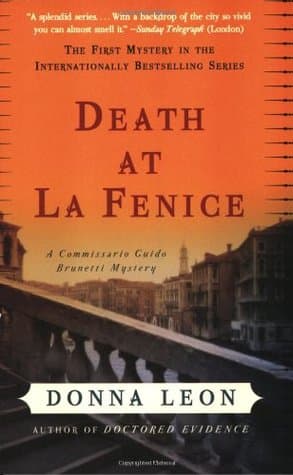
During an intermission of Verdi's 'La Traviata' at Venice's La Fenice opera house, the acclaimed German conductor, Maestro Helmut Wellauer, collapses backstage. He is taken to the hospital but dies soon after, showing signs of poisoning. Vice-Commissario Guido Brunetti of the Questura investigates. Initial observations reveal a peculiar almond odor, typical of cyanide, suggesting murder. Brunetti interviews staff and performers, including the director, stage manager, and singers. No one seems to have a clear motive or saw anything suspicious. The incident shocks Venetian society and the international music community, starting a complex investigation for Brunetti.
Initial Inquiries and Suspects
Brunetti's investigation quickly shows that Maestro Wellauer was disliked by everyone. He was known for his arrogance, cruelty, and abusive behavior towards musicians, singers, and staff. Interviews with orchestra members, especially the first violinist and a flautist, describe a tyrannical perfectionist who enjoyed humiliating others. Brunetti learns Wellauer had many enemies, both professionally and personally. He had a reputation for womanizing and recently had a public argument with a young singer. The large number of people who disliked the Maestro makes it hard for Brunetti to find a main suspect, suggesting widespread revenge rather than a single personal vendetta.
The Poison and the Means
Forensic analysis confirms Wellauer died from cyanide poisoning. Brunetti and his team consider how the poison could have been given during the short intermission. They look at the Maestro's coffee, water, and even his make-up kit. The search for the cyanide's source leads Brunetti to local chemical suppliers and pharmacies, but no immediate clues appear. He also interviews Wellauer's personal assistant, who is quiet and seems upset, offering little useful information. Brunetti suspects the killer knew Wellauer's habits well and had access to backstage areas, limiting potential suspects to those within the opera house.
Wellauer's Private Life and Financial Dealings
As Brunetti investigates more, he uncovers parts of Wellauer's private life that complicate the case. He learns about Wellauer's significant wealth and his detailed financial records, which show nothing immediately suspicious. However, a more personal discovery emerges: Wellauer had a long, secret relationship with a much younger woman, Flavia Petrelli, a mezzo-soprano performing in 'La Traviata' that night. This adds complexity, as Petrelli's initial calm seems to hide a deeper involvement. Brunetti also finds Wellauer's history of manipulating and exploiting people, suggesting a killer driven by deep resentment.
The Petrelli Connection
Brunetti focuses on Flavia Petrelli, Wellauer's mistress. He learns their relationship was tense and that Wellauer was often cruel to her, despite their long affair. Petrelli, a talented but emotionally fragile singer, first denies any major problems, but her manner suggests otherwise. Brunetti considers a lover's quarrel turning into murder, especially given Wellauer's history of infidelity and emotional abuse. He watches Petrelli's interactions with other opera company members, looking for signs of involvement or hidden resentment. Their complex relationship puts Petrelli high on Brunetti's suspect list, but he lacks direct evidence linking her to the poisoning.
The Clue of the Missing Book
During a thorough search of Wellauer's dressing room, Brunetti notices something missing: a specific book of poetry, known to be a favorite of the Maestro's. This small detail interests Brunetti, as it suggests someone had access to the room and a reason to take something personal. He questions the opera house staff again, focusing on who might have entered the dressing room without being seen. The missing book becomes a possible clue to the killer's motive or identity, hinting at a closer connection than first thought and moving the investigation beyond professional dislike.
The Revelation of Wellauer's True Identity
Through careful investigation, including tracing Wellauer's past in Germany, Brunetti uncovers a secret: Helmut Wellauer was not his birth name. He had used this identity for years. His real name was Helmuth Stein, and he had abandoned his wife and children in Germany decades earlier, leaving them poor and emotionally hurt. This changes the understanding of Wellauer's character, showing him as a man capable of great cruelty and abandonment. This discovery brings a new group of potential suspects, especially his estranged family, who would have strong reasons for revenge after years of suffering.
The Estranged Son and the Book's Significance
Brunetti's investigation into Wellauer's past reveals his abandoned son, now an adult. He learns the son, seeking revenge and closure, came to Venice to confront his father. The missing poetry book becomes important: it was a treasured item of Wellauer's first wife, and the son's taking it was a symbolic act of reclaiming his mother's memory and a final act of defiance against his cruel father. Brunetti realizes the son, driven by decades of resentment, planned the poisoning as a precise act of justice.
The Confession and the Aftermath
When faced with Brunetti's clear evidence, Wellauer's son confesses to the murder. He explains how he carefully planned the poisoning, using his knowledge of his father's habits and the opera house's layout. He says his motive was not money or anger, but a deliberate, long-planned act of revenge for the suffering his father caused his mother and himself. He saw his father's death as the only way to get justice and closure for decades of abandonment and emotional abuse. Brunetti understands the deep pain that led to the act, but he must still deal with the complexities of justice and morality when personal suffering causes such extreme actions.
Brunetti's Reflection and the Weight of Justice
With the case closed, Brunetti thinks about justice and the lasting effects of Wellauer's cruelty. He understands the son's motive, recognizing the deep pain that led to the murder, and feels a moral conflict. While the law requires punishment, Brunetti feels some empathy for the killer, seeing him as a victim of Wellauer's lifelong malice. The case leaves Brunetti with a lingering sadness, thinking about the dark parts of human nature and the long-term results of a life without compassion. He returns to his family, finding comfort in their love amidst the harsh realities of his job.
Principal Figures
Guido Brunetti
Protagonist
The astute and empathetic Vice-Commissario of the Venice Questura
Guido Brunetti is the central protagonist, a middle-aged police detective in Venice. He is intelligent, observant, and deeply empathetic, often pondering the moral complexities of the crimes he investigates. Brunetti is a family man, devoted to his wife, Paola, and their two children, Raffi and Hannah, finding solace and intellectual stimulation in their company. He possesses a strong sense of justice but is also pragmatic, understanding the nuances of human behavior and the limitations of the law. His investigative style is characterized by patience, careful observation, and a keen understanding of Venetian society.
Relationships: Paola Brunetti (Wife, intellectual companion); Raffi Brunetti (Son); Hannah Brunetti (Daughter); Sergente Vianello (Subordinate and trusted colleague); Patta (Superior, often a source of frustration)
Maestro Helmut Wellauer
Victim/Antagonist
The world-renowned, tyrannical conductor whose murder sets the plot in motion
Helmut Wellauer is the victim whose murder drives the narrative. He is a highly acclaimed, yet universally detested, German conductor. Wellauer is portrayed as arrogant, cruel, and abusive, deriving pleasure from humiliating those around him, particularly musicians and singers. He has a history of womanizing and emotional exploitation. Brunetti later discovers Wellauer's true identity was Helmuth Stein, and he had abandoned his first family decades ago, leaving them in poverty. His life is characterized by selfishness and a complete lack of empathy, making him a character who garners little sympathy even in death.
Relationships: Flavia Petrelli (Long-term mistress); Wellauer's Son (Estranged and vengeful son); Wellauer's First Wife (Abandoned and suffering wife)
Flavia Petrelli
Supporting
A talented mezzo-soprano and Maestro Wellauer's long-term mistress
Flavia Petrelli is a talented mezzo-soprano performing in 'La Traviata' and Wellauer's long-term mistress. She is beautiful, seemingly composed, but inwardly fragile and deeply affected by Wellauer's abusive behavior. Her relationship with Wellauer was tumultuous and emotionally draining, marked by his infidelities and cruelty. Petrelli initially presents a cool facade to Brunetti, but her vulnerability and the depth of her suffering eventually become apparent. She is a key figure in the initial suspect pool due to her close, yet fraught, connection to the victim.
Relationships: Maestro Helmut Wellauer (Lover, emotionally abusive relationship)
Paola Brunetti
Supporting
Guido Brunetti's intelligent and supportive wife
Paola Brunetti is Guido's wife, a university lecturer with a sharp intellect and a deep love for literature and philosophy. She provides a crucial sounding board for Guido, offering insights and a different perspective on his cases. Paola is strong-willed, opinionated, and fiercely protective of her family. Her discussions with Guido often touch upon broader moral and ethical questions, enriching the narrative and allowing Brunetti to process the complexities of his work. She represents stability, warmth, and intellectual companionship in Brunetti's life, a stark contrast to the darkness he encounters professionally.
Relationships: Guido Brunetti (Husband, intellectual and emotional partner)
Sergente Vianello
Supporting
Brunetti's loyal and efficient subordinate
Sergente Vianello is Brunetti's trusted subordinate and often his primary companion during investigations. He is reliable, diligent, and possesses a practical, straightforward approach to police work. While not as intellectually inclined as Brunetti, Vianello is a keen observer and an excellent fact-finder, providing valuable support and legwork. He is loyal to Brunetti and often acts as a foil to Brunetti's more philosophical musings, keeping the investigation grounded in practical realities. Their professional relationship is built on mutual respect and a comfortable rapport.
Relationships: Guido Brunetti (Superior and trusted colleague)
Patta
Supporting
Brunetti's bureaucratic and often exasperating superior
Patta is Brunetti's superior at the Questura, a character often portrayed as more concerned with appearances, political correctness, and bureaucratic procedure than with true justice. He frequently tries to manage or direct Brunetti's investigations based on public perception or personal ambition, much to Brunetti's quiet frustration. Patta represents the bureaucratic obstacles and political pressures that Brunetti must navigate in his work. Despite his flaws, he is Brunetti's boss, and Brunetti must find ways to work around or subtly defy his directives to pursue the truth.
Relationships: Guido Brunetti (Subordinate, often a source of frustration)
Wellauer's Son (unnamed)
Antagonist
The abandoned son of Maestro Wellauer, driven by decades of revenge
Wellauer's son, whose name is not explicitly given in the summary, is the true murderer. He is the product of Wellauer's first marriage, abandoned along with his mother in Germany decades prior. He grew up in poverty and emotional distress due to his father's callous desertion. His motive is deep-seated revenge for the suffering inflicted upon his family. He meticulously plans the murder, driven by a desire for justice and closure, seeing his father's death as the only way to rectify the past. His act is not one of passion but of cold, calculated retribution.
Relationships: Maestro Helmut Wellauer (Father, object of revenge); Wellauer's First Wife (Mother, whose suffering he avenges)
Wellauer's First Wife (unnamed)
Mentioned
Maestro Wellauer's abandoned first wife, whose suffering fuels the revenge plot
Wellauer's first wife, whose name is not detailed, is a crucial background character. She was abandoned by Wellauer (then Helmuth Stein) decades before, left with their children in poverty and emotional devastation. Her suffering, and the subsequent hardship faced by her son, forms the core motive for Wellauer's murder. Though she does not appear directly in the narrative, her tragic story is central to understanding the depth of the killer's rage and the long-term consequences of Wellauer's cruelty. Her cherished book of poetry becomes a symbolic clue.
Relationships: Maestro Helmut Wellauer (Husband, who abandoned her); Wellauer's Son (Son, who avenges her suffering)
Dottor Aurino
Supporting
The medical examiner who performs the autopsy on Wellauer
Dottor Aurino is the medical examiner who conducts the autopsy on Maestro Wellauer. He provides the crucial forensic evidence confirming cyanide poisoning and aids Brunetti in understanding the precise circumstances of Wellauer's death. Aurino represents the scientific and technical arm of the investigation, providing objective data to support Brunetti's deductions. He is a professional and competent figure, though his role is primarily functional in advancing the plot through medical findings.
Relationships: Guido Brunetti (Professional colleague)
Themes & Insights
Justice vs. Law
This theme looks at the conflict between legal justice and personal revenge. Brunetti struggles with the morality of a murder committed out of deep, understandable revenge. While the law requires the killer's punishment, Brunetti understands the profound suffering that fueled the act. This makes him question if the legal system always provides true justice. The Maestro's son's act, though illegal, is shown as a form of justice for the decades of abandonment and cruelty his family endured. This forces Brunetti and the reader to consider right and wrong beyond legal definitions.
“Justice, Brunetti thought, was often a matter of who got to tell the story first.”
The Corrosive Nature of Cruelty
The novel shows how Maestro Wellauer's lifelong cruelty and arrogance created many enemies and eventually led to his death. His abuse of power, emotional manipulation, and abandonment of his family are detailed, showing the lasting and destructive impact such behavior has. The murder is not random but a direct result of Wellauer's character, showing how deep cruelty can grow and lead to violent revenge. The theme suggests that actions, no matter how small, can have far-reaching and devastating consequences.
“He had been a man who collected enemies as others collected stamps, carefully, methodically, with a connoisseur's eye for the most exquisite hatred.”
Identity and Deception
A main theme is the deception around Wellauer's true identity. The discovery that 'Helmut Wellauer' was an assumed name, and that he had left his previous life as 'Helmuth Stein', highlights the idea of created identities and hidden pasts. This deception allowed him to escape the effects of his earlier actions, but his past eventually catches up. Brunetti's investigation involves uncovering these layers of deception to find the real man and the true motives behind his murder, showing how a person's real self and history can never be fully erased.
“The Maestro, it seemed, had been conducting an entirely different opera in his private life, one of deception and abandonment.”
The Hidden Lives of Public Figures
The novel explores the sharp contrast between a celebrated artist like Maestro Wellauer's public image and his private, often unpleasant, reality. To the world, he was a genius conductor, but privately, he was a cruel, abusive, and manipulative man. Brunetti's investigation looks into the hidden lives of Wellauer and the opera world's elite, revealing the secrets, resentments, and weaknesses beneath the glamorous appearance. This theme shows how a public image can hide deep personal flaws and the emotional cost of keeping such a difference.
“The glitter of La Fenice, he thought, often concealed a remarkable amount of human ugliness.”
Venice as a Character
Venice itself is important, more than just a setting. The city's winding canals, old buildings, and unique atmosphere contribute to the novel's mood and plot. Its isolated nature and complex social structure influence the investigation, as Brunetti navigates its close-knit communities and unspoken rules. Venice's beauty and decay mirror the moral decay and hidden secrets found in the story, making the city an essential, almost living, backdrop for the human drama. The intimate, enclosed environment of Venice allows for a more focused and personal investigation.
“Venice, Brunetti thought, was a city of masks, and not just during Carnival.”
Plot Devices & Literary Techniques
Red Herring (Flavia Petrelli)
The initial focus on the Maestro's mistress as a prime suspect
Flavia Petrelli, Maestro Wellauer's long-term mistress, serves as a significant red herring. Her tumultuous relationship with the victim, coupled with Wellauer's cruel treatment of her, makes her a highly plausible suspect for much of the initial investigation. Brunetti spends considerable time scrutinizing her, her emotional state, and her alibis. This misdirection effectively draws attention away from the true killer and the more complex, deeply buried motive, allowing the real plot to unfold gradually as Brunetti uncovers Wellauer's hidden past and true identity.
The Missing Book of Poetry
A seemingly insignificant detail that provides the crucial link to the killer's motive
The missing book of poetry from Wellauer's dressing room acts as a crucial symbolic and plot device. Initially, its absence seems minor, but Brunetti's persistence in understanding its significance leads to the revelation of Wellauer's true identity and his abandoned family. The book, a cherished possession of Wellauer's first wife, becomes a powerful symbol of the past and the emotional connection between the killer and his victim. Its removal by the son is a deliberate act of reclaiming a piece of his mother's memory, thereby connecting the killer directly to the long-buried past and his motive for revenge.
The Unmasking of Identity
The revelation of Maestro Wellauer's true name and abandoned past
The unmasking of Maestro Wellauer's true identity as Helmuth Stein and the discovery of his abandoned first family is a pivotal plot device. This revelation fundamentally shifts the entire investigation, moving it from a search for a killer motivated by professional animosity or a lover's quarrel to one driven by deep-seated familial revenge. It transforms Wellauer from a mere victim into a figure whose past cruelty directly caused his demise. This device creates a powerful dramatic turn and highlights the theme of deception and the inescapable nature of one's past.
The Tyrannical Victim
The victim's universally disliked character complicates the motive and suspect pool
Maestro Wellauer's character as a universally tyrannical and abusive individual is a central plot device. This characteristic means that almost everyone he encountered had a motive to wish him ill, making the initial search for a killer incredibly broad. This device allows Leon to explore the myriad ways people react to cruelty and abuse, from silent resentment to open defiance. It also serves to muddy the waters for Brunetti, as the sheer number of potential suspects with plausible motives forces him to dig much deeper than a simple personal vendetta, leading to the more profound discovery of Wellauer's hidden life.
Death at La Fenice Quotes
“Perhaps the only way to truly know a city is to walk its streets with no particular destination in mind.”
“The past, like a persistent ghost, always demands its due.”
“There are some people who can only exist in the reflected glow of others.”
“Music, like memory, has a way of twisting itself around the heart and refusing to let go.”
“Venice was a city built on secrets, and sometimes it seemed the very stones whispered them.”
“It was amazing how much evil could be hidden behind a facade of respectability.”
“The truth, like water, always finds a way to seep through the cracks.”
“There are wounds that never heal, only scar over, waiting for the right moment to ache again.”
“Every family has its own peculiar sort of madness, its own private history of slights and triumphs.”
“The most dangerous lies are the ones we tell ourselves.”
“Justice, in Venice, often wore a mask as intricate as those sold for Carnevale.”
“To be truly alone in a crowd is a particular kind of torture.”
“The dead, unlike the living, offer no resistance to the truth.”
“Sometimes the greatest betrayals come from those closest to us.”
Quiz
10 questions on the plot and the characters. Each answer comes with a short explanation.
Question 1
Where does Maestro Helmut Wellauer die?
- At his hotel room
- Backstage at La Fenice
- In a Venetian café
- On a gondola
Show answer
B. Backstage at La Fenice Maestro Wellauer dies backstage at the opera house, La Fenice, during an intermission, which is the central setting for the initial crime.
Question 2
What poison is used to kill Maestro Wellauer?
- Arsenic
- Strychnine
- Cyanide
- Ricin
Show answer
C. Cyanide The book explicitly states that Maestro Wellauer died 'painfully from cyanide poisoning,' which is a key detail in the early stages of the investigation.
Question 3
Who is the protagonist and lead investigator in the novel?
- Dottore Alvise
- Commissario Brunetti
- Sergente Vianello
- Capitano Scarpa
Show answer
B. Commissario Brunetti Guido Brunetti, the suave, urbane vice-commissario of police, is the main character and the 'genius at detection' responsible for solving the case.
Question 4
What is the primary motivation for Maestro Wellauer's murder, as revealed in the investigation?
- Financial gain
- Political rivalry
- Revenge for past wrongs
- A random act of violence
Show answer
C. Revenge for past wrongs The summary states that 'a chilling picture slowly begins to take shape--a detailed portrait of revenge painted with vivid strokes of hatred and shocking depravity,' indicating revenge as the core motive.
Question 5
What makes the investigation particularly challenging for Brunetti, according to the description?
- Lack of evidence at the crime scene
- Too many plausible suspects driven by hatred
- Interference from higher political powers
- The difficulty of navigating Venice's waterways
Show answer
B. Too many plausible suspects driven by hatred The text explicitly states, 'And the dilemma for Guido Brunetti will not be finding a murder suspect, but rather narrowing the choices down to one,' implying a multitude of potential culprits with strong motives.
Question 6
What aspect of Venice is highlighted as a contrast to the violent crime that occurs?
- Its bustling tourist industry
- Its serenely beautiful and mysterious nature
- Its modern art scene
- Its historical military significance
Show answer
B. Its serenely beautiful and mysterious nature The description sets the scene by contrasting 'little violent crime in Venice, a serenely beautiful floating city of mystery and magic, history and decay' with the evil that Brunetti must confront.
Question 7
Which of the following describes Maestro Helmut Wellauer's professional standing?
- A struggling local musician
- A world-renowned conductor
- A famous opera singer
- A respected music critic
Show answer
B. A world-renowned conductor The book identifies Wellauer as 'a world-renowned conductor,' establishing his high profile and the public nature of his death.
Question 8
What core theme is explored through the numerous potential suspects in the murder case?
- The unpredictability of fate
- The pervasive nature of jealousy in the arts
- The long-lasting and destructive power of hatred and revenge
- The corruption within Venetian high society
Show answer
C. The long-lasting and destructive power of hatred and revenge The summary emphasizes 'a detailed portrait of revenge painted with vivid strokes of hatred and shocking depravity,' highlighting hatred and revenge as central themes that create many potential suspects.
Question 9
How does the author characterize violent crime in Venice, generally, at the beginning of the book?
- It is rampant and a daily concern.
- It is virtually nonexistent, making this case an anomaly.
- It is common but usually confined to specific districts.
- It primarily involves petty theft, not murder.
Show answer
B. It is virtually nonexistent, making this case an anomaly. The introduction states, 'There is little violent crime in Venice,' establishing the rarity and shock value of Maestro Wellauer's murder within the city's context.
Question 10
What makes Brunetti's role as 'genius at detection' crucial in this particular case?
- He must navigate complex international diplomacy.
- He needs to decipher an intricate code left by the victim.
- He must distinguish the true motive and killer amidst a plethora of strong, vengeful candidates.
- He has to use advanced forensic technology not available to others.
Show answer
C. He must distinguish the true motive and killer amidst a plethora of strong, vengeful candidates. Brunetti's genius is tested by the challenge of 'narrowing the choices down to one' from many individuals with valid reasons for hatred and revenge against the victim, requiring deep psychological insight and deductive reasoning.
Death at La Fenice FAQ
What is 'Death at La Fenice' about?
'Death at La Fenice' introduces Commissario Guido Brunetti as he investigates the murder of world-renowned conductor Maestro Helmut Wellauer, who dies from cyanide poisoning during an intermission at Venice's famed opera house, La Fenice. Brunetti delves into Wellauer's past and present relationships, uncovering a multitude of enemies and a complex web of motives ranging from professional jealousy to deep personal grievances.
Why should I read 'Death at La Fenice'?
You should read 'Death at La Fenice' for its intricate mystery, its rich portrayal of Venice, and the introduction of Commissario Guido Brunetti, an intelligent and humane detective. The novel offers a deep dive into the operatic world and Venetian society, combining a compelling whodunit with cultural observations and a nuanced exploration of human nature.
What is the background/setting of 'Death at La Fenice'?
The book is set in Venice, Italy, primarily within the elegant and historic opera house La Fenice, as well as various Venetian palazzos, canals, and police headquarters. The setting is crucial, as Venice's unique atmosphere, social dynamics, and the insular world of opera provide a vivid backdrop and integral context for the investigation.
What are the most memorable quotes?
One memorable quote reflects Brunetti's perspective: "He had learned that the human heart was an abyss from which anything could emerge." Another highlights the Venetian setting: "Venice was a city that invited secrets, a place where walls whispered and canals carried away the evidence of lives lived in shadow." These quotes capture the book's themes of human complexity and the city's enigmatic nature.
What writing style does the author use?
Donna Leon employs an elegant, descriptive, and atmospheric writing style. She uses detailed observations of Venetian life, culture, and food, alongside sharp character insights and intricate plotting. The narrative is often reflective, allowing readers to delve into Brunetti's thoughts and moral dilemmas, rather than rushing through action.
What minor details add significant meaning?
The repeated mention of Wellauer's cruel comments about singers' voices and appearances, particularly those directed at Flavia Petrelli, initially seems like typical artistic temperament but later reveals the depth of his capacity for maliciousness. Also, the specific type of cyanide used, initially suggesting a professional killer, becomes a key detail in tracing the murderer's personal connection to the victim.
What are some subtle foreshadowing moments?
Early conversations about Maestro Wellauer's universally disliked personality and his history of making enemies subtly foreshadow the sheer number of suspects Brunetti will face. The casual mention of certain characters' past grievances or long-held grudges, often dismissed as petty, later resurface as significant motivations for murder.
What unexpected character connections exist?
An unexpected connection is revealed between Maestro Wellauer and the elderly Countess Loredana Falier, who harbored a decades-long hatred for him due to a past betrayal involving her family and a significant financial fraud. This deep-seated, long-dormant connection provides a powerful motive that initially goes unnoticed by Brunetti.
What are unspoken character motivations?
Many characters are motivated by unspoken desires for revenge, not just for themselves but for others. For instance, some individuals who worked with Wellauer were silently motivated by a desire to avenge insults or injustices he inflicted upon their colleagues, suggesting a collective, unspoken resentment that fueled a murderous intent.
What psychological complexities do characters exhibit?
The Countess Loredana Falier exhibits complex psychological traits, displaying a calm, almost serene demeanor despite harboring a decades-long, burning desire for revenge. Her ability to meticulously plan and execute the murder, then live with it, showcases a chilling blend of intellect, patience, and unyielding bitterness.
What are the major emotional turning points?
A major emotional turning point for Brunetti is when he fully grasps the depth of Maestro Wellauer's depravity and the profound suffering he inflicted on others. This realization shifts his investigation from simply finding a killer to understanding the moral justifications (or lack thereof) behind the act, challenging his own sense of justice.
How do relationship dynamics evolve?
The relationship dynamic between Brunetti and his wife, Paola, evolves as she becomes an intellectual sounding board for his theories, offering insights that help him navigate the complexities of human motivation. Their discussions often reveal the social and moral undercurrents of Venetian society, deepening Brunetti's understanding of the case.
Which parts remain ambiguous or open-ended?
While the killer is identified, the novel leaves some ambiguity regarding the full extent of Wellauer's past victims and the collective impact of his malice. Brunetti often reflects on the broader implications of justice and retribution, suggesting that some moral questions raised by the murder remain unanswered, even with the culprit found.
What are controversial scenes or decisions?
The most controversial aspect is arguably the motive and the identity of the killer, Countess Loredana Falier. Her cold, calculated revenge, driven by a long-past injustice, forces Brunetti and the reader to confront whether some acts, even murder, can arise from a deeply understandable, albeit illegal, sense of retribution against a truly villainous individual.
Death at La Fenice ending explained: how it ends & what it means
The novel concludes with Commissario Brunetti successfully identifying Countess Loredana Falier as Maestro Wellauer's murderer. She poisoned him in revenge for a decades-old financial scandal and personal humiliation Wellauer inflicted upon her family. The ending means that justice, in a legal sense, is served, but it also prompts Brunetti to ponder the nature of evil and the sometimes-justified rage it can provoke, leaving him with a nuanced understanding of the human capacity for both cruelty and retribution.
About the author
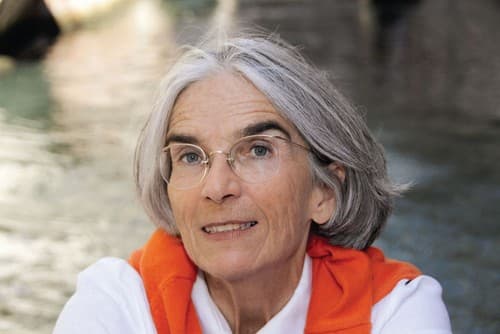
Donna Leon is a critically acclaimed American-born mystery novelist, best known for her Commissario Brunetti series. Set in Venice, her novels are celebrated for their intricate plots, vivid portrayals of Venetian life, and social commentary. "Death at La Fenice" was the debut novel that introduced readers to the beloved detective.
Similar books
- The Name of the Rose
Umberto Eco
4.1 (301k) average on GoodreadsHistorical FictionFeatures a detailed, intellectual investigation into a murder with a strong sense of place and historical context.
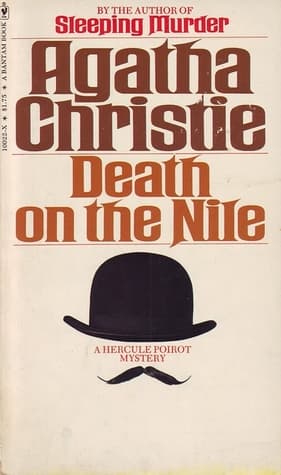
- Death on the Nile
Agatha Christie
4.1 (127k) average on GoodreadsThrillerA classic whodunit with a confined suspect list and a focus on uncovering hidden motives and relationships.
- And Then There Were None
Agatha Christie
4.3 (822k) average on GoodreadsThrillerChristie's novel prioritizes intricate plotting, a high body count, and a classic closed-circle mystery structure. Leon's novel is less about the mechanics of the crime and more about its societal reverberations and the psychological toll on the investigator, offering a more contemplative and character-driven experience.
- Angels & Demons
Dan Brown
3.9 (2.7M) average on GoodreadsThrillerA Harvard symbologist races through Rome's ancient sites, deciphering cryptic clues to unmask the Illuminati and stop a vengeful plot to destroy the Vatican with a stolen antimatter weapon.
- Gone Girl
Gillian Flynn
4.1 (2.3M) average on GoodreadsThrillerA wife's sudden disappearance on her fifth anniversary reveals a web of lies and psychological warfare, exposing the secrets within a seemingly perfect marriage.
- The Girl on the Train
Paula Hawkins
3.9 (2.1M) average on GoodreadsThrillerA woman’s fascination with a seemingly perfect couple she watches from her daily train commute leads her into a dark investigation when she witnesses something that shatters their idyllic image.





Enjoyed the summary?
A summary gives you the shape of the book. The book itself has the detail, the examples and the voice.
Find Death at La Fenice on AmazonAs an Amazon Associate, BookBrief earns from qualifying purchases. How we're funded