

Synopsis
Covers the whole plot, including the ending.
- Difficulty
- Medium
- Pacing
- Moderate
- Mood
- Intriguing, Suspenseful, Thought-provoking, Philosophical
- Read it if
- You enjoy thrillers that blend psychological mystery with philosophical and theological questions, and are open to speculative concepts about the nature of reality and divine existence.
- Skip it if
- You prefer straightforward thrillers without a strong speculative or philosophical bent, or are uncomfortable with stories that challenge established religious or scientific paradigms.
Denial Plot Summary
Covers the whole plot, including the ending.
The First Patient: Dr. Edward Faulkner and the Enigma of Michael
Dr. Edward Faulkner, a psychiatrist at a London clinic, meets Michael, a new patient admitted after a violent outburst in a church. Michael, an intelligent man, insists he has proof of God's existence, claiming he has seen and heard things that defy science. Faulkner, an atheist and scientist, first dismisses Michael's claims as delusions, attributing them to a severe psychotic break. However, Michael's clear arguments and the disturbing details of his visions begin to subtly unnerve Faulkner, forcing him to consider the limits of his own rational views. The initial sessions are a battle of wits, with Michael challenging Faulkner's scientific beliefs and Faulkner trying to understand Michael's perceived madness.
The Editor's Dilemma: Sarah Jinks and the Manuscript
Sarah Jinks, a junior editor at a London publishing house, is tasked with reviewing an unsolicited manuscript. The manuscript, titled 'The Proof,' purports to offer scientific and empirical evidence of God's existence. It is filled with complex theological arguments, philosophical discussions, and bizarre, almost prophetic, personal testimonies. Sarah finds the content deeply unsettling, close to insane, and first dismisses it as the ramblings of a madman. Her senior editor, Mr. Peterson, instructs her to reject it, but Sarah is drawn to the manuscript's strange intensity, unable to shake off a creeping sense of unease. The author's name on the manuscript is simply 'Michael,' a detail that will later become important.
Unsettling Parallels: Faulkner's Research and Sarah's Manuscript
As Dr. Faulkner studies Michael's case history, he uncovers unusual incidents surrounding Michael's life, including unexplained disappearances and a history of intense, visionary experiences that predate his current breakdown. Simultaneously, Sarah, against her better judgment, continues to read Michael's manuscript, finding disturbing similarities between the events described in its pages and unsettling news reports. Both Faulkner and Sarah independently begin to notice an increasingly coherent, though terrifying, logic within Michael's claims, even as they struggle to reconcile it with their understanding of reality. The manuscript speaks of a cosmic clock and coming revelations, mirroring Michael's pronouncements in therapy.
The Convergence: A Shared Obsession
Driven by a growing, shared interest, Faulkner starts researching obscure theological texts and ancient prophecies, while Sarah tries to trace the origins of Michael's manuscript. Their independent investigations eventually lead them to the same unusual coincidences and unexplained phenomena. A chance encounter at a university library, where both are looking for similar esoteric texts, leads to their first, cautious meeting. They discover they are both pursuing the same 'Michael' and are both grappling with the unsettling implications of his claims. This meeting is a turning point, as they realize the scope of the mystery they are involved in is much larger than either had first imagined. They decide to collaborate, fueled by a mix of scientific curiosity and growing dread.
The First 'Proof': Unexplained Events
Working together, Faulkner and Sarah begin to meticulously cross-reference Michael's statements with real-world events. Their investigation leads them to a remote, ancient site in the British countryside, mentioned vaguely in Michael's manuscript. While there, they witness an inexplicable astronomical phenomenon and hear a localized, ethereal sound that seems to resonate directly with phrases Michael had used. This event, witnessed by both of them, is scientifically impossible to explain and deeply shakes their rational worldview. It is the first tangible 'proof' that Michael's claims might not be mere delusions, but rather a terrifying glimpse into a reality they were not prepared to accept. The experience leaves them profoundly disturbed and questioning everything they thought they knew.
Michael's Escape and the Intensification of the Hunt
Just as Faulkner and Sarah begin to truly believe in the possibility of Michael's claims, Michael mysteriously escapes from the psychiatric clinic, leaving behind cryptic notes that deepen the mystery. His escape triggers a nationwide search, but Faulkner and Sarah realize they are not just looking for a mentally unstable patient; they are pursuing someone who holds extraordinary, perhaps cosmic, knowledge. The stakes are raised considerably, as they fear what Michael might do or reveal, and what forces might be at play. They become convinced that Michael's escape is not random, but part of a larger, unfolding plan, one that he has meticulously documented in his manuscript.
The Cosmic Clock: Decoding the Prophecies
With Michael on the loose, Faulkner and Sarah dedicate themselves to fully deciphering his manuscript, which they now realize is not just a personal testimony but a complex prophecy, outlining a series of impending global events. They discover references to a 'Cosmic Clock' and a precise timetable for what Michael calls 'the Revelation.' The prophecies are chillingly specific, detailing natural disasters, societal upheavals, and spiritual awakenings. As they decode the manuscript, they find that some of the predicted events are already beginning to manifest, albeit subtly, in global news. A horrifying realization dawns on them: Michael is not predicting the end of the world, but rather the undeniable manifestation of a divine presence, and they are running out of time.
The Opposition: The Secret Society
As Faulkner and Sarah get closer to understanding Michael's truth, they realize they are not alone in their pursuit. They uncover a clandestine organization, a secret society that has known of Michael's claims for centuries and has actively worked to suppress any evidence of divine intervention. This society, made up of influential figures in politics, science, and religion, believes that humanity is not ready for such a revelation and that it would lead to global chaos. They begin to actively interfere with Faulkner and Sarah's investigation, placing obstacles, spreading misinformation, and even resorting to threats, making the duo's quest even more dangerous. The society's existence further validates Michael's claims, confirming the impact his 'proof' would have.
The Final Revelation: Confronting the Truth
After a harrowing chase across continents, dodging the secret society, Faulkner and Sarah finally track Michael to a remote, ancient temple site, the very location where Michael claims the final 'proof' will manifest. Here, Michael, seemingly lucid and calm, explains the full scope of his discovery and the true nature of God's imminent revelation. He reveals that his 'madness' was merely a heightened state of perception, allowing him to commune with a higher reality. The 'proof' is not just philosophical, but an undeniable, sensory experience that will transcend all human understanding, forcing humanity to confront a divine presence it has long denied. The scene is set for the ultimate confrontation between belief and disbelief, science and faith.
The Aftermath: A World Transformed
The book concludes with the 'Revelation' occurring, a profound and undeniable event that leaves the entire world certain of God's existence. The specific nature of this revelation is somewhat ambiguous but is described as an experience that transcends all prior human understanding, witnessed globally. Faulkner and Sarah, no longer atheists or skeptics, are left to grapple with the profound implications of this new reality. The established order of science, religion, and politics is shattered, forced to reconcile with the undeniable. The secret society's efforts are useless. Humanity is changed, facing a future where the divine is no longer a matter of faith, but an undeniable, terrifying, and awe-inspiring truth. The final pages explore the immediate, chaotic impact on a world forced to confront its deepest denial.
Principal Figures
Dr. Edward Faulkner
Protagonist
A brilliant but staunchly atheist psychiatrist, driven by scientific rationalism.
Dr. Edward Faulkner is a highly respected psychiatrist, a man of sharp intellect and unwavering scientific principles. He prides himself on his ability to rationalize and explain human behavior through psychology and neurobiology, dismissing anything beyond the empirical as delusion. He is initially arrogant in his certainty, viewing Michael as a fascinating but ultimately deluded case study. His drive stems from a deep-seated belief in the power of human reason and a skepticism born from a life devoted to scientific inquiry. He is methodical, analytical, and initially resistant to any notion of the supernatural.
Relationships: Michael (Patient-doctor, then intellectual adversary, then source of terrifying truth); Sarah Jinks (Collaborator and fellow seeker of truth)
Sarah Jinks
Protagonist
A junior editor who stumbles upon Michael's manuscript and becomes entangled in the mystery.
Sarah Jinks is a bright, ambitious junior editor with a keen eye for compelling narratives, even if they are unconventional. She is initially pragmatic and focused on her career, viewing Michael's manuscript as unpublishable madness. However, her intellectual curiosity and a subtle, intuitive sense of something profound within the text draw her deeper into the mystery. She is less dogmatic than Faulkner, more open to possibilities, though still grounded in a modern, rational perspective. Her drive comes from a desire to understand and a growing sense of unease that something extraordinary is unfolding.
Relationships: Michael (Author of a manuscript, then source of terrifying truth); Dr. Edward Faulkner (Collaborator and fellow seeker of truth); Mr. Peterson (Her boss, representing the conventional publishing world)
Michael
Catalyst/Antagonist (to conventional thought)
A patient who claims to have irrefutable proof of God's existence.
Michael is initially presented as a highly intelligent but deeply disturbed patient, diagnosed with a severe psychotic disorder. He is articulate, intense, and unwavering in his claims, possessing a disturbing clarity about his 'visions' and 'proof.' He is not malicious but rather driven by an urgent need to convey a truth he believes is paramount for humanity. His 'madness' is eventually revealed to be a heightened state of awareness, allowing him to perceive realities beyond normal human comprehension. He acts as a prophet, a messenger, and a disruptor of established order. His motivations are cosmic, not personal.
Relationships: Dr. Edward Faulkner (Psychiatrist, then intellectual sparring partner, then reluctant believer); Sarah Jinks (Recipient of his manuscript, then fellow witness to the truth)
Mr. Peterson
Supporting
Sarah's senior editor, representing the voice of conventional publishing and skepticism.
Mr. Peterson is Sarah's no-nonsense, pragmatic senior editor. He embodies the conventional wisdom and commercial realities of the publishing industry. He dismisses Michael's manuscript as unpublishable and the work of a lunatic, representing the initial societal denial that Sarah and Faulkner must overcome. He is focused on profitability and established literary norms, unable to see beyond the surface of what he considers 'madness.' He serves as a foil to Sarah's growing curiosity, highlighting the resistance to unconventional truths.
Relationships: Sarah Jinks (Boss-employee)
The Secret Society (Unnamed Leaders)
Antagonist
A clandestine organization dedicated to suppressing the truth of God's existence.
This shadowy organization is comprised of powerful and influential individuals from various sectors—government, science, religion, and finance. They have operated for centuries, believing that humanity is not ready for the truth of God's tangible existence, fearing it would lead to global chaos and the collapse of societal order. They are ruthless in their methods, employing surveillance, manipulation, and intimidation to maintain their version of reality. Their motivation is a twisted form of preservation, believing they are protecting humanity from itself, even if it means denying a fundamental truth.
Relationships: Michael (Target of suppression); Dr. Edward Faulkner (Adversaries); Sarah Jinks (Adversaries)
Themes & Insights
The Conflict Between Science and Faith
At its core, 'Denial' explores the tension between empirical science and religious faith. Dr. Faulkner, as a psychiatrist, represents scientific rationalism, initially dismissing Michael's claims as delusion. Sarah, while less rigid, also approaches the manuscript with a skeptical mindset. The narrative carefully dismantles their scientific certainties, presenting phenomena that defy all known scientific explanation, forcing them to confront the limits of their worldview. The book suggests that true understanding might lie beyond the strictly empirical, challenging modern scientific thought. This conflict is evident in Faulkner's internal struggle during his sessions with Michael, as Michael systematically undermines his scientific beliefs.
“The greatest trick the Devil ever pulled was convincing the world he didn't exist. The greatest trick God ever pulled was convincing the world He was just a belief.”
The Nature of Truth and Reality
The novel constantly questions what constitutes 'truth' and 'reality.' Initially, Michael's claims are dismissed as madness, an alternate reality confined to his mind. However, as Faulkner and Sarah uncover corroborating evidence, their understanding of reality begins to shift. The book proposes that there might be layers of reality beyond human perception, and that what we consider 'truth' is often limited by our denial and biases. The idea that a 'madman' could possess a deeper truth than the most rational minds is central. The climax, with its global 'Revelation,' forces a collective redefinition of reality for all of humanity, showing that truth can be both terrifying and undeniable.
“Madness, Doctor, is merely a different perspective on reality. Sometimes, it's a clearer one.”
Denial and Cognitive Dissonance
The title itself highlights the central theme of denial. Humanity, represented by Faulkner, Sarah, and the Secret Society, actively denies the possibility of a tangible divine presence. Faulkner's initial refusal to entertain Michael's claims, Sarah's professional dismissal of the manuscript, and the Secret Society's centuries-long suppression all show this denial. The cognitive dissonance experienced by Faulkner and Sarah as they encounter clear proof is a key element of their character arcs. The novel explores the psychological ways people reject uncomfortable truths that challenge their fundamental beliefs, and the profound impact when those truths become undeniable.
“It's easier to believe a man is mad than to accept that everything you believe is wrong.”
The Implications of Divine Revelation
Beyond merely proving God's existence, the novel explores the profound and potentially catastrophic implications of such a revelation. The Secret Society's fear of global chaos, the shattering of established religious and scientific institutions, and the fundamental reordering of human society are all explored. The book suggests that while humanity might wish for proof of God, the actual, undeniable manifestation could be terrifying, leading to a crisis of identity, purpose, and order. It is not just about belief, but about the overwhelming societal and individual consequences of a forced confrontation with the divine. The ending portrays a world irrevocably altered, grappling with a truth it was utterly unprepared for.
“When the veil is lifted, Doctor, humanity will not rejoice. It will weep for its lost ignorance.”
Plot Devices & Literary Techniques
The Unsolicited Manuscript
A seemingly random document that acts as a key to a cosmic mystery.
Michael's manuscript, 'The Proof,' serves as a crucial plot device. It's the initial point of contact for Sarah Jinks and provides an independent, textual corroboration of Michael's claims, which eventually brings her into contact with Faulkner. It contains the prophecies, the 'Cosmic Clock,' and the philosophical arguments that guide the protagonists' investigation. Its existence outside of Michael's direct testimony lends credibility and allows for a narrative structure where the 'proof' is slowly unveiled through text and research, rather than solely through direct interaction with the 'madman.' It is the physical manifestation of the terrifying truth.
The 'Madman' as Prophet
A seemingly insane character who holds the ultimate truth.
Michael's character functions as a classic 'madman as prophet' archetype. His initial diagnosis of psychosis allows for the initial dismissal of his claims, building tension and cognitive dissonance. This device challenges the reader's and characters' assumptions about sanity and truth, suggesting that conventional sanity might be a barrier to higher understanding. His 'madness' is not a flaw but a filter, allowing him to perceive realities others cannot. This subversion of expectations makes his eventual revelations all the more impactful and terrifying, as the source of undeniable truth comes from the least expected, most dismissed quarter.
The Cosmic Clock/Prophecy
A hidden timetable for impending global events and divine revelation.
The 'Cosmic Clock' and the detailed prophecies within Michael's manuscript serve as a powerful device for building suspense and urgency. It provides a concrete, albeit cryptic, timeline for the unfolding events, transforming the investigation into a race against time. This device allows the narrative to escalate from psychological drama to a global thriller, as the protagonists realize they are not just solving a mystery but preventing or witnessing a world-altering event. The specificity of the prophecies, even if initially disbelieved, provides a framework against which real-world events can be measured, slowly convincing the protagonists and the reader.
The Secret Society
A clandestine organization actively suppressing a profound truth.
The Secret Society acts as an external antagonistic force, providing tangible obstacles and raising the stakes beyond a purely intellectual or psychological conflict. Their existence confirms the profound impact of Michael's truth, demonstrating that powerful entities have long been aware of and actively tried to control this knowledge. This device introduces elements of political intrigue, conspiracy, and espionage, adding layers of danger and complexity to Faulkner and Sarah's quest. Their opposition validates Michael's claims and underscores the magnitude of the truth being revealed, highlighting humanity's inherent resistance to such a profound shift in understanding.
Denial Quotes
“The past is never dead. It's not even past.”
“Sometimes the only way out is through.”
“Lies breed lies, and soon you're lost in a labyrinth of your own making.”
“Fear has a way of distorting everything, making shadows into monsters.”
“Justice isn't always fair, but it always finds a way.”
“The most dangerous secrets are the ones we keep from ourselves.”
“Every choice has a ripple effect, even the ones we think are insignificant.”
“In the darkness, the truth often shines the brightest.”
“You can run, but you can never truly escape yourself.”
“Trust is a fragile thing, easily broken and almost impossible to mend.”
“Sometimes the greatest evil wears the most charming smile.”
“Memory is a fickle friend, sometimes a comfort, sometimes a curse.”
“The line between sanity and madness is often thinner than we dare to imagine.”
Quiz
10 questions on the plot and the characters. Each answer comes with a short explanation.
Question 1
What is the profession of the protagonist, Sam, at the beginning of the story?
- A psychiatrist
- A journalist
- A book editor
- A police detective
Show answer
C. A book editor Sam is introduced as a book editor, specifically working on a manuscript that brings her into contact with the controversial psychiatrist.
Question 2
Who is the psychiatrist initially treating the patient who claims to have proof of God?
- Dr. Alex Kennedy
- Dr. Ben Carter
- Dr. Sarah Miller
- Dr. Michael Davies
Show answer
A. Dr. Alex Kennedy Dr. Alex Kennedy is the psychiatrist who is deeply involved with the patient and his extraordinary claims, and who initially dismisses them as delusion.
Question 3
What is the name of the patient who claims to have proof of God's existence?
- John Smith
- Arthur Jenkins
- Robert Jones
- Peter Brown
Show answer
B. Arthur Jenkins Arthur Jenkins is the patient in the psychiatric hospital whose claims about God's existence drive the central plot of the novel.
Question 4
What is the initial reaction of both Sam and Dr. Kennedy to Arthur Jenkins's claims?
- Immediate belief and excitement
- Skepticism and dismissal as delusion
- Fear and avoidance of the topic
- Indifference and professional detachment
Show answer
B. Skepticism and dismissal as delusion Both Sam and Dr. Kennedy, coming from rational and scientific backgrounds, initially view Jenkins's claims as symptoms of his mental illness.
Question 5
What kind of evidence does Arthur Jenkins claim to possess that proves God's existence?
- An ancient religious artifact
- A mathematical equation or code
- A series of prophetic visions
- Personal communication from a divine entity
Show answer
B. A mathematical equation or code Jenkins's 'proof' is not a physical object or spiritual experience, but rather a complex mathematical or coded sequence that he believes demonstrates an intelligent designer.
Question 6
What drives Sam and Dr. Kennedy to reconsider their initial assessment of Arthur Jenkins?
- A direct intervention by a religious organization
- Jenkins's sudden recovery and release from the hospital
- Unexplained events and the compelling, consistent nature of Jenkins's 'proof'
- Pressure from the media to investigate his claims further
Show answer
C. Unexplained events and the compelling, consistent nature of Jenkins's 'proof' Their reconsideration stems from the growing realization that Jenkins's 'delusions' are remarkably coherent and begin to align with strange occurrences, making his claims disturbingly plausible.
Question 7
What is the central theme explored by the novel regarding the nature of belief and reality?
- The conflict between scientific advancement and religious dogma
- The terrifying possibility that what is dismissed as madness might be ultimate truth
- The psychological impact of isolation and institutionalization
- The corrupting influence of power within the medical establishment
Show answer
B. The terrifying possibility that what is dismissed as madness might be ultimate truth The core of the story is the unsettling premise that a 'madman' could possess a truth so profound and challenging that it shatters conventional understanding of reality, forcing others to confront their own 'denial'.
Question 8
How does the discovery of Jenkins's 'proof' impact the world outside the immediate characters?
- It leads to a global religious revival and widespread acceptance of faith.
- It remains a closely guarded secret, only known to a select few.
- It causes immense societal upheaval, fear, and a re-evaluation of existence.
- It is ultimately debunked as a complex hoax.
Show answer
C. It causes immense societal upheaval, fear, and a re-evaluation of existence. If Jenkins's proof is indeed valid, it would have catastrophic implications for all human understanding, leading to global panic and a fundamental shift in perspective on life, death, and purpose.
Question 9
What ethical dilemma do Sam and Dr. Kennedy face once they begin to believe Arthur Jenkins?
- Whether to exploit Jenkins's discovery for personal gain.
- How to protect Jenkins from those who would silence him, while also grappling with the implications of his truth.
- If they should attempt to replicate Jenkins's discovery themselves.
- Whether to commit Jenkins to a more secure, long-term institution.
Show answer
B. How to protect Jenkins from those who would silence him, while also grappling with the implications of his truth. Once they entertain the possibility of Jenkins's truth, they are faced with the moral imperative to protect him and his revelation, despite the terrifying consequences it might unleash.
Question 10
The title 'Denial' primarily refers to whose initial psychological state in the novel?
- Arthur Jenkins's denial of his own mental illness.
- The world's general denial of any supernatural existence.
- Sam and Dr. Kennedy's initial refusal to accept the possibility of Jenkins's claims.
- Religious institutions' denial of scientific evidence.
Show answer
C. Sam and Dr. Kennedy's initial refusal to accept the possibility of Jenkins's claims. The title directly reflects the psychological barrier that Sam and Dr. Kennedy initially erect against Arthur Jenkins's claims, categorizing them as madness rather than confronting the terrifying implications of their potential truth.
Denial FAQ
What is the central premise of 'Denial'?
'Denial' revolves around the shocking realization that a man previously dismissed as delusional, who claims to have proof of God's existence, might actually be telling the terrifying truth. This revelation upends the lives of a young editor and a psychiatrist who initially sought to understand or dismiss his claims.
Who are the main characters involved in uncovering the truth?
The primary characters are Sarah, a young editor, and Dr. Richard Meredith, a psychiatrist. Sarah initially encounters the man's manuscript, and Dr. Meredith is involved in his psychiatric evaluation, both of whom are profoundly affected when they start to believe his extraordinary claims about God.
What kind of 'proof' does the madman claim to possess regarding God's existence?
The man, whose name is initially withheld to maintain mystery, claims his proof is not theological or philosophical, but empirical and scientific in nature. He asserts he has discovered a tangible, verifiable piece of evidence that undeniably points to a divine creator, challenging all existing understanding of reality.
How does the book explore the conflict between faith and science?
The book deeply explores this conflict by presenting a scenario where a scientific 'proof' of God threatens to obliterate the traditional concept of faith, turning belief into a verifiable fact. It examines the psychological and societal implications of such a discovery, blurring the lines between what is considered spiritual and what is empirically provable.
What initial reactions do Sarah and Dr. Meredith have to the man's claims?
Initially, Sarah is intrigued but skeptical of the manuscript's wild assertions, while Dr. Meredith views the man as suffering from a profound delusion, characteristic of a severe psychiatric condition. Both approach his claims with professional detachment, trying to rationalize or diagnose his extraordinary beliefs.
Are there any subtle hints early on that suggest the man's sanity or the validity of his claims?
Yes, subtle hints often manifest in the man's coherent, if unsettling, discourse and his precise, unwavering conviction, which challenges Dr. Meredith's diagnostic categories. Sarah also notes an unusual consistency and intricate detail in his manuscript that goes beyond typical delusional ramblings, making her pause.
Does the book connect to any real-world scientific theories or philosophical concepts about creation?
While fictional, the book draws parallels to philosophical debates about intelligent design and the limits of human perception, and it might subtly reference quantum physics or cosmological theories in its explanation of the 'proof.' It grounds its extraordinary premise in concepts that echo real scientific speculation, making the impossible seem plausible.
Is there a specific historical or religious text that influences the man's 'proof'?
The book implies that the man's discovery might reinterpret or unlock a previously misunderstood aspect of ancient texts, or it might be entirely independent, a purely scientific revelation. It hints at a convergence where ancient wisdom and modern discovery align, lending deeper credibility to his claims.
How does the 'proof' impact the man himself psychologically, beyond just his conviction?
The 'proof' has left the man isolated and profoundly tormented, bearing the burden of a truth he knows will shatter humanity's worldview. He exhibits a deep sense of despair and urgency, not just conviction, suggesting the truth itself is a heavy psychological weight, rather than a source of peace.
What psychological defense mechanisms do Sarah and Dr. Meredith employ before accepting the truth?
Both characters initially employ denial and rationalization as primary defense mechanisms. Dr. Meredith tries to fit the man into known psychiatric frameworks, while Sarah attempts to find logical inconsistencies in his manuscript, struggling to reconcile his claims with their established understanding of reality.
How does the book portray the psychological impact of having one's fundamental beliefs shattered?
The book vividly portrays the profound disorienting and terrifying psychological impact of having one's foundational beliefs shattered, manifesting as existential dread, identity crisis, and a sense of profound loss of control. Sarah and Dr. Meredith experience a breakdown of their worldview, leading to intense emotional turmoil and fear.
Are there characters who actively resist or try to suppress the truth, and what are their motivations?
Yes, as the truth begins to surface, powerful institutions or individuals, possibly religious or scientific, emerge who actively try to suppress it, driven by fear of societal collapse, loss of power, or the inability to reconcile the discovery with their established doctrines. Their motivations are often rooted in self-preservation or a misguided attempt to protect humanity from an unbearable truth.
Does the book suggest that some truths are better left undiscovered?
The book strongly implies that certain truths, particularly those that fundamentally alter our understanding of existence, can be too overwhelming or destructive for humanity to handle. The terror experienced by the characters upon realizing the truth suggests that not all knowledge brings liberation, and some can lead to profound despair.
What is the philosophical implication of God being 'proven' rather than believed?
The philosophical implication is immense: it transforms God from an object of faith into a scientific fact, potentially robbing humanity of free will in belief, individual spiritual journeys, and the comforting ambiguity of the unknown. It raises questions about the nature of humanity's relationship with the divine when choice is removed.
Is the 'truth' presented as comforting or terrifying, and why?
The 'truth' is overwhelmingly presented as terrifying, not comforting. The terror stems from its implications, which shatter human concepts of free will, purpose, and the very fabric of reality, forcing an unbearable confrontation with an absolute, undeniable power that might not conform to human expectations of benevolence.
How might different religious or scientific communities react to such a discovery within the book's world?
Within the book's world, different communities would likely react with a spectrum of responses: some religious groups might embrace it as ultimate validation, while others might vehemently deny it as blasphemy or a false idol. Scientific communities would either scramble to integrate it into existing frameworks or face a paradigm-shattering crisis, leading to widespread upheaval and conflict.
Does the book offer any hope or resolution, or does it end on a note of despair?
The book tends to lean towards a note of profound unease or despair, given the terrifying nature of the truth and its implications for humanity. While it might offer a fleeting glimmer of understanding or acceptance, the overarching tone suggests that some knowledge is a burden rather than a blessing, leaving a lasting sense of existential dread.
About the author

Peter James is a British author known for his work in fiction, particularly in the thriller genre. His notable books include "Denial," which explores themes of truth and deception, "Alchemist," a story intertwining mystery and adventure, and "Host," which delves into suspenseful narratives. James has gained recognition for his engaging storytelling and complex characters.
Similar books
- The Da Vinci Code
Dan Brown
3.9 (1.9M) average on GoodreadsThrillerExplores ancient secrets, religious conspiracies, and a race against time to uncover a hidden truth.
- The Name of the Rose
Umberto Eco
4.1 (301k) average on GoodreadsHistorical FictionCombines mystery and intellectual debate within a setting where profound truths are sought and guarded.
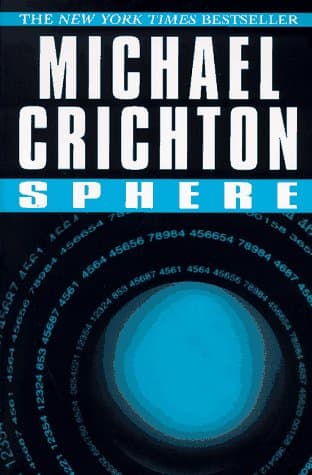
- Sphere
Michael Crichton
3.8 (167k) average on GoodreadsThrillerBoth 'Denial' and 'Sphere' involve protagonists confronting an enigmatic, potentially alien, force that challenges their understanding of the world. However, Crichton's 'Sphere' is rooted in hard science fiction, exploring human psychology under extreme duress in a contained environment, with the threat being external and observable. James's 'Denial' leans more into the cosmic horror tradition, where the threat is often intangible, ancient, and deeply intertwined with human history and consciousness, blurring the lines between external threat and internal breakdown. 'Denial' seeks to unravel a truth that has been hidden by humanity, while 'Sphere' discovers a truth that is alien to humanity.
- Angels & Demons
Dan Brown
3.9 (2.7M) average on GoodreadsThrillerA Harvard symbologist races through Rome's ancient sites, deciphering cryptic clues to unmask the Illuminati and stop a vengeful plot to destroy the Vatican with a stolen antimatter weapon.
- Gone Girl
Gillian Flynn
4.1 (2.3M) average on GoodreadsThrillerA wife's sudden disappearance on her fifth anniversary reveals a web of lies and psychological warfare, exposing the secrets within a seemingly perfect marriage.
- The Girl on the Train
Paula Hawkins
3.9 (2.1M) average on GoodreadsThrillerA woman’s fascination with a seemingly perfect couple she watches from her daily train commute leads her into a dark investigation when she witnesses something that shatters their idyllic image.





Enjoyed the summary?
A summary gives you the shape of the book. The book itself has the detail, the examples and the voice.
Find Denial on AmazonAs an Amazon Associate, BookBrief earns from qualifying purchases. How we're funded