

Synopsis
Covers the whole plot, including the ending.
- Difficulty
- Medium
- Pacing
- Moderate
- Mood
- Darkly humorous, Suspenseful, Macabre, Witty
- Read it if
- You enjoy dark humor, psychological thrillers, and morally ambiguous protagonists, especially if you like the 'Dexter' series.
- Skip it if
- You are sensitive to graphic violence, dark themes, or find the glorification of a serial killer unappealing.
Dexter By Design Plot Summary
Covers the whole plot, including the ending.
Honeymoon's End and a Macabre Display
Dexter Morgan returns to Miami from his honeymoon in Paris with Rita, having managed his 'Dark Passenger' during their trip. Life has taken on an unusual normalcy, with Rita's children, Astor and Cody, now living with them. However, the peace is shattered when a body is discovered on South Beach, arranged in a grotesque scene: a young woman posed as a sunbather, complete with beach chair, sunglasses, and a severed head placed between her legs. The scene immediately captures Dexter's dark fascination, signaling the arrival of a new kind of killer whose artistic flair challenges Dexter's own understanding of murder and justice.
First Impressions of the Artist
Detective Sergeant Doakes, still recovering from his previous encounter with Dexter, is back on the scene, though mostly confined to a wheelchair and struggling with basic communication. Angel Batista and Debra Morgan lead the investigation into the first victim, whose identity is eventually revealed as a local art student. The meticulous staging of the crime scene, designed to shock, suggests a killer who views murder as an art form. Dexter, working as a blood spatter analyst, is both repulsed and intrigued, recognizing a perverse kindred spirit in the killer's dedication to their craft, even if their methods differ significantly from his own.
A Second, More Elaborate Creation
The killer strikes again, and this time the scene is even more elaborate and disturbing. A young man's body is found in the ocean, posed as a mermaid, with a tail fashioned from fishing nets and shells, and strategically placed kelp. This second victim further confirms that Miami has a serial killer obsessed with aesthetic presentation. Dexter observes the details, noting the killer's progression and the increasing complexity of their work. He feels a growing sense of competition and a dark admiration for the killer's commitment, even as he internally critiques their artistic choices and the lack of a proper 'code' in their victim selection.
Debra's Frustration and Dexter's Insight
Debra Morgan, now a detective, is increasingly frustrated by the lack of progress in identifying the 'Art Killer.' Her usual blunt approach is not yielding results against such an unconventional perpetrator. Meanwhile, Dexter, using his unique perspective and access to crime scene details, starts to connect the dots. He notices patterns in the victims' backgrounds and the artistic motifs, leading him to believe the killer is not just creating art, but is likely an artist themselves, possibly someone involved in the local art scene. His 'Dark Passenger' begins to stir with the prospect of hunting this new, intriguing prey.
The Art World Connection
The victims are all linked to Miami's avant-garde art scene, specifically a gallery known for its controversial exhibits. This connection directs the police, including Debra and Angel Batista, to interview various artists, curators, and patrons. Dexter, leveraging his position, subtly guides the investigation towards individuals who might possess the artistic skill and twisted mindset necessary to create such macabre displays. He finds himself drawn to the eccentric and often aggressive personalities within this world, searching for the one who resonates with his own dark understanding of creation and destruction.
Introducing Robert Chase
Through police work and his own instinct, Dexter narrows in on Robert Chase, a renowned but volatile performance artist known for his shocking and often violent installations. Chase's history of pushing boundaries, his public outbursts, and his fascination with death and transformation align with the 'Art Killer's' profile. Dexter begins to stalk Chase, observing his behavior, his interactions, and his artistic process, which often involves live, visceral performances that blur the lines between art and reality. The hunt intensifies as Dexter feels a dangerous connection to Chase's twisted genius.
A Confrontation of Artists
Dexter gets closer to Robert Chase, even attending one of his intense performance art pieces. During a private conversation, Dexter subtly probes Chase, trying to gauge his reaction and confirm his suspicions. He senses a deep darkness within Chase, a desire to shock and control, but also a lack of the specific 'code' that governs Dexter's own killings. Chase, in turn, seems to recognize something unique in Dexter, an unspoken understanding of the macabre. This interaction solidifies Dexter's belief that Chase is the killer, and that their eventual confrontation will be a clash of two very different, yet equally dark, artistic philosophies.
The Final Masterpiece
Robert Chase prepares for his most ambitious and horrific 'masterpiece' yet, planning a public display that will involve multiple victims and a grand, theatrical reveal. The pressure on Miami Metro to stop the killer is immense. Dexter, now confident in Chase's identity, knows he must act before more innocent lives are lost. He tracks Chase to his hidden studio, a macabre workshop filled with props, tools, and the chilling signs of his twisted artistry. Dexter understands that this is not just about stopping a killer; it is about a duel between two individuals who understand the dark beauty of death, each with their own unique approach to its execution.
Dexter's Justice
Dexter confronts Robert Chase in his studio, a place where Chase has meticulously planned his final, gruesome exhibit. The confrontation is a tense cat-and-mouse game, with Chase initially believing Dexter might be an admirer or even a potential collaborator. However, Dexter reveals his true intentions, incapacitating Chase and preparing him for the ritual of the 'Dark Passenger.' Dexter meticulously explains Chase's crimes, the pain he inflicted, and the twisted nature of his 'art.' In a grim reversal, Dexter becomes the ultimate critic, delivering a final, definitive judgment on Chase's life and work, ensuring his 'art' will never harm anyone again.
Aftermath and Lingering Questions
With Robert Chase dispatched, the 'Art Killer' case is officially closed by Miami Metro, much to Debra's relief. Dexter returns to his somewhat normal life with Rita, Astor, and Cody, but the experience leaves a lasting mark. He reflects on the fine line between creation and destruction, the subjective nature of art, and the unsettling similarities and crucial differences between himself and Chase. While he eliminated a dangerous killer, the encounter forced Dexter to confront the artistic impulses within his own 'Dark Passenger,' leaving him to ponder the deeper meaning of his own gruesome 'masterpieces' and his place in a world he both inhabits and preys upon.
Dexter By Design Characters
Dexter Morgan
Protagonist
A serial killer who works as a blood spatter analyst for Miami Metro, guided by a strict code.
Dexter is a forensic blood spatter analyst for the Miami Metro Police Department, and secretly, a serial killer who only targets other murderers who have escaped justice. He is driven by his 'Dark Passenger,' an inner compulsion for violence, which he manages through a strict moral code taught by his adoptive father, Harry. He strives to appear normal, often observing human behavior with a detached, analytical eye. In this book, he is newly married to Rita and attempting to balance his domestic life with his homicidal urges, finding a strange kinship and rivalry with the 'Art Killer.'
Relationships: Rita Bennett (His wife, whom he tries to protect and maintain a semblance of a normal marriage with.); Debra Morgan (His adoptive sister and fellow detective, whom he cares for and subtly manipulates to aid his own pursuits.); Angel Batista (His colleague and friend at Miami Metro, a detective who trusts Dexter's professional judgment.); Sergeant Doakes (His former nemesis who is now recovering, still possessing an unspoken suspicion of Dexter.)
Robert Chase
Antagonist
A celebrated but sadistic performance artist who creates macabre murder tableaux.
Robert Chase is the 'Art Killer,' a highly regarded but deeply disturbed performance artist in Miami's avant-garde scene. He views murder as the ultimate art form, meticulously staging his victims in elaborate, shocking displays. Chase is driven by a desire for recognition and to push societal boundaries, believing his gruesome creations are profound statements. He is charismatic yet volatile, possessing a twisted artistic vision that clashes with Dexter's more 'code'-driven approach to killing. His actions force Dexter to confront the performative aspects of his own dark desires.
Relationships: Dexter Morgan (His rival in the art of killing, though Chase is initially unaware of Dexter's true nature.)
Debra Morgan
Supporting
Dexter's adoptive sister and a detective at Miami Metro, struggling with the gruesome case.
Debra is a tough, foul-mouthed, but dedicated detective at Miami Metro. She genuinely cares for Dexter, though she often expresses her affection through sarcastic remarks. She is ambitious and determined to solve the 'Art Killer' case, but finds herself frustrated by the killer's unconventional methods and the lack of traditional clues. Her professional struggles highlight the bizarre nature of the crimes, and she relies on Dexter's unique insights, unaware of his true involvement. She represents the 'normal' law enforcement perspective against which Dexter's dark activities are contrasted.
Relationships: Dexter Morgan (Her adoptive brother, whom she loves and often relies on for professional insight, unaware of his secret life.); Angel Batista (Her partner and friend, with whom she shares a close working relationship.)
Rita Bennett
Supporting
Dexter's wife, a kind but somewhat naive woman trying to build a normal family life.
Rita is Dexter's wife, a sweet-natured woman who has endured past trauma and seeks stability and normalcy. She genuinely loves Dexter, believing him to be a steady, if somewhat emotionally reserved, husband. She is largely oblivious to Dexter's 'Dark Passenger' and his nocturnal activities, attributing his quirks to his past and his job. Her focus is on creating a loving home for her children, Astor and Cody, and her new husband. Her presence anchors Dexter to a semblance of a normal life, providing a constant reminder of the facade he must maintain.
Relationships: Dexter Morgan (Her husband, whom she loves and trusts, unaware of his murderous secret.); Astor Bennett (Her daughter.); Cody Bennett (Her son.)
Angel Batista
Supporting
A good-natured detective at Miami Metro, Dexter's friend and colleague.
Angel Batista is a detective with Miami Metro and Dexter's friend and colleague. He is generally warm, empathetic, and a dedicated police officer. He values his relationships and often tries to understand people's motivations. Angel respects Dexter's professional abilities and often confides in him, viewing him as a trusted, if slightly odd, friend. He is instrumental in the police investigation of the 'Art Killer,' providing a balance to Debra's more aggressive approach. His presence helps ground the police procedural elements of the narrative.
Relationships: Dexter Morgan (His colleague and friend, whom he trusts professionally and personally.); Debra Morgan (His partner and friend.)
Sergeant Doakes
Supporting
A former detective, now recovering from an injury, still suspicious of Dexter.
Sergeant Doakes, Dexter's former nemesis, is severely injured and mostly confined to a wheelchair, struggling with communication. Despite his physical limitations, his intense suspicion and silent judgment of Dexter persist. He represents a lingering threat to Dexter's secret, a constant reminder that someone, even in a diminished capacity, sees through his facade. His presence adds a layer of tension and unresolved conflict, as Dexter must navigate Doakes's silent accusations while trying to maintain his carefully constructed normal life.
Relationships: Dexter Morgan (His former colleague and personal rival, whom he deeply distrusts and suspects of being a killer.)
Astor Bennett
Supporting
Rita's daughter, now living with Dexter.
Astor is Rita's eldest child, a pre-teen girl who is adjusting to her new life with Dexter as her stepfather. She often exhibits typical teenage moods and occasional defiance, but generally seeks stability and affection. Her presence, along with Cody's, forces Dexter to engage more with domestic life and the challenges of parenthood, further complicating his attempts to balance his two lives. Dexter often views her, and Cody, with a detached, analytical interest, trying to understand their emotional needs.
Relationships: Rita Bennett (Her mother.); Cody Bennett (Her brother.); Dexter Morgan (Her stepfather.)
Cody Bennett
Supporting
Rita's son, now living with Dexter.
Cody is Rita's younger child, a quiet and somewhat unusual boy who, unbeknownst to Rita, shares some of Dexter's darker inclinations. He is observant and often seems to understand more than he lets on, particularly regarding Dexter's true nature. His subtle, unsettling interests hint at a potential 'Dark Passenger' of his own, making Dexter view him with a mixture of fascination and concern. Cody's presence adds a unique dynamic to Dexter's family life, as Dexter recognizes a potential protege or successor in him.
Relationships: Rita Bennett (His mother.); Astor Bennett (His sister.); Dexter Morgan (His stepfather, with whom he shares a subtle, dark understanding.)
Dexter By Design Themes
Art as a Reflection of Darkness
The novel explores how art can be a powerful medium for expressing and acting upon humanity's darkest impulses. Robert Chase uses murder as his ultimate artistic expression, meticulously staging his victims to create grotesque 'masterpieces.' This forces Dexter to confront the artistic elements within his own 'Dark Passenger,' blurring the lines between creation and destruction. The theme highlights that while art can be beautiful, it can also be a vehicle for the macabre, reflecting deep psychological disturbances and a twisted aesthetic. The contrast between Chase's public, shocking art and Dexter's private, 'clean' kills emphasizes different facets of this theme.
“He was a killer, yes, but he was also an artist. And in his own twisted way, he was a master.”
The Nature of Normalcy and Deception
Dexter's central struggle is maintaining a facade of normalcy while harboring his homicidal urges. His marriage to Rita and his role as a stepfather push him further into conventional domesticity, making his secret life more challenging to manage. He constantly observes and mimics 'normal' human behavior, highlighting the performative aspect of his existence. The theme questions what 'normal' truly means and how easily it can be faked, particularly in the context of a serial killer living undetected in plain sight. His internal monologue frequently dissects the social cues and expectations he must meet.
“Normal. It was a word that clung to me like a cheap suit, ill-fitting but necessary.”
The Code vs. Anarchy
The conflict between Dexter's strict 'Code of Harry' and Robert Chase's unbridled, arbitrary killings forms a core thematic tension. Dexter only targets other murderers, believing he serves a twisted form of justice. Chase, however, kills indiscriminately for aesthetic and shock value, lacking any moral compass. This contrast forces Dexter to reaffirm his own code and its importance, even as he recognizes a shared dark impulse with Chase. The theme explores the differing justifications for violence and the psychological need for internal rules, even for those who operate outside conventional morality. Dexter sees Chase as a dangerous perversion of his own 'art form'.
“He killed for art. I killed for... justice. A very specific, very bloody kind of justice.”
Identity and Self-Discovery
Dexter is constantly grappling with his identity as a monster, a husband, a father figure, and a forensic analyst. The emergence of the 'Art Killer' forces him to reflect on his own methods and motivations, seeing a distorted mirror image of himself. He questions the 'art' in his own killings and the true nature of his 'Dark Passenger.' This theme explores the ongoing process of self-understanding, even for someone as disconnected as Dexter, and how external challenges can provoke internal introspection about one's true nature and purpose. His interactions with Cody also feed into this, as he sees a potential reflection of himself.
“Who was I? A monster in a lab coat, a husband, a stepfather, a hunter. All of them, and none of them.”
Plot Devices & Literary Techniques
The Dark Passenger
Dexter's internal, insatiable urge to kill, which he channels according to Harry's Code.
The 'Dark Passenger' is Dexter's metaphorical representation of his psychopathic urges, an inner entity that demands to be fed through murder. It serves as Dexter's primary motivation, driving the plot as he seeks out victims. In this novel, the Dark Passenger is particularly intrigued and challenged by Robert Chase's artistic approach to murder, seeing it as both a rival and a fascinating deviation from Dexter's own methods. It's a key device for explaining Dexter's actions and providing his internal monologue with a distinct, often morbid, voice.
The Code of Harry
A set of rules given to Dexter by his adoptive father, guiding his choice of victims and method of operation.
The Code of Harry is the moral framework Dexter uses to justify and control his homicidal urges. It dictates that he only kills other killers who have evaded the justice system, and that he must carefully gather evidence to confirm their guilt. This device provides the ethical (or anti-ethical) structure for Dexter's actions, distinguishing him from indiscriminate serial killers like Robert Chase. It's a constant internal reference point for Dexter, allowing him to maintain a semblance of control and avoid detection, while also serving as a narrative device to introduce his victims.
Forensic Analysis
Dexter's job as a blood spatter analyst, providing him with access to crime scenes and investigative details.
Dexter's profession as a blood spatter analyst at Miami Metro is a crucial plot device. It grants him legitimate access to crime scenes, allowing him to observe details, gather information, and subtly influence investigations without arousing suspicion. His expertise is invaluable to the police, yet it simultaneously serves his own dark agenda, providing him with the means to identify potential victims or track the movements of other killers. It's the perfect cover, blending his scientific acumen with his predatory instincts.
The Tableau Murders
The serial killer's method of staging victims in elaborate, artistic poses.
The 'tableau murders' are the central mystery and a significant plot device. Robert Chase's meticulously staged crime scenes, designed as disturbing works of art, drive the police investigation and capture Dexter's fascination. These elaborate displays provide visual horror and psychological depth, challenging the characters to understand the killer's artistic vision. For Dexter, they are not just crimes but a perverse form of communication, a dark dialogue between two 'artists' of death, compelling him to engage in a hunt that is both professional and deeply personal.
Dexter By Design Quotes
“I'm Dexter, and I'm not sure what I am. I just know there's a darkness in me, and I've found a way to make it useful.”
“The thing about killing people is that it's a very intimate act. You're taking something that can never be given back.”
“Love. It's a word I've always struggled with. It implies a connection, a vulnerability I'm not sure I possess.”
“People are so predictable. They want what they can't have, and they always think they're smarter than they are.”
“My Dark Passenger is always with me, a silent partner, a constant companion. It whispers, it urges, it demands.”
“There's a certain elegance to a well-executed plan, even if the end result is messy.”
“The world is full of monsters, and I'm just one of them. The only difference is, I choose my monsters wisely.”
“Sometimes I wonder if I'm doing good, or just doing what I'm programmed to do.”
“Art, in its purest form, is about expression. And what I do, in my own way, is an expression.”
“The blood speaks to me. It tells me stories, gives me answers.”
“Every secret has a shelf life. Eventually, it spoils.”
“It's not about the kill itself, it's about the hunt. The anticipation, the planning, the inevitable outcome.”
“Being normal is a constant performance. And sometimes, I get tired of the applause.”
“There's a rhythm to the city, a dark pulse beneath the surface. And I'm just dancing to its beat.”
Quiz
10 questions on the plot and the characters. Each answer comes with a short explanation.
Question 1
Where did Dexter Morgan spend his honeymoon before the events of 'Dexter By Design'?
- London
- Paris
- Rome
- Venice
Show answer
B. Paris The book description explicitly states Dexter had a 'surprisingly glorious honeymoon in Paris'.
Question 2
What is Dexter's profession in Miami?
- Forensic Psychologist
- Homicide Detective
- Blood Spatter Analyst
- Medical Examiner
Show answer
C. Blood Spatter Analyst The description states, 'Dexter’s work as a blood spatter analyst never fails to offer new temptations'.
Question 3
What is the initial murder tableau discovered in Miami that piques Dexter's curiosity?
- A victim posed as a swimmer in a pool
- A corpse displayed as a sunbather on a beach chair
- A body arranged as a tourist taking photos
- A victim staged as a chef in a restaurant
Show answer
B. A corpse displayed as a sunbather on a beach chair The description mentions, 'The discovery of a corpse (artfully displayed as a sunbather relaxing on a Miami beach chair) naturally piques Dexter’s curiosity'.
Question 4
What is the primary motivation for Dexter's 'homicidal hobbies'?
- Financial gain
- Personal vendetta
- An offbeat sense of justice
- Random acts of violence
Show answer
C. An offbeat sense of justice The text states his work offers 'new temptations that appeal to his offbeat sense of justice'.
Question 5
What nickname does Dexter use for his inner urge to kill?
- The Night Hunter
- The Shadow Self
- The Dark Passenger
- The Inner Demon
Show answer
C. The Dark Passenger The description refers to 'his Dark Passenger still waits to hunt with him in the moonlight'.
Question 6
How is Dexter's married life described at the beginning of the book?
- Strained and difficult
- Almost normal and agreeable
- Exciting but chaotic
- Lonely and isolating
Show answer
B. Almost normal and agreeable The text states, 'Married life seems to agree with him: he’s devoted to his bride, his stomach is full, and his homicidal hobbies are nicely under control.'
Question 7
What kind of artist is the new serial killer being pursued by Miami's finest?
- A musical virtuoso
- A literary genius
- A sadistic artiste
- A performance artist
Show answer
C. A sadistic artiste The description introduces the antagonist as 'a sadistic artiste--who is creating bizarre murder tableaux of his own'.
Question 8
What is a key thematic element highlighted by the new serial killer's methods?
- The pursuit of fame
- The intersection of murder and art
- The randomness of violence
- The struggle for power
Show answer
B. The intersection of murder and art The killer is described as an 'artiste' creating 'bizarre murder tableaux', directly linking murder with artistic expression.
Question 9
How does the discovery of the new serial killer impact Dexter's 'homicidal hobbies'?
- It forces him to abandon them completely.
- It makes him question his own sense of justice.
- It offers new temptations and puts him 'back in business'.
- It makes him focus solely on his family life.
Show answer
C. It offers new temptations and puts him 'back in business'. The text states, 'And Dexter, of course, is back in business,' implying the new killer reignites his darker pursuits.
Question 10
The synopsis implies a contrast between Dexter's outwardly normal life and his inner world. What literary device does this primarily represent?
- Foreshadowing
- Personification
- Irony
- Allusion
Show answer
C. Irony The contrast between his 'almost normal' married life and his 'Dark Passenger' and 'homicidal hobbies' is a clear example of dramatic or situational irony.
Dexter By Design FAQ
What is the central premise of 'Dexter By Design'?
'Dexter By Design' sees Dexter Morgan, now a newlywed after his Parisian honeymoon, confronting a new serial killer in Miami. This killer, an 'artiste,' stages elaborate murder tableaux, which deeply intrigues Dexter and his Dark Passenger, pulling him back into active pursuit of justice.
How does Dexter's married life with Rita impact his 'hobby' in this book?
Married life with Rita initially provides Dexter with a sense of normalcy and contentment, making his homicidal urges seem 'nicely under control.' However, the emergence of the new serial killer quickly reawakens his Dark Passenger, proving that domestic bliss is not enough to suppress his true nature.
Who is the primary antagonist Dexter faces in 'Dexter By Design'?
The primary antagonist is a sadistic serial killer who stages his victims in bizarre, artistic tableaux across Miami. This killer's meticulous and public displays of death challenge Dexter's own method and sense of purpose, making him a compelling rival.
What kind of 'art' does the new killer create with his victims?
The killer creates elaborate, macabre 'art' installations using his victims. An early example is a corpse 'artfully displayed as a sunbather relaxing on a Miami beach chair,' indicating a highly theatrical and public approach to murder.
How does Dexter's role as a blood spatter analyst contribute to the plot?
Dexter's profession as a blood spatter analyst directly immerses him in the investigation of the new killer's crime scenes. His unique insight into the mechanics of murder and his ability to 'read' the scenes provides him with crucial clues and a deeper understanding of the killer's methods, fueling his personal hunt.
Does Dexter feel any personal connection or rivalry with the 'artiste' killer?
Yes, Dexter feels a strong, almost intellectual, rivalry with the 'artiste' killer. The killer's elaborate and public displays of death resonate with Dexter's own dark impulses, making him feel a kinship and a challenge to his own 'art' of murder, albeit under his Code.
Are there any recurring characters from previous books who play a significant role?
While the synopsis focuses on Dexter and the new killer, recurring characters like Deborah Morgan (Dexter's sister) and Rita (his wife) are likely to play significant roles. Deborah's police work would involve her in the investigation, and Rita's presence highlights Dexter's struggle with normalcy.
What specific clues or details does Dexter pick up from the crime scenes that others might miss?
Dexter, with his unique perspective and 'Dark Passenger' insight, is likely to notice subtle details in the staging, the choice of victims, or the method of killing that reveal the killer's personality or motives. His ability to think like a predator gives him an edge in deciphering the 'art.'
How does the 'Dark Passenger' manifest itself in this installment, particularly with Dexter being newly married?
The 'Dark Passenger' initially appears subdued due to Dexter's marital contentment, but the new killer's activities act as a powerful catalyst, reawakening it with renewed vigor. The 'Passenger' revels in the hunt and the challenge presented by such a unique serial killer.
Does Dexter grapple with the morality of his actions more or less now that he is married?
The synopsis suggests that Dexter's homicidal hobbies are 'nicely under control,' implying a period of less internal conflict. However, the new killer's emergence forces him to confront his true nature, potentially leading to a renewed struggle with his 'Code' and his dual life, even with Rita.
How does the 'artiste' killer's motivation compare to Dexter's 'Code of Harry'?
The 'artiste' killer appears to be motivated by a desire for spectacle and perhaps a twisted aesthetic, while Dexter is bound by the 'Code of Harry,' targeting only other killers. This fundamental difference creates a moral and procedural clash, with Dexter seeing the 'artiste' as a target.
What psychological impact does confronting a killer who is also 'artistic' have on Dexter?
Confronting an 'artistic' killer deeply fascinates Dexter, as it mirrors his own meticulous approach to murder, albeit without the 'Code.' This shared dark creativity could lead to a complex mix of admiration, rivalry, and a deeper understanding of his own dark impulses and the nature of evil.
Is the 'artiste' killer a reflection or a foil to Dexter's own nature?
The 'artiste' killer serves as both a reflection and a foil. They reflect Dexter's meticulousness and a certain dark creativity, but are a foil because their lack of a moral code (like Harry's) makes them a target for Dexter, highlighting the specific boundaries of Dexter's own pathology.
Does the book suggest that Dexter's attempts at normalcy (like marriage) are ultimately futile?
The immediate re-emergence of the Dark Passenger upon discovery of the new killer strongly suggests that Dexter's attempts at normalcy, even through marriage, are inherently fragile. His true nature is deeply ingrained and easily reawakened by the right stimulus, implying futility in long-term suppression.
Could the 'artiste' killer be seen as a critique of modern art or celebrity culture?
Given the 'artful' and public display of victims, the killer could be interpreted as a dark critique of modern art's boundaries or a commentary on society's fascination with spectacle and true crime, turning victims into morbid 'exhibits' for public consumption.
What is the significance of the Parisian honeymoon mentioned at the beginning?
The Parisian honeymoon signifies a brief period of idealized happiness and normalcy for Dexter, serving as a stark contrast to the macabre events that follow. It establishes a baseline of contentment from which Dexter is abruptly pulled back into his darker world, highlighting the power of his true calling.
How does the setting of Miami contribute to the atmosphere of the story?
Miami, with its vibrant, often superficial, and sun-drenched facade, provides a stark and ironic backdrop for the dark and gruesome murders. The contrast between the beautiful setting and the horrific crimes enhances the macabre atmosphere and highlights the hidden darkness beneath the city's surface.
Does Dexter struggle with empathy or a lack thereof when observing the 'artiste's' victims?
Dexter's primary struggle is not typically with empathy for victims, but rather a fascination with the killer's method and the 'art' of death. He likely views the victims as pieces in a puzzle, focusing on how they were killed rather than their suffering, aligning with his psychopathic traits.
About the author

Jeff Lindsay is an American author best known for his Dexter series, which includes "Darkly Dreaming Dexter," "Dearly Devoted Dexter," "Dexter in the Dark," and "Dexter By Design." The series follows the life of Dexter Morgan, a forensic blood spatter analyst who leads a secret life as a vigilante serial killer. Lindsay's work has inspired a popular television adaptation, further increasing the series' visibility.
Similar books
- American Psycho
Bret Easton Ellis
3.8 (242k) average on GoodreadsThrillerExplores the mind of a serial killer with a detached, almost artistic perspective on violence.
- The Silence of the Lambs
Thomas Harris
4.2 (464k) average on GoodreadsThrillerFeatures a brilliant, manipulative serial killer and a protagonist who must understand their twisted psychology.
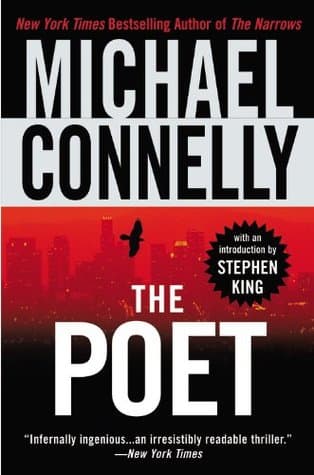
- The Poet
Michael Connelly
4.2 (82k) average on GoodreadsThrillerConnelly's The Poet focuses on a detective's pursuit of a killer, offering a traditional police procedural perspective. Lindsay's Dexter By Design flips this by placing the reader squarely inside the killer's head, providing a completely different lens through which to view crime, justice, and morality.
- Angels & Demons
Dan Brown
3.9 (2.7M) average on GoodreadsThrillerA Harvard symbologist races through Rome's ancient sites, deciphering cryptic clues to unmask the Illuminati and stop a vengeful plot to destroy the Vatican with a stolen antimatter weapon.
- Gone Girl
Gillian Flynn
4.1 (2.3M) average on GoodreadsThrillerA wife's sudden disappearance on her fifth anniversary reveals a web of lies and psychological warfare, exposing the secrets within a seemingly perfect marriage.
- The Girl on the Train
Paula Hawkins
3.9 (2.1M) average on GoodreadsThrillerA woman’s fascination with a seemingly perfect couple she watches from her daily train commute leads her into a dark investigation when she witnesses something that shatters their idyllic image.





Enjoyed the summary?
A summary gives you the shape of the book. The book itself has the detail, the examples and the voice.
Find Dexter By Design on AmazonAs an Amazon Associate, BookBrief earns from qualifying purchases. How we're funded