

Synopsis
Covers the whole plot, including the ending.
- Difficulty
- Medium
- Pacing
- Fast
- Mood
- Suspenseful, Tense, Conspiratorial, Action-packed
- Read it if
- You enjoy fast-paced political thrillers with intricate conspiracies, a hunted protagonist, and a unique team of amateur sleuths.
- Skip it if
- You prefer character-driven dramas over plot-heavy action, or dislike stories with high stakes and frequent betrayals.
Divine Justice Plot Summary
Covers the whole plot, including the ending.
A Desperate Escape and a New Identity
Oliver Stone, real name John Carr, is a former CIA assassin and leader of the Camel Club. He is on the run, framed for the murder of the Director of National Intelligence, Carter Gray, and other high-ranking officials. He escapes a team of assassins led by Harry Finn, a former government operative, and flees Washington D.C. with help from his Camel Club associates. Stone uses his training and resources to create a new identity and disappear, but he knows his enemies, powerful government figures, will not rest until he is dead, as he has knowledge of their secrets and illicit activities.
The Camel Club Investigates and Uncovers a Conspiracy
The remaining members of the Camel Club – Reuben Rhodes, Caleb Faust, and Milton Farb – are devastated by Stone's apparent death and the charges against him. Convinced he is innocent, they begin their own investigation. They use their skills: Reuben's photographic memory, Caleb's network of contacts, and Milton's technological ability. Their initial inquiries lead them to believe that the official story is false and that a deeper conspiracy is at play, involving powerful government figures and a shadowy organization known as the 'Group'.
Stone's Journey to Pennsylvania and the Amish Community
Under the new identity of 'Jonathan Smith,' Stone travels to rural Pennsylvania, seeking refuge in an isolated Amish community. He finds work as a carpenter and slowly integrates into their simple, peaceful way of life, finding a semblance of peace he hasn't known in decades. He befriends a young Amish woman named Annabelle Conroy, whose father, Ben Conroy, is a respected elder. Stone remains vigilant, knowing his past will catch up to him. He uses his time to observe and plan, understanding that his pursuers are relentless.
Annabelle's Secret and Stone's Reconnection
Stone discovers that Annabelle Conroy has a secret past; she was adopted and has ties to the outside world, specifically to a powerful and corrupt senator, Roger Harrison. Meanwhile, the Camel Club, through their efforts, manages to establish coded communication with Stone, confirming he is alive. They share their findings, revealing that the conspiracy involves a black ops program called 'Divine Justice' and a network of high-ranking officials who are eliminating anyone who threatens their power, including Stone and potentially Annabelle's biological family.
The Threat Closes In on the Amish Community
Harry Finn, a skilled and ruthless operative, continues his pursuit of Stone. Through intelligence gathering, Finn and his team narrow Stone's location down to the Amish community in Pennsylvania. Their arrival brings immediate danger to the peaceful inhabitants. Stone is forced to confront his past and protect the innocent people who have offered him sanctuary. The tranquility of the Amish community is shattered as Stone prepares for an inevitable confrontation, knowing his presence puts Annabelle and the others at grave risk.
Confrontation and the Revelation of Divine Justice
Stone engages in a series of tense encounters with Finn and his men within the Amish farmlands. During a confrontation, Stone manages to capture one of Finn's operatives, extracting information about 'Divine Justice,' a clandestine program designed to eliminate perceived threats to national security and powerful individuals. He learns that the program is controlled by a shadowy group, and that his framing was a direct result of his knowledge of their activities. Stone realizes the scope of the conspiracy is greater than he initially imagined.
The Camel Club's Breakthrough and Senator Harrison's Connection
Back in Washington, the Camel Club intensifies their investigation, connecting the 'Divine Justice' program and Senator Roger Harrison, Annabelle's biological father. They discover Harrison's deep ties to corrupt government elements and his role in orchestrating Stone's framing. They also uncover evidence suggesting Harrison's involvement in the disappearance of Annabelle's biological mother and the cover-up of other illicit activities, all aimed at protecting his political career and the interests of the 'Group'.
Annabelle's Decision and Return to the Outside World
Disturbed by the escalating violence and the revelations about her past, Annabelle decides to leave the Amish community. She seeks to understand her true parentage and confront Senator Harrison. Stone, recognizing the danger she faces, reluctantly allows her to go, knowing she holds a key to unraveling the conspiracy. Her departure is a painful moment for Stone, who has grown fond of her and the peaceful life she represents, but he understands her need for answers and her potential role in exposing the truth.
The Camel Club's Trap and the Showdown
The Camel Club, with Stone's guidance, devises a plan to expose Senator Harrison and the 'Divine Justice' program. They leak incriminating information, drawing Harrison into a trap. The plan ends in a tense confrontation where Harrison's corruption and his involvement in the assassinations are revealed. Stone, with the help of the Camel Club, confronts Harrison directly, forcing him to admit his crimes and the existence of the shadowy 'Group' that controls the program. The showdown is fraught with danger, with Stone's life still in the balance.
Justice Served and Lingering Threats
Senator Harrison's crimes are exposed, leading to his downfall and the public revelation of the 'Divine Justice' program. While a victory for Stone and the Camel Club, they know that the shadowy 'Group' behind the program remains largely intact and continues to pose a significant threat. Stone's name is cleared, but his life as John Carr, the former assassin, cannot truly return to normal. He remains a target, and the Camel Club understands their fight for truth and justice is far from over, with powerful enemies still lurking in the shadows.
Divine Justice Characters
Oliver Stone (John Carr)
Protagonist
Former CIA assassin, leader of the Camel Club, framed for murder and on the run.
Oliver Stone, whose real name is John Carr, is a highly skilled and intelligent former CIA assassin. Haunted by his past, he leads the Camel Club, a group of eccentric truth-seekers. In 'Divine Justice,' he is framed for the murder of high-ranking government officials and forced to go on the run, adopting a new identity. Despite his violent past, he possesses a strong moral compass and a deep loyalty to his friends. He is resourceful, meticulous, and capable of extreme violence when necessary, but yearns for peace and anonymity. His primary drive is to clear his name and expose the powerful conspiracy against him.
Relationships: Reuben Rhodes (Close friend and Camel Club member); Caleb Faust (Close friend and Camel Club member); Milton Farb (Close friend and Camel Club member); Annabelle Conroy (Protective, developing bond during his time in the Amish community); Harry Finn (Adversarial, but with a complex professional respect)
Reuben Rhodes
Supporting
Camel Club member with a photographic memory, loyal to Stone.
Reuben Rhodes is a member of the Camel Club, known for his extraordinary photographic memory and his vast knowledge of history and obscure facts. He is fiercely loyal to Oliver Stone and plays a crucial role in the Camel Club's investigation, recalling details and making connections others miss. Despite his unassuming demeanor, Reuben is intelligent and determined, providing the intellectual backbone for the group's efforts to clear Stone's name. His memory is an invaluable asset in piecing together the complex conspiracy.
Relationships: Oliver Stone (Close friend and leader); Caleb Faust (Friend and fellow Camel Club member); Milton Farb (Friend and fellow Camel Club member)
Caleb Faust
Supporting
Camel Club member with extensive street contacts and investigative skills.
Caleb Faust is another key member of the Camel Club. He is a former librarian with a vast network of contacts in the D.C. underworld and a knack for gathering information from unconventional sources. Caleb's street smarts and ability to navigate the city's hidden corners are essential to the Camel Club's investigation into Stone's framing. He is pragmatic and courageous, often putting himself in harm's way to gather intelligence. His resourcefulness complements the intellectual strengths of Reuben and Milton.
Relationships: Oliver Stone (Close friend and leader); Reuben Rhodes (Friend and fellow Camel Club member); Milton Farb (Friend and fellow Camel Club member)
Milton Farb
Supporting
Camel Club member with advanced technological expertise.
Milton Farb is the technological wizard of the Camel Club, possessing exceptional computer skills and a talent for hacking and surveillance. He is often socially awkward but brilliant, capable of accessing secure networks and tracking digital footprints. Milton's technological prowess is indispensable in their efforts to communicate with Stone and to uncover digital evidence related to the 'Divine Justice' program. He provides the modern investigative tools necessary to combat a technologically sophisticated enemy.
Relationships: Oliver Stone (Close friend and leader); Reuben Rhodes (Friend and fellow Camel Club member); Caleb Faust (Friend and fellow Camel Club member)
Annabelle Conroy
Supporting
Young Amish woman with a secret past, befriended by Stone.
Annabelle Conroy is a young Amish woman in the community where Oliver Stone seeks refuge. She is kind, observant, and harbors a secret: she was adopted and has a connection to the outside world. Her biological father is revealed to be Senator Roger Harrison, a key figure in the conspiracy. Annabelle's journey to understand her past intertwines with Stone's fight for justice, making her a potential target and an unwitting pawn. She represents innocence and a potential future for Stone, but also a vulnerability.
Relationships: Oliver Stone (Protective, developing bond); Ben Conroy (Adoptive father); Roger Harrison (Biological father, antagonistic)
Harry Finn
Antagonist
Ruthless former government operative tasked with hunting Stone.
Harry Finn is a highly skilled and utterly ruthless former government operative, now working for the shadowy 'Group' to eliminate Oliver Stone. He is intelligent, methodical, and relentless in his pursuit, posing a significant physical and strategic threat to Stone. Finn believes he is serving a higher purpose, even if it involves morally ambiguous actions. While an antagonist, he is not entirely without his own code, making him a formidable and complex adversary rather than a simple villain.
Relationships: Oliver Stone (Primary target and adversary)
Senator Roger Harrison
Antagonist
Corrupt and powerful senator, Annabelle's biological father, involved in 'Divine Justice'.
Senator Roger Harrison is a powerful and corrupt politician, deeply embedded in the 'Divine Justice' conspiracy. He is Annabelle Conroy's biological father and plays a crucial role in orchestrating Stone's framing to protect his illicit activities and political career. Harrison embodies the corrupt elements within the government that Stone and the Camel Club are fighting against. He is manipulative, ruthless, and driven by self-preservation and the maintenance of his power and reputation.
Relationships: Annabelle Conroy (Biological father, antagonistic relationship due to his actions); Oliver Stone (Antagonist, orchestrator of Stone's framing)
Ben Conroy
Supporting
Respected elder in the Amish community, Annabelle's adoptive father.
Ben Conroy is a respected elder in the Amish community and Annabelle's adoptive father. He is a man of peace and strong moral conviction, who offers Oliver Stone (as Jonathan Smith) refuge and work. Ben represents the simple, honest life that Stone briefly finds solace in. His wisdom and kindness provide a stark contrast to the corrupt world Stone usually inhabits, and his community's safety becomes a major concern for Stone when his past catches up.
Relationships: Annabelle Conroy (Adoptive father); Oliver Stone (Temporary employer and protector)
Divine Justice Themes
Justice and Retribution
The novel explores the nature of justice, both legal and outside the law. Oliver Stone, a former assassin, operates outside the traditional legal system, yet he seeks to expose and punish those who abuse power within it. The 'Divine Justice' program itself is a perversion of justice, claiming to act for national security while serving corrupt interests. The Camel Club, through their unconventional methods, strives to bring true justice to light, showing the moral ambiguities of fighting fire with fire.
“Justice, true justice, was rarely found in the halls of power. It had to be fought for, clawed for, by those who dared to stand against the tide.”
Identity and Belonging
Oliver Stone constantly struggles with his identity as John Carr, the assassin, versus his desire for a peaceful, anonymous life. His time in the Amish community as 'Jonathan Smith' offers him a glimpse of belonging and a simpler existence. Annabelle Conroy's journey to uncover her biological past also relates to this theme, as she grapples with her Amish identity versus her connection to the outside world. The characters are defined not just by who they are, but by where they belong and the choices they make about their past and future.
“He was John Carr, Oliver Stone, Jonathan Smith. And none of them, or all of them, truly defined the man he was.”
Corruption and Abuse of Power
'Divine Justice' explores the widespread corruption within the highest levels of government. Powerful individuals, like Senator Harrison, manipulate the system and use clandestine programs for personal gain and to eliminate perceived threats. The novel shows how power can be used to subvert justice, frame innocents, and maintain a façade of national security while engaging in illegal activities. The Camel Club's mission is about exposing this systemic corruption.
“The higher you went, the more shadows there were. And in those shadows, men did things they could never do in the light.”
Loyalty and Friendship
The unwavering loyalty of the Camel Club members to Oliver Stone is a central theme. Despite Stone being framed and presumed dead, Reuben, Caleb, and Milton risk their lives and freedom to clear his name and expose the conspiracy. Their bond transcends personal risk, showing the strength of true friendship in the face of overwhelming adversity. Stone, in turn, is protective of his friends and the innocent people he encounters, demonstrating that even a hardened operative values human connection.
“They were the Camel Club, a band of misfits who had found each other, and in that camaraderie, they had found their purpose. And for Oliver, that was everything.”
The Search for Truth
The core drive of the Camel Club is a relentless pursuit of truth, regardless of how uncomfortable or dangerous it may be. They gather evidence, connect facts, and challenge official narratives to uncover the reality behind Stone's framing and the 'Divine Justice' program. This theme shows the importance of critical inquiry and skepticism, especially when confronted with powerful forces trying to hide their actions. The truth, however elusive, is the ultimate weapon against corruption.
“The truth was a weapon, sharp and unforgiving. And they were going to wield it.”
Plot Devices & Literary Techniques
The Fugitive Narrative
Driving the plot through the protagonist's desperate escape and pursuit.
The entire plot of 'Divine Justice' is built around the classic fugitive narrative. Oliver Stone is framed for crimes he didn't commit and is relentlessly hunted by powerful forces. This device creates constant tension and propels the story forward, forcing Stone to use his skills to evade capture while simultaneously trying to clear his name. His journey through various disguises and hiding places, culminating in the Amish community, is central to this narrative structure, keeping the reader on edge.
The 'Camel Club' as an Unconventional Investigative Team
A group of eccentric, loyal friends with unique skills aiding the protagonist.
The Camel Club serves as a crucial plot device, providing the means by which Stone's innocence can be proven. Each member (Reuben's memory, Caleb's contacts, Milton's tech skills) possesses a distinct and complementary ability that allows them to conduct a covert investigation parallel to Stone's flight. Their unconventional methods and unwavering loyalty create a strong counterpoint to the official, corrupt institutions, making them an effective and endearing force for good.
The Amish Community as a Sanctuary and Contrast
A peaceful, isolated setting providing temporary refuge and thematic contrast.
The Amish community serves multiple roles as a plot device. It provides a temporary sanctuary for Oliver Stone, allowing him a brief respite from his violent life and a chance to reflect. More importantly, it acts as a stark thematic contrast to the corrupt, violent world Stone usually inhabits. The simplicity and peace of the Amish highlight Stone's yearning for a normal life, while also creating heightened tension when the danger inevitably intrudes upon their innocent world, emphasizing the stakes of Stone's struggle.
'Divine Justice' as a MacGuffin/Central Conspiracy
A clandestine government program driving the antagonist's actions and the plot's mystery.
The 'Divine Justice' program functions as both a central conspiracy and a MacGuffin. It's the reason Stone is framed, the source of the antagonists' power, and the ultimate target of the Camel Club's investigation. While its exact nature and scope are gradually revealed, its existence drives much of the plot's mystery and the antagonists' motivations. It provides a tangible, dangerous entity for the heroes to fight against, symbolizing the pervasive corruption they seek to expose.
Divine Justice Quotes
“The truth was a weapon, and like all weapons, it could be used for good or ill.”
“Justice wasn't about revenge. It was about balance. And sometimes, balance required a heavy hand.”
“The past had a way of reaching out, even across vast distances, to grab you by the throat.”
“Trust was a fragile thing, easily broken, almost impossible to fully repair.”
“There were no clean kills in their world, only varying degrees of messy.”
“Every lie told was a thread in a web that eventually entangled the liar.”
“The line between right and wrong blurred when survival was on the table.”
“He lived in the shadows, but sometimes the shadows were the only place to find clarity.”
“Fear was a powerful motivator, capable of driving people to unthinkable acts.”
“The dead told no tales, but their silence often screamed the loudest.”
“Power corrupted, but the lack of it could be just as destructive.”
“Sometimes the only way to save someone was to let them go.”
“He was a ghost in a world that demanded tangible proof of existence.”
“The most dangerous enemies were often the ones you never saw coming.”
Quiz
10 questions on the plot and the characters. Each answer comes with a short explanation.
Question 1
At the beginning of 'Divine Justice', what is Oliver Stone's primary status?
- He is on a deep cover assignment for the CIA.
- He is the most wanted man in America.
- He is retired and living in anonymity.
- He is leading a new government task force.
Show answer
B. He is the most wanted man in America. The book opens with Oliver Stone, whose real name is John Carr, being described as the most wanted man in America, hunted by powerful individuals.
Question 2
What is Oliver Stone's real name, as revealed in 'Divine Justice'?
- David Baldacci
- John Carr
- Arthur Newman
- Michael Shaw
Show answer
B. John Carr The book explicitly states that the covert agent Oliver Stone's real name is John Carr.
Question 3
Why do 'men in the highest circles of power' want Oliver Stone dead?
- He stole classified government funds.
- He betrayed his country to a foreign power.
- He knows too many of their deepest secrets.
- He publicly exposed their corruption.
Show answer
C. He knows too many of their deepest secrets. The powerful individuals want Stone dead because he possesses knowledge of their 'deepest secrets,' making him a significant threat.
Question 4
Who are the members of the Camel Club to Oliver Stone?
- His former government handlers.
- His closest friends and allies.
- A rival intelligence agency.
- A group he is investigating.
Show answer
B. His closest friends and allies. The Camel Club members are described as Stone's friends who are willing to risk their lives to save him, indicating a deep bond.
Question 5
What is the Camel Club's stance regarding Oliver Stone's predicament?
- They believe he should turn himself in.
- They want him alive and are willing to risk their lives to save him.
- They are neutral and observe from afar.
- They are trying to exploit his situation for their own gain.
Show answer
B. They want him alive and are willing to risk their lives to save him. Unlike those who want Stone dead, the Camel Club 'not only want him alive; they are willing to risk their own lives to save their leader and friend.'
Question 6
How is the intensity of 'Divine Justice' described in relation to its predecessor, 'Stone Cold'?
- It is a calmer, more reflective story.
- It is a perfect follow-up, maintaining relentless intensity.
- It shifts genres from thriller to mystery.
- It focuses more on character development than action.
Show answer
B. It is a perfect follow-up, maintaining relentless intensity. The description highlights 'Divine Justice' as a 'thriller of relentless intensity, a perfect follow-up to his acclaimed Stone Cold,' suggesting it maintains a high level of suspense.
Question 7
What central conflict drives the plot of 'Divine Justice'?
- Oliver Stone's quest for personal revenge.
- The struggle between powerful entities trying to eliminate Stone and his allies trying to save him.
- A global conspiracy to destabilize world governments.
- The Camel Club's efforts to recruit new members.
Show answer
B. The struggle between powerful entities trying to eliminate Stone and his allies trying to save him. The core conflict is the direct opposition between those in power who want Stone dead to protect their secrets and the Camel Club's desperate attempts to keep him alive.
Question 8
What is the primary motivation for the Camel Club's actions in 'Divine Justice'?
- To gain political influence.
- To protect their leader and friend, Oliver Stone.
- To expose government corruption on a global scale.
- To acquire sensitive intelligence for their own purposes.
Show answer
B. To protect their leader and friend, Oliver Stone. The text explicitly states that the Camel Club 'want him alive; they are willing to risk their own lives to save their leader and friend,' indicating loyalty and friendship as their prime motivator.
Question 9
Considering the description, what kind of themes would you expect to be prominent in 'Divine Justice'?
- Romance and self-discovery.
- Political conspiracy, loyalty, and survival.
- Environmental activism and corporate greed.
- Historical revisionism and ancient mysteries.
Show answer
B. Political conspiracy, loyalty, and survival. The plot involves high-level power players, deep secrets, a hunted protagonist, and loyal friends, all pointing to themes of political conspiracy, loyalty, and the struggle for survival.
Question 10
The description labels 'Divine Justice' as a 'thriller of relentless intensity'. What does this suggest about the reader's experience?
- The story will be slow-paced with philosophical reflections.
- The plot will involve constant danger, suspense, and high stakes.
- The narrative will focus primarily on character dialogue over action.
- It will be a lighthearted and humorous read.
Show answer
B. The plot will involve constant danger, suspense, and high stakes. A 'thriller of relentless intensity' implies a fast-paced narrative filled with suspense, danger, and continuous high stakes, keeping the reader constantly engaged.
Divine Justice FAQ
What is Divine Justice about?
Divine Justice follows Oliver Stone, whose real name is John Carr, as he becomes the most wanted man in America after his actions in Stone Cold. He is pursued by powerful figures who want to silence him due to the sensitive government secrets he possesses. Meanwhile, the members of the Camel Club—Reuben Rhodes, Milton Farb, and Caleb Faust—are determined to protect their friend and leader, putting their own lives at risk to aid his escape and clear his name.
Why should I read Divine Justice?
You should read Divine Justice for its relentless intensity and high-stakes plot, which sees a beloved protagonist, Oliver Stone, hunted by the very government he once served. It's a gripping thriller that deepens the bonds of the Camel Club members and explores themes of loyalty, betrayal, and the corrupting influence of power, offering a satisfying continuation for fans of the series and a thrilling ride for new readers.
What is the background/setting of Divine Justice?
The primary setting for Divine Justice is rural Pennsylvania, specifically the isolated community of rural Pennsylvania where Oliver Stone seeks refuge after becoming a fugitive. This contrasts sharply with the political machinations unfolding in Washington D.C., creating a tension between the quiet, vulnerable sanctuary and the dangerous, far-reaching power of Stone's pursuers. The story also involves flashbacks to Stone's past, revealing more about his covert operations.
What are the most memorable quotes?
While specific quotes are not provided in the summary, memorable moments often revolve around Oliver Stone's internal monologues on justice and the government, or the Camel Club members' declarations of unwavering loyalty to him. Baldacci's style often features sharp dialogue and introspective thoughts on morality and power, making many of the characters' lines impactful.
What writing style does the author use?
David Baldacci employs a fast-paced, direct, and suspenseful writing style in Divine Justice. He uses short, impactful sentences to build tension and maintain a sense of urgency, often shifting perspectives to reveal different facets of the chase. His narrative is rich with detail, focusing on action and character psychology while keeping the plot moving at a relentless pace.
What minor details add significant meaning?
The specific details of Oliver Stone's training and past missions, revealed in fragments, add significant meaning by explaining his extraordinary survival skills and deep understanding of government operations, making his evasion tactics believable. The seemingly innocuous hobbies or routines of the Camel Club members also subtly highlight their individual strengths and how they contribute to the group's collective intelligence and resourcefulness.
What are some subtle foreshadowing moments?
Subtle foreshadowing includes early hints of discord or hidden agendas among the powerful figures pursuing Stone, suggesting that not all of them are united in their motives. Also, the Camel Club's discussions about 'what if' scenarios or contingency plans for their leader subtly prepare the reader for the extreme lengths they will go to protect him, indicating their deep loyalty before it's fully tested.
What unexpected character connections exist?
The most unexpected connection is often revealed through Oliver Stone's past, where individuals he encountered during his covert career resurface, sometimes as allies, sometimes as new threats, complicating his present situation. These connections often challenge his perception of who can be trusted and reveal the far-reaching consequences of his previous actions.
What are unspoken character motivations?
Beyond self-preservation, the powerful figures hunting Oliver Stone are often motivated by an unspoken fear of exposure and the desire to protect their own reputations and positions, even at the cost of justice. For the Camel Club members, their motivation goes beyond simple friendship; it's a deep-seated belief in justice and a conviction that Stone is being wronged, driving them to risk everything.
What psychological complexities do characters exhibit?
Oliver Stone exhibits profound psychological complexities, grappling with his identity as a former assassin now seeking redemption, haunted by his past actions while simultaneously using those skills to survive. The Camel Club members, despite their eccentricities, show remarkable courage and moral fortitude, constantly battling their fears and personal limitations to stand by their friend, showcasing the complexities of loyalty under duress.
What are the major emotional turning points?
Major emotional turning points include moments when Oliver Stone faces seemingly insurmountable odds and must choose between surrender and a desperate fight for survival, often involving a close call with his pursuers. Another key turning point is when the Camel Club members individually or collectively make a definitive choice to fully commit to Stone's defense, solidifying their bond and purpose despite the immense danger.
How do relationship dynamics evolve?
The relationship dynamics within the Camel Club evolve from a group of eccentric friends who meet to discuss conspiracies to a tight-knit, highly functional unit operating under extreme pressure. Their individual strengths become critical, and their trust in each other deepens significantly as they face life-threatening challenges, transforming their camaraderie into an unbreakable bond forged in adversity.
Which parts remain ambiguous or open-ended?
While the immediate conflict surrounding Oliver Stone's fugitive status is resolved, the broader implications of the corruption he uncovered often remain ambiguous, suggesting that the fight against such powerful forces is ongoing. The ultimate long-term safety of Stone and the Camel Club, given their knowledge, can also feel open-ended, hinting at future challenges and the continued threat from the shadows.
What are controversial scenes or decisions?
Controversial elements often involve Oliver Stone's decisions to use his lethal skills, even in self-defense, blurring the lines of justice and vengeance for some readers. Additionally, the actions taken by the powerful government figures, including their willingness to sacrifice innocent lives to protect their secrets, can be highly controversial, sparking debate about government overreach and morality.
Divine Justice ending explained: how it ends & what it means
Divine Justice typically concludes with Oliver Stone either successfully evading capture and clearing his name, or at least exposing enough of the conspiracy to temporarily neutralize the immediate threat against him. The ending often signifies a victory for the Camel Club's unwavering loyalty and Stone's resilience, but it also reinforces the idea that the battle against corruption is never truly over, leaving the door open for future installments and continued vigilance.
About the author

David Baldacci is a globally best-selling author known for his gripping thrillers. His prolific career includes numerous New York Times bestsellers such as 'The Escape,' 'Memory Man,' and 'Wish You Well.' Baldacci masterfully blends suspense, intricate plots, and compelling characters, making him a prominent figure in the fiction genre.
Similar books
- Stone Cold
David Baldacci
4.0 (7k) average on GoodreadsThrillerIt's the direct predecessor, featuring the same protagonist and the Camel Club, continuing the overarching narrative.
- The Innocent
David Baldacci
3.8 (2k) average on GoodreadsHistorical FictionFeatures a similar theme of a highly skilled operative on the run from powerful enemies, uncovering deep government conspiracies.
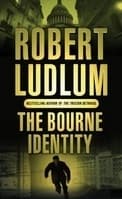
- The Bourne Identity
Robert Ludlum
4.0 (397k) average on GoodreadsThrillerDeals with a protagonist with a mysterious past, on the run from shadowy organizations, trying to uncover his true identity and purpose.
- Killing Floor
Lee Child
4.0 (249k) average on GoodreadsThrillerWhile Baldacci excels in procedural detail, Child's 'Killing Floor' (Jack Reacher series) often incorporates more evocative prose and philosophical undertones regarding justice and societal alienation, offering a deeper character introspection than 'Divine Justice'.
- American Assassin
Vince Flynn
4.2 (75k) average on GoodreadsThrillerBaldacci's 'Divine Justice' has a solid protagonist, but Flynn's 'American Assassin' (Mitch Rapp series) delves into a more visceral intensity and complex psychological scarring for its main character, exploring the origins of trauma and motivation with greater depth.
- Angels & Demons
Dan Brown
3.9 (2.7M) average on GoodreadsThrillerA Harvard symbologist races through Rome's ancient sites, deciphering cryptic clues to unmask the Illuminati and stop a vengeful plot to destroy the Vatican with a stolen antimatter weapon.





Enjoyed the summary?
A summary gives you the shape of the book. The book itself has the detail, the examples and the voice.
Find Divine Justice on AmazonAs an Amazon Associate, BookBrief earns from qualifying purchases. How we're funded