
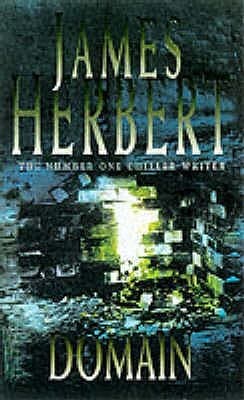
Synopsis
Covers the whole plot, including the ending.
- Difficulty
- Medium
- Pacing
- Fast
- Mood
- Bleak, Terrifying, Desperate, Claustrophobic, Visceral
- Read it if
- You enjoy intense, grim post-apocalyptic survival stories with a strong horror element and a focus on psychological and physical endurance against overwhelming odds.
- Skip it if
- You are sensitive to graphic violence, extreme body horror, or stories with a relentlessly bleak tone and little hope.
Domain Plot Summary
Covers the whole plot, including the ending.
The First Strike
The story begins with a sudden, devastating nuclear attack on London. Protagonist David Ash, a former SAS officer, is home when the bombs fall, witnessing instant destruction. His wife, Sarah, and son, Ben, are caught in a supermarket blast. Despite injuries, David searches for them in the ruins but realizes it is hopeless. He joins a small group of survivors, including journalist Kate and engineer Mark, heading for deep shelters and tunnels beneath the city. The immediate aftermath is horrific, with widespread death, radiation sickness, and radioactive ash making the surface uninhabitable.
Descent into Darkness
David's group and others descend into the dark, winding tunnels of the London Underground and old sewers. The initial relief of finding shelter is brief as new threats emerge. Radiation levels remain high in many areas, and the air is thick with dust and death. Supplies are scarce, leading to immediate rationing and disputes. The psychological toll of the catastrophe begins, with despair and paranoia growing. David uses his military training to maintain order and lead, but the disaster's scale and unknown underground dangers test his resolve.
The Rat King's Domain
As the survivors go deeper, they find signs of an unnatural presence. Whispers circulate about massive rats, far larger and more aggressive than any known. These are not ordinary vermin; they are mutated, intelligent, and organized, led by a fearsome 'Rat King.' The rats launch coordinated attacks, picking off stragglers and overwhelming small groups. David and his companions see the brutal efficiency of these creatures, realizing they are predators, not just scavengers. The rats use darkness and tunnel knowledge to ambush human prey, turning the underground sanctuary into a deadly trap.
A Glimmer of Hope and Betrayal
After harrowing encounters, David's dwindling group finds a well-stocked, fortified government bunker, seemingly untouched by the initial blasts. This offers temporary respite and a chance to regroup. However, the bunker is not empty. It holds a small, armed military contingent led by the ruthless Colonel Hinchcliffe, who cares more about his authority and hoarding resources than other survivors. Hinchcliffe sees David's group as intruders and threats, leading to immediate tension. David must navigate this new human threat while still facing the rats.
The Battle for the Bunker
The bunker's safety is brief. The mutated rats, showing uncanny intelligence, find a way to breach its defenses, perhaps drawn by the concentration of human life. A massive, horrifying battle erupts inside the bunker. Colonel Hinchcliffe's soldiers, though armed, are overwhelmed by the rats' numbers and ferocity. Many fall to their claws and teeth. David, Kate, and Mark fight alongside the remaining soldiers, using whatever they can to repel the attack. The bunker, once a symbol of hope, becomes another death trap, showing the futility of human defenses against this new enemy.
The Rat King's Lair
After the devastating bunker attack, David believes the only way to survive is to confront the Rat King directly. He, Kate, and a few other determined survivors decide to track the creatures to their main lair, deep within London's forgotten catacombs and ancient tunnels. This journey is perilous, taking them through dark, suffocating passages filled with decay and constant threat of ambush. They find evidence of the rats' gruesome feeding habits and disturbing intelligence, strengthening David's resolve to eliminate their leader before humanity is consumed.
Visions and Despair
As David goes deeper into the rats' domain, psychological pressure grows. He experiences vivid, disturbing hallucinations and nightmares, often involving his lost wife and son, Sarah and Ben, and the nuclear blast. These visions are amplified by the darkness and the rats' psychic influence in their lair. David struggles with grief, guilt, and profound loss, questioning his sanity and survival. Kate provides emotional support, trying to keep him grounded, but the apocalypse's trauma weighs heavily on them all.
The Final Confrontation
David, Kate, and the remaining survivors finally reach the heart of the rats' domain — a vast, cavernous chamber filled with countless rats, all serving the colossal Rat King. The Rat King is a grotesque, mutated monstrosity, far larger and more terrifying than other rats, with unnerving intelligence and an almost hypnotic presence. A brutal, climactic battle ensues. David, armed with a makeshift flamethrower and determination, fights the Rat King in a desperate struggle, while Kate and the others fight off swarming hordes. The air is thick with blood, fur, and burning flesh as humanity makes its last stand.
Victory and Loss
In a grueling confrontation, David kills the Rat King, unleashing psychic agony that disorients the remaining rats. Their leader's death causes the rat army to descend into chaos, turning on each other and scattering. However, victory comes at a terrible price. Many of David's companions, including some of the most resilient, are lost in the final battle. Kate, though wounded, survives, offering a small glimmer of hope. The immediate threat of the organized rat intelligence is neutralized, but the world above remains a radioactive wasteland, and humanity's future is uncertain.
Emergence into a New World
With the Rat King defeated and the organized rat hordes diminished, David and Kate, the sole remaining survivors of their original group, slowly return to the surface. The journey is somber, marked by the silent tunnels, now without the constant scuttling and chittering of rats. When they emerge, the world above is completely transformed. London is a silent, skeletal ruin, shrouded in a perpetual twilight of dust and ash. The sky is a sickly orange, and the air is still tainted with radiation. There are no signs of other human life, only desolation and the chilling realization of what has been lost forever.
A Lonely Future
David and Kate, isolated in a world without civilization, must confront their daunting reality. They are two of the last humans in a landscape utterly devoid of life as they knew it. Their immediate concerns shift to finding uncontaminated food and water, securing shelter, and dealing with radiation exposure. Despite the horrors and profound grief they carry, a faint spark of resilience remains. They cling to each other, finding solace and strength in their shared survival, embarking on an uncertain future in a world reborn from nuclear fire and rat-infested darkness.
Domain Characters
David Ash
Protagonist
A former SAS officer turned survivor, driven by loss and survival.
David Ash is the central protagonist, a man of military background whose life is shattered by the nuclear apocalypse. Initially a loving husband and father, he is forced to become a hardened survivor. He possesses strong leadership qualities, tactical knowledge, and a fierce will to live, often putting himself in danger for the sake of others. His grief for his lost family is a constant, gnawing pain that fuels his determination but also threatens to consume him.
Relationships: Sarah Ash (Wife, lost in the blast); Ben Ash (Son, lost in the blast); Kate (Fellow survivor and romantic interest); Mark (Fellow survivor, initial ally)
Kate
Supporting
A resourceful journalist who becomes David's closest ally.
Kate is a pragmatic and intelligent journalist who quickly adapts to the post-apocalyptic world. She is resourceful, observant, and possesses a strong moral compass. Despite the horrors, she maintains a sense of humanity and provides crucial emotional support to David, often acting as his anchor. Her quick thinking and ability to assess situations prove invaluable to the group's survival.
Relationships: David Ash (Fellow survivor and romantic interest); Mark (Fellow survivor and ally)
Mark
Supporting
A pragmatic engineer whose skills are vital for the group.
Mark is an engineer by profession, bringing practical skills and a logical mindset to the group. He is focused on problem-solving, often dealing with the mechanical challenges of navigating the underground and improvising solutions. While less emotionally expressive than Kate, his grounded approach and technical expertise are essential for their survival, particularly in securing resources and understanding the environment.
Relationships: David Ash (Fellow survivor and ally); Kate (Fellow survivor and ally)
Colonel Hinchcliffe
Antagonist
A ruthless military officer obsessed with control and survival at any cost.
Colonel Hinchcliffe is a secondary antagonist, representing the dark side of human nature under duress. He is a high-ranking military officer who takes command of a fortified bunker. Driven by a rigid sense of hierarchy and a desire for absolute control, he is willing to sacrifice others to ensure his own survival and that of his hand-picked few. He views outsiders with suspicion and hostility, quickly coming into conflict with David's group.
Relationships: David Ash (Antagonistic rival); Soldiers (Subordinates)
The Rat King
Antagonist
The monstrous, intelligent leader of the mutated rat hordes.
The Rat King is the primary antagonist, a terrifying, grotesque mutation of a rat, vastly larger and more intelligent than its brethren. It is the psychic and physical leader of the massive rat hordes, orchestrating their attacks with cunning and a chilling awareness. It embodies the ultimate, unnatural threat born from the nuclear devastation, a symbol of nature's horrific retaliation against humanity. Its presence is felt throughout the underground, instilling fear and despair.
Relationships: Mutated Rats (Leader of the horde); David Ash (Mortal enemy)
Sarah Ash
Mentioned
David's wife, lost in the initial nuclear attack.
Sarah Ash is David's beloved wife, who perishes in the initial nuclear blast along with their son, Ben. Though she is never seen alive in the main narrative, her memory and David's grief for her are a constant driving force for his actions. She represents the profound personal loss that defines the post-apocalyptic world for David and many other survivors.
Ben Ash
Mentioned
David's young son, lost with his mother in the blast.
Ben Ash is David's young son, who dies alongside his mother, Sarah, in the nuclear attack. Like Sarah, he is a memory that haunts David, symbolizing the innocence and future that was brutally stolen. His loss contributes significantly to David's trauma and adds a layer of profound sadness to his desperate fight for survival.
The Mutated Rats
Antagonist
The primary threat: swarms of intelligent, monstrous rats.
The mutated rats are the omnipresent, central antagonists of the story. Transformed by radiation and the new environment, they are far larger, more aggressive, and possess an unnerving collective intelligence, orchestrated by the Rat King. They hunt humans, demonstrating tactical prowess and a terrifying capacity for violence. They represent the ultimate horror of a world turned feral, where humanity is no longer the apex predator.
Relationships: The Rat King (Led by); Humans (Predators of)
Domain Themes
The Brutality of Nuclear War
The novel shows the immediate, devastating effects of nuclear conflict. It includes horrific details of the blast's aftermath: widespread death, radiation sickness, civilization's collapse, and environmental destruction. This theme starts on the first pages, with David witnessing London's annihilation, and continues through the constant threat of radiation poisoning and the struggle for basic resources. It serves as a stark warning about the ultimate cost of such a conflict.
“The city had been a living, breathing entity, a vibrant monster. Now it was a dead beast, its bones picked clean by the fire, its flesh turned to dust.”
The Degeneration of Humanity
Beyond physical destruction, the book explores how civilization and morality crumble under extreme pressure. Survivors make impossible choices, and many succumb to their baser instincts. Colonel Hinchcliffe embodies this, prioritizing control and his own survival over compassion. Constant threat and scarcity lead to paranoia, violence, and a loss of empathy among humans, showing how easily society's veneer can strip away, reducing people to desperate animals.
“It wasn't just the bombs that had killed the world. It was what they'd done to the people who survived.”
Nature's Vengeance and Mutation
The mutated rats are a main example of this theme. Nuclear fallout does not just destroy; it transforms, creating new, monstrous life forms that prey on humanity. The rats are not just animals; they are intelligent, organized, and adaptive, representing nature's horrific response to humanity's self-destruction. Their evolution into the dominant underground species signifies a reversal of the natural order, where humans are now the hunted.
“They were no longer just rats. They were the inheritors, the new masters of the dark.”
Grief and Survival
David's personal journey is rooted in his grief for his lost wife and son. This profound loss is a constant companion, driving his actions but also threatening to overwhelm him. The theme explores how individuals cope with immense personal tragedy while also fighting for physical survival. It highlights the psychological toll of apocalypse, where emotional wounds are as debilitating as physical ones, yet the will to live often persists even in utter despair.
“Every breath was a betrayal of the dead, every beat of his heart a reminder of what he had lost.”
Hope in Despair
Despite the overwhelming bleakness and constant threat, the novel also touches on the enduring human spirit and a faint glimmer of hope. David and Kate's growing bond, their shared determination to fight, and their eventual emergence into the ravaged world, signify a resilient, though fragile, hope for the future. Even in total annihilation, the act of survival itself, and the forging of new connections, suggests that humanity, in some form, might endure. Their final journey together represents a small, defiant act of moving forward.
“There was nothing left, and yet… there was us. And that was something.”
Plot Devices & Literary Techniques
The Underground Labyrinth
The extensive network of tunnels and sewers beneath London.
The underground infrastructure of London (Underground, sewers, forgotten catacombs) serves as both a refuge and a trap for the survivors. It is a symbol of humanity's past achievements now repurposed for desperate survival. Its darkness and complexity create a claustrophobic, disorienting atmosphere, amplifying the fear of the unknown and providing the perfect hunting ground for the mutated rats. The labyrinthine nature of the tunnels constantly challenges the characters' navigation skills and psychological endurance.
Radiation Sickness
The lingering, invisible threat of nuclear fallout.
Radiation sickness is a constant, insidious threat that underscores the long-term consequences of nuclear war. It's an invisible enemy that slowly weakens and kills survivors, adding a layer of dread even when immediate dangers are overcome. It represents the inescapable, pervasive damage caused by the bombs, making even 'safe' areas potentially deadly. Its effects are depicted in the deteriorating health of survivors, highlighting the slow, agonizing death that awaits many.
The Rat King's Psychic Influence
The Rat King's ability to exert mental control and induce visions.
Beyond its physical prowess, the Rat King possesses a psychic influence that affects humans, particularly David. This device adds a psychological horror element, blurring the lines between reality and hallucination. It allows the Rat King to manipulate, disorient, and instill deeper fear in its prey, making it a more formidable and supernatural antagonist than a mere animal. David's visions of his family are often amplified or twisted by this influence, adding to his internal torment.
Scarcity of Resources
The dwindling supply of food, water, and essential items.
The extreme scarcity of resources is a critical plot device that drives much of the human conflict and decision-making. It forces rationing, creates tension between survivors, and highlights the breakdown of societal norms. The constant struggle for food and water underscores the primitive nature of their existence and the sheer difficulty of survival, making every discovery a moment of temporary relief and every loss a major setback.
Domain Quotes
“The wind was a living thing, screaming its fury across the land, tearing at the trees, whipping the sea into a frenzy of white horses.”
“It wasn't the bombs that killed you, not directly. It was the slow, agonizing crawl of the world dying around you.”
“Fear was a constant companion, a cold knot in the gut that never truly went away.”
“The city was a tomb, a monument to the folly of man.”
“There was no good, no evil, only the stark reality of existence.”
“The rats were the new masters, scuttling through the ruins, claiming what was left.”
“He knew then that humanity's greatest enemy wasn't the bomb, but itself.”
“The silence was worse than any scream, a vast, echoing void where life had once thrummed.”
“Hope was a dangerous thing, a fragile spark that could be extinguished in an instant.”
“The world had ended, not with a bang, but with a whimper of radiation sickness and starvation.”
“He looked at the sky, no longer blue, but a bruised, sickly grey, and knew it mirrored the colour of his soul.”
“Survival was a dirty business, stripping away all pretence, leaving only the raw, desperate animal.”
“The past was a ghost, haunting their every step, a reminder of what they had lost.”
Quiz
10 questions on the plot and the characters. Each answer comes with a short explanation.
Question 1
What catastrophic event initiates the main conflict and setting of 'Domain'?
- A massive earthquake
- A global pandemic
- A nuclear war
- An alien invasion
Show answer
C. A nuclear war The book 'Domain' by James Herbert centers around the aftermath of a nuclear conflict that devastates the city.
Question 2
Where do the initial survivors seek refuge from the immediate aftermath of the nuclear attack?
- In remote countryside bunkers
- On ships at sea
- Beneath the wrecked city streets
- In abandoned government facilities above ground
Show answer
C. Beneath the wrecked city streets The synopsis explicitly states that for a few, survival is possible only beneath the wrecked streets, away from the poisonous ashes.
Question 3
What specific threat awaits the survivors in the subterranean refuge?
- Other desperate human survivors
- A new viral disease
- Genetically mutated insects
- The rats
Show answer
D. The rats The final line of the synopsis clearly states: 'But below, the rats are waiting,' indicating the primary subterranean threat.
Question 4
What is the primary danger posed by the 'slow-descending poisonous ashes' to those remaining above ground?
- They obscure vision, making escape difficult.
- They contaminate food and water supplies.
- They are toxic and lethal, causing death or mutilation.
- They attract dangerous wildlife.
Show answer
C. They are toxic and lethal, causing death or mutilation. The description mentions 'poisonous ashes' and that people above ground are 'destroyed or mutilated beyond hope,' implying the ashes are a direct, lethal threat.
Question 5
Beyond physical survival, what implicit theme is suggested by the description of the city's state and its people?
- The resilience of nature
- The fragility of civilization and humanity's destructive potential
- The triumph of technology
- The inevitability of peace
Show answer
B. The fragility of civilization and humanity's destructive potential The description of a 'long-dreaded nuclear conflict,' a 'city torn apart, shattered,' and people 'destroyed or mutilated beyond hope' strongly suggests themes of humanity's self-destructive nature and the collapse of societal order.
Question 6
What is implied about the nature of the nuclear conflict in 'Domain'?
- It was a sudden, unexpected attack.
- It was a localized incident, not widespread.
- It was a long-anticipated event.
- It was accidentally triggered.
Show answer
C. It was a long-anticipated event. The phrase 'The long-dreaded nuclear conflict' indicates that this event was anticipated and feared for a significant period before it occurred.
Question 7
The mention of 'poisonous ashes' descending suggests what specific post-nuclear phenomenon?
- Radiation fallout
- Volcanic ash
- Acid rain
- Heavy snowfall
Show answer
A. Radiation fallout In the context of a nuclear conflict, 'poisonous ashes' that slowly descend and cause harm is a clear reference to radioactive fallout, a common consequence of nuclear detonations.
Question 8
What differentiates the threat of the 'rats' from the 'poisonous ashes'?
- The rats are a psychological threat, while ashes are physical.
- The rats are an active, biological threat, while ashes are a passive environmental hazard.
- The rats are only dangerous to children, while ashes affect everyone.
- The rats are a problem above ground, while ashes are below.
Show answer
B. The rats are an active, biological threat, while ashes are a passive environmental hazard. The ashes are a 'slow-descending poisonous' environmental hazard, while the rats are 'waiting' below, implying an active, predatory, and biological danger distinct from the inert, albeit deadly, fallout.
Question 9
Considering the genre blend of 'Thriller, Fantasy, Science Fiction,' which element from the synopsis most strongly hints at the 'Thriller' aspect?
- The city being torn apart
- The long-dreaded nuclear conflict
- The necessity of seeking refuge 'if there is time'
- The lurking danger of 'the rats are waiting' below
Show answer
D. The lurking danger of 'the rats are waiting' below While other elements contribute to the overall tension, the explicit statement 'But below, the rats are waiting' sets up an immediate, unknown, and visceral threat, characteristic of a thriller's suspense and horror elements.
Question 10
The phrase 'if there is time to avoid the slow-descending poisonous ashes' emphasizes what critical element for the initial survivors?
- The need for specialized equipment
- The importance of speed and immediate action
- The necessity of a large group for survival
- The advantage of prior military training
Show answer
B. The importance of speed and immediate action The phrase 'if there is time' directly highlights the urgency and narrow window of opportunity for survivors to reach safety before the deadly ashes become inescapable, emphasizing the critical role of immediate action.
Domain FAQ
What is the core premise of James Herbert's 'Domain'?
'Domain' plunges readers into the immediate aftermath of a nuclear war, where London lies in ruins, devastated by the initial blasts and the subsequent fallout. The narrative follows a small group of survivors, led by the stoic character of Luke, as they desperately seek refuge and navigate the shattered remains of their world, facing both environmental hazards and monstrous, mutated threats.
Who is Luke and what is his role among the survivors?
Luke is the central protagonist, a former soldier, and the de facto leader of the small band of survivors. His military training and pragmatic nature make him crucial for their immediate survival, as he makes difficult decisions about shelter, resources, and combating the dangers they encounter, often clashing with others who prefer a more optimistic or humane approach.
What are the primary threats the survivors face in the immediate aftermath of the bombs?
Initially, the survivors contend with the direct consequences of the nuclear blasts: crumbling infrastructure, radiation sickness, and the suffocating, poisonous ash that blankets the city. Beyond these environmental dangers, they soon discover a more immediate and terrifying threat in the form of the mutated, intelligent rats that have thrived underground and developed a chilling, organized predatory instinct.
How does the setting of post-apocalyptic London contribute to the horror?
The setting of a familiar, once-bustling London reduced to a desolate, ash-choked wasteland amplifies the horror by juxtaposing the ordinary with the utterly catastrophic. Iconic landmarks are twisted into grotesque monuments of destruction, creating a pervasive sense of loss and isolation, and making the subterranean tunnels beneath the city feel even more claustrophobic and menacing.
What distinguishes the rats in 'Domain' from typical vermin?
The rats in 'Domain' are not merely numerous or aggressive; they are depicted as having undergone a terrifying evolution, displaying heightened intelligence, communication skills, and even a degree of strategic thinking. They are organized into a formidable, almost militaristic force, capable of ambushing and overwhelming human prey, making them a truly existential threat rather than just a nuisance.
Are there any subtle hints about the rats' origins or specific mutations beyond what's explicitly stated?
While the novel explicitly links their mutations to the nuclear fallout, there are subtle suggestions that their rapid evolution might also be influenced by the sheer desperation and chaos of the post-apocalyptic environment, accelerating their adaptation. The narrative hints at a communal, almost hive-mind intelligence, suggesting a more profound biological shift than just increased size or aggression.
Is there a deeper meaning to the 'Domain' title, beyond just territory?
The title 'Domain' can be interpreted in multiple ways: it refers to the rats' burgeoning control over the subterranean world, but also subtly points to humanity's lost 'domain' over the Earth. It questions who truly holds dominion in this new world order, suggesting that nature, in its most primal and mutated form, has reclaimed its supreme authority.
Are there any recurring symbols or motifs used by Herbert to enhance the horror?
Herbert frequently uses motifs of darkness, claustrophobia, and the corruption of the familiar to enhance the horror. The pervasive ash and gloom symbolize the death of civilization, while the constant threat of being trapped underground reflects humanity's diminishing freedom. The grotesque mutations of once-ordinary creatures serve as a stark reminder of nature's brutal retaliation.
How does the character of Luke grapple with his own humanity in the face of extreme survival?
Luke consistently struggles with the moral compromises demanded by their desperate situation. His military pragmatism often clashes with his innate human empathy, particularly when making decisions about sacrificing the weak or abandoning those who slow them down. He carries the burden of leadership, which forces him to suppress personal feelings for the greater good, leading to internal conflict and a sense of growing emotional detachment.
What psychological impact does the constant threat of the rats have on the survivors?
The relentless, intelligent attacks from the rats induce profound psychological trauma among the survivors, manifesting as paranoia, extreme anxiety, and a breakdown of trust. The fear of being hunted and devoured by a seemingly unstoppable, unseen force erodes their mental stability, leading to irrational behavior, despair, and a struggle to maintain their sanity.
How do the different characters' coping mechanisms reflect various psychological responses to trauma?
The survivors exhibit diverse coping mechanisms: Luke embodies stoicism and leadership, while others succumb to despair, denial, or aggression. Characters like Neil, who struggles with past trauma, find their existing psychological vulnerabilities exacerbated by the apocalypse, showcasing how extreme stress can shatter or warp individual psyches differently.
Does the novel explore the concept of collective trauma or societal breakdown?
Yes, 'Domain' deeply explores collective trauma, not just through individual suffering but through the collapse of societal norms and structures. The survivors struggle to form a new social order, grappling with questions of morality, justice, and leadership in a world where civilization has ceased to exist, highlighting the psychological impact of losing everything familiar.
Is 'Domain' primarily a cautionary tale about nuclear war, or does it have broader philosophical implications?
While undoubtedly a stark cautionary tale about nuclear war, 'Domain' also delves into broader philosophical implications about humanity's place in the natural order and its capacity for both survival and cruelty. It questions the nature of intelligence and evolution, suggesting that humanity's self-proclaimed superiority is fragile and easily overturned when faced with a more primal, adapted threat.
How does the ending of 'Domain' contribute to its lasting impact or message?
The ending of 'Domain' is bleak and uncompromising, reinforcing the novel's grim view of post-apocalyptic survival. It leaves the reader with a profound sense of despair and the realization that even if humanity survives the immediate cataclysm, the new world might be one where they are no longer the dominant species, leaving a haunting and unsettling final impression.
Could the rats in 'Domain' be seen as a metaphor for humanity's own destructive tendencies?
One strong interpretation is that the mutated rats act as a metaphor for humanity's own capacity for unchecked destruction and primal savagery. Having brought about their own downfall through nuclear war, humans are now preyed upon by creatures that embody a distorted, accelerated version of their own aggressive instincts, creating a cyclical commentary on violence and consequence.
Does the book offer any glimmer of hope, or is it relentlessly pessimistic?
'Domain' is largely relentlessly pessimistic, offering very little in the way of conventional hope. While the survivors cling to the idea of a future, the constant losses and the overwhelming power of the mutated rats continually crush any nascent optimism. The novel focuses more on the brutal realities of survival and the psychological toll, rather than on finding a path to redemption or rebuilding.
How does 'Domain' compare to Herbert's earlier 'The Rats' in terms of themes and horror?
'Domain' is a direct sequel to 'The Rats,' escalating its predecessor's themes of nature's revenge and the horror of mutated vermin. While 'The Rats' focused on a localized outbreak, 'Domain' expands the scope to a global nuclear apocalypse, making the threat existential and presenting a world where humanity has already lost its dominance, thus deepening the horror and despair.
About the author

James Herbert was a British author known for his contributions to the horror genre. His notable works include "The Secret of Crickley Hall," which explores themes of loss and the supernatural, and "Domain," a post-apocalyptic tale. Herbert's writing often combines elements of suspense and the macabre, earning him a dedicated readership.
Similar books
- The Road
Cormac McCarthy
4.0 (716k) average on GoodreadsScience FictionShares a grim, post-apocalyptic setting and a focus on survival against a desolate world.
- Metro 2033
Dmitry Glukhovsky
4.0 (41k) average on GoodreadsFantasyFeatures underground survival in a post-apocalyptic world with mutated creatures and human conflicts.
- Angels & Demons
Dan Brown
3.9 (2.7M) average on GoodreadsThrillerA Harvard symbologist races through Rome's ancient sites, deciphering cryptic clues to unmask the Illuminati and stop a vengeful plot to destroy the Vatican with a stolen antimatter weapon.
- Gone Girl
Gillian Flynn
4.1 (2.3M) average on GoodreadsThrillerA wife's sudden disappearance on her fifth anniversary reveals a web of lies and psychological warfare, exposing the secrets within a seemingly perfect marriage.
- The Girl on the Train
Paula Hawkins
3.9 (2.1M) average on GoodreadsThrillerA woman’s fascination with a seemingly perfect couple she watches from her daily train commute leads her into a dark investigation when she witnesses something that shatters their idyllic image.
- The Da Vinci Code
Dan Brown
3.9 (1.9M) average on GoodreadsThrillerA symbologist and a cryptologist race through European landmarks, deciphering ancient codes and uncovering a conspiracy that could rewrite the foundations of Christianity.





Enjoyed the summary?
A summary gives you the shape of the book. The book itself has the detail, the examples and the voice.
Find Domain on AmazonAs an Amazon Associate, BookBrief earns from qualifying purchases. How we're funded